As an Amazon Associate, SpecPicks earns from qualifying purchases. See our review methodology.
Best CPU Coolers for 2026
Top-rated CPU coolers for 2026: 360 mm AIO liquid coolers for high-TDP flagships, tower air for quiet and low-maintenance builds, and budget options that still tame mid-tier CPUs ($30–$50 segment). This guide covers CPU coolers only — case fans, fan controllers, and thermal compound are surfaced separately on the full Cooling & Fans category page (linked below).
At-a-glance comparison
| Pick | Best For | Price | Rating | Verdict |
|---|---|---|---|---|
| Noctua NH-D15S 140mm CPU Cooler, 16cm, 65CFM, 1500RPM… | Best Overall | $109.95 | Best all-rounder of the bunch. Top-rated, near-zero complaint rate. Backed by 1,222 verified reviews. | |
| Noctua NH-L9a-AM4, Premium Low-Profile CPU Cooler for AMD… | Best Value | $49.95 | Best price-to-performance ratio of these picks. Top-rated and the strongest spec-per-dollar of the picks here. Backed by 2,844 verified reviews. | |
| Noctua NH-L9i, Premium Low-Profile CPU Cooler for Intel… | Budget Pick | $49.95 | Cheapest pick that still clears our quality bar. Top-rated, near-zero complaint rate. Backed by 3,425 verified reviews. | |
| Noctua NH-L12S, Premium Low Profile CPU Cooler with Quiet… | Honorable Mention | $74.95 | Editor pick for this guide. Top-rated, near-zero complaint rate. Backed by 1,912 verified reviews. | |
| Noctua NH-U12S SE-AM4, Premium CPU Cooler for AMD AM4… | Honorable Mention | $69.95 | Editor pick for this guide. Top-rated, near-zero complaint rate. Backed by 1,601 verified reviews. |
🏆 Best Overall: Noctua NH-D15S 140mm CPU Cooler, 16cm, 65CFM, 1500RPM, 24.6dB, Compatible with Intel LGA1851, LGA1700, LGA1200, LGA115x and AMD AM5 & AM4

Noctua NH-D15S 140mm CPU Cooler, 16cm, 65CFM, 1500RPM, 24.6dB, Compatible with Intel LGA1851, LGA1700, LGA1200, LGA115x and AMD AM5 & AM4. A curated pick in its category. See full product detail for specs, benchmarks, and alternatives.
*Price sourced from Amazon.com. Last updated 2026-07-25. Price and availability subject to change.
💰 Best Value: Noctua NH-L9a-AM4, Premium Low-Profile CPU Cooler for AMD AM4 (Brown)

Noctua NH-L9a-AM4, Premium Low-Profile CPU Cooler for AMD AM4 (Brown). A curated pick in its category. See full product detail for specs, benchmarks, and alternatives.
*Price sourced from Amazon.com. Last updated 2026-07-25. Price and availability subject to change.
🧪 Budget Pick: Noctua NH-L9i, Premium Low-Profile CPU Cooler for Intel LGA1200 & LGA115x (Brown)
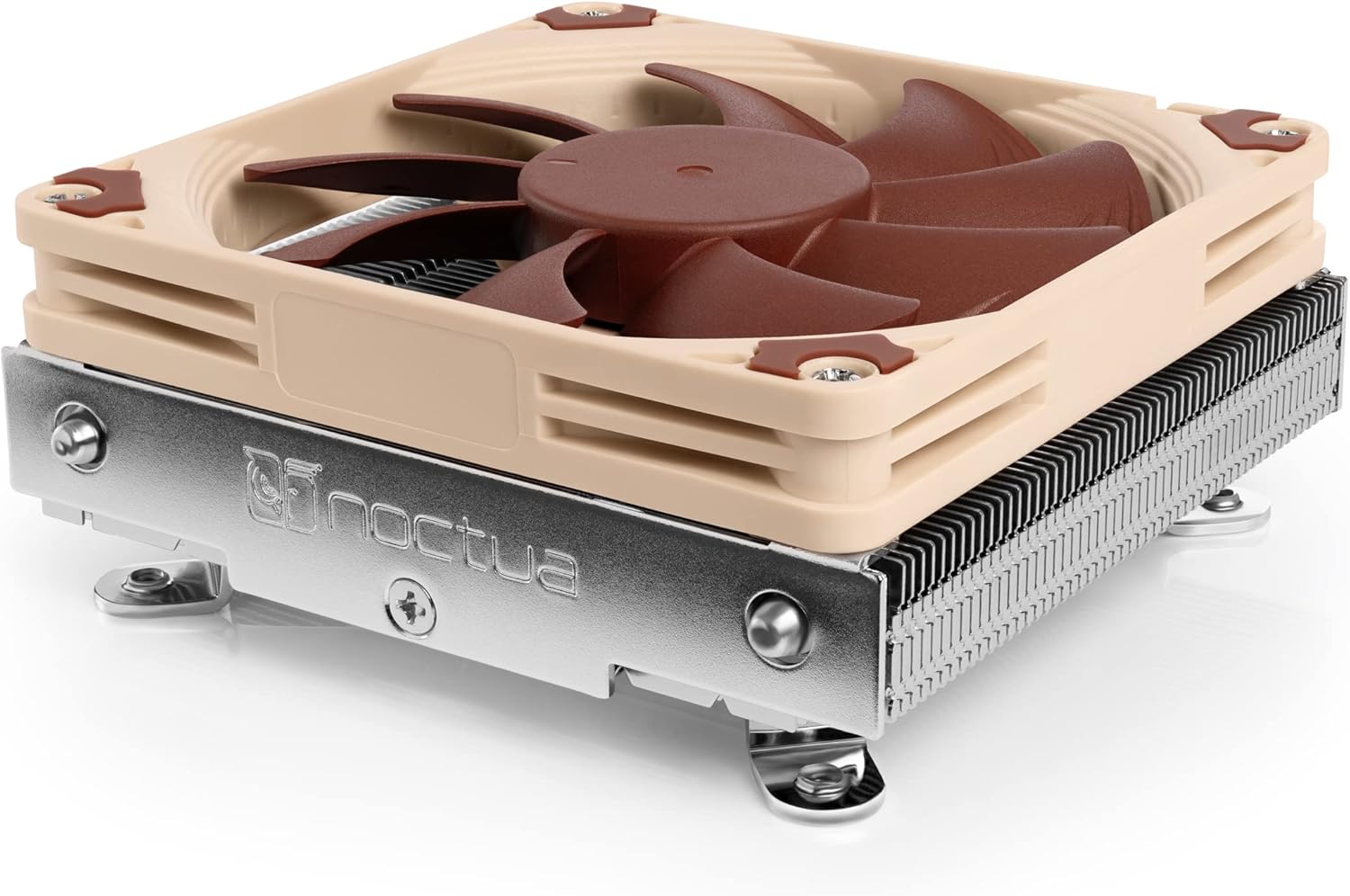
Noctua NH-L9i, Premium Low-Profile CPU Cooler for Intel LGA1200 & LGA115x (Brown). A curated pick in its category. See full product detail for specs, benchmarks, and alternatives.
*Price sourced from Amazon.com. Last updated 2026-07-25. Price and availability subject to change.
Honorable Mention: Noctua NH-L12S, Premium Low Profile CPU Cooler with Quiet 120mm PWM Fan (Brown)
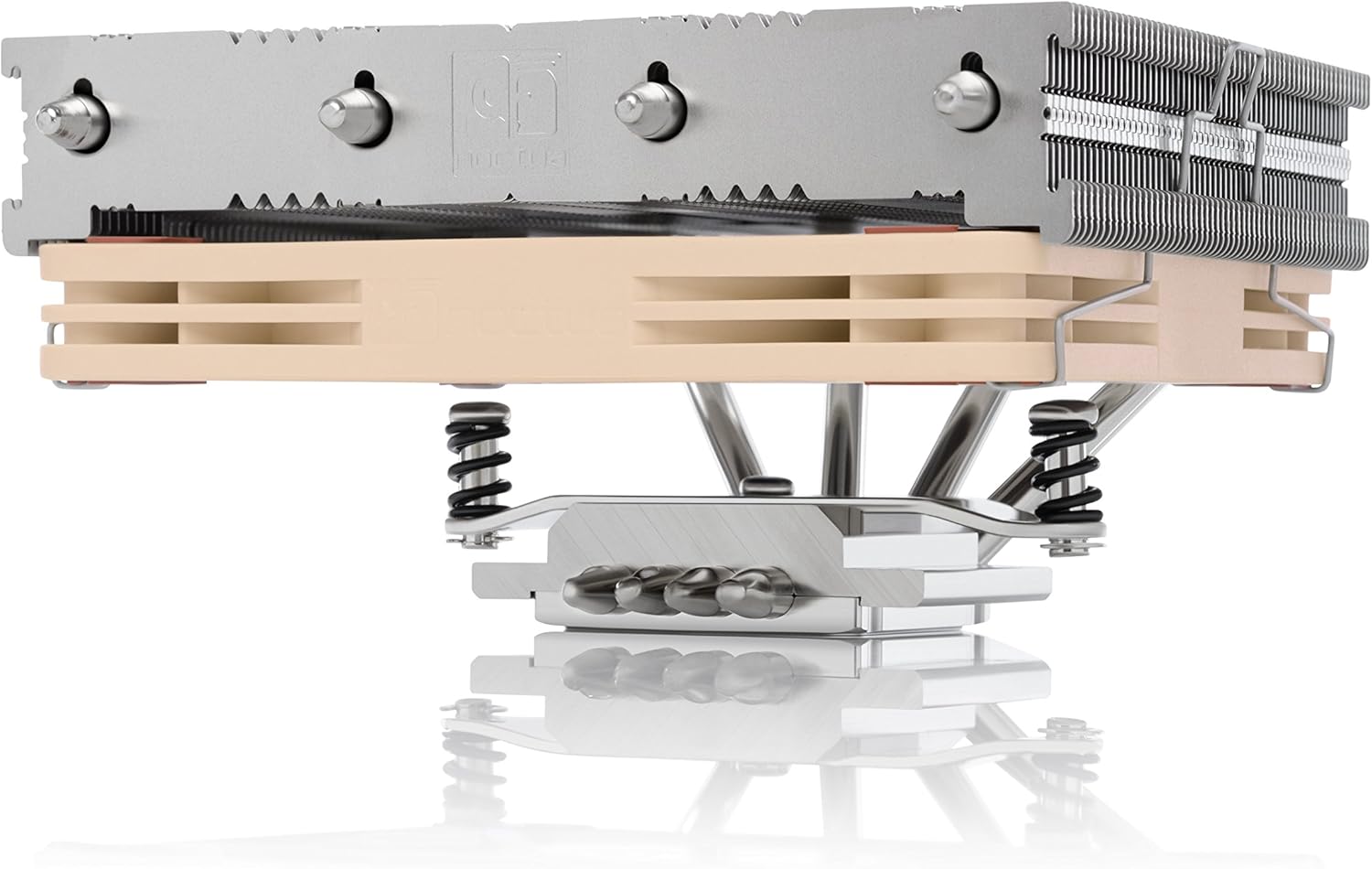
Noctua NH-L12S, Premium Low Profile CPU Cooler with Quiet 120mm PWM Fan (Brown). A curated pick in its category. See full product detail for specs, benchmarks, and alternatives.
*Price sourced from Amazon.com. Last updated 2026-07-25. Price and availability subject to change.
Honorable Mention: Noctua NH-U12S SE-AM4, Premium CPU Cooler for AMD AM4 (Brown)

Noctua NH-U12S SE-AM4, Premium CPU Cooler for AMD AM4 (Brown). A curated pick in its category. See full product detail for specs, benchmarks, and alternatives.
*Price sourced from Amazon.com. Last updated 2026-07-25. Price and availability subject to change.
What to look for in cooling & fans
Scope note: this guide focuses specifically on CPU coolers (AIO liquid + tower air). For case fans, fan controllers, and thermal compound, see the broader Cooling & Fans category page linked in the Related Guides section below. Match cooler capacity to CPU package power, not "Ryzen 9 = AIO required" rules of thumb. A Ryzen 7 7800X3D at ~120 W package power runs fine on a $35 tower; a Core Ultra 9 285K at 250 W needs a 360 mm AIO or the very best tower. Air coolers are quieter at low loads (no pump noise), simpler to maintain (zero liquid, no pump failure mode), and last the life of multiple CPU upgrades. AIOs trade those advantages for better peak-load cooling and unobstructed RAM/motherboard clearance. Before you buy, check three compatibility points against your build: (1) socket — confirm AM5 / LGA1851 / LGA1700 mounting hardware ships in the box (most coolers do, but value SKUs sometimes require a $5 retention-kit add-on); (2) tower height vs. case CPU-cooler clearance (the spec on the case datasheet — a 165 mm NH-D15 will not fit in a 158 mm SFF case); (3) AIO radiator length and thickness vs. case radiator support (240/280/360 mm + 27–55 mm thick — many mid-towers only take a 240 mm in the top and a 360 mm in the front). On the fan side, PWM (4-pin) is a hardware feature you want regardless — it gives the motherboard RPM control via duty-cycle modulation, so the cooler stays quiet at idle and spins up only under load; 3-pin DC fans run at one fixed voltage and are louder for the same cooling. ARGB vs. non-RGB is purely aesthetic — it does not affect cooling performance, but ARGB headers on the motherboard (or an included controller hub) are required to drive the lighting, so verify your board has one before paying the RGB premium. Avoid: 120 mm single-fan AIOs (loud, only beat a $20 stock cooler by a few degrees), thermal paste sold as a CPU "cooler" (paste interfaces a cooler to the IHS — it doesn't replace one), and Corsair RGB LED fan kits / Lighting Node PRO bundles (chassis airflow accessories, not CPU coolers).
Related Guides
More guides & deep dives from the SpecPicks archive
Browse all articles & guides →- How to Build a Windows 98 Retro PC in 2026
- Emulation Hardware in 2026: FPGA, Software, and Cart-Reader Ecosystems
- Best 1440p Gaming GPUs in 2026
- RTX 4070 Super vs RX 7800 XT — Which to Buy in 2026
- Best Budget Gaming PC Build 2026 — ~$1,000 ($800 on Sale)
- Best Retro Handhelds in 2026 — From $35 to $500
- The Complete Voodoo5 5500 AGP Driver Guide (2026 Edition)
More reviews from the SpecPicks archive
Browse all reviews →- Best Force-Feedback Racing Wheel for PC in 2026: G29 vs HORI vs Thrustmaster
- Stable Diffusion vs Flux — which open image model wins in 2026?
- Putting a Modern SATA SSD in a Win98/XP Retro Build via an IDE Bridge
- Can a Raspberry Pi 4 Run a Local LLM? Ollama tok/s Tested
- Dumping Big-Box CD-ROM Games in 2026 with an IDE-to-USB Adapter
- Microsoft + Nvidia AI PCs Run Real Agents: The Local Hardware That Matches (2026)
- Intel Arc B580 for LLM Inference: What It Can Actually Do
- Raspberry Pi Zero W Projects for Beginners in 2026
- IDE-to-USB and CompactFlash Adapters for Retro PCs: FIDECO vs Unitek vs Vantec
- Why That Game Boy Clone Runs Too Fast — and the Crystal Fix
- ComfyUI on a 12GB RTX 3060: SDXL and Flux Image Gen Benchmarked
- Ryzen 7 9800X3D vs Ryzen 9 9900X3D: Which Zen 5 X3D Chip Wins in 2026?
- Local LLM in VSCode: The 2026 Setup Guide
- This DIY 'Steam Controller Puck' Emulates Xbox, Switch & PS Pads
- Anthropic's 2GW AMD Deal: What It Means for Local-vs-Cloud Builders
- Best SSD for Expanding Your Steam Library in 2026: SATA Value Picks
- Logitech G920 vs Thrustmaster: Best Beginner Sim Racing Setup 2026
- ComfyUI on an RTX 3060 12GB: Real Image-Gen Throughput in 2026
- After the Mythos Cyber-Ops Report, Why Run AI on an Air-Gapped Local Box
- Building a Period-Correct Windows 98 Gaming PC in 2026: Parts, Pitfalls, and Driver Archaeology
- GPU-Accelerated Autorouter Handles Monstrous PCB Designs
- Building a Modern BYOC LAN Party Box: 8 Period-Correct Rigs for QuakeCon-Style Events in 2026
- Qwen 3.6 27B GGUF: BF16 vs Q4_K_M vs Q8_0 Compared
- llama.cpp vs Ollama for Single-User Chat on an RTX 3060 (2026)
- Best Budget Gaming PC Parts in 2026: A 5-Pick Build List
- Bilingual Voice Agents: Frontier ASR on Code-Switched Speech
- Best CPU Cooler for the Ryzen 7 5800X in 2026
- Ryzen AI Max+ 395 (Strix Halo) Mini PC vs RTX 3060 12GB for Local LLMs
- Run DeepSeek & Qwen Locally on an RTX 3060 12GB (2026 Guide)
- Qwen-Image-3.0 on an RTX 3060 12GB: Local Text-in-Image Gen
- llama.cpp vs vLLM for Single-User Local Chat in 2026: Which Wins on a 12GB GPU?
- Best Budget SSD for a Gaming PC in 2026: SATA vs NVMe
- Ah Yes, 'Gaming' Laptops: The Hype vs. Reality
- Build a Raspberry Pi 4 AirPlay Receiver in 2026: Full Walkthrough
- Run Text-to-SQL Locally on a 12GB GPU After Gemini-SQL2
- How to run Qwen 3 14B on Apple M4 Max
- Continuous Blood Pressure Monitoring Without a Cuff in 2026
- Linux Now Boots on a Sega Genesis — Here's What That Actually Means
- Grok 4.5 Tops AutomationBench at 51%: Cloud Score vs Local-Rig Reality
- Best USB Microphone for Streaming Under $150 in 2026
- The Budget Streaming Starter Kit: Mic, Light, and Webcam Under $250
- Forza Horizon 6: Is 8GB VRAM Enough or Do You Need an RTX 3060 12GB?
- Qwen 3.6 27B on 24GB VRAM: Backend, Quant + Settings Synthesis
- Adding Modern Audio to a Retro PC: Sound BlasterX G6 on XP
- Best GPU for Llama 3.1 70B (2026)
- Is the RTX 3060 12GB Still Worth It for 1440p Gaming in 2026?
- Zhipu ZCode vs Claude Code: Cheaper Agentic Coding, and the Rig to Run It
- 8BitDo Sn30 Pro vs Pro 2: Best Bluetooth Controller for Raspberry Pi 4 Emulation
- Best Sim Racing Wheel for Beginners: G29 vs HORI vs Thrustmaster
- Quake 3 + UT99 Dedicated Server on Raspberry Pi 4 8GB: Headless AI-Managed Setup (2026)
- GameSir G7 SE vs DualSense: Which Controller Is Better on PC in 2026?
- When Gemini Debugs Your Linux Boot: Agentic Sysadmin on a Local RTX 3060 Rig
- Intel IPEX-LLM vs Ollama on AMD: AI Rig Guide 2025
- 8BitDo Pro 2 on Win98 SE and WinXP: Mapping a Modern Bluetooth Pad to DOSBox, Glide Games, and…
- How to Run DeepSeek-R1 32B on Apple M4: Which Mac You Need + Real tok/s
- GeForce 3 Ti 500 vs Radeon 8500: The 2001 DirectX 8 GPU Showdown
- Best Monitor for Color Grading Under $500 in 2026
- BOSGAME VTA-439: AMD Ryzen AI 9 HX 470 Mini PC for Linux
- Dual RTX 3090 Ti in 2026: Worth It vs. the Alternatives?
- Best Budget SSD for Gaming and Boot Drives in 2026
- Q4_K_M Is Fine for Chat, a Trap for Agents: KV Cache Quant Math for Local Coding
- Boot Windows 98 from CompactFlash: Transcend CF133 + IDE Adapter Guide
- RetroPie Handheld Shells in 2026: Pick the Right Pi for Your DIY Handheld
- NVMe vs SATA SSD for Local LLMs: Does Disk Speed Matter?
- Active Quake 3 and OpenArena Servers in 2026 — How to Find and Join Them
- Best Parts for a Budget Ryzen + RTX 3060 Gaming PC Build in 2026
- Best GPUs for Running Local LLMs in 2026
- Is 12GB VRAM Still Enough for Local LLMs in 2026?
- Heterogeneous GPU Weighting and Layer Splitting: Mixed-GPU LLM Inference on Consumer Hardware
- Raspberry Pi 5 Price Guide: What You'll Actually Pay
- Logitech G502 Hero in 2026: Is the $40 Classic Still the Mouse to Beat?
- GeForce 4 Ti 4600 Won't Boot in Windows XP — Field Troubleshooting Guide
- Intel Axes BigDL: What It Means for CPU and Arc LLM Inference
- DualSense vs 8BitDo Pro 2 vs GameSir G7 SE: Best PC Controller in 2026
- Best GPU for 1080p Esports in 2026: Why the RTX 3060 Still Wins
- North Mini Code: The New Small Coding Model and the Hardware That Runs It
- Sound BlasterX G6 for Retro PC Gaming Audio: An External Card for Win98/XP and DOSBox Builds
- How to run Qwen 3 14B on NVIDIA GeForce RTX 5090
- Microsoft and Mistral Sign Multi-Billion Europe AI Infra Deal
- When OpenAI Retires a Model: Build a Local RTX 3060 Hedge
- Best Controller for PC and Steam Gaming in 2026: G7 SE vs 8BitDo Pro 2 vs DualSense
- Is My CPU Sufficient for Light Universe Simulations?
- llama.cpp on Snapdragon Hexagon NPU: First Real Benchmarks and What Actually Works
- Intel Arc Pro B60 24GB: AI Workstation GPU Guide 2025
- Intel Axes BigDL: Local-LLM Picks for Consumer GPUs in 2026
- Linux Gaming Is Getting Faster: Windows APIs Hit the Kernel
- Best Budget AM4 CPU for a 2026 AI + Gaming Build: 5800X vs 5700X vs 5600G
- Sound Blaster AWE64 vs Aureal Vortex 2: The Win98 Audio API War, Revisited
- Best Raspberry Pi Alternative in 2026: Pi vs Orange Pi vs Radxa
- Claude Code Ran Hidden Repo Malware Unverified — Why Local AI Sandboxing Matters
- Best SATA SSDs for Gaming and Retro PC Builds in 2026
- Best Cheap Raspberry Pi Alternatives in 2025
- Imaging Your Big-Box CD-ROM Collection: A CompactFlash + IDE Workflow
- Logitech G29 vs HORI Force Feedback Wheel for Sim-Racing Beginners
- AMD Ryzen AI Halo vs NVIDIA DGX Spark — or Just an RTX 3060?
- AMD Ryzen AI Halo vs NVIDIA DGX Spark: Local-AI Mini-Box Showdown
- Best Budget GPU for Running Llama 70B Locally: RTX 3060 12GB Stacked
- Benchmarking Asus Tablet Repairability Scores 2026
- Nemotron 3 Ultra vs MiniMax M3: Best Open Model for a 12GB Rig
- Best CPU Coolers for Ryzen and Intel Builds in 2026
- SNES Classic vs Sega Genesis Mini: Best Plug-and-Play Retro Console in 2026
- AI Bug-Hunting Exploded: Run a Local Vuln-Scanner LLM on 12GB VRAM
- How to run Qwen 3 14B on NVIDIA GeForce RTX 4090
- Linux Driver to Expose Voltage Inputs for Raspberry Pi SBCs: What Tinkerers Get
- Ryzen 9800X3D Idle Temp: What's Normal (2026 Guide)
- Best AM4 Gaming CPU in 2026: Ryzen 7 5800X vs 3700X vs 3900X vs Intel i7-9700K
- Best SSDs & Cloning Tools for Gaming PC Upgrades 2026
- Ollama vs vLLM for Single-User Local Chat on an RTX 3060 12GB (2026)
- ATI Radeon 9700 Pro Install Guide: Catalyst Versions, AGP 8x Compatibility, and Period-Correct Drivers
- Best SATA SSD for Boot Drive Upgrades on Aging Desktops (2026)
- Local LLM Agent Infrastructure: 2026 Hardware Guide
- AI-Driven Driver Hunting on WinXP: Using Vision LLMs to Install Audigy 2 ZS Without Internet
- Qwen 3.6 27B vs Mistral 3.5 Medium: Local Hardware Showdown for 24GB GPUs
- Handheld Gaming PC Sale: Best 2026 Deals to Buy Now
- Ryzen 7 5800X vs 5700X for Gaming and Streaming: Which AM4 Chip Wins in 2026?
- Best Microphones for Streaming and Podcasting (2026)
- Raspberry Pi LLM Projects: What Actually Runs in 2026
- Best SSD for a Local LLM Workstation: NVMe vs SATA Model-Load Latency Tested
- Claude Opus 4.8 Raised the Bar — Best Local Coding LLMs for a 12GB RTX 3060
- Build a Budget Self-Hosted Game Server on a Ryzen 5 5600G in 2026
- Self-Host Jellyfin on a Raspberry Pi 4 8GB: Real Transcoding Numbers
- How to Host a Quake 3 Arena Server in 2026: Modern Setup for Classic LAN Play
- Best SSD for 2000s LAN Party PC Builds (2026)
- Viral: Hobbyists Are Tracking Every Plane With a $50 Raspberry Pi - Here Is What You Need
- Flux 3 Native-Audio Video: Can a 12GB GPU Run It?
- Best Gaming Mouse for FPS Esports Under $80 (2026)
- Voodoo 3 3500 TV vs Voodoo 5 5500: Which Late-3dfx Card Should You Hunt For in 2026?
- Qwen 3.6 27B Quantization Showdown: BF16 vs Q8_0 vs Q4_K_M on Consumer GPUs
- RTX 5090 vs RTX 4090 at 1080p Competitive: Does the New Flagship Help Esports FPS?
- IPEX-LLM + Ollama vs a CUDA RTX 3060 Rig
- Open-Weight Models Caught Up to Frontier: What to Run on a 12GB GPU
- Intel Core Ultra X7 Panther Lake Performance on Linux 7.1
- Best SSD for PS4 Pro Upgrade in 2026: SATA Picks That Actually Cut Load Times
- Asus ROG Harpe II Extreme: 24K-Gold, 65K-Sensor Gaming Mouse
- Best Retro Emulator Consoles 2026: AMD GPU Buying Guide
- Turtle Beach Recon 50 vs BERIBES: Best Budget Gaming Headset Under $40?
- DeepSWE vs SWE-Bench Pro: The Coding-Agent Benchmark Shakeup
- Samsung Odyssey 4K vs KOORUI QD-Mini LED: Best 4K Gaming Monitor?
- RTX 5090 AI Build Guide: CPU, RAM, PSU & Cooling for Local Inference
- LEGO Batman: Legacy of the Dark Knight Runs Well on Steam Deck
- Samsung Winds Down Chip Output Before Strike — Brace for SSD Prices
- Best Budget Streaming Starter Kit for Twitch & YouTube in 2026
- Intel Arc B580 for Local LLMs in 2026: 12GB for Under $300
- Best SSD for a PS4 Pro Upgrade in 2026
- Intel's Bartlett Lake Core 9 273PQE Loses to a 4-Year-Old CPU
- Ollama vs LM Studio MLX in 2026: Which Local Runner Wins?
- KOORUI 27" 4K QD-Mini LED vs Samsung Odyssey 27" 4K: Which 4K Gaming Monitor Wins?
- US Forces Anthropic to Disable Claude Fable 5: Local Fallbacks
- A LEGO Castle Case for the Raspberry Pi 5 Is Going Viral — Here's the Build
- Ryzen 5 5600G for Local LLMs: iGPU + CPU Inference in 2026
- Grok Imagine Hits #5: Can a $300 RTX 3060 Run Local Image AI?
- Intel Arc Pro B70 vs RTX 3060 12GB for Local LLM Inference
- vLLM vs llama.cpp for Single-User Chat on an RTX 3060 12GB (2026)
- Voodoo3 3000 Won't POST: Troubleshooting a 1999 Build in 2026
- Best Storage for a Windows 98 Retro PC: CompactFlash vs IDE-to-USB SSD Adapters
- CompactFlash as Your IDE Hard Drive: A Silent, Reliable Retro PC Boot Disk
- Logitech G502 Hero vs Modern FPS Mice: Is the Classic Still Worth It in 2026?
- Why a Red Hat Engineer Ditched ARM64 for AMD Ryzen (Linux AI Builds)
- Is the RTX 3060 12GB Still Worth It for Gaming in 2026?
- GeForce FX 5900 Won't POST or Crashes in WinXP: Troubleshooting Guide
- Microsoft's SkillOpt Boosts GPT-5.5 With Just a Trained Markdown File
- Mount a 90s Big-Box CD-ROM ISO on Win98 Without a CD Drive: The CompactFlash + IDE Workflow
- Best Motherboard for Ryzen 7 9800X3D in 2026
- Best Gaming Monitor Under $400 in 2026: 5 Top Picks
- Linux Fu: Upcycling an Old Router in 2026
- RetroArch Cores Download Guide: Safe Sources 2025
- Best Game Controller for Couch & Big-Screen PC Gaming in 2026
- Ryzen 5 5600G vs Ryzen 7 5700X vs Ryzen 7 5800X for 1080p Gaming in 2026
- Qwen3.6-35B-A3B vs Gemma4-26B-A4B: Which MoE Fits a 12GB RTX 3060
- This Open-Source KVM Runs a Pentium 4 Instead of a Raspberry Pi
- Is 8GB RAM Enough in 2026? A Real-World Performance Analysis
- Enthusiast Hides Gaming PC Inside Living Room Fan
- Best Webcam for Twitch Streaming on a Budget in 2026
- Can a Raspberry Pi Zero W Run a Local LLM in 2026? A Tiny-Model Reality Check
- Best GPU for Local LLMs in 2026: Why the RTX 3060 12GB Still Wins on Value
- Jan.ai vs LM Studio vs Ollama: Easiest Local-LLM App for a 12GB Card in 2026
- Best Beginner Racing Wheel 2026: Logitech G29 vs HORI FFB
- Intel Arc Pro B70 vs RTX 3060 12GB for Local LLMs
- GPT-5.6 Sol vs Local Open-Weights: Why a 12GB Rig Still Earns Its Keep
- Qwen 3.8 vs Kimi K3: Which Open-Weight Model Fits a 12GB Rig?
- 32B Models on 12GB VRAM: What an RTX 3060 Can Really Run in 2026
- Best CPU Coolers for AMD Ryzen in 2026: 5 Picks Ranked
- Best AM4 CPU for Gaming in 2026: 5 Ranked Picks
- Ryzen 7 5800X3D vs Core i7-14700K: The 2026 DDR4 Value Fight
- Logitech G920 vs HORI Racing Wheel: Best Starter Sim Wheel in 2026
- Best PC Cooling Fans for High-Airflow Gaming PCs in 2026
- Transcend CF133 CompactFlash as a Win98 Boot Drive: Speed Tests, Compatibility, and the Adapter That…
- AVX-512 Speeds Linux Software RAID Up to 41% — What It Means for Your Homelab NAS
- Best CPU Cooler for Ryzen 9 3900X Overclocking in 2026
- Blue Yeti vs HyperX QuadCast 2 S: Best Streaming Mic Under $200
- Best Budget Gaming SSDs Under $100 in 2026
- Running Mistral's New OCR Model Locally on a 12GB GPU
- Best CPU Cooler for AMD Ryzen 7 5800X High-TDP Builds (2026)
- Best AM4 CPU to Pair With an RTX 3060 12GB in 2026
- How to run Llama 3.1 8B on Apple M3 Ultra
- 768GB Intel Optane DIMMs Running a 1-Trillion-Parameter LLM: How the Build Actually Works
- Best GPUs for Local LLM Inference in 2026
- Best CPU Cooler for High-TDP Builds (2026)
- Build a Home NAS on a Raspberry Pi 4 8GB in 2026
- Best DualSense Controllers and Adapters for PC in 2026
- Best SATA SSD for an AM4 Budget Build: BX500 vs 870 EVO vs WD Blue
- Pi Pico Puts Bluetooth Keyboards on the I2C Bus
- Building a CompactFlash Boot Drive for a Windows 98 Retro PC
- Intel Arc Pro B60 24GB vs RTX 3060 12GB: the VRAM math
- VRAM calculator: what can you actually run on your GPU?
- Ollama vs LM Studio vs llama.cpp on an RTX 3060 12GB: Best Local Runner in 2026
- Sound Blaster Live! Restoration Guide: Period-Correct Audigy FX Bridge for Win98 Builds
- Running Local LLMs on a Raspberry Pi 4 8GB: tok/s, Quantization, and What Actually Works
- How to Archive Your Old IDE and CompactFlash Retro PC Drives in 2026
- Sound Blaster X G6 on a Win98 + Voodoo3 Build: Period-Correct Audio That Beats On-Board
- Building a 2001 Pentium III + GeForce 3 Win98SE Gaming Rig: A 2026 Build Log
- Forza Horizon 6 on the RTX 3060 12GB: 1080p and 1440p Settings Guide
- Best Wireless Productivity Keyboards for Home Office in 2026
- Direct3D vs OpenGL vs Glide: The API War That Shaped PC Gaming
- How Much System RAM for Llama 3.1 70B on a 12GB RTX 3060? The 48GB Kit Question
- Best Budget SSD for Gaming and PC Upgrades in 2026
- Logitech G502 Hero vs SteelSeries QcK: The Cheap FPS Setup That Still Wins in 2026
- Athlon XP + Radeon 9800 Pro AGP Build Guide: 2003 Period-Correct Rig
- CompactFlash and IDE-to-USB Adapters for Retro PC Builds in 2026
- Ryzen 7 5800X vs Ryzen 7 5700X for Gaming and Local AI: Which Wins?
- Best IDE-to-USB Adapter for Retro PC Data Recovery: FIDECO vs Unitek vs Vantec
- RTX 3060 12GB in 2026: Is It Still a 1080p Value Champion?
- Best SSD for Steam Deck and Handheld Emulation in 2026
- Period-Correct Storage for a Windows XP Gaming Rig: SSD, CompactFlash, or IDE?
- Best Controller for PC Emulation: 8BitDo Pro 2 vs GameSir G7
- Best CompactFlash to IDE Adapter for Win98 SE Builds in 2026
- DGX Spark vs Mac Studio M3 Ultra: Which AI Dev Machine Wins in 2026?
- Running Local LLMs on a Raspberry Pi 5 in 2026: What Works, What Doesn't
- CompactFlash as a Hard Drive: The Win98 Retro Storage Guide
- CompactFlash Boot Drive for Windows 98: Transcend CF133 Setup and Benchmarks
- vLLM 0.21 Adds Intel Arc Support: The Local Stack Widens
- Ryzen 7 9800X3D vs 7800X3D: The Real-Game FPS Gap at 1080p, 1440p, and 4K
- Blue Yeti vs HyperX QuadCast 2 S: Best USB Mic for New Streamers
- DeepSeek V4 Flash on a 12GB RTX 3060: The Cheapest Agentic Model, Run Local
- GeForce FX 5900 Ultra vs Radeon 9800 Pro: The 2003 DirectX 9 Showdown Revisited
- Running Qwen3.6 35B A3B at 80 tok/s on a 12GB GPU: What the MSI RTX 3060 12GB Setup Looks Like
- Lossless Scaling on Steam Deck: Is It Worth It?
- Local LLM on Mac: The 2026 Setup Guide
- Is the RTX 3060 12GB Still Worth Buying in 2026?
- AMD Ryzen AI Max 400 'Gorgon Halo': 192GB for Local LLMs vs RTX 3060 12GB
- Best Budget Gaming PC Parts Under $700 in 2026
- How Much VRAM Does 32k Context Use on an RTX 3060 12GB? (2026)
- Best Mid-Range Gaming CPU (2026)
- Qwen 3.6 27B vs Sonnet 4.6: Local Agentic Benchmarks
- Raspberry Pi 5 8GB Review (2026): Still the SBC to Beat
- Are We the Last Generation of PC Builders?
- Running Qwen3 35B A3B at 80 tok/s on a 12GB RTX 3060 in 2026
- Air vs AIO for the Ryzen 7 5800X: is the Noctua NH-U12S enough?
- Best Budget Gaming Headset Under $60: Turtle Beach Recon 50 vs BERIBES vs TAGRY
- Steam Deck OLED vs ROG Xbox Ally: 2026 Comparison
- Best Game Controllers for Every Platform in 2026
- Best Bluetooth Controller for Retro Emulation in 2026 (RetroPie, Batocera, PC)
- Build a Low-Power Pi Home Server with NVMe in 2026
- Ryzen AI Max+ 395 128GB vs RTX 3060 12GB for Local LLMs
- Best Streaming Setup Bundle in 2026: 5 Picks From Mic to Stream Deck
- 3dfx Voodoo2 SLI on Windows 98 SE: Period-Correct Build, Glide Driver Setup, and Real Quake 3 Benchmarks
- Anthropic's 2GW AMD Deal: Should You Still Run Local?
- Cyberdeck Raspberry Pi 4/5 Mini Music Workstation Build Guide
- How to run DeepSeek-R1 32B on NVIDIA GeForce RTX 4090
- AI-Driven Driver Recovery for SB Live! and Audigy on Win98: How an LLM Watches the Installer
- Build a Low-Power Jellyfin Server on a Raspberry Pi 4 8GB in 2026
- Best Raspberry Pi Alternatives for SBC Enthusiasts in 2026
- Best Internal SSD for a PS4 Pro Upgrade: 2.5" SATA Picks That Cut Load Times
- NVIDIA Nemotron 3 Ultra: What It Takes to Run Locally
- AMD EXPO Ultra-Low Latency BIOS Updates: 600-Series Guide
- Aider vs Cline vs Continue on a Local Coding Rig (RTX 3060, 2026)
- Best IDE & CompactFlash to USB Adapters for Retro PCs 2026
- Raspberry Pi 4 8GB Cyberdeck Build: A Practical 2026 Parts Guide
- Imaging and Restoring Vintage IDE Drives in 2026: SATA/IDE-to-USB Adapters Compared
- Intel llm-scaler-vllm PV 1.4 Adds Arc Pro B70 Support: What Local-LLM Builders Get
- Abit BP6 Dual Celeron 366 Build Guide: The Legendary $200 SMP Workstation in 2026
- The Sound Blaster Monopoly: How Creative Still Shapes Retro PC Audio in 2026
- RTX 5080 vs RTX 4080 SUPER — one generation apart
- Best Gaming Controllers for PC in 2026: 5 Picks Tested Across Genres
- Best Raspberry Pi 5 Alternatives in 2025
- Raspberry Pi 4 8GB Homelab in 2026: Jellyfin, Pi-hole and Home Assistant on One Board
- 007 First Light on Steam Deck: Performance & Best Settings
- Best Noctua Cooling Products in 2026: A Brand Buying Guide
- Raspberry Pi OS Moves to the Linux 6.18 LTS Kernel
- Free Retro Game Emulators: Best Picks for 2026
- Logitech G920 vs HORI Overdrive for Sim Racing in 2026
- Voodoo3 3000 PCI Install Guide for Win98 SE in 2026
- SteamOS Boots on Intel Hardware: Enthusiast Hack Breaks AMD Lock-In
- Ryzen 7 5700X vs 5800X for a 2026 Gaming and Streaming Build
- Best Mini-ITX Case for a Small Form Factor Gaming PC in 2026
- Intel Arc Pro B60 Gaming Performance: 2025 Benchmarks
- 1998 3dfx Voodoo2 SLI Build Guide: Period-Correct Glide Gaming with a CompactFlash Boot Drive
- Alienware Area-51 RTX 5090 Gets $2,580 Off — Worth It?
- Sega Genesis Mini vs SNES Classic Edition: Which Mini Console Wins in 2026?
- Best SATA SSDs for Console and Retro PC Upgrades in 2026
- SANSUI 27" 4K vs KOORUI 27" QD-Mini LED: Best Sub-$400 4K Gaming Monitor
- RTX 3060 12GB vs RX 7600 XT for Local LLMs: The Cheap Inference Card to Buy in 2026
- Build an Always-On Raspberry Pi Zero W Project: 24/7 FM Radio and More
- Best Budget 1080p Gaming PC Parts in 2026: 5 Picks
- Grok Imagine Video 1.5 Is #2 — What GPU Runs Local Video Gen?
- Raspberry Pi Locator Is Shutting Down: How to Find Pi 4 Stock in 2026
- KDE KWin Gaming Patches 2026: Linux Latency vs Windows
- OpenAI Codex 'Watch Once, Repeat Forever': What It Means for Local Coding Rigs
- Ryzen 7 5800X vs 5700X for 1080p Gaming: Which AM4 Chip Wins in 2026?
- Best Gaming Monitor for 2026: 5 Picks from 1440p to 4K
- Best Streaming & Content-Creation Starter Kit in 2026
- How to run DeepSeek-R1 32B on AMD Radeon RX 7900 XTX
- Best 12GB GPU for Local LLMs in 2026
- A 4B Local Coding Agent That Hits 87%: Does It Run on a 3060?
- Best Budget Gaming Audio for 2026: Headsets, Earbuds, Mics and DACs
- GLM-5.2 Review: The Most Powerful Open-Weights LLM You Can Self-Host in 2026
- Asus ROG Xreal R1 AR glasses pre-orders start today at $849 — 240 Hz virtual gaming at 171 inches on PC…
- DeepSeek 4 Flash on 128GB MacBook: Local Inference Throughput Reality Check
- Build Your Own Gaming PC in 2026: The 5 Components That Actually Matter
- Why NVIDIA Killed 3dfx: How the Voodoo Brand Still Haunts Modern GPU Launches
- NVIDIA Nemotron 3 Ultra (550B/55B-Active): What a 12GB Rig Can Run
- Can a 12GB RTX 3060 Run Gemma 4 31B? Quantization & Tok/s Reality Check
- Gemma 4 and Larger Qwen 3.6: What Hardware You'll Actually Need
- ASUS TUF VG27AQ vs Dell G3223Q: 1440p HDR or 4K 32-Inch in 2026
- Hailo-10H AI Accelerator on Raspberry Pi 5: Real Tok/s for On-Device LLMs
- Gemma 4 31B on a 12GB RTX 3060: Quantization, VRAM, and Real tok/s
- Troubleshooting 3dfx Voodoo Cards on Modern AGP Builds: The 2026 Recovery Playbook
- Mount a 90s Big-Box CD-ROM ISO on Win98 Without a CD Drive
- Best 1440p 240Hz Gaming Monitors for Competitive FPS in 2026
- Best Gaming SSD for PC Builds in 2026: 5 Picks Tested
- Sound Blaster Live! vs Audigy FX for a 2002 Win98/XP Bridge Build
- Intel Arc Pro B70 vs RTX 3060 12GB: Budget AI + 1440p in 2026
- Best Budget 4K Gaming Monitor Under $400 in 2026: SANSUI vs KOORUI Mini-LED
- Active Unreal Tournament 99 Servers in 2026: Find, Join, Host
- Is the KOORUI 27-inch 4K Mini-LED a Real Upgrade for Console Gaming?
- Best GPU for 1080p Esports in 2026: Why the RTX 3060 12GB Still Wins
- Local AI on a Raspberry Pi in 2026: What Actually Runs (and What Doesn't)
- GLM-5.2 vs Frontier Models on GDPval-AA: What It Means for Local Builders
- 2000s LAN Party, Modern Build: Period-Correct Hardware That Still Boots in 2026
- Best CPU Cooler for AM4 Ryzen in 2026
- Best Budget SSD for Gaming and PC Upgrades in 2026
- Microsoft + NVIDIA's 'Agent PC': What Local Hardware Does an On-Device AI Agent Actually Need in 2026?
- GPT-5.6 Pro's Three-Model Split: What It Means for Local RTX 3060 Builders
- CompactFlash-to-IDE Boot Drive: The Silent Win98 Build Upgrade
- Run Qwen 3.6 27B Locally: What Fits on 12GB in 2026
- AMD Ryzen 9 9950X3D2 on Linux vs Windows 11: Why the Penguin Wins
- Best GPU for Forza Horizon 6 at 1080p & 1440p in 2026
- Samsung's 240Hz 1440p Gaming Monitor Drops to $169
- Sega's TMSS Explained: The Lock-Out Chip Behind the Genesis, and Why It Still Trips Up Reissues
- Best Controller for Retro Emulation on PC: 8BitDo, GameSir, DualSense
- CompactFlash as a Boot Drive: Silent Storage for a Period-Correct Retro PC (2026)
- AI Bug-Hunters Are Flooding Security Reports: Running a Local Code-Audit LLM on an RTX 3060
- Qwen3.6 27B on a 12GB GPU: Quantization, Context, and Real-World Tok/s
- Windows XP Gaming in 2025: Hardware, Fixes, Best Games
- Microsoft Mirage and Persistent-Memory Video Gen: How Much VRAM You Actually Need
- llama.cpp vs LM Studio vs Ollama on an RTX 3060: Which Local Runner Wins in 2026
- LM Studio vs Ollama on an RTX 3060: Which Local Runner Wins?
- GPT-5.6 Sol Ultra Shipped: Cloud vs Local Coding Rig
- llama.cpp vs vLLM for Single-User Chat on an RTX 3060 12GB (2026)
- OpenAI Codex Now Encrypts Agent-to-Agent Instructions: The Case for Local, Auditable Agents
- Hidden Code in Claude Code Flagged Chinese Users: What It Means for Local-LLM Privacy
- Hailo-8 vs Hailo-8L vs Coral TPU: Which AI Accelerator Wins on Raspberry Pi 5?
- Best Sim Racing Wheel for Forza on Xbox + PC 2026
- Best Webcam for Streaming Under $200 (2026)
- Can a 12GB RTX 3060 Still Run 2026's Local LLMs?
- Best Gaming Webcam and Streaming Setup in 2026
- Run a Local LLM on a Raspberry Pi 4 8GB: What Works in 2026
- Anthropic's Fable 5 Ban and Jailbreak: What It Means for Local-LLM Resilience
- Best Budget SSD for Gaming PC Builds in 2026: 5 Picks
- RTX 5060 vs RTX 3060 12GB for Local LLMs in 2026
- Best Budget AIO CPU Cooler for Gaming PCs (2026)
- Self-Host Immich on a Raspberry Pi 4 8GB: A Google Photos Replacement
- Best Storage Upgrades for Retro and Budget PC Builds in 2026
- Aider vs Cline vs Continue.dev for Local Coding on an RTX 3060 (2026)
- AutomationBench Cost Gap: What DeepSeek V4's 5-Cent Task Means for Local Agent Rigs
- How to Fix a Raspberry Pi 5 That Won't Boot: Power, microSD, and Display Diagnostics
- Jetson Orin Nano Super vs Raspberry Pi 5: Real Edge-AI Benchmarks (2026)
- Qwen3.7-Plus vs Gemma 4 12B for Local Agents on a 12GB GPU
- Best GPU for Stable Diffusion and Local Image Generation in 2026
- RetroPie Handheld Build Guide 2026: Hardware & Setup
- Running local LLMs on the Ryzen 5 5600G iGPU (no dedicated GPU) in 2026
- Best Budget Gaming Monitors Under $300 for 1080p in 2026
- Building a 2001 LAN-Party Rig: Pentium III, GeForce 3, Win98 SE Period-Correct Build Log
- Best Game Controllers for PC and Console (2026)
- CompactFlash as a Silent IDE Boot Drive: A 1998-Era Build Log
- Build a Raspberry Pi 4 NAS with a Crucial BX500 SSD in 2026
- Ollama vs llama.cpp on the RTX 3060 12GB: Which Local LLM Runner Wins in 2026?
- KDE Plasma 6.7 X11 vs. Wayland NVIDIA Gaming on CachyOS
- Pro-Level 180Hz 1440p Gaming Monitor for $159: Gigabyte Deal
- Best Gaming Mouse for FPS Esports in 2026 (Tournament-Tested Picks)
- Modern Sound Cards on Retro Rigs: The Sound BlasterX G6 for Win9x and DOS Audio
- 1440p High-Refresh vs 4K for Gaming in 2026: ASUS TUF 27" QHD vs SANSUI/KOORUI 4K
- Best Budget SSD for PS5 and Steam Download Cache in 2026
- Ryzen 7 5800X3D vs Intel Core i7-14700K for DDR4 Gaming
- CRT vs LCD for Retro Gaming: Which Wins in 2026?
- GameSir G7 SE vs DualSense for PC Gaming in 2026
- Best Gaming Mouse for Logitech G502 Hero Loyalists in 2026
- Best CPU Cooler for AMD Ryzen in 2026
- Anthropic Raises $65B Series H Near a Trillion-Dollar Valuation: What It Means for Local-AI Builders
- Solar-Powered Raspberry Pi Bird Identifier Shows the Pi AI Camera's Reach
- Troubleshooting Local LLM Inference on Raspberry Pi 4 8GB and Pi 5: OOM, Swap, Quantization Crashes, and…
- Best Budget SSD for PC Builds in 2026
- Best GPU for 1440p Local Image Generation in 2026: Why the RTX 3060 12GB Still Wins on Value
- Logitech Slashes Gaming Mouse Prices up to 47% for Prime Day
- Best Streaming Microphones for Content Creators in 2026
- Best GPU for 1440p Ultrawide Gaming in 2026: Performance Tier Breakdown
- Claude Sonnet 5 Costs ~$2.29/Task: When an RTX 3060 Rig Breaks Even
- AMD Instinct MI300X vs Consumer GPUs: What Local AI Builders Should Buy in 2026
- Qwen3.6-27B vs Coder-Next: Local Code Accuracy and VRAM on AMD Rigs
- Best Budget Internal SSD for 2026: 5 Picks Tested by Value
- How to Decode Modern Monitor Names: A 2026 Buyer's Translation Guide
- CRT vs Monitor for Retro Gaming: Which Wins in 2026
- MSI MPG 322UR QD-OLED X24: 4K 240Hz Performance Analyzed
- RTX 3060 12GB vs Ryzen 5600G iGPU: Best 1080p Entry Path
- Why Preassembled PCs Beat DIY Builds in 2026
- Gemma 4 12B Fits Multimodal AI Into 16GB of RAM
- Best Budget GPU for Local LLMs in 2026: The 12GB RTX 3060 Case
- Best CPU Cooler for Gaming PCs in 2026: Air & AIO Picks
- Aider vs Cline vs Cursor for AI-Assisted Coding in 2026
- Build a $20 DualSense PC Adapter: The Open-Source Sony Workaround
- Best CPU Coolers for a Quiet Ryzen Gaming PC in 2026
- Build a Period-Correct Windows 98 Gaming PC with CompactFlash Storage in 2026
- Best Budget GPU for Local LLMs in 2026: RTX 3060 12GB vs the Alternatives
- Intel Arc Pro B60 Review 2025: Xe2 Workstation GPU Guide
- Best Budget Gaming Mouse + Mousepad Combo Under $80 in 2026
- Best CPU Cooler for AMD Ryzen Builds in 2026
- Open-WebUI on an RTX 3060: A Self-Hosted ChatGPT in 2026
- Best SATA SSD to Upgrade Your PS4 Pro in 2026
- Intel Arc LLM Inference: A770 & B580 Guide 2025
- Intel Arc Pro B70 vLLM Support Lands — vs RTX 3060 12GB
- Best GPU for Running Llama 70B Locally in 2026
- Logitech G29 / G920 Not Detected on Windows 11: Step-by-Step Driver Fix Guide (2026)
- 3dfx Voodoo3 3000 PCI vs Voodoo5 5500 AGP: Win98 Performance Synthesis (2026)
- Best Controller for Raspberry Pi Retro Gaming and Emulation in 2026
- AMD Ryzen 7 7700X3D Review: 7800X3D's OEM-Only Rival
- Surprise AI Bills: Moving LLM Work to a Local RTX 3060 12GB Rig
- Best Controller for Steam Deck and PC in 2026: 8BitDo vs GameSir vs DualSense
- Period-Correct Pentium III + GeForce 4 Ti Build for 2001-2003 Gaming
- Why NVIDIA's New AI Servers Use Hot-Tub Coolant
- Can a Raspberry Pi 4 8GB Run a Local LLM? What Actually Works in 2026
- Can a Raspberry Pi 4 8GB Run a Local LLM? Ollama Tiny-Model Benchmarks
- GPT-5.5 Instant Shipped: What an RTX 3060 12GB Local Stack Covers When OpenAI Retires a Model
- Build a Raspberry Pi Retro Handheld with the 8BitDo SN30 Pro
- Best PC Gaming Controller 2026: GameSir G7 SE vs 8BitDo Pro 2 vs Sony DualSense
- HyperX QuadCast 2 vs Blue Yeti: Best USB Mic for Streaming and Podcasting in 2026
- Noctua NH-U12S vs CoolerMaster ML240L: Air or AIO for 5800X
- Qwen3.6 35B A3B on RTX 3060 12GB: 80 tok/s with llama.cpp MTP
- DFlash Speculative Decoding on Qwen3.5-35B-A3B: How an RTX 2080 Super 8GB Hits 60+ tok/s
- DualSense vs GameSir G7 SE for PC Gaming in 2026: Which Controller Wins?
- Troubleshooting a Vintage WinXP Retro PC That Won't Boot: Driver Verifier, BIOS, and IDE Recovery
- Cursor Launches Its Own AI Model and Git Platform: What Changes
- OpenAI Buys Ona: What Autonomous Codex Means for Local Coding Rigs
- Bezos-Backed Prometheus Raises $12B at $41B: The Local-vs-Cloud Question
- AI-Driven Driver Install on Win98 + WinXP: Vision-LLM Walks the Installer (Field Report)
- How to run Llama 3.1 70B on AMD Radeon RX 7900 XTX
- Mistral Medium 3.5 128B on Local Hardware: MLX 4-bit at ~70GB Explained
- OpenAI Tripled Revenue to $5.7B but Burned $3.7B: What It Means for Local AI
- AA-AgentPerf: What the New Agentic Inference Benchmark Means for Local Coding Rigs
- Claude Fable 5 Tops the Intelligence Index: What Frontier Cloud AI Means for Local Rig Builders
- No GPU Required? Testing Local LLM Inference on the Ryzen 5 5600G iGPU
- Best AMD GPU for 4K Gaming in 2026
- Logitech Prime Day Peripheral Deals Hit 47% Off — What Is Actually Worth Buying
- Self-Host Jellyfin on a Raspberry Pi 4 8GB in 2026
- Ryzen AI Max 400 'Gorgon Halo': 192GB Unified Memory vs an RTX 3060 for Local LLMs
- FIDECO vs Unitek vs Vantec: Best IDE-to-USB Adapter for Dumping Retro Drives
- Best CPU Cooler for AM4 Ryzen 5800X & 9700K Builds (2026)
- Best GPU for Gaming in 2026: Our Top 5 Picks Tested
- Razer Soma Chroma Gaming Chair Review: RGB vs. Adjustability
- Best Raspberry Pi Alternative for Emulation (2025)
- T9 Keyboard for Your Smartphone: 2026 Maker's Guide
- xAI Open-Sources Grok-Build: Can You Run It Locally?
- OG NeoGeo Stick vs 8BitDo SN30 Pro: Which Feels More Period-Correct for Fighting Games in 2026?
- Best Single-Board Computer Kits for Beginners (2026)
- AI Coding Agents Find the Right File but Miss the Lines — What Local Code Models on a 12GB GPU Get Wrong
- Modern CRT Monitor for Retro Gaming: The 2025 Reality Check
- Moonshot AI Targets $30B: Can You Run a Kimi-Class Open Model on a 12GB GPU?
- Best CPU Coolers for Ryzen 9000 (9800X3D / 9950X3D) in 2026
- Microsoft + Nvidia Agent PCs: Hardware to Run Agents Locally
- Best Budget 4K Gaming Monitor for an RTX 3060: KOORUI vs Samsung Odyssey
- Best Raspberry Pi Alternative in 2025: Full Buying Guide
- Voodoo3 3000 Period-Correct Build Log: Quake 3 + UT99 LAN Rig for 1999
- Best 1TB SATA SSD for Cloning Old Drives and OS Migrations 2026
- Backing Up Vintage IDE Drives to CompactFlash in 2026
- Qwen3.6-27B on Dual RTX 3060 12GB: The $400 30-50 tok/s Local LLM Build
- Can a Raspberry Pi 4 8GB Run a Local LLM with Ollama?
- Building a Local AI-Agent Eval Rig After AISI's Benchmark Warning
- Best SSD for a Local-LLM Rig in 2026: NVMe vs SATA
- Intel Arc Stable Diffusion WebUI: Setup & Performance 2026
- The Best Retro Game Emulators for Mac in 2026
- AI-Driven Win98 LAN Party Server Config Generation
- Best CPU for Gaming in 2026: 5 Picks Tested
- CRT Monitor for Retro Consoles: 2025 Buying Guide
- Best GPU for Training CNNs at Home in 2026: The RTX 3060 12GB Case
- Ollama vs llama.cpp vs vLLM on an RTX 3060 12GB: Fastest Runtime?
- StarCraft Brood War in 2026: Joining Battle.net Classic, the Fish Server, and ASL Pro Circuit
- Active Quake 3 and OpenArena Servers in 2026: How to Find, Join, and Host
- ComfyUI on an RTX 3060 12GB: Stable Diffusion & Flux Throughput in 2026
- Imaging Vintage IDE & SATA Drives in 2026: USB Adapters
- Building a 1999 GeForce 256 + Pentium III Win98 Rig in 2026
- Best SATA SSD for a PS4 Slim and Emulation Box in 2026
- Frontier Models Cheat on Security Tests: Why You Should Eval Locally
- Build a Raspberry Pi Zero W Cyberdeck in 2026: BOM + Wiring Guide
- Can the RTX 3060 12GB Still Game at 1440p in 2026?
- Coding Agents Can Run Hidden Malware: Why a Sandboxed Local Rig Matters
- How to run Llama 3.1 70B on Apple M4 Max
- GPT-5.6 Rollout Now Requires US Government Sign-Off, Customer by Customer
- Best Retro Gaming Consoles and Controllers to Buy in 2026
- Best Wired Headset for PlayStation Cross-Play Cross-Platform Voice Chat (2026)
- Best GPU for 4K Gaming in 2026: Five Cards Ranked by FPS-per-Dollar
- GPU & CPU Upgrade ROI: Cost-per-FPS Calculator Guide
- Linux Driver Will Expose Voltage Inputs on Raspberry Pi SBCs
- Sound Blaster on a Retro Gaming PC: Period-Correct Audio and the Modern G6 Bridge
- Raspberry Pi Projects for Beginners: 6 No-Solder Builds
- Best Wireless Controller for PC Gaming in 2026
- Intel Nova Lake-S Adds Two 22-Core Game-Cache SKUs: What It Means for Builders
- Running a Local Coding Agent on a Small Model: What Actually Breaks (and How to Fix It)
- Open-Source Layer Brings Reflex and Anti-Lag 2 to All GPUs
- Best SSD for a Raspberry Pi 5 Boot Drive in 2026
- RTX 3060 12GB for ComfyUI & Stable Diffusion: The VRAM Budget Pick (2026)
- Air vs AIO for the Ryzen 7 5800X: Noctua NH-U12S vs CoolerMaster ML240L
- Best Controller for PC Emulation in 2026: Pro 2 vs DualSense
- AI-Assisted Sound Card Driver Install on Vintage WinXP: How a Vision LLM Automates the Sound Blaster Audigy FX
- Wooden CPU Cooler: How to Build One and What to Expect
- ASRock Phantom Gaming vs Steel Legend 360 LCD Review
- Best GPU + Monitor Pairings for 1440p QD-Mini-LED Gaming in 2026
- Pentium III Tualatin Overclocking and Slotket Build Guide: The Forgotten King of Socket 370
- Prime Intellect Raises $130M to Help Enterprises Build Their Own AI Agents
- Building a 2002 LAN Party PC: GeForce 4 Ti + Athlon XP
- Best Game Controller for PC and Console in 2026
- Period-Correct 1999 Voodoo2 SLI + Pentium III LAN-Party Build Log (2026)
- Qualcomm Enters the Data-Center Market With Its Own AI Processor
- Best Budget Streaming Setup for Beginners in 2026
- Modder Runs a Counter-Strike Clone at 60 FPS on the Original PSP
- Best NVMe SSD for Local LLM Model Storage in 2026
- Best $1000 Prime Day Gaming PC: RTX 5060 Ti + 32GB RAM
- How to run Llama 3.1 8B on Apple M4 Max
- ASUS Beta BIOS Restores Ryzen 9000 Memory Encryption Ahead of AMD
- Plug-and-Play Retro Consoles Compared: Genesis Mini vs SNES vs NES Classic
- Blue Yeti vs HyperX QuadCast 2 S: Best USB Mic for Streaming in 2026
- Best Steam Deck Dock for 4K Desktop Gaming in 2026: JSAUX Docking Station Tested Against the Use Case
- SteamOS Boots on Intel Hardware: Enthusiast Hack Lands
- ComfyUI on an RTX 3060 12GB: Stable Diffusion Throughput in 2026
- Cursor vs Cline vs Aider for Local-First AI Coding in 2026
- Is the KOORUI 27" 4K QD-Mini LED Worth It for RTX 3060 Gaming?
- CompactFlash to IDE 50-Pin Adapters: A Retro Storage Buyer's Guide for 2026
- Handheld Gaming PCs Ranked: 2025's Best, Compared
- Forza Horizon 6 on the Steam Deck: Settings, Frame Pacing, and the SSD Question
- HiDream-O1 1.5 Lands #3 in Text-to-Image: Can You Run It Locally on a 12GB GPU?
- Samsung 1440p 240Hz Gaming Monitor Drops to $169 — 32% Off
- 50+ Raspberry Pi Project Ideas for 2025 (By Skill Level)
- OpenAI Launches ChatGPT Work: An Agent for Whole Workflows
- Best USB Microphone for Game Streaming on Twitch (2026)
- Ryzen AI Max+ 'Gorgon Halo' 192GB vs RTX 3060 12GB for Local LLMs (2026)
- Retro Windows XP: SSD Upgrade via IDE Adapter (2026 Guide)
- Raspberry Pi 4 8GB as a Headless Local-LLM Sidecar: llama.cpp Tuning, Quantization Matrix, and Real tok/s
- Raspberry Pi OS Moves to the Linux 6.18 LTS Kernel With an Updated LabWC Compositor
- Best Budget GPU for Local LLM Inference Under $400 (2026)
- Per-Model Hardware Guide: Matching Llama, DeepSeek & Qwen to Your GPU
- Ryzen AI Max+ 395 Review: Specs and What It's Really For
- 16% of Freelance Jobs Are Now AI-Doable: The Local Agent Rig That Runs Them
- Best Gaming Mouse Pad for Esports and Productivity (2026)
- Ethernet WiFi Router on a Pi Pico 2W: What's Possible
- Raspberry Pi Locator Website to Shut Down in July 2026
- 1-Trillion-Param LLM on 768GB of Optane vs a 12GB RTX 3060: What's Practical
- LM Studio on an RTX 3060 12GB: A Zero-Terminal Local LLM Setup
- KOORUI vs Samsung Odyssey: Best 27" 4K Gaming Monitor?
- Ryzen 7 5800X + RTX 3060 12GB: Best 1440p AM4 Build
- LLM-Driven Driver Install on Windows 98, 2000, and XP: Vision-LLM Walkthroughs from a 4-PC Retro Fleet
- Microsoft Now Points to 32GB RAM for Windows 11 Gaming — What It Means for Your Build
- Best 24GB GPU for Local LLM Inference in 2026
- Retro Nintendo Switch 2 Dock Channels the N64 and Holds Six Game Cards
- Intel Nova Lake-S 22-Core vs AMD Ryzen 7 5800X: Is the Cache Chip Worth Upgrading?
- Intel's Bartlett Lake Core 9 273PQE Reportedly Loses to a Four-Year-Old CPU
- RTX 3060 12GB vs Ryzen 5 5600G iGPU for Entry Local LLM Inference
- Best Budget PC Gaming Accessories Under $100 in 2026
- AMD Ryzen 7 9800X3D Bundle: DDR5 + MSI B850 Wi-Fi 7 Guide
- Best Game Controller for PC in 2026
- Best CPU Air Cooler for Ryzen 7000/9000 Builds (2026)
- Samsung's 2026 Odyssey Lineup Adds 5K, 6K and a 360Hz 4K QD-OLED
- Intel Eyed as TSMC Backup by Google and Nvidia for AI Chips
- Ideogram 4.0 Open Weights: Running Text-to-Image on a 12GB GPU
- Self-hosting an OpenAI-compatible LLM gateway with LiteLLM
- Asus ROG Xreal R1: 240Hz AR Glasses Hit Review
- Building a 1998 Voodoo2 SLI Glide Rig in 2026: CompactFlash Boot and Quake II
- Microsoft Mirage Adds Persistent Spatial Memory: Can a 12GB GPU Run Local Video Gen?
- Best SATA, IDE & CompactFlash Adapters for Retro PC Data Recovery in 2026
- GPT-5.6 Deleted a User's Files: Why Local, Sandboxed Agents Matter
- Best Fight Stick and Pad for Fighting Games on PC (2026)
- Best Budget Gaming Setup Essentials for 2026: Mouse, Keyboard, Headset, Mic & Mousepad
- Best Raspberry Pi Projects for College Students in 2026: 8 Builds on a Pi 4 8GB
- Best Gaming Mouse Pad for Esports FPS in 2026
- Ryzen 7 5800X vs Intel Core i7-9700K for 1080p Gaming in 2026: Which Budget Chip Wins?
- Building a Period-Correct 1999 3dfx Voodoo3 Windows 98 PC in 2026
- Qwen 3.6 35B-A3B vs Qwen 3.6 27B Dense: Which Local LLM Wins on a Single 24GB GPU?
- Best Mouse Pad for FPS and MOBA Esports Players (2026)
- Samsung 870 EVO vs Crucial BX500: Best Budget SATA SSD for a 2026 Build
- Best CPU Cooler for Ryzen 7 5800X Overclocking in 2026
- Private Smart Home: Running a Local LLM Voice Assistant in 2026
- MiMo-V2.5-Pro Local Hardware Requirements: VRAM, Tok/s, and Quantization on Consumer GPUs
- Prime Day 2026: Logitech Gaming Mice Drop Up to 47% Off
- Running Qwen 3.6 27B on a Single RTX 3060 12GB: Quantization, Context, and Real Tok/s
- Best Webcam for Streaming and Video Calls Under $200 (2026)
- 3dfx Voodoo5 5500 PCI Boots in a Modern ASUS Z77 Board
- Best CPU Cooler for 2026: 5 Picks for Air, AIO, and Silent Builds
- Best Wireless Controller for Sega Genesis Mini and Retro Emulation in 2026
- Build a PiKVM V3 Device for Remote Server Management (2026)
- Raspberry Pi 4/5 Wall Mount Case: 3D Printing Guide
- Ryzen 7 5700X + RTX 3060 12GB: The Best Value 1080p Combo in 2026
- Ryzen AI Max for Local LLMs: What the Hardware Enables
- Run Kimi K2.7 Code Locally: Ollama vs llama.cpp on RTX 3060
- Is the Logitech G502 Hero Still the Best FPS Mouse in 2026?
- RTX 5070 Ti vs 4070 Ti SUPER
- RTX 3060 12GB vs RTX 3060 Ti 8GB for Local LLMs: VRAM Beats Bandwidth Every Time
- Run a Local Coding Agent on an RTX 3060 12GB (After Codex Went Autonomous)
- Sony Ends Physical PlayStation Disc Production by 2028
- Coral TPU for LLM Inference: What the Specs Really Say
- Strix Halo Gaming Benchmarks: What AMD's APU Can Really Do
- Best CPU Cooler for AM5 Overclocking: Noctua NH-U12S vs Cooler Master ML240L
- FIDECO vs Unitek vs Vantec: Which SATA/IDE Adapter Boots Win98 from CompactFlash in 2026?
- The Sound Blaster Monopoly: How Creative Labs Owned PC Audio
- Jellyfin on a Raspberry Pi 4 8GB in 2026: The 4K Transcode Reality Check
- Sega's $5M Bet Saved Nvidia in 1996 — Jensen Heads to Tokyo
- Qwen3.7-Plus Goes Agentic: Cloud Model vs Your Local 12GB Rig
- Ryzen 5 5600G vs Ryzen 7 5700X for a Budget Gaming + Streaming PC
- 16GB vs 32GB RAM for Windows 11 Gaming in 2026
- AI-Driven Win9x Driver Install: How Vision-LLMs Tame Vintage Installers (2026)
- Silent SSD-Style Windows 98 Build: CompactFlash Boot + IDE Adapter Workflow
- Best Raspberry Pi Alternative for Klipper (2025 Guide)
- Pelican-Style Filament Dry Box: The Adafruit Build, Explained
- Logitech G502 Hero in 2026: Is the FPS Mouse King Still Worth It?
- Half an MI350X in a PCIe Slot: Inside AMD’s 144GB MI350P, the First Air-Cooled CDNA 4 Card
- Best Sim Racing Setup for 2026: Wheels, Shifters and Pedals
- Local 13B LLM Inference on a $700 Used Build: Ryzen 7 3700X + RTX 3060 12GB Benchmarked
- SATA SSD vs NVMe for Gaming: Does It Actually Load Faster?
- ComfyUI on an RTX 3060 12GB: Stable Diffusion Throughput and VRAM Limits in 2026
- Ryzen 9 9950X3D vs Core Ultra 9 285K
- Intel Kills BigDL: The Local-LLM Path Forward in 2026
- Windows XP Gaming ISO: A Modern Hardware Setup Guide
- Best Raspberry Pi 5 Starter Kits and Accessories for Home Lab Builds (2026)
- Tencent Hunyuan-MT 440MB On-Device Translator: Which Phones and SBCs Can Actually Run It?
- AMD Radeon RX 9070 GRE Linux Performance 2026
- RTX 5090 AI Desktop: 2026 Build Guide & Benchmarks
- How nVidia Killed 3dfx — and Why Voodoo Still Haunts Every GPU Launch
- Kimi K3 Just Launched: What You Can (and Can't) Run Locally Instead
- Best Webcam for PC Game Streaming Under $100 (2026)
- Ollama vs llama.cpp vs LM Studio on an RTX 3060 12GB: Which Local Runner Wins in 2026?
- Resident Evil Code: Veronica on a CRT — Why It Still Hits Different
- Best Budget Gaming Monitor in 2026: 5 Picks From 1440p to 4K
- AMD Ryzen AI Max 395 Box: Can a 128GB Unified-Memory APU Replace a Dual-3090 Local LLM Rig?
- Best SATA SSDs for Gaming and Emulation in 2026
- CompactFlash to IDE Adapter Workflow: Imaging, Cloning, and Reviving Win98 Drives in 2026
- Local LLM vs Claude in 2026: What an RTX 3060 12GB Rig Actually Replaces
- Ryzen 5 5600G vs Ryzen 7 5700X: Which for a Budget 1080p Build?
- Build a Raspberry Pi Zero W Retro Emulation Handheld in 2026
- Ryzen 5 5600G vs Ryzen 7 5700X for a No-GPU Home Server
- Sega Genesis Mini vs Raspberry Pi Emulation in 2026: Which to Buy?
- Building multi-agent AI orchestrators — LangGraph, DSPy, n8n, and picking the right one
- How to run Qwen 3 14B on Arc B580
- Build a Sub-$60 Air Quality Monitor on a Raspberry Pi 4 (CO₂, PM2.5, VOC)
- AMD Ryzen AI Mini PC vs a DIY RTX 3060 Build for Local LLMs
- Raspberry Pi 5 vs Pi 4 8GB for Homelab: Which Should You Buy?
- Voodoo3 3000 PCI vs AGP — Driver Install Troubleshooting in 2026
- Raspberry Pi 4 8GB Local LLM Throughput in 2026
- Adafruit Ships a Triple LED Matrix Bonnet for the Raspberry Pi
- Genesis Mini vs SNES Classic vs a Pi RetroPie in 2026
- Local LLMs on Refurb M4 Max vs New M5 Max: What the LocalLLaMA Numbers Show
- Intel i7-9700K vs Ryzen 7 5700X for 1080p Gaming (2026)
- AI-Driven Win98 Voodoo3 Driver Recovery on a Raspberry Pi 5 Companion
- Intel Arc for Stable Diffusion: ComfyUI + A1111 setup (2026)
- DwarfStar Distributed Inference: Splitting a Single LLM Across a Home LAN of Mismatched GPUs
- Samsung 256GB microSD Drops to $47.99 — 40% Off Storage Deal
- KOORUI 27" 4K vs Samsung Odyssey 4K for Console + PC Gaming
- Local LLM PC Build 2026: What 12GB of VRAM Really Runs
- Ryzen 7 5700X + RTX 3060 12GB: A Balanced 1440p Build in 2026
- Sound Blaster G6 on a Modern Retro Build: When a USB DAC Beats an AWE32
- Local LLMs on the Ryzen 5 5600G: llama.cpp CPU Inference Numbers
- Hands-On: Asus ROG Harpe II Extreme Edition 20 Gaming Mouse
- Hacker Loads Sega Genesis Games From a Vinyl Record Player
- GeForce 6800 Ultra AGP Install Guide: Drivers, Benchmarks, and the Last Great AGP Card
- Running a Local LLM on the Ryzen 7 5800X + RTX 3060 12GB: Ollama Throughput Per Watt
- FIDECO vs Unitek vs Vantec: The Best IDE-to-USB Adapter for Rescuing Retro Drives in 2026
- vLLM vs llama.cpp on an RTX 3060 12GB for Local Chat
- Ryzen 7 9800X3D vs Ryzen 9 9950X3D: Which X3D Wins at 1440p in 2026?
- Ryzen AI Max Mini PC 128GB: Specs, Uses, Alternatives
- Intel Core Ultra 5 250K Plus Takes On the Ryzen 5 7600X3D for Mid-Range Gaming
- Samsung's 256GB microSD Drops to $47.99 — and What It Means for Cheap Storage
- AMD Ryzen 9 9950X3D2 Runs Faster on Linux Than Windows 11
- Best CPU Cooler for AM4 Ryzen Overclocking in 2026
- Can a Raspberry Pi 4 Run the Oomwoo Open-Source Robot Vacuum Brain?
- Jetson Orin Nano Super for Local LLM: 7B/13B Tokens-per-Second Reality Check
- GLM-5.2: Probably the Most Powerful Text-Only Open-Weights LLM
- Imaging Vintage Hard Drives in 2026: SATA/IDE-to-USB Adapters Compared (FIDECO vs Unitek vs Vantec)
- Raspberry Pi 500 Specs, Price & Real-World Use in 2026
- NVIDIA's AI Servers Run on Hot Tub Coolant — No Evaporators Neede
- IPEX-LLM + Ollama on Intel Arc: Setup, tok/s, and the RTX 3060 Reality Check
- Linux Driver Will Expose Voltage Inputs for Raspberry Pi SBCs
- Step 3.7 Flash vs Gemma 4 12B: Which Local Model Wins on a 12GB GPU?
- Handheld Gaming PCs With a Keyboard: 2025 Guide
- CompactFlash as an IDE Drive: Silent, Period-Correct Storage for Win98 Rigs
- Best Controller for Fighting Games on PC in 2026: HORI HORIPAD vs 8BitDo Pro 2 vs DualSense
- vLLM vs llama.cpp on a 12GB RTX 3060: Which Wins in 2026?
- Best Streaming and Podcasting Gear for 2026: 5 Picks for Mic, Light, and Monitoring
- Best GPU for 1440p 144Hz Esports in 2026: RTX 3060 Ventus Sweet Spot
- Intel Kills BigDL: The Best Local-LLM Stack to Switch To in 2026
- Play Retro Games in Your Browser: Best Emulators 2025
- Why Direct3D Killed Glide: How the 3dfx Voodoo Empire Lost the API Wars
- Blue Yeti vs HyperX QuadCast 2 S: Best USB Mic for Game Streaming in 2026
- Sound Blaster Audigy FX Deep Dive: Is It Worth It for a 2003 WinXP Period-Correct Gaming Build?
- Raspberry Pi AI HAT+ (26 TOPS): What It Actually Runs in 2026
- Best GPU for 1440p Esports in 2026: Why the RTX 3060 12GB Still Delivers
- Ryzen 7 5800X vs 5700X for Gaming: Is the $60 Gap Worth It?
- Best GPU for Running Llama 3.1 8B Locally on a Budget (2026)
- Build a Pocket RetroPie Handheld on a Raspberry Pi Zero W (2026 BOM)
- Rescue a Dying Retro PC: Image Your IDE Drive to CompactFlash First
- FIDECO vs Unitek SATA/IDE-to-USB Adapters: Imaging and Rescuing Vintage Drives in 2026
- Llama.cpp Console Released: What Changes for Local LLM Operators on a 12GB GPU
- Gaming PC Build 2026: The Reddit-Consensus Parts List
- Imaging Vintage IDE Drives in 2026: A CompactFlash + USB Adapter Workflow
- Sega Genesis Games Loaded Off a Vinyl Record: How the Hack Works
- Blue Yeti vs HyperX QuadCast 2 S: Best Streaming Mic 2026
- Best SSD for a Big Steam Library: Crucial BX500 1TB vs WD Blue
- Ryzen 5 5600G vs Ryzen 7 5800X for a Budget 1080p Gaming Build
- Best SATA SSD for Gaming and Game-Library Storage in 2026
- Sega Genesis Loads Games From a Vinyl Record in Viral Retro Hack
- Logitech G Pro X2 Superstrike Drops to $125.99
- How to run Llama 3.1 8B on Apple M4
- GPT-5.6 Sol matches Fable 5 near one-third the cost
- Perplexity's Local-or-Cloud Router: What Hardware Runs the Local Half
- Raspberry Pi 4 8GB in 2026: Still the Best Home-Lab SBC for Under $80
- Best Gaming CPU for 1080p and 1440p Builds in 2026
- Raspberry Pi 5 IOMMU Support Is Landing in the Mainline Linux Kernel
- KOORUI 27-inch 4K QD-Mini LED: A Budget HDR Gaming Monitor?
- Best Single-Board Computers for Home Lab in 2026
- Which GPU for Which LLM in 2026: A Per-Model Hardware Guide
- Build a Jellyfin Home Media Server on a Raspberry Pi 4 (8GB) in 2026
- Best CPU Coolers for Ryzen and Intel Builds in 2026
- 3dfx Voodoo5 5500 AGP tuning guide — 2026 edition
- Best Budget Gaming PC Build 2026: AMD Parts Guide
- MLX engine comparison… and oMLX is the top choice.
- Local Coding Agents: 87% HumanEval with a 4B-Parameter Model
- Linux Beats Windows 11 on the Ryzen 9 9950X3D2, Phoronix Finds
- Best CompactFlash and SATA/IDE Adapter for a Retro PC Boot Drive in 2026
- Best Storage Upgrades for Gaming and Retro PCs in 2026
- Cisco's Open Security LLMs: Local Vulnerability Scanning on an RTX 3060
- How to run Llama 3.1 70B on Apple M4
- Building a Sim Racing Cockpit Under $500: Logitech G29 + Thrustmaster TH8A Shifter
- RTX 3060 12GB vs RTX 4060 for 1080p Gaming: The VRAM Question
- Best Game Controllers for PC and Emulation in 2026
- 48GB DDR5 or 12GB VRAM? What Actually Speeds Up Local LLMs
- Can a Raspberry Pi 4 8GB Run a Local LLM in 2026? Real tok/s and What Fits
- How to run Llama 3.1 8B on NVIDIA GeForce RTX 3090
- RTX 3060 vs Arc B580 for 1440p Gaming: Which 12GB Card Wins?
- Best CPU Cooler for the Ryzen 7 5800X: Air vs AIO in 2026
- Ryzen 7 5800X vs 5700X for a Dual-Duty Gaming and Local-LLM Build
- AMD RX 9070 XT Hits All-Time-Low $629 in Amazon Lightning Sale
- Best Wired Controller for Fighting Games on PC (2026)
- Tesla Caps AI Spend at $200/Week — The Local RTX 3060 Rig Case
- Best Sim Racing Wheel and Shifter Combo for Beginners: Logitech G920 + Thrustmaster TH8A
- Local AI Server LLM Setups 2025: What Hardware Matters
- Best 4K Monitor Under $300 for RTX 3060 12GB Gaming in 2026
- AMD RX 9070 XT Hits All-Time Low $629 in Amazon Lightning Sale
- ASRock Phantom Gaming 360 LCD Cooler Debuts With Strong Numbers
- Running a 1-Trillion-Parameter LLM on 768GB of Cheap Optane
- Best Gaming Headset Under $50 for Console + PC (2026)
- Best CPU Coolers for Ryzen in 2026: 5 Tested Picks
- RetroPie Handheld Case Comparison 2025: Top Picks
- Muse Spark 1.1 Beats GLM-5.2 at Coding — Does It Change the Local-Rig Question?
- 8BitDo Pro 2 vs DualSense for PC Emulation: Which Controller Wins
- Coreboot + AMD openSIL: Windows 11 Works on MSI Ryzen
- Best Budget Streaming Starter Kit for 2026 (Under $200)
- Sound Blaster Audigy 2 ZS in a 2026 WinXP Build: The Last True EAX Card
- Best GPU for 1080p 240Hz Esports: RTX 3060 12GB Build (2026)
- Best PC Gaming Controllers in 2026: 5 Top Picks
- Best Gaming Mouse for Warzone & FPS Esports in 2026
- Logitech G29 vs HORI Force Feedback: Best Beginner Sim-Racing Wheel in 2026
- Best Controllers for Retro Gaming and Emulation in 2026
- Best CPU for Gaming 2026: Price-to-Performance Guide
- Local LLM Use Cases in 2026: What a 12GB Rig Actually Delivers
- Best Budget Gaming Peripherals Under $50 in 2026
- Intel llm-scaler-vLLM 1.4 with Arc Pro B70: Local Inference vs RTX 3060 12GB
- Dumping and Imaging Vintage IDE and CompactFlash Drives in 2026: A Safe Workflow
- Budget 4K QD-Mini LED Gaming Monitors Hit New Lows in 2026
- Alienware AW3426DW Review: QD-OLED Ultrawide Gaming at $699
- CRT PC Monitors for Retro Gaming: 2026 Buying Guide
- Build a Silent Pi 4 NVMe Homelab: Cooling, VESA, SSD Boot
- Building a Silent Windows 98 Gaming PC in 2026: The Full Parts List
- Best Controller for RetroPie & Pi Emulation: SN30 Pro vs DualSense
- LLM-Driven Driver Install on Windows 98: How Claude Walks Voodoo + Sound Blaster Setup
- Build a RetroPie Console on a Raspberry Pi 4 8GB in 2026: A Complete Walkthrough
- Noctua-Style Pi 5 NAS Build Goes Viral — Here's the Parts List
- Period-Correct 1999 Voodoo3 + Pentium III LAN Party Build Guide
- How to run DeepSeek-R1 32B on Apple M3 Ultra
- Best AM4 CPU Cooler in 2026: 5 Picks for Ryzen Builds
- Raspberry Pi Projects for Home Automation in 2025
- Can a Raspberry Pi 4 8GB Run a Local LLM in 2026? tok/s for TinyLlama, Phi, and Qwen
- The $500M Claude Bill: What Local LLM Inference Actually Costs
- Revive a Dead Payphone with a Raspberry Pi Zero 2 W: Full Build Walkthrough
- AI coding assistants ranked — Claude Code, Cursor, GitHub Copilot, Aider
- Win98 SE on 1GB+ RAM: The vcache Fix Every Retro Builder Needs
- Best Controller for PC Retro Gaming (2026)
- Build a Home AI Assistant on a Raspberry Pi 4 8GB in 2026
- Raspberry Pi 4 vs Pi Zero W: Which Board for Your First Project?
- Best GPU for DeepSeek-R1 32B (2026)
- Reve 2.0 Debuts at #2: Can You Run Competitive Image Models on an RTX 3060 12GB?
- Best SSD for a Steam Deck or ROG Ally Upgrade (2026)
- KOORUI 27" 4K vs Samsung Odyssey 27" 4K: Best 4K Monitor for Console & PC Gaming
- Imaging a vintage IDE hard drive with a USB adapter in 2026
- RTX 3060 12GB vs RTX 4060 for 1080p Gaming: Which Wins in 2026?
- Blue Yeti vs HyperX QuadCast 2 S: Best USB Mic for Streaming in 2026
- Can Local Qwen 3.6 Match Frontier Models at Canvas Code?
- MTP Decoding on RTX 3060 12GB: When Multi-Token Prediction Helps (and Hurts)
- Best CPU Cooler for a Ryzen Build in 2026 (Air & AIO)
- Best 4K Gaming Monitors Under $600 in 2026
- CompactFlash Boot Drive for a Win98 / XP Retro PC (2026 Guide)
- KOORUI vs Samsung Odyssey: Best 27-inch 4K Gaming Monitor in 2026
- Open-Source Linux Driver Lands for the ASUS ZenVision Lid OLED
- Sound Blaster Audigy 2 ZS on Windows XP: Driver Install and Gotchas in 2026
- RTX 5080 vs RTX 5070: Which Blackwell GPU Should You Buy in 2026?
- Best Budget Gaming PC Build Parts in 2026: 5 Core Picks
- Best Gaming Headsets and Audio Gear for Console Players in 2026
- 768GB Optane vs RTX 3060 12GB: The Trillion-Param LLM Reality
- Logitech G502 HERO vs G29: Which Logitech Peripheral Belongs in Your Sim Rig?
- Period-Correct LAN Party Build: 2002 Pentium 4 + GeForce 4 Ti + Sound Blaster Live
- 2000s LAN Party Modern Setup Guide: Hardware, Cables, and Server Stack in 2026
- Microsoft's Copilot Goes Agentic — Run Your Own Agent Locally on an RTX 3060
- AMD Ryzen 9 9950X Hitting 98°C While Streaming?
- Best PC Controllers for Cross-Platform Gaming in 2026
- CompactFlash as a Win98 Boot Drive: Sizes, Limits, Gotchas
- Best Controller for Raspberry Pi Retro Emulation in 2026
- Build a RetroPie Handheld in 2026: A Complete Step-by-Step Guide
- Why Local RAG Beats Cloud Agents at Follow-Up Questions on an RTX 3060
- Best Sim Racing Wheel for Forza Horizon 6 on PC in 2026
- Raspberry Pi 5 + Hailo-8 vs Jetson Orin Nano Super: Which Edge AI Box Wins for Vision Workloads?
- Claude Sonnet 5: What Shipped and What It Means for Local Rigs
- How to run Llama 3.1 70B on Arc B580
- Best Budget 4K Gaming Monitor 2026: SANSUI 27" vs KOORUI QD-Mini LED vs ASUS TUF
- GLM-5.2 on an RTX 3060 12GB: Can the New Open-Weights Leader Run Local?
- Using an LLM to Fix Win98 Voodoo & TNT Driver Installs
- Best Budget GPU for Stable Diffusion and SDXL in 2026
- Legion Go vs Steam Deck vs ROG Ally: 2026 Buying Guide
- Steam Deck: Linux's Trojan Horse for PC Gamers
- Best Retro Console Reissues to Buy in 2026
- ChatGPT Full-Duplex Voice: What Real-Time Speech Needs on Your Desk
- Best Game Controllers for PC, Retro & Handheld in 2026
- Inkling: The New US Open-Weights Leader — Can You Run It Locally?
- Intel Optane DIMMs Run 1-Trillion-Parameter LLM on One Workstation
- Best Gaming Keyboards for Home Office and Esports (2026)
- Ryzen 7 5800X3D Hard to Find: DDR5 CPU Alternatives Worth It?
- Open-Source NVIDIA NVK Vulkan Driver Now Supports DLSS
- Build a Silent Home NAS on a Raspberry Pi 4 8GB With a SATA SSD (2026)
- Samsung's 256GB microSD Falls to $47.99 — Plus the SSD Sidegrade
- Best Streaming Gear for Starting a Channel in 2026
- Best Arcade Fight Stick & Controller for PlayStation Fighting Games (2026)
- Started a Homelab a Month Ago: Am I Doing It Right?
- Why Nvidia Killed 3dfx — and How Voodoo Still Shapes Every GPU Launch
- Best Budget Ryzen Gaming PC Build for 1080p in 2026
- Intel Arc AI Training in 2026: What Workloads Actually Work
- Forza Horizon 6 Cuts Load Times to 4 Seconds With Advanced Shader Delivery
- Forza Horizon 6 Hits 130K Concurrent on Steam, Tops PC Gamer at 84/100
- Best Mouse Pad for Office Productivity and Long Hours (2026)
- RX 9070 XT vs RTX 3060 12GB for Local LLMs in 2026
- Is the KOORUI 27-Inch 4K QD-Mini LED a Good Match for an RTX 3060?
- Best Raspberry Pi Alternative for Home Assistant (2026)
- GLM-5.2 vs DeepSeek V4 on a 12GB RTX 3060: Which Open-Weights Model Wins?
- llama.cpp MTP support landed - Qwen3.6 27B at 2.44× on a Strix Halo, 2.17× on a RTX 3090 rig
- Best Internal SSDs Under $100 in 2026
- Nous Hermes Desktop: A Local AI Agent for Your Own Hardware
- How to run Qwen 3 14B on NVIDIA GeForce RTX 5080
- Building a Period-Correct 2003 WinXP Gaming Rig with Sound Blaster Audigy and a Modern 8BitDo Controller
- Apple Sues OpenAI Over Alleged Trade-Secret Theft: What It Means
- Ollama vs llama.cpp vs vLLM — which local LLM runtime wins in 2026?
- OpenAI and Broadcom Unveil 'Jalapeño' Inference Chip
- Anthropic Backs Off Billing Overhaul as Price War Heats Up
- Authentic Retro PC Audio in 2026: Sound BlasterX G6 vs Vintage AWE64 and Audigy
- Grok 4.5, GPT-5.6, Kimi K3: four frontier models in eight days — what it means for local rigs
- Best Coding LLM Stack for an RTX 3060 12GB and 32GB RAM (2026)
- Best $1000 Gaming PC Build for 2026: Parts We'd Actually Buy
- Best Gaming Headsets for PS5 and PC in 2026
- A DIY Wireless Fingerprint Authorization Device Turns Heads on Hackaday
- Best Raspberry Pi Alternatives for AI in 2026
- Asus ProArt PA27USD OLED Lands — and What 4K Gamers Can Buy for Less
- RTX 5090 vs RTX 5080: Which Should You Buy in 2026?
- Best Mouse Pad for Competitive FPS Aiming on Large Desks (2026)
- Best USB-C Capture and Streaming Gear for Console + PC Creators (2026)
- How to run Llama 3.1 70B on NVIDIA GeForce RTX 4090
- Devin Maker Cognition Hits $26B: What a Capital-Backed Coding Agent Race Means for Local-LLM Builders
- Steam Machine 2025 Review: Couch Gaming and the 4K Question
- Best PC Game Controllers for 2026: 5 Picks Ranked
- AVX-512 Software RAID on AMD Ryzen: Up to 41% Faster Linux md-RAID
- Best Quiet CPU Cooler for Silent Workstation and Office Builds 2026
- llama.cpp vs Ollama vs LM Studio on an RTX 3060 12GB (2026)
- Samsung 870 EVO vs WD Blue SN550: Best Storage for Forza Horizon 6 Fast Loading
- Best GPU for Stable Diffusion Under $300 (2026): RTX 3060
- Sound Blaster in 2026: Using the Creative Sound BlasterX G6 on a Retro and Modern PC
- Amstrad CPC Emulator Now Runs on the Raspberry Pi Pico 2
- Proprietary Models See Your Business: The Case for a Local Ryzen + RTX 3060 Rig
- Best Cooler for the Ryzen 7 5800X: NH-U12S vs AK620 vs ML240L
- Can a Ryzen 5 5600G Run Local LLMs With No GPU? CPU + iGPU Inference Tested
- Raspberry Pi 5 Pinout Guide: The Full 40-Pin GPIO Breakdown
- Ryzen 5 5600G vs Ryzen 7 5700X for a Budget 1080p Gaming Build
- Sound Blaster Audigy FX vs G6: Modern USB Audio for Retro-Gaming Rigs
- Strix Halo Clustering for Local LLMs: What the LocalLLaMA Reports Show
- Two RTX 3060 12GB vs One Bigger GPU for Local 70B Models
- DIY Handheld Tricorder Build Guide 2026
- Noctua NH-U12S vs ML240L RGB on a Ryzen 7 5800X
- Build a Jellyfin Media Server on a Raspberry Pi 4 in 2026
- Best Gaming Monitors in 2026: 1080p, 1440p, and 4K Picks
- Period-Correct 1999 LAN Rig: Pentium III, Voodoo3 3000, Sound Blaster
- Do You Need a USB Sound Card for Gaming? Recon 50 + Sound Blaster G6 (2026)
- IBM Granite 4.1 (3B / 8B / 30B): Local Inference Benchmarks and Hardware Picks
- Using a Raspberry Pi 5 with AI to Recover Lost Windows 98 INF Files (2026)
- Best Streaming Gear for PC Gamers in 2026
- Moving Files On and Off a Retro PC: CompactFlash + IDE-to-USB
- Asus ROG Xreal R1 Brings 240 Hz to AR Glasses — What PC Gamers Should Know
- Qwen-Audio-3.0-TTS-Plus Tops the Speech Arena: Run It Locally on an RTX 3060?
- Best USB Microphone for Streaming in 2026: HyperX QuadCast 2 vs Blue Yeti
- How to run Qwen 3 14B on Apple M4 Pro
- Intel llm-scaler-vllm 1.4: Arc Pro B70 Inference Support Lands
- Best Game Controller for PC and PS5 in 2026
- Best Controller for Sim Racing Beginners on PC in 2026
- Best CRT Monitor for Retro Gaming: 2026 Buying Guide
- Run Soofi S 30B Locally: What a 12GB RTX 3060 Can Actually Do
- Ryzen 7 5700X vs Intel Core i7-9700K: Best Budget Streaming + Gaming CPU in 2026
- Raycast FPS in COBOL: Can a 60-Year-Old Language Render 3D?
- Fine-Tune Video and Image Models at Scale: NeMo vs Diffusers
- Logitech G502 Hero vs SteelSeries QcK: Building a Competitive FPS Loadout in 2026
- Pi Pico Puts Bluetooth Keyboards on the I2C Bus
- Intel Arc B580 LLM Inference: 12GB Battlemage Benchmarks
- AMD Ryzen AI Max 400 'Gorgon Halo': What 192GB of Unified Memory Unlocks for Local AI
- Best Streaming Webcam and Mic Setup Under $300 (2026)
- How to run Llama 3.1 8B on Apple M4 Pro (2026)
- Controlling Windows 98 and XP PCs with AI agents — the retro-agent project
- Ryzen AI Max 400 'Gorgon Halo' 192GB vs RTX 3060 12GB for Local LLMs
- Best CPU Cooler for the Ryzen 7 5800X: NH-U12S vs ML240L vs AIRCOM S7
- Amstrad CPC 464/6128 Emulator on Raspberry Pi Pico 2
- GameSir G7 SE vs 8BitDo Pro 2: Best Wired-vs-Wireless PC Controller
- Best SATA SSDs Under $100 in 2026: 5 Picks for Boot Drives, Upgrades, and Retro PCs
- That Game Boy Clone Runs Too Fast — and the Fix Is a Clock Crystal
- Best Mid-Range CPU for Streaming and Gaming in 2026: Ryzen 7 5800X vs 5700X vs 5600G
- AI-Driven Driver Install on WinXP: Vision LLM Walks the Audigy FX Setup
- MiniMax-M3 Scores 55 on AA Index: Can You Self-Host It?
- Self-Hosting Jellyfin on a Ryzen 5 5600G: 4K Transcode on the Cheap
- Thinking Machines Drops Inkling, a 975B Open Model Leading US Labs
- NVIDIA RTX PRO 6000 Blackwell vs RTX A6000: Is 96 GB Worth $4,000 More?
- Gemini 3.5 Flash vs Local LLM on RTX 3060 12GB: When Cloud Beats Self-Hosted
- RTX 5090 vs RTX 5080: Is the $1000 Premium Worth It for 4K Gaming in 2026?
- Someone Got Linux Booting on a Sega Mega Drive
- Best CPU for the RTX 3060 12GB (No Bottleneck) in 2026
- Claude Opus 4.8 Tops the Intelligence Index: Cloud vs Local on a 3060
- Microsoft Signals 32GB RAM as the Windows 11 Gaming Baseline
- Best 1440p Monitor for the RTX 3060 12GB (2026)
- Jellyfin on a Raspberry Pi 4 8GB: What It Can and Can't Transcode
- Prime Day 2026: Gaming Monitor Deals Worth a Look
- CompactFlash as a Silent IDE Boot Drive in a Retro Windows 98 Gaming PC: Full 2026 Guide
- HiDream-O1-Image Debuts as Top Open-Weights Text-to-Image Model
- Using Claude to Hunt PCI Device IDs on Win98: Voodoo, Audigy, GeForce 4 Ti
- IDE and CompactFlash to USB Adapters for Retro PC Drive Imaging: Which to Buy
- Best GPU for 1080p Esports in 2026: High-Refresh Without Overspending
- Qwen3.6-35B-A3B on an 8GB Laptop: What the Krasis Benchmark Means for Local Inference
- Best Sim Racing Wheel Under $300 in 2026: Force Feedback That's Worth It
- CompactFlash as a Win98 Boot Drive: The 2026 Setup Guide
- Mount a 90s CD-ROM on Windows 98 Without a CD Drive (2026)
- Best Handheld Gaming PC Under $300 in 2026
- Best SSD for PS5 Console Storage Expansion in 2026
- The KVM That Runs a Pentium 4 Instead of a Raspberry Pi
- DIY Steam Controller Puck Adds Xbox, Switch and PS Emulation Modes
- Ryzen 5 5600G vs Intel i7-9700K for Budget Gaming in 2026
- What Is Mistral AI? The OpenAI Rival Explained (2026)
- Best AMD CPUs for Gaming in 2026: Top Ryzen Picks
- Ryzen 7 5800X vs Ryzen 5 5600G for a Budget Local-AI Workstation
- Intel Arc GPU for Stable Diffusion: Setup & Benchmarks
- Microsoft's SkillOpt Boosts Models With Just a Markdown File — What It Means for Your Local RTX 3060 Rig
- Raspberry Pi AI Module in 2026: Can a Pi + Hailo Run Local LLMs?
- Best AI HATs for Raspberry Pi 5 in 2026
- Grok 4.5 Ranks #4 on GDPval: Cloud-vs-Local Math for 2026
- Bridging Retro Audio: Sound Blaster Legacy to a Modern Sound BlasterX G6
- ROCm in 2026: Is AMD Finally a Real Local-LLM Option?
- How to run Llama 3.1 8B on AMD Radeon RX 7900 XTX
- Logitech G502 Hero vs HyperX QuadCast 2 S vs Elgato Cam Link 4K: Building a Sub-$300 Streaming Starter Kit
- How to run Qwen 3 14B on NVIDIA GeForce RTX 5070
- Best GPU for Running Llama 8B Under $300 in 2026
- RTX 3060 vs RTX 5060 Ti — two generations apart
- How to run DeepSeek-R1 32B on NVIDIA GeForce RTX 3090
- Sound BlasterX G6 for Retro Gaming PC Audio in 2026
- The Half-Life Mod Era That Built Modern Multiplayer: Counter-Strike, Day of Defeat, TFC, Natural Selection
- Best GPU for Local LLMs Under $400: Why the RTX 3060 12GB Beats the 8GB Trap
- Baidu Unlimited OCR Runs Locally: Document AI on an RTX 3060 12GB
- Running a Local LLM on a Raspberry Pi 5 With llama.cpp: Real tok/s on 1B-8B Models
- Ryzen 9 9950X3D2 vs Ryzen 7 5800X: Is the Upgrade Worth It?
- Steam Controller (2026) Scores 83/100 in Early Reviews
- Best USB Microphones for Streaming and Podcasting (2026)
- 8BitDo Pro 2 vs GameSir G7 SE: Best Controller for PC Emulation in 2026
- Best GPU for Llama 70B at Home in 2026: RTX 3060 12GB Stack vs Single Workstation Card
- CompactFlash as an IDE Boot Drive: The Definitive Win98 Storage Guide
- Intel Arc LLM Performance: A770, B580 & Pro B60 Guide 2025
- llama.cpp Vulkan on the RTX 3060 12GB: Setup and Measured tok/s for 2026
- CompactFlash Imaging for Retro PCs: A CF133 + IDE Workflow
- Best Electric Air Blowers for Gaming Keyboards & PC Fans
- Best CPU Cooler for Ryzen 7 5800X and 5700X in 2026
- Ryzen 5 5600G vs Ryzen 7 5700X for a Budget Gaming Build
- Anthropic Extends Free Fable 5 as GPT-5.6 Sol Heats Pricing War
- Arc A770 16GB vs RTX 3060 12GB for Local Llama 3
- Used RTX 3090 for Local LLM in 2026: 24GB Inference Reality Check + Servicing Guide
- Best SATA SSD for a 2026 Game Library Drive
- Best Gaming PC Upgrades Under $200 in 2026: 5 Picks That Move the Needle
- MicroPython Now Runs on the Super Nintendo — Here's What That Means
- Building a Period-Correct Windows 98 SE Gaming PC in 2026
- RTX 4090 vs RX 7900 XTX
- Best Game Controller for PC in 2026: 5 Picks From DualSense to Arcade Stick
- Best GPU for Local LLMs Under $300: Why the RTX 3060 12GB Still Wins
- CompactFlash Boot Drive for Windows 98 Retro PC: The 2026 Transcend CF133 Recipe
- Running a Modern SATA SSD in a Windows XP Retro Gaming PC
- ROG Ally X vs Steam Deck OLED: Specs, Battery, Price (2026)
- Motherboard Sales Fell 33% in 2026: Is DIY PC Building Dying?
- Athlon 64 + Radeon 9800 Pro Windows XP Build (2026 Revival): CompactFlash-to-IDE Boot Guide
- Loading Sega Genesis Games Off a Vinyl Record
- Best Raspberry Pi Accessories for Home-Lab Builds in 2026
- Which GPU Runs Which LLM? A Per-Model VRAM Compatibility Guide (2026)
- pxpipe: Hide Text in PNGs to Cut Claude Code Token Costs up to 70%
- UT99 OldUnreal 469 Patch in 2026: Migration, Servers, and Period-Correct Controller Mapping
- Best Game Controller in 2026: 5 Picks for PC, Console and Retro
- Best CPU Under $300 for a 1080p Gaming Build (2026)
- Best Budget FPS Gaming Setup Under $120: Mouse, Pad, Keyboard and Headset for 2026
- Is an RTX 3060 Enough for 4K Gaming? Pairing It With a Budget 4K Monitor
- Ryzen 5 5600G vs Ryzen 7 5700X for a Budget Gaming PC
- Gemma 4 26B-A4B NVFP4 vs Qwen 3.6 27B Q4_K_M: Single-GPU Local Inference Benchmarked
- Pentium 4 + Radeon 9700 Pro Windows XP Build in 2026
- Imaging a 90s IDE Hard Drive with a SATA/IDE-to-USB Adapter: The Retro-PC Data-Rescue Workflow
- RTX 3080 vs RTX 5080 — is it time to upgrade?
- Best 4K Gaming Monitor for the PS5 Pro and PC in 2026
- Anthropic Tightens Claude Fable 5 Limits — Why Builders Are Eyeing Local Rigs
- How to Image a Vintage IDE Hard Drive in 2026 With a USB Adapter
- ComfyUI on an RTX 3060 12GB: Local Image Generation Setup
- Build a RetroPie Arcade on a Raspberry Pi 4 8GB in 2026
- Best 8GB GPU for Local LLMs in 2026
- Best 4K Gaming Monitor Under $700 in 2026
- Build a Raspberry Pi Retro Handheld in 2026: Parts and Setup
- Claude Fable 5 Beats GPT-5.5 by 13 Points: The Local-LLM Reality Check
- Best CPU Cooler for Ryzen 7 5800X & AM4 Overclocking (2026)
- Small Form Factor Gaming PC Build Guide for 2024
- JADEPUFFER Agentic Ransomware: Why a Local AI Rig Changes Your Threat Model
- Raspberry Pi vs AMD GPUs for Local LLMs: What the Specs Show
- Running a 3dfx Voodoo5 5500 PCI in a Modern Board in 2026
- PFlash on a Single RTX 3090: 10× Prefill Speedup at 128K Context vs llama.cpp
- Retro Console on a Modern TV: Fix the Blur (2026 Guide)
- Best GPU for AI code generation in 2026
- Voodoo 3 3500 TV vs GeForce 256 DDR: The Last Great 1999 Gaming GPU Showdown
- Claude Opus 4.8 Ships, Tops GPT-5.5 on Intelligence Index
- Best NVMe SSD for Local AI Model Storage in 2026
- Claude Fable 5 Burns 117k Tokens/Task: Can a Local RTX 3060 Keep Up?
- Vision LLMs Driving Win98 Driver Installs: Inside Our 4-PC Retro Fleet
- Building a Silent Windows 98 PC with a CompactFlash Boot Drive
- PS3 Emulation Reaches Radeon HD 2000-4000: What It Unlocks
- Best Budget SSDs for Gaming PCs and Consoles in 2026
- Qwen 3.6 35B-A3B on RTX 3060 12GB: Local LLM Throughput Guide (2026)
- Best Sim Racing Gear for Beginners in 2026
- Qwen 3.6 27B Matches Sonnet 4.6 on Artificial Analysis Agency
- Which GPU for Which Model: A Per-LLM VRAM Picker for Local Rigs (2026)
- Memory Prices Climb as Samsung and SK Hynix Pour $590B Into Chips
- Building a Silent Pentium III Windows 98 Gaming Rig in 2026
- Four Frontier Models in Eight Days: What a 12GB GPU Can Actually Run
- Ryzen AI Max 400 192GB vs RTX 3060 for Local LLMs
- Best CPU Cooler for a Ryzen 7 5800X (AM4) in 2026
- Raspberry Pi 5 Local LLM Server: Best Models for 8GB RAM in 2026
- vLLM vs llama.cpp for Single-User Local Chat on a 12GB GPU
- Benchmarking Open Models on Custom Tooling: Is It Agentic Enough?
- Ollama vs vLLM for Single-User Chat on an RTX 3060 in 2026
- LM Studio vs Ollama on an RTX 3060 12GB: Which Local Runtime in 2026?
- How to run Qwen 3 14B on Apple M4
- Hacker Loads Sega Genesis Games Off a Vinyl Record
- Local LLM Inference on the RTX 3060 12GB: 2026 Quantization Playbook
- AVX-512 Lifts Linux RAID Up to 41% on AMD Ryzen Chips
- Best Budget Upgrades for a Ryzen Gaming PC in 2026
- Best Budget Ryzen Gaming PC Parts in 2026: 5 Picks That Punch Up
- Sound BlasterX G6 on a Windows 98/XP Retro Gaming PC: What It Actually Does
- Best Gaming Webcam and Microphone Bundle for Streamers in 2026
- CompactFlash vs SATA-to-IDE: The Best Silent Boot Drive for a Win98 PC
- A 2007 Samsung UMPC Becomes a Wii U Gamepad
- Raspberry Pi Projects for College Students: 2026 Guide
- Gemini-SQL2 Tops Text-to-SQL — Can a 12GB RTX 3060 Run Local SQL Models Instead?
- Best Gaming Monitor for Console and PC Hybrid Setups Under $300 in 2026
- Forza Horizon 6 on Steam Deck: Best Settings, Dock & Storage in 2026
- Best Gaming Monitor for Console and PC Crossover (2026)
- Best CPU Cooler for AM5 Ryzen 9 Overclocking (2026)
- Ryzen 7 5800X vs 5700X for Streaming and Gaming in 2026
- Voodoo3 3500 TV on Windows 98 SE: AI-Assisted Driver Install Walkthrough in 2026
- Best Controller for Fighting Games on PC in 2026
- The Retro Switch 2 Dock That Looks Exactly Like an N64
- Running a Local Bug-Hunting LLM on an RTX 3060 12GB
- Best CPU Cooler for the Ryzen 7 5800X: Air vs 240mm AIO
- RTX 3060 12GB: Ollama vs llama.cpp vs vLLM Token Speed (2026)
- Crucial BX500 vs Samsung 870 EVO vs WD Blue: Best Budget SATA SSD for Gaming
- RTX 3060 12GB vs Ryzen 5 5600G iGPU for Entry Local LLMs
- A 180Hz 1440p Gaming Monitor at Entry-Level Pricing — How It Stacks Against Our 4K Picks
- Sound Blaster Audigy FX vs Sound BlasterX G6 for Retro Win98/XP Builds
- Building a Period-Correct 2001 Win98 Rig With Parts You Can Still Buy
- ZOTAC vs MSI RTX 3060 12GB: Which Twin-Fan Card Should You Buy in 2026?
- Amazon RTX 5060 Deal: $324 Budget GPU for 1080p Gaming
- Raspberry Pi AI Projects: A 2025 Builder's Guide
- Best GPU for 1440p Gaming Under $300 in 2026
- Voodoo5 5500 PCI Boots on a Modern Z77 Board: Retro-on-Modern Just Got Easier
- AI-Driven Driver Hunt: Installing Vintage Sound Cards on Windows 98 With Claude
- Gemini 3.6 Flash vs 3.5 Flash-Lite: Cloud Tier or Local RTX 3060?
- Best Budget Gaming Keyboard Under $50 in 2026
- First-Time CPU Delidding: What to Expect and How to Get It Right
- RTX 3060 12GB Showdown: ZOTAC Twin Edge vs MSI Ventus 2X (2026)
- IPEX-LLM + Ollama on Intel Arc vs RTX 3060 12GB (2026)
- Open-WebUI vs LM Studio: Best Local LLM Front-End in 2026
- Best Gaming Mouse Pads for FPS and MOBA in 2026
- Best CPU for the MSI RTX 3060 12GB: 5600G vs 5700X vs 5800X
- GPT-5.6 Sol Reportedly Cracks a 30-Year Statistics Conjecture in 90 Minutes
- How Fast Is Local LLM Inference on a Ryzen 7 5800X (CPU-Only, No GPU)?
- Mistral AI Seeks €3 Billion to Fund Its European Push — The Local-vs-Cloud Angle
- AMD Instinct MI300X vs Radeon RX 7600 XT: Datacenter vs Desk
- Building a Period-Correct 2001 GeForce 3 + Windows 98 SE Gaming Rig
- Qwen 3.6 27B vs Gemma 4 31B Local Inference: VRAM, Tok/s, and Quality Across Quantizations
- RetroArch PS3 Emulation: What Actually Works in 2026
- Best SATA SSD for Retro PC Upgrades in 2026
- Horse Riding Game Controller for PC/Mac: Buy or Build
- Intel Panther Lake on Linux: First Core Ultra X7 Numbers Land
- DiffusionGemma Runs Locally: Google's Diffusion Text Model on a 12GB RTX 3060
- vLLM 0.21 Adds Intel GPU Support: What It Means for Budget AI Rigs
- Sound Blaster Audigy 2 ZS in 2026: The Last Great Win98/XP Sound Card Install Guide
- Ollama vs llama.cpp on an RTX 3060 12GB: Tokens-per-Second Showdown (2026)
- Best Retro PC Upgrade Kit 2026: Sound & Storage
- SNES Classic vs Sega Genesis Mini in 2026: Which Is Worth It?
- GameSir G7 SE vs 8BitDo Pro 2 for PC Gaming: Wired Precision vs Wireless Flexibility
- Best Quiet CPU Cooler for Ryzen 7 3700X Silent Builds in 2026
- 3dfx Voodoo2 SLI in 2026: Build Guide, Glide Setup, CF Storage
- Intel Core Ultra 5 250K Plus vs Ryzen 5 7600X3D: The Mid-Range Faceoff
- OpenAI Codex Now Records and Replays Your Workflow: the Local-Rig Angle
- Best SATA SSD for a Retro Windows 98 Build: BX500 vs 870 EVO
- Best Webcam for Twitch Streaming Under $100 in 2026
- GLM-5.2 Review: Running the Top Open-Weights LLM on an RTX 3060
- GPU Benchmark Data Freshness and Source Attribution in 2026
- Gemini 3.5 Flash Can Drive Your Screen — Build a Local Agent Rig Instead
- Best 16GB GPU for Local LLM 2026
- Renting AI Compute vs Running It Home: The RTX 3060 Math
- Hosting a Period-Correct LAN Party in 2026: Quake 3, UT99, and the Gear That Still Works
- Crucial BX500 vs Samsung 870 EVO for an Emulation Box
- From AWE32 to BlasterX G6: The Sound Blaster Lineage for Modern Retro Rigs
- Best CPU Cooler for a Ryzen 5800X Under PBO + Manual Overclock in 2026
- Best Microphone for Streaming and Podcasting Under $200 in 2026
- Running Mistral Leanstral 1.5 Locally on an RTX 3060 12GB
- How to run Qwen 3 32B on Arc B580
- LG UltraGear 52G930B 52-Inch 5K Gaming Monitor Review
- Best CPU cooler for the Ryzen 7 5800X in 2026
- Noctua-Style Raspberry Pi 5 NAS Build Goes Viral — What Pi 4 Owners Can Borrow
- Best Mouse and Mousepad for FPS in 2026: G502 Hero + SteelSeries QcK
- Best AM4 Upgrade Parts Under $100 Each in 2026
- Intel Arc Pro B60 Creator 24GB: Workstation GPU Guide
- KOORUI 4K QD-Mini LED vs Samsung Odyssey 4K: Which 27-Inch Wins?
- How to run Qwen 3 32B on NVIDIA GeForce RTX 5090
- What Does DPS Mean in Gaming? Damage Per Second Explained
- LM Studio on an RTX 3060 12GB: Local-LLM Setup and tok/s in 2026
- Build a Motion-Triggered Trail Camera With the Raspberry Pi HQ Camera (2026)
- How to Install Windows 98 SE on a CompactFlash Boot Drive in 2026 (Retro PC Build Guide)
- Local AI on Raspberry Pi 5: Real Benchmarks for Llama, Phi, and Gemma (2026)
- Mac Studio AI Model 2025: Performance vs AMD Alternatives
- Ollama on a 12GB RTX 3060: Best Models and tok/s in 2026
- Noctua NH-U12S vs Cooler Master ML240L for Ryzen 5800X
- Intel Arc B50 for Stable Diffusion vs RTX 3060 12GB: Which Wins in 2026
- Which GPU Runs Which LLM in 2026: The RTX 3060 12GB Model-Fit Matrix
- Build a Pi Zero 2 W Retro Mini-TV: Full Parts List and Setup
- GLM-5.2's 37k-Token Reasoning Outputs and What They Mean for Local Rigs
- RX 9070 XT vs RTX 3060 12GB for Local LLM Inference (2026)
- Best AMD Ryzen 5000 CPUs for AM4 in 2026
- pxpipe Cuts Claude Code Token Costs Up to 70%: How It Works, When to Go Local
- GeForce 4 Ti 4200 AGP: The Best-Value Retro GPU for a 2002 Windows XP Build
- Best Gaming Monitors Under $400 in 2026
- NVMe vs SATA for Game Load Times: WD Blue SN550 vs Crucial BX500 in 2026
- ComfyUI for NVIDIA Cosmos 3 on an RTX 3060 12GB: Setup + Limits
- RTX 5090 AI TOPS: What the Official Number Means
- 20GB Homelab Memory Left: What to Add Next
- Anthropic Launches Claude Science for Researchers
- Rescue Dying Vintage IDE & SATA Drives with a USB Adapter Before They Fail
- Best SSD for PS4 Pro in 2026: SATA Upgrades That Cut Load Times
- Linux Gaming Keeps Closing the Gap: What the Latest Kernel Work Means
- Build a Frigate AI Security-Camera NVR on a Raspberry Pi 4 8GB in 2026
- Debugging Vintage Windows with Claude: SYSFIX Patterns for Win98 vcache, MSNP32, and Glide Hangs
- 8BitDo SN30 Pro on SNES Classic and Genesis Mini: Bluetooth Setup Guide
- FIDECO vs Unitek vs Vantec: Best IDE/SATA-to-USB Adapter for Retro PCs
- Jetson Orin Nano Super vs Hailo-8 AI HAT+: Which Edge-AI Path Is Right for You?
- Best Streaming Starter Kit for New Creators in 2026
- Leanstral 1.5 on the RTX 3060 12GB: Open Math and Code on a Budget GPU
- Raspberry Pi Dual Monitor Setup: Driving Two 4K Displays in 2026
- Best SATA SSD for a Retro Windows XP or 98 Build (2026)
- Aider vs Cline vs Continue.dev for Local-LLM Coding on a 12GB GPU
- Raspberry Pi 5 Projects Worth Building in 2026
- ASUS TUF 27" 1440p vs Samsung Odyssey G5 32": Best High-Refresh Esports Monitor
- Best AM4 CPU for 1080p Gaming in 2026: 5 Value Picks
- Rescue Your Retro PC's Data Before the IDE or SATA Drive Dies
- Best Retro PC Storage Adapters in 2026: IDE, SATA & CompactFlash Picks
- Google's Tiny Gemma 3 Board: What a $0 SBC Gemma Demo Means for Local AI
- News: ChatGPT Now Listens and Talks at Once
- Best Sim Racing Wheel Setup for Beginners in 2026
- Hobbyist Turns a Raspberry Pi and ADS-B Into a Viral Real-Time Airport Tracker
- Claude Opus 4.8 vs Local LLM on RTX 3060 12GB: Honest 2026 Benchmarks
- RTX 5080 vs RTX 4090: Which GPU Is Best in 2026?
- Best SATA SSD to Upgrade a PS4 Pro in 2026: Faster Loads on a Budget
- Best Budget GPU for CNN and Image-Model Training in 2026: The RTX 3060 12GB Deep Dive
- Quantization on a 12GB GPU: q4 vs q5 vs q8 Tok/s and Quality on the RTX 3060
- Set Up a Local LLM Coding Assistant in VS Code on an RTX 3060 12GB (2026)
- Imaging Vintage IDE Drives in 2026: The Retro-PC Backup Workflow
- Ryzen AI Max+ 'Gorgon Halo' 192GB vs RTX 3060 12GB for Local LLMs
- A Red Hat Engineer Went Back to AMD Ryzen for His Linux Desktop
- Noctua NH-U12S vs DeepCool AK620 for Ryzen Overclocking: Air-Cooler Showdown
- Best GPU for Local LLMs Under $350: Why the RTX 3060 12GB Still Wins
- Anthropic Keeps Supplying Claude to the NSA After Pentagon Supply-Chain Flag
- Ryzen 7 5800X vs Ryzen 5 5600G for Gaming and Streaming
- GeForce 4 Ti 4600 AGP in 2026: Period-Correct Win98 Install Guide
- CUDA 13.3 Landed: What Local LLM Operators Need to Know for RTX 3060 / 4090 Rigs
- Best Streaming Mic for Console Gaming in 2026: HyperX QuadCast 2 vs Blue Yeti
- Imaging Big-Box CD-ROMs to CompactFlash for a Windows 98 Retro PC
- CompactFlash as a Win98 Hard Drive: IDE Adapter Setup Guide
- DeepSeek on the US Entity List: What It Means for Local Inference
- Best Streaming and Content-Creation Gear in 2026
- Samsung Winds Down Memory Output Before 18-Day Strike — SSD Price Watch
- 1440p 165Hz vs 4K 60Hz: ASUS TUF VG27 vs SANSUI 27" for Gaming
- Intelligence Index v4.1: The Agentic-Benchmark Shift and Your Local Rig
- Lemonade v10.5.1: an MTP + ROCm 7.13 quick start for Strix Halo
- Can the RTX 3060 12GB Run Qwen3-27B Locally in 2026?
- Best SSD for Steam Deck OLED Expansion in 2026: SATA Adapter vs M.2 2230
- AMD Ryzen 7 5800X + RTX 5060 Combo Hits $439 With Free Cooler
- SANSUI 27" 4K vs KOORUI 27" QD-Mini LED for PS5 & 4K Gaming in 2026
- Best Raspberry Pi Alternative for Klipper in 2026 (and When the Pi Still Wins)
- Best 4K Monitor for PS5 and Console Gaming Under $400 (2026)
- Noctua NH-U12S vs MasterLiquid ML240L for a Ryzen 7 5800X
- Anthropic's Samsung Chip Talks: Why Local Inference on an RTX 3060 Still Matters
- vLLM on a Single RTX 3060 12GB: Batched Serving Numbers and When It's Worth It (2026)
- Is the RTX 3060 12GB Still Worth It for 1080p Gaming in 2026?
- Windows NT Now Boots on the Nintendo GameCube: What the Homebrew Port Actually Runs
- Tesla Capped AI Spend at $200/Week — Build a Local Inference Box for Less
- Period-Correct Sound for a Modern Retro PC: The Sound Blaster G6 and the EAX Legacy
- Best Capture Setup for Console Streaming in 2026: Elgato Cam Link 4K + PS4 Pro
- Reviving the LAN Party in 2026: Arcade Sticks, Classic Consoles, and Local Multiplayer
- Best 4K Monitor for Forza Horizon 6 on PC (2026)
- Best GPU for Llama 3.1 8B (2026)
- Razer Blade 16 (2026) Review: Gaming Performance and Endurance
- AMD Ryzen 7 7700X3D Lands as a Newegg Exclusive at $329
- How to run Qwen 3 32B on Apple M4 Max
- Intel Arc Pro B60 24GB: The Cheapest 24GB Inference Card Yet?
- Fish Audio S2.1 Pro Is Free Until July 24 — But Can You Run TTS Locally on an RTX 3060?
- CompactFlash as a Retro PC Boot Drive: The 2026 CF-to-IDE Build Guide
- Best Controller for PC Gaming in 2026: Wired vs Wireless Compared
- DeepSeek V4 on an RTX 3060 12GB: What Actually Fits Locally
- Best Budget Gaming Mouse Pad for Esports in 2026
- Best Components for a Budget Local-LLM Workstation in 2026
- Crucial BX500 vs Samsung 870 EVO: Best 1TB SATA SSD for Game Storage
- Best Plug-and-Play Retro & Budget Consoles in 2026: 5 Picks Ranked
- Sound Blaster Audigy 2 ZS vs Live! 5.1: WinXP Gaming Audio in 2026
- Build a Privacy-First Ring Alternative on a Raspberry Pi 4 in 2026
- How to Image a 90s Big-Box CD-ROM to CompactFlash for IDE-Adapter Retro PCs
- Best USB Microphone and Streaming Kit for Creators in 2026
- Run Local LLMs on a Ryzen 5 5600G With No GPU (2026)
- VibeThinker-3B Local: 3B Reasoning Model on an RTX 3060 12GB
- Open-Source NVK Adds DLSS: What RTX 3060 Owners Get
- Qwen3.6-35B-A3B vs Gemma 4 26B-A4B: MoE Showdown on Consumer GPUs
- Mac Unified Memory for LLMs: What Matters in 2026
- Using Claude to Auto-Generate Period-Correct DOSBox-X Configs for 90s PC Games
- Retro Game Emulator for TV: 2025 Setup & GPU Guide
- How to Run a Public Website on a $10 ESP32 Without Servers
- Is the RTX 3060 12GB Still Worth It for 1080p Gaming in 2026?
- Best Budget SATA SSD for Gaming and Boot Drives in 2026
- OpenAI Codex Now Repeats Tasks From One Demo: Can a Local RTX 3060 Agent Match It?
- How to run Llama 3.1 70B on Apple M3 Ultra
- Intel Arc A770 LLM Performance: Local Inference Guide
- How to run DeepSeek-R1 32B on Apple M4 Pro
- Can the Ryzen 5 5600G Game at 1080p Without a Graphics Card in 2026?
- Stable Diffusion WebUI Forge on an RTX 3060 12GB: Setup and Real Throughput
- Kimi K3 Scores 57 on Intelligence Index at $0.94/Task
- Sound Blaster G6 on a Modern Retro Build: When a USB DAC Beats an AWE32
- 32GB of DDR5 Drops to $240 in New Newegg Build Bundles
- How to Find and Join Active UT99 and UT2004 Servers in 2026
- Best Budget Streaming & Content-Creation Gear in 2026: 5 Picks That Punch Above Their Price
- How to run Llama 3.1 70B on NVIDIA GeForce RTX 5080
- Reve 2.0 Debuts at #2 for Text-to-Image: Can You Run Local Image Gen on an RTX 3060?
- Retro Gear Cables Melting Into Cases: Causes and Fixes
- Homebrew Hardware Mod Gives the NES a Graphics Upgrade
- HiDream-O1-Image on an RTX 3060 12GB: Does It Fit?
- Best Game Controller for PC in 2026: 5 Picks Tested Against Real Use
- Best USB Microphone for Streaming and Podcasting (2026)
- Logitech G920 vs HORI Racing Wheel: Best Beginner Sim Setup (2026)
- RTX 5070 Ti vs RTX 5080: Is the $400 Step-Up Worth It at 1440p and 4K?
- OpenAI Now Uses AI to Red-Team Its Own Models: What It Means for Local Setups
- Qwen3.6 27B on a Single RTX 3060 12GB: Why MTP Drops Context From 137K to 14K
- Asus ROG Xreal R1: 240Hz AR gaming glasses land
- Best Budget SATA SSD for a Steam Game Library in 2026
- Qwen 3.8 Open Weights on a 12 GB RTX 3060: What Actually Fits
- AMD Ryzen AI Max+ 395: The 128GB Mini PC Running 70B LLMs Locally
- How to run Llama 3.1 8B on NVIDIA GeForce RTX 5090
- Best Streaming Starter Kit for Creators in 2026
- Radxa Rock 5B+ Review (2026): The Enthusiast's RK3588 Board
- Build a Silent Win98 Retro PC with CompactFlash Storage (2026)
- Best Budget SATA SSD for a Retro PC Build in 2026
- Best PC Game Controller in 2026
- Best Controller for PC AAA Gaming in 2026
- Crucial BX500 vs Samsung 870 EVO: Best 2.5" SATA SSD for a Budget Build
- G4-Meromero 31B: Running the Uncensored Gemma 4 Finetune on a 12GB RTX 3060
- Best Budget SATA SSD in 2026: BX500 vs SanDisk Plus vs WD Blue
- Build a Raspberry Pi 4 NAS With an SSD in 2026
- Intel Arc for Stable Diffusion: VRAM, Setup & Benchmarks 2025
- Ideogram 4.0 Open Weights on an RTX 3060 12GB: Local Text-to-Image in 2026
- How to Image and Preserve Vintage IDE and CompactFlash Drives in 2026
- Best Budget Streaming Setup in 2026: 5 Picks Under Budget
- Quiet RTX 3060 12GB Local LLM Box: Build Notes from a Real Setup
- Sound Blaster Audigy FX in a Period-Correct Win98 Gaming Build
- Ryzen 5 5600G vs Ryzen 7 5700X for a Budget LLM + Gaming Build
- Qwen3 MTP on a Single RTX 3060 12GB: What the New Benchmark Numbers Actually Mean
- Copilot Cowork Goes Usage-Based: The Local-Rig Cost Case in 2026
- Raspberry Pi LLM Cluster: What It Can (and Can't) Do
- Double RTX 3070 VRAM: What's Actually Possible in 2026
- Intel Arc A770 for Local LLMs: 2026 Benchmark Guide
- Building a 1998 Voodoo2 SLI Gaming PC With CF Storage in 2026
- Best SATA SSD for Gaming and Console Upgrades in 2026
- Best Controller for PC Gaming in 2026: GameSir G7 SE vs DualSense vs HORI
- Per-Model GPU VRAM Requirements for Local LLMs in 2026
- Best Wireless Productivity Keyboards Under $50 in 2026
- Matrox G400 MAX in 2026: Period-Correct Install, EMBM Showcase, and Pentium III Benchmarks
- Local AI Server Build 2026: RAM, VRAM and NVMe for 13B+ Models
- Nintendo Switch Steering Wheel V2: A 3D-Printed Accessibility Controller
- Samsung Unveils World's First 4K 360Hz QD-OLED Panel
- Building a CompactFlash + IDE Storage Stack for Win98 and WinXP Retro Rigs
- Best SSD for a Retro PC Build: CompactFlash vs SATA in 2026
- Qwen3.6-27B at Q4_K_M for Agentic Coding: Is the Quant Safe on a 12GB RTX 3060?
- RTX 4080M Desktop Build: 100W Gaming vs. RX 9070 GRE
- Open WebUI vs LM Studio: Best Local Chat Front-End for a 12GB GPU
- llama.cpp vs Ollama vs vLLM on a 12GB RTX 3060 (2026)
- Kimi K3 Lands #5 on Coding Agents: What You Can Actually Run Local
- MCL8080+ Squeezes an Intel 8080 Emulator into an ATtiny85
- AMD Ryzen AI Max+ 395 'Strix Halo' 128GB for Local LLMs: Mini-PC vs an RTX 3060 Rig
- RetroPie Handheld 3D Print Guide: Cases, Settings & Parts
- Ollama vs llama.cpp on a 12GB GPU: Which Is Faster for Single-User Chat?
- Sega Saved Nvidia in 1996: The NV1 Gamble That Shaped Every GPU
- vLLM vs llama.cpp for Single-User Chat on a 12GB GPU (2026)
- M3 Ultra vs RTX 4090 for local LLMs
- Can a Raspberry Pi 4 8GB Run a Local LLM in 2026? Phi & TinyLlama tok/s
- 768GB Intel Optane DIMM Rigs: Can Cheap Persistent Memory Really Run a 1T-Parameter LLM?
- Jensen Huang Heads to Tokyo as Sega's 1996 Bet on Nvidia Is Remembered
- AMD Ryzen AI Max+ 395 Box (Strix Halo) for Local LLMs: What 128GB Unified Memory Actually Buys You
- Running Qwen3.6 35B A3B at 80 tok/s on a 12GB GPU: The MTP Setup Guide
- KOORUI 4K QD-Mini LED vs Samsung Odyssey 4K: Best Budget 4K Gaming Monitor in 2026?
- Retro Console Mods in Canada: 2026 Legal & Hardware Guide
- AMD Ryzen AI HALO vs RTX 3060 12GB for Local LLMs in 2026
- Cloudflare CEO: The Web's Future Is 'Pay to Crawl' as Bots Overtake Humans
- Best Controller for PC Emulation and Retro Console Crossover (2026)
- Gemini 3.5 Flash vs Local LLMs on a 12GB GPU: When Cloud Wins
- Ryzen 7 9800X3D vs Ryzen 9 9950X3D: The 2026 X3D Buyer's Verdict
- oQ vs Q vs MXFP vs UD MLX: Which Quantization Format Should You Actually Pick in 2026?
- Best Budget GPU for Local Stable Diffusion and ComfyUI in 2026
- Modern PC Builds vs Period-Correct Retro Rigs: A 2026 Comparison
- Best DualSense and PC-Compatible Controller (2026)
- Adding USB Audio to a Retro Windows XP Gaming PC: Sound BlasterX G6
- Build a Self-Updating 24/7 FM Radio Station on a Raspberry Pi Zero W
- 21 GPU's benchmarked running a small TTS model (vram peak: 5GB)
- Raspberry Pi 5 Specs: Full 2025 Breakdown
- NVIDIA RTX A6000 48GB Review: The Workstation Card That Still Owns Local 70B Inference (2026)
- Load Retro Games onto a Win98 IDE PC with a CompactFlash Adapter (2026)
- Gemma 4 12B Runs Local: Best 12GB GPUs for Google's New Open Model
- $100 CPU Shootout: Ryzen 5 5500 vs Core i3-14100F vs i3-12100F
- Best Raspberry Pi 5 Projects and Kits for 2026
- Intel Arc B60 Stable Diffusion: Setup & Benchmarks 2025
- Best Plug-and-Play Retro Gaming Consoles to Buy in 2026
- Mistral Robostral Navigate: An 8B Model Steers Robots From One Camera
- ComfyUI on an RTX 3060 12GB: Flux and SDXL Speeds in 2026
- ComfyUI on an RTX 3060 12GB: Local Stable Diffusion Setup and Real Throughput
- Intel's Bartlett Lake Core 9 273PQE Loses to a Four-Year-Old CPU
- Best Game Streaming Starter Kit in 2026: Mic, Light, and Capture
- Qwen 3.6 27B on a 12GB RTX 3060: Which Quant Actually Fits?
- Laguna XS.2 Lands in llama.cpp: What the Tiny Hybrid Model Means for Local Inference
- Best budget SSD for a gaming PC in 2026: BX500 vs 970 EVO Plus vs SSD Plus
- AA-AgentPerf: What the New Agentic Benchmark Means for Local Coding Rigs
- Best CPU Cooler for AM4 Ryzen 7 5800X Overclocking Under $100 in 2026
- Best Plug-and-Play Retro Game Console in 2026
- Samsung Odyssey 4K vs KOORUI 27" 4K Mini-LED: Which Wins?
- MTP (Multi-Token Prediction): 2x Faster Token Generation on AMD Strix Halo & Radeon 9700 AI Pro
- Imaging a Vintage IDE Drive to CompactFlash for a Silent Win98 Boot
- New Linux Driver Exposes Voltage Inputs on Raspberry Pi SBCs
- A New Benchmark Says AI Fails at Real Knowledge Work — Does a Bigger Local Rig Help?
- In Brief: Best Buy Cuts $1,000 Off RTX 5070 OLED Gaming Laptop with Core Ultra 9 275HX
- SNES Classic vs Sega Genesis Mini vs Raspberry Pi RetroPie: Best Plug-and-Play Retro Gaming in 2026
- Best Budget FPS Mouse + Pad Combo: G502 Hero & QcK 2026
- AMD Challenges Nvidia DGX Spark with $3,999 Ryzen AI Halo
- Raspberry Pi 5 Secondary Monitor Setup Guide (2025)
- Best Dock and Storage Combo for Handheld PC Gaming: JSAUX Dock + a Fast SSD
- Best Mechanical Keyboard for Office and Hybrid Coding in 2026
- Meta Muse Spark 1.1 Hits 51 on the Intelligence Index: The Local Angle
- Turtle Beach Recon 50 in 2026: Is the $40 Gaming Headset Still Worth It?
- CompactFlash vs SATA SSD vs IDE-to-USB: Best Storage for a Retro PC
- Best CPU for Streaming and Gaming on AM4 in 2026
- Best Storage for a Raspberry Pi Homelab: SATA SSD over USB vs microSD
- Best PC Game Controller for Every Genre in 2026
- Complete Ollama Installation Guide for 2026: Hardware & Software Setup
- Single vs. Dual Channel Memory: Intel Core Ultra 7 270K
- Ryzen 7 5800X + RTX 5060 Bundle Drops to $439 With a Free CPU Cooler
- HyperX QuadCast 2 S vs Blue Yeti for Streamers: Which USB Mic Wins in 2026?
- Build a Real-Time Flight Tracker (ADS-B) on a Raspberry Pi 4 in 2026
- The $5M Sega Bet That Saved Nvidia — and Still Shapes GPU Launches
- Building a Period-Correct 2001 GeForce 3 Windows 98 SE Rig — With a CompactFlash Boot Drive
- Qwen 3.6 35B-A3B-MTP on a GTX 1060 6GB: How Far Can Old GPUs Still Go?
- Shared ChatGPT and Claude Chat Links Are Spreading Malware (And Local LLMs Fix It)
- DeepCool AK620 vs Noctua NH-U12S for Ryzen 7 5800X: Which Air Cooler Wins in 2026?
- Samsung Unveils World's First 4K 360Hz QD-OLED Panel
- Intel Arc B580 & Arc Pro B60 24GB vs RTX 3060 12GB for Local LLMs
- ROG Ally X vs Steam Deck OLED: 2026 Buying Guide
- Intel Arc AI Inference: 2025 Performance & Setup Guide
- llama.cpp Vulkan vs CUDA on a 12GB RTX 3060: Which Backend Wins?
- Best 4K Monitor for PS5 and Xbox Series X Console Gaming in 2026
- Ryzen 7 5800X vs 5700X for 1080p High-Refresh Gaming
- Grok Imagine Video 1.5 Hits #2 — But Local Video Gen on an RTX 3060 Is Still Free
- Sony to End Physical PlayStation Disc Production by 2028: What It Means for Retro Collectors
- Best GPU for Forza Horizon 6 at 1440p in 2026 (Without Breaking the Bank)
- llama.cpp vs Ollama vs vLLM on a 12GB RTX 3060: Which Wins in 2026?
- Self-Host Jellyfin and Home Assistant on a Raspberry Pi 4 8GB in 2026
- 256GB microSD Drops to $32 — but for a Game Library, a SATA SSD Still Wins
- Add Wireless Controllers and More Games to Your SNES Classic & Genesis Mini in 2026
- How to run Qwen 3 32B on Apple M4 (2026)
- Best Ryzen CPU for Gaming in 2026
- US Government Forces Anthropic to Disable Claude Fable 5 Worldwide
- Best SSD for Retro PC IDE-to-SATA Builds (Win98, WinXP) in 2026
- Intel Arc Pro B70 Linux Gaming Performance 2026
- Ryzen 5600G vs 5700X vs 5800X: Best CPU for a 1080p Gaming Build (2026)
- Dual RTX 3060 12GB: 24GB of VRAM for GLM-5.2 on a Budget?
- Sony Trinitron FW900 Setup for Retro Gaming: Resolution Sweet Spots, Calibration, and Refresh-Rate Math
- Best GPU for Local LLMs Under $400 in 2026
- Best Budget AMD Gaming PC Upgrades in 2026: 5 Parts That Move the Needle
- Noctua NH-U12S vs DeepCool AK620 on Ryzen in 2026: Honest Pick
- Best GPU for AI image generation in 2026 — Flux, SDXL, SD 3.5
- Best Sim Racing Wheel Setup 2026: G920 vs HORI vs TH8A
- Best Steam Deck Dock for 4K Gaming on a TV in 2026
- Air vs AIO for the Ryzen 7 5800X: Noctua NH-U12S vs CoolerMaster ML240L
- Ryzen 7 5800X3D vs Core i7-14700K on DDR4 for 1440p Gaming (2026)
- Secluso: Private DIY Home Security on a Raspberry Pi 4
- Handheld Gaming PC Near Me: Where to Buy in 2025
- Raspberry Pi Pico SDK 2.3.0 Ships: What Changed
- MTP in llama.cpp: The Regression, the Fix, and the KV-Cache Free Lunch
- Kimi K3 Nears GPT-5.6 at Half the Cost — And What It Means for Home Rigs
- Qwen3 Local: RTX 3060 12GB Build vs Mac Mini for Inference
- Period-Correct Windows XP Gaming PC: 2002-2005 Build Guide for 2026
- Build a Period-Correct Windows XP Gaming PC in 2026: The CompactFlash Boot-Drive Trick
- NVMe vs SATA SSD for a 2026 Gaming PC: WD_BLACK SN770 vs the Value SATA Trio
- Best Budget Gaming CPU Under $250 in 2026
- LLM Hardware Compatibility Guide: Llama, Mistral & DeepSeek
- Best PC Cooling Solutions for AM4 and AM5 Builds in 2026
- Crucial BX500 vs Samsung 870 EVO: Best Budget SATA SSD for Upgrades
- Build a Raspberry Pi Zero Cyberdeck in 2026: Parts, Wiring and a Working BOM
- Ling 2.6 1T on Local Hardware: Can You Actually Run a Trillion-Parameter Model at Home in 2026?
- Best Controller for Emulation and Fighting Games in 2026
- Sound Blaster Audigy 2 ZS vs Audigy FX for Windows XP Gaming (2026)
- PebbleOS Comes to the Raspberry Pi RP2350: What the Port Means for Tinkerers
- Steam Deck OLED vs ROG Ally X vs Legion Go: 2026 Gaming Handheld Shootout
- OpenAI Says 'Chat Is Dead': Building a Local Agent Rig in 2026
- RTX 3060 12GB vs RTX 4060: Best Budget GPU for 1080p Gaming + Local AI
- Best GPU for the Ryzen 7 5800X3D in 2026: No-Bottleneck Picks
- Claude Now Writes 65% of Anthropic's Code: The Local Coding-Rig Angle
- Best Retro Gaming Console to Buy in 2026
- How to run DeepSeek-R1 32B on Apple M4 Max
- Best Internal SSDs for PC Gaming Builds (2026)
- Turn a Raspberry Pi Pico W Into a Driverless USB WiFi Adapter
- Aureal Vortex 2 vs Sound Blaster Live!: A3D 2.0 vs EAX in Vintage PC Gaming
- Best SSDs for a Raspberry Pi homelab NAS in 2026
- ChatGPT Now Saves Dossiers About You: Build a Private Local LLM Box
- Which GPU for Which LLM? A Per-Model Hardware Cheat Sheet
- Kimi K3 Sold Out the Cloud — Can You Run It Locally?
- Noctua NH-U12S vs DeepCool AK620 for the Ryzen 7 5800X
- What Fits in 12GB VRAM? RTX 3060 Local LLM Model Guide (2026)
- Gemma-4-Harmonia-31B Heretic: What the Uncensored Merge Adds Over Base Gemma 4
- vLLM vs llama.cpp on a 12GB GPU: Which Serves Local LLMs Faster?
- Best Budget AM4 Gaming PC Parts in 2026
- Strix Halo LLM Benchmarks: What AMD's APU Delivers
- Which Open LLMs Actually Handle Tool-Calling on an RTX 3060?
- AOC U27G4XM 4K 160Hz Review: Speed, Flexibility, Value
- Run Home Assistant on a Raspberry Pi 4 8GB in 2026 (SSD Boot)
- LG UltraGear 52G930B 52-inch 5K gaming monitor review: Extreme in every respect
- Build a Wall-Mounted Raspberry Pi 4 Arcade Cabinet: 3D-Printed Case, SSD Boot, Real BOM
- Count Anything Runs Locally on a 12GB GPU: Object-Counting AI on the RTX 3060
- Best Home Office Monitor Under $200 (2026)
- Best RGB Lighting for a Gaming PC Desk: LED Strips and Case Fans Done Right
- Best PC Gaming Peripherals Under $50 in 2026
- NVIDIA DGX Spark Review: Grace Blackwell vs RTX 5090 & Mac Studio M3 Ultra
- Simba 3.2 Tops the TTS Leaderboard: Run Local Text-to-Speech on an RTX 3060 12GB
- Raspberry Pi OS Moves to Linux 6.18 LTS: Performance Gains for Pi 4 Owners
- AMD Revives Zen 2: Ryzen 7 4700LE in $800 RTX 3050 Prebuilts
- Self-Host Jellyfin on the Raspberry Pi 4 8GB: Transcoding Limits
- Best 4K Monitor Under $400 for Console & PC Gaming 2026: SANSUI vs KOORUI vs ASUS TUF
- Acti Brings AI Agents Into Your Smartphone Keyboard
- 9800X3D vs Core Ultra 9 285K — gaming vs productivity
- Ryzen 7 9800X3D Hits Record-Low Price — and the 5800X Value Case
- GPT-5.6 Sol Matches Fable 5 at 1/3 Cost: Local-Rig Fallout
- Best 32-Inch 4K Gaming Monitor for PS5 + PC 2026
- Inkling 975B: Thinking Machines' Open-Weight Speech Model, Explained
- Best Wireless Controller for a Couch-Gaming Living-Room PC in 2026
- Raspberry Pi 4 8GB in 2026: Still the Right Pick for Retro Emulation and Home Servers?
- Intel i7-9700K vs Ryzen 7 5700X for a Budget 2026 Gaming Build
- Blue Yeti vs HyperX QuadCast 2 S: Best USB Mic for Streaming
- Running Windows XP Off a 2.5-inch SATA SSD via an IDE Adapter (2026 Guide)
- Ryzen 7 5800X3D vs 5800X: Does 3D V-Cache Beat Raw Clocks for Gaming?
- Best CompactFlash and IDE-to-USB Adapters for Retro PC Builds (2026)
- ComfyUI on an RTX 3060 12GB: SDXL Throughput and VRAM Tuning
- Arc A770 vs B580 for Local LLM Inference: 2025 Comparison
- OpenAI Codex Now Drives Windows Autonomously: What It Means for Local AI Rigs
- Best Budget SSD for Gaming and Local-LLM Storage in 2026
- Logitech G29 vs HORI Force Feedback Wheel — Which First Wheel Is Right?
- Build a Pocket Retro Emulation Handheld on the Raspberry Pi Zero W in 2026
- Best SATA SSD to Revive an Old Gaming PC in 2026
- Is the RTX 3060 12GB Still Worth It for 1080p and 1440p Gaming in 2026?
- Best 4K Monitor for PS5 (4K/120Hz) in 2026
- Inside reusable-agents: A Self-Hostable LLM Agent Framework Driving Two Live Consumer Sites in 2026
- ComfyUI on a 12GB RTX 3060: Install + Stable Diffusion Throughput 2026
- Best 1440p 240Hz Gaming Monitors in 2026
- Windows XP on Steam Deck: Retro Setup Guide
- GTX 1050 Ti in 2026: Performance, Use Cases, and Modern Comparisons
- Crucial BX500 vs Samsung 870 EVO: Best SATA SSD for Game Loads
- Pentium III Coppermine vs Tualatin: Which 2001 LAN Build CPU Aged Better
- Is the RTX 3060 12GB Still the Best Budget GPU for 1080p Esports in 2026?
- What We Lost When LAN Parties Died: A 2026 Editorial
- Which LLMs Actually Fit on an RTX 3060 12GB in 2026?
- Best Sim Racing Wheel for Beginners on PS5 & PC (2026)
- Asus RTX 5060 Hits $2 Over MSRP for Prime Members
- Best Fighting Game Controller and Arcade Stick for PC in 2026
- Best Gaming Mice for Competitive FPS in 2026
- Best SATA SSD for the PS4 Pro in 2026 (Cheap Speed Upgrade)
- KOORUI 4K QD-Mini LED vs Samsung Odyssey 4K: Best 27-Inch Gaming Monitor?
- RTX 3060 12GB vs Intel Arc B580 for Stable Diffusion
- GPT-5.6 Sol Nearly Matches Fable 5 at a Third the Cost: The Local-Rig Angle
- Claude Limits Cut: Why a Local Fallback Rig Just Got Cheaper
- Best Cooler for the Ryzen 7 5800X: Noctua NH-U12S vs Cooler Master ML240L
- Best NVMe SSD for a Compact Gaming PC: WD_BLACK SN770 in 2026
- Home Assistant on a Raspberry Pi 4 8GB in 2026: SSD Boot, Power Draw, Performance
- Best Sound Card and DAC for Competitive FPS Players in 2026
- RTX 5090 vs RTX 4090 — is the Blackwell upgrade worth it?
- Ryzen 7 5800X + RTX 5060 Combo Drops to $439 with a Free Cooler
- Best Noctua and Quiet-Tier CPU Coolers in 2026
- pxpipe Hides Prompts in PNGs to Cut Claude Code Tokens 70% — Or Just Run Local on an RTX 3060
- Apple Intelligence Ships in China on Alibaba's Qwen: What It Means
- Best Budget SATA SSD for a Steam Library in 2026: BX500 vs 870 EVO vs SN550
- PS5 DualSense vs 8BitDo Pro 2 on Raspberry Pi 4 RetroPie: Which Controller Wins in 2026?
- Mistral Medium 3.5 Local Inference: Hardware Requirements and Benchmarks
- Sound BlasterX G6 for Retro DOS and Win98 Gaming: Does a Modern USB DAC Fix the EAX Era?
- Noctua NH-U12S vs DeepCool AK620: Best Air Cooler for an Overclocked Ryzen
- MiniCPM5-1B: The 1B Model That Beats Reasoning Peers by Knowing When to Shut Up
- Open WebUI on a Raspberry Pi 4, Inference on an RTX 3060: The Split-Brain Home LLM Stack
- Steam Deck OLED vs ROG Ally Z1 Extreme: 2025 Comparison
- 8BitDo Pro 2 vs GameSir G7 SE vs DualSense: Best Controller for Emulation
- Building a Budget Local-AI Box: Ryzen 7 5800X + RTX 3060 12GB
- Gemini-SQL2 Tops Text-to-SQL: Can an RTX 3060 Run a Local SQL Model?
- Best Budget Gaming CPU: Ryzen 5 5600G vs 5700X vs i7-9700K
- Can a Raspberry Pi 4 8GB Run Local LLMs in 2026?
- Best Budget 4K Gaming Monitor in 2026
- Best Gaming PC Build Components for 2026
- Best GPU for 1080p High-Refresh Esports 2026: RTX 3060 12GB
- Ryzen 7 5800X vs 5700X: Best 8-Core AM4 CPU 2026
- Best CPU for Streaming and Gaming Under $300: Ryzen 7 5800X vs 5700X vs 5600G
- Best Local LLM for Coding Agents on a 24GB GPU (Late 2026)
- 2025 Local LLM Leaderboard: Best AMD GPUs Ranked
- Samsung 870 EVO vs Crucial BX500: Best Budget SATA SSD for a Secondary or Retro Build in 2026
- Best PC Gaming Controllers in 2026: 5 Picks for Every Budget
- OpenAI Names Its Biggest Data Center Yet, With NVIDIA Backing: What It Means
- Steam Deck OLED vs ROG Xbox Ally X: 2026 Comparison
- Meta's AI Bill Hits Billions: The Case for Local Inference on a $300 GPU
- Leanstral 1.5 on an RTX 3060 12GB: Local Math + Bug-Finding Benchmarks
- vLLM Framework Vulnerability: What Local LLM Operators Need to Patch in 2026
- SANSUI vs KOORUI 27" 4K: Which Budget 4K Gaming Monitor Wins?
- Open-Source NVIDIA NVK Vulkan Driver Adds DLSS Support: What It Means for RTX 3060 Owners
- Build a Silent Windows 98 Gaming PC With a CompactFlash IDE Drive
- Open Weights Are Reshaping Agentic Coding: A 2026 Local-Rig Reality Check
- Claude Code Cut 80% of Its System Prompt: What Changes for Local Agent Rigs
- Claude Opus 4.8 Takes #1 on the Artificial Analysis Intelligence Index at 61.4
- Intel Arc B580 vs RTX 3060 12GB for Local LLMs in 2026
- How to run Llama 3.1 8B on NVIDIA GeForce RTX 4090
- Ryzen 5 5600G vs Ryzen 7 5700X for a Budget Homelab and Virtualization Box in 2026
- Windows 98 SE on >512MB RAM: The vcache Fix Explained (2026)
- Best Gaming Monitor for 1440p in 2026
- Home Assistant on a Raspberry Pi 4 8GB: 2026 Smart-Home Hub Build
- GPT and Claude Flunked Bridgewater's Finance Test — Why a Local RAG Box Fills the Gap
- Sound Blaster Audigy 2 ZS vs Sound Blaster Live! on Windows 98: Which Wins for Late-90s Gaming?
- ASUS ProArt PA27USD Lands: 27-Inch OLED Aims at Gaming
- Rescue a Dying Vintage IDE Drive by Cloning It to CompactFlash
- Build a Retro Emulation Handheld on Raspberry Pi Zero W with RetroPie
- Best Gaming Monitor for Console + PC Dual Setup in 2026
- Intel's llm-scaler-vLLM 1.4 Adds Arc Pro B70: A Cheaper Local-Inference Path?
- RetroPie on a Raspberry Pi 4 8GB: The Definitive 2026 Emulation Build
- How to run DeepSeek-R1 32B on NVIDIA GeForce RTX 5090
- Intel Core Ultra 7 270K Plus: Dual-Channel Memory Scaling Tested
- Logitech G920 vs HORI Racing Wheel: Best Wheel for Forza Horizon 6
- Best Brand Page: Logitech G Gaming Gear Lineup for 2026 PC Builders
- Best Cooler for the Ryzen 7 5800X: Noctua NH-U12S vs ML240L
- Modern Retro Console Mods: 2026 Upgrade Guide
- AMD Radeon RX 9070 GRE Review: Thoroughly Midrange
- Best Budget SATA SSD for Everyday Upgrades (2026)
- Qwen 3.6 vs Frontier Models on a Local Rig: The Honest Gap
- Build a Raspberry Pi 4 NVMe Jellyfin Homelab Box in 2026
- Running a Local LLM on a Raspberry Pi 4 Cluster — Realistic Expectations for 2026
- DeepSeek Seeks More Cash Weeks After $7B Round
- Using Claude to Drive Period-Correct Win98 Driver Installs on Voodoo and GeForce 4 Hardware
- Best Budget PC Upgrades Under $200 in 2026: 5 Picks That Move the Needle
- Handheld Gaming PC Comparison: 2024's Top Picks
- Best USB Microphone for Streaming in 2026: QuadCast 2 vs Yeti
- Best SATA SSD to Upgrade a PlayStation 4 Pro in 2026
- Best 2.5" SATA SSD to Upgrade a PS4 Pro in 2026
- Someone Got Linux Booting on a Sega Genesis: What the Megadrive Hack Shows
- LiquidAI LFM2.5-8B-A1B: An 8B MoE You Can Run on a 12GB RTX 3060
- Advanced Raspberry Pi Projects for Adults (2026 Guide)
- Retro PC storage in 2026: CompactFlash-to-IDE vs a SATA SSD for Win98/XP
- Best Budget SSD for Gaming in 2026: 5 Tested Picks Ranked
- Building a New Gaming PC in 2026: The Complete Guide
- Best Budget Gaming Monitor Under $300 in 2026
- Best Streaming Gear for New Creators in 2026
- Best SSD for PS5 Storage Expansion Under $100 (2026)
- DeepSeek V4 vs Claude Opus 4.6: Local Inference Hardware for the Open-Weight Challenger
- GPT-5.6 Sol Now Requires US Government Approval Per Customer
- Best AM4 CPU for Budget Gaming and Local AI in 2026
- Best Budget GPU for 1080p Gaming in 2026: Is the RTX 3060 12GB Still the Pick?
- Crucial BX500 vs Samsung 870 EVO for Budget & Retro Builds
- Add NVMe Boot and Active Cooling to a Raspberry Pi 5 in 2026
- Per-Model LLM Hardware Guide 2026: What Actually Runs Llama, Qwen, and Mistral Locally
- AI-Driven Driver Install for Win98: Vision-LLM + 3060 12GB Build (2026)
- HyperX QuadCast 2 S vs Blue Yeti for Streaming in 2026
- Raspberry Pi AI Kit 2025: Specs, Uses, and Limits
- Raspberry Pi AI HAT+ 2 Review: 4 TOPS Edge AI on 1.2W
- Raspberry Pi 5 16GB Ships — Is the Pi 4 8GB Still Worth It?
- Troubleshooting Corsair 12V-2x6 Cable Issues on RTX-Class GPUs (2026)
- Logitech G502 Hero vs MK270 Combo: Best PC Setup for Sub-$50
- SteamOS Boots on Intel: Enthusiast Hack Breaks Valve's AMD-Only Grip
- Building a Silent Win98/XP Boot Drive: CompactFlash + IDE Adapter Setup
- Open WebUI + Ollama on an RTX 3060: The Self-Hosted ChatGPT Alternative for 2026
- Network-Wide Ad Blocking with Pi-hole on a Raspberry Pi 4 8GB (2026 Setup)
- Building a Local LLM Workstation on a Raspberry Pi 5 + Ryzen 7 5800X Hybrid
- How LAN Parties Died: A 2002-2008 Cultural Retrospective
- Shared ChatGPT & Claude Chat Malware: Why Local LLMs Cut the Risk
- Linux Gaming Keeps Getting Faster: Windows APIs Land in the Kernel
- Intel Arc AI Performance: What Works for Inference in 2026
- Raspberry Pi 5 + Hailo-8L vs Coral Dual Edge TPU: Which AI Accelerator HAT Wins in 2026?
- Best Budget Streaming Mic + Capture Setup: Blue Yeti vs HyperX QuadCast 2 S
- vLLM on Windows in 2026: What Actually Works on a 12GB Card
- Asus ROG Harpe II Extreme Lands With a 65K-DPI Sensor
- Ollama vs llama.cpp for Single-User Chat on an RTX 3060 12GB (2026)
- Google's 'Frozen v2' Chip Bakes Gemini Into Silicon: What It Means for Local Rigs
- Claude Mythos: What Anthropic Found + Why Regulators Were Briefed
- Best Gaming CPUs for 1080p and 1440p Builds (2026)
- Apple Intelligence Gets a Second Shot With Google and Nvidia Help
- Troubleshooting WinXP Audigy FX Install Failures in 2026
- FIDECO vs Unitek: Best IDE-to-USB Adapter for Retro Drive Imaging
- Best Gaming Monitor for Console Gaming in 2026
- RTX 3060 12GB vs RTX 4060 — Which Mid-Range GPU for 2026 Builds?
- Gemini 3.6 Flash Shipped: Why Local Builders Still Reach for a 12GB GPU
- Best PlayStation Controllers for PC Gaming in 2026
- Best Budget SATA SSD for Gaming PC Builds in 2026: 5 Picks Tested for Steam Library Speed
- DeepSeek Hits the US Entity List: What It Means for Local Inference
- AMD Ryzen AI Halo: A DGX Spark Rival at Mini-PC Size
- RTX 5080 vs RX 7900 XTX: Which GPU Wins in 2026?
- Ryzen 5 5600G vs Ryzen 7 5700X: Best Budget Build CPU 2026
- Ryzen AI Max 395 Laptop: Specs and AI Performance
- Advanced Shader Delivery on the RX 9070 XT: Benchmark Results
- Intel Arc Pro B60 Price: Is $999 Worth It in 2025?
- VibeThinker-3B on an RTX 3060 12GB: Reasoning in 3 Billion Params
- Do You Even Need a Graphics Card? Ryzen 5 5600G iGPU vs RTX 3060 for 1080p
- Logitech G920 vs HORI Racing Wheel: Best Sim Racing Wheel for PS5 & PC
- Intel Arc Pro B70 + llm-scaler-vllm 1.4: Is It the New Budget Inference King?
- Best GPU for ComfyUI and SDXL Under $350 — Why the RTX 3060 12GB Still Wins
- Best Budget AM4 Build for Local LLM Inference in 2026
- Gemini-Class Models on Local Hardware: How Much VRAM You Actually Need
- Running GLM-5.2 Locally on an RTX 3060: Ollama VRAM + tok/s
- Best Wireless Controller for PC Gaming on Couch and Living Room (2026)
- Build a 2001 GeForce 3 Windows 98 Gaming PC in 2026: Parts and Setup
- Meta Is 'Token Managing' Now: Cut Local-LLM Cost on a Single RTX 3060
- Raspberry Pi OS Moves to Linux 6.18 LTS: What Changes for Pi Builders
- OpenAI vs Anthropic Token Price War: When a $300 GPU Wins
- Best Sim Racing Wheel & Pedal Setup in 2026
- Sega Genesis Mini vs SNES Classic: Which Plug-and-Play Console Holds Up in 2026?
- Glide on Modern PCs: dgVoodoo2 + nGlide for 3dfx-Era Games (2026)
- Best Gaming Mouse Pad for Esports & Office Use in 2026
- Best Retro PC Building Tools & Adapters 2026: The Kit That Ships the Build
- NVMe vs SATA for Gaming: WD Blue SN550 vs Crucial BX500 in 2026
- Sound Blaster Audigy FX Install Guide for Win98 SE Period-Correct Builds
- Why AI Memory Bandwidth Matters: From Micron's HBM to Your GDDR6
- Expanding the SNES Classic and Genesis Mini Library in 2026
- Self-Host Immich on a Budget Homelab Box: Storage Tiers That Make Sense
- Best Sim Racing Wheel and Shifter for Beginners in 2026
- llama.cpp vs vLLM for Single-User Local Chat in 2026: Which Backend Fits?
- Run DeepSeek Locally on a 12GB RTX 3060: 2026 Quant Guide
- Best Buy Cuts $900 Off an Asus 64GB Gaming Laptop — Is a Desktop Smarter?
- Best Gaming Keyboard for Office and Gaming Crossover (2026)
- Self-Hosted Home Assistant on a Raspberry Pi 4 8GB (2026 Build)
- Troubleshooting Sound Blaster Audigy FX Crackling and Driver Failures on WinXP (2026)
- Best AIO Liquid CPU Coolers for High-TDP Builds in 2026
- Best Retro Mini Console & Handheld in 2026
- 180Hz 1440p Gaming Monitors Hit Entry-Level Pricing
- How to run Llama 3.1 70B on NVIDIA GeForce RTX 5070
- Silent, SD-Free Retro Storage: CompactFlash + IDE on Win98/XP
- Panther Lake NPU vs RTX 3060: Which Runs Local LLMs Faster?
- All-AMD Gaming PC Build for 2026: Our Top 5 Ryzen + Radeon Configurations
- Best Mechanical Keyboard for Office and Hybrid Work in 2026
- Unified RAM for LLMs: 2025-2026 Hardware Guide
- PiKVM Hardware Requirements: The Real 2026 Guide
- Benchmarking Open Models for Agentic Tool Use on an RTX 3060
- ASUS Beta BIOS Restores Ryzen 9000 Memory Encryption Ahead of AMD's July Timeline
- Best Budget SSDs for Retro and Homelab Builds in 2026
- Dual RTX 3090 Setup Guide 2026: PSU, NVLink, Cooling
- GPT-5.5-Cyber vs Mythos: Can You Run Cyber-Eval Models Locally?
- Build a 3D-Printed Cyberdeck Music Workstation on a Raspberry Pi 4
- Building a 2002 Windows XP Gaming Rig: GeForce 4 Ti, Sound BlasterX G6, CompactFlash Boot
- Super Mario 64 Nintendo DS Port Lands With Multiplayer Support
- AMD Ryzen AI Halo: Pre-Orders Open for Linux Developers
- Running Qwen3.6 35B A3B at 80 tok/s on a 12GB GPU: What the LocalLLaMA Benchmark Means
- Shared ChatGPT & Claude Chats Are Spreading Malware — Run a Local LLM on a 12GB GPU Instead
- AMD Ryzen AI Max+ 395 vs Mac Studio M4 Max for Local LLM Inference
- Glide vs OpenGL vs Direct3D: The PC Gaming API War 1996-2003, Benchmarked
- Nemotron 3 Ultra vs Step 3.7 Flash: The 2026 Open-Weights Race
- Best GPU for AI Workstations in 2026
- Best Streaming Setup Gear for Beginners in 2026
- Ryzen 7 5700X vs 5800X for a 2026 Gaming Build: Which AM4 Chip Wins?
- Best 2.5" SATA SSD for Old Laptop and PC Upgrades in 2026
- Best Streaming Gear for New Streamers in 2026: 5 Picks to Start On-Air
- 8BitDo Pro 2 vs DualSense: Best Controller for PC Gaming in 2026
- Troubleshooting Ryzen 7 5800X Memory Training, Boot Loops, and Cold-Start Hangs on B550 in 2026
- Linux Beats Windows 11 on AMD's Ryzen 9 9950X3D2
- Claude Opus 4.8 Tops GPT-5.5: What Runs Local on a 12GB GPU
- BOSGAME VTA-439: A Linux-Friendly Ryzen AI 9 HX 470 Mini PC
- Crucial BX500 vs Samsung 870 EVO: Best Budget 1TB SATA SSD for Gaming in 2026
- How to Find and Join Active Retro Multiplayer Servers in 2026 (Quake 3, UT99, CS 1.6, Diablo II)
- Best Wireless Streaming Microphones for Twitch in 2026
- Building a period-correct Windows 98 gaming rig in 2026
- Ryzen 7 5800X3D vs Core i7-14700K: DDR4's Last Big Fight
- CompactFlash vs SATA SSD via IDE Adapter for Retro PC Storage
- Best SSD for the Steam Deck and Handheld PCs (2026)
- Best Used Ryzen CPU for Budget AM4 Gaming Upgrades in 2026
- Qwen3.6 35B on a Single RTX 3060 12GB: What Actually Fits
- AVX-512 Speeds Up Linux Software RAID by Up to 41% on AMD Ryzen
- Best Gaming Controllers for PC and Emulation in 2026
- Benchmarking Open Models for Tool-Use on a Budget RTX 3060 Rig
- Minimal Raspberry Pi 5 Case: Friction-Fit 3D Printing Guide
- AMD Ryzen AI Max 400 'Gorgon Halo': 192GB Unified Memory for Local LLMs
- Data Center CPU Demand Surge: AI Agents and the GPU Ratio Shift
- ComfyUI on an RTX 3060 12GB: Stable Diffusion Setup and Real tok-per-image Math
- Best 4K Monitor for PS5 and PC Under $500: KOORUI QD-Mini LED vs Samsung Odyssey
- Raspberry Pi AI HAT+ 2025: TOPS, Price, Setup Guide
- Best IDE & SATA-to-USB Adapters for Retro PC Builds in 2026
- Qwen3.6-27B vs Coder-Next: Which Local Coding Model Wins?
- Anthropic May Follow Microsoft to AMD: What It Means for Home AI Rigs
- Crucial BX500 vs Samsung 870 EVO vs WD Blue: Best Budget SATA SSD for Your Game Library (2026)
- Intel Arc AI Software: oneAPI, OpenVINO & LLM Guide
- Adding USB Storage to a Windows 98 PC With a SATA/IDE Adapter
- llama.cpp vs Ollama on an RTX 3060 12GB: Which for Solo Chat?
- Best SSD to Upgrade a PS4 Pro: Crucial BX500 vs Samsung 870 EVO Real-World Gains
- Imaging Vintage IDE Drives with a CompactFlash + USB Adapter
- GeForce 4 Ti 4600 vs GeForce FX 5900: The Last Great AGP Cards Compared (2026)
- Best Controller for Emulation and Retro Gaming on PC (2026)
- Building a Period-Correct 1998 Voodoo2 SLI Rig (and Imaging Its Boot Drive)
- Ryzen 7 5800X3D vs 5800X for 1080p Competitive Gaming: Which Wins?
- How to run Llama 3.1 8B on NVIDIA GeForce RTX 5080
- Revive an Old Payphone with a Raspberry Pi Zero 2W
- NotebookLM Now Runs Code: Self-Hosting the Same Idea on a 12GB GPU
- Best CPU for a Budget AI + Gaming Rig: Ryzen 7 5700X vs 5800X vs 5600G
- Imaging a 1998 IDE Drive and Letting an LLM Rebuild Win98
- Gemma 4 31B Abliterated on a Single RTX 3060 12GB: Quantization, VRAM, and Real Tok/s
- Best Budget CPU for Gaming + Productivity in 2026: The Honest Buying Guide
- Best Sim Racing Wheels and Pedals for PC and PlayStation in 2026
- ComfyUI Ideogram 4: Setup, GPU Needs & Hardware Guide
- How Creative Killed Aureal: The 1999 Patent War, Audigy's Lineage, and Why Consumer PC Audio Stagnated for…
- Building a Budget Sim Racing Setup: Logitech G920 vs Thrustmaster TH8A Shifter
- Logitech G920 vs HORI Racing Wheel: Best First Sim Wheel?
- Troubleshooting Voodoo 5 5500 PCI Driver Hangs on Windows 98 SE: Field Guide
- How to run DeepSeek-R1 32B on NVIDIA GeForce RTX 5080
- Forza Horizon 6 Runs Surprisingly Well on Steam Deck — Here's What Players Are Reporting
- How to Identify Any Vintage GPU: A Visual + GPU-Z Guide for Retro PC Builders
- Best NVIDIA RTX 3060 Graphics Cards in 2026: 5 AIB Picks Compared
- Silicon Motion PCIe 6.0: Nvidia AI Drives Consumer Storage
- GLM-5.2 Local: What GPU Actually Runs the Top Open-Weights LLM
- Asus RTX 5060 Hits Near-MSRP on Amazon Prime — Is the Budget Blackwell Worth It?
- Gemini API Adds MCP + Background Execution: Build a Local Agent Host
- Intel Arc Pro B70 (BMG-G31) Posts Strong Linux Gaming Numbers — How It Stacks Up Against an RTX 3060
- Self-Host Jellyfin on a Raspberry Pi 4 8GB in 2026: Setup and Real Transcode Limits
- Running DeepSeek Distills Locally on a Ryzen 7 5800X + RTX 3060
- Adafruit's 2026 I2S Microphone Guide Brings Real-Time Audio to CircuitPython
- Raspberry Pi Zero 2W: Privacy-Preserving Ring Alternative
- Best Gaming PC Build 2026: 4K Ray Tracing Guide
- How Creative's Sound Blaster Ruled PC Audio for 20 Years
- Best Budget NVMe SSD for a Big Steam Library: WD Blue SN550 vs SATA
- Sound Blaster AWE32 vs AWE64: Which Belongs in Your DOS Build?
- Intel Arc A770 16GB for Local LLMs: 2025–2026 Guide
- Raspberry Pi 4 8GB vs Pi 5 for a 2026 Homelab: Is the Pi 4 Still Worth It?
- Sound BlasterX G6 vs Audigy FX for Modern Retro WinXP Gaming
- R36S Retro Handheld: Real Specs vs. the Hype (2026 Guide)
- llama.cpp vs vLLM for Single-User Local Chat on an RTX 3060 (2026)
- Sound Blaster Audigy 2 ZS Won't Install on Windows XP: Driver Hunt + Fix
- Best Way to Stream a PS4 Pro to PC: Elgato Cam Link 4K Capture Setup
- Build a Raspberry Pi 4 NAS in 2026: Best SATA SSD Setup Over USB 3.0
- 3dfx Voodoo 5 5500 Install Troubleshooting on Windows 98 SE: Drivers, IRQs, and Glide Wrapper Fixes
- OpenAI's Codex Price War: When Local Coding on an RTX 3060 Wins
- Logitech G29 vs HORI Force Feedback Wheel: Which Entry Sim Racing Wheel Wins?
- Can a Modern Sound Blaster G6 Replace an AWE64 for Retro PC Audio?
- Best USB Microphone for Streaming in 2026
- Best CPU for Gaming in 2026: Intel vs AMD Showdown
- Linux Driver Set to Expose Voltage Sensors on Raspberry Pi SBCs
- Ryzen 7 5800X vs Ryzen 7 5700X for 2026 Budget Gaming Builds
- HyperX QuadCast 2 vs Blue Yeti for Twitch in 2026
- Build a Silent Raspberry Pi 5 NAS with NVMe and Active Cooling in 2026
- Inkling's 975B Open-Weight Speech Model — and the 12GB Rig That Transcribes Free
- Best GPU for Local Llama 3 8B Under $400: Why the RTX 3060 12GB Wins
- Aider vs Cline vs Cursor for Local Coding on a 12GB GPU (2026)
- Ryzen AI Max+ 395 LLM Performance: What to Expect
- Mount a 90s Big-Box CD-ROM ISO on Win98 Without a CD Drive
- Best SSD for a 1TB+ Steam Library in 2026: SATA vs NVMe Showdown
- Sega Genesis Games Loaded Off a Vinyl Record — and What It Means for Retro Collectors
- Raspberry Pi 4 8GB as a Jellyfin Media Server: Real Limits
- Raspberry Pi Pico W Becomes a Driverless USB WiFi Adapter
- Best CompactFlash and IDE/SATA-to-USB Storage Gear for Retro PC Builds in 2026
- Raspberry Pi Projects on GitHub: 2025 Guide
- Raspberry Pi Projects for Students (2025 Guide)
- Ryzen 7 5800X vs 5800X3D for 1440p Gaming: Which Should You Buy?
- Best CPU Cooler for Intel Core i7/i9 Builds in 2026
- NES Graphics Upgrade Mod Gains Community Traction
- CRT Monitor for Retro Gaming: What Actually Matters in 2025
- AMD Ryzen AI Halo vs RTX 3060 for Local LLMs in 2026
- CompactFlash to IDE: Period-Correct Silent Storage for Win98 Builds
- ComfyUI for local image generation — the 2026 setup guide
- MiniMax-M3 Tops Open-Weight Models at Intelligence Index 55
- Best SATA SSD to Revive an Old Laptop: Crucial BX500 vs Samsung 870 EVO
- Best Logitech Gaming Gear in 2026: Mice, Keyboards, and Wheels
- Period-Correct Windows 98 Boot Drive: CompactFlash vs IDE SSD
- ComfyUI on a 12GB GPU: SDXL and Flux Setup, VRAM Limits, and Real Throughput
- Oomwoo: The Open-Source, 3D-Printed Robot Vacuum That Skips the Cloud
- Is My GPU Dying? 5 Warning Signs to Check Now
- Qwen 3.6 27B at 2x tok/s: Luce DFlash on One RTX 3090
- Can an RTX 3060 12GB Still Run 2026's Local LLMs?
- Raspberry Pi 5 Kit: What's Actually Worth Buying in 2025
- Qwen 3.6 27B with MTP: 2.5x Throughput on Local Hardware (Real Benchmarks)
- Ollama vs LM Studio on an RTX 3060 12GB in 2026: Which Local Runner Wins?
- How Many CPU Cores Does a Local-LLM Rig Actually Need?
- Best Performance-per-Dollar Hardware Rankings 2026
- llama.cpp on a 12GB RTX 3060: llama-bench Setup and Measured tok/s
- Raspberry Pi 500 Plus: The Real Lineup vs. the Rumors
- Noctua NH-U12S vs DeepCool AK620: Best Air Cooler for AM5 OC
- Build a Couch Emulation Station: Raspberry Pi 4 + 8BitDo SN30 Pro
- vLLM vs Ollama on an RTX 3060 12GB: Which Server Wins?
- Which LLMs Fit a 12GB RTX 3060? Per-Model VRAM Cheat Sheet (2026)
- Booting Windows 98 From CompactFlash: The Silent Solid-State Retro Drive
- Home Assistant on a Raspberry Pi 4 8GB: Full 2026 Setup
- Best Gaming Mouse for Office Productivity Crossover (2026)
- 'Count Anything' AI Model Does Object Counting — Harder Than It Sounds
- Quietest AM4 CPU Cooler in 2026: Noctua NH-U12S vs DeepCool AK620 vs AC Infinity
- Hobbyists Are Self-Hosting a Nintendo eShop With Ownfoil on a Raspberry Pi
- 768GB Optane Ran a 1T-Param LLM: What It Means for Home Rigs
- Forza Horizon 6 Runs Smooth on Steam Deck — the Dock-and-Settings Combo
- Host a Quake 3 + UT99 LAN Server on a Raspberry Pi 4 in 2026
- KOORUI 27" QD-Mini LED vs Samsung Odyssey 27" 4K: Which 4K Panel for Console + PC?
- Orange Pi 5 Plus vs Raspberry Pi 5: The Honest Head-to-Head (2026)
- Open-WebUI + Ollama on RTX 3060 12 GB: A 2026 Self-Hosted Stack
- Ryzen AI Max+ 395 vs RTX 4070: Gaming vs AI in 2026
- Step 3.7 Flash Benchmarks: What You Can Actually Run on 12GB
- Installing 3dfx Voodoo Glide Drivers on Windows 98 in 2026
- Best Gaming CPUs for 2026: Why the Ryzen 7 9800X3D Leads the Pack
- IBM Granite 4.1 8B vs Qwen 3.6 27B: Which Small Local Model Wins on a 16GB GPU?
- Fable 5 Cloud vs an RTX 3060 12GB Local Rig: Is Local Still Worth It in 2026?
- Qwen 3.6-27B in Full VRAM on a 5070 Ti: 50K Context at 4.256bpw, Real Numbers
- Intel Arc Stable Diffusion Benchmark: A770, B580 & B60 (2025)
- Ryzen AI Max LLM Test: What the Public Data Shows
- RTX 3060 12GB for 1080p 240Hz Esports: CS2, Valorant, Apex
- Windows XP Gaming Laptops in 2026: A Realistic Buying Guide
- DeepSeek on the US Entity List: Running V4 Locally in 2026
- Best Peripherals for a Modern Retro-PC LAN Party (2026)
- Started a Homelab a Month Ago — Is a Ryzen 5 5600G Enough?
- Best PC Controller in 2026: DualSense vs GameSir G7 SE vs HORIPAD
- Best PC and Console Game Controller in 2026
- Best Raspberry Pi Alternative for AI Inference in 2026: When to Step Up
- Build a Budget Local-AI Rig in 2026: Ryzen 7 5800X + RTX 3060 12GB
- Qwen 3.6 35B-A3B KV Cache Deep Dive: Memory, PPL, and Quantization Tradeoffs
- RTX 5090 and Ryzen 7 9800X3D Benchmark Showdown: 2026 Performance Deep Dive
- Raspberry Pi 5 IOMMU Support Lands in Mainline Linux: What It Means
- Best SSD for a Local LLM Model Library in 2026: Capacity vs Load Speed
- Silent Cooling for a Retro Sleeper PC: Fitting a Modern Quiet Fan to a Vintage Case
- Best 4K Gaming Monitors Under $500 in 2026
- LLM VRAM Requirements by Model in 2026: What Fits 12GB, 24GB, 48GB
- GLM-5.2's Long-Horizon Agent Mode: Running It Locally in 2026
- IPEX-LLM + Ollama in Docker on Intel Arc: The 2026 Setup Guide
- M5 vs DGX Spark vs Strix Halo vs RTX 6000: AI Workload Guide
- Ryzen 5 5600G vs RTX 3060 12GB for Entry Local LLM Inference (2026)
- After the Claude Code Malware Scare: Build an Isolated Local Agent Rig
- Best Streaming Gear for New Creators in 2026
- Jan vs LM Studio: The Best No-Terminal Local LLM App for an RTX 3060 (2026)
- Intel Arc Pro B60 Gaming Guide: 24GB Battlemage in 2026
- Best Cooling for AMD Ryzen Overclocking in 2026
- Raspberry Pi 5 8GB Review: Specs, Price & Use Cases (2025)
- KOORUI 27" 4K QD-Mini LED: Is a Budget 4K Gaming Monitor Enough for an RTX 3060?
- Build a Retro Emulation Cabinet Brain on a Pi 4 8GB in 2026
- 4K 60Hz or 1440p 240Hz? Picking a Monitor for an RTX 3060-Class GPU
- Acti Puts AI Agents in Your Keyboard: On-Device vs Local-GPU Inference
- Framework Desktop & Ryzen AI Max+ 395 Review: Best Strix Halo Mini PCs in 2026
- Running a Local Coding Agent on an RTX 3060 12GB: Qwen3-Coder in Practice
- Imaging Vintage IDE Drives to Preserve 90s Game CDs
- Best PS4 & PS5 Controllers for PC Gaming in 2026
- Hy3-Preview vs DeepSeek V4 Flash: Where the New Open-Weights Model Actually Lands
- Grok 4.5 at $0.31 a Task: When Cheap Cloud Beats a Local Build
- Gemma-4-Harmonia-31B Uncensored on RTX 3060 12GB: Quantization, VRAM, and tok/s
- Add AI Vision to a Raspberry Pi 4 8GB with an AI Accelerator (2026)
- GLM-5.2: The Open-Weights Model Built for Long-Horizon Agentic Tasks
- MSI RTX 3060 Ventus 2X vs ZOTAC RTX 3060 Twin Edge: Which $300 1080p GPU Wins in 2026?
- Best 4K Monitor for the PS4 Pro and PS5 in 2026 (Value Pick)
- Replace a Dying IDE Drive With CompactFlash in a Win98 Retro PC
- Self-Host Immich on a Ryzen 5 5600G Mini-PC: Power, Storage, Real Throughput
- Raspberry Pi 5 16GB for Local LLMs: What Models Actually Fit?
- Bigme Color E-Ink Monitor: 60 FPS and 4096 Colors Explained
- Save $550 on iBuyPower RTX 5070 + 7800X3D 4K Gaming PC
- CompactFlash to IDE Adapter Won't Boot on Windows 98: Troubleshooting Guide 2026
- Sony Will End Physical PlayStation Disc Production in 2028
- MSI Raider 16 Max HX Review: Elite Gaming and Creator Power
- Build an 8-Node Raspberry Pi Cluster for Distributed Computing (2026)
- Intel Bartlett Lake vs i9-13900K: More Cores, Fewer Frames
- Building a Retro PC Server Farm with AI: Hosting Quake 3, UT99 & OpenArena in 2026
- Audigy 2 ZS Won't Detect in Win98 SE: A Troubleshooting Decision Tree
- Mistral Medium 3.5 Local Inference: VRAM, Quantization & Tokens/sec on Consumer GPUs
- Local Image Generation AI in 2026: AMD Hardware Performance & Setup Guide
- Sound Blaster X G6 on a Windows XP Retro Gaming PC: Worth It?
- Intel Arc Stable Diffusion Guide: Setup & Benchmarks 2025
- Adafruit Reverse-Engineers the Creative Katana V2X Soundbar
- Intel Preps Two 22-Core Nova Lake-S SKUs With Game-Boosting Cache
- Best Budget GPU for Stable Diffusion: Why the RTX 3060 12GB Still Wins
- Can a 12GB RTX 3060 Run a 70B LLM? The Offload Reality Check
- Best Gaming Headset for PC and Console in 2026
- Best Gaming CPU Coolers Under $100 in 2026
- Qwen 3.6 27B vs DeepSeek V4: Which Local Model Wins on a Single 5090?
- Ryzen 5 5600G vs Ryzen 7 5700X: Which Wins for Budget 1080p Gaming?
- Best GPU for 1080p Gaming in 2026: Where the RTX 3060 12GB Lands
- Best Budget PC Gaming Peripherals and Desk Setup in 2026
- Raspberry Pi Zero W vs Pi 4 for a 2026 Cyberdeck: Which Board Fits?
- Best Budget GPU for Local LLMs in 2026: RTX 3060 12GB
- Best Gaming SSD for PC Builds in 2026: 5 Picks Tested
- When a Game Boy Clone Runs Too Fast: The Crystal-Swap Fix Behind a Viral Repair
- Best Budget Gaming CPUs for 1080p in 2026
- llama.cpp vs vLLM for Single-User Local Chat on a 12GB GPU (2026)
- Period-Correct Windows 95 Pentium MMX Build Guide: 3dfx Voodoo 1, AWE32, and Authentic 1996 Gaming
- Prime Intellect's $130M raise: build your own agent rig
- Best Mini PC for Local LLMs in 2026: Ryzen AI Halo vs a DIY 3060 Box
- CPU Offload for Local LLMs: Does a Ryzen 7 5800X Help?
- Best Controller for Retro Emulation on PC: 8BitDo Pro 2 vs GameSir G7 SE
- The Sound Blaster Monopoly: How Creative Owned Every PC — and What to Buy Now
- ASUS ROG Crosshair 2006 X870E: A Retro-Styled AM5 Mobo for ROG's 20th Anniversary
- Samsung Unveils World's First 360Hz 4K QD-OLED Gaming Panel
- Ryzen 7 9800X3D Hits Record-Low Price — What It Means for AM4 Upgraders
- CompactFlash as an IDE Hard Drive for Your Win98 Retro Build
- Best Budget Local-AI Workstation Parts in 2026: 5 Picks
- Sound BlasterX G6 on a Retro Windows XP Rig: USB Audio for Period-Correct Builds
- Retro N64-style Switch 2 dock holds six Game Cards
- 4K@60fps USB Video Capture on Linux: What Works in 2026
- Best CPU for Streaming and Gaming on a Single PC in 2026
- How to run Llama 3.1 70B on Apple M4 Pro
- Kimi K2.7 Code on an RTX 3060 12GB: Can a $300 GPU Run It?
- Best Gaming Mouse Pad for FPS Esports (2026)
- Crucial BX500 vs SanDisk SSD Plus vs WD Blue: Best Budget SATA SSD for a Boot Drive
- Best CPU Cooler for Ryzen 7 5800X Overclocking (2026)
- Best Raspberry Pi for Klipper in 2026: Pi 4 8GB vs Alternatives
- Raspberry Pi 4 8GB as a Local LLM Box: What Models Actually Run?
- Why You Shouldn't Leave Model Selection on Default in Copilot, Gemini, and Other AI Tools
- OpenAI Codex Price War vs Running a Local Coding Model on an RTX 3060
- On-Device AI Keyboards: Can an RTX 3060 12GB Train the Model?
- Noctua NH-U12S vs DeepCool AK620 for the Ryzen 7 5800X
- Ryzen 7 5800X + RTX 5060 Combo Hits $439 With Cooler
- Asus ProArt PA27USD 27-Inch OLED Review: Color Meets Gaming Speed
- Boot Windows 98 from CompactFlash: A Silent, Reliable CF-to-IDE Build
- GPT-5.5 Instant Got a Readability Upgrade — Can a Local RTX 3060 Match It?
- RTX 3060 12GB vs Intel Arc B580 for 1080p gaming: FPS per dollar (2026)
- Best Mechanical Keyboard for Office Work & Productivity (2026)
- Best Raspberry Pi Projects for Beginners in 2026
- Best SSD for a Homelab NAS in 2026: Crucial BX500 vs Samsung 870 EVO vs WD Blue SN550
- Ollama vs llama.cpp on a 12GB GPU in 2026: Which Local Runtime to Pick
- Self-Hosted Jellyfin on a Raspberry Pi 4 8GB: What 1080p Transcoding Really Costs
- GameSir G7 SE vs 8BitDo Pro 2 vs DualSense for PC
- Best Gaming Mouse for FPS Esports Under $100 (2026)
- Inkling 975B Open Weights: What a Frontier Speech Model Means for Local Rigs
- Intel Axes BigDL/IPEX-LLM: Where Local Inference Goes Now
- Microsoft + Nvidia Agent PCs vs a DIY RTX 3060 12GB Local-Agent Box
- Building a DualSense PC Adapter with a Raspberry Pi for $20 (2026)
- How to Image and Preserve a Vintage IDE Hard Drive in 2026 (CompactFlash + USB Adapter Workflow)
- Best Controller for Steam Deck Docked Mode in 2026
- Self-Host Home Assistant on a Raspberry Pi 4 8GB: Setup and Real Limits
- RetroArch PS2 Emulation: Setup, BIOS & Performance Guide
- Vision LLMs Driving Period-Correct WinXP and Win98 Installers: Field Report from a 4-PC Retro Fleet
- DualSense vs 8BitDo Pro 2 for PC Gaming in 2026
- OpenAI Just Beat Every Human at AtCoder — Can You Run a Coding LLM Locally?
- Best Sim Racing Wheels for Beginners in 2026
- LattePanda Sigma Review (2026): The x86 SBC That Breaks the Pi Pattern
- Raspberry Pi Air Quality Sensor Guide: Setup & Sensor Picks
- Best CPU Coolers for AMD Ryzen 5000 (AM4) in 2026
- OpenAI and Anthropic Are Giving Startups Free Compute — Here's the Local Rig That Replaces It
- Patch-to-Exploit in Hours: Why a Local Security LLM Rig Now Makes Sense
- Samsung 27" 1440p 240Hz Gaming Monitor Drops to $169 in 2026 Deal
- Watching a Z80 Live From a Raspberry Pi RP2350
- Best SSD for Gaming and Retro PC Builds in 2026
- Self-Host Immich Photo Backup on a Raspberry Pi 4 8GB in 2026
- Building a Period-Correct 1999 Quake III Arena LAN Rig: Voodoo3, Pentium III, and Win98 SE
- Self-Hosting Jellyfin on a Raspberry Pi 4 8GB: What It Can Really Do
- ComfyUI on an RTX 3060 12GB: A 2026 Local Stable Diffusion Setup Guide
- Ryzen 7 5800X vs Ryzen 7 5700X: Which 8-Core AM4 Chip to Buy in 2026
- Best PC Cooling for High-TDP Builds in 2026
- Best Mechanical Keyboard for Office and Gaming Crossover (2026)
- Voodoo5 5500 PCI in a Modern Board: Install, Glide & Win98 Setup
- Raspberry Pi 5 IOMMU Driver Heads to the Mainline Linux Kernel
- Best Local LLM You Can Run on 12GB of VRAM in 2026
- Best GPU for Qwen 3 14B (2026)
- Retro Game Emulator Online: Top Browser-Based Picks for 2026
- Microsoft's Copilot Super App vs a Local RTX 3060 Ollama Box in 2026
- Ollama vs llama.cpp vs vLLM on an RTX 3060: Which Runtime Wins for a Single-User Local Setup in 2026?
- Intel Nova Lake-S adds two 22-core gaming-cache SKUs
- Jetson Orin Nano Super for ROS 2 Robotics: Build Guide + Real Latency Numbers
- Ex-Sega Engineer Builds a 'Super-Realistic' CRT Emulator
- Building a CompactFlash-Boot Win98 SE Retro PC: 2026 Workflow
- DualSense vs 8BitDo Pro 2: Best PC Controller in 2026
- AI Bug-Hunting Surged: Running a Local Security-Scanner LLM on 12GB VRAM
- AI-Driven Driver Install on Windows 98: TNT2, Voodoo3, and SoundBlaster Live! Walked by Claude
- Best Streaming Setup Under $400: G502 + QuadCast 2 S + Cam Link 4K vs the Bundle Alternatives
- Blue Yeti vs HyperX QuadCast 2 S: Which USB Mic Wins for Streaming in 2026?
- GLM-5.2 on 12GB VRAM: Quantization and Speed on the RTX 3060
- Gemini 3.5 Live Translate Goes Cloud-First — The Local, Private Path on a Raspberry Pi
- Best Gaming Monitors for Console and PC in 2026
- News: Mistral Enters Robotics With Robostral Navigate 8B
- Why You Shouldn't Leave the Default Model on Copilot or Gemini
- Self-Hosting Immich on a Raspberry Pi 4 8GB: Power and Performance
- Best Raspberry Pi 4 8GB Retro Emulation Setup in 2026
- Best SSD for a 4TB Steam Game Library Under $250 (2026)
- llama.cpp vs Ollama on an RTX 3060 12GB: Which Runner Wins?
- Per-Model Hardware Picker: Matching 7B-70B LLMs to Your GPU
- Build a Live ADS-B Flight Tracker on a Raspberry Pi 4 in 2026
- MSI RTX 3060 12GB in 2026: Still the Right 1080p GPU?
- Ryzen 5 5600X vs 5700X vs 5800X: Best AM4 Gaming CPU in 2026
- Self-Hosting Jellyfin on a Raspberry Pi 4 8GB: Real Performance
- 2002 GeForce 4 Ti Win98 Build: CompactFlash Storage Done Right
- RTX 5090 vs RTX 6000: Specs, Gaming, AI Compared
- Best Starter Kit for Learning Robotics on Raspberry Pi (2026)
- Voodoo3 3000 PCI No-Display Troubleshooting on Windows 98 SE (2026)
- FREENOVE Ultimate Starter Kit on Raspberry Pi 4 8GB: 30 Projects Tested for First-Time Makers and Robotics…
- Ryzen AI Halo vs a DIY RTX 3060 Box for Local LLMs in 2026
- Stable Diffusion WebUI Forge in 2026: Faster Inference on the RTX 3060 12GB
- Best SSD to Upgrade a PS4 Pro: Samsung 870 EVO vs Crucial BX500
- DualSense vs GameSir G7 SE for PC Sim Racing: Which Controller Wins in 2026
- Ryzen 5 5600G vs Ryzen 7 5700X: Best CPU for a First Gaming PC in 2026
- Adafruit's Cyberdeck Raspberry Pi Music Workstation Guide Lands
- Sub-$300 4K Mini-LED Gaming Monitors Hit the Mainstream
- Raspberry Pi Home Automation Projects: A 2025 Starter Guide
- This Switch 2 Dock Looks Exactly Like an N64 — and Holds Six Game Cards
- Can a Raspberry Pi 4 8GB Run a Local LLM in 2026? Realistic tok/s Numbers
- Best CompactFlash + IDE Adapters for Retro PC Builds in 2026
- Ryzen 7 5800X + RTX 5060 Combo Drops to $439 With Free Cooler
- Best Gaming GPUs for 1080p High-Refresh Rate (2026)
- Build a Fully Local PDF-to-Audiobook Pipeline on Jetson Orin Nano Super
- Voodoo5 5500 AGP Won't POST: Complete Troubleshooting Guide for 2026 Restorations
- Run Qwen Locally: Apple Silicon vs a 12GB RTX 3060 Rig in 2026
- Self-hosting a Claude proxy — cache, rate-limit, and audit every request
- Best Gaming Headset for PlayStation 5 Under $80 (2026)
- Sound Blaster AWE32/AWE64 to Audigy: The Right Sound Card for Every Retro Era
- Best Budget SSD for a Steam Library in 2026: SATA vs NVMe on a Tight Budget
- Best Wireless Keyboard for Home Office and Light Gaming (2026)
- Best 1440p Gaming Monitor in 2026: 5 Picks Tested for Esports, RPGs, and PS5
- Claude Code Artifacts Just Shipped: What It Adds, and the Local Aider Alternative
- Grok Imagine 1.5 Shipped 720p Video — Run Local Image/Video Gen Instead
- What Hardware Runs a Gemini-Class Model Locally in 2026?
- Build a Jellyfin Media Server on a Raspberry Pi 4 8GB in 2026
- Best Mac for running local LLMs in 2026
- The Adder at the Heart of Intel's 8087 Math Coprocessor
- Intel LLM-Scaler vLLM 1.4 on Arc Pro B70: What the Latest Driver Stack Means for Local Inference
- Gunnir Arc B580 vs RTX 5090D on DeepSeek: The Budget AI-Rig Upset Explained
- Best SSD to Upgrade a PS4 in 2026
- Sound BlasterX G6 on a Retro PC: Bringing Modern DAC Quality to Pentium III and Athlon XP Builds
- Asus RTX 5060 Hits Near-MSRP on Prime — Is the RTX 3060 12GB Still the Value Pick?
- Best Plug-and-Play Retro Console and Handheld to Buy in 2026: 5 Ranked Picks
- Best Streaming Starter Kits in 2026: Mic, Light, Capture, and the One-Box Builds
- Windows XP Gaming Setup Guide: Hardware & Drivers (2025)
- ExLlamaV2 vs llama.cpp on the RTX 3060 12GB: Faster for 12B?
- Best Budget Local-LLM Box: RTX 3060 12GB + Ryzen 5 5600G
- Best Streaming Microphone for Twitch and YouTube in 2026
- Best Mac for AI & LLM Workloads in 2026
- How to Run a SATA SSD on a Windows XP Retro Gaming PC (AHCI + Adapters)
- Best SATA/IDE-to-USB Adapters for Ripping Old Drives in 2026
- Best Budget SATA SSD for Gaming in 2026
- How to run DeepSeek-R1 32B on NVIDIA GeForce RTX 5070
- Glide vs OpenGL vs Direct3D: The API War That DirectX 9 Ended
- Ryzen AI Max vs RTX 4060: Which Fits Your Build?
- Ryzen 7 5800X vs Ryzen 5 5600G for 1080p Gaming and Light Local LLM Work
- Ideogram 4.0 Open Weights: Native 2K Image Gen on a 12GB GPU
- Raspberry Pi 4 8GB vs Pi Zero W: Which Fits Your First Project?
- SteamDSXL Yay or Nay? Dual-Screen Steam Deck Dock Review
- Building a Voodoo 2 SLI Windows 98 Gaming Rig in 2026: Period-Correct Parts That Are Still Findable
- Best Gaming Headsets and Streaming Mics for Console + PC (2026)
- Building a 2001 LAN Party Rig in 2026: GeForce 3, Pentium III, and Period-Correct Peripherals
- Inside the Creative Katana V2X Soundbar Teardown — and What It Says About Sound Blaster
- vLLM on an RTX 3060 12GB: Is It Worth It for Single-User Chat?
- DeepCool AK620 vs Noctua NH-U12S for the Ryzen 7 5800X
- Ryzen 7 5800X3D vs Core i7-14700K: The DDR4 Gaming Faceoff for 2026 Builders
- Adding a Manual Shifter to Your Sim Rig: Is the Thrustmaster TH8A Worth It for the G29?
- NVIDIA Cosmos 3 vs Ideogram 4.0: Which Open Image Model to Run on 12GB
- Best 4K Gaming Monitor Under $400 in 2026: SANSUI vs KOORUI vs Samsung
- RTX 5090 vs RTX A6000 for Local LLMs: Speed (5090) or Capacity (A6000)?
- Best 1440p Gaming Monitor for an RTX 3060: ASUS TUF 2K vs KOORUI 4K
- Best GPU for Local Llama 70B in 2026: RTX 3060 12GB Stack vs Single Workstation Card
- Best GPU for Local Stable Diffusion Under $400: Why the RTX 3060 12GB Still Wins
- How to run Qwen 3 32B on NVIDIA GeForce RTX 5070
- Retro Game Emulators for iPhone: What Works in 2026
- Linux 7.3: 'Flatten the Pick' Scheduler Gains for Gaming
- Best SSD for the PS4 Pro in 2026: SATA Upgrade Guide
- Ryzen AI Developer Platform: AMD's Debian Linux for AI Devs
- Best Gaming CPUs Under $400 for 2026: Ryzen, X3D, and Intel Picks
- GPT-5.6 Deleted User Files With Full Disk Access, OpenAI Says It Shouldn't Have
- Best CPU for Local LLM Inference in 2026: Ryzen 7 5800X vs 5700X vs 5600G
- Gemma 4 31B Heretic Finetune: Can It Run on a 12GB RTX 3060?
- Best USB Microphone for Discord and Office Calls Under $200 (2026)
- Running Llama 3.1 70B Locally: Hardware Requirements & Performance Benchmarks
- How to run DeepSeek-R1 32B on Arc B580
- Best SSD for PS5 and Console-PC Hybrid Setups in 2026
- 3dfx Voodoo2 SLI in 2026: Building a Period-Correct Windows 98 Glide Rig
- Best Gaming Headset for PS5 and PC in 2026
- HyperX QuadCast 2 vs Blue Yeti: Best Streaming Mic in 2026
- Ryzen 5 5600G vs Ryzen 7 5800X for a Budget 2026 Build
- Ryzen 5 5600G vs Ryzen 7 5700X for Budget Gaming in 2026: Which AM4 CPU Wins?
- Beyond LLMs: How Agent Logic Scales Enterprise AI
- Why PSU Fans Aren't Built for Repairability
- Moonshot Pauses Kimi K3 Signups After GPU Demand Maxes Out
- Steam Deck on 100+ Inch Screens: Big-Screen Setup Guide
- Build a 2001 GeForce3 + Win98 SE Gaming Rig in 2026: Parts and Gotchas
- AMD Ryzen AI Halo ($4K) vs a $900 RTX 3060 12GB Local-LLM Build: Buy or Build?
- AMD Ryzen AI Max 400 'Gorgon Halo': 192GB Unified Memory APU Hits $3,999
- Sound Blaster Audigy FX vs Sound Blaster Live! for Period-Correct Win98 Builds
- Ryzen AI Max 400 Gorgon Halo vs RTX 3060 for Local LLMs
- Samsung and SK Hynix Plan $590B Chip Push as Memory Prices Climb
- Intel Arc B50 for Stable Diffusion: Setup & Performance
- Best Gaming Controller for PC and Console in 2026: 5 Picks Compared
- What Is AI? A Practical 2026 Guide for Makers
- Forza Horizon 6 Boots in 4 Seconds with Advanced Shader Delivery
- NVIDIA GeForce GTX 10 Pascal GPUs: 10th Anniversary
- Hackaday Europe 2026: Building a Retro PC From Scratch
- Running Your Own AI Guardrail Model on a 12GB GPU in 2026
- Best Raspberry Pi Heatsink and Cooling Kits for Pi 5 in 2026
- Qwen 27B Context Collapse: Why MTP Drops 137K to 14K on 12GB GPUs
- Oomwoo: A New Open-Source, 3D-Printable Robot Vacuum That Skips the Cloud
- Chrome Using Too Much RAM? Fixes + Hardware Upgrades
- Sega Genesis Mini vs SNES Classic: The Definitive 2026 Plug-and-Play Retro Showdown
- Gemma 4 31B Creative-Writing Finetunes on RTX 3060 12GB
- Windows 98 vs Windows 2000 for a GeForce-Era Retro Gaming Build
- Best Mini PC for Local LLM Inference in 2026
- AMD Ryzen AI Max+ 395 vs RTX 3060 12GB for Local LLM Inference (2026)
- Corsair's New Gaming Mouse Has a Dedicated Stream Deck Launch Button
- Claude Code Telemetry Flap: Why a Local RTX 3060 Rig Is the Privacy Play
- Panther Lake NPU vs RTX 3060 12GB for Local LLM Inference
- Best Streaming Kit for Beginners in 2026: Mic, Cam, and Lights
- Best Gaming SSD in 2026: 5 Picks for PS5, Steam Deck, and Custom Builds
- How to run Llama 3.1 70B on NVIDIA GeForce RTX 3090
- Best SSD for Steam Deck and Handheld Gaming Storage Expansion 2026
- Raspberry Pi Locator Shuts Down in July: Where to Buy a Pi Now
- Best Budget SSD for a Gaming PC in 2026: Crucial BX500 vs SanDisk vs Samsung 970 EVO Plus
- OpenAI Says GPT-5.5-Cyber Beats Anthropic's Mythos on Security
- Sound Blaster vs Aureal Vortex 2: The Positional-Audio War Creative Won
- Best GPU for LLM Training and Inference in 2026
- Gemma 4 31B-IT on a 12GB RTX 3060: What Fits, What Offloads, How Fast
- Ryzen 7 5800X vs Ryzen 5 5600G for 1080p Gaming: Which Wins?
- Codex Now Drives Windows PCs: The Local-Agent Rig You Can Build Instead
- Ryzen 7 9800X3D vs Ryzen 9 9900X: Which Zen 5 CPU Wins in 2026?
- GPT-5.6 Sol Ships Under Government Access OpenAI Calls Unsustainable
- Best CPU Cooling for AMD Ryzen Builds in 2026
- Best Budget SSD for 2026: 5 SATA and NVMe Picks
- Asus RTX 5060 Hits MSRP for Prime Members — What It Means for Budget Builders
- How Sega's $5M bet saved Nvidia in 1996 — and shaped every GPU launch since
- Running Gemma 4 31B Finetunes Locally: Dual RTX 3060 12GB vs Single 24GB Card
- Best Budget SSD for a Steam Library: NVMe vs SATA Game Load Times
- Ryzen 7 5700X vs Intel Core i7-9700K: Best Budget Gaming CPU in 2026
- AI-Driven Vintage Driver Install on WinXP: Using Vision-LLM to Walk a Voodoo + Audigy Setup
- Ryzen AI Max+ 395 128GB vs Dual RTX 3060 for Local LLMs
- Qwen3.6 35B-A3B Just Cleared FoodTruck-Bench: What the MoE Sparse Path Means for 12GB Cards
- Best Cooler for a Ryzen 7 5800X: Noctua NH-U12S vs CoolerMaster ML240L
- AMD Ryzen AI Max+ PRO 495 192GB: What the PassMark Leak Tells Us
- A Practical Look at the PlayStation Architecture — and Why It Still Matters
- Best Mini PC for Local LLM Inference in 2026: Ryzen vs Apple vs Intel
- Mistral Leanstral 1.5: Running the New Open Math Model on a 12GB RTX 3060
- Ryzen 7 5800X vs Ryzen 5 5600G for a Budget Gaming Build
- Best Budget SATA SSD for 2026 Builds
- Can a Local RTX 3060 12GB LLM Debug Linux Boot Like Gemini?
- Building a 3dfx Voodoo2 SLI Win98 Rig with a CompactFlash Boot Drive
- Cosmos3-Super on an RTX 3060 12GB: Can the #1 Open-Weights Image Model Run Local?
- Homelab Month One: Raspberry Pi 4 or a Ryzen 5 Mini-PC?
- Imaging Vintage IDE and SATA Drives in 2026: The Vantec CB-ISATAU2 Workflow
- Self-Host NextCloud on a Raspberry Pi 4 8GB: A Complete Private-Cloud Build for 2026
- Kimi K2.7 Code Is 12x Cheaper Than GPT-5.5 — Run It Local?
- Adding a Sound BlasterX G6 to a Windows 98/XP Retro Gaming PC
- Ryzen 5 5600G as a Budget Local-LLM Host: iGPU + System RAM in 2026
- Building a MAME Fighting Setup: Fight Stick + CF Storage for an Arcade Corner
- Kimi-Dev-72B Local Coding Benchmarks: VRAM Required, Tok/s, and How It Stacks Against DeepSeek V4 and…
- Crucial BX500 vs Samsung 870 EVO vs SanDisk SSD Plus: Best Budget SATA SSD
- GLM-5.2 With CPU Offload: Ryzen 7 5800X + RTX 3060 12GB Tested
- Grok 4.3 vs GPT-5 vs Claude 4.7: Local Hardware Implications of the Closed-Model Intelligence Index
- UT99 OldUnreal 469 Patch in 2026: Migrate Configs, Rejoin Modern Servers, and Tune Mouse Precision
- Fix Windows 98 SE on 1GB+ RAM: The Vcache Gotcha
- AMD Ryzen 7 5800X3D Re-Review Shows DDR4 Still Has Gaming Legs in 2026
- How to run Llama 3.1 70B on NVIDIA GeForce RTX 5090
- Build a Jellyfin Media Server on a Raspberry Pi 4 8GB: Measured Perf
- Best Wireless Controller for PC LAN Parties & Couch Co-Op in 2026
- AMD Ryzen AI Max+ 'Gorgon Halo' 192GB: What 192GB Unified Memory Means for Local LLMs
- GLM-5.2 vs Qwen3 on a 12GB GPU: Best Open-Weights LLM for an RTX 3060
- Best Streaming Gear for a $500 Twitch Starter Setup in 2026
- Claude Opus 4.8 Tops the Intelligence Index — How Close Can a $300 RTX 3060 Get Locally?
- GLM-5.2 vs Claude Opus 4.7: Open-Weights Value on Local GPUs
- How to run Qwen 3 14B on Apple M3 Ultra
- Forza Horizon 6 on Steam Deck: How Well Does It Run?
- Ryzen AI Max+ 395 LLM Inference: Specs, Bandwidth, Reality
- KOORUI 27" 4K vs Samsung Odyssey 27" 4K for PS5 and PC Gaming
- 256GB Samsung microSD Drops to $32 — Storage Prices Slide
- Self-Hosting DeepSeek on an RTX 3060 12GB: What Fits in 2026
- AA-Briefcase's 800x Cost Spread: What It Means for Local Agentic Rigs
- Kimi K3 Costs $10.57 per Agentic Task: Is Local Cheaper?
- Intel llm-scaler-vllm 1.4: What Arc Pro B70 Support Means for Sub-$1500 Local Inference
- Anthropic Shutdown Reignites the AI-Sovereignty Debate — and the Case for Local Inference
- Benchmarking Open LLMs for Tool-Use: RTX 3060 12GB vs Ryzen 5800X CPU-Only
- Which GPU for Which LLM? A Per-Model VRAM Guide for 2026
- Best Retro Gaming Storage Adapters for Win98 and DOS PCs in 2026
- PiKVM Hardware Guide 2026: Boards, Kits & Storage
- RTX 5090 Benchmark 2026: 4K Gaming & AI vs. AMD
- ASUS A7N8X-Deluxe + Athlon XP Barton 2500+: The Definitive 2003 Enthusiast Build Guide
- Best Budget GPU for CNN & Vision Inference 2026: RTX 3060 12GB
- Build a Pi Zero W Handheld Retro Emulator in 2026: Full Parts List and Setup
- Can the Ryzen 5 5600G Run Local LLMs Without a GPU?
- Intel Arc LLM Support: What Works in 2026
- GeForce 4 Ti 4600 + Pentium 4 Northwood: Period-Correct 2002 Build Guide
- Intel Arc vs NVIDIA 2026: Local LLM Tokens per Dollar
- Mouse Wheel Scrolling Wrong Direction? Here's the Fix
- GameSir G7 SE vs DualSense vs 8BitDo Pro 2 for PC Gaming in 2026
- Best Wireless Controller for PC Gaming in 2026
- Acer Nitro 65 Review: Solid Gaming, Connectivity Caveats
- Raspberry Pi 5 Power Supply: What You Actually Need (2026)
- Best SSD for a Retro PC Build: SATA, CompactFlash, or IDE Bridge?
- Steam Deck OLED vs ROG Xbox Ally X: Which Handheld Wins?
- Local LLM as a Quake 3 / UT99 Demo Coach: Ollama on Ryzen 7 5800X + RTX 3060 (2026)
- Can a Ryzen AI Max+ 395 Mini-PC With 128GB Run Big LLMs? The r/LocalLLaMA Question
- OpenAI Codex Now Repeats a Task After Watching Once — Local Agentic Alternatives
- Best Sim Racing Wheel for PC and Console in 2026
- Cut AI API Bills: Run Local LLMs on an RTX 3060 12GB (2026)
- Building a 2003-Era LAN Party Rig: Pentium 4, GeForce FX 5900, Audigy 2 ZS
- Ollama vs LM Studio vs GPT4All on a 12GB GPU (2026)
- Dual Radeon AI PRO R9700 Workstation: Sub-£2,000 Local LLM Build
- Linux Driver Adds Voltage Monitoring for Raspberry Pi SBCs
- MAYFLASH F300 vs GameSir G7 SE: Best Controller for PC Fighting Games (2026)
- GeForce 4 Ti 4600 Won't Boot Past POST: AGP Voltage and BIOS Field Guide
- Troubleshooting Ryzen 5 5600X No-POST: Memory, BIOS, and Cooler Mount Fixes (2026)
- Qwen 3.6 27B vs Llama 3.1 70B on Local Hardware: tok/s, VRAM, and Quality (2026)
- Which GPU Does Each Popular LLM Actually Need in 2026?
- vLLM vs llama.cpp for Single-User Chat on an RTX 3060 (2026)
- Intel llm-scaler-vLLM 1.4: vLLM Lands on Arc — How It Stacks Up vs an RTX 3060
- Qwen Plays DCSS: What Roguelike Runs Tell Us About Long-Context Agent Performance
- Best Wireless Keyboard for Office and Hybrid Work in 2026
- SteamOS Boots on Intel Hardware After Community Port
- Best CPU for a Local-LLM Homelab Under $300 in 2026
- Best Gaming Monitor for 1440p Under $400 (2026)
- Period-Correct 2001 Pentium III Build: Sound Blaster Audigy Era Synthesis
- Best Raspberry Pi Starter Kits for Beginners (2026)
- Open-WebUI on a Raspberry Pi 4: A Front-End for Your RTX 3060 LLM Rig
- Raspberry Pi Zero 2 W Powers a Privacy-First Ring-Camera Alternative
- LongCat-2.0: A Frontier Model Trained Without Nvidia GPUs
- Fable 5 as Manager: The Delegate-to-Sonnet-5 Cost Pattern
- CUDA 13.3 and the RTX 3060: What Changes for Local LLM Inference
- GLM-5.2 Is Now the Most Intelligent Open-Weights Model — and the Most Verbose
- Build a RetroPie Handheld with the Raspberry Pi Zero W in 2026: Full BOM + Setup
- Best AMD Ryzen CPU for Gaming in 2026: 5 Picks Compared
- Best CPU for Streaming and Gaming Under $300 (2026)
- Best Plug-and-Play Retro Gaming Consoles in 2026: 5 Picks
- Retro Console Modding Services: What to Expect in 2026
- Dump and Archive Your Retro PC's IDE Drives in 2026: A USB Adapter Workflow
- Gemma 4 Stealth Update Fixes Tool Calling: What Changes Locally
- GLM-5.2 for Local Agents: Can a 12GB RTX 3060 Run Long-Horizon Tasks?
- SATA/IDE to USB Adapters in 2026: FIDECO vs Unitek vs Vantec for Retro PC Data Recovery
- 1999 Dream Build Reborn: Voodoo3, Pentium III, CF Storage
- AMD's Ryzen 7 7700X3D Goes Newegg-Exclusive at $329
- Build a Local Voice Assistant on a Raspberry Pi 4 8GB in 2026: Full BOM and Real Limits
- AI-Assisted Voodoo Driver Surgery on Windows 98
- Best 27-inch 4K Monitor for PC and Console: Odyssey vs KOORUI
- Ryzen 5 5600G vs Ryzen 7 5700X for Budget 1080p Gaming
- Build a Home Assistant Smart-Home Hub on a Raspberry Pi 4 8GB in 2026
- KOORUI 27" QD-Mini LED vs Samsung Odyssey: Best 4K Pick
- Best Budget PC Gaming Peripherals in 2026: 5 Picks That Punch Above Their Price
- Lenovo G02 Retro Handheld Reportedly Ships Preloaded With Pirated Games
- Intel Arc AI Image Generator: 2025 Setup & Performance Guide
- Best GPU for Running 27B-32B Local LLMs in 2026
- Best Storage for a Retro PC Build in 2026
- Ryzen AI Max Mini-ITX: Framework Desktop Specs Explained
- RTX 5090 Prebuilt vs a $700 RTX 3060 Local-LLM Box: What Extra VRAM Actually Buys
- Build Your Own Air Quality Monitor: Skip the $300+ Price Tag
- Four Frontier Models in Eight Days: What a 12GB RTX 3060 Can Actually Run
- 8BitDo Pro 2 vs GameSir G7 SE: Best PC Emulation Controller
- LiteLLM as a Fallback Router: Keep Working When Limits Hit
- PC Sim Racing Wheels in 2026: Logitech G29, Thrustmaster and HORI Compared
- Ryzen 7 5800X vs Ryzen 7 5700X for 1440p Gaming: Is the Premium Worth It?
- Why Retro Cables Are Melting Into Their Cases in Storage
- AMD Ryzen AI Halo Mini PC vs RTX 3060 12GB for Local LLMs
- Best Budget PC Gaming Upgrades Under $150 in 2026
- GameSir G7 SE vs HORIPAD Pro: Best Wired PC Controller
- Asus ROG Harpe II Extreme Brings a 65K-DPI Sensor — and a Gold Price Tag
- Best PC and Emulation Controllers in 2026
- Anthropic: AI Builds Working Exploits in Hours, Not Weeks
- On-Device AI Keyboards: What a Sub-2GB LLM Needs to Run Local
- AI-Assisted Driver Hunting on Voodoo3 + GeForce 4 Ti: A 2026 Win98 Workflow
- Using LLMs to Install Vintage GPU Drivers on Win98 and WinXP: A Field Report from Our Retro-Agent Fleet
- RTX 4090 AI Video Generation: 2026 Performance Guide
- Best PlayStation 5 Controllers in 2026: 5 Picks for Every Player
- Cheap 80s Keyboard Gets a Modern Brain Upgrade
- Best 4K Monitor for PS5 in 2026 (Without Overpaying)
- Best Gaming CPU for 1440p Builds in 2026
- Build a Raspberry Pi 4 8GB Starter Home Lab in 2026: BOM + First Services
- Claude Code + Fable 5 Ported Command & Conquer to iOS in Hours: What Local Coding Rigs Need
- New Raspberry Pi 5 Active-Cooler + NVMe VESA Case Lands (3D-Printable)
- Per-Model GPU Requirements 2026: Which 7B-70B LLMs Actually Fit on 8GB, 12GB, and 24GB
- CompactFlash to IDE Imaging for Win98: Troubleshooting Common Failures
- Can a Raspberry Pi 4 8GB Run a Local LLM in 2026? Realistic tok/s
- Best Webcam and Mic Setup for Streaming Under $300 (2026)
- MicroPython Now Runs on the Super Nintendo — On Real Hardware
- Best Wireless Gaming Controller for PC and Console (2026)
- Local AI Image Generation: Best AMD GPUs for 2026
- Best PlayStation Controller for PC Gaming in 2026
- Best Budget Build for Local LLMs in 2026: How Far a Ryzen 5 5600G + RTX 3060 Gets You
- VibeThinker-3B: A 3B Reasoning Model on RTX 3060 and Raspberry Pi 4
- A 3D-Printed Switch Steering Wheel V2 Brings Adaptive Racing to More Players
- How to run Qwen 3 14B on AMD Radeon RX 7900 XTX
- ComfyUI on an RTX 3060 12GB: VRAM Tuning and Image-Gen Throughput
- PCIe Gen2/Gen3 1:2 Analog MUX: Practical Maker Implementation
- Transcend CF133 CompactFlash as a Windows 98 Boot Drive: Setup & Gotchas
- Gemma 4 31B Uncensored on a 12GB RTX 3060: What Fits, How Fast
- Voodoo5 5500 PCI Boots on Modern ASUS P8Z77-V Pro — A Look at Retro GPUs in 2026 Boards
- How to run Qwen 3 32B on NVIDIA GeForce RTX 5080
- Best 4K Gaming Monitor in 2026: 5 Picks From Budget to Premium
- Sound Blaster AWE32 vs AWE64: The 1998 MIDI Decision
- Gemma 4 Tool-Calling Fix: Re-test Function Calls Locally
- GameSir G7 SE vs 8BitDo Pro 2: Best Wired-Feel Controller for PC & Steam Deck
- Self-Host Jellyfin on a Ryzen 5 5600G Mini Build in 2026: Measured Power and Transcoding
- The vLLM MCP Vulnerability: What Local LLM Operators Need to Do
- xAI Open-Sources Grok-Build: Running Agentic Coding on Your Own GPU
- Build a Raspberry Pi 4 Pi-hole + Unbound Ad-Blocker in 2026
- Forza Horizon 6 Advanced Shader Delivery: 4-Second Loads vs 90 Seconds Explained
- IPEX-LLM + Ollama in Docker: Running Local Models on Intel GPUs
- Build a Plex Media Server on a Raspberry Pi 4 8GB in 2026
- Get Up to $900 Off a Dell PC: Gaming & Everyday Deals
- How to run Llama 3.1 8B on NVIDIA GeForce RTX 5070
- Ollama vs LM Studio on an RTX 3060 12GB: Which Runner Wins?
- Ryzen 7 5700X vs 5800X for 1080p & 1440p Gaming in 2026
- ComfyUI on an RTX 3060 12GB: What Image Models Actually Run Well
- Microsoft MAI-Image-2.5 Lands #2 on the Image Arena — The Local Angle
- How to run Qwen 3 32B on NVIDIA GeForce RTX 3090
- Best NVMe SSD for Gaming PCs in 2026
- Ryzen 7 5800X vs Core i7-9700K: Best Budget 1080p Gaming CPU in 2026
- Best Mouse and Mousepad for FPS Aim Training in 2026
- Build or Buy a Gaming PC in 2026? The Real Tradeoffs
- Aider vs Cline vs Continue.dev on a Local RTX 3060 (2026)
- Intel Arc Pro B60 AI: 24GB VRAM for Local LLMs in 2026
- CPU-Only LLM Inference on a Ryzen 7 5800X: When 32GB of RAM Beats a 12GB GPU
- How to run Llama 3.1 8B on Arc B580
- Best Budget GPU for 1440p Gaming in 2026: Is the RTX 3060 12GB Still It?
- Intel Plans Two 22-Core Nova Lake-S SKUs With Game-Boosting Cache
- Building a Local LLM Voice Assistant on Raspberry Pi 4 8GB: Whisper + Llama 3.2 1B Setup (2026)
- Best Cooling Solutions for Modern Gaming PCs (2026)
- Ex-Sega Engineer's 'Super Realistic' CRT Emulator — What It Means for Retro Mini-Consoles
- Raspberry Pi RP2350 Emulates a Z80 in Real Time — What That Actually Means
- Build a Raspberry Pi 4 8GB RetroPie Emulation Station in 2026
- Cerebras Running GPT-5.4 and 5.5 Internally: What it Means for Local LLM Builders
- Best CPU Cooler for AM4 + Ryzen 5000 in 2026
- Best Webcam for Streaming and Remote Work in 2026
- Transcend CF133 CompactFlash as a Retro PC Boot Drive: Setup + Gotchas
- Mistral Medium 3.5 Dense Local Inference: Hardware Tiers from 24GB to 192GB
- Best Budget Battlestation 2026: 5 Picks That Punch Up
- GameSir G7 SE vs DualSense: Best Controller for PC
- Self-Hosted Immich on a Raspberry Pi 4 8GB: Photo Backup Without the Cloud
- Asus ROG Harpe II Extreme: A 24K-Gold, 65K-Sensor Gaming Mouse
- Cerebras Running GPT-5.4 and GPT-5.5 Internally: What the CFO's Slip Tells Us About Wafer-Scale Inference
- Samsung Odyssey OLED G9 Drops $700 — and a Cheaper 4K Path
- NVK Open-Source Vulkan Driver Gains Experimental DLSS on Linux
- How to run Qwen 3 32B on Apple M4 Pro
- N100 Mini PC vs Raspberry Pi 4 for Home Assistant in 2026
- Sound Blaster Audigy FX in a Period-Correct WinXP Build: 2026 Install and Tuning Guide
- Best Gaming Monitor for Console + PC in 2026
- Best Mouse Pads for Competitive FPS Gaming in 2026
- Open WebUI on a Raspberry Pi 4: A Self-Hosted LLM Front-End That Sips Power
- Steam Deck LCD Battery Swollen: Diagnosis & Safe Fix Guide
- RTX 3060 12GB vs RTX 5060: Best Value for 1080p Gaming + Local AI
- Corsair LL120 RGB vs Noctua NH-U12S: Cooling a 5800X for All-Day Gaming
- Can a Raspberry Pi 4 8GB Run Local LLMs in 2026? Ollama tok/s + SSD-Boot Setup
- Ollama vs llama.cpp for Qwen 3.6 27B on a 12GB RTX 3060
- Best 4K Gaming Monitor Under $500 in 2026
- MacBook Neo Benchmarks 2026: Apple Silicon vs AMD
- Ryzen 7 5800X vs 5700X vs 5600G for a Budget Local-LLM Rig
- DeepSeek Tops US AI Vendor Charts in June 2026 as Firms Chase Cheaper AI
- AIO vs Air on a Ryzen 7 5800X: Corsair ML240L vs Noctua NH-U12S
- hipEngine on Strix Halo + 7900 XTX: Native Qwen 3.6 Inference Without ROCm Drama
- Best 4K Monitor for Console Gaming on a PS4 Pro in 2026
- Microsoft Now Points to 32GB RAM for Windows 11 Gaming
- Best Internal SSDs for Gaming PCs (2026)
- GPT-5.6 Sol at One-Third the Cost: When Local Inference Still Wins
- Kimi K3 vs Qwen 3.8 for Local Coding Agents in 2026
- Best GPU for Llama 3.1 405B (2026)
- Prompt Injection Still Breaks Local AI Agents in 2026
- The Pentium III 1 GHz Race: When Intel and AMD Broke the Gigahertz Barrier in the Same Week
- Which GPU Runs Which LLM? A 2026 VRAM-to-Model Map
- Best 1TB SATA SSDs for PC Builds and Retro Upgrades in 2026
- Best Budget 4K Monitor for an RTX 3060 Build in 2026: SANSUI vs KOORUI vs ASUS TUF
- Best SATA SSD for a PS4 Slim Storage Upgrade in 2026
- Build a Self-Hosted AI Home Lab on a Raspberry Pi 4 8GB in 2026
- Best GPU for Local Stable Diffusion at 1080p/1440p in 2026
- Build a Raspberry Pi Carputer for Your Daily Driver (2026)
- Intel Arc Pro B60 AI Performance: 24GB VRAM Explained
- 10 Raspberry Pi Projects Worth Building in 2025
- Best Plug-and-Play Retro Console to Buy in 2026
- When Does a Homelab Become a Job?
- GeForce 3 Ti 500 Build Guide: Period-Correct Win98 SE Rig for 2001-Era Gaming
- Ryzen 5 5600G vs Ryzen 7 5700X: Best Budget AM4 CPU 2026
- Sony Will End Physical PlayStation Disc Production in 2028
- Best Budget GPU for Local LLM Inference in 2026
- Ryzen 5 5600G vs Ryzen 7 5700X for 1080p Gaming
- Datacenter GPU in a Gaming PC for £200: Is It Worth It?
- How to run Qwen 3 32B on NVIDIA GeForce RTX 4090
- Best Budget Gaming PC Parts in 2026: A Ryzen + RTX 3060 Build
- Best Bluetooth Controller for Switch and Retro Emulation on Steam Deck (2026)
- Voodoo3 3000 vs GeForce 256: 1999 Glide vs OpenGL Showdown
- Samsung SSD Brand Guide 2026: Every Drive Worth Buying
- MSI RTX 3060 Ventus vs ZOTAC RTX 3060 Twin Edge: Which 12GB Card to Buy
- Is the Ryzen 7 5800X Still Worth It for 1440p Gaming in 2026?
- Best Internal SATA SSDs for PC Upgrades (2026)
- Build a DualSense PC Dongle with a Raspberry Pi Pico: Adaptive Triggers and Haptics on Windows
- Open-Weight Models Caught Up on Cyber Benchmarks in Four Months — What That Means for Your Rig
- Best Budget Gaming CPU in 2026: 5 AM4 and Entry Picks Ranked
- Best X870E Motherboards for the Ryzen 7 9800X3D in 2026
- CompactFlash as a Boot Disk: A Silent, Reliable Drive for Your Win98 Retro Rig
- Does Dual-Channel RAM Matter for Local LLM Inference?
- Best GPU for Local LLMs Under $400 in 2026: Why 12GB Still Wins
- DeepSeek V4 Pro Local Inference: Hardware Requirements and Cost-Per-Million-Tokens vs API
- Best Single-Board Computer for a 2026 Home Lab
- Raspberry Pi Projects for Teens: Best Builds 2026
- Intel-Scaler vLLM 0.21.0: What Changes for Local Arc + Intel GPU Rigs
- Best Budget 4K Monitor in 2026: SANSUI vs KOORUI vs ASUS TUF
- Raspberry Pi OS Now Ships on Linux 6.18 LTS With Performance Gains
- The Best Raspberry Pi Projects for Students in 2026 (With a Real Parts List)
- ExLlamaV2 vs llama.cpp for Single-User Chat on an RTX 3060 12GB in 2026
- RTX 5080 vs RX 9070 XT
- Top 20 Most Played Steam Deck Games: April 2026
- CompactFlash as an IDE Hard Drive: Silent, Solid-State Storage for Win98 & DOS Builds
- Best Budget 1TB SATA SSD 2026: BX500 vs WD Blue vs SanDisk Ultra 3D vs Samsung 870 EVO
- Best SATA SSD for Gaming and Everyday Upgrades in 2026
- Hugging Face Says an AI Agent Breached Its Infrastructure
- Local Video-Gen on 12GB: What an RTX 3060 Does in the Gemini Omni Flash Era
- AMD Ryzen Buying Guide 2026: Every Tier Compared
- Ryzen 5 5600G vs Core i7-9700K for a Budget 1080p Gaming Build
- Ryzen 5 5600G APU for Local LLM Inference in 2026: What You Can Actually Run
- Crucial BX500 vs Samsung 970 EVO Plus: SATA vs NVMe
- Best AMD Ryzen 5000 CPU for Gaming in 2026: 5 Picks
- AMD Ryzen AI Max for Local LLMs: What the Specs Mean
- Building a Period-Correct 1998 Voodoo2 SLI Win98 Gaming PC in 2026: Parts, Boot Media, and Glide Setup
- Why a Game Boy Clone Ran Too Fast — and the DIY Fix Makers Are Building
- How to Build a $2000 Home AI Rig in 2026: Used RTX 3090 Guide
- Best GPU for 1080p Esports in 2026: Why the RTX 3060 12GB Still Delivers
- Best SSD to Upgrade Your PS4 Pro in 2026: SATA Drives That Actually Speed It Up
- SATA vs NVMe for a Ryzen 5800X Gaming Build: Does It Matter?
- Raspberry Pi 4 8GB vs Pi 5 vs Pi Zero W for a 2026 Homelab
- Raspberry Pi OS Gets a Desktop Refresh: What Changes for Pi 4 Users
- Sound BlasterX G6 for DOS and Win98 Retro Gaming: SBEMU and Real-Mode Audio
- VibeThinker-3B: A 3B Reasoning Model That Fits Any 12GB GPU
- Ideogram 4.0 Open Weights: Running It Locally on an RTX 3060 12GB
- Noctua NH-U12S vs DeepCool AK620: Best Air Cooler for a Ryzen 5800X
- Crucial BX500 vs Samsung 970 EVO Plus: SATA vs NVMe Boot Drive
- Logitech G29 vs HORI vs Thrustmaster: Best Sim Racing Wheel for Beginners
- Best Webcam for Streaming and Remote Work (2026)
- NVFP4 on RTX 50-Series: What llama.cpp's Native FP4 Support Means for Local Inference
- Claude Fable 5: Anthropic Admits 'Wrong Tradeoff' on Throttling
- Linux vs Windows 11: AMD Ryzen 9 9950X3D Performance
- Best Controller for PC Emulation and Retro Gaming in 2026
- RTX 5090 vs RX 7900 XTX — does AMD still matter?
- Local AI Video After Seedance 2.5: What GPU Generates 30-Second Clips
- Best Single-Board Computers for AI and Robotics Projects in 2026
- Best Wireless Gaming Controllers for PC and Console in 2026
- Best SSDs and Cloning Tools to Upgrade an Aging Gaming PC or Console in 2026
- Best Racing Wheel for Forza Horizon 6 on PC (2026)
- Best PC Gaming Peripherals in 2026: 5 Picks for Keyboard, Audio, and Control
- Does Ryzen 3D V-Cache Speed Up CPU-Only LLM Inference?
- Best Single-Board Computer Project Kits for Beginners (2026)
- Raspberry Pi AI HAT+ 26 TOPS: Specs, Setup, and Verdict
- LattePanda Sigma GPU: What Its Graphics Really Offer
- Can You Run Local TTS on an RTX 3060 12GB in 2026?
- Building a Period-Correct 2002 GeForce 4 Ti + Pentium 4 Northwood Win98/XP Dual-Boot
- Sound Blaster Audigy FX vs Sound BlasterX G6: Picking a Card for Retro and Modern Dual-Boot
- Best AMD CPU for Gaming in 2026: Our Top 5 Ryzen Picks
- Ryzen 5 5600G vs Ryzen 7 5700X for a 2026 Home Lab
- GeForce4 Ti 4600 tuning guide — ForceWare, Detonator, and XP/98 driver pairing
- Is the RTX 3060 12GB Still a Good 1080p Gaming GPU in 2026?
- Sound Blaster G6 in a Period-Correct WinXP Build: Modern USB DAC Meets Vintage Hardware
- 3D Printed Glow-Spike Bracelet: Adafruit Builder's Guide 2026
- Samsung 870 EVO vs Crucial BX500: Best SATA SSD 2026
- Ryzen 7 9800X3D vs 7800X3D upgrade guide
- Claude Fable 5 Launches at #1 on the Intelligence Index — What Local Builders Should Take Away
- Best NVMe Boot SSD for an AM4 Ryzen Build: 970 EVO Plus vs the Budget Field
- Mac Studio M3 Ultra vs RTX 5090 for AI Inference in 2026
- Oomwoo Is a New Open-Source Robot Vacuum You Can 3D Print
- Best GPU for Local LLM in 2026: VRAM Is Everything
- Raspberry Pi 4 8GB as a Low-Power Quake 3 / OpenArena / UT99 Dedicated Server (2026 Build Log)
- Oomwoo: An Open-Source Robot Vacuum You 3D-Print Yourself
- Build a Pi Zero W Retro Handheld in 2026: Full Parts List and Setup
- Tenstorrent TT-QuietBox 2 (Blackhole) vs RTX 5090: Should LLM Builders Care?
- Best Upgrades to Revive an Old Gaming PC in 2026: 5 Picks
- Cactus Hybrid Router: Gemma4-2B Local + Gemini Fallback
- Build a Budget Local-LLM Workstation Under $1,500: Ryzen 7 5800X + RTX 3060 12GB Benchmarks
- Solar-Powered Bird Identifier: Raspberry Pi Zero 2W + AI Camera
- Raspberry Pi LLM GPU Guide: What Actually Works in 2026
- Jellyfin vs Plex on a Raspberry Pi 4 (8GB) in 2026: Transcoding, Power Draw, and Which to Self-Host
- Do you need a shifter for sim racing? Logitech G29 + Thrustmaster TH8A
- Best PlayStation and PC Controllers for 2026
- Stable Diffusion on Intel Arc vs RTX 3060 12GB: Which Budget GPU Renders Faster?
- Best CPU Cooler for Ryzen 7 5800X Heavy Workloads (2026)
- Sound Blaster Audigy 2 ZS vs Aureal Vortex 2: The Last Great Win98 Audio Battle
- Raspberry Pi 5 + AI HAT: Five Computer-Vision Projects That Actually Run in Real Time
- AMD Ryzen AI Halo Ships with a Fully Open-Source Linux Stack
- Best AIO Liquid Cooler for Ryzen X3D & High-End Intel (2026)
- Blue Yeti vs HyperX QuadCast 2: Best Budget Streaming Mic Setup in 2026
- DualSense vs 8BitDo Pro 2 vs GameSir G7 SE: PC Sim Racing
- Cloning a Win98 Voodoo3 Boot Drive: SATA-IDE Adapter Workflow
- Best Racing Wheel Under $300: Logitech G29 vs HORI Force Feedback
- How Companies Name Their Monitors: Brand-by-Brand Guide
- Intel Arc Pro B60 vs RTX 3060 12GB for Local LLM
- Best Beginner Racing Wheel in 2026: Logitech G920 vs HORI Racing Wheel Overdrive
- RTX 3060 12GB vs Arc B580 for 1080p Gaming: Which Wins?
- vLLM vs Ollama for a Single-User 12GB Rig in 2026
- Best GPU for Qwen 3 32B (2026)
- How to run Qwen 3 14B on NVIDIA GeForce RTX 3090
- llama.cpp vs Ollama on a 12GB RTX 3060 in 2026: which is faster?
- Does a Gaming Mouse Pad Actually Improve Your Aim? QcK vs Generic
- GeForce FX 5900 Ultra Period-Correct WinXP Build Guide: Driver Hunt, Half-Life 2 Mixed-Mode, and Doom 3…
- Best SSD for Local LLM Model Storage in 2026: NVMe vs SATA
- Best Streaming Kit for New Creators in 2026
- Self-Host a 24/7 FM Radio Station on a Raspberry Pi Zero 2W
- ViewSonic VX2730D-4K Review: 4K Gaming at 163 PPI and 144Hz
- Best Retro-PC Storage & Drive-Imaging Kit in 2026: 5 Picks
- Best GPU for an AI rig in 2026 — the shortlist
- Best GPU for Stable Diffusion Under $400: Why the RTX 3060 12GB Still Wins
- AI-Driven Sound Blaster Driver Recovery on Win98 in 2026
- Best Handheld Gaming PC Under $200 in 2026
- Ollama vs llama.cpp vs vLLM on the RTX 3060 12GB
- LoRA Fine-Tuning Small LLMs on an RTX 3060 12GB in 2026
- Best PC Streaming Starter Kit in 2026: 5 Picks
- Run Qwen 3.6 27B Locally: VRAM, Quant & tok/s on a 12GB RTX 3060
- RTX 5090 vs Mac Studio M4 Max for AI — which wins in 2026?
- Qwen 3.6 35B on RTX 3060 12GB: 18–28 tok/s
- Ryzen AI Max 395 Mini PC: Specs, Performance & Buying Guide
- Forza Horizon 6 on Steam Deck: Best Dock and Controller Setup for 2026
- Best Internal SSD for Gaming PC Build in 2026
- Best SteamOS Handheld Gaming PCs in 2025: What to Buy
- That $850 Prebuilt With $1,200 of Parts: What the Math Actually Says
- AI-Driven Win98 Voodoo Driver Install: A Repeatable Vision-LLM Playbook for the Sound Blaster Audigy FX
- Sound Blaster Audigy FX vs SoundBlasterX G6: Picking a Card for a 2002-2008 Era Build
- Best GPU Under $400 for Llama-Class 8B Models in 2026
- Best SATA SSD to Upgrade Your PS4 Pro Storage in 2026
- Best Streaming Microphone for Twitch in 2026
- 10 Raspberry Pi Projects for Kids to Build in 2026
- SNES Classic vs Raspberry Pi 4 RetroPie: Which Retro Console Wins in 2026?
- China Mobile JT-4.1 Flash 236B: A Token-Efficient MoE and What It Takes to Self-Host
- Best GPUs for 1440p Gaming in 2026
- Best CPU for AI Inference Workstations in 2026
- Throw a Modern Retro LAN Party in 2026: The Hardware Checklist
- Best CPU Cooler for Ryzen 7 9800X3D in 2026
- ASUS ROG Zephyrus G1 OLED RTX 5070 Drops $575 This Week — Is It the Right Buy?
- Ollama on the RTX 3060 12GB: Model Sizes and tok/s for 2026
- Mini-ITX Gaming PC in a 3D Printed Case: 2026 Builder's Guide
- Best SSD for a Local AI / LLM Workstation in 2026
- AMD Ryzen AI Halo Mini PC: Open-Source Power Analyzed
- Best Budget Gaming Peripherals in 2026
- Pentium II/III LAN Party Build Brand Profile: Why Creative and 3dfx Defined the Era
- Best 12GB GPU for Stable Diffusion: RTX 3060 in 2026
- How to run Qwen 3 32B on Apple M3 Ultra
- Build a Magic Mirror 2 Smart Home Hub (2026)
- Ryzen AI Max+ 395 Specs: Full Breakdown and Comparison
- Build a Raspberry Pi 4 8GB NAS with SATA SSDs in 2026
- Best Budget GPU for Local LLMs Under $300 in 2026: Why the RTX 3060 12GB Still Wins
- DeepSeek V4 Pro at $0.04 a Task: When Local Still Beats the Cloud
- RTX 3060 12GB vs Arc A770 16GB for Stable Diffusion in 2026
- Best Budget GPU for Local 12B–14B LLM Inference: Why the RTX 3060 12GB Still Wins
- Inside the Intel 8087: Decapping a 1980 Math Coprocessor's Microcode
- AMD Ryzen AI Halo Review Roundup: AMD Builds Its Own DGX Spark Rival
- Someone Just Loaded a Sega Genesis Game from a Vinyl Record — Here's How (And What It Means for Retro…
- Corsair Launches Lightweight Budget HS35 v3 Gaming Headset
- Ryzen 5 5600G vs Ryzen 7 5700X for a Budget 1080p Gaming + Local-AI Build
- Best Storage and IDE Adapters for Retro PC Builds in 2026
- Raspberry Pi OS Moves to Linux 6.18 LTS — Real Performance Gains
- Best PC Gaming Controller in 2026: GameSir G7 SE vs DualSense vs 8BitDo Pro 2
- Best Wired Mouse and Pad for FPS in 2026: Logitech G502 Hero and SteelSeries QcK
- Self-Host Immich on a Raspberry Pi 4 8GB: SSD Boot, Power Draw, and Real Performance
- Handheld Gaming PCs Ranked: 2025's Top Picks Compared
- Gemma 4 12B Speech-to-Text on an RTX 3060 12GB: Local Transcription tok/s
- ESP32-S3 vs RP2350 vs Nordic nRF54L15: Which MCU for On-Device AI in 2026?
- Hyperscalers May Soon Outrun Their Cash Flow on AI Buildout
- Lenovo G02 Retro Handheld Reportedly Ships With Pirated Game Library
- CPU Cooler Bracket Fix: How to Secure Your CPU When It Fails
- Jellyfin on a Ryzen 5 5600G: 4K Transcoding on a $400 Mini-Server (2026)
- llama.cpp vs Ollama on an RTX 3060: Which Runs GLM-5.2 Faster?
- Best GPU for Running Ollama on 12GB VRAM in 2026: RTX 3060 12GB Deep-Dive
- Intelligence Index v4.1 Goes Agentic: Can a 12GB RTX 3060 Keep Up Locally?
- STEPLA-1 8-Bit Hardwired CPU: 74-Series Logic Explained
- RTX 3060 Driver Crashes and Stuttering: Troubleshooting Guide (2026)
- Started a Homelab Last Month — Is the Ryzen 5 5600G Build Right?
- Self-Host Immich on a Raspberry Pi 4 8GB: 2026 Setup + Perf
- The Truth About Sega's TradeMark Security System (TMSS)
- Best SSD for Gaming and Everyday Builds in 2026
- How We Use a Vision-LLM to Install Sound Blaster and Voodoo Drivers on Windows 98 — A Real Workflow From Our…
- IPEX-LLM Ollama Update 2026: What's New for Intel GPU Rigs
- Ryzen AI Max+ 395 Motherboard Guide: What You Can Upgrade
- Best Budget Sim Racing Wheel: Logitech G29 vs HORI vs Thrustmaster
- Best Game Controllers for PC in 2026
- Ollama on Intel + AMD via IPEX-LLM: Docker Compose Guide
- Raspberry Pi AI HAT+ Hits 26 TOPS for On-Device Inference
- Raspberry Pi 4 8GB vs Pi 5 vs Mini-PC for Local LLMs
- Build a Self-Updating 24/7 FM Radio Station on a Raspberry Pi Zero W
- Samsung's 360Hz 4K QD-OLED vs Budget 4K Gaming Monitors: Is the Premium Worth It?
- Best AM4 CPU for Streaming While Gaming: 5600G vs 5700X vs 5800X
- Best GPU for ComfyUI & Stable Diffusion Under $300 in 2026
- Best SSD for PS4 Pro: SATA Upgrades That Actually Help
- CompactFlash as an IDE Boot Drive for Your Win98 Retro PC in 2026
- Best Wired Gaming Headset Under $50 for PC and Console in 2026
- Sony to End Physical PlayStation Disc Production by 2028: What It Means for Gamers
- Best SATA SSD in 2026: Crucial BX500 vs Samsung 870 EVO vs WD Blue vs SanDisk
- Best Controller for Retro Emulation and Indie Gaming in 2026
- Flux.2-Klein Pipeline: Real-Time Webcam AI at 30 FPS
- Aider vs Cline vs Cursor for Local + Cloud Coding in 2026
- Forza Horizon 6 Is the Highest-Rated Game of 2026: What Metacritic's 94 Says About Where Racing Sims Are Going
- Ryzen AI Max vs RTX 40 Series: Which Wins for AI and Gaming?
- SteamOS Boots on Intel Hardware in Community Hack
- Offline Suitcase Robot: Jetson Orin NX SUPER + Gemma 4 E4B
- Best GPU for Llama 70B Local Inference in 2026: RTX 3060 12GB Dual vs RTX 3090 vs Gorgon Halo
- Local LLM vs Claude in 2026: When On-Device Beats the API
- Use a Raspberry Pi 4 as a Second Monitor or KVM in 2026
- Ryzen AI Max 385 Mini PC: Specs and What It's Really For
- Ternary Text-to-Image: Running Bonsai 4B on a 12GB RTX 3060
- What Rig Runs an AI Agent Locally? Building for the Agent Era
- Best Raspberry Pi Starter Kit for Beginners in 2026
- Best GPU for 1440p Esports at 240Hz in 2026
- Etched's Transformer-Only Inference Chip vs Your GPU: What Changes for Local Builders
- Mystery N64 Cartridge Found in the Woods Boots Up
- Best Controllers for Steam Deck and PC in 2026
- Best USB Microphone for a Raspberry Pi Project YouTube Channel (2026)
- International Women in Engineering Day 2026: A Beginner's Pi Starting Point
- Somebody Booted Linux on a Sega Genesis — Here's the Catch
- 3dfx Voodoo5 5500 AGP Install Guide: Glide, 4-Sample FSAA, and the Last Great 3dfx Driver Stack for Win98SE
- Qwen 3.8 Open Weights: What Fits on a 12GB GPU
- Build a Private Security Camera on a Raspberry Pi (Ring Alternative) in 2026
- Best SSD for a PS4 Pro Upgrade in 2026: 870 EVO vs BX500
- Intel Arc B390 Handhelds vs Steam Deck: The Predator Atlas 8
- CompactFlash + IDE Storage for a Period-Correct Windows 98 Build
- Period-Correct 2002 LAN Party Build Around an Athlon XP and GeForce 4 Ti
- Build a Wireless Fingerprint Door Lock on a Raspberry Pi Zero W
- Retro Console Mods UK: Legal Rules & 2025 Options
- Best SSD for Steam Deck Storage Expansion (2026)
- Lenovo G02 Retro Handheld Ships Preloaded With Thousands of Games
- Raspberry Pi 4 8GB vs Zero 2W for an AI Camera (2026)
- Samsung Winds Down Chip Production Six Days Before Strike: What Memory Buyers Should Do Right Now
- Open-WebUI Self-Hosted on a Ryzen 5 5600G + RTX 3060: A Private ChatGPT at Home
- Best Gaming Desk Setup Essentials in 2026: 5 Picks
- Ryzen 5 5600G vs Ryzen 7 5700X for a 24/7 LLM Server
- Tencent Hy3 on an RTX 3060 12GB: Can a $300 GPU Run It?
- Build a Self-Hosted Security Camera on a Raspberry Pi 4 8GB in 2026
- Build a Motion-Triggered Wildlife Camera on Raspberry Pi (2026)
- AI-Driven Driver Install on Win98: Using a Vision LLM to Recover a Voodoo3 PCI Card
- CompactFlash as a Win98 Boot Drive: Transcend CF133 + IDE Adapter Walkthrough
- RTX 5090 AI Build 2026: Full Parts List & VRAM Sizing
- Local RTX 3060 rig vs Kimi K3's cheap API: the 2026 cost-per-task math
- Best Sim-Racing Wheel and Shifter Setup for Beginners in 2026
- Jellyfin on Raspberry Pi 4 8GB with an SSD (2026 Guide)
- Best SSD Upgrade for PS4 Pro & PS4 Slim in 2026
- This Retro Switch 2 Dock Looks Exactly Like an N64 — and Holds Six Cards
- Free Retro Game Emulator Online: 2026 Browser Guide
- Best Budget AM4 Gaming Build Parts in 2026
- Best NVMe SSD for PC Gaming Builds in 2026
- Kimi K2.7 Code: 12x Cheaper Than GPT-5.5, But Can You Run It Locally?
- Logitech G29 vs HORI Force Feedback: Which Sim Wheel for Beginners?
- Best 27-Inch 4K Gaming Monitor: KOORUI QD-Mini LED vs Samsung Odyssey
- Raspberry Pi 4 8GB as a 2026 Home Server: What Actually Runs Well
- AMD Ryzen AI Halo ($4K) vs a DIY RTX 3060 Local-LLM Rig
- Best CPU for Streaming and Gaming on a Single PC in 2026
- Best Gaming Mouse Pad for Competitive FPS in 2026: 5 Picks Ranked by Glide, Tracking, and Sweat Resistance
- Can a 12GB RTX 3060 Run Bonsai 27B, the New Open Reasoning Model?
- Is the RTX 3060 12GB Still the Best Budget 1080p GPU in 2026?
- What a $15 Raspberry Pi Zero W Can Still Do in 2026
- Best SATA SSD for a PS4 Upgrade in 2026: BX500 vs 870 EVO vs WD Blue
- HyperX QuadCast 2 vs Blue Yeti for Streaming & Podcasting (2026)
- Best Cooler for the Ryzen 7 5800X: Noctua vs DeepCool vs CoolerMaster
- GLM-5.2 on an RTX 3060 12GB: Can a Budget Card Run Long-Horizon Agents?
- NVIDIA Bankrolls AI Startups to Tighten Its Chip Grip
- Best Streaming Gear for New Content Creators in 2026
- BOSGAME VTA-439: A Linux-Friendly Ryzen AI Mini PC
- GeForce 4 Ti 4600 AGP in a Windows XP Build: Drivers, Gotchas and Benchmarks
- How to run Qwen 3 32B on AMD Radeon RX 7900 XTX
- Local PDF-to-Audiobook on a Raspberry Pi 5: Kokoro 82M + Qwen + llama.cpp
- Claude Sonnet 5 Closes the Opus Gap: When Local Still Wins
- Best Sim Racing Wheel + Shifter Combo Under $400 in 2026: 5 Setups for iRacing, ACC, and GT3
- Best Controller for Forza Horizon 6 on PC (2026)
- Best 27-inch 1440p Monitor for Ryzen 7 5800X Esports Builds (2026)
- Period-Correct Win98 Build in 2026: CompactFlash, Drivers, Glide
- Is Your First Homelab Right? A 2026 Hardware Sanity Check on a Ryzen 5 5600G
- 180Hz 1440p Monitors Hit Entry Pricing — Here's How the 4K Tier Compares
- CRT Monitor vs TV for Retro Gaming: Which Actually Looks Right?
- Ollama vs llama.cpp on an RTX 3060: Which Local Runner Wins in 2026?
- Build a Silent Windows 98 Boot Drive with CompactFlash + IDE
- Best GPU for Running Llama 3 8B Locally Under $350 (2026)
- Best Budget Streaming & Podcast Gear in 2026
- Strix Halo vs RTX 3060 12GB: Unified Memory or Discrete VRAM?
- Zero-CPU-Overhead OV7725 Camera Streaming on RP2350
- Raspberry Pi 5 IOMMU Driver Lands for the Mainline Linux Kernel
- Open WebUI — self-hosted ChatGPT for your local models
- Gemini Intelligence Hardware Requirements: What Google's Stack Tells Us About Local Inference
- Best Gaming Controllers for PC in 2026: 5 Top Picks
- Best GPU for 1080p Esports Under $400 in 2026: RTX 3060 Showdown
- Best CPU Cooler for AM4 Ryzen Overclocking (2026 Edition)
- Run a Local LLM on a Raspberry Pi 4 (8GB) in 2026: What Actually Works and How Slow It Is
- AI-Driven Sound Blaster Driver Install on WinXP via Vision LLM
- AMD Ryzen 7 5800X3D Re-Review: Maxing Out DDR4 Gaming in 2026
- Noctua NH-U12S vs DeepCool AK620 vs ML240L: Best Cooler for a Ryzen 7 5800X
- The Hackaday Europe 2026 Retro PC Build: What They Actually Built and Why It Matters
- Best 1440p Monitor for the RTX 3060 in 2026: Picks That Actually Match
- Cerebras Says It's Running GPT-5.5 Internally — What It Means for Local LLM Boxes
- Best GPU for 1440p Esports in 2026: RTX 3060 12GB Tested
- AMD Ryzen 7 5800X3D Re-Review: DDR4's Last Gaming Champion in 2026
- Best Raspberry Pi 5 Home Lab Cluster Setup for Self-Hosting (2026)
- Best Budget Streaming Gear in 2026: 5 Picks to Go Live Cheap
- Best PC Game Streaming Gear in 2026: 5 Picks for Mic, Light & Capture
- Raspberry Pi OS Moves to Linux 6.18 LTS: What the Kernel Jump Means for Pi 4 Owners
- Logitech Gaming Mouse Deals Hit 47% Off for Prime Day 2026
- Best Gaming Monitor for PS5 & High-Refresh PC Gaming (2026)
- Best Raspberry Pi 4 Starter Kit Bundle for First-Time Robotics Builders in 2026
- Best Capture Device for Recording Retro Consoles and Old PCs in 2026
- Grok Imagine 1.5 Brings 720p Image-to-Video — Can You Run It Locally?
- Building a Period-Correct 2003 LAN Party Rig with Athlon XP and Audigy 2 ZS
- Cloudflare Swaps Its Blanket AI Bot Block for Granular Crawler Controls
- LattePanda Sigma vs Raspberry Pi 4 8GB: x86 Windows SBC vs ARM Linux for Edge AI Workloads in 2026
- Best 1440p Monitor for an RTX 3060: Matching Panel to GPU
- LM Studio vs Jan.ai vs Ollama on an RTX 3060 12GB: Which Local Runner Wins?
- Mistral Seeks €3B: What a Bigger European Lab Means for Local Rigs
- Linux Gaming Keeps Closing the Gap: Kernel and Windows-API Work Behind the Gains
- Forza Horizon 6 PC Benchmarks: What GPU Hits 60 FPS at 1440p?
- Intel-Scaler vLLM 0.21.0: What the New Release Changes for Intel GPU Inference
- Rescue a Dying Vintage IDE Drive: Imaging Retro Disks with a USB-to-IDE Adapter
- Retro Game Emulator Download 2026: Best Picks for AMD PCs
- Can You Run Kimi K3 Locally? VRAM Math for the New Open Model
- Best CPU Cooler for the Ryzen 7 5700X: Noctua vs DeepCool vs CoolerMaster
- Build a Raspberry Pi 4 Cyberdeck Music Workstation in 2026
- How to Find and Join Active Quake 3 and UT99 Servers in 2026
- Best Budget CPU for 1080p Gaming: Ryzen 7 5700X vs 5800X vs i7-9700K
- Beijing's $295B AI Buildout Wants 80% Domestic Chips — What It Means for GPU Buyers
- Best CPU Cooler for AM5 and LGA1700 Overclocking (2026)
- Prime Day 2026: Gaming Monitor and Logitech Peripheral Deals to Watch
- Best SSD for Steam Deck and Handheld PCs in 2026
More buying guides from SpecPicks
Browse all buying guides →- Best CPU Coolers for 2026
- Best Gaming Mice for 2026
- Best 1440p 240Hz Gaming Monitors in 2026
- Best GPU for Running 27B-32B Local LLMs in 2026
- Best NVMe External Enclosures for 2026
- Best Controllers for PC Gaming in 2026
- Best GPUs for 4K Gaming in 2026
- Best Tools for Building and Repairing Retro PCs in 2026
- Best CPUs for Gaming in 2026
- Best 4K Monitors for Content Creators in 2026
- Best NVMe SSDs for Gaming in 2026
- Best Graphics Cards for Gaming in 2026
- Best Mechanical Keyboards for Gaming in 2026
- Best External SSDs for Content Creators in 2026
- Best CPUs for Content Creators in 2026
- Best PC Cases for Building in 2026
- Best GPUs for Running Local LLMs in 2026
- Best AM5 Motherboards for 2026
- Best Gaming Monitors for 2026
- Best Retro Gaming Consoles & Handhelds for 2026
- Best DDR5 RAM for Gaming PCs in 2026