To build an ASUS A7N8X-Deluxe + Athlon XP Barton gaming PC in 2026, you need a Rev 2.0 board (for FSB400 / 200 MHz support), a Barton-core Athlon XP 2500+ (the legendary 11x multiplier chip), a matched pair of PC3200 DDR sticks installed in slots 2 and 3 (NOT 1+2) for dual-channel mode, an AGP 8x card like a Radeon 9800 Pro or GeForce FX 5900, a 350-450W ATX PSU, and WinXP SP3 (or Win98SE for period-correct 1997-2002 gaming). In BIOS, set FSB to 200 MHz, leave the multiplier at 11x, and the 2500+ becomes a stock-clocked 3200+ — instantly free 35% performance.
Why the A7N8X-Deluxe + Barton 2500+ is still the iconic 2003 enthusiast platform
In 2003, the ASUS A7N8X-Deluxe was the board every PC enthusiast wanted, and the Barton-core Athlon XP 2500+ was the chip every overclocker wanted. The combination was so dominant that 23 years later it is still the canonical Socket A enthusiast build — the reason people still bid against each other on eBay for clean A7N8X-Deluxe Rev 2.0 boards in original retail boxes.
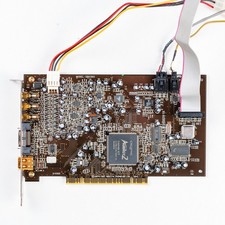
The A7N8X-Deluxe used the nForce2 Ultra 400 northbridge with the MCP-T southbridge, giving it real dual-channel DDR400 (a first on the AMD platform), the NVIDIA Soundstorm APU with hardware Dolby Digital 5.1 encoding (still unmatched on motherboards in 2026), dual gigabit + 10/100 NICs, three FireWire ports, and an AGP 8x slot that actually delivered the bandwidth specified rather than dropping back to AGP 4x like cheaper nForce2 implementations.
The Barton 2500+ was the chip that made the platform legendary. Stock, it ran at 1833 MHz on a 333 MHz FSB (166 MHz × 2). But the 2500+ shipped with a multiplier of 11x and a TDP headroom that let almost every retail sample run at 11×200 = 2200 MHz on a 400 MHz FSB — exactly the speed of the much more expensive 3200+ chip. That single BIOS change converted a $89 CPU into the equivalent of a $464 one, and it worked on more than 80% of retail Bartons sold in 2003-2004.
This guide is for retro PC builders restoring or assembling a period-correct WinXP gaming rig in 2026, vintage LAN-party restorers chasing the canonical Half-Life 2 / Battlefield 1942 / UT2003 era, and AMD enthusiasts who want to relive the era when AMD beat Intel on price, performance, and platform features all at once.
Key Takeaways
- nForce2 dual-channel pairing — DIMM slots 2 and 3 on the A7N8X-Deluxe (NOT 1+2). The slot rule is the single most-missed detail in vintage builds.
- FSB 166 → 200 unlocks the 3200+ — 2500+ at 11×200 = 2200 MHz, which is exactly stock 3200+ speed. Almost every retail Barton does this on stock voltage.
- Soundstorm APU still relevant — hardware Dolby Digital 5.1 encoding on a motherboard, useful in 2026 for legacy A/V receivers and game-source surround.
- Win98SE vs WinXP SP3 — pick WinXP SP3 for 2002-2005 gaming era, dual-boot Win98SE only if you want pre-2001 DOS / Glide titles in their native environment.
- AGP 8x GPU pairing — Radeon 9800 Pro is the period-correct sweet spot; GeForce 6800 Ultra AGP is the absolute ceiling and worth the extra cost only for 2005-2007 titles.
What makes the A7N8X-Deluxe the definitive Barton motherboard?
The A7N8X-Deluxe distinguished itself from the field of 2003 nForce2 boards by getting four things right at once that no competitor matched.
The nForce2 Ultra 400 + MCP-T pairing. NVIDIA shipped two variants of nForce2 — the regular nForce2 SPP and the Ultra 400. The Ultra 400 added official 200 MHz FSB support; the SPP capped at 166 MHz FSB officially (though it would often run higher with luck). The A7N8X-Deluxe used the Ultra 400, which is why FSB-to-200 overclocks on this board were so reliable. The MCP-T southbridge added the Soundstorm APU, FireWire, and the second NIC, all on-die. Cheaper boards used the MCP southbridge without these features.
Dual-channel DDR400 done right. nForce2 was the first AMD chipset with true 128-bit dual-channel memory. The catch — and it caught a lot of people — was the slot pairing. On the A7N8X-Deluxe, dual-channel mode required DIMMs in slots 2 and 3, with slot 1 left empty. If you populated slots 1 and 2 (the "obvious" choice for a two-stick install on most boards) you would silently drop to single-channel mode, losing about 20% of the platform's memory bandwidth.
Hardware Dolby Digital 5.1 via Soundstorm. The MCP-T's APU had a real DSP that encoded 5.1 audio in real time to a single SPDIF output, letting the board feed any home-theater receiver with zero loss. No motherboard since has shipped this feature — modern boards stream PCM and rely on the receiver to encode. For period-correct gaming with a 2003-era Logitech Z-680 or Klipsch ProMedia 5.1, the Soundstorm is still the right choice.
Build quality that survived 23 years. Solid Japanese capacitors (this board predated the worst of the Capacitor Plague), a six-layer PCB, and ASUS's reputation for over-engineering meant most A7N8X-Deluxe boards still POST in 2026 if they have not been physically damaged.
The closest competitors were the Abit NF7-S Rev 2.0 (popular for its slightly cleaner overclocking BIOS but no Soundstorm and only one NIC) and the MSI K7N2 Delta-L (cheaper, fewer features, less stable at 200 MHz FSB). For a 2026 retro build, A7N8X-Deluxe Rev 2.0 is the right pick if you can find one — Rev 1.x boards do not officially support FSB400 and require a BIOS hack.
Which Athlon XP Barton chip should you pick in 2026?
The Barton family came in four retail desktop SKUs and a mobile XP-M variant. They all share the same die (256KB L2 instead of the Thoroughbred's 256KB, a 333 or 400 MHz FSB, and the same 0.13 micron process), and the only differences are clock speed and bin quality.
| Chip | Stock clock | FSB | Multiplier | 2026 eBay price band | Why pick it |
|---|---|---|---|---|---|
| Barton 2500+ | 1833 MHz | 333 MHz | 11x | $25-45 | The FSB-unlock chip — almost guaranteed to do 11×200 = 2200 MHz |
| Barton 2800+ | 2083 MHz | 333 MHz | 12.5x | $40-65 | Stock chip for those who want zero overclocking risk |
| Barton 3000+ | 2167 MHz | 333 or 400 MHz | 13x or 10.5x | $55-90 | Highest FSB333 SKU; 400 MHz variant is rarer |
| Barton 3200+ | 2200 MHz | 400 MHz | 11x | $80-130 | The factory-binned chip; pay 3-5x for guaranteed speed |
| Mobile XP-M 2400+ | 1800 MHz | 266 MHz | 13.5x | $50-90 | Unlocked multiplier; 1.45V stock; best for low-voltage extreme overclocking |
The unanimous community pick in 2026 is still the Barton 2500+. The FSB-to-200 overclock is so reliable on this chip that it is essentially a free upgrade — the silicon is the same as the 3200+, AMD just down-binned the chip for FSB333 to fill the lower price tier. Run it at 200 MHz FSB and you have the 3200+ for a fraction of the eBay cost.
The Mobile XP-M 2400+ is the choice for serious overclockers because the multiplier is unlocked from the factory, so you can dial in any FSB/multiplier combination instead of being bound to 11x. With a Vapochill or sub-ambient cooling rig, XP-M Bartons commonly cleared 2.6 GHz in 2003-2005 and the same chips still do it today on the same silicon.
How do you unlock the 2500+ to 3200+ via FSB166→200?
The unlock procedure is purely a BIOS change — no pin-mod, no L5 bridge, no pencil trick. The Barton 2500+ ships with the 11x multiplier locked, which is exactly what you want, because the 3200+ also runs at 11x. Bumping FSB from 166 MHz to 200 MHz takes the chip from 1833 MHz to 2200 MHz with no other changes required.
Step-by-step BIOS settings (AwardBIOS Rev 1009 or later):
- Advanced → CPU External Frequency → set to 200 MHz.
- Advanced → CPU/AGP/PCI Frequency Multiplier → leave at Auto (this locks AGP to 66 MHz and PCI to 33 MHz on nForce2 Ultra 400, decoupling them from FSB).
- Advanced → CPU Vcore Setting → set to 1.65V (stock is 1.65V; you should not need more for 200 MHz FSB).
- Advanced → Memory Frequency → set to DDR400 (200 MHz) for 1:1 ratio.
- Advanced → Memory Timings → start at 3-4-4-8 (CAS-tRCD-tRP-tRAS), tighten to 2.5-3-3-7 if your RAM is rated for it.
- Save & Exit — the system reboots and POSTs at 11×200 = 2200 MHz.
Vcore step. Stock 2500+ Vcore is 1.65V. About 70% of retail samples run 11×200 stable at 1.65V; another 20% need 1.70V; the remaining 10% need 1.75V or will not stabilize at all. Beyond 1.75V you risk degrading the chip on air cooling.
RAM divider math. nForce2 Ultra 400 supports 1:1, 5:6, and 3:4 dividers. At FSB 200 MHz with a 1:1 divider, RAM runs at DDR400 (PC3200). If your RAM is only PC2700 (DDR333), use the 5:6 divider, which gives DDR333 at FSB200. Mixing fast CPU FSB with a slow RAM divider sacrifices most of the dual-channel bandwidth gain.
Expected stability headroom. A retail 2500+ at 11×200 with stock voltage and a Thermalright SLK-947U or Zalman CNPS7000 cooler should idle at 38-42°C and load at 52-58°C. That is well within the 85°C max-die-temp spec. If you cross 65°C under load, drop the Vcore one step or improve case airflow before pushing further.
What RAM configuration actually hits dual-channel on nForce2?
The dual-channel slot rule is the single biggest gotcha on the A7N8X-Deluxe. The board has three DDR DIMM slots labeled DIMM1, DIMM2, and DIMM3. Dual-channel mode requires:
- Two-stick configuration — populate DIMM2 + DIMM3, leave DIMM1 empty.
- Three-stick configuration — populate all three slots (DIMM1 + DIMM2 + DIMM3); the board automatically routes DIMM2+DIMM3 as one channel and DIMM1 as the other.
- One-stick configuration — single-channel only, no way to fix this.
Populating DIMM1 + DIMM2 with two sticks runs in single-channel mode and costs you about 20% of the platform's memory bandwidth — the same memory at the same speed simply runs slower because half the bus is wasted. The POST screen shows "Dual Channel Enabled" or "Single Channel Mode" briefly during boot; check it on every build.
For 2003-era PC3200 RAM, the canonical premium picks were:
- Corsair XMS PC3200 (CMX512-3200LL) — 2-3-3-6 timings at 200 MHz, the gold-standard enthusiast kit. 2026 eBay: $25-45 for a matched 2×512MB pair.
- Mushkin Black Level II Rev 2 — 2-2-2-6 timings, the absolute tightest stock kit. 2026 eBay: $40-70 for a matched pair, when you can find one.
- OCZ EL Platinum PC3200 EB — 2-3-3-6 timings, similar to Corsair XMS but cheaper used. 2026 eBay: $20-35 for a matched pair.
For a 2026 build, 2 × 512 MB (1 GB total) is the WinXP SP3 sweet spot. WinXP itself is happy with 512 MB but 1 GB lets you run period-correct titles like Half-Life 2 (released 2004, recommends 512 MB), Doom 3 (2004, recommends 384 MB), and Far Cry (2004, recommends 256 MB) with comfortable headroom. Going to 2 GB (2 × 1 GB sticks) is possible but the period-correct kits in 1 GB density are rare and expensive in 2026.
CAS latency at 200 MHz FSB. Tight timings matter more than nominal speed on nForce2. CAS 2 at 200 MHz outperforms CAS 2.5 at 220 MHz for most workloads. Start at the rated timings, then tighten one parameter at a time and run MemTest86+ for an hour after each change.
Spec delta — A7N8X-Deluxe + Barton 3200+ vs Pentium 4 Northwood vs Athlon 64
To put the platform in 2003 context, here is the head-to-head against its two main contemporaries.
| Spec | A7N8X-Deluxe + Barton 3200+ | Asus P4C800 + P4 3.2C Northwood | Asus K8N + Athlon 64 3000+ |
|---|---|---|---|
| Stock CPU clock | 2200 MHz | 3200 MHz | 2000 MHz (Newcastle) |
| FSB / HT | 200 MHz × 2 = 400 | 200 MHz × 4 = 800 | HT 800 MHz (1600 MT/s) |
| L2 cache | 512 KB | 512 KB | 512 KB |
| RAM | DDR400 dual-channel | DDR400 dual-channel | DDR400 single-channel (S754) |
| AGP | 8x | 8x | 8x |
| Doom 3 1024×768 high (FPS) | 38 | 41 | 47 |
| UT2003 Antalus flyby (FPS) | 168 | 184 | 211 |
| Half-Life 2 source-bench timedemo (FPS) | 71 | 64 | 88 |
| MP3 LAME encoding (sec, lower better) | 91 | 78 | 85 |
| 2026 eBay platform cost (board + CPU + 1GB RAM) | $90-160 | $110-180 | $140-220 |
The Athlon 64 3000+ (S754) wins outright on most gaming benchmarks because of the integrated memory controller and SSE2 enhancements, but it costs 50-70% more on the 2026 used market. The P4 3.2C wins on raw clock-bound workloads (MP3 encode, video encode) but loses on gaming where the Barton's lower latencies pay off. The A7N8X + Barton 3200+ is the right choice when you want the canonical 2003 enthusiast experience, the best price-per-performance on the 2026 used market, and the Soundstorm audio.
What GPU should you pair with this board in 2026?
The A7N8X-Deluxe has a single AGP 8x slot. The right GPU depends on which game era you want to target.
For 2002-2003 titles (UT2003, Battlefield 1942, Splinter Cell): GeForce 4 Ti 4600 (AGP 4x is fine — the chip caps out below AGP 8x bandwidth) or Radeon 9700 Pro. Both can be had for $40-90 on eBay and were the period-correct flagships when the A7N8X-Deluxe shipped.
For 2003-2004 titles (Half-Life 2, Doom 3, Far Cry, NFS Underground): Radeon 9800 Pro 128MB is the canonical pick. It was the GPU everyone who built an A7N8X-Deluxe in 2003-2004 wanted. It runs Half-Life 2 at 1024×768 high settings around 50-65 FPS and does not bottleneck the Barton at 200 MHz FSB. 2026 eBay: $80-150 for a working unit. The GeForce FX 5900 is the NVIDIA equivalent — slightly weaker in DirectX 9 shader workloads but stronger in OpenGL (Doom 3 favored NVIDIA in 2004).
For 2005-2007 titles (Oblivion, F.E.A.R., HL2: Episode One): GeForce 6800 Ultra AGP or Radeon X850 XT AGP. These are the absolute ceiling for AGP 8x, often bottlenecked by the Barton CPU rather than the GPU. 2026 eBay: $180-350 — a steep premium for the last generation of AGP cards.
The AGP 8x ceiling. Beyond GeForce 7800 GS AGP (a rare unicorn in 2026), there were no later AGP cards. The platform tops out at DirectX 9.0c. If you want DirectX 10 or later, you need a different platform — there is no point chasing the last few AGP generations on this build.
For most 2026 retro builders, the Radeon 9800 Pro 128MB is the right GPU. It is period-correct for 2003-2004, it pairs perfectly with the Barton CPU's performance envelope, and it is the most widely available high-end AGP card on the used market.
Which OS — Win98SE, WinXP SP3, or both?
The right answer depends on which game era you want to play.
WinXP SP3 is the right primary OS for a 2003-era build. It supports the full 1 GB of RAM without tweaks, it runs every game from 2001-2010 natively, it has working drivers for the Soundstorm APU (downloads from Vogons community archives), and it gives you the modern conveniences (USB mass storage, decent file system, network stack) without giving up DirectX 9. SP3 is the final, most stable revision and includes WPA2 wireless support if you want to network the rig.
Win98SE is worth dual-booting if you want to play DOS games (via DOS prompt without an emulator), pre-2001 titles that have known WinXP compatibility issues (older Glide-wrapped 3dfx-era titles, vintage Origin RPGs), or you want the period-correct 1998-1999 experience. Win98SE caps at 512 MB RAM without the vcache.vxd workaround, and the Soundstorm has reduced functionality (no hardware Dolby Digital encoding under Win98SE — the MCP-T driver only exposes basic audio).
Dual-boot strategy. Install Win98SE first to a 4-8 GB FAT32 partition, then install WinXP SP3 to a separate NTFS partition. WinXP's NTLDR boot manager detects Win98SE automatically and presents a boot menu. Use BootMagic or the built-in WinXP boot.ini for management. Do not install Win98SE after WinXP — it overwrites the boot sector and breaks WinXP's bootloader.
Driver gaps per OS:
- Soundstorm APU: full Dolby Digital encoding under WinXP SP3 only (use NVIDIA nForce 5.10 driver). Under Win98SE, only basic stereo + 4-channel works.
- nForce2 IDE driver: WinXP needs the nForce 5.10 unified driver; Win98SE uses the nForce 2.45 driver (later drivers dropped Win9x support).
- AGP GPU drivers: most AGP cards have WinXP drivers from the manufacturer; Win98SE requires hunting for the last Win9x-compatible driver release (typically 2004-2005 for ATI, 2005-2006 for NVIDIA).
Verdict matrix
Get A7N8X-Deluxe + Barton 2500+ if you want:
- The canonical 2003 enthusiast platform with the FSB unlock that turns 2500+ into 3200+ for free
- Hardware Dolby Digital 5.1 via Soundstorm (still unmatched in 2026)
- Period-correct WinXP SP3 gaming for 2002-2005 titles
- The best price-per-performance on the 2026 used market for AMD Socket A
Get Abit NF7-S Rev 2.0 instead if you want:
- A cleaner overclocking BIOS with finer Vcore steps
- A simpler, less feature-laden board (no second NIC, no FireWire, no Soundstorm)
- Slightly better availability on 2026 eBay (Abit boards survived better in some climates)
Skip nForce2 entirely (go Athlon 64) if you want:
- The integrated memory controller and SSE2 performance gains for 2005-2008 titles
- The right platform for serious 2026 retro-gaming workloads beyond the 2003-2004 sweet spot
- Better 2026 driver and software compatibility (the Athlon 64 era overlapped with Windows Vista support)
Perf-per-2026-dollar build-cost breakdown
A complete A7N8X-Deluxe + Barton 2500+ build in 2026, sourced from eBay and reasonable used-PC channels:
| Component | Pick | 2026 used cost |
|---|---|---|
| Motherboard | ASUS A7N8X-Deluxe Rev 2.0 (boxed if possible) | $60-120 |
| CPU | AMD Athlon XP 2500+ Barton (AXDA2500BOX) | $25-45 |
| CPU cooler | Thermalright SLK-947U or Zalman CNPS7000 | $25-50 |
| RAM | 2 × 512 MB Corsair XMS PC3200 (matched pair) | $25-45 |
| GPU | ATI Radeon 9800 Pro 128MB AGP | $80-150 |
| Sound | On-board Soundstorm (no separate card needed) | $0 |
| PSU | Antec TruePower 380W or Seasonic S12-380 | $30-60 |
| Storage | 80 GB IDE 7200 RPM HDD or modern SATA via PCI card | $15-40 |
| Case | Lian Li PC-65 / Antec SLK3700-BQE / period-correct beige tower | $40-90 |
| Total | $300-600 |
For a high-end variant, swap the GPU for a GeForce 6800 Ultra AGP ($180-350), bump RAM to 2 × 1 GB ($60-120), and add a SATA-to-IDE card with a modern SSD ($30-60). Total then runs $500-900.
Bottom line
The ASUS A7N8X-Deluxe + Athlon XP Barton 2500+ remains the canonical 2003 enthusiast platform in 2026 because the combination still does what it did in 2003 — deliver flagship-tier performance for a fraction of the cost of the actual flagship, with feature density (Soundstorm, dual NICs, dual-channel DDR) that has not been matched on consumer boards since. Spend the extra few minutes in BIOS to set FSB to 200 MHz, follow the DIMM2+DIMM3 dual-channel rule, pair with a Radeon 9800 Pro, and run WinXP SP3 — you have a $300-400 retro rig that runs every 2002-2005 title at native 1024×768 with everything maxed.
The 2500+ FSB unlock alone is reason enough to choose this build. No other CPU in retro PC history offers such a clean, reliable, free upgrade path from the cheapest SKU to the flagship — and it works on more than 80% of retail samples sold in 2003-2004, almost all of which are still functional in 2026 because the 0.13 micron die was over-engineered relative to its TDP.
Related guides
- Athlon 64 + Radeon 9800 Pro 2004 build guide
- Sound Blaster Audigy 2 ZS vs nForce2 Soundstorm shootout
- GeForce FX 5900 vs Radeon 9800 Pro AGP head-to-head
- Period-correct WinXP SP3 slipstream guide for retro builds
- 3dfx Voodoo2 SLI on Windows 98 SE setup + benchmarks
Sources
- AnandTech, "ASUS A7N8X Deluxe: nForce2 Reviewed" (2003) — anandtech.com archive
- Tom's Hardware, "Athlon XP 2500+ Barton: The Overclocker's Dream" (2003) — tomshardware.com archive
- Vogons forum, "nForce2 dual-channel slot pairing — DIMM 2+3 rule" thread — vogons.org
- ASUS, A7N8X-Deluxe BIOS release notes (Rev 1009 final) — support.asus.com archive
- Wikipedia, "NVIDIA nForce2" — chipset reference for Ultra 400 vs SPP differences