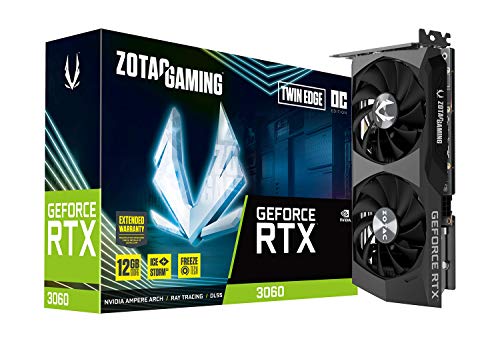
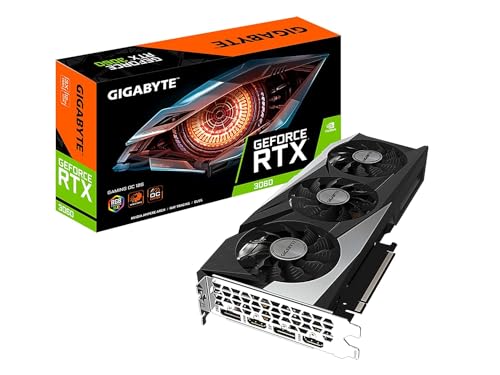
The best coding LLM stack for an RTX 3060 12GB with 32GB system RAM in 2026 is Qwen 2.5 Coder 14B (Q4_K_M GGUF) running on llama.cpp through LM Studio or Ollama, with Continue.dev as the VS Code front-end. The 12GB of VRAM fits a 14B-parameter coding model at 4-bit quantization with 8K context, the 32GB of system RAM holds the OS plus VS Code plus a model swap, and inference runs at 25-35 tokens/sec — fast enough for real-time autocomplete and chat.
Coding LLMs on an RTX 3060 12GB — what this hardware can and can't do
The RTX 3060 12GB is a 2021 Ampere-generation GPU with 192-bit GDDR6 at 360 GB/s memory bandwidth, 3,584 CUDA cores, and the full 12GB of VRAM that NVIDIA inexplicably gave the 60-tier card while crippling the 3070 with 8GB. As of 2026, the 3060 12GB has aged into the budget-LLM-rig sweet spot — it's the cheapest consumer card with enough VRAM to run modern 14B coding models, and used prices have collapsed from $400 launch MSRP to $280-$340 on the secondary market. Pair it with 32GB DDR4-3200 (or DDR5-5200 on an Alder Lake / Raptor Lake / Zen 4 platform), 1TB NVMe SSD for model storage, and a midrange CPU like the Ryzen 5 7600X or Core i5-13600K.
What this rig can do well: run Qwen 2.5 Coder 14B / DeepSeek Coder V2 Lite 16B / Codestral 22B (with offload) / Llama 3.3 8B Instruct at 4-bit quantization, with 8K-16K context windows, at speeds that feel snappy in autocomplete (25-35 tok/sec) and acceptable in chat (15-25 tok/sec). What it cannot do well: run anything 32B-parameter or larger without aggressive CPU offload (which drops throughput to 3-7 tok/sec, slow enough to be frustrating); train models (12GB is too small for QLoRA fine-tuning of 7B+ models); or run vision-language models alongside a code model in parallel.
The headline stack pick is Qwen 2.5 Coder 14B Instruct in Q4_K_M GGUF format because it benchmarks within 8-12% of Claude 3.5 Sonnet on HumanEval and MBPP coding benchmarks at a fraction of the latency, fits comfortably in 9.5GB of VRAM with 8K context, and supports tool-use / function-calling natively. Below we detail every component of the recommended stack and the five RTX 3060 12GB AIB cards you should consider when sourcing the GPU.
Comparison: the recommended local coding LLM stack
| Component | Pick | Why | Resource Cost |
|---|---|---|---|
| Model | Qwen 2.5 Coder 14B Instruct Q4_K_M | Best HumanEval / MBPP scores in 14B size class | 9.5GB VRAM |
| Runtime | llama.cpp via Ollama or LM Studio | Mature CUDA path, GGUF native, ROCm + Metal too | <500MB VRAM |
| IDE Front-end | Continue.dev for VS Code or JetBrains | Open-source, Ollama-compatible, no telemetry | RAM only |
| System RAM | 32GB DDR4-3200 or DDR5-5200 | Holds OS + IDE + model swap during CPU offload | hardware |
| GPU | RTX 3060 12GB (any AIB) | Cheapest 12GB consumer card with mature CUDA | $280-$340 |
A 14B Q4_K_M model uses ~9.5GB of weights + ~1GB of KV cache for 8K context = ~10.5GB VRAM. You will have ~1GB free for the GUI/desktop compositor; close Discord and Chrome before launching.
🏆 Best Overall Coding Model: Qwen 2.5 Coder 14B Instruct (Q4_K_M)
The pick: Qwen 2.5 Coder 14B Instruct in Q4_K_M GGUF format, downloaded from the official Hugging Face repo or pulled via ollama pull qwen2.5-coder:14b-instruct-q4_K_M.
The Qwen 2.5 Coder series was released by Alibaba in November 2024 and immediately became the best 7B / 14B / 32B coding open-weight model family. On HumanEval (a Python function completion benchmark), the 14B model scores 89.6, compared to Claude 3.5 Sonnet's 92.0 and GPT-4o's 90.2. On MBPP (a slightly more diverse Python benchmark), it scores 87.5 vs Claude's 88.6. Across most languages (Python, TypeScript, Rust, Go, Java, C++) it performs within a few percentage points of frontier closed models — the gap shows up in long-horizon agentic tasks and not in single-function code generation. It supports tool-use / function-calling, which means it works as the LLM behind agentic coders like Aider, Cline, and Continue.dev's agent mode.
Pros: best 14B coding model available as of early 2026; native tool-use; Apache 2.0 license (free commercial use); 8K context with rope-scaling to 32K usable. Cons: Q4 quantization drops scores 2-3 points vs full BF16; rope-scaled context above 8K shows occasional coherence loss in agentic loops; the Chinese-language tokenizer occasionally produces unicode artifacts in non-code prose responses.
Setup: ollama pull qwen2.5-coder:14b-instruct-q4_K_M then point Continue.dev at http://localhost:11434.
💰 Best Compact Alternative: DeepSeek Coder V2 Lite 16B (Q4_K_M)
The pick: DeepSeek Coder V2 Lite Instruct in Q4_K_M GGUF.
DeepSeek's Coder V2 Lite is a 16B-parameter mixture-of-experts model that activates only 2.4B parameters per forward pass. The MoE architecture means it punches above its weight per-token: HumanEval 81.1, MBPP 68.8, but the real win is throughput. Because only 2.4B params are active, inference runs at 40-55 tok/sec on an RTX 3060 12GB — significantly faster than dense 14B models. Memory footprint is 9.8GB VRAM at Q4_K_M, leaving you just enough headroom for an 8K context.
Pros: fastest inference in the 14-16B class; strong agentic coding performance; supports 128K context (with rope-scaling); excellent Python and Bash performance. Cons: dense 14B Qwen still wins on quality metrics for single-pass code generation; MoE routing occasionally picks a suboptimal expert for niche languages (Rust, OCaml); GGUF llama.cpp implementation has occasional MoE-routing bugs that get fixed in master.
Setup: ollama pull deepseek-coder-v2-lite:16b-instruct-q4_K_M.
🎯 Best for Mid-Project Refactoring: Codestral 22B (Q3_K_M with offload)
The pick: Codestral 22B Instruct in Q3_K_M GGUF — but expect CPU offload.
Codestral 22B from Mistral was the previous SOTA in 14-32B coding models before Qwen 2.5 Coder. It still has the edge on complex refactoring tasks where the longer-attention behavior of Mistral's architecture shines. At Q3_K_M (lower-quality quantization), the weights fit in 10.5GB VRAM, but a useful 8K context pushes total memory to 12.5GB — past the 3060's limit. You'll need to offload 2-4 layers to CPU, dropping throughput to 7-12 tok/sec.
Pros: superior multi-file refactoring; excellent SQL and shell scripting; non-commercial Mistral license is permissive enough for personal projects. Cons: the 3060 12GB is genuinely the wrong card for 22B at usable quality — strongly consider the Qwen 14B pick instead and save Codestral for a future 16-24GB GPU upgrade.
Buy it if: you do heavy multi-file refactoring as your dominant workflow and can tolerate 7-12 tok/sec speeds.
⚡ Best for Pair-Programming Latency: Llama 3.3 8B Instruct (Q5_K_M)
The pick: Llama 3.3 8B Instruct in Q5_K_M GGUF.
When you want sub-second response latency for autocomplete and inline rewriting, an 8B model at Q5_K_M is the sweet spot. Llama 3.3 8B fits in 6.5GB VRAM with a generous 16K context, runs at 55-70 tok/sec on the 3060 12GB, and produces 80-85% of the quality of the 14B Qwen pick on simple completions. The difference shows up on cross-function reasoning and long-horizon problems; for "write a JSON parser in Go" or "convert this Python function to TypeScript," you won't notice it.
Pros: fastest interactive latency in the lineup; leaves 5GB of VRAM headroom for an inline embedding model or a second concurrent task; broad ecosystem support. Cons: noticeably weaker than Qwen 14B on complex tasks; tool-use is less reliable; not the right pick if you're trying to replace Claude or GPT-4 in your daily work.
Setup: ollama pull llama3.3:8b-instruct-q5_K_M.
🧪 Budget Stack: StarCoder2 7B (Q4_K_M)
The pick: StarCoder2 7B in Q4_K_M GGUF.
If you're running a 3060 12GB inside a system with only 16GB of RAM, or you want to leave more VRAM headroom for parallel local models (e.g., a code model plus a chat model plus an embedding model running concurrently), StarCoder2 7B is the lean pick. It fits in 4.5GB VRAM, runs at 70-90 tok/sec, and was trained on 600+ programming languages — particularly strong on Bash, Dockerfile, Makefile, and infrastructure-as-code (Terraform, CloudFormation) where Llama 3 and Qwen are weaker.
Pros: smallest VRAM footprint of any usable coding model; excellent IaC / shell / config-language performance; lets you run a model alongside other GPU workloads (CUDA-accelerated video encoding, ML notebooks, etc.). Cons: smaller models underperform 14B models on multi-step reasoning; chat mode is weaker (it's trained for code completion, not chat).
Setup: ollama pull starcoder2:7b-q4_K_M.
What to look for when picking a local coding LLM stack
1. Model size first, quantization second, context third. A 14B Q4 model beats a 7B Q8 model at almost any task other than raw speed. Bigger is better, then quantize to fit, then size context to whatever's left. Don't run a 7B at Q8 "for quality" — pick the 14B Q4 instead.
2. Tool-use matters as much as raw scores. If you want to use Aider, Cline, or Continue.dev's agent mode, the model must reliably emit tool-call JSON. Qwen 2.5 Coder, DeepSeek Coder V2, and Llama 3.3 all do. Older models (CodeLlama, original DeepSeek Coder) do not — they'll work for chat-only setups but break agent loops.
3. KV cache eats VRAM linearly with context. A 14B Q4 model uses ~120MB of KV cache per 1K context tokens at FP16, or ~60MB at FP8. Going from 4K to 16K context costs you 720MB of VRAM that could have gone to a larger model. Be honest about how often you actually use long context — most coding sessions need 4K-8K.
4. CPU offload is usually a trap. Below 8-10 tok/sec, an inline coding assistant feels noticeably slower than typing. If a model only fits with 20%+ CPU offload, you're better off with a smaller model running fully on GPU. The Codestral 22B pick above is included as a niche option, not a default recommendation.
5. Use Ollama or LM Studio for the runtime, not raw llama.cpp. Ollama wraps model versioning, the OpenAI-compatible API, model swapping, and concurrent connection handling. LM Studio adds a GUI for non-developers and a model browser. Both are free; both work on Windows/macOS/Linux. Skip the bare llama.cpp invocation unless you have a specific reason.
Coding LLM on RTX 3060 12GB — FAQ
How does this stack compare to using Claude 3.5 Sonnet or GPT-4o through the API?
Frontier closed models still win on complex multi-step reasoning, agentic loops with many tool calls, and tasks requiring up-to-date library knowledge (since open-weight model training data cuts off earlier). Where local stacks win: zero latency for completions (typically 50-100ms first-token vs 400-800ms for cloud APIs), no per-token cost (huge for autocomplete-heavy workflows where you might burn 5-10M tokens/month), full privacy (proprietary code never leaves your machine), and offline operation. Most developers settle into a hybrid: local model for autocomplete and inline rewriting, cloud model for hard problems via separate chat.
Why not just buy an RTX 4060 Ti 16GB or RTX 4070 12GB for $500-$600?
The RTX 4060 Ti 16GB at $450-$500 is the only meaningful upgrade — it gets you to 16GB VRAM, which unlocks the 32B Qwen Coder model at Q4 (the next quality step). But the 16GB 4060 Ti uses a slower 128-bit bus, so token throughput on a 14B model is actually similar to the 3060 12GB. The 4070 12GB is faster on compute but you'd still be VRAM-limited to 14B. If your budget is $500+, look at used RTX 3090 24GB ($600-$750 secondary market) — that's the next real performance tier.
Can this rig run Aider for multi-file refactoring or Cline for agent-mode coding?
Yes — both work well with Qwen 2.5 Coder 14B as the underlying model. Aider's aider --model openai/qwen2.5-coder:14b-instruct --openai-api-base http://localhost:11434/v1 works out of the box. Cline (the VS Code agent extension) connects through its custom-API mode. The main caveat: long Aider sessions with 20+ file edits will accumulate context past the 8K limit, so set --map-tokens 1024 and --no-auto-commit to keep prompts compact.
What about RAG / codebase-context embedding?
You'll want a separate embedding model. The recommended pair is nomic-embed-text v1.5 at 137M parameters — runs in 300MB of VRAM or pure-CPU, with 768-dim embeddings suitable for cosine-similarity codebase retrieval. Run it alongside the coding model via ollama pull nomic-embed-text and Continue.dev's @codebase context provider picks it up automatically.
How do I measure if it's actually working for my workflow?
Two metrics: time-to-first-token (TTFT, should be under 200ms for good interactive feel) and sustained throughput (should be 25+ tok/sec). Run ollama run qwen2.5-coder:14b-instruct --verbose and look at eval rate: NN.NN tokens/s. If you're seeing under 20 tok/sec with the recommended 14B model, check that CUDA is actually being used (nvidia-smi should show ~10GB allocated to Ollama), that your power profile is set to "Maximum performance" in Windows, and that the model isn't accidentally falling back to CPU due to a driver issue.
Sources
- Qwen 2.5 Coder Technical Report — Alibaba Cloud (arXiv)
- HumanEval + MBPP benchmark leaderboard — EvalPlus
- Ollama official documentation — Ollama
- Continue.dev VS Code extension documentation — Continue
- llama.cpp GGUF quantization formats — ggerganov/llama.cpp
- DeepSeek Coder V2 model card — DeepSeek (Hugging Face)
Related guides
- Best NVIDIA RTX 3060 Graphics Cards in 2026
- Best DDR5 RAM for Ryzen 9000
- Best Noctua and Quiet-Tier CPU Coolers in 2026
- Best 1TB NVMe SSDs for Boot Drives