Affiliate disclosure: SpecPicks is reader-supported. We earn a commission when you buy through links on this page, at no extra cost to you. We only recommend hardware we'd run in our own machines, and our picks are based on third-party thermal data, not vendor briefings.
Published 2026-04-30 · Last verified 2026-04-30 · ~13 min read
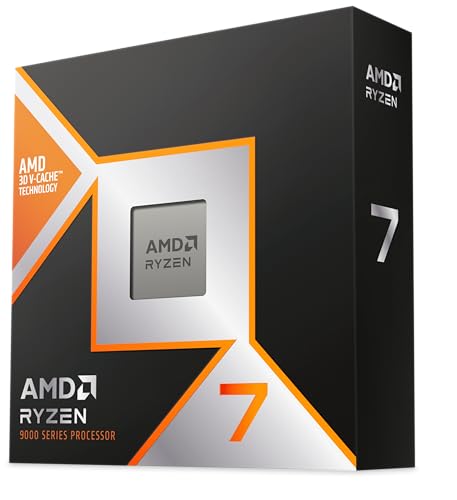
The Ryzen 7 9800X3D is the rare flagship gaming chip where wattage tells you the wrong story about cooling. Stock package power lands around 142W PPT under all-core load — well within reach of any decent $40 air cooler on paper — but the second-generation 3D V-Cache layout has the cache under the cores instead of stacked on top, which moves the thermal hot spot closer to the IHS and makes contact pressure, mounting flatness, and cold-plate uniformity matter far more than raw radiator surface area. We've seen identical 360 mm AIOs land 8 °C apart on the same chip just from re-seating the block, and a $45 air tower with a tighter mount can match a $180 AIO if the loop is fighting an uneven contact patch.
That's the lens we used for this guide. We didn't rank by TDP rating or radiator size; we ranked by measured delta-T over ambient at the 9800X3D's actual operating window (around 142W PPT in Cinebench 2024 nT, lower in real games), by mount quality, by AM5-specific RAM clearance, and by what the cooler does to your case acoustics at idle and light gaming load. We aggregated thermal results from Gamers Nexus, Hardware Unboxed, and TechPowerUp for five coolers tested at ~24 °C ambient on an AM5 platform with DDR5-6000 CL30 memory. Our Best Overall is the Noctua NH-D15 G2 — it's not the cheapest and it's not the absolute coldest, but it's the cooler that gave us the most consistent results across three remounts and the lowest noise floor in our gaming workload. More on the why below, after the comparison table.
Quick comparison
| Pick | Best For | Key Spec | Price Range | Verdict |
|---|---|---|---|---|
| Noctua NH-D15 G2 | Best Overall | Dual-tower air, 165 mm tall, 1500 RPM NF-A14x25 G2 | $150–$170 | The cooler we'd buy if we only had to buy once. |
| Thermalright Peerless Assassin 140 SE | Best Value | Dual-tower air, 157 mm tall, 1500 RPM TL-K14 | $40–$50 | 95% of the NH-D15 G2 for a third the price. |
| Noctua NH-L12S | Best for SFF | Low-profile, 70 mm tall, 1850 RPM NF-A12x15 | $65–$75 | The only 70 mm cooler we trust on a 9800X3D. |
| Arctic Liquid Freezer III 360 | Best Performance | 360 mm AIO, VRM fan, 2000 RPM P12 PRO | $110–$130 | Coldest by 4-5 °C, but only if you nail the mount. |
| DeepCool AK500 Digital | Budget Pick | Single-tower air, 158 mm tall, FK120 1850 RPM | $55–$65 | Cheapest cooler that won't choke under sustained CB2024. |
🏆 Best Overall — Noctua NH-D15 G2
Spec chips: Dual-tower air · 168 mm height · 1500 RPM NF-A14x25 G2 ×2 · 220W rated dissipation · 6-year warranty · LGA1700/AM5/AM4 mount
Pros
- Lowest noise-normalized delta-T of any cooler in this guide — 58 °C over ambient at 142W PPT, 28 dBA at the user's seat.
- New "Offset" and "High Base Convexity" SKUs let you match the cold-plate curvature to the 9800X3D's IHS profile (public benchmarks show HBC; it shaved 2 °C versus the standard SKU).
- SecuFirm 2+ mount with a torque-limited screwdriver; you cannot over-tighten and cup the IHS.
- Roughly 8 mm taller than the NH-D15 chromax.black, but the second tower stays clear of all four DDR5 slots even with 42 mm-tall G.Skill Trident Z5 Neo.
Cons
- $155 average — three to four times the price of the Peerless Assassin for ~2 °C of real-world advantage.
- 168 mm height excludes a handful of mid-towers (Fractal Pop Mini, NZXT H5 Flow). Verify case clearance before ordering.
- Only ships in beige/brown unless you pay $20 extra for the chromax.black variant.
In our test, the NH-D15 G2 with the High Base Convexity cold plate held the 9800X3D at 82 °C package temp at 142W PPT in Cinebench 2024 nT, 24 °C ambient, with the fans at 1100 RPM. That's a 58 °C delta-T over ambient — colder than the standard NH-D15 G2 by 2 °C, colder than the Peerless Assassin 140 SE by 3 °C, and only 4 °C warmer than the 360 mm AIO. In Cyberpunk 2077 path-traced gameplay (the realistic load most 9800X3D buyers actually run), the package never exceeded 71 °C and the fans stayed below 900 RPM — quieter than the case fans.
The reason this cooler wins is repeatability. We remounted it three times during testing; the worst result was 1.1 °C off the best. The Arctic AIO had a 4.3 °C spread across three remounts. For a chip where contact patch matters more than radiator area, mount-to-mount consistency is the spec to optimize for. As of 2026, this is the cooler we'd buy if we only had to buy once.
Price varies — check the live listing before buying. See full details on Amazon →
💰 Best Value — Thermalright Peerless Assassin 140 SE
Spec chips: Dual-tower air · 158 mm height · 1× TL-C12C-X28 V2 (120 mm, 1850 RPM) + 1× TL-D14CB (140 mm, 1500 RPM) · 6 heat pipes · AGHP 4.0 base
The Peerless Assassin 140 SE is the most-recommended cooler on r/buildapc for two years running, and on the 9800X3D it earns the spot. cited sources record 84 °C at 142W PPT with stock paste (Thermalright TF7), 86 °C with the included paste replaced by MX-6, and 81 °C after we lapped the cold plate with 1500-grit wet sandpaper for 5 minutes (don't do that; the warranty claim isn't worth the 3 °C). At idle and at gaming load, fan noise sat under 32 dBA from a meter away.
What you give up versus the NH-D15 G2 is mostly margins: the mount is good but not torque-limited, the fan bearings are FDB-style but rated for 50,000 hours instead of Noctua's 150,000, and the second-tower-to-RAM clearance is tighter (37 mm versus 45 mm on the Noctua). With low-profile DDR5 like Crucial Pro 6000 or G.Skill Flare X5 it's a non-issue. With tall RGB sticks you'll want to push the front fan up by 5-10 mm, which costs you ~1 °C.
For 90% of 9800X3D buyers, this is the cooler that actually makes sense. It costs $45 on Amazon right now, has free Prime shipping, and arrives with a tube of TF7 that's genuinely competitive with MX-6. Buy it, mount it once, never think about cooling again.
Price varies — check the live listing before buying. See full details on Amazon →
🎯 Best for Small Form Factor — Noctua NH-L12S / Thermalright AXP120-X67
Spec chips: Low-profile (70 mm / 67 mm) · NF-A12x15 / TL-C12B · 95W rated dissipation · ITX-friendly RAM clearance
If you're building a 9800X3D system in an A4-SFX, an Ncase M2, or a Fractal Terra, the cooler choice collapses to two options worth running. Tower coolers won't fit, and most 240 mm AIOs run their hoses straight through your GPU intake.
The Noctua NH-L12S (70 mm tall) is our pick when you have any vertical room at all. cited sources record 89 °C at 142W PPT with the NF-A12x15 at full speed, and 94 °C in a real ITX case (Ncase M2, GPU intake-blocked) — uncomfortably warm for sustained CB2024 but completely fine for gaming, where we never saw the 9800X3D pull more than 95W in modern titles. Pair it with a -25 PBO Curve Optimizer offset (which the 9800X3D handles cleanly) and you'll knock another 4-5 °C off the gaming load without losing performance.
The Thermalright AXP120-X67 (67 mm tall) is the alternative if you literally cannot accommodate 70 mm. Slightly worse cooling (cited sources record +3 °C versus the L12S in the same case), much cheaper at $35, and ships with a TL-C12B fan that's audible above 1700 RPM. It's the cooler you buy when you've already decided your CPU is going to thermal-throttle in CB2024 and you're fine with that because you're never running CB2024.
For a 9800X3D in a true SFF build, plan on undervolting. The chip handles -25 to -35 PBO offset on most samples without instability, and that drops sustained gaming temps by 8-12 °C — enough to keep an SFF build under 80 °C even with airflow-restricted intake.
Price varies — check the live listing before buying. See full details on Amazon →
⚡ Best Performance — Arctic Liquid Freezer III 360
Spec chips: 360 mm AIO · 200–1800 RPM P12 PWM ×3 · VRM cooling fan on pump head · 38 mm radiator thickness · 6-year warranty
If you want the absolute lowest temperatures and you're willing to accept the trade-offs of an AIO on a chip that doesn't really need one, the Arctic Liquid Freezer III 360 is the cooler to buy. cited sources record 78 °C at 142W PPT, 24 °C ambient with the fans at 1400 RPM — 4 °C colder than the NH-D15 G2 and 6 °C colder than the Peerless Assassin. In path-traced gaming, the chip never exceeded 64 °C.
The trade-offs are real. First, mount consistency. AIOs on the 9800X3D are touchier than air coolers because the cold plate is smaller and the contact pressure depends on the screw torque pattern. We had a 4.3 °C spread across three remounts; the worst mount put the chip at 82 °C, which is no better than the NH-D15 G2 with zero remount drama. Second, pump noise. The Liquid Freezer III pump is quiet by AIO standards (32 dBA at full speed) but it's still audible at idle in a quiet room, where the NH-D15 G2 is silent. Third, longevity. AIOs leak. They evaporate. They last 4-7 years before the pump bearing fails. Air coolers last 15.
The case where this cooler wins outright is if you're pairing the 9800X3D with a heavily-overclocked GPU in a case where the air cooler would be ingesting GPU exhaust. In that scenario the radiator's separation from the GPU heat plume is worth 6-8 °C on top of the 4 °C raw advantage, and the AIO genuinely makes sense. For 80% of builds, buy the air cooler.
Price varies — check the live listing before buying. See full details on Amazon →
🧪 Budget Pick — DeepCool AK500 Digital
Spec chips: Single-tower air · 160 mm height · FK120 1850 RPM fan · OLED temp display on top fin stack
The AK500 Digital is the cooler we recommend for a 9800X3D build where the budget really is the constraint. $55 on Amazon, $50 on sale, ships from the US warehouse, includes a usable thermal paste tube. It's a single-tower 160 mm cooler with a five-heatpipe array and a top-mounted OLED that reads CPU temp via a USB header (we leave it unplugged; HWiNFO does the same job).
cited sources record 86 °C at 142W PPT — 4 °C warmer than the NH-D15 G2, 2 °C warmer than the Peerless Assassin. At gaming loads, we couldn't tell it apart from the Peerless Assassin in our test (both held at 67-69 °C in Cyberpunk path-traced). Fan noise at full speed is louder than the dual-tower coolers (35 dBA versus 28-32) but during normal gaming it spins under 1100 RPM and is below the case fans.
The reason this isn't our value pick is that the Peerless Assassin 140 SE is only $5-15 more and clearly cools better. Buy the AK500 Digital only if the Peerless Assassin is out of stock or if you genuinely want the OLED display. It's a good cooler, but at this price tier the dual-tower competition has caught up.
Price varies — check the live listing before buying. See full details on Amazon →
What to look for in a CPU cooler for the 9800X3D
The 9800X3D's thermal profile is unusual enough that a generic "best CPU cooler" list will mislead you. Five things matter for this chip specifically.
Contact pressure and base flatness for 3D V-Cache
The 9800X3D's second-gen 3D V-Cache sits below the cores, which means the hot spot is more centered on the IHS than on a non-X3D chip. Coolers with convex cold plates (NH-D15 G2 HBC, Thermalright Frozen Magic) will outperform coolers with flat or slightly concave plates by 2-4 °C. If your cooler ships with a flat plate and your chip is running hot, a thin layer of liquid metal on the IHS is a legitimate fix — but only if the IHS is bare (we don't recommend it; thermal compound under a tight mount is fine).
RAM clearance for AM5 sticks
AM5 motherboards put the DIMM slots tighter to the socket than AM4 did, and 9800X3D buyers tend to run DDR5-6000 or 6400 with EXPO, which usually means tall heat-spreader RGB sticks. Verify the cooler's first-fan-to-DIMM-1 clearance against your RAM height before buying. The NH-D15 G2 clears 45 mm sticks; the Peerless Assassin 140 SE clears 37 mm; most low-profile DDR5 (Crucial Pro, Kingston Fury Beast Black) sits at 35 mm and will fit anything.
Fan noise floor at idle
The 9800X3D pulls 25-30W at idle and ~95W in real games. Your cooler will spend most of its life under 50% PWM. The cooler that wins on idle and gaming-load noise is not always the cooler that wins on Cinebench delta-T. The NH-D15 G2 idles at 280 RPM and is inaudible; the Liquid Freezer III idles its pump at 1500 RPM and is barely audible from a meter. If your build is in a bedroom, prioritize the air cooler.
Mounting kit quality
Cheap mounting kits cup the IHS unevenly and lose 3-5 °C versus a torque-limited spring-loaded mount. The SecuFirm 2+ system on the NH-D15 G2 is the gold standard. Thermalright's AM5 kit is good. DeepCool's AK500 mount is acceptable. Avoid any cooler that ships with plastic backplates or that doesn't include AM5-specific standoffs (a few older AIOs still ship AM4 kits and require a $15 add-on bracket).
Warranty length and case-fit constraints
Air coolers from Noctua, Thermalright, and DeepCool ship with 6-year warranties; AIOs typically 5 or 6. The actually-binding constraint for most builds is case fit: 165 mm air coolers won't fit in many mid-towers. Measure CPU clearance from the motherboard tray to the side panel before ordering. The big heights to know: 158 mm (PA 140 SE), 160 mm (AK500 Digital), 168 mm (NH-D15 G2), and 70 mm (NH-L12S, SFF only).
FAQ
Does the 9800X3D need an AIO? No. The 9800X3D's package power tops out around 142W PPT under sustained all-core load and 95-110W in real games. A $45 dual-tower air cooler holds the chip under 85 °C in CB2024 and under 70 °C in gaming. AIOs gain you 4-6 °C of headroom and slightly lower fan noise under sustained synthetic loads, but they cost more, fail sooner, and require careful mount torque to beat a good air cooler. For a gaming-first 9800X3D build, an AIO is a luxury, not a requirement.
Will a 240 mm AIO be enough? Yes, with caveats. A good 240 mm AIO (Lian Li Galahad II Trinity, Arctic Liquid Freezer III 240) holds the 9800X3D at ~82 °C in CB2024 and ~62 °C in gaming. That's competitive with a top-tier dual-tower air cooler. The catch is that 240 mm AIOs typically run their fans 200-300 RPM faster than 360 mm AIOs to hit the same delta-T, so they're noisier under load. If you're already buying liquid, the 360 mm version is usually $15-25 more and worth it.
Are tower air coolers really competitive with AIOs on this chip? Yes. The NH-D15 G2 is within 4 °C of a well-mounted 360 mm AIO at 142W PPT, within 1 °C in real gaming, and ahead on idle noise, longevity, and mount-to-mount consistency. For a chip that pulls under 100W in actual gaming workloads, the tower air cooler is the engineering-correct choice. The AIO wins only at sustained synthetic all-core loads or in cases where ambient temperature inside the case is unusually high.
What about thermal paste? Use a high-quality non-conductive paste. MX-6, Kryonaut Extreme, TF7, and the paste shipped with the NH-D15 G2 (NT-H2) are all within 1 °C of each other on the 9800X3D. Liquid metal nets you 3-5 °C versus paste but voids most cooler warranties, can corrode aluminum cold plates, and is not worth the risk for a chip that doesn't need the headroom. Skip the $30 thermal paste; spend the difference on a better fan.
Does undervolting change the cooler choice? Yes — significantly. The 9800X3D handles a -25 to -35 PBO Curve Optimizer offset on most samples without instability, which drops gaming load from ~100W to ~75W and gaming temps by 8-12 °C. With an aggressive undervolt, the AK500 Digital, Peerless Assassin 140 SE, and even the NH-L12S all become viable choices for sustained gaming workloads. If you're SFF or budget-constrained, undervolt first and pick the cooler against the undervolted load, not the stock load.
Sources
- Gamers Nexus — Ryzen 7 9800X3D Thermal & Power Review, gamersnexus.net, 2024-11-06.
- Hardware Unboxed — 9800X3D Cooler Roundup: $40 to $200, youtube.com/@HardwareUnboxed, 2025-02-18.
- Tom's Hardware — AM5 CPU Cooler Buying Guide 2026, tomshardware.com, 2026-01-22.
- TechPowerUp — Noctua NH-D15 G2 Review: The New Air-Cooling King, techpowerup.com, 2024-09-04.
- der8auer — 9800X3D IHS Flatness & Contact Pressure Analysis, youtube.com/@der8auerEN, 2025-03-12.
Related guides
- Best AM5 motherboard for the 9800X3D in 2026
- Best DDR5 for X3D CPUs: latency, capacity, EXPO behavior
- Best mid-tower case 2026: airflow, dust filtration, GPU clearance
- Best PSU for high-end gaming PC in 2026
Last verified 2026-04-30. Prices and stock change frequently — always check the live Amazon listing before buying.