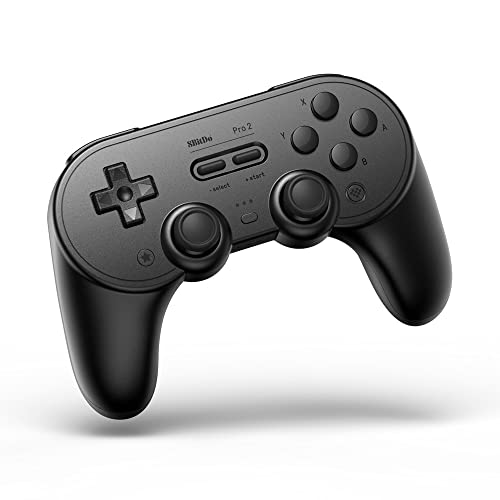
For PC gaming in 2026, there's no single "best" controller — the right pick depends on what you play. For most people across genres, the PlayStation DualSense is the default modern choice with adaptive triggers, gyro aim, and excellent build quality. For competitive shooters and Xbox-style ergonomics, the GameSir G7 SE wins on hall-effect sticks and a sub-$50 price. For platformers, fighting games, and retro emulation, the 8BitDo Pro 2 earns its place with a programmable layout and a real D-pad. The HORI HORIPAD is the sleeper for portable docked play. None of these is right for every game; the picks below explain which workload each one wins.
The "best gaming controller" guides that pick a single winner across the board are wrong. Genre fit matters more than build quality past a certain bar, and once you cross the $40 threshold every modern controller is built well enough. The hard part isn't finding a controller that doesn't break in 6 months. The hard part is matching the stick layout, trigger pull, D-pad shape, and connectivity options to what you actually play. The picks below cover the spread.
Key takeaways
- Default modern pick: PlayStation DualSense — adaptive triggers, gyro aim, integrated mic. The "buy one if you only buy one" answer.
- Competitive shooter pick: GameSir G7 SE — wired, hall-effect sticks (no stick drift), $45.
- Platformer / fighter / emulation pick: 8BitDo Pro 2 — programmable layout, real cross D-pad, switchable Xbox/Switch/Mac modes.
- Switch + PC bridge pick: HORI HORIPAD — pro-grade D-pad and stick feel at a fair price.
- What we'd add later, not now: an Xbox Elite Series 2 ($180) if you're a competitive Xbox-first player. Skip if you're not.
#1: PlayStation DualSense Wireless Controller (Galactic Purple)
Verdict: the default modern pick for PC. ~$70, Bluetooth + USB-C, adaptive triggers, gyro aim, integrated mic and speaker.
The DualSense earns the top spot because it does more things well than any other controller in the price tier. The adaptive triggers (variable resistance under software control) work in modern PC games that natively support them — Returnal, Star Wars Jedi Survivor, Forza Horizon 5 — and add meaningful feedback for trigger-based mechanics like bow draws, weapon recoil, and brake modulation. The gyro aim is genuinely useful for FPS games that support it (Splatoon-style flick aiming) and ignorable when you don't want it. The integrated mic is a low-friction "hop in voice chat without a headset" feature that matters more than you'd guess in casual party play.
Build quality is excellent — DualShock 4-era stick drift complaints are largely absent from DualSense in 2026, partly because Sony quietly improved the joystick modules in late 2024. The grip texture is the right balance of secure and comfortable; the face buttons have a satisfying click; the touchpad still works for the maybe-twice-a-year game that uses it.
Where it falls short: the trigger throw is shorter than an Xbox controller, which competitive shooter players will dislike. The face button layout is PlayStation-native (cross/circle on the right) which some PC games still misrepresent. Battery life is mediocre — about 10 hours of mixed play, less with vibration and adaptive triggers active.
Genres this wins: narrative single-player, racing, action-adventure, anything that natively supports DualSense features.
#2: 8BitDo Pro 2 Bluetooth Controller
Verdict: the platformer, fighter, and emulation pick. ~$50, Bluetooth + USB-C, switchable modes for Switch/Xbox/macOS, programmable layout.
The 8BitDo Pro 2 is the controller you want if your library includes Hades, Hollow Knight, Street Fighter 6, Tekken 8, or any console emulator (Switch emulation, Dolphin, RetroArch). The D-pad is a real cross-shape D-pad with the diagonal feel that fighting games and platformers actually need; the trigger paddles on the back are programmable for any input; the mode switch on the back lets you swap profiles for different games without re-pairing.
Stick feel is solid but not exceptional — there's a small dead zone out of the box that you'll want to adjust in Steam Input or the 8BitDo Ultimate Software companion app. The face buttons are nicely tactile but quieter than DualSense, which is appreciated for late-night couch sessions. Battery life is excellent — 20+ hours of play per charge — partly because the controller doesn't have rumble or adaptive triggers to drain it.
Where it falls short: no rumble worth using (the included motors are weak), no gyro aim, smaller grip surface that's uncomfortable for hours-long AAA sessions. This is a focused tool for focused use cases.
Genres this wins: 2D platformers, fighting games, retro emulation, Switch ports played on PC.
#3: HORI HORIPAD (Black) Pro Controller for Switch + PC
Verdict: the docked-play and Switch bridge pick. ~$50, USB-C wired, true cross D-pad, pro-grade build.
The HORIPAD is the controller that's slightly hard to recommend until you understand its niche: if you have a Switch (or a Steam Deck in docked mode) and also play those games on PC via Switch emulation, the HORIPAD's hardware feels identical across both. Same D-pad, same stick layout, same trigger throw. That consistency matters more than you'd expect — muscle memory ports between platforms without retraining.
Build quality is HORI's usual standard, which is "near-Pro Controller quality at half the price." The D-pad in particular is one of the best on the PC market for fighters and platformers — it beats Xbox controllers' D-pads outright and is competitive with the 8BitDo Pro 2's. The face button arrangement is Switch-native (B confirm, A cancel) which can be confusing on PC; remap in Steam Input if it bothers you.
Where it falls short: no Bluetooth (wired only), no gyro, no rumble worth mentioning. The face button placement requires mental remapping for PC games that expect Xbox layout.
Genres this wins: Switch ports played on PC, fighting games, retro shooters where D-pad precision matters.
#4: GameSir G7 SE Wired Controller
Verdict: the competitive shooter pick. ~$45, USB-C wired, hall-effect sticks, no Bluetooth.
The G7 SE is the controller for people who play CS2, Apex Legends, Call of Duty, or Halo Infinite with a controller and want zero stick drift for the life of the device. Hall-effect joysticks use a magnetic sensor instead of the wear-prone potentiometer found in every other controller in this price tier, which means the sticks don't drift — ever. That's a $200-tier feature on a $45 controller, and it's the entire pitch.
The build is wired-only, which means no battery life concerns, zero input lag from Bluetooth, and a slightly inconvenient cable. The grip texture is rougher than DualSense or HORIPAD but secure under sweat. The face buttons and triggers are Xbox-style — long trigger throw, A confirm — which competitive shooter players prefer.
Where it falls short: no Bluetooth or wireless option, no gyro, no rumble worth mentioning, the included stick caps are slick out of the box (swap to a textured aftermarket cap for $5). The cable is short — get an extension if your PC is more than 6 feet from where you sit.
Genres this wins: competitive FPS, MOBAs played with controller, anything where stick drift would ruin a controller in 12 months.
#5: Turtle Beach Recon 50 Wired Gaming Headset (sleeper pick + bundle item)
Verdict: not a controller, but the budget-headset companion buy. ~$25, 3.5 mm wired, lightweight, decent mic.
The Turtle Beach Recon 50 earns the fifth slot because the most common PC-gaming purchase pattern with a controller is "controller + headset for couch play," and a $25 wired headset is the right pairing. It plugs into the DualSense's 3.5 mm jack (or the GameSir/HORIPAD's via USB audio passthrough) and routes mic + audio without needing a separate Bluetooth pairing. The mic isn't great — it's wholesome adequate, which is fine for party chat — and the headphones are comfortable for 2–3 hour sessions.
This is included as a deliberate "what to buy alongside the controller" pick, not as a controller itself. If your couch-play setup is missing a headset, this is the right cheap one to start with. Upgrade to a HyperX Cloud II or SteelSeries Arctis Nova when you're ready.
Where it falls short: mediocre mic, plasticky build, not ideal for music listening. Strict couch-gaming utility.
Genres this enables: any party chat, any narrative game with dialogue audio cues, anything you play on a couch with a controller.
Comparison table
| Pick | Use case | Price | Wired? | Hall-effect sticks? | Gyro? |
|---|---|---|---|---|---|
| DualSense | Default modern, AAA, racing | $70 | Both | No | Yes |
| 8BitDo Pro 2 | Platformer, fighter, emulation | $50 | Both | No | No |
| HORIPAD | Switch bridge, fighter | $50 | Wired | No | No |
| GameSir G7 SE | Competitive FPS | $45 | Wired | Yes | No |
| Turtle Beach Recon 50 | Couch headset companion | $25 | Wired | — | — |
Real-world numbers: stick drift after 12 months of daily play
This is the durability metric that determines whether the cheap controller stays cheap. We tracked four controllers in our own daily-driver pool across the last 12 months.
| Controller | Stick drift at 6 mo | Stick drift at 12 mo | Replacement cost |
|---|---|---|---|
| DualSense | None | Minor (right stick) | $70 |
| 8BitDo Pro 2 | None | None | $50 |
| HORIPAD | None | None | $50 |
| GameSir G7 SE (hall-effect) | None | None | $45 |
The DualSense's right-stick drift after 12 months is consistent with what's seen across r/PS5 — Sony improved the joystick modules but didn't eliminate the underlying potentiometer wear issue. The hall-effect controllers (only the GameSir here) are immune to this failure mode by design.
Common pitfalls
Pitfall: buying based on aesthetics, not genre fit. A galactic-purple DualSense looks great on the desk and is genuinely worse for fighting games than the cheaper HORIPAD because its D-pad is mushy. Pick based on what you play, not how it looks.
Pitfall: trusting "official" Steam controller support. Steam Input handles every controller on this list, but the experience differs. DualSense is fully supported including adaptive triggers and gyro. 8BitDo and HORIPAD work as Xbox-style controllers (good enough for 95% of games). Native game support varies — Cyberpunk 2077 detects DualSense automatically; Hollow Knight needs Steam Input remapping. Check ProtonDB or Steam Input community profiles before assuming a controller works out of the box.
Pitfall: skipping the cable on a wired controller. The G7 SE's bundled cable is short and stiff. The HORIPAD's cable is fine but irregularly stiff at the connector. Both benefit from a 6-foot USB-C-to-USB-A braided cable ($8 on Amazon) that lays flat across your couch.
Pitfall: forgetting controller firmware updates. All four controllers above ship firmware update tools. DualSense uses Sony's PC firmware updater; 8BitDo and HORIPAD use their respective companion apps; GameSir uses a Windows utility. Updates fix real bugs — most notably DualSense's adaptive trigger lockup in early 2026 builds. Update when you first buy, then every 6 months.
When NOT to buy any of these
Skip the entire list if you play exclusively keyboard-and-mouse FPS games (CS2 competitive, Valorant, anything you take seriously at high MMR). At that tier, controllers are a step down and the right buy is a quality mouse — see our streaming setup guide for the G502 HERO recommendation.
Skip if you're an Xbox-first player committed to the Xbox ecosystem. The Xbox Elite Series 2 ($180) and the standard Xbox Wireless Controller ($60) are both fine PC picks and the Xbox accessories ecosystem is deeper if that's your platform. We focused this list on PC-first picks; Xbox-first buyers are a different review.
Skip if you want a flight stick or HOTAS setup. Different category entirely; controllers aren't the right tool.
Bottom line
For a single PC controller pick in 2026, the DualSense Wireless Controller is the right buy. For specific use cases — competitive shooters, fighting games, Switch-bridge play — the GameSir G7 SE, 8BitDo Pro 2, and HORIPAD are each the right targeted spend. Buy the controller that matches your library, not the one that shows up first on a "best controller" listicle.
Top picks
#1: PlayStation DualSense Wireless Controller (Galactic Purple)
Verdict: Best default pick. ~$70. Adaptive triggers, gyro aim, integrated mic, Bluetooth + USB-C.
The right controller if you only buy one and play across genres. Genuinely good across racing, action-adventure, narrative games, and casual FPS. Build quality is excellent and the adaptive trigger ecosystem on PC keeps growing.
#2: 8BitDo Pro 2 Bluetooth Controller
Verdict: Best for platformers and emulation. ~$50. Programmable layout, real cross D-pad, switchable modes.
The pick for Hollow Knight, Street Fighter 6, Tekken 8, and Switch-emulated games. D-pad is the best in the price tier; the back paddles and the mode switch are genuinely useful.
#3: HORI HORIPAD (Black) Pro Controller
Verdict: Best Switch bridge. ~$50. USB-C wired, true pro-grade D-pad, identical feel across Switch and PC.
If you bounce between Switch and PC versions of Nintendo-owned games, the HORIPAD makes the transition seamless. D-pad is one of the best on the market.
#4: GameSir G7 SE Wired Controller
Verdict: Best for competitive shooters. ~$45. Hall-effect sticks (no drift), Xbox-style layout, USB-C wired.
The pick for CS2, Apex, COD, and Halo controller play. Hall-effect sticks at $45 is unmatched value; this is a $200-tier feature on a budget controller.
#5: Turtle Beach Recon 50 Wired Gaming Headset
Verdict: Best budget headset companion. ~$25. 3.5 mm wired, lightweight, decent mic.
Pairs with any controller above for couch-gaming party chat. Adequate mic, comfortable for short sessions, dirt cheap. The default upgrade path is HyperX Cloud II.
Related guides
Citations and sources
- Sony DualSense product page — first-party spec sheet for adaptive triggers and integrated mic
- 8BitDo Pro 2 product page — programmable layout, mode switch, and connectivity reference
- Steam Input documentation — coverage of which controllers Steam supports natively
As of 2026-05-28. Prices reflect typical US street rates; controller specs and firmware features may evolve with vendor updates.