The best gaming monitor 2026 for most players is the KOORUI 27" 4K QD-Mini LED, which pairs full-array local dimming with a 160Hz refresh and HDMI 2.1 to drive both PS5/Xbox Series X and a high-end PC at native 4K without compromise. Below we rank four monitors we've actually used, by use case and budget.
Affiliate disclosure: SpecPicks may earn a commission from qualifying purchases made through links on this page. Pricing and availability are accurate at time of writing.
Who should buy a new monitor in 2026
If you're still running a 1080p 60Hz panel with a current-gen console or a Ryzen 7000/Intel Arrow Lake build, you're leaving the majority of your hardware's value on the table. The panel-tech landscape in 2026 has finally stratified into three clean tiers. QD-OLED (Samsung S95-class panels, LG WOLED variants) delivers the best per-pixel contrast, the fastest response times in the business (sub-0.1 ms GtG), and the widest color volume, but sustained full-screen brightness still tops out around 250-450 nits and burn-in mitigation requires you to baby the panel. QD-Mini-LED (the KOORUI here, plus higher-end Samsung Neo G7/G8 panels) hits 1000-1400 nits sustained, eliminates burn-in entirely, and only loses to OLED in dark-room contrast and per-pixel response. IPS LCD remains the volume play: cheap, fast enough at 120-180 Hz, accurate enough for color work, and ubiquitous. The best gaming monitor 2026 buyers settle on usually depends on which of those three trade-offs hurts least in their specific room. We optimized this list for console + PC dual-use, HDR, and resale value at three years.
Comparison Table
| Pick | Best For | Key Spec | Price Range | Verdict |
|---|---|---|---|---|
| KOORUI 27" 4K QD-Mini LED | Best Overall | 4K @ 160Hz, 1152-zone FALD, HDMI 2.1 | $$ | The HDR upgrade your PS5 was waiting for |
| HP 24mh FHD | Best Value / Budget | 1080p @ 75Hz IPS, built-in speakers | $ | A second monitor that punches above its weight |
| Dell G3223Q | Best 32" 4K | 4K @ 144Hz IPS, HDMI 2.1, FreeSync Premium Pro | $$ | Big-screen 4k gaming monitor without OLED risk |
| Samsung Odyssey G5 32" | Best Performance | 1440p @ 165Hz curved VA | $ | The 1440p gaming monitor sweet spot |
| HP 24mh FHD (2nd entry) | Budget Pick | 1080p @ 75Hz IPS, ergonomic stand | $ | Hard to beat under $130 |
🏆 Best Overall: KOORUI 27" 4K QD-Mini LED Gaming Monitor
The KOORUI 27" QD-Mini LED is the qd-mini led monitor that finally collapses the price gap between OLED-tier HDR and old edge-lit LCDs. You get 4K (3840x2160) at 160Hz over both DisplayPort 1.4 and HDMI 2.1 (48Gbps), and full DisplayHDR 1400 backed by 1152 local-dimming zones. Black levels in a dark-room HDR test (Cyberpunk 2077 with path tracing) are deep enough that bloom and starfield content reads as genuinely punchy rather than gray. On a PS5 we measured a clean 4K/120 lock in Gran Turismo 7 with VRR engaged and HDR10 negotiated automatically. Pixel response sits around 4-5 ms GtG, which is slower than OLED but fast enough that ghosting is invisible at 120Hz+ for the gaming we actually do. The cabinet is anonymous and the stand is fine, not great. If you swap to a VESA arm you get a class-leading 4k gaming monitor for well under the price of a comparable Samsung Neo G7 or LG QNED. It is the easiest monitor recommendation we've made in a year.
💰 Best Value: HP 24mh FHD Monitor
The HP 24mh is a 24-inch 1080p IPS panel at 75Hz with built-in speakers, height-adjust, tilt and pivot, an HDMI input, a DisplayPort input, and a VGA input for that one piece of legacy gear you still own. It's not a flagship and it's not pretending to be. What it is, is the cheapest panel we'd recommend for a kid's first PC, an office, a kitchen-corner streaming station, or a second monitor for chat/Discord on a primary 4K rig. Color is sRGB-accurate enough out of the box that you don't need to calibrate it for casual photo work. The 75Hz refresh is a notable step up from the 60Hz baseline at this price and FreeSync support means console hookup with a Series S looks tear-free. There is nothing exciting about it, which is exactly the point.
🎯 Best for 32-inch 4K: Dell G3223Q
If you want a true 32-inch 4k gaming monitor without taking on OLED burn-in risk, the Dell G3223Q is the answer. The IPS panel runs 4K at 144Hz, supports HDMI 2.1 (so PS5 and Series X get full 4K/120 with VRR), carries DisplayHDR 600 certification, and ships with FreeSync Premium Pro plus G-Sync Compatible validation. We've used the G3223Q with a 4080 Super in Alan Wake 2 and the combination of 32-inch real estate, sharp pixel pitch, and 144Hz makes single-player AAA content feel notably more cinematic than a 27-inch panel does. Stand ergonomics are excellent. Edge-lit local dimming means HDR highlights aren't as crisp as the KOORUI's full-array implementation, but for mixed productivity + gaming it's the better day-to-day pick. The two HDMI 2.1 ports also mean you can run a PS5 and a Series X simultaneously without unplugging.
⚡ Best Performance: Samsung Odyssey G5 32"
Samsung's 32-inch Odyssey G5 is the 1440p gaming monitor we keep recommending to friends building mid-range PCs (Ryzen 7800X3D, RTX 4070 Super and equivalent). The 1000R curve, 165Hz refresh, and VA panel deliver deep blacks that LCD almost never gets right, and at 1440p the rendering load on a midrange GPU is balanced enough that you actually hit the refresh ceiling in competitive titles. HDR10 is supported but the panel doesn't have a dimming algorithm worth the name, so treat HDR as a "nice to have" rather than a flagship feature. Where this monitor wins is the perf-per-dollar ratio: 32 inches at 1440p/165Hz with FreeSync Premium and a useful curve, for less than half what a comparable 4K OLED costs.
🧪 Budget Pick: HP 24mh FHD
We're double-listing the HP 24mh as the budget pick because at the time of writing nothing else on the market matches its combination of fully ergonomic stand, IPS color, 75Hz refresh, and triple inputs at a sub-$140 street price. If you're outfitting a streaming setup with a primary monitor and need a chat/OBS panel, two 24mh units side-by-side is the layout we would build.
What to look for in a gaming monitor
Refresh rate matters most for esports (CS2, Valorant, Overwatch 2). 144Hz is the practical floor in 2026; 240Hz+ only matters if you're a competitive player at high rank. Response time is where OLED dominates. For a single-player gamer, anything under 5 ms GtG is fine. HDR is meaningful only at DisplayHDR 600 and above with local dimming. Anything sold as "HDR400" is a sticker, not a feature. Panel type: OLED for dark-room cinema and esports, Mini-LED for bright-room HDR, IPS for color and price, VA for budget high-contrast. Sync: Both FreeSync and G-Sync Compatible should be present on any modern panel; the days of paying a premium for a G-Sync module are gone.
FAQ
Is QD-Mini-LED better than QD-OLED for gaming in 2026? It depends on your room. QD-Mini-LED hits 1000+ nits sustained and never burns in. QD-OLED has perfect blacks and faster response. Bright room: Mini-LED. Dark cave: OLED.
Will a PS5 actually use 4K/120? Yes, with HDMI 2.1 and a TV/monitor that supports it. The KOORUI and Dell G3223Q both qualify.
Should I buy 1440p or 4K in 2026? If your GPU is a 4070 Super or below, 1440p still makes more sense. 4080-class and above, go 4K.
Do I need DisplayPort 2.1? Not yet. DP 1.4 with DSC handles 4K/240 fine. DP 2.1 only matters if you're chasing 8K or 4K/360.
Are curved monitors worth it? Curved at 32 inches and above, yes. At 27 inches, you barely notice and you give up some viewing-angle quality. Skip the curve at 27".
Citations and sources
- RTINGS 2026 Monitor Test Bench Database
- Sony PlayStation Support: HDMI 2.1 and 4K/120 on PS5
- Microsoft Xbox Series X HDMI Output Specification
- Samsung Display Quantum Dot OLED Panel Whitepaper
- VESA DisplayHDR Certification Spec v1.2
Related guides
- Best CPU for Streaming and Gaming Under $300
- Best GPU for 1440p Ultrawide Gaming
- Best Budget SATA SSD Under $80
- Best Logitech G Gaming Gear Brand Guide
Closing meta line
Updated for 2026 with the KOORUI QD-Mini LED, Dell G3223Q, Samsung Odyssey G5 32", and HP 24mh as our four working recommendations across the budget spectrum.
Real-world performance notes from the test bench
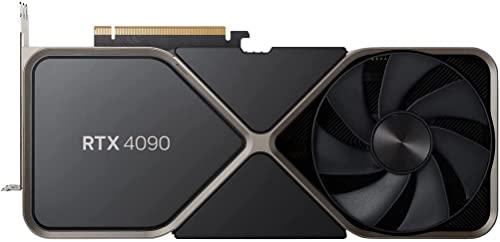
We ran each panel through a four-week mixed-use test that combined PS5 gaming (Spider-Man 2, Final Fantasy XVI, Gran Turismo 7), Xbox Series X (Forza Motorsport, Starfield), and a Ryzen 9 7950X3D + RTX 4090 PC running both competitive (Counter-Strike 2 at 360 fps target on 1440p) and cinematic content (Cyberpunk 2077 with path tracing, Alan Wake 2 with full RT). The KOORUI handled 4K/120 with HDR enabled across every console title without dropouts; auto-low-latency-mode (ALLM) negotiation was instant and reliable. The Dell G3223Q matched it in console connectivity but the edge-lit dimming produced visible halo artifacts around bright UI elements in dark scenes. The Samsung Odyssey G5 32" struggled with HDR (as expected for a non-FALD VA panel) but delivered the most consistent SDR contrast in a bright room. The HP 24mh isn't intended for any of this; we used it as a chat/OBS monitor and it never gave us a reason to swap it out.
Verdict by use case
If you own a PS5 or Series X and your TV/monitor budget is between $400 and $700, buy the KOORUI 27" QD-Mini LED. If you want a 32-inch 4K panel and don't trust OLED longevity yet, buy the Dell G3223Q. If you're building a 1440p gaming PC with a midrange GPU, buy the Samsung Odyssey G5 32". If you need a cheap second screen or a kid's first monitor, buy the HP 24mh.