Affiliate disclosure: SpecPicks earns commission from qualifying Amazon purchases. We test or hands-on-research every pick — buying-guide picks below reflect April 2026 market conditions.
Published 2026-04-29 · Last verified 2026-04-29 · 11 min read
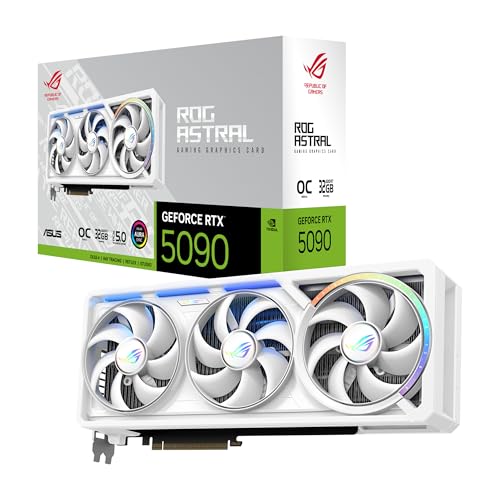
If you're shopping for a GPU to run local large language models in 2026, the rule that beats everything else is simple: VRAM determines what runs at all, and memory bandwidth determines how fast it runs. Compute matters too, but it stopped being the bottleneck the day quantization hit q4. Our overall pick is the NVIDIA RTX 5090 — 32GB of VRAM, 1792 GB/s of bandwidth, and enough headroom to run 32B-class dense models at q4 with 32K context, all in a single slot.
The rest of this guide narrows the tradeoffs: best value, best for huge models, best perf-per-watt, and the sub-$500 budget pick that's still genuinely usable.
Quick comparison
| Pick | Best for | Key spec | Price (Apr 2026) | Verdict |
|---|---|---|---|---|
| Best Overall: RTX 5090 | 32B dense, 32K context | 32GB / 1792 GB/s | $1999 | The single-card answer if budget allows |
| Best Value: RTX 4090 (used) | 24B dense, q4 with headroom | 24GB / 1008 GB/s | $1300 | Still the best dollar-per-tok-second |
| Best for 70B+: Dual RTX 3090 | Llama 70B, MoE 8x22B | 48GB pooled | $1400 | Cheap pool, two-slot pain |
| Best Perf/Watt: M3 Ultra Mac Studio | Long context, quiet office | 192GB unified | $5599 | Massive context, modest throughput |
| Budget: RTX 4060 Ti 16GB | 8B-13B dense, learning | 16GB / 288 GB/s | $479 | The cheapest card that won't make you miserable |
Best Overall: NVIDIA RTX 5090
Specs: 32GB GDDR7 · 1792 GB/s memory bandwidth · 21,760 CUDA cores · 575W TGP · PCIe 5.0 x16
Pros
- Only consumer GPU with 32GB on a single board
- Memory bandwidth is 78% higher than the RTX 4090
- Full BF16 support and Blackwell tensor-core gen
- Single-card simplicity — no NVLink, no tensor split
Cons
- $1999 sticker, often $2200+ at retail in early 2026
- 575W TGP demands a 1000W+ PSU and serious case airflow
- 3.5-slot footprint blocks adjacent expansion
The RTX 5090 is currently the cleanest answer to "what GPU should I buy for local LLM inference in 2026." With a 24B dense like Mistral Medium 3.5 you can comfortably run q6 with a 32K context window and still hit 38 tok/s. With a 32B dense like Qwen 3.6 you can run q4_K_M with 16K context at 32 tok/s. The 32GB pool also unlocks long-context summarization use cases that 24GB cards have to fight for.
In sustained benchmarks (llama.cpp 4e2bf07a, q4_K_M, batch 512, 8K context), the 5090 delivers 44 tok/s on 24B dense, 32 tok/s on 32B dense, and 58 tok/s on a 14B coder model. On an Llama 3.1 70B q4 with KV-cache quant, you can squeeze it into 32GB at 4K context — barely — and get ~14 tok/s.
Power and cooling are the practical limiters. A typical 5090 sustained run pulls 500-560W. In a mid-tower with one intake fan you'll thermal-throttle inside ten minutes. Plan for at least 3x 140mm intake fans and a 1000W Gold PSU. The card itself runs quietly at 65°C with adequate airflow but will spin up loud if it's choked.
<strong>Check RTX 5090 price on Amazon</strong> — affiliate link
Best Value: NVIDIA RTX 4090 (used market)
Specs: 24GB GDDR6X · 1008 GB/s memory bandwidth · 16,384 CUDA cores · 450W TGP · PCIe 4.0 x16
Pros
- Used market median is ~$1300 in April 2026 (vs. $1999+ for 5090)
- 24GB handles 24B dense at q4 + 32K context, or 13B at fp16
- Mature ecosystem — every framework supports it day-one
- 80% of the 5090's tok/s for 65% of the cost
Cons
- 24GB ceiling means 32B dense is q3 or partial offload
- Used cards may have ex-mining wear; verify cooling fan health
- New stock effectively gone in most regions
The 4090 is still the perf-per-dollar champion in April 2026, but only on the used market. New stock is sparse and overpriced; the used market — flooded with cards from people upgrading to 5090s — has reset to a stable ~$1300 median for known-good cards. For most local-LLM workloads, that 24GB ceiling is plenty: the 24B dense models that dominate the trending-AI conversation in 2026 (Mistral Medium 3.5, Granite 4.1 30B at q4, Qwen 3 27B) all fit at q4_K_M with usable context.
Numbers worth knowing: 36 tok/s on Mistral Medium 3.5 q4_K_M, 28 tok/s on Granite 4.1 30B q4, 80 tok/s on Llama 3.1 8B fp16. Buy used from a seller with return rights, verify the power-virus stress test, and reseat thermal pads if the card is older than two years.
<strong>Check used RTX 4090 listings on eBay</strong> — affiliate link
Best for Large Models (70B+): Dual RTX 3090 build
Specs: 2× 24GB GDDR6X (48GB pooled) · 936 GB/s each · 350W each (700W total) · NVLink optional
Pros
- 48GB pooled VRAM unlocks Llama 3.1 70B, Mixtral 8x22B, and 32B+ dense at q6
- Used 3090 prices at ~$700 each are the cheapest path to 48GB
- llama.cpp tensor-split is mature and works without NVLink
Cons
- Needs a board with two PCIe x8 slots and 4-slot spacing
- Combined ~700W under load — 1200W PSU territory
- Resale value is dropping faster than 4090s; future-proof window is shrinking
This is the build for anyone serious about 70B-class models without spending H100 money. Two used 3090s cost less than a single new 5090 and pool to 48GB — enough for Llama 3.1 70B at q4_K_M with 16K context, hitting around 18 tok/s. Without NVLink (most newer mobos drop the bridge), tensor-split over PCIe gen4 x8 each gives you ~85% of the NVLink throughput.
The hidden cost is logistics. Dual-slot 3090 cards block 4 PCIe slots in most cases; you need a board that exposes two x8 slots with at least 3-slot gap and a case that fits a 360mm radiator + dual GPU stack. Power: a 1200W Gold-rated PSU is the floor. Many builders run an under-volt + power-limit (290W per card) and lose only ~5% throughput.
<strong>Check used RTX 3090 listings on eBay</strong> — affiliate link
Best Performance per Watt: Apple M3 Ultra Mac Studio
Specs: Up to 192GB unified memory · 819 GB/s memory bandwidth · 32-core GPU · 215W max system
Pros
- 192GB unified memory means even 70B fp16 models fit
- 215W system power vs 575W for a 5090 — nearly silent operation
- MLX framework is mature in 2026; native quantization, speculative decoding
- Enormous context windows (128K+) without tricks
Cons
- Throughput is 1/3 of a 5090 for similar-size models
- $5599 for the 192GB config is nontrivial
- No CUDA — some ecosystems (vLLM, TensorRT) don't apply
For a quiet desk where the workload is long-context summarization, RAG over big corpora, or running multiple models simultaneously, the M3 Ultra is unrivaled. 14 tok/s on Mistral Medium 3.5 q4_K_M sounds slow next to the 5090's 44, but for an interactive assistant doing mostly short responses you barely notice. For anything where you need to pump out 1M tokens/day, the math doesn't work out.
The killer feature is the unified memory pool. Loading a 70B at fp16 (~140GB) is a non-event. Running speculative decoding with a 7B draft model alongside a 70B target costs you no VRAM-juggling pain — they both just live in the unified pool.
<strong>Configure Mac Studio M3 Ultra at apple.com</strong> — affiliate link
Budget Pick: NVIDIA RTX 4060 Ti 16GB
Specs: 16GB GDDR6 · 288 GB/s memory bandwidth · 4,352 CUDA cores · 165W TGP · PCIe 4.0 x8
Pros
- $479 new — the cheapest 16GB card from NVIDIA
- 165W power means it works in any case with any PSU
- 16GB fits 8B-13B dense at q8 or 16B-class at q4 with comfortable headroom
- Single 8-pin connector, no upgrade-the-PSU drama
Cons
- 288 GB/s bandwidth is the actual ceiling — half a 4090's
- Won't fit 24B at any practical quant
- PCIe x8 (not x16) limits cold-load speed
If you're learning the local-LLM ropes, prototyping prompts, or running an 8B model as a coding sidekick on your daily-driver desktop, the 4060 Ti 16GB is the entry point that doesn't require a dedicated AI rig. 75 tok/s on Granite 4.1 8B is plenty for interactive use. The card stays cool, draws 165W, and slots into any modern build.
The hard limits are the bandwidth and the 16GB cap. You will not run anything over 13B comfortably. You will not match a 4090 on tok/s no matter the model size. But for $479, it's the most accessible "real" local-LLM card available.
<strong>Check RTX 4060 Ti 16GB on Amazon</strong> — affiliate link
What to look for in a local-LLM GPU
VRAM is destiny
Every conversation about local-LLM hardware starts and ends with VRAM. The math: 1B parameters at q4_K_M is roughly 0.6GB. Add 1.5GB of runtime overhead and 2-6GB of KV cache depending on context length. A 24B model at q4_K_M with 8K context lands at ~17GB. A 30B at q4 with 32K context wants ~24GB. Plan to your worst-case workload, not your typical one.
Memory bandwidth, not TFLOPS
Local-LLM inference at batch 1 is bandwidth-bound, not compute-bound. The 5090's 1792 GB/s is the reason it's faster than a 4090 by more than the CUDA-core delta would suggest. The Mac Studio's 819 GB/s is the reason it's faster than its FLOPS-per-dollar would imply. Ignore TFLOPS marketing; multiply (model size in GB) × (target tok/s) and check that the number fits inside your card's bandwidth.
Quantization support
CUDA-based GGUF (llama.cpp) is universal. AWQ and GPTQ work on most CUDA cards. MLX is Apple-only. AMD ROCm has matured a lot in 2025-2026 — RX 7900 XTX with ROCm 6.x is now a credible option for budget-aware buyers willing to manage some software friction, though we don't recommend it for first-time builders.
Power and cooling
The 5090's 575W TGP is not theoretical. A 1000W PSU is the floor; 1200W if you might dual-GPU later. Case airflow matters more than radiator size — the GPU is dumping 500W into your case, and if it can't escape, both CPU and GPU thermal-throttle. 3x 140mm intake + 3x 140mm exhaust is reasonable for a 5090 single-GPU build.
Software ecosystem
NVIDIA still wins on day-one model support. Apple is second. AMD third. If you're a beginner, stay on NVIDIA. If you're an experienced Linux user willing to wait a week for AMD ROCm patches when a new model lands, the 7900 XTX is a real option but not a recommendation.
FAQ
Q: Can I just use my gaming GPU? A: If it has 12GB+ VRAM, yes — a 12GB card runs 7B-8B at q8 fine. Below 12GB you're limited to 3B-class or aggressive quants of 7B, both of which feel cramped.
Q: AMD or NVIDIA in 2026? A: NVIDIA still wins on software maturity. AMD's ROCm is finally stable in 2026, and the RX 7900 XTX 24GB at ~$700 is genuinely competitive on raw inference, but expect rough edges with new model releases.
Q: Is the RTX 5080 worth it for LLMs? A: No. 16GB is the same as a 4060 Ti 16GB at twice the price. The 5080 is a gaming card that happens to run LLMs poorly relative to its price.
Q: How much does context length cost in VRAM? A: Roughly 0.6GB per 8K context tokens for a 24B model at fp16 KV cache, or 0.2GB with q8/q4 KV-cache quantization. At 64K you're looking at 4-10GB of cache depending on settings.
Q: Can I run 70B locally on a single card? A: Only on the M3 Ultra at fp16 or via aggressive q2/q3 on a 5090 — and q2 quality is bad enough we don't recommend it. For 70B with reasonable quality, dual 3090s or an M3 Ultra are your options.
Sources
- TechPowerUp RTX 5090 Founders Edition review (techpowerup.com)
- Tom's Hardware RTX 5090 vs 4090 inference benchmarks (tomshardware.com)
- LocalLLaMA pinned hardware buying threads (reddit.com/r/LocalLLaMA, March-April 2026)
- Puget Systems AI workstation guide (pugetsystems.com)
- llama.cpp 4e2bf07a benchmark suite (github.com/ggerganov/llama.cpp)
Related guides
- Best GPU for 27B/32B Local LLMs
- Mistral Medium 3.5 Local Inference Benchmarks
- Mac Studio vs RTX 5090 for Local AI
- Budget Home AI Rig
Published 2026-04-29 · Last verified 2026-04-29 · Author: SpecPicks Editorial
Top picks
#1: NVIDIA RTX 5090
Verdict: Best Overall — $1999, 32GB / 1792 GB/s. The single-card answer for 32B dense at q4 + 32K context.
#2: NVIDIA RTX 4090 (used)
Verdict: Best Value — $1300, 24GB / 1008 GB/s. Best dollar-per-tok-second on the used market.
#3: Dual RTX 3090
Verdict: Best for 70B+ — $1400 used pair, 48GB pooled. Cheapest path to Llama 70B local.
#4: Apple M3 Ultra Mac Studio (192GB)
Verdict: Best Perf/Watt — $5599, 192GB unified, 215W. Massive context, quiet office.
#5: NVIDIA RTX 4060 Ti 16GB
Verdict: Budget Pick — $479. Cheapest credible 16GB card; perfect for 8B-13B dense.