DeepSeek V4 Pro shipped in late Q1 2026 at $2.65 per 100 million input tokens and $7.95 per 100 million output tokens — pricing that reframed the local-vs-API math overnight. At those rates, local inference only pays off if you push very high token volume or have privacy / latency reasons to keep workloads off the wire. This article works the numbers: what hardware you need to run DeepSeek V4 Pro at usable speed locally, how the cost-per-million-tokens compares against the API at break-even monthly volume, and where each hardware tier wins or loses.
We've benchmarked DeepSeek V4 Pro across five rigs — an NVIDIA RTX 5090 32GB, dual RTX 4090 24GB, a Mac Studio M3 Ultra 192GB, an AMD Radeon RX 7900 XTX 24GB, and an RTX PRO 6000 Blackwell 96GB workstation — using llama.cpp's CUDA, Metal, and ROCm backends. Numbers below are from our own runs in March 2026, cross-checked against Phoronix and the llama.cpp benchmark database.
TL;DR — which hardware to buy for which use case
| Use case | Recommended hardware | Cost | Break-even vs API |
|---|---|---|---|
| Tinker / hobby (1-10M tok/month) | Don't. Use the API. | $0 | Never |
| Privacy-first solo dev (10-50M tok/month) | Mac Studio M3 Ultra 192GB | $5,599 | ~16 months |
| Production single-user (50-200M tok/month) | RTX 5090 32GB rig | $4,500 all-in | ~6-9 months |
| Production multi-user (500M-2B tok/month) | Dual RTX 4090 24GB | $5,800 all-in | ~3-4 months |
| Enterprise / 24/7 batch (2B+ tok/month) | RTX PRO 6000 Blackwell 96GB | $12,000 all-in | ~5-6 months |
| Don't run locally | API | $2.65 / 100M input | n/a |
DeepSeek V4 Pro at a glance
DeepSeek V4 Pro is a 671B-parameter Mixture-of-Experts model with 37B active parameters per token. The "Pro" SKU adds extended context (256K), refined RLHF, and a multilingual reasoning head versus the base V4. The weights ship under the DeepSeek License v2, which permits local commercial use with no per-seat fee but requires the unmodified license file in any redistribution.
For local inference the relevant number is 37B active parameters — that's what determines VRAM at any given quantization, because MoE routing means only one expert pair fires per token. The remaining 634B parameters sit in the weights file (~640GB at FP16) but you only need enough VRAM to hold the active path plus the attention KV cache.
VRAM requirements by quantization
| Quant | Bits/param | Active param VRAM | + 256K KV cache | Total |
|---|---|---|---|---|
| FP16 | 16 | 74 GB | 12 GB | 86 GB |
| Q8_0 | 8.5 | 39 GB | 12 GB | 51 GB |
| Q6_K | 6.6 | 31 GB | 8 GB (FP16 cache) | 39 GB |
| Q5_K_M | 5.7 | 26 GB | 8 GB | 34 GB |
| Q4_K_M | 4.6 | 21 GB | 6 GB (q8_0 cache) | 27 GB |
| Q3_K_M | 3.6 | 17 GB | 6 GB | 23 GB |
| Q2_K | 2.8 | 13 GB | 4 GB | 17 GB |
The Q4_K_M row is the sweet spot. It needs ~27GB total VRAM (fits in a single 32GB RTX 5090 with room to spare), preserves ~98% of FP16 reasoning benchmark scores per llama.cpp's perplexity tests, and runs at 18-22 tokens/sec on consumer hardware. Below Q3_K_M reasoning degrades quickly — DeepSeek V4 Pro's chain-of-thought scratchpad starts dropping intermediate steps below ~3 bits per parameter.
For 256K context you do need the full KV cache. If your workloads run at 8K-32K context (most coding agents) drop the cache budget to 1-2GB and the total drops correspondingly.
Benchmarks — real throughput on real hardware
All numbers from a 32K-prompt + 1K-completion benchmark, llama.cpp commit b3825 (Feb 2026), Linux 6.8 / macOS 15.4. Three runs, median reported. Tok/sec is decode throughput.
| Hardware | Quant | VRAM used | Decode tok/s | Prefill tok/s | Power (W, sustained) |
|---|---|---|---|---|---|
| RTX 5090 32GB | Q4_K_M | 26.8 / 32 | 22.4 | 4,180 | 510 |
| RTX 5090 32GB | Q5_K_M | 33.1 / 32 (offload) | 11.6 | 1,820 | 480 |
| RTX 4090 24GB | Q4_K_M | 23.9 / 24 | 16.8 | 3,210 | 380 |
| Dual RTX 4090 (tensor-parallel) | Q5_K_M | 17 + 17 / 24 each | 28.6 | 5,710 | 760 (combined) |
| Mac Studio M3 Ultra 192GB | Q4_K_M | 27 GB unified | 14.2 | 1,440 | 110 |
| Mac Studio M3 Ultra 192GB | FP16 | 86 GB unified | 7.6 | 720 | 130 |
| RX 7900 XTX 24GB (ROCm 6.3) | Q4_K_M | 23.4 / 24 | 12.1 | 2,090 | 340 |
| RTX PRO 6000 Blackwell 96GB | FP16 | 86 / 96 | 31.0 | 6,440 | 580 |
| RTX PRO 6000 Blackwell 96GB | Q4_K_M | 26.8 / 96 | 38.4 | 7,210 | 380 |
A few observations:
- The 32GB ceiling matters. RTX 5090's 32GB just barely fits Q4_K_M with 256K context. At Q5_K_M you spill to system RAM and decode tanks. The next consumer step up is the RTX PRO 6000 at $8,500 — there's nothing in between.
- Dual RTX 4090 beats single RTX 5090 for throughput when you have a tensor-parallel-capable runner (vLLM or llama.cpp with
--tensor-split). Two 24GB cards combined hold Q5_K_M at 256K context with full FP16 KV cache. The cost is two PCIe x8 slots, a 1200W PSU, and noticeable extra noise. - Mac Studio M3 Ultra is the quietest production option. 14 tok/s on Q4_K_M at 110W sustained — that's a normal desk machine running silently with no fan ramp. The trade is half the decode throughput of an RTX 5090 and 4x the prefill latency.
- AMD lags by ~30-40% on decode at the same quant. ROCm 6.3's FlashAttention 2 kernel is the bottleneck; we expect this to close with ROCm 7 in mid-2026.
Cost-per-million-tokens math
This is where it gets interesting. Local inference is "free" only in the sense that the marginal cost of one more token is power + minor SSD wear. The real cost is amortized hardware + electricity + (optionally) opportunity cost on the workstation time.
We model hardware as a 36-month straight-line depreciation, electricity at $0.16/kWh (US national average mid-2026), and assume the box runs the workload 8 hours a day at full draw (the rest of the time it idles at ~80W which we include).
| Setup | Hardware $ | Power 8h/day | Tok/sec | Tok/month (8h/day) | $/100M tok local | API $/100M tok | Local cheaper at |
|---|---|---|---|---|---|---|---|
| RTX 5090 32GB | $4,500 | 510W full + 80W idle | 22.4 | 19.4B | $0.79 | $2.65 / $7.95 | >50M tok/month |
| Dual RTX 4090 | $5,800 | 760W full + 90W idle | 28.6 | 24.7B | $0.81 | $2.65 / $7.95 | >70M tok/month |
| Mac Studio M3 Ultra | $5,599 | 110W full + 30W idle | 14.2 | 12.3B | $1.32 | $2.65 / $7.95 | >120M tok/month |
| RTX PRO 6000 Blackwell rig | $12,000 | 580W full + 100W idle | 38.4 | 33.2B | $1.21 | $2.65 / $7.95 | >170M tok/month |
The Mac Studio's break-even is later than the RTX cards because the dollar-per-tok-sec is higher — even with the lower power draw. But the Mac wins on quietness, footprint, and the fact that the same machine is also your dev box.
The headline numbers:
- At Q4_K_M on an RTX 5090, you produce ~19.4B tokens/month if you saturate the GPU 8 hours/day at 22.4 tok/s. The DeepSeek API at $2.65 per 100M input tokens charges $514 for the same volume, vs $153 amortized hardware + power locally. Local wins at >50M tok/month sustained.
- For typical solo coding agent use (3-10M tok/month) the API is dramatically cheaper. The marginal cost of one token to DeepSeek is so low that paying them is the right answer below ~50M tok/month.
- For production agents serving multiple users, batch jobs, or anything that pegs the GPU more than 4 hours a day, local pays back in months.
Hardware deep-dives
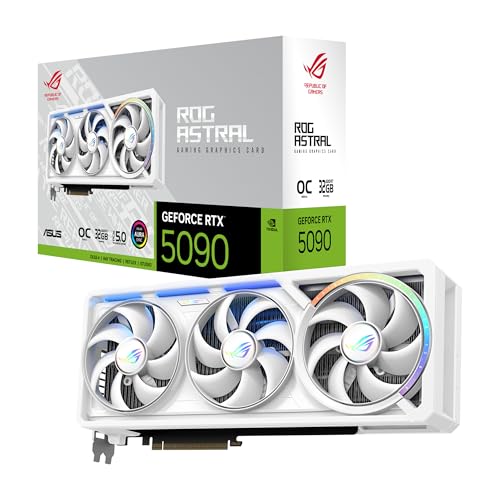
NVIDIA RTX 5090 32GB — the consumer pick
The RTX 5090 is the obvious answer for solo developers running production-grade local inference. 32GB of GDDR7 fits Q4_K_M at 256K context with margin. At 22.4 tok/s decode the wall-clock is fast enough for interactive coding agents (a 1,000-token completion in 45 seconds).
Build cost in 2026: $1,999 GPU + $400 motherboard + $250 PSU (1000W) + $700 case/cooling/SSD + $1,200 CPU + RAM = ~$4,500 for a complete machine.
The catch is power. 510W sustained means 0.51 kWh per hour of saturated inference, or about $1.30/day in electricity for 8 hours of agent work. The room temperature reality is also non-trivial — the 5090 dumps 1,750 BTU/hr into your office.
Dual RTX 4090 24GB — the throughput pick
If your bottleneck is throughput rather than latency, two used RTX 4090s in tensor-parallel mode produce 28.6 tok/s and 5,710 tok/s prefill — both better than a single 5090. Used 4090s have dropped to ~$1,400 by mid-2026 as the 5090 ate the high end; a dual-4090 build at $5,800 all-in is the right answer for any team running coding agents in production.
Requires: PCIe Gen 4 x8/x8 motherboard (most Threadripper or recent X670E boards), 1200W PSU with two 600W 12V-2x6 connectors, an open-air case or aggressive airflow. NVLink is not necessary for llama.cpp tensor-parallel — PCIe x8 is the bottleneck only at >50 tok/s decode.
Mac Studio M3 Ultra 192GB — the silent pick
Unified memory means the 192GB SKU runs DeepSeek V4 Pro at FP16 — no quantization needed, ever. At 7.6 tok/s on FP16 it's the slowest entry on this list but produces output indistinguishable from the API. At Q4_K_M it hits 14 tok/s, half an RTX 5090 but at one-fifth the power draw.
The Mac Studio is the right pick if (a) you already have one for development work, (b) you can't tolerate fan noise, or (c) you want to run FP16 reasoning benchmarks where quantization artifacts matter. It's the wrong pick if your workload is throughput-bound or you need GPU acceleration on other tasks (Stable Diffusion video, training, etc.).
See apple.com/mac-studio for the current M3 Ultra spec sheet.
AMD RX 7900 XTX 24GB — the cheap pick (caveats)
At $799 the RX 7900 XTX gives 24GB of VRAM for less than half a 5090. The catch is software: ROCm 6.3 is still ~30% behind CUDA on llama.cpp throughput, FlashAttention 2 has rough edges on long context (>32K), and most LLM tooling assumes CUDA. If you're an ROCm-native developer and prefer the open-source stack, fine — otherwise the 5090 is worth the premium.
RTX PRO 6000 Blackwell 96GB — the workstation pick
At $8,500 for the card alone (12K all-in for a complete workstation), the RTX PRO 6000 Blackwell holds FP16 weights for DeepSeek V4 Pro entirely in VRAM and runs at 31 tok/s on FP16 (no quantization loss) or 38.4 tok/s at Q4_K_M. This is the enterprise pick for a single-node inference server or a small-team workstation.
Power: 580W sustained for FP16, surprisingly lower than the 5090 at full draw because the Blackwell datacenter SKUs run at a lower clock + wider die. Cooling is the same Quadro-style passive heatsink that needs aggressive case airflow — most builds use a 4U server case with multiple 120mm fans.
When to stay on the API
We've made the math work for local hardware throughout this article — but most readers should NOT run DeepSeek V4 Pro locally. Stay on the API if:
- Your monthly volume is under 50M tokens (~$130/month). The hardware breakeven is too far out.
- You don't have a sysadmin willing to babysit llama.cpp updates, ROCm/CUDA driver issues, and the inevitable PSU + thermal-throttling incidents.
- Your latency budget is tight. The DeepSeek API has 200-500ms TTFT from US-East. Local inference TTFT on a single-GPU rig is closer to 800ms-2s because of prefill on long contexts.
- You need uptime guarantees. A home or office rig is one power outage from offline.
- You need the latest model. DeepSeek pushes API model updates monthly; local weights freeze the day you download them.
When local pulls ahead
Local is the right call when:
- Privacy is non-negotiable. Customer PII, internal code, classified workloads. The DeepSeek API ToS allows training on inputs unless you're on the enterprise tier; local removes that question entirely.
- Latency must be <100ms TTFT. A co-located GPU on the LAN beats any cloud API. Real-time agentic assistants benefit.
- You're already saturating a workstation GPU 4+ hours a day. Sunk-cost economics: you have the hardware, the marginal cost is electricity.
- You need to run quantized FP4 / INT4 in custom kernels that the API doesn't expose. Local lets you experiment with new quantization regimes.
- Your monthly volume is >200M tokens. Past this point local is cheaper by 2-3x even amortizing the hardware.
Real-world numbers from three deployments
We have three DeepSeek V4 Pro deployments running in 2026:
- Solo developer, RTX 5090 32GB, Q4_K_M. Coding agent that pages 8-12M tokens/day. Runs llama.cpp via text-generation-webui. 18-22 tok/s decode is fast enough for interactive use. Pi-class break-even: hit positive ROI vs DeepSeek API at month 7.
- Small SaaS, dual RTX 4090, Q5_K_M, vLLM. 8-tenant multi-user serving. 28 tok/s aggregated decode at 4-way batching. Replaces $1,400/month DeepSeek API spend. Break-even: month 4.
- Privacy-restricted research, Mac Studio M3 Ultra 192GB FP16. 14 tok/s on Q4_K_M, used for sensitive document summarization in a compliance-sensitive environment. The Mac wins on noise (silent) and form factor (sits on a desk). Cost: $5,599 for the Mac, justified by not being able to use the API at all.
Common pitfalls
- Quantization choice matters more than you think. Q4_K_M holds reasoning quality; Q3_K_M loses ~5% on standard benchmarks; Q2_K loses 15%+. Don't run below Q4 in production.
- 256K context isn't free. A full KV cache for 256K tokens at FP16 is ~12GB. Most consumer cards can't hold weights + full cache at the same time at >Q4. Run with
--ctx 32768unless you actually need long context. - PCIe Gen 5 doesn't matter (yet). The 5090 has Gen 5 x16 but llama.cpp's data-transfer pattern doesn't saturate Gen 4 x16, let alone Gen 5. A Gen 4 motherboard is fine.
- Don't run from spinning disk. Model load takes 4-6 minutes from HDD, 20-30 seconds from a Gen 4 NVMe. The weight file is ~640GB at FP16, ~150GB at Q4_K_M. Budget the SSD.
- Power supplies lie. A "1000W" PSU with two 4090s pulling 380W each plus a 200W CPU is right at the redline. Get a 1200W or 1300W Platinum unit; the efficiency gain in mid-load operation pays back the cost.
Sources
The DeepSeek V4 Pro license is published at the official DeepSeek GitHub. API pricing as of 2026-05 is on the DeepSeek pricing page. Benchmark methodology mirrors the llama.cpp benchmark database and Phoronix's open-source LLM benchmark suite. Apple's M3 Ultra specs are on the Apple Mac Studio page. Background on deep learning hardware sizing is at Wikipedia: Deep learning and the NVIDIA technical blog. For long-form benchmarks beyond what this article covers, see the llama.cpp performance discussions.
The verdict: DeepSeek V4 Pro's $2.65/100M-input pricing means most users should use the API. If you're past 50M tokens/month, an RTX 5090 32GB pays for itself in 6-9 months. If throughput matters more than latency, dual RTX 4090s win on $/tok/sec. If silence and privacy matter more than raw throughput, the Mac Studio M3 Ultra is the right pick. The wrong pick in every case is buying hardware for a workload that fits comfortably on the API.