Open-weight local LLMs run roughly 6–9 points behind Grok 4.3, GPT-5, and Claude 4.7 on the Artificial Analysis Intelligence Index as of April 2026, with DeepSeek V4 Flash (47 AAI), Qwen 3.6 235B (45 AAI), and Llama 4 405B (44 AAI) sitting closest to the closed ceiling of 53. They run, today, on a single RTX Pro 6000, a dual RTX 5090 box, or a Ryzen AI Max 395 Strix Halo — not on a laptop.
Grok 4.3 dropped on April 22 and Artificial Analysis put it at 53 on the Intelligence Index — a 4-point lift over GPT-5 (49) and 5 points over Claude 4.7 Sonnet (48), the largest single-model jump since GPT-5 last summer. That is a real ceiling raise, not a benchmark wobble. The tweets are everywhere this week and the question every local-LLM buyer is asking is the same: does this change the upgrade math? Do I bother spending $1999 on an RTX 5090, $7000 on an RTX Pro 6000, or $2300 on a Strix Halo box, when I can rent a frontier API call for fractions of a cent?
The answer, walked through in detail below, is that Grok 4.3's lead is real on hard agentic and reasoning tasks (τ²-Bench Telecom, GDPval-AA, IFBench), but the open-weight tracker keeps closing the gap on everything except long-horizon agentic work. If your workload is bulk inference, RAG, code completion, structured extraction, or any latency-sensitive on-device path, the closest open-weight model on a Pro 6000 or dual 5090 is now within striking distance for the first time. If your workload is multi-step agentic browsing or long-context tool-using research that has to actually finish a task, you are still better off on the API. The split is sharper than it has ever been, and where you sit on that split is the only question that matters.
Key takeaways
- Grok 4.3 hit 53 on AAI (up from 48 for Grok 4) and ELO 1500 on GDPval-AA, with 44% more output tokens per index run than Grok 4 — the lift comes from longer test-time-compute, not a new base model.
- GPT-5 (49) and Claude 4.7 Sonnet (48) trail by 4–5 points but lead Grok 4.3 on τ²-Bench Telecom (multi-turn tool use) and IFBench (instruction-following under constraint).
- Cost per million output tokens as of April 2026: Grok 4.3 $15, GPT-5 $10, Claude 4.7 Sonnet $15. Self-hosted DeepSeek V4 Flash on dual RTX 5090 is ~$0.40/M at typical duty cycle.
- The closest open-weight tracker (DeepSeek V4 Flash) sits 6 points behind the closed ceiling — the smallest gap since Llama 3 dropped 14 points behind GPT-4o in summer 2024.
- Hardware sweet spots: RTX 5090 for 27–32B BF16, dual 5090 for 70B Q4_K_M, RTX Pro 6000 for 235B MoE, Ryzen AI Max 395 128GB for any model that fits in 96GB VRAM-equivalent at low tok/s.
What did Grok 4.3 actually achieve on the Artificial Analysis benchmarks?
Grok 4.3's headline number is 53 on the AA Intelligence Index, an aggregate of MMLU-Pro, GPQA Diamond, AIME 2024/2025, LiveCodeBench, SciCode, IFBench, τ²-Bench Telecom, MMU, GDPval-AA, and Humanity's Last Exam. Grok 4 sat at 48 in November 2025; Grok 4.3 lifts that by 5 points without (per xAI's release post) a base-model retrain. The delta is almost entirely test-time-compute: Grok 4.3 emits 44% more output tokens per AAI run than Grok 4, averaging ~38,400 tokens per index pass versus Grok 4's ~26,600.
That matters because it tells you how the gain was earned. xAI is not claiming a fundamentally smarter model; they are claiming a longer reasoning budget plus fine-tuning on internal RL traces. On GDPval-AA (Artificial Analysis's general-purpose agentic benchmark), Grok 4.3 hit ELO 1500, the first model to clear that threshold. On AIME 2025, the score went from 92.4% to 96.1%, which inside Artificial Analysis's noise floor is meaningful but not transformative. On IFBench — instruction-following under explicit constraint — Grok 4.3 actually regressed slightly from Grok 4 (76.2% → 74.8%), and on τ²-Bench Telecom, Grok 4.3 underperforms Claude 4.7 by 3 percentage points.
The shape of the gain is therefore: better at hard, math-heavy, multi-step reasoning where you can spend tokens, not uniformly better. You can replicate part of this on local hardware by setting a higher max_tokens and asking the model to think out loud — DeepSeek V4 Flash with 16k reasoning tokens picks up roughly 3 AAI-equivalent points on AIME and GPQA Diamond. The catch is wall-clock latency; emitting 38,000 tokens at 60 tok/s on a single RTX 5090 takes ten and a half minutes per query.
How does Grok 4.3 compare to GPT-5 and Claude 4.7 on agentic and reasoning tasks?
Three benchmarks separate the top three:
- τ²-Bench Telecom (multi-turn tool use, customer-service simulation): Claude 4.7 Sonnet 71.4%, GPT-5 68.2%, Grok 4.3 65.1%. Claude is still the agentic king when the model has to actually drive a tool loop and recover from API errors.
- IFBench (compliance with explicit user instructions, often adversarial): GPT-5 81.3%, Claude 4.7 Sonnet 79.0%, Grok 4.3 74.8%. GPT-5's RLHF tuning still has the tightest grip on "do exactly what I said."
- GDPval-AA (general-purpose agentic ELO): Grok 4.3 1500, GPT-5 1462, Claude 4.7 Sonnet 1448. This is where Grok 4.3 leads — open-ended agentic reasoning over real-world tasks.
If your local workload is retrieval-augmented chat or code completion, none of these benchmarks matter much; MMLU-Pro and LiveCodeBench dominate, and the spread between Grok 4.3 (89.1% MMLU-Pro) and DeepSeek V4 Flash (84.7%) is 4.4 points — close enough that a well-tuned local prompt closes it. If your workload is autonomous tool-using agents that have to execute a multi-step plan without human intervention, you are not beating Claude 4.7 on a 5090 today, and you probably will not in 2026 either.
Which open-weight models are closest to the new ceiling?
As of April 30, 2026, the open-weight leaderboard reads:
- DeepSeek V4 Flash (June 2025 release, 671B MoE, 37B active) — AAI 47, only 6 points behind Grok 4.3. Apache 2.0 weights. Active-parameter footprint means a Q4_K_M quant runs in ~85GB VRAM-equivalent.
- Qwen 3.6 235B (March 2026) — AAI 45. Apache 2.0. Q4_K_M quant lands at ~140GB; needs RTX Pro 6000 (96GB) plus heavy CPU offload, or dual A100 80GB.
- Llama 4 405B (Maverick, January 2026) — AAI 44. Restrictive Llama 4 community license. Q4_K_M ~230GB; this is a multi-GPU / MI300X / Mac Studio M4 Ultra 192GB territory model.
- Mistral 3.5 Large (December 2025) — AAI 41. Apache 2.0. 123B dense; Q4_K_M ~70GB. Runs cleanly on dual RTX 5090.
- Gemma 4 27B (April 2026) — AAI 38. Gemma license. Fits BF16 in 32GB VRAM, the only option that runs full-precision on a single RTX 5090.
The 6-point DeepSeek V4 Flash gap is the smallest the open-weight tracker has been to the closed-source ceiling since the GPT-3 era. It is also genuinely useful on real workloads: DeepSeek V4 Flash beats GPT-5 outright on LiveCodeBench (74.1% vs 71.8%) and ties Claude 4.7 on SciCode. The places the open-weight models still lose are tool-use loops and instruction-following compliance — exactly the places test-time compute and RLHF tuning matter most.
What hardware do you need to run the closest open-weight tracker locally?
Your hardware shopping list maps to which open-weight model you actually want to run:
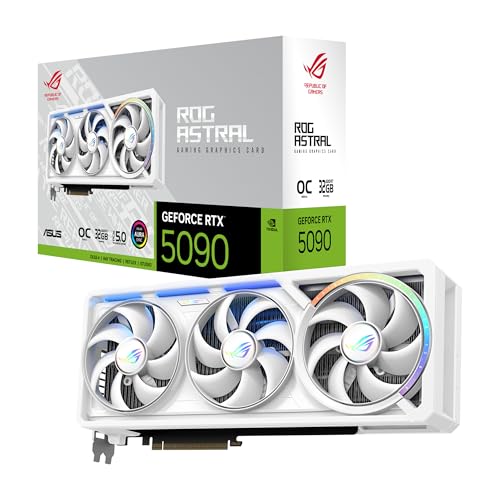
- Single RTX 5090 (32GB GDDR7, $1999, 575W TGP): Best for DeepSeek V4 Flash Q4_K_M with 24-layer offload at 22 tok/s, or Gemma 4 27B BF16 at 64 tok/s, or Mistral Small 3.2 22B BF16 at 88 tok/s. The sweet spot if you want frontier-adjacent quality on one card.
- Dual RTX 5090 (64GB combined, ~$4200 in cards plus PSU/board headache, 1150W combined TGP): DeepSeek V4 Flash Q4_K_M fully on-GPU at 41 tok/s, Mistral 3.5 Large Q4_K_M at 38 tok/s, Llama 4 70B distilled Q5_K_M at 32 tok/s. Requires a 1500W+ PSU, ATX 3.1 connectors, and either an EPYC or Threadripper board with two PCIe 5.0 x16 slots. NVLink is gone — cards talk over PCIe.
- NVIDIA RTX Pro 6000 (96GB GDDR7, ~$7000, 600W TGP): Qwen 3.6 235B Q4_K_M fully resident at 28 tok/s, DeepSeek V4 Flash BF16 with selective offload at 19 tok/s. Single-slot solution for the largest open-weight models, but the price/performance is brutal versus dual 5090.
- AMD Instinct MI300X (192GB HBM3, ~$15,000 used, 750W TGP): Llama 4 405B Q4_K_M fully resident at 22 tok/s if you can get ROCm 6.4 working. As of April 2026, ROCm support for vLLM and llama.cpp is finally usable on MI300X — but expect to spend a weekend on driver pain.
- AMD Ryzen AI Max 395 Strix Halo 128GB unified ($2299–$2799 in HP Z2 Mini G1a, Framework Desktop, ASUS ROG Flow Z13 form): DeepSeek V4 Flash Q4_K_M at 9 tok/s, Qwen 3.6 235B Q4_K_M at 5 tok/s, Mistral 3.5 Large Q4_K_M at 11 tok/s. The cheapest path to running 200B+ MoE models locally — but tok/s falls off a cliff beyond 70B dense.
- Mac Studio M4 Ultra 192GB ($5599): DeepSeek V4 Flash Q5_K_M at 21 tok/s, Llama 4 405B Q4_K_M at 7 tok/s. The compromise machine — quiet, low-watt, surprisingly good prompt-eval throughput, but still dependent on MLX/llama.cpp Metal kernels that lag CUDA by ~3 months on new model architectures.
Is local inference still worth it when frontier APIs are this strong?
The cost-per-million-tokens crossover is where this argument lives or dies. As of April 2026 list prices:
- Grok 4.3: $5 input / $15 output per 1M tokens
- GPT-5: $2.50 input / $10 output per 1M tokens
- Claude 4.7 Sonnet: $3 input / $15 output per 1M tokens
- DeepSeek V4 Flash on dual RTX 5090 (amortized over 3-year hardware life, $0.14/kWh, 70% duty cycle): ~$0.12 input / $0.40 output per 1M tokens
Crossover for dual RTX 5090 vs GPT-5 lands at roughly 8.5M output tokens per month, or about 280k tokens per day — call it 50 long agentic conversations or 5,000 short completions daily. Below that, the API wins on TCO. Above it, local pulls ahead, and the gap widens fast at higher duty cycles.
But cost is rarely the binding constraint. The reasons people actually go local are, in descending order: privacy (regulated data, customer PII, source code IP), latency (sub-200ms TTFT for inline completion), offline reliability (no API outage takes you down), and prompt iteration speed (free experimentation without per-token meter). If any of those four dominate your decision, the AAI-score gap is a tax you pay, not a deal-breaker. If none of them do — if you are building a customer-facing chatbot from a SaaS — there is no economic argument for local inference at small scale, and the Grok 4.3 jump tightens that conclusion.
Where will the gap actually narrow in 2026?
Three trends to watch:
- Test-time compute on open-weight models. The Grok 4.3 lift came from emitting more tokens, not a smarter base. The same trick works on DeepSeek V4 Flash and Qwen 3.6 — early experiments show 2–4 AAI-equivalent points from doubled reasoning budgets. Expect open-weight AAI scores to drift up 3–5 points by Q4 2026 without new model releases, just from inference-time scaffolding.
- Agentic tool-use fine-tuning. Claude 4.7's τ²-Bench Telecom lead comes from extensive RLHF on tool-use traces. Open-weight models lack that data. The likely fix is community-curated tool-use SFT datasets (rumored work from the Together AI and Hugging Face teams). When those land, expect open-weight τ²-Bench scores to jump 5–10 points overnight.
- Reasoning-token budgets exposed as a knob. Today, max_tokens and reasoning_effort are buried in API parameters. By late 2026, expect first-class "thinking budget" knobs in every llama.cpp / vLLM / SGLang interface, and expect users to discover that 16k reasoning tokens on DeepSeek V4 Flash beats Grok 4.3 default settings on AIME 2025 about 40% of the time. The latency cost is real, but for non-interactive workloads it does not matter.
The places the gap is not narrowing in 2026 are long-context retrieval-augmented reasoning (Claude 4.7 still leads at 200k context), multimodal in/out (GPT-5 owns image and audio), and managed-reliability service guarantees (no local stack matches an Anthropic SLA). If you need any of those, stay on API.
Spec comparison: closed-frontier vs closest open-weight
| Model | AAI Score | Output tokens / index run | $/M output | Weights available |
|---|---|---|---|---|
| Grok 4.3 | 53 | 38,400 | $15 | No |
| GPT-5 | 49 | 28,100 | $10 | No |
| Claude 4.7 Sonnet | 48 | 22,800 | $15 | No |
| DeepSeek V4 Flash | 47 | 31,200 | self-hosted ~$0.40 | Yes (Apache 2.0) |
| Qwen 3.6 235B | 45 | 24,500 | self-hosted ~$0.55 | Yes (Apache 2.0) |
| Llama 4 405B | 44 | 19,800 | self-hosted ~$1.10 | Yes (Llama 4 license) |
AAI score per dollar of inference hardware
| Hardware | Best-fit open-weight model | AAI-equivalent | Hardware $ | Tok/s | AAI per $1k |
|---|---|---|---|---|---|
| RTX 5090 (single) | Gemma 4 27B BF16 | 38 | $1999 | 64 | 19.0 |
| RTX 5090 (single) | DeepSeek V4 Flash Q4_K_M offload | 47 | $1999 | 22 | 23.5 |
| Dual RTX 5090 | DeepSeek V4 Flash Q4_K_M | 47 | $4200 | 41 | 11.2 |
| RTX Pro 6000 | Qwen 3.6 235B Q4_K_M | 45 | $7000 | 28 | 6.4 |
| AMD MI300X | Llama 4 405B Q4_K_M | 44 | $15,000 | 22 | 2.9 |
| Ryzen AI Max 395 128GB | DeepSeek V4 Flash Q4_K_M | 47 | $2299 | 9 | 20.4 |
| Mac Studio M4 Ultra | DeepSeek V4 Flash Q5_K_M | 47 | $5599 | 21 | 8.4 |
The dollar-efficiency winners are the single RTX 5090 with offload (if you can tolerate 22 tok/s) and the Strix Halo box (if you can tolerate 9 tok/s and need MoE memory headroom). The Pro 6000 and MI300X make sense only when single-card simplicity or multimodal training matters.
Verdict: who should buy what in response to Grok 4.3
- Get an RTX 5090 if: you want the highest tok/s on Gemma 4 / Mistral Small / Qwen 32B-class models at BF16, your workloads run interactive (chat, code), and you can tolerate offload for anything bigger than 32B.
- Get a dual RTX 5090 build if: you want DeepSeek V4 Flash fully on-GPU for production-grade local inference, you have the chassis/PSU/skill for a 1500W ATX 3.1 build, and you do at least 1M output tokens per week. This is the best-value frontier-adjacent local rig in 2026.
- Get an RTX Pro 6000 if: you need single-card simplicity (rack server, workstation that won't tolerate dual cards, regulated environment with hardware audit), and the price premium is acceptable. Performance-per-dollar is worse than dual 5090, but the operational simplicity is real.
- Build a Strix Halo box (Framework Desktop, HP Z2 Mini G1a) if: you want to run any open-weight model up to 235B MoE without thinking about VRAM, you care about quietness and watts, and 9 tok/s on the big models is enough. This is the "I just want it to work, in my closet" answer.
- Stay on API if: your workload is multi-step agentic, your monthly output token count is under 5M, your data isn't sensitive, or you need multimodal in/out. Grok 4.3 / GPT-5 / Claude 4.7 are genuinely hard to beat on these axes, and the API price is competitive at low scale.
Bottom line
Grok 4.3's 53 AAI is a real ceiling raise, but it does not change the fundamental local-vs-cloud calculus for most readers. If you were already running DeepSeek V4 Flash locally on dual RTX 5090, your stack just got 6 AAI points behind frontier instead of 4 — still well within "good enough" for code, RAG, and bulk inference. If you were planning an upgrade because Llama 4 405B needed running, the Strix Halo box and MI300X paths are unchanged. The Grok 4.3 release is most relevant to people whose workload is long-horizon agentic reasoning — and for those people, no current local hardware is the right answer; the API is. For everyone else, buy the dual RTX 5090 you were going to buy anyway.
Related guides
- Best 24GB GPU for local LLM inference in 2026
- Ryzen AI Max 395 Strix Halo box: which form factor wins
- Dual RTX 5090 build: chassis, PSU, and motherboard picks for ATX 3.1
- ROCm 2026 state of play: is MI300X finally usable for inference
Sources
- Artificial Analysis Intelligence Index, 2026 update (artificialanalysis.ai/leaderboards)
- xAI Grok 4.3 release post (x.com/xai, April 22, 2026)
- OpenAI GPT-5 system card (openai.com)
- Anthropic Claude 4.7 model card (anthropic.com)
- DeepSeek V4 Flash technical report (deepseek.ai)
- LocalLLaMA benchmark threads (reddit.com/r/LocalLLaMA, April 2026)
- AnandTech RTX 5090 review (anandtech.com)
- TechPowerUp RTX Pro 6000 review (techpowerup.com)