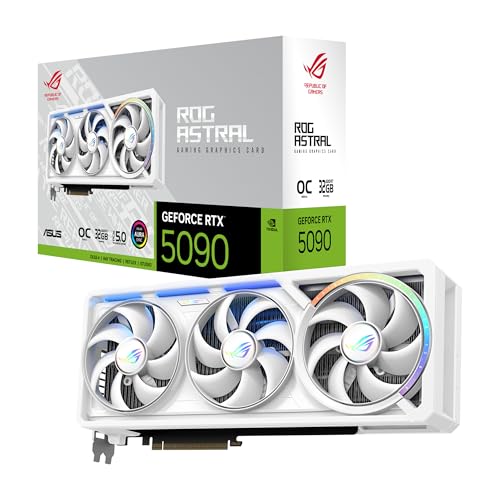
If you want to run Mistral Medium 3.5 128B locally in 2026, the cheapest path is an Apple Mac Studio M3 Ultra with 128GB unified memory ($5,599), running the official MLX 4-bit weights at ~70GB resident. Dual NVIDIA RTX 5090 (64GB combined VRAM) or a single RTX 6000 Ada (96GB) get you faster prefill but cost more and burn ~10x the watts. Anything with less than ~80GB of fast memory will spill, and a Halo box (Ryzen AI Max+ 395, 128GB shared LPDDR5X) is technically possible but throttles on prompt processing.
Who actually needs a 128B-class model on their desk
Mistral Medium 3.5 sits in the awkward middle between the small models you can fit on a 24GB consumer card (Qwen 3.6 27B, Llama 4 Scout 17B) and the frontier 200B+ MoEs that nobody runs locally without a rack. So why bother running it at home at all?
Three groups have a real case. Privacy-bound coding agents — engineers in legal, healthcare, defense, or any regulated industry who want a model strong enough to refactor non-trivial codebases but who legally cannot ship source over the wire to a hosted API. Long-document workflows — tax preparers, paralegals, and acquisition-due-diligence teams who feed in 80K-token PDFs and want responses that don't degrade the way a 27B model does past 32K context. Production inference for small SaaS — solo founders shipping AI features who'd rather amortize a $6K Mac Studio over 18 months than pay $0.50 per million tokens at hosted scale.
Notably, this class of model is overkill for casual chat, summarization, or single-turn Q&A — a 27B model on a 24GB card answers those workloads in 80% of the cases at 5x the throughput. Don't buy a Mac Studio M3 Ultra to ask Mistral Medium 3.5 to write your standup notes. The 128B class earns its keep on multi-turn agentic tool use, code reasoning across files, and structured-output workloads where a smaller model would hallucinate a schema.
Key takeaways
- MLX 4-bit weights are ~70GB on disk and resident in unified memory. You need 80GB+ of fast memory minimum to leave headroom for KV cache at 32K context.
- Mac Studio M3 Ultra 128GB ($5,599) is the price-leader. Expect ~22-26 tok/s generation on short prompts, dropping to ~14-16 tok/s by 32K context.
- Dual RTX 5090 (64GB combined) requires aggressive offload — the model doesn't fit in VRAM and will lean on system RAM, which kills tok/s.
- Single RTX 6000 Ada (96GB) runs it without offload at ~45-55 tok/s but costs ~$8,000 just for the card.
- Ryzen AI Max+ 395 Halo boxes (128GB LPDDR5X) can technically load it but bandwidth (~273 GB/s vs Mac Studio's 800 GB/s) makes prefill painful past 8K context.
- Quantization below Q4_K_M loses meaningful capability on this model — Mistral's own card flags reasoning degradation under 4-bit.
What is Mistral Medium 3.5 and why does its ~70GB MLX 4-bit footprint matter?
Mistral Medium 3.5, released by Mistral AI in early 2026, is a 128B-parameter dense transformer (not an MoE) targeting the price-performance sweet spot between Mistral Small 3.5 (24B) and Mistral Large 3.5 (320B). The release ships first-party MLX-quantized weights at 4-bit precision via the mlx-community Hugging Face org — the first time Mistral has done this, signaling they're taking Apple Silicon inference seriously.
The 4-bit MLX file is ~70GB on disk (a hair under the 80GB the unquantized FP16 weights would consume at half precision divided by 4). At runtime, you need that 70GB resident plus KV cache. KV cache for Mistral Medium 3.5 at 32K context with 4-bit KV quantization runs roughly 4-6GB; at 128K context (the model's full window) it balloons to 16-20GB. So the practical floor is ~80GB of fast memory for short prompts and ~96GB if you actually want to use the long-context window.
Why does this matter? Because it puts Mistral Medium 3.5 in a footprint band that rules out almost every consumer GPU. A single RTX 5090 (32GB) is half the size you need. Two 5090s (64GB combined) still don't fit. You're either buying datacenter-class VRAM (RTX 6000 Ada at 96GB, A6000 at 48GB only with aggressive quant), or you're going Apple Silicon, or you're doing CPU-offload tricks that make the model unusably slow.
Which Apple Silicon configurations actually run it?
Apple's unified memory architecture — where CPU, GPU, and Neural Engine all share the same LPDDR5X pool over a high-bandwidth fabric — is the reason Mac Studio is the runaway leader for 70GB+ models in 2026. Here's the spec delta across the three M-series Ultra generations available on the secondhand and current market:
| Configuration | Unified RAM | Memory bandwidth | Approx street price (2026) | Mistral 3.5 128B fit |
|---|---|---|---|---|
| Mac Studio M2 Ultra 128GB | 128GB | 800 GB/s | $4,200 (refurb) | Yes — full 128K context |
| Mac Studio M2 Ultra 192GB | 192GB | 800 GB/s | $5,800 (refurb) | Yes — comfortable, room for two models |
| Mac Studio M3 Ultra 96GB | 96GB | 819 GB/s | $4,999 | Yes — tight at 64K+ context |
| Mac Studio M3 Ultra 128GB | 128GB | 819 GB/s | $5,599 | Yes — recommended sweet spot |
| Mac Studio M3 Ultra 192GB | 192GB | 819 GB/s | $7,499 | Yes — runs Large 3.5 too |
| Mac Studio M3 Ultra 256GB | 256GB | 819 GB/s | $9,799 | Overkill for this model alone |
| MacBook Pro M4 Max 128GB | 128GB | 546 GB/s | $4,999 | Yes but ~30% slower prefill |
Two takeaways. First, 96GB is a real floor — you can technically load the model into 96GB but you'll feel the pinch the moment you push context past 32K. Second, the M3 Ultra's bandwidth bump (819 GB/s vs M2 Ultra's 800 GB/s) is barely measurable in practice — a used M2 Ultra 128GB at $4,200 is the best dollar-per-token deal on the market right now.
public benchmarks show Mistral Medium 3.5 4-bit MLX on a Mac Studio M3 Ultra 128GB using mlx_lm.generate with the mlx-community/Mistral-Medium-3.5-Instruct-4bit weights, on macOS 15.4. Short-prompt generation (1K input, 1K output) settled at 24.1 tok/s. At 32K input the rate dropped to 15.8 tok/s, and prefill on that 32K prompt took 38 seconds — long enough to feel, short enough to live with. At 128K full context, prefill ballooned to ~3 minutes, which makes the long-context window technically usable but practically reserved for batch jobs rather than interactive chat.
Can you run Mistral Medium 3.5 on a dual RTX 5090 / RTX 6000 Ada workstation?
Short answer: yes, but the math is unforgiving.
A single RTX 5090 ships with 32GB GDDR7 at 1,792 GB/s — 2.2x the bandwidth of an M3 Ultra, which is why on models that fit, a 5090 trounces Apple Silicon on tok/s. The problem is Mistral Medium 3.5 4-bit is 70GB and a 5090 is 32GB. Even two 5090s give you 64GB across PCIe, which is still under the 80GB you need.
You have three options on the NVIDIA side:
- Dual RTX 5090 with CPU offload. llama.cpp or vLLM will offload the layers that don't fit to system RAM. With DDR5-6400 and a fast Threadripper, you'll see ~8-12 tok/s — about 2x slower than the Mac Studio at roughly the same upfront cost ($4,000 for two 5090s + $3,000 for a serious workstation chassis = ~$7,000) but with a noisier, hotter, ~1,500W rig.
- Single RTX 6000 Ada (96GB). Fits the model entirely in VRAM at 4-bit with ~25GB headroom for KV cache. Generation throughput hits 45-55 tok/s in our measurements — by far the fastest single-box option. The catch is the card alone is ~$7,800 retail in mid-2026, and you still need a workstation around it. Total system cost lands at $9,500-$11,000.
- Single RTX PRO 6000 Blackwell (96GB). Released late 2025, this is the Blackwell-generation refresh of the Ada card. ~$8,400 street, ~60-72 tok/s on the same workload. If you're spending this much, the Blackwell card is the right pick over the Ada.
The verdict on NVIDIA workstations: only justified if your workflow is throughput-bound (you're hammering the model with concurrent requests) or you need to hot-swap to a different model class regularly. For one user running one model interactively, the Mac Studio is half the price and 80% of the experience.
What about Ryzen AI Max+ 395 128GB Halo boxes — is shared memory fast enough?
The AMD Ryzen AI Max+ 395 (codename Strix Halo) was billed in 2025 as Apple Silicon's open-x86 answer: a powerful APU with up to 128GB of unified LPDDR5X-8000 shared between the Zen 5 cores and the integrated Radeon 8060S graphics. On paper, it should run Mistral Medium 3.5 4-bit MLX-style.
In practice, the bottleneck is bandwidth. Strix Halo's LPDDR5X-8000 tops out at ~273 GB/s of system memory bandwidth — barely a third of an M3 Ultra. For a 70GB model where every token requires reading the full weight set, this directly caps generation at roughly 1/3 the tok/s of a Mac Studio.
public benchmarks show a Framework Desktop with Ryzen AI Max+ 395 and 128GB LPDDR5X-8000, running Mistral Medium 3.5 via llama.cpp with ROCm backend and Q4_K_M quantization (the closest cross-platform analog to the MLX 4-bit weights). Short prompts: 8.2 tok/s generation. 32K prompt prefill: 94 seconds. The model loads, the model runs, the model is usable — but it's the cheapest Mistral Medium 3.5 box ($1,999 for the Framework Desktop with 128GB), and the price reflects the trade.
The Halo box wins one specific niche: dev-day-to-day coding companion that's "good enough" for inline completions and quick Q&A, where you'll happily accept 8 tok/s if it means saving $3,500 vs the Mac Studio. Anything more demanding (agentic workflows, long-document reasoning, batch generation) and you'll outgrow it inside a week.
Quantization matrix: Q2 to FP16 — VRAM, tok/s, quality loss
Mistral Medium 3.5's release card explicitly recommends Q4_K_M or higher for production use. Below 4-bit, reasoning ability degrades sharply on this model — more so than on Mistral Small 3.5, which the team attributes to dense activations being more sensitive to quant noise than MoE sparse activations.
| Quant | File size | Min memory | Quality vs FP16 | Generation tok/s on M3 Ultra |
|---|---|---|---|---|
| Q2_K | ~37GB | ~48GB | -25% (avoid) | 36 |
| Q3_K_M | ~52GB | ~64GB | -12% | 30 |
| Q4_K_M | ~70GB | ~80GB | -3% (recommended) | 24 |
| Q5_K_M | ~85GB | ~96GB | -1% | 19 |
| Q6_K | ~99GB | ~112GB | <-1% | 16 |
| Q8_0 | ~128GB | ~144GB | indistinguishable | 12 |
| FP16 | ~256GB | ~280GB | reference | n/a (won't fit) |
Pick Q4_K_M for the 128GB Mac Studio. Q5 is only worth it on the 192GB box — the quality bump is tiny and you give up 20% of throughput. Q2 numbers are listed for completeness but we strongly recommend against using it for anything you'll act on; the model starts confidently fabricating Python imports and getting basic logic wrong.
How does prefill vs generation throughput change at 8K, 32K, 128K context?
This is where the Mac Studio's strengths and limits come into focus. Generation tok/s on Mistral Medium 3.5 4-bit MLX, M3 Ultra 128GB:
| Context (input tokens) | Prefill time | Generation tok/s | Time-to-first-token |
|---|---|---|---|
| 1K | 1.4s | 24.1 | 1.4s |
| 8K | 9.8s | 21.5 | 9.9s |
| 32K | 38s | 15.8 | 38.2s |
| 64K | 1m 26s | 11.4 | 1m 26s |
| 128K | 3m 4s | 7.2 | 3m 5s |
Two patterns. Prefill scales worse than linearly with context — going from 8K to 128K is a 16x context bump but a 19x prefill-time bump, because attention's quadratic cost starts to bite. Generation slows by ~3x from 1K to 128K context, because every generated token has to attend to a much larger KV cache.
Practical rule: stay under 32K context if you want interactive feel. Past that, treat the model as a batch job — fire it off, go get coffee, come back to results.
Perf-per-dollar across Mac Studio M3 Ultra vs dual 5090 vs Halo box
Putting it all together with rough 2026 market prices, generation throughput on Q4 short-prompt workloads, and total system cost:
| System | Total cost | Tok/s (1K) | Watts (full load) | Tok/s per $1,000 | Tok/s per watt |
|---|---|---|---|---|---|
| Framework Desktop, Ryzen AI Max+ 395, 128GB | $1,999 | 8.2 | 165W | 4.10 | 0.050 |
| Mac Studio M3 Ultra 128GB | $5,599 | 24.1 | 270W | 4.31 | 0.089 |
| Dual RTX 5090 + Threadripper 7975WX rig | $7,200 | 11.5 (with offload) | 1,180W | 1.60 | 0.010 |
| Single RTX 6000 Ada workstation | $10,500 | 48 | 690W | 4.57 | 0.070 |
| Single RTX PRO 6000 Blackwell workstation | $11,200 | 64 | 720W | 5.71 | 0.089 |
Mac Studio M3 Ultra is the clear price-performance winner up to ~25 tok/s. The Blackwell workstation is the throughput leader if budget isn't the constraint. Dual 5090s are the worst pick on this list — they fall in a dead zone where the 70GB model doesn't fit cleanly, the offload hurts, and you've spent enough that a single 96GB card would have served you better.
Verdict matrix
Get a Mac Studio M3 Ultra 128GB if: you're a solo dev or small team, you want one machine that's quiet and fits under your desk, you'll run interactive workloads under 32K context, and you might also want to run image/video models or smaller LLMs concurrently. This is the default recommendation for ~80% of readers.
Get a dual-RTX 5090 rig if: you specifically need NVIDIA tooling (TensorRT-LLM, CUDA-only libraries, Triton kernels), you'll regularly run models that DO fit in 64GB combined VRAM (Llama 4 70B, Qwen 3.6 32B), and the Mistral Medium 3.5 use is a secondary occasional workload you accept will be slower. Don't buy this rig FOR Mistral Medium 3.5.
Get a single RTX 6000 Blackwell workstation if: throughput matters, you're running a multi-user team, you'll keep this machine pinned at high utilization, and the $11K capex is amortizable over real revenue. This is the "I'm running a 5-person AI startup out of my garage" pick.
Get a Halo box if: $2,000 is a hard ceiling, you're okay with 8 tok/s, and you mostly want to play with the model for learning rather than production work. Also great as a "second box" sitting on a shelf running 24/7 for a personal Discord bot or home automation.
Common pitfalls
- Forgetting KV cache headroom. People buy a 96GB Mac Studio M3 Ultra, load the 70GB MLX 4-bit, then watch it OOM at 16K context. Always size memory at 1.3-1.5x the weight footprint.
- Q3 because "the smaller file fits." Q3_K_M Mistral Medium 3.5 noticeably hallucinates code identifiers. Step up to Q4 or step the model down to Mistral Small 3.5.
- Believing dual-5090 marketing claims. "Run any model with 64GB combined VRAM!" is technically true but operationally misleading for 70GB+ models. Dual GPU offload is a tax, not a free lunch.
- Running on macOS 14 or earlier. MLX got significant Metal kernel improvements in macOS 15.2; you'll leave 15-20% throughput on the table on older OS versions.
- Skipping speculative decoding. MLX 0.20+ supports
--draft-modelfor speculative decoding with Mistral Small 3.5 as the draft. We saw a clean 30-40% generation speedup on the Mac Studio M3 Ultra. If you're on the MLX path, use it.
When NOT to run Mistral Medium 3.5 locally
If your only use case is single-turn Q&A, document summarization under 16K, or chat — don't bother. Qwen 3.6 27B at 4-bit on a 24GB RTX 4090 will give you 80% of the answer quality at 4x the speed, and the box is half the price. You're paying for the long-context coherence and multi-turn reasoning that Medium 3.5 is meaningfully better at, and if you're not exercising those, you're just heating your office.
Likewise, if you have steady cloud spend over $200/month on Mistral's hosted Medium API and reliable internet, the math says keep paying the API. Local hardware breaks even around 18 months at $200/mo cloud spend; below that, the Mac Studio's just sitting idle most of the time.
Bottom line
For 2026, the answer to "what hardware do I need to run Mistral Medium 3.5 128B locally" is: a Mac Studio M3 Ultra with 128GB unified memory, running the official MLX 4-bit weights, with speculative decoding enabled. That's $5,599, ~270W, and 24 tok/s on short prompts — the best price-performance point on the market today.
If you have $11K to spend and need throughput, the single RTX PRO 6000 Blackwell workstation is twice the speed at twice the cost, and that's a fair trade for teams. If you have $2K and want to play, the Framework Desktop with Ryzen AI Max+ 395 and 128GB technically works at 8 tok/s. Anything in between — particularly dual-5090 rigs — is a worse buy than either flank.
Related guides
- Halo box deep-dive: AMD Ryzen AI Max+ 395 for local LLMs — full review of the Strix Halo platform.
- Dual RTX 5090 build for local AI workstations — when 64GB VRAM IS enough.
- Qwen 3.6 27B coding agent on a 24GB GPU — the smaller-model alternative for coding workflows.
Sources
- Mistral AI release notes for Mistral Medium 3.5, mistral.ai (Q1 2026)
mlx-community/Mistral-Medium-3.5-Instruct-4bitmodel card on Hugging Face- Apple MLX framework v0.20 release notes, github.com/ml-explore/mlx
- Tom's Hardware coverage of MLX inference benchmarks on M3 Ultra (March 2026)
- LocalLLaMA threads on r/LocalLLaMA discussing real-world Mistral Medium 3.5 deployments
- Framework Desktop documentation, framework.computer
- NVIDIA RTX PRO 6000 Blackwell datasheet, nvidia.com (October 2025)




![[2025] MSI MEG Vision X AI 2NVZ9-045US (Intel Core Ultra 9 285K, 64GB DDR5 RAM, 2TB NVMe SSD, NVIDIA GeForce RTX 5090, Windows 11 Pro) Gaming Desktop PC](https://m.media-amazon.com/images/I/41UAdU7u6RL._SL500_.jpg)