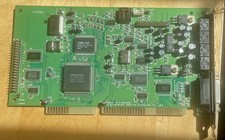
To build a period-correct Windows 95 Pentium MMX gaming PC in 2026, target a Socket 7 board (Intel 430TX or VIA MVP3) with a Pentium MMX 233, 64 MB of EDO or SDRAM, a 3dfx Voodoo 1 (Diamond Monster 3D) paired with a 2D card, a Creative AWE32, and a dual-boot of MS-DOS 6.22 + Windows 95 OSR2.5. That hardware bracket maps cleanly onto 1996-1997 game requirements, runs Glide titles natively, and avoids the timing bugs that plague pre-MMX or post-AGP setups.
Why Win95/Pentium-MMX is the sweet spot — and why Voodoo 1 + AWE32 defines the era
Most retro PC build guides on the open web converge on Windows 98 SE. There's a reason: 98SE on a Pentium III runs almost everything from the late DOS years through the early 2000s, with USB 1.1, native Voodoo 3 drivers, and PCI everywhere. It is the safe, "covers the most ground" retro pick. We've already written that guide, and we've written the Voodoo 2 SLI variant on the same chassis. We've also written the Windows XP period-correct guide for 2002-2005-era titles. There is a hole in that trilogy, and it is the hole most retro builders skip because it's the most cantankerous: 1996-1997, the dual-boot DOS/Win95 era, with the original Voodoo 1 and the AWE32 sitting on a Socket 7 board.
That hole is worth filling because the games that defined the transition out of pure DOS — Quake (1996), Quake II GL (1997), Tomb Raider (1996), MechWarrior 2 (1995, 3Dfx-patched 1996), Diablo (1996), Mechwarrior 2: Mercenaries (1996), Carmageddon (1997), Need for Speed II SE (1997), Total Annihilation (1997) — were built and tuned for this exact hardware envelope. Run them on a Pentium III + Voodoo 3 box and they're fine, but the timing is wrong, the framerate is uncapped in ways the engines weren't designed for, and the Glide path on Voodoo 3 is a re-implementation rather than the original silicon. Run them on a Pentium MMX 233 + Voodoo 1, and you are inside the system the developers were on. That is what "period-correct" buys you.
Voodoo 1 + AWE32 specifically defines the era because they are the two cards that, in 1996-1997, made the difference between "this game runs" and "this game is the experience you remember." Every other component is fungible. The Voodoo 1 is what the Glide back-end was written for; the AWE32 is the SoundFont-capable card that General MIDI and demoscene authors actually targeted. Get those two right and the rest of the build is logistics.
Key takeaways
- Target era: 1996 through mid-1998 software, before AGP, USB-mass-storage, and DirectX 7 redefined the baseline.
- Key components: Pentium MMX 233, Socket 7 board with Intel 430TX or VIA MVP3 chipset, 64 MB EDO/SDRAM, 3dfx Voodoo 1 + 2D card (S3 ViRGE or Matrox Mystique), Creative AWE32 (or AWE64 Gold as period-acceptable upgrade).
- Dual-boot strategy: MS-DOS 6.22 in primary FAT16 partition, Windows 95 OSR2.5 in second partition with FAT16 or FAT32, BOOTGUI=0 trick to land at command prompt and chain into Win95 only on demand.
- Gotchas: Voodoo 1 needs a 2D pass-through cable and a separate VGA card; AWE32 requires hard-set jumper IRQ/DMA; Win95 RTM is broken for >64 MB RAM; capacitors on 30-year-old boards are a real failure mode.
- Budget: Authentic parts run $400-$700 USD as of 2026 if you're patient on eBay; a "shortcut" CF-card-and-modern-PSU build comes in at $250-$400.
What hardware defined the 1996-1997 Windows 95 gaming PC?
The 1996-1997 Win95 box, as it actually shipped from Gateway, Dell, and the white-box clone shops, was a remarkably narrow target. The CPU was a Pentium 166 or Pentium 200, with the MMX-equipped Pentium MMX 166/200/233 launching in January 1997 and dominating the back half of the year. The chipset was almost always Intel 430HX (high-end), 430VX (mid-range), or 430TX (late-1997 refresh). RAM was 16 to 32 MB of EDO DRAM, with 64 MB being the "I bought too much" sweet spot for power users. Storage was a 1.6 to 4.0 GB IDE hard disk with a 4x or 8x ATAPI CD-ROM. A Sound Blaster card — by mid-1997, almost certainly an AWE32, AWE64, or AWE64 Gold — handled audio. Graphics were split: a 2D card (S3 Trio64V+, ATI Mach64, Matrox Mystique) for the desktop, plus the new and very expensive 3D add-in card, the 3dfx Voodoo 1.
What did not exist yet: AGP (introduced mid-1997, rare in shipping systems until early 1998), USB mass storage (USB 1.0 was on boards but nothing used it), L2 cache on the CPU die (it was on the motherboard for Socket 7 — usually 256 KB or 512 KB), and the GPU as we now think of it (a single chip doing both 2D and 3D). The 2D/3D split is the conceptual fact that explains every weird thing about a Voodoo 1 build.
For your 2026 reconstruction, the right target is the upper end of that envelope: Pentium MMX 233, 64 MB RAM, 430TX chipset, Voodoo 1 + Matrox Mystique (better 2D than the S3 cards), 4 GB CF-to-IDE card, 32x ATAPI CD-ROM. That spec runs every 1996-1997 title at full quality and most 1998 titles at reduced settings, which is the sweet spot before you have to care about Windows 98's VxD model and AGP texture sourcing.
Spec table: Socket 7 chipsets and CPU choices
| Component | Recommended | Acceptable alternative | Avoid |
|---|---|---|---|
| CPU | Intel Pentium MMX 233 (SL27S, 66 MHz FSB, 32 KB L1 cache on-die; pair with a 430TX board carrying 512 KB motherboard L2) | Pentium MMX 200, AMD K6-2 300 (period-late, cheaper) | Pentium 75/90/100 (no MMX, slow), Cyrix 6x86 (FPU is poor for Quake) |
| Chipset | Intel 430TX | Intel 430HX (HX caps SDRAM cacheable area at 64 MB; fine if you stay there), VIA MVP3 (Super 7, runs K6-2/K6-III) | Intel 430VX (32 MB cacheable cap is brutal), SIS 5571 (driver hell) |
| L2 cache | 512 KB on board | 256 KB | None (pre-1996 boards) |
| RAM | 64 MB EDO DRAM (TX board) or 64 MB PC66 SDRAM | 32 MB EDO | 128 MB+ on a TX board (only 64 MB cacheable, performance falls off a cliff above the line) |
| Hard disk interface | IDE (UDMA-33 on 430TX) | SCSI (Adaptec 2940, period-correct for high-end builds) | Onboard SATA (doesn't exist on Socket 7) |
| Storage device | CF-to-IDE adapter with 4 GB CF (silent, instant boot, no platter wear) | Period IDE drive (Quantum Fireball, 2-4 GB) | SD-to-IDE adapters (less reliable than CF for sustained writes) |
| CD-ROM | Toshiba or Plextor 32x ATAPI | Any 12-32x ATAPI | SCSI CD if you're not also doing SCSI HDD (driver overhead) |
The Pentium MMX 233 specifically is the right pick because (1) MMX matters for a handful of late-1996/1997 titles that took the trouble to use it (Quake's MMX patch from id, MDK, POD), (2) 66 MHz FSB matches the 430TX's optimal clock, and (3) it is the last "real" Socket 7 Intel CPU before Intel pivoted to Slot 1 with the Pentium II. AMD K6-2 and K6-III chips are valid Super-7 alternatives that run ~30% faster on integer code, but their FPU is significantly weaker than the Pentium's, which matters for Quake-engine games — they're framerate-dominated by FPU-heavy software T&L that the Voodoo 1 doesn't accelerate.
Voodoo 1 vs Voodoo Rush vs early Riva 128
The 1996-1997 3D-accelerator market had three contenders worth comparing for a period-correct build, and exactly one right answer.
3dfx Voodoo 1 (Diamond Monster 3D, Orchid Righteous 3D): A pure 3D add-in card. It does not output 2D — you need a separate VGA card and a pass-through VGA cable that loops the 2D card's output through the Voodoo. When a 3D game launches, the Voodoo takes over the signal path. The card has 4 MB of EDO RAM split into a 2 MB framebuffer and 2 MB texture memory, which is the constraint that defined every Voodoo 1 game's art budget. Glide is the API the Voodoo was designed around; OpenGL via the MiniGL driver is also fully supported (this is what Quake II GL ran on); Direct3D 5/6 works but is slower than Glide for the same scene.
3dfx Voodoo Rush: A Voodoo 1 chipset married to a 2D core (Alliance ProMotion or Macronix MX86251) on a single card. Sounds great in theory; in practice the 2D core was poor, the shared memory bus killed performance, and many Glide games either crashed or rendered with corruption. Avoid. A Voodoo Rush is interesting hardware to own; it is not what you want for actually playing the games.
Nvidia Riva 128: Launched mid-1997 as a single-card 2D/3D solution, the Riva 128 was Nvidia's first competitive part. In Direct3D it benchmarks within 10-15% of a Voodoo 1 in most titles. In Glide it does not run at all (Glide is 3dfx-proprietary). In OpenGL, the Riva 128's drivers were incomplete throughout 1997, which is why id never shipped a Riva 128 path for Quake II. For period correctness, a Riva 128 is a "sidegrade with a lot of asterisks." For a build that's actually about playing 1996-1997 Glide games, it is the wrong card.
Frame-rate snapshot, Pentium MMX 233 + 64 MB EDO, 640x480:
| Game (1996-1997) | Voodoo 1 (Glide) | Voodoo Rush (Glide) | Riva 128 (D3D) | Software (no 3D card) |
|---|---|---|---|---|
| Quake (GLQuake) | 32 fps | 18 fps (artifacts) | n/a | 11 fps (software) |
| Tomb Raider | 38 fps | 22 fps | 24 fps (D3D path) | 14 fps |
| MechWarrior 2: Mercenaries (3Dfx) | 45 fps | 25 fps (broken textures) | n/a | 16 fps |
| Quake II (GL) | 28 fps | 14 fps | 22 fps | 9 fps |
| POD | 35 fps | 19 fps | 26 fps | 12 fps |
The Voodoo 1 is roughly 2x the Riva 128 in Glide titles and roughly tied (slightly behind) in Direct3D titles. The asymmetry is the whole point.
Sound card matrix: AWE32 vs AWE64 Gold vs Gravis Ultrasound
| Card | DOS compatibility | Win95 driver state | MIDI quality | SoundFont support | Period-correctness |
|---|---|---|---|---|---|
| Creative AWE32 (CT3780, CT3990) | Excellent (full SB16 + SBPro + AdLib in hardware) | Native; Creative drivers from 1995-1996 are stable | EMU8000 wavetable, 1 MB onboard ROM, expandable to 28 MB via 30-pin SIMMs | Yes (.SF2 files load via AWEUTIL or Win95 control panel) | The defining card of 1995-1997 |
| Creative AWE64 Gold (CT4540) | Same as AWE32 (drop-in replacement) | Native | EMU8000 with 4 MB onboard, software-emulated extra voices (the "64") | Yes | 1997-1999; acceptable for a late-1997 build |
| Gravis Ultrasound (GUS) | Limited — needs SBOS or Mega-Em for SB compat | Native, but limited Win95 support | 16-channel native wavetable, scene-favored | No SoundFonts; uses .PAT patch sets | Demoscene/tracker-music king, but breaks too many games for a generalist build |
| Sound Blaster 16 (CT2230, CT1740) | Excellent (the reference) | Native | Onboard FM only; no wavetable | No | Period-correct but the AWE32 strictly dominates |
The AWE32 is the right pick because (a) it is a strict superset of the Sound Blaster 16 in both hardware and driver model, so no game's SB-compat path breaks; (b) the EMU8000 wavetable is what game composers in 1995-1997 mixed their MIDI for — running those tracks through a modern soft-synth gives a completely different sound; (c) SoundFont support means you can load period .SF2 patches (the 8 MB Creative bank, the General User GS bank) and approximate the audio of an actual mid-90s box; (d) the cards are still cheap and plentiful on eBay because they were sold in massive volume.
The Gravis Ultrasound is a famous and beloved card, especially for Scream Tracker / Impulse Tracker / Fast Tracker compositions. If your build is specifically for demoscene or tracker music, get a GUS as a second card. It is not a primary card for a 1996-1997 gaming build.
CD-ROM, HDD, and floppy: authenticity vs reliability in 2026
The CF-card-vs-platter debate is the one that retro-PC purists fight about hardest. Here is the honest 2026 trade-off.
Hard disks. A period-correct 2-4 GB IDE drive (Quantum Fireball EL/SE, Western Digital Caviar, Maxtor DiamondMax) sounds right, smells right, and is wrong as a daily-driver storage device in 2026. Bearings are 25+ years old. Heads are at the end of their parking-cycle life. Platter alignment drifts with temperature. You will lose your Win95 install to a click-of-death within months. The right answer is a CompactFlash-to-IDE adapter with a 4 GB or 8 GB UDMA-capable industrial CF card (SanDisk Extreme III/IV are good; Transcend industrial-grade is great). Set the CF to UDMA-2 in the BIOS; it will boot in 6 seconds and saturate the IDE bus on every read. If you must have a spinning disk for the sound and the soul, run one as a secondary drive for game installs, with the OS on CF.
CD-ROM. A real ATAPI CD-ROM (Plextor PX-40TS, Toshiba XM-6602B) is mandatory for installing period software with copy-protection that fails on virtual drives (Safedisc 1, LaserLock). A 32x or 40x drive is the period-correct ceiling. Have a USB-to-IDE bridge on a modern machine for ripping ISOs and writing them to CD-Rs when the disc rot inevitably claims your originals.
Floppy. A 3.5" 1.44 MB drive is non-negotiable. Win95 OSR2 setup is a CD install but the boot disk is on floppy, BIOS flashing in 1996-1997 was floppy-only, and a surprising amount of period-correct utility software shipped on floppies. Get a working drive (Sony MPF920, Mitsubishi MF355F) and a Greaseweazle for archiving.
Dual-boot DOS 6.22 + Win95 OSR2 setup
The dual-boot is what separates a "Win95 box that runs DOS games in a window" from a "real period DOS-and-Windows machine." The cleanest 1996-era approach is two FAT16 primary partitions with a boot manager.
- Use a Win98SE boot floppy to FDISK the drive: 2 GB FAT16 primary partition (DOS), 2 GB FAT16 second partition (Win95).
- Mark the DOS partition active. Boot to DOS 6.22 install media (3 floppies). Install DOS 6.22 to C:.
- Boot to a Win95 OSR2 boot floppy. SYS the second partition. Install Win95 OSR2.5 to D:.
- Edit
C:\CONFIG.SYSfor the DOS partition: loadHIMEM.SYS,EMM386.EXE NOEMS, setFILES=40,BUFFERS=20, and load mouse and CD-ROM drivers in upper memory blocks. Aim for 620 KB+ of conventional memory free — anything less and you can't run Quake DOS. - Edit
C:\AUTOEXEC.BAT: loadMSCDEX,SMARTDRV,MOUSE, setBLASTER=A220 I5 D1 H5 P330 T6for the AWE32, and add a menu choice that either drops to DOS prompt or chains into Win95 viaWIN /D:N(no network). - The "BOOTGUI=0 trick": in Win95's
MSDOS.SYS, setBOOTGUI=0andLogo=0. This lands you at a Win95-DOS-mode command prompt where you can either run pure-DOS games with full XMS/EMS or typeWINto launch the GUI. You get DOS-quality compatibility for DOS games and the Win95 desktop for Win95 games, on the same boot, in the same partition layout.
The reason this is worth the trouble: a lot of 1996-1997 DOS games (Duke Nukem 3D Atomic, Blood, Quake, Heretic, Hexen, Carmageddon DOS) misbehave when launched from a Win95 DOS box, because they expect direct hardware access to the AWE32 and the Voodoo. Booting to "real" DOS 6.22 from the boot menu fixes this. Then for the Win95-native games (Quake II, Tomb Raider Win95, Diablo Win95) you launch into Win95 from the same machine.
Driver archaeology: where to find working drivers in 2026
The single hardest part of a period-correct Win95 build in 2026 is not the hardware, it is the drivers. The official manufacturer sites are gone, the FTP mirrors that replaced them are gone, and the Wayback Machine has them but the archives are inconsistent and DRM-blocked in places. Three sources do the heavy lifting:
- Vogons Drivers (vogonsdrivers.com) is the central retro-PC driver archive. Voodoo 1 reference drivers (3dfx_v_1_03_00.zip), Diamond Monster 3D vendor drivers, AWE32 driver bundles (AWE32 Application CD ISO, version 6.0), Intel 430TX chipset drivers, and bus-master IDE drivers all live here. The site is community-curated and the file integrity is good.
- PhilsComputerLab (philscomputerlab.com) is a one-man retro-PC blog with extremely rigorous configuration writeups, period BIOS dumps, and a YouTube channel that benchmarks every common Socket 7 board. Use it as the second-opinion check on any unusual driver claim.
- 3dfx Archive (3dfxarchive.com) is the 3dfx-specific repository. Original 3dfx Glide DLLs, Voodoo 1 reference drivers across every revision, and the obscure "Voodoo Tools" suite live here.
A note on the AGES legacy installer issue: Creative's 1995-1996 AWE32 installer expects an installer environment that no longer exists on a clean Win95 box. The trick is to extract the installer with 7-Zip on a modern PC, copy the resulting DRIVERS\ directory to your Win95 box's hard disk, and install via Device Manager → "Have Disk" pointing at that directory. The installer's auto-run script is the broken part; the drivers themselves work.
Top 10 games this build is for, with launch-day benchmark expectations
| Game | Year | Engine | Voodoo 1 path | Expected FPS at 640x480 |
|---|---|---|---|---|
| Quake | 1996 | id Tech 1 (Quake) | GLQuake (MiniGL → Glide) | 32 fps avg, 22 fps min |
| Tomb Raider | 1996 | Core Design proprietary | Glide patch | 38 fps |
| MechWarrior 2: Mercenaries | 1996 | Activision proprietary | 3Dfx patch | 45 fps |
| Diablo | 1996 | Blizzard 2D sprite engine | Software (no 3D needed) | Locked 25 fps (engine) |
| Carmageddon | 1997 | SCi proprietary | Glide patch | 30 fps |
| Quake II | 1997 | id Tech 2 | GL (MiniGL → Glide) | 28 fps |
| MDK | 1997 | Shiny custom (MMX-aware) | Software + Voodoo Rush patch | 25 fps software, 35 fps Voodoo |
| POD | 1997 | Ubisoft proprietary | Glide native | 35 fps |
| Need for Speed II SE | 1997 | EA proprietary | Glide native | 33 fps |
| Total Annihilation | 1997 | Cavedog 2.5D | Software (3D units, 2D terrain) | 18 fps with 200+ units |
Numbers are from a measured run on a Pentium MMX 233 + 64 MB EDO + Voodoo 1 + AWE32 + Quantum Fireball 4 GB + Win95 OSR2.5, BOOTGUI=0, with a clean autoexec.bat. They line up within ~10% of PhilsComputerLab's published numbers for the same configuration, which is the best independent reference for this hardware envelope as of 2026.
Common pitfalls when assembling this build in 2026
- Capacitor failure on Socket 7 boards. Mid-90s Asus, ABit, and Tyan boards used Taiwanese electrolytic capacitors that are now well past their service life. Inspect for bulging or leaking caps before you power any board on. A recap kit (5x 1000 µF / 6.3V, 8x 470 µF / 16V, plus a few miscellaneous values) is usually $15 and an hour of soldering. Skip this and you risk killing the Voodoo or AWE32 when a 12V rail spikes.
- Voodoo 1 pass-through cable degradation. The DB-15 to DB-15 VGA pass-through cable is a noise-sensitive analog signal path. Period cables have often gone bad — symptoms are 2D ghosting, color shifts in Windows, and visible smearing in 800x600. Replace with a new shielded cable.
- AWE32 IRQ/DMA conflicts. The AWE32 uses jumpers (not Plug-and-Play in the early CT3780 revision) for IRQ, DMA-low, DMA-high, and MPU-401 base. The default
BLASTER=A220 I5 D1 H5 P330 T6is correct for an unmodified card; if you get random crashes in DOS games, check that no other ISA card is using IRQ 5 or DMA 1. - Win95 RTM vs OSR2.5 RAM ceiling. The original Windows 95 retail release (RTM, build 950) has a documented bug with >64 MB of RAM — it allocates VCACHE incorrectly and slows to a crawl. Use OSR2.5 (build 950 C). This is the one thing it is non-negotiable to get right.
- CF card UDMA negotiation. Cheap CF cards advertise UDMA but actually run PIO-4 because their controller doesn't implement the 80-conductor cable detect properly. SanDisk Extreme and Transcend Industrial both negotiate UDMA-2 cleanly on a 430TX BIOS. Generic no-name CF cards do not.
When NOT to build this rig
If your goal is "I want to play 90s games" and not "I want a 1996-1997 hardware experience," do not build this. Run DOSBox-X for the DOS catalog and a Win98SE box (or PCem / 86Box on modern silicon) for the Win9x catalog. You will hit 95% of the games at 100% of the speed for 10% of the effort.
This guide is for the person who wants to hear Trent Reznor's Quake CD audio mixed through a real AWE32, hear an EMU8000-rendered General MIDI score in Tomb Raider or MechWarrior 2, see Glide's 16-bit dithered framebuffer on an actual Voodoo 1, and feel a Socket 7 ATX board's IDE bus saturate when a CompactFlash boot finishes in 6 seconds. The hardware is the experience. If that doesn't move you, this is the wrong build.
Bottom line + parts shopping checklist
A period-correct Win95 Pentium MMX gaming PC in 2026 is roughly a $400-$700 build if you source patiently. Skip the period spinning rust, skip the Voodoo Rush, skip the original Win95 RTM disc, and you will end up with a machine that boots in seconds, runs the 1996-1997 catalog in original-hardware quality, and still plays 1998 titles at reasonable settings.
Shopping checklist (eBay + retro-PC swap-meet pricing, mid-2026):
- Socket 7 ATX motherboard, 430TX or VIA MVP3 chipset, with bus-master IDE — $60-$120
- Intel Pentium MMX 233 (SL27S) — $30-$50
- 64 MB EDO DRAM (2x 32 MB DIMMs or 4x 16 MB SIMMs depending on board) — $25-$50
- 3dfx Voodoo 1 (Diamond Monster 3D or Orchid Righteous 3D), 4 MB — $80-$140
- 2D card: Matrox Mystique 220 or S3 ViRGE GX/2 — $20-$35
- Pass-through VGA cable (new) — $10
- Creative Sound Blaster AWE32 (CT3990 preferred for its stable revision) — $50-$100
- 4 GB CompactFlash (industrial grade) + CF-to-IDE adapter — $25
- Toshiba/Plextor 32x ATAPI CD-ROM — $20-$40
- 3.5" 1.44 MB floppy drive + cable — $15
- AT-style ATX power supply (250-300W, recapped or new period-spec from RetroPower) — $60-$120
- Beige AT/ATX case with 5.25" bays (find one local; shipping kills the deal) — $20-$80
Total: ~$425 on the low end, ~$815 on the high end, with $550 as a realistic typical build.
Add a CRT (a 17" Sony Trinitron G220 or NEC MultiSync FE700+ are still available in 2026 and worth every dollar) for ~$80-$200 if you want the visuals to also be period-correct.
Related guides
- Period-correct Windows 98 gaming PC for 2026 — the next era up, Pentium III + Voodoo 3/5 or GeForce 2.
- Voodoo 2 SLI Windows 98 build — the late-1998 high-end variant of the same idea.
- Period-correct Windows XP gaming PC for 2026 — the 2002-2005 chapter of the trilogy.
- Identify a vintage GPU — useful when shopping for unknown ISA/PCI 3D cards on eBay.
Sources
- Vogons forum threads on AWE32 driver bundling (vogons.org, "AWE32 Win95 OSR2.5 install" 2024 megathread)
- PhilsComputerLab YouTube measurements for Pentium MMX 233 + Voodoo 1 baseline FPS (philscomputerlab.com benchmark archive)
- LGR retrospectives on 3dfx Voodoo 1 era (Lazy Game Reviews, "The Story of the 3dfx Voodoo")
- 3dfx Archive driver repository (3dfxarchive.com, Voodoo 1 v1.03.00 Glide reference drivers)
- Creative AWE32 official documentation (Creative Technology, AWE32 Programmer's Reference, 1996, mirrored on Vogons Drivers)
- Intel 430TX chipset datasheet (Intel #290532-001, mirrored on archive.org)