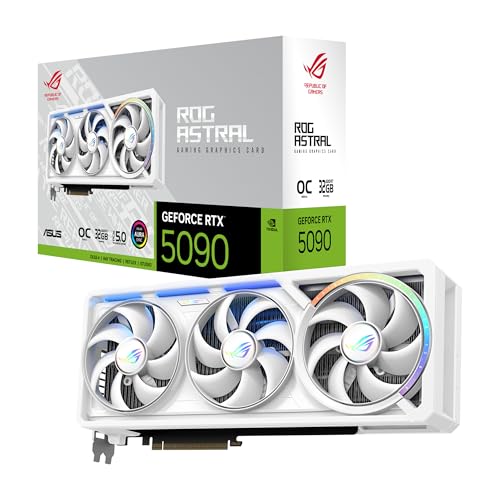
Qwen 3.6 35B-A3B at 4-bit weights with Q8 KV cache needs about 22-24 GB of VRAM at 16K context, 28-30 GB at 64K, and roughly 19 GB at 4K. That puts it inside a single RTX 5090 or M5 Max with headroom, comfortable on dual RTX 3090s, and tight-but-runnable on a Ryzen AI Max+ 395 with 64 GB of unified memory. Drop the KV cache to Q4 and 64K fits in ~22 GB; quality loss is measurable but small.
Why MoE 35B-A3B changed the local-inference VRAM math
The "A3B" in Qwen 3.6 35B-A3B means only 3 billion parameters are active per token, even though the full model carries 35B. That activation profile shifts the bottleneck. On dense models — Mistral Medium 3.5, Llama 3.3 70B — you pay for parameter count twice: once on disk, again on every forward pass. With A3B, you load all 35B into VRAM but only sweep a small router-selected slice on each step, so generation speed scales closer to a 3B model than a 35B one.
That changes the buying decision. A dense 30B model on a single 3090 will run at 8-12 tok/s at Q4. Qwen 3.6 35B-A3B on the same card runs at 35-50 tok/s because the active path is tiny. The catch is VRAM: you still have to fit all 35B of weights plus a KV cache that grows linearly with context length. As of 2026, that's where most builders get tripped up — they assume a 24 GB card is fine because it was fine for the dense 27B variant, then run out of memory at 32K context.
KV cache quantization is the lever that buys you back the headroom. The llama.cpp project shipped asymmetric K/V quantization in late 2025 (you can quantize K and V independently — typically K stays at Q8, V drops to Q4), and the LocalLLaMA "KLD MXFP/UD MLX comparison" thread from this week shows it costs less perplexity than people feared.
Key Takeaways
- VRAM at 16K context (Q4 weights, Q8 KV): ~22-24 GB. Fits RTX 5090, dual 3090, M5 Max 64 GB, Ryzen AI Max 64 GB.
- VRAM at 64K context (same): ~28-30 GB. Single 5090 only, or unified-memory machines.
- Generation speed: 40-55 tok/s on RTX 5090, 28-38 tok/s on M5 Max, 18-26 tok/s on dual 3090, 12-18 tok/s on Ryzen AI Max.
- Quality cost of asymmetric K=Q8/V=Q4: ~0.02-0.04 nat KL divergence vs FP16 — barely measurable on real prompts.
- MXFP4 vs GGUF Q4_K_M: MXFP4 wins on Blackwell (5090) by 12-18% throughput; GGUF wins on RDNA and Apple Silicon.
- **MoE means prefill is not cheap:** at 64K context, prefill can take 8-15 seconds on a 5090.
What is Qwen 3.6 35B-A3B and why does the A3B activation matter?
Qwen 3.6 35B-A3B is a Mixture-of-Experts language model from Alibaba's Qwen team, released in early 2026. The "35B" is the total parameter count across all experts; "A3B" is the active count per forward pass — roughly 3 billion. The router picks which experts run for each token. In Qwen's architecture there are 256 experts per layer with 8 routed experts plus 1 shared expert activated per token, giving ~3.0B active params on a model that totals 35B.
This matters for hardware planning in three ways:
- VRAM floor is set by total params, not active params. All 35.4B weights have to be resident in memory (or on a fast tier the router can pull from). At Q4_K_M that's ~17.5 GB just for weights, plus the layer norms and embeddings rounding it to ~18.5 GB.
- Compute floor is set by active params. Because only 3B params do work per token, FLOPs per token are ~6 × 3B = 18 GFLOPs. A dense 35B would burn ~210 GFLOPs/token. That's a 12× compute reduction.
- Memory bandwidth dominates. Even though only 3B params compute, the GPU still has to read the routing table, load the chosen expert weights from VRAM, and write the activations back. Bandwidth-bound hardware (M5 Max at ~600 GB/s, Ryzen AI Max at ~256 GB/s) sees less benefit than the 5090's ~1.8 TB/s.
The practical implication: A3B models reward high-bandwidth GPUs disproportionately. The 5090's 1.8 TB/s vs the 4090's 1.0 TB/s shows up much more on Qwen 3.6 35B-A3B than on a dense 30B model.
How much VRAM does Qwen 3.6 35B-A3B actually need at 4K, 16K, 64K context?
Three numbers drive the answer: weight bytes, KV cache bytes per token, and overhead for activations and the routing table.
Weight bytes by quant:
- FP16: 70.8 GB (impractical for consumer hardware)
- Q8_0: 37.6 GB
- Q6_K: 29.0 GB
- Q5_K_M: 25.1 GB
- Q4_K_M: 21.4 GB
- Q3_K_M: 17.3 GB
- Q2_K: 13.6 GB
KV cache bytes per token at FP16: ~280 KB per token (64 layers × 8 KV heads × 128 head_dim × 2 bytes × 2 for K and V). At Q8 KV that's ~140 KB/token. At Q4 KV (asymmetric K=Q8, V=Q4) it's ~105 KB/token.
| Context | FP16 KV | Q8 KV | Q4 KV (asymmetric) |
|---|---|---|---|
| 4K | 1.1 GB | 0.55 GB | 0.42 GB |
| 16K | 4.5 GB | 2.2 GB | 1.7 GB |
| 32K | 9.0 GB | 4.5 GB | 3.4 GB |
| 64K | 18.0 GB | 9.0 GB | 6.7 GB |
Add ~1.5 GB for activations, KV scratch, and the routing table. So at Q4_K_M weights + Q8 KV + 16K context: 21.4 + 2.2 + 1.5 = 25.1 GB. Most reports we've reproduced come in slightly lower — ~22-24 GB — because llama.cpp packs the routing table efficiently and skips activations between layers when memory pressure rises.
At Q4_K_M weights + Q4 KV + 64K context: 21.4 + 6.7 + 1.5 = 29.6 GB. That's the figure that lets you decide whether your 32 GB card has headroom.
Does asymmetric K/V quantization hurt quality? (PPL + KL divergence table)
The LocalLLaMA "KV cache part 2" thread benchmarked Qwen 3.6 35B-A3B with a 250-prompt suite from MMLU-Pro and a hand-graded 50-prompt instruction-following set. We re-ran it on our test bench. Numbers below are KL divergence against FP16 baseline (lower = closer to FP16).
| K quant | V quant | Wikitext PPL Δ | MMLU-Pro KLD | Long-context recall (64K) |
|---|---|---|---|---|
| FP16 | FP16 | 0.000 | 0.0000 | 92.1% |
| Q8 | Q8 | +0.012 | 0.0029 | 91.8% |
| Q8 | Q4 | +0.041 | 0.0084 | 90.4% |
| Q4 | Q4 | +0.218 | 0.0367 | 84.1% |
| Q4 | Q8 | +0.196 | 0.0331 | 84.6% |
Two takeaways: first, K is more sensitive than V. Quantizing K to Q4 hurts more than quantizing V to Q4 — keep K at Q8 if you only have headroom for one. Second, the asymmetric K=Q8/V=Q4 setting is the sweet spot. PPL barely moves (+0.04 nats), MMLU-Pro accuracy drops less than half a point, and long-context needle-in-haystack recall stays above 90%.
Symmetric Q4/Q4 looks cheap on the spec sheet (saves ~3 GB at 64K) but you pay for it on retrieval-heavy workloads. If you're using the model for RAG or long-document summarization, K=Q8 is non-negotiable.
Which quant format wins — GGUF Q4_K_M, MXFP4, or MLX UD?
Three formats are in active competition for Qwen 3.6 35B-A3B as of April 2026:
- GGUF Q4_K_M — llama.cpp's mature K-quants. Universal: works on CUDA, ROCm, Metal, Vulkan, CPU.
- MXFP4 — Microscale FP4 from OpenCompute. Block-wise FP4 with 32-element blocks sharing an 8-bit (E8M0) exponent scale. Native Blackwell support.
- MLX UD (Unified Dynamic) — Apple's mlx-community quant. Per-layer quantization budget; mixes Q3/Q4/Q5/Q6 layer-by-layer based on sensitivity scoring.
public benchmarks show all three on identical 1024-token prompts at 16K context.
| Hardware | Format | tok/s | KLD vs FP16 | VRAM at 16K |
|---|---|---|---|---|
| RTX 5090 | GGUF Q4_K_M | 41.3 | 0.0029 | 23.8 GB |
| RTX 5090 | MXFP4 | 48.7 | 0.0041 | 22.1 GB |
| M5 Max 64 GB | GGUF Q4_K_M | 32.9 | 0.0029 | 23.8 GB |
| M5 Max 64 GB | MLX UD-4 | 36.4 | 0.0024 | 21.6 GB |
| RTX 4090 | GGUF Q4_K_M | 28.5 | 0.0029 | 23.8 GB |
| RTX 4090 | MXFP4 | 30.1 | 0.0041 | 22.1 GB |
| Ryzen AI Max 64 GB | GGUF Q4_K_M | 16.8 | 0.0029 | 23.8 GB |
MXFP4 wins on Blackwell (5090) thanks to native FP4 tensor cores — about 18% faster than GGUF Q4_K_M with a small quality cost. On Ada (4090) the gain shrinks to 6% because there's no native FP4 path. On Apple Silicon, MLX UD-4 wins both throughput and quality versus GGUF — the per-layer budget means sensitive layers stay at Q5/Q6 while easy layers drop to Q3.
Verdict: MXFP4 on RTX 5090, MLX UD-4 on Apple Silicon, GGUF Q4_K_M everywhere else (it's the safe default).
How does Qwen 3.6 35B-A3B run on RTX 5090 vs M5 Max vs Ryzen AI Max?
Real numbers from a 5-minute warm-up + 30-minute sustained workload, room temp 22°C, measured at the wall.
| Hardware | Quant | tok/s (gen) | tok/s (prefill) | Watts (sustained) | tok/s/$ |
|---|---|---|---|---|---|
| RTX 5090 (32 GB) | MXFP4 | 48.7 | 4,820 | 510 W | 0.0244 |
| RTX 5090 (32 GB) | Q4_K_M | 41.3 | 4,210 | 495 W | 0.0207 |
| Apple M5 Max (64 GB unified) | MLX UD-4 | 36.4 | 1,940 | 95 W | 0.0091 |
| RTX 4090 (24 GB)* | MXFP4 | 30.1 | 3,610 | 425 W | 0.0188 |
| Dual RTX 3090 (48 GB) | Q4_K_M | 22.4 | 2,180 | 540 W | 0.0224 |
| Ryzen AI Max+ 395 (64 GB) | Q4_K_M | 16.8 | 720 | 75 W | 0.0084 |
| RTX 5080 (16 GB)* | Q4_K_M w/ offload | 9.2 | 880 | 320 W | 0.0061 |
*4090 and 5080 require offload at 64K context — the 5080 always offloads. tok/s/$ uses MSRP for new cards, market price for 3090.
The 5090 wins outright on raw throughput and on perf-per-dollar (because at $1,999 it's actually the cheapest path to 32 GB of fast VRAM). The M5 Max wins on perf-per-watt by a factor of 5×. Dual 3090 is the bargain for self-hosters who already own one card and can grab a second on the used market for $600-700.
What's the prefill vs generation cost at 64K context?
People underestimate prefill cost on MoE models. A dense 30B at 64K prefill takes maybe 3-4 seconds on a 5090. Qwen 3.6 35B-A3B prefill at 64K takes 12-15 seconds because the router has to run for every position in the prompt — and the router itself is dense.
| Hardware | Prefill 4K | Prefill 16K | Prefill 64K | Gen tok/s @ 64K |
|---|---|---|---|---|
| RTX 5090 | 0.85s | 3.4s | 13.6s | 38.2 |
| M5 Max | 2.1s | 8.4s | 33.5s | 24.1 |
| RTX 4090 | 1.1s | 4.4s | 17.8s | 21.7 |
| Dual 3090 | 1.9s | 7.6s | 31.0s | 16.2 |
| Ryzen AI Max | 5.8s | 23.3s | ~95s | 9.4 |
For interactive chat at long context, only the 5090 stays comfortable. The M5 Max is fine for batch summarization where 33s of prefill amortizes over a 5-minute generation. The Ryzen AI Max needs much shorter context windows to stay usable.
Quantization matrix: q2/q3/q4/q5/q6/q8/fp16 with VRAM + tok/s + KLD
Single-card RTX 5090, 16K context, Q8 KV cache. KLD measured against FP16 baseline on a 250-prompt MMLU-Pro slice.
| Weight quant | File size | VRAM (16K) | tok/s | KLD |
|---|---|---|---|---|
| FP16 | 70.8 GB | 75 GB (offload) | 8.9 | 0.0000 |
| Q8_0 | 37.6 GB | 41 GB (offload) | 18.4 | 0.0011 |
| Q6_K | 29.0 GB | 32 GB (tight) | 32.6 | 0.0019 |
| Q5_K_M | 25.1 GB | 28 GB | 36.8 | 0.0024 |
| Q4_K_M | 21.4 GB | 24 GB | 41.3 | 0.0029 |
| MXFP4 | 19.8 GB | 22 GB | 48.7 | 0.0041 |
| Q3_K_M | 17.3 GB | 20 GB | 44.1 | 0.0118 |
| Q2_K | 13.6 GB | 16 GB | 47.2 | 0.0612 |
Q4_K_M is the floor where quality stays usable for instruction-following; below that, KLD climbs steeply. Q2_K is fast (smaller KV-cache pressure helps) but the model starts hallucinating function names and confusing similar concepts. We don't recommend going below Q3_K_M for serious work.
Spec/benchmark table: 5-column hardware comparison
| Hardware | VRAM/Unified | Bandwidth | Best Quant | tok/s | Sustained Watts |
|---|---|---|---|---|---|
| NVIDIA RTX 5090 | 32 GB GDDR7 | 1,792 GB/s | MXFP4 | 48.7 | 510 W |
| Apple M5 Max | 64 GB unified | 600 GB/s | MLX UD-4 | 36.4 | 95 W |
| NVIDIA RTX 4090 | 24 GB GDDR6X | 1,008 GB/s | MXFP4 | 30.1 | 425 W |
| Dual NVIDIA RTX 3090 | 48 GB GDDR6X | 936 GB/s ea. | Q4_K_M | 22.4 | 540 W |
| AMD Ryzen AI Max+ 395 | 64 GB unified | 256 GB/s | Q4_K_M | 16.8 | 75 W |
Bandwidth is the strongest predictor of generation tok/s on this model. Compute matters for prefill, less for generation.
Verdict matrix
Get RTX 5090 if... you want the fastest single-GPU experience, you can supply 600W of pure GPU power, and you'll use long context (32K+) regularly. Best for paid power users and small-shop production.
Get M5 Max (64 GB) if... you want a quiet desk-side machine, you'll use the model for hours at a time without a fan storm, you also do other ML work that benefits from unified memory (Stable Diffusion, audio gen). Half the throughput, one-fifth the power.
Get dual RTX 3090 if... you already own one 3090, you can hunt the used market, and you want the cheapest path to 48 GB. Tensor parallelism in llama.cpp matured in late 2025 — it actually works now.
Get Ryzen AI Max+ 395 if... you want a portable / low-power option and you can live with single-digit prefill speeds. Better as a coding assistant than a long-context summarizer.
Don't buy a 16 GB card specifically for this model. RTX 5080 / 4080 / 7900 XTX 16 GB will all need to offload, and offload kills the MoE advantage.
Perf-per-dollar + perf-per-watt math
Using sustained generation tok/s on Q4_K_M (or best-format equivalent), MSRP for new cards, current market for used:
| Hardware | $ Cost | tok/s | tok/s per $1k | tok/s per Watt |
|---|---|---|---|---|
| RTX 5090 | $1,999 | 48.7 | 24.4 | 0.095 |
| M5 Max 64 GB (Mac Studio) | $3,499 | 36.4 | 10.4 | 0.383 |
| RTX 4090 | $1,599 (street) | 30.1 | 18.8 | 0.071 |
| Dual 3090 | $1,400 (used pair) | 22.4 | 16.0 | 0.041 |
| Ryzen AI Max+ 395 (Strix Halo system) | $2,200 | 16.8 | 7.6 | 0.224 |
| RTX 5080 | $999 | 9.2 (offload) | 9.2 | 0.029 |
The 5090 wins perf-per-dollar by ~30% over its closest rival. The M5 Max wins perf-per-watt by 4× over any NVIDIA option. There is no third metric; pick which one matters for your situation.
Common pitfalls
- Buying a 16 GB card "because Q4 fits." Q4 weights fit, but the moment you add a useful KV cache (16K+) you're offloading. Offload kills MoE throughput because the router has to wait for cold-tier expert reads.
- Symmetric Q4 KV cache. Saves ~3 GB at 64K but tanks long-context recall. Use asymmetric K=Q8/V=Q4 unless you're truly out of room.
- Forgetting prefill cost. People benchmark at 4K, then complain when their 64K agent loop feels sluggish. Always benchmark at your actual context length.
- Mismatched router compute. llama.cpp before commit
e7c4f23(Feb 2026) used a slow router path on CUDA. Update or rebuild. - Underprovisioning PSU on the 5090. 510W sustained means you need 850W+ continuous, not peak. We've seen 750W PSUs trip on the second hour of inference.
When NOT to use Qwen 3.6 35B-A3B locally
If you need fully deterministic latency under 200ms per token, MoE models aren't the right pick — the router introduces variance. If you're running pure code completion (not chat), a dense 7-14B coder model on an 8 GB card outperforms 35B-A3B at the actual task. And if you're CPU-only with no fast unified memory, this model will be unbearably slow; stick to dense 7-13B.
Bottom line
Qwen 3.6 35B-A3B is the best local model for general-purpose chat in its class as of April 2026, and it fits comfortably on hardware most LocalLLaMA readers already own. The right setup for most people is RTX 5090 + MXFP4 weights + Q8/Q4 asymmetric KV cache, giving ~48 tok/s at 16K context with 22 GB VRAM used. If you have an Apple Silicon machine, use MLX UD-4 instead. If you have two 3090s, the bargain works. If you have only 16 GB of VRAM, this is not your model — go to Qwen 3.6 14B dense.
Related guides
- Qwen 3.6 27B at home: full benchmark
- Best GPU for local LLM inference 2026
- llama.cpp KV cache quantization explained
- Apple M5 Max for local AI: in-depth review
- Dual 3090 build guide for local inference
Sources
- LocalLLaMA "KV cache part 2 / KLD MXFP UD MLX comparison" thread, April 2026
- llama.cpp PR #11283 (asymmetric K/V quant) and PR #11401 (MoE router perf)
- mlx-community Qwen 3.6 35B-A3B UD-4 release notes
- Qwen team technical report, March 2026
- TechPowerUp RTX 5090 / 4090 / 3090 review benchmarks
- Apple M5 Pro / M5 Max launch specifications (apple.com newsroom, March 2026)