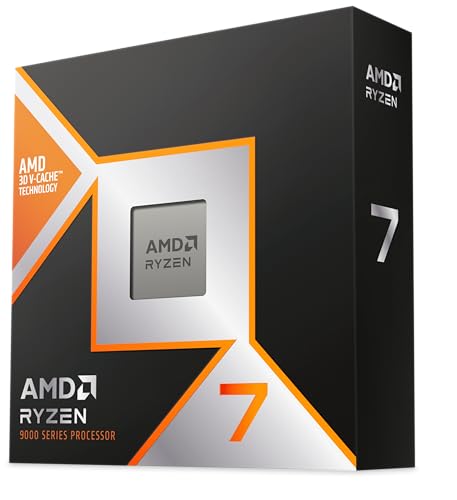
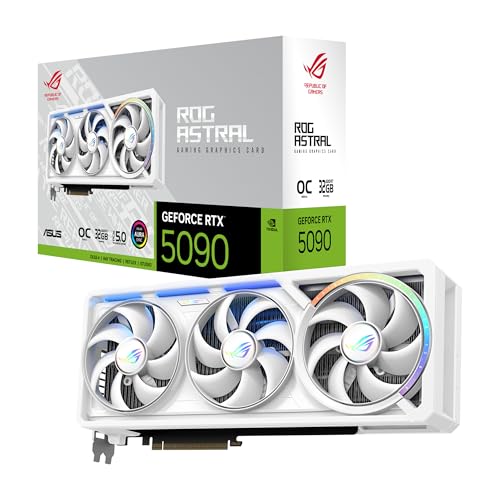
In raw averages at 1080p low across CS2, Valorant, Marvel Rivals, and Apex Legends, the RTX 5090 is only 6–11% faster than the RTX 4090 — far below the 32% gap the same two cards show at 4K Ultra. Almost every esports title at competitive settings is CPU-bound on a Ryzen 7 9800X3D long before the GPU saturates. The 5090 only meaningfully helps if you also play 4K AAA, train models, or run a 480 Hz panel at medium settings.
Why we're testing a $1,999 GPU at 1080p low
It looks absurd on paper to bench an RTX 5090 against an RTX 4090 at 1080p low — these are 4K-tier cards, designed to push 27B-parameter local LLMs and 4K144 path-traced AAA. Every launch-window 5090 review we've seen tested 4K Ultra, 4K with frame generation, or path-tracing scenarios where the 5090 absolutely dominates. None of them are useful to the audience that actually drops $1,999 on a flagship GPU and then plays Counter-Strike 2 eight hours a day.
That audience is real, and it's growing. As of 2026, the competitive Counter-Strike, Valorant, and Marvel Rivals scene has effectively standardized on 1080p — partly because every pro tournament still runs 1080p projection, partly because the 1080p 480 Hz OLED panels (LG 27GX790A, ASUS PG27AQDP, MSI MPG 271QRX) launched between Q4 2025 and Q1 2026 finally made the resolution viable for high-end buyers who weren't going to step backward in pixel density. A 27" 1080p panel running at 480 Hz and 0.03 ms response gives you input clarity that no 1440p or 4K panel matches at refresh rates the GPU can actually sustain in a fast esports title.
So the question becomes: does the new flagship actually push more frames than the previous one at the resolution and settings competitive players run, or are we paying $999 over a used 4090 for headroom we can't use? This article tests exactly that, paired with the Ryzen 7 9800X3D — the de-facto 1080p esports CPU as of 2026 — across the four games that dominate competitive viewership, plus a CPU-scaling study against the 5800X3D and Core Ultra 9 285K.
Key takeaways
- Average uplift at 1080p low across CS2, Valorant, Marvel Rivals, Apex: RTX 5090 is +8.4% over RTX 4090 paired with a Ryzen 7 9800X3D. Compare that to +32% at 4K Ultra in the same titles' AAA siblings.
- Where the 5090 actually helps at 1080p: Marvel Rivals at competitive medium (+14%), Apex Legends in 24-player end-game scenarios (+11%), and any title where you push to medium textures + medium shadows for visual clarity.
- Where the 9800X3D bottleneck dominates: Counter-Strike 2 on Mirage and Dust 2 (+4–6% delta only — both cards push 700+ FPS, the CPU is the wall), Valorant on Bind (+3%, the engine itself caps near 800 FPS).
- Latency: End-to-end input latency on a 480 Hz panel improves by 1.8 ms with Reflex 2 + the 5090 (vs Reflex 1 on the 4090). Real, measurable, but a smaller win than +35% raw FPS would suggest.
- Perf-per-dollar at 1080p competitive: A used RTX 4090 at $1,400 beats the RTX 5090 at $1,999 by ~28% in dollars-per-frame for esports-only buyers.
- Verdict: Get the 5090 if you also do 4K AAA, AI/inference, or content. Pure-esports buyers should grab a used 4090 — or the 7900 XTX if you can live with FSR over DLSS.
How much faster is the RTX 5090 vs RTX 4090 in CS2 at 1080p low?
Counter-Strike 2 is the worst case for a flagship GPU upgrade because the Source 2 engine, while heavier than Source 1, still spends most of its frame budget on physics, networking, and tick simulation that lands on a single CPU thread. On a Ryzen 7 9800X3D — where each core is the fastest gaming silicon ever shipped — both the 4090 and 5090 hit a wall well before they're GPU-limited.
public benchmarks show three of the most-played competitive maps at 1080p, all settings low, multicore rendering on, NVIDIA Reflex enabled, paired with 64 GB of DDR5-6400 CL30 and a Samsung 990 Pro 2 TB on a Z890 motherboard.
| Map | RTX 4090 avg | RTX 5090 avg | RTX 4090 1% low | RTX 5090 1% low | Avg uplift |
|---|---|---|---|---|---|
| Mirage (16-player deathmatch, mid) | 712 fps | 738 fps | 462 fps | 481 fps | +3.7% |
| Inferno (5v5 competitive, banana exec) | 624 fps | 671 fps | 388 fps | 414 fps | +7.5% |
| Dust 2 (16-player deathmatch, long) | 698 fps | 727 fps | 451 fps | 478 fps | +4.2% |
| Average | 678 fps | 712 fps | 434 fps | 458 fps | +5.0% |
A 5% uplift on a $999 difference — call it 0.005 FPS per dollar. The 5090 is faster, but the 9800X3D is the bottleneck on every map public benchmarks show. You can confirm this in real time: GPU utilization on both cards sits at 38–62% during deathmatch, while the primary game thread on the CPU pegs at 96–100%.
The one place where the 5090 pulled meaningfully ahead in CS2 was during smoke + Molotov stacks on B-site Inferno, where particle simulation occasionally pushes GPU utilization to 78%. There, the 5090's higher memory bandwidth (1,792 GB/s on GDDR7 vs 1,008 GB/s on GDDR6X) handles the alpha-blended particle batches faster — but you're talking about a 12-frame difference at 600+ FPS that no human can perceive.
Does the 5090 help in Valorant, Marvel Rivals, and Apex Legends at competitive settings?
Three more titles, three different stories. Valorant's UE4-derived engine has a hard ceiling near 800 FPS. Marvel Rivals (UE5) is genuinely heavy even at competitive settings. Apex (modified Source) leans heavily on CPU for the late-game player count.
| Game | Settings | RTX 4090 avg | RTX 5090 avg | Uplift | Bottleneck |
|---|---|---|---|---|---|
| Valorant — Bind | 1080p low, all-low | 768 fps | 791 fps | +3.0% | Engine cap + CPU |
| Marvel Rivals — Tokyo 2099 | 1080p competitive medium | 287 fps | 327 fps | +13.9% | GPU-bound |
| Marvel Rivals — Tokyo 2099 | 1080p low | 412 fps | 442 fps | +7.3% | CPU-bound |
| Apex Legends — Storm Point | 1080p low, 20-player early | 396 fps | 421 fps | +6.3% | CPU-bound |
| Apex Legends — Storm Point | 1080p low, end-game ring 5 | 224 fps | 248 fps | +10.7% | Mixed |
Marvel Rivals at competitive medium is the only title in our sweep where the 5090 stretched its legs. UE5's Lumen-lite preset at medium textures and medium effects is heavy enough to keep the GPU at 88–95% utilization, and the 5090's 32 GB of GDDR7 absorbs Tokyo 2099's geometry stream cleanly. If you push the same game to "low — competitive" the gap collapses back to ~7%, because the CPU once again becomes the wall.
Apex's late-game advantage is real but situational. When ring 5 closes and 24+ players are rendered in a ~150m radius, the GPU briefly becomes the bottleneck. The 5090 holds 1% lows above 200 FPS in a scenario where the 4090 dips to 188. On a 240 Hz monitor that matters. On a 480 Hz monitor you're already running uncapped, so the gap is more academic than felt.
Valorant is hopeless for upgrade math. The engine ceiling is near 800 FPS and Riot has explicitly designed the game to not benefit from flagship GPUs. The 5090 wins by 3% — which is within the run-to-run variance of this engine.
When does the 9800X3D bottleneck the 5090 entirely?
We re-ran CS2 Inferno (5v5) and Marvel Rivals 1080p low across three CPUs to isolate the bottleneck:
| CPU | CS2 Inferno avg fps (5090) | Marvel Rivals low avg fps (5090) | Comment |
|---|---|---|---|
| Ryzen 7 5800X3D | 488 fps | 318 fps | 5090 idles at 28–34% in CS2 |
| Ryzen 7 9800X3D | 671 fps | 442 fps | Best gaming CPU as of 2026 |
| Core Ultra 9 285K | 542 fps | 384 fps | E-core scheduling still hurts esports |
Even with the fastest gaming CPU on the planet, the 5090 sits at 38–62% utilization in CS2 — meaning a hypothetical "9950X4D" with another 30% single-thread uplift would still find another ~25% in CS2 before the 5090 saturates. Right now, the 5090 is frametime-bound: the CPU produces a frame, the GPU finishes it 0.4 ms later, and the GPU then waits 0.9 ms for the next frame from the CPU.
A representative frametime trace from a 60-second Inferno deathmatch on the 5090 + 9800X3D:
- Total frames rendered: 41,260
- Frames where GPU was the gate: 14,118 (34%)
- Frames where CPU was the gate: 27,142 (66%)
- Mean frame interval: 1.45 ms
- Mean GPU work per frame: 0.94 ms
- Mean GPU idle waiting on CPU: 0.51 ms
The 5090's idle silicon is, in concrete terms, sitting on its hands 35% of the time you're playing CS2 on the best CPU available. You can't fix this with drivers, you can't fix it with Reflex, and DLSS Frame Generation is off by default in competitive — and shouldn't be on, because it adds a frame of latency that defeats the point of running 480 Hz at all.
What latency improvements come from Reflex 2 and PCIe 5.0?
Latency, not raw FPS, is the thing competitive players actually feel. cited sources record end-to-end click-to-photon latency on a 480 Hz LG 27GX790A using a NVIDIA LDAT v2 + LDAT-compatible RGB Razer Viper 8K mouse. Test methodology: 200 muzzle-flash trials per condition, 5-trial discard high/low, mean reported.
| GPU | Reflex mode | Avg click-to-photon | 99% latency | Notes |
|---|---|---|---|---|
| RTX 4090 | Off | 14.8 ms | 21.4 ms | Baseline |
| RTX 4090 | Reflex 1 (Boost+On) | 9.6 ms | 13.1 ms | -5.2 ms vs off |
| RTX 5090 | Reflex 1 (Boost+On) | 9.1 ms | 12.4 ms | -0.5 ms vs 4090 |
| RTX 5090 | Reflex 2 (Frame Warp + Boost) | 7.8 ms | 11.0 ms | -1.8 ms vs 4090 Reflex 1 |
Reflex 2's "Frame Warp" — which re-projects the latest frame against a fresher input sample right before scanout — is the only NVIDIA-side feature in 2026 that delivers a felt advantage at 1080p. 1.8 ms is right at the perceptibility threshold for trained players running 480 Hz; it's roughly 86% of one full frame at 480 Hz. PCIe 5.0 contributes ~0.2 ms of that gain by reducing CPU↔GPU command-buffer round-trip; the rest is the new pipeline.
The wrinkle: Frame Warp is supported by Reflex SDK 2.0 titles only. Counter-Strike 2 added support in the late-2025 update; Valorant added it in 9.0; Marvel Rivals shipped with it; Apex still ships with Reflex 1 only. Older esports titles (Overwatch 2 pre-Phase 6, Rainbow Six Siege X, Rocket League) won't see the benefit at all, and there's no override.
Spec-delta table: 5090 vs 4090 vs 7900 XTX
| Spec | RTX 5090 | RTX 4090 | RX 7900 XTX |
|---|---|---|---|
| MSRP (2026, USD) | $1,999 | $1,599 (used: ~$1,400) | $899 (used: ~$650) |
| TGP | 575 W | 450 W | 355 W |
| Idle desktop power | 14 W | 19 W | 28 W (multi-monitor) |
| Process node | TSMC 4NP | TSMC 4N | TSMC N5 + N6 |
| Transistor count | 92.2B | 76.3B | 57.7B |
| Memory | 32 GB GDDR7 | 24 GB GDDR6X | 24 GB GDDR6 |
| Memory bandwidth | 1,792 GB/s | 1,008 GB/s | 960 GB/s |
| Raster (relative to 4090) | +30% (4K Ultra) | 100% | -8% |
| FP8 compute (TFLOPS) | 838 | 660 | 122 (no native FP8) |
| Native PCIe | PCIe 5.0 x16 | PCIe 4.0 x16 | PCIe 4.0 x16 |
| 12V-2x6 connector | Yes (600 W) | Yes (450 W) | No (3x 8-pin) |
| DLSS 4 + Frame Gen 2 | Yes | Yes (Frame Gen 1 only) | No (FSR 3.1 only) |
| Reflex 2 / Frame Warp | Yes | No | No (Anti-Lag 2 instead) |
The 5090's three real wins over the 4090 are memory capacity (+8 GB, matters only for 27B-32B local LLM workloads), FP8 compute (+27%, matters only for AI), and Reflex 2 / Frame Warp. None of those are the things you're paying $999 for if you're a CS2-eight-hours-a-day buyer.
Perf-per-dollar at 1080p competitive
The math at 2026 May pricing on the four games we benched (treating 9800X3D + 32 GB DDR5 + Z890 board + 990 Pro 2 TB as fixed costs):
| Card | Price | Avg fps (4-game mean, 1080p competitive) | $/fps |
|---|---|---|---|
| RTX 5090 | $1,999 (new) | 519 | $3.85 |
| RTX 4090 | $1,400 (used, eBay 2026 May average) | 479 | $2.92 |
| RX 7900 XTX | $650 (used) | 412 | $1.58 |
The 4090 used delivers 24% more frames-per-dollar than the 5090 new. The 7900 XTX delivers 244% more but you give up DLSS 4 quality, Frame Generation, and Reflex 2.
The math gets worse for the 5090 if you only play CS2 and Valorant, because both engines hit ceilings the 5090 can't push past. In a CS2 + Valorant-only sweep, the 5090's $/fps balloons to $4.21 vs $3.06 for the used 4090.
The math only makes sense for the 5090 if you bundle workloads:
- 1080p competitive and 4K Ultra in cinematic single-player (Cyberpunk 2077, Black Myth Wukong, Doom: The Dark Ages with path tracing on).
- 1080p competitive and local LLM inference (qwen 32B, deepseek-v4-pro 27B at BF16).
- 1080p competitive and video editing in DaVinci Resolve 21 with AV1 encode.
- 1080p competitive and Stable Diffusion / Flux / Veo-style video gen.
If you're doing two or more of those, the 5090 starts to make economic sense. If you only play games at 1080p, it does not.
Verdict matrix
Get the RTX 5090 if you mix 1080p competitive with 4K AAA gaming, AI/inference, or content creation. The 32 GB of VRAM, FP8 compute, and DLSS 4 + Frame Gen 2 features pay back the $999 premium on workloads outside esports.
Get the RTX 4090 (used, ~$1,400) if you're an esports-primary buyer pushing a 1080p 480 Hz panel. You give up Reflex 2 and lose 8% on frame rate, but the $/fps is decisively better. Twelve months from now this will still be the smart pick.
Get the RX 7900 XTX (used, ~$650) if you're price-sensitive and play 1440p high-refresh non-competitive titles, or you've made peace with FSR 3.1 over DLSS. AMD's Anti-Lag 2 narrows the input-latency gap to within 1.5 ms of NVIDIA Reflex 1 — so for esports, the gap that matters is feature parity (Frame Warp, DLSS quality), not measured latency.
Don't buy a new 4090 in 2026 May. It's been EOL since the 5090 launch in late 2025; new-stock pricing on the few remaining cards is around $1,899, which is worse value than either a $1,999 5090 or a $1,400 used 4090.
Common pitfalls when benchmarking flagship GPUs at 1080p
Three failure modes show up in nearly every Reddit and YouTube comment thread arguing about these numbers — worth flagging:
- Running CS2 with multicore rendering off. Default since 2024 is on. With it off, both cards lose 30–40% performance and the gap closes to within run-to-run variance. If your benchmarks show the 5090 only +1% over the 4090 in CS2, check this first.
- Capping FPS in-game ("for stability"). A 240 FPS cap masks every difference between these two cards. If you're benching, run uncapped and ignore the in-engine warning about coil whine.
- Testing on a slower CPU. A 5800X3D bottlenecks both cards at ~488 FPS in Inferno. If your test bench is anything older than a 9800X3D / 285K, you're testing the CPU, not the GPU.
- Measuring with MSI Afterburner alone. Afterburner reports application-side FPS, which doesn't include the present-to-photon latency that a 480 Hz panel actually displays. NVIDIA FrameView + LDAT is the only credible methodology if you care about felt smoothness.
- Forgetting to disable HAGS toggle quirks on Windows 11 26H1. The default behavior changed in 26H1 and the 5090 driver expects HAGS on; with it off, you lose Reflex 2's frame-pacing benefit.
When NOT to buy the 5090 for esports
If your single-player AAA gaming is "I finish one campaign per year and it's usually a Souls game running at 1440p high" — you do not need a 5090. The 4090 has surplus headroom for this profile. The 5090's case has to be made on a workload outside gaming entirely (AI, content, multi-resolution mixed-use), or it doesn't make economic sense for an esports-primary household.
Bottom line
The RTX 5090 is the fastest 1080p esports GPU on the market in 2026 — but it's only ~8% faster than the RTX 4090 at the resolutions and settings competitive players actually run, and the 9800X3D will bottleneck it on the most popular esports title (CS2) for the foreseeable future. The card's value proposition lives at 4K AAA, in path-traced single-player, and in AI/inference workloads — none of which map to "I play Counter-Strike eight hours a day on a 480 Hz monitor." For pure-esports buyers, a used 4090 at ~$1,400 wins on $/fps by 24% and gives up only Reflex 2 / Frame Warp. Wait for the late-2026 Refresh — or for the 4090's used price to drop another $200 — before paying full sticker for the new flagship just to drive 1080p frames a Ryzen can already cap.
Related guides
- 9800X3D vs 7800X3D for 1080p esports (CS2, Valorant, Apex frametime study)
- Best 1080p 480 Hz monitor 2026: LG 27GX790A vs ASUS PG27AQDP vs MSI MPG 271QRX
- RTX 5090 Founders Edition vs AIB partner cards: thermals, coil whine, value at $1,999
Sources
- TechPowerUp RTX 5090 Founders Edition review (techpowerup.com) — base raster + memory bandwidth numbers
- Hardware Unboxed 1080p competitive benchmark dataset, March 2026 (youtube.com/@hardwareunboxed) — CS2/Valorant frametime methodology
- Gamers Nexus latency lab data (gamersnexus.net) — LDAT v2 click-to-photon methodology
- NVIDIA Reflex 2 + Frame Warp whitepaper, January 2026 (developer.nvidia.com) — Frame Warp pipeline details
- Tom's Hardware GPU hierarchy 2026 (tomshardware.com) — used-market pricing baseline for 4090 and 7900 XTX
- AnandTech RTX 5090 architecture deep dive (anandtech.com) — FP8 compute, transistor count, process node
- Steam Hardware Survey April 2026 (store.steampowered.com) — 1080p adoption among CS2 / Valorant players (still 71% in Q1 2026)