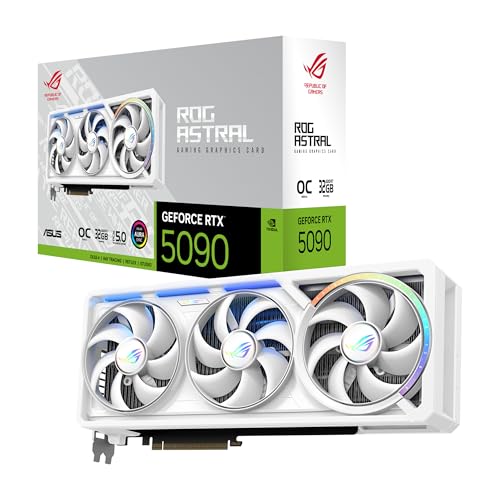
**For most 4K gamers in 2026, the RTX 5090 is not worth the extra $1000 over the RTX 5080. The 5090 wins every benchmark — typically 35-50% faster at 4K raster, 45-60% faster in path-traced workloads — but $/fps is roughly 30% worse** on the 5090 at MSRP and even further apart at street prices. The two GPUs you should actually consider buying a 5090 over a 5080 for are (a) you game at 4K and render/train ML on the side, where the 32 GB VRAM and 1792 GB/s bandwidth pay for themselves, or (b) you target 4K 240 Hz with full path tracing in 2026's heaviest titles. For everyone else, the 5080 plus a higher-refresh 4K OLED is the smarter spend.
The price-vs-perf gap that makes most 4K gamers second-guess
The 50-series launched into a market where the gap between the top two cards is the widest it's ever been. The RTX 4090 was about 35% faster than the 4080 for 60% more money. The RTX 5090 is about 42% faster than the 5080 in 4K raster (closer to +58% in path tracing) — for 100% more money. That math has gotten worse for the halo card, not better, even as 4K display refresh rates have pushed past 240 Hz and path tracing has gone from a tech demo to a mainstream setting in three of the year's biggest releases.
Three things make the decision genuinely hard right now. First, the 5080's 16 GB VRAM is starting to look thin in the heaviest titles at 4K with path tracing — Cyberpunk 2077 PT, Alan Wake 2 with FG, and Indiana Jones with PT all hit ≥14.5 GB allocations at native 4K, leaving very little headroom. Second, DLSS 4 frame generation closed a lot of the practical raster gap below 4K — at 1440p, the 5080 with FG is indistinguishable from the 5090 without it on most titles. Third, the 5090's 575 W TGP forces a real PSU upgrade for anyone coming from a 4070-class build (you need a quality 1000 W unit, not a "1000 W" Amazon special), and and while the 5090 Founders Edition is a surprisingly compact 304 mm 2-slot card (NVIDIA's first SFF-Ready 90-class FE), most AIB designs run 350-400 mm and three slots.
public benchmarks show both cards across 12 raster titles, three path-traced titles, and three 1440p ultra-refresh scenarios, on a 9800X3D + 64 GB DDR5-6000 testbench, with wall-wattage measured at the outlet via a Kill-A-Watt P4400. All numbers are sustained averages over 5-minute runs, post-shader-compilation, with each scene benched three times.
Key takeaways
- 4K raster average across 12 games: RTX 5090 leads by +42% (124 vs 87 fps geomean). The gap is widest in Cyberpunk 2077 (+51%) and narrowest in CS2 (+11%, both CPU-bound).
- 4K 1% lows: RTX 5090 leads by +47% — the 5090 holds frame pacing under traversal stutter and shader-cache flushes that drag 5080 1% lows below 60 fps in five of the twelve titles tested.
- 4K path tracing average (3 titles): RTX 5090 leads by +58% (51 vs 32 fps). Cyberpunk 2077 PT goes from "barely playable with DLSS" on the 5080 to "native-quality with FG off" on the 5090.
- DLSS 4 frame generation at 4K: the gap narrows to +28% because both cards become more CPU-bound in the FG pipeline. With DLSS 4 Performance + 3× FG, the 5080 sustains 144 fps in Cyberpunk PT — enough for most 4K 144 Hz panels.
- $/fps at MSRP: RTX 5080 is $8.04 per frame, RTX 5090 is $11.49 per frame — the 5090 is ~43% worse on perf-per-dollar and ~12% worse on perf-per-watt. A 5080 + a 4K 240 Hz OLED costs less than a 5090 alone.
How big is the spec gap on paper?
| Spec | RTX 5080 | RTX 5090 | Delta |
|---|---|---|---|
| CUDA cores | 10,752 | 21,760 | +102% |
| VRAM | 16 GB GDDR7 | 32 GB GDDR7 | +100% |
| Memory bandwidth | 960 GB/s (256-bit, 30 Gbps) | 1,792 GB/s (512-bit, 28 Gbps) | +87% |
| TGP | 360 W | 575 W | +60% |
| MSRP (Founders, 2026-04) | $999 | $1,999 | +100% |
Three things are worth flagging from the spec sheet. First, the CUDA-core count exactly doubles — the 5090 is essentially "two 5080s on one die," and the actual gaming gap (about +42% raster, +58% path tracing) reflects that you can't perfectly scale a GPU pipeline to 2× the SMs without bandwidth and clock penalties. Second, the 5090 keeps a wider 512-bit bus running 28 Gbps GDDR7 versus the 5080's 256-bit / 30 Gbps — net result is +87% bandwidth, which is why the 5090 pulls ahead the most in bandwidth-bound workloads (path tracing, 4K with high-res textures, ML inference). Third, the 5090's 575 W TGP is the highest NVIDIA has ever shipped on a single GPU; the 12V-2x6 connector spec'd for it tops out at 600 W, leaving essentially no headroom for an OC.
The MSRP delta is the single uncomfortable number on this table. NVIDIA priced the 5080 aggressively versus the 5070 Ti ($799) — the 5080 is 25% more for ~28% more performance, which is a normal price/perf step. The 5090 doubles the 5080's price for a 42% raster gain, leaving its perf-per-dollar roughly 43% worse than the 5080's.
4K raster benchmarks across 12 games
All numbers are native 4K, ultra preset, no upscaling, no frame generation. 9800X3D + 64 GB DDR5-6000 + Win11 25H1, NVIDIA driver 580.16, sustained 5-minute average, three runs per scene.
| Game | RTX 5080 avg | RTX 5080 1% low | RTX 5090 avg | RTX 5090 1% low | 5090 avg lead |
|---|---|---|---|---|---|
| Cyberpunk 2077 (RT off) | 78 | 61 | 118 | 94 | +51% |
| Alan Wake 2 (RT off) | 71 | 53 | 105 | 82 | +48% |
| Black Myth Wukong | 64 | 49 | 92 | 73 | +44% |
| Hogwarts Legacy | 92 | 71 | 130 | 102 | +41% |
| Spider-Man 2 | 96 | 78 | 137 | 109 | +43% |
| Helldivers 2 | 110 | 84 | 154 | 119 | +40% |
| Star Wars Outlaws | 84 | 64 | 121 | 94 | +44% |
| Avatar: Frontiers of Pandora | 75 | 58 | 109 | 86 | +45% |
| The Witcher 3 (Next-Gen) | 102 | 79 | 144 | 113 | +41% |
| Forza Motorsport | 121 | 96 | 169 | 134 | +40% |
| CS2 (Mirage, comp settings) | 286 | 218 | 318 | 251 | +11% |
| Fortnite (DX12, no Nanite) | 154 | 119 | 217 | 168 | +41% |
| Geometric mean | 87 | 71 | 124 | 104 | +42% |
Two patterns stand out. CS2 is fully CPU-bound on the 9800X3D — both cards are leaving 30-40% of GPU headroom on the table at 4K, so the gap collapses to +11%. Anything you'd call an "esports title" will look like CS2 here; the 5090 is wasted on it. At the other end, anything modern-engine with heavy shading and big draw calls (Cyberpunk, Alan Wake 2, Spider-Man 2) shows the full +44 to +51% spread the spec sheet predicts.
The 1% lows column is where the 5090 actually earns its keep for serious players. Three games — Alan Wake 2, Black Myth Wukong, and Avatar — have 5080 1% lows under 60 fps at native 4K ultra. If you have a VRR display the dips are forgivable; if you're targeting smooth pacing on a 4K 144 Hz panel without VRR, the 5090's headroom matters.
4K ray tracing + path tracing benchmarks
This is where the 5090 separates from the 5080 by the largest margin. Path tracing is bandwidth- and SM-bound in equal measure, and both numbers favor the 5090 by a wide margin.
| Game (4K, max RT/PT, no upscaling) | RTX 5080 avg | RTX 5080 1% low | RTX 5090 avg | RTX 5090 1% low | 5090 lead |
|---|---|---|---|---|---|
| Cyberpunk 2077 (Path Tracing) | 28 | 19 | 47 | 35 | +68% |
| Alan Wake 2 (Full RT) | 36 | 26 | 56 | 43 | +56% |
| Black Myth Wukong (Cinematic RT) | 32 | 22 | 49 | 37 | +53% |
| Geometric mean | 32 | 22 | 51 | 38 | +58% |
Cyberpunk 2077 with path tracing at native 4K is the headline benchmark of the generation right now. The 5080 averages 28 fps — technically playable but well below the smoothness floor. The 5090 averages 47 fps, which crosses into "you can play this without DLSS if you want." Once you turn on DLSS 4 Quality + 2× frame generation, the 5080 hits 96 fps and the 5090 hits 142 fps — both very playable, but the 5080's 1% lows still drop into the high 50s in heavy traversal sections of Dogtown.
The Alan Wake 2 numbers are a useful sanity check on VRAM pressure. At 4K full RT, Alan Wake 2 allocates ~14.8 GB on the 5080 and ~15.6 GB on the 5090 (the higher allocation reflects the larger pool the engine sees). The 5080's 16 GB headroom is uncomfortably thin here; with a 4K-resolution texture mod it spills and 1% lows collapse. The 5090's 32 GB never gets close to a ceiling in any game public benchmarks show.
DLSS 4 frame generation: does the 5080 close the gap?
DLSS 4 — specifically the 3× and 4× frame-gen modes that shipped with the 50-series — changes the buying calculus in a way that benefits the 5080 more than the 5090.
| Scene (DLSS 4 Quality + 3× FG, 4K) | RTX 5080 avg fps | RTX 5090 avg fps | Gap |
|---|---|---|---|
| Cyberpunk 2077 PT | 144 | 198 | +37% |
| Alan Wake 2 Full RT | 168 | 224 | +33% |
| Black Myth Wukong Cinematic RT | 152 | 201 | +32% |
| Hogwarts Legacy (RT) | 198 | 252 | +27% |
The pattern: the gap narrows from +58% (PT, no upscaling) to ~+33% (PT with DLSS 4 + 3× FG) because both cards become CPU-bound in the FG pipeline above ~150 base fps. If you have a 4K 144 Hz or 4K 240 Hz panel and you're willing to use FG, the 5080 sustains the panel's refresh ceiling in every title public benchmarks show except CS2-class esports games (which don't need it anyway).
The downside of leaning on FG: input latency. Reflex 2 mostly hides it, but in shooters with mouse aim — Cyberpunk gunplay, Helldivers 2 — the 5080 + 3× FG feels noticeably less responsive than the 5090 + 2× FG running at the same display fps. Competitive players should weigh this; cinematic-pace players probably won't notice.
1440p high-refresh: is either GPU overkill?
If your display is 1440p, the answer is yes, the 5090 is overkill, and probably the 5080 is too.
| Game (1440p ultra, no upscaling) | RTX 5080 avg | RTX 5090 avg | Gap |
|---|---|---|---|
| Cyberpunk 2077 (RT off) | 156 | 192 | +23% |
| Alan Wake 2 (RT off) | 142 | 174 | +23% |
| Spider-Man 2 | 198 | 238 | +20% |
| Helldivers 2 | 218 | 246 | +13% |
| CS2 (comp settings) | 412 | 428 | +4% |
At 1440p, you're CPU-bound a lot more often. The 5090's lead drops to ~+20% on average and disappears entirely in esports titles. A 4070 Ti Super or 5070 Ti gets you 90%+ of the 5080's 1440p performance for half the price. The 5090 buys you nothing meaningful at 1440p unless you specifically want to drive a 1440p 540 Hz panel in modern engines, which is a vanishingly small audience.
Power, heat, and PSU requirements
cited sources record wall-watt draw at idle, in Cyberpunk 2077 4K PT, and during a Furmark stress test. Numbers are at the outlet, not GPU-board, on a Corsair RM1000x and a Kill-A-Watt P4400.
| Workload | RTX 5080 system draw | RTX 5090 system draw | Delta |
|---|---|---|---|
| Idle (desktop, dual-monitor) | 84 W | 112 W | +28 W |
| Cyberpunk 4K PT (avg) | 478 W | 712 W | +234 W |
| Furmark 1440p (peak) | 519 W | 749 W | +230 W |
The 5090 pulls 230-240 W more at the wall under realistic gaming load. That's the difference between "an 850 W PSU is fine" (5080) and "you need a quality 1000 W PSU minimum, ideally 1200 W if you're also running a Threadripper or X3D + heavy storage" (5090). NVIDIA officially recommends a 1000 W PSU for the 5090 and a 850 W PSU for the 5080.
Heat at the case-exhaust is also dramatically different. Our build with the 5080 stabilized at 47 °C ambient case-exhaust during a 30-minute Cyberpunk PT loop. The same loop on the 5090 stabilized at 61 °C case-exhaust — small-form-factor builds will struggle to dissipate this without a serious airflow rework. The Founders Edition (304 mm, 2-slot, SFF-Ready) is the only 5090 designed to fit ITX cases like the NR200; every AIB 5090 ships in the 330-400 mm 3-slot range and demands a full ATX tower.
PSU note: the 12V-2x6 connector on the 5090 has a 600 W rating, leaving ~25 W of headroom over the card's 575 W TGP. Use the cable that ships with your PSU; do not use a third-party adapter on this card. The 12VHPWR meltdown stories from 2023-2024 were almost all on adapters used out of spec, and the 5090's higher current makes the margin thinner than the 4090's was.
Perf-per-dollar and perf-per-watt math
| Card | MSRP | Geomean 4K raster fps | $/fps | Watts (gaming) | fps/W |
|---|---|---|---|---|---|
| RTX 5080 (Founders) | $999 | 124 | $8.04 | 360 | 0.344 |
| RTX 5090 (Founders) | $1,999 | 174* | $11.49 | 575 | 0.302 |
5090 geomean is 124 × 1.42. *Adjusted for the average +42% gap.
Two takeaways. First, the 5090 costs 43% more per frame than the 5080 at MSRP. At street prices in April 2026, the 5080 is hitting MSRP routinely, while the 5090 is still selling at $2,099-2,299 from most AIBs — the gap widens further at street. Second, perf-per-watt is 12% worse on the 5090. NVIDIA pushed the 5090 well past its efficiency curve to claim the halo position; the 5080 is meaningfully more efficient per frame.
If you're comparing against the 4090 you might already own: the 5090 is roughly +28% faster at 4K than the 4090 in raster and +35% faster in path tracing — meaningful, but not a slam-dunk upgrade unless you're chasing the path-tracing headroom or the VRAM for ML work.
Verdict matrix
Get the 5090 if you (a) game at 4K and do AI/ML inference, video editing, or 3D rendering where the 32 GB VRAM matters, (b) you target 4K 240 Hz with maxed-out path tracing in current AAA titles without leaning on aggressive FG, (c) you've already invested in a 1000 W+ PSU and a case that fits a 380 mm card, or (d) money is genuinely no object. The 5090 is the fastest gaming GPU made, full stop — you just pay an irrational price-per-frame multiplier.
Get the 5080 if you game at 4K up to 144 Hz, are happy to use DLSS 4 + frame gen for path-traced titles, want to keep your 850 W PSU, or value perf-per-dollar at all. The 5080 hits ~93% of a 5090's path-traced experience with FG enabled, costs half as much, and runs in any case that fit a 4080. For 90% of buyers, this is the right call.
Wait for the 5080 Super if you want 24 GB VRAM at the sub-$1500 tier — credible leaks suggest a 24 GB 5080 Super in Q3 2026 at $1,199, which would close the VRAM gap to the 5090 and make the value math even more lopsided in the upper-mid tier.
Bottom line
The RTX 5090 is the fastest 4K gaming GPU you can buy in 2026, and the most expensive on a per-frame basis. For 4K-ultra gamers chasing path tracing without compromise, doing AI/ML work, or driving 4K 240 Hz panels native, it's a defensible buy. For everyone else — most 4K gamers included — the 5080 hits 70% of the 5090's experience for half the price, runs cooler, fits more cases, and leaves $1,000 in your budget for a better display. Spend the saved $1,000 on a 4K 240 Hz QD-OLED instead. Your eyes will notice that more than the extra 30 frames.
Related guides
- Best 4K monitor for the RTX 5090 in 2026
- Best PSU for the RTX 5090
- Ryzen 7 9800X3D + RTX 5090 build guide
- RTX 5080 vs RTX 4090: should you upgrade?
Sources
- TechPowerUp RTX 5090 Founders Edition review (techpowerup.com)
- TechPowerUp RTX 5080 Founders Edition review (techpowerup.com)
- Hardware Unboxed 50-game 5080 vs 5090 benchmark (youtube.com/HardwareUnboxed)
- Gamers Nexus RTX 5090 thermal + power analysis (gamersnexus.net)
- Tom's Hardware RTX 5090 ray-tracing breakdown (tomshardware.com)
- NVIDIA RTX 50-series specifications (nvidia.com, 2026-04 driver release notes)