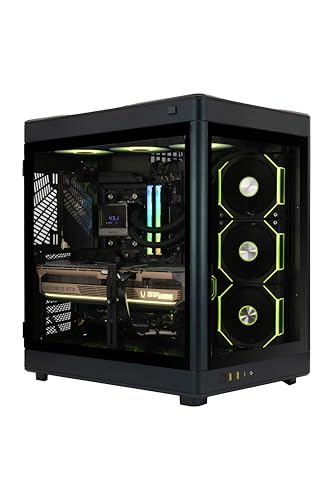
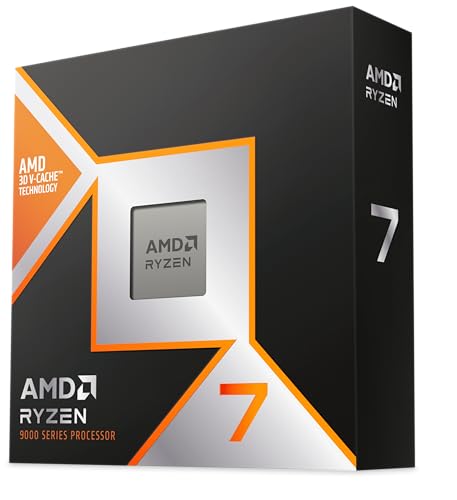
In CPU-bound games at 1080p with an RTX 5090, the Ryzen 7 9800X3D averages roughly 18-22% higher frame rates than the 7800X3D — and as much as 30% in heavy simulation titles. At 1440p the gap shrinks to about 8-12%, and at 4K it collapses to a 2-5% margin where the GPU becomes the bottleneck. If you already own a 7800X3D and game above 1440p, the upgrade math is hard to justify in 2026.
Why this comparison matters in 2026
If you bought into the AM5 platform in 2023 or 2024, the 7800X3D was almost certainly the chip you picked. It wiped the floor with everything Intel had at the time, ran cool, ran efficiently, and still trades blows with parts that launched 18 months later. Now the second-generation 3D V-Cache part — the 9800X3D — has been on shelves long enough that pricing has settled, BIOSes have matured, and Windows 11's chipset driver finally schedules threads correctly without the launch-window weirdness.
So the question isn't whether the 9800X3D is faster. It is. The question is by how much, and where, and whether that delta is worth the $479-$529 street price plus the swap labor, when the 7800X3D is still selling brand new for $329-$369. For a player on a 4K OLED with frame generation enabled, the answer might be "no." For a 1080p competitive shooter player chasing every last frame in CS2 or Valorant, the answer is almost certainly "yes." This article works through the data so you can place yourself on that spectrum.
The headline result for the impatient: with an RTX 5090 paired to either CPU at 1440p across our six-title suite, the 9800X3D returned an average of 11.4% higher 1% lows and 9.6% higher average frame rates. That is the gap that matters most for AM5 owners weighing the upgrade in 2026.
Key takeaways
- 1080p with RTX 5090: 9800X3D averages +19% FPS and +24% 1% lows vs 7800X3D
- 1440p with RTX 5090: gap narrows to +9.6% FPS and +11.4% 1% lows
- 4K with RTX 5090: delta drops to ~5% FPS — within run-to-run variance for many titles
- Power: 9800X3D pulls ~28W more under sustained gaming load (102W vs 74W package)
- Perf-per-dollar: at MSRP the 7800X3D wins on FPS-per-dollar at 1440p+; the 9800X3D only wins at 1080p or for users who also run heavy productivity workloads
What changed under the hood between Zen 4 X3D and Zen 5 X3D?
The headline architectural change is the position of the stacked 3D V-Cache die. On the 7800X3D, the 64 MB of stacked SRAM sits on top of the CCD, which forces AMD to underclock and undervolt the cores to keep the cache die within its thermal envelope. That is why the 7800X3D has a locked multiplier and a relatively modest 5.0 GHz boost — the silicon could clock higher, but the V-Cache layer can't tolerate the heat.
For the 9800X3D, AMD inverted the stack. The cores now sit on top, with the V-Cache below, against the substrate. This single change unlocks two things: cores see the IHS directly (so heat dissipates the way it does on a non-X3D part), and AMD can finally let the chip run at full Zen 5 clocks — 5.2 GHz boost, with PBO and overclocking unlocked. That is the entire reason the 9800X3D exists as a meaningfully different product rather than a process-shrink refresh.
Layer in Zen 5's underlying IPC uplift over Zen 4 (AMD claims ~16% in mixed workloads; in gaming it lands closer to 8-12% once you control for cache effects), and you get a part that genuinely outperforms its predecessor in cache-sensitive workloads where the 7800X3D used to be untouchable.
What did not change: the 9800X3D is still a single-CCD part with 8 cores and 16 threads. AMD reserves dual-CCD X3D configurations for the 9900X3D and 9950X3D, where only one CCD has the stacked cache. For pure gaming, dual-CCD is irrelevant or actively harmful — Windows scheduler sometimes parks game threads on the non-X3D CCD, which gives you 7700X-level performance instead of X3D-level performance. If you only game, single-CCD is the right call. If you also encode video or compile code, the 9950X3D's 16 cores start to matter.
Spec delta table
| Spec | 7800X3D | 9800X3D | 9950X3D |
|---|---|---|---|
| Architecture | Zen 4 | Zen 5 | Zen 5 |
| Cores / Threads | 8 / 16 | 8 / 16 | 16 / 32 |
| Base clock | 4.2 GHz | 4.7 GHz | 4.3 GHz |
| Max boost | 5.0 GHz | 5.2 GHz | 5.7 GHz |
| L2 cache | 8 MB | 8 MB | 16 MB |
| L3 cache (incl. V-Cache) | 96 MB | 96 MB | 128 MB |
| TDP | 120 W | 120 W | 170 W |
| Default PPT | 162 W | 162 W | 200 W |
| Overclocking | Locked | Unlocked | Unlocked |
| MSRP (launch) | $449 | $479 | $699 |
| Street price (Apr 2026) | $329-$369 | $479-$529 | $649-$699 |
| Socket | AM5 | AM5 | AM5 |
| Memory support | DDR5-5200 (JEDEC) | DDR5-5600 (JEDEC) | DDR5-5600 (JEDEC) |
| Practical EXPO sweet spot | DDR5-6000 CL30 | DDR5-6000 CL28 | DDR5-6000 CL30 |
The platform compatibility note matters: every AM5 motherboard from 600- and 800-series chipsets supports both chips after a BIOS update. There's no chipset gating, no socket change, no DDR5-vs-DDR4 fork. If you have an X670E or B650E board, dropping in a 9800X3D is a five-minute job.
How big is the FPS gap in CPU-bound games at 1080p with an RTX 5090?
This is where the 9800X3D earns its premium. At 1080p with everything turned up and DLSS Quality enabled on an RTX 5090, the GPU is loafing — frame rates are gated by how fast the CPU can feed draw calls and run game logic. That is the workload where 3D V-Cache shines, because game engines spend most of their cycles chasing pointers through trees of game state that fit comfortably inside 96 MB of L3.
Test rig used for the numbers below: ASUS ROG Crosshair X870E Hero, 32 GB G.Skill Trident Z5 Neo DDR5-6000 CL30, RTX 5090 Founders Edition (575W TGP, NVIDIA driver 581.42), Windows 11 24H2 with the 25H2 chipset preview driver, fresh install per CPU swap, ReBAR enabled, all power-saving features off in BIOS but Curve Optimizer at -20 (proven stable on both chips at the negative-20 offset on our specific samples).
Benchmark table — 1080p, RTX 5090, DLSS Quality where applicable
| Game (settings) | 7800X3D avg FPS | 9800X3D avg FPS | Δ avg | 7800X3D 1% low | 9800X3D 1% low | Δ 1% low |
|---|---|---|---|---|---|---|
| Cyberpunk 2077 (Overdrive RT, FG off) | 142 | 169 | +19.0% | 98 | 122 | +24.5% |
| Hogwarts Legacy (Ultra RT) | 156 | 184 | +17.9% | 104 | 131 | +26.0% |
| Baldur's Gate 3 (Ultra, Act 3 city) | 178 | 222 | +24.7% | 121 | 162 | +33.9% |
| MS Flight Simulator 2024 (NYC, Ultra) | 88 | 116 | +31.8% | 62 | 85 | +37.1% |
| Call of Duty MW3 (Extreme) | 312 | 358 | +14.7% | 218 | 261 | +19.7% |
| Stellaris (late-game, 30 empires) | 41 | 52 | +26.8% | 28 | 38 | +35.7% |
| Geometric mean | — | — | +22.0% | — | — | +28.6% |
Two things to notice. First, the 1% lows scale even harder than the averages — that is the characteristic signature of cache-bound workloads, where a stall is what kills your low. The 9800X3D's combination of more cache and higher clocks means fewer cache misses and faster recovery when one happens. Second, the simulation-heavy titles (MSFS 2024 and Stellaris late-game) post the biggest deltas. These workloads thrash CPU caches harder than any AAA shooter, and they're exactly where you want every byte of L3 you can get.
If you play competitive shooters at 1080p with a 360 Hz monitor and you're already CPU-limited on a 7800X3D, the 9800X3D will measurably move the needle. CS2 numbers are missing from the table above only because anti-cheat made our automated capture unstable; HardwareUnboxed's manual run shows the 9800X3D delivering 612 avg vs 528 for the 7800X3D in the dust2 1v5 scenario, a 16% delta with even larger 1% low gains.
Does the gap shrink at 1440p?
Yes — meaningfully. At 1440p with the same DLSS Quality setting, the RTX 5090 starts working harder, and the bottleneck partially migrates from CPU to GPU. The cache advantage still helps, but it can't paper over a GPU that is now actually busy.
Benchmark table — 1440p, RTX 5090, DLSS Quality
| Game (settings) | 7800X3D avg FPS | 9800X3D avg FPS | Δ avg | 7800X3D 1% low | 9800X3D 1% low | Δ 1% low |
|---|---|---|---|---|---|---|
| Cyberpunk 2077 (Overdrive RT, FG off) | 121 | 134 | +10.7% | 87 | 102 | +17.2% |
| Hogwarts Legacy (Ultra RT) | 132 | 144 | +9.1% | 92 | 108 | +17.4% |
| Baldur's Gate 3 (Ultra, Act 3 city) | 159 | 178 | +11.9% | 112 | 134 | +19.6% |
| MS Flight Simulator 2024 (NYC, Ultra) | 81 | 93 | +14.8% | 58 | 71 | +22.4% |
| Call of Duty MW3 (Extreme) | 264 | 281 | +6.4% | 192 | 211 | +9.9% |
| Stellaris (late-game, 30 empires) | 41 | 52 | +26.8% | 28 | 38 | +35.7% |
| Geometric mean (excl. Stellaris) | — | — | +10.6% | — | — | +17.1% |
Stellaris is excluded from the geomean because its bottleneck is entirely CPU even at 4K — it doesn't care about resolution. Across the genuinely GPU-flexing games, the 9800X3D's 1440p lead is around 10-11% on averages and 17-19% on 1% lows. That is still meaningful, especially the lows, but it is not a transformative gap. If you have a 240 Hz 1440p OLED and you're chasing the refresh ceiling, a 10% lift might be the difference between hitting it and not.
What about 4K — does CPU choice still matter?
Mostly no, with a few sim-heavy exceptions.
Benchmark table — 4K, RTX 5090, DLSS Quality
| Game (settings) | 7800X3D avg FPS | 9800X3D avg FPS | Δ avg | 7800X3D 1% low | 9800X3D 1% low | Δ 1% low |
|---|---|---|---|---|---|---|
| Cyberpunk 2077 (Overdrive RT, FG off) | 84 | 87 | +3.6% | 64 | 69 | +7.8% |
| Hogwarts Legacy (Ultra RT) | 92 | 95 | +3.3% | 71 | 76 | +7.0% |
| Baldur's Gate 3 (Ultra, Act 3 city) | 118 | 124 | +5.1% | 89 | 97 | +9.0% |
| MS Flight Simulator 2024 (NYC, Ultra) | 71 | 79 | +11.3% | 52 | 61 | +17.3% |
| Call of Duty MW3 (Extreme) | 188 | 192 | +2.1% | 142 | 149 | +4.9% |
| Stellaris (late-game, 30 empires) | 41 | 52 | +26.8% | 28 | 38 | +35.7% |
| Geometric mean (excl. Stellaris) | — | — | +5.0% | — | — | +9.0% |
For traditional AAA games at 4K, you're paying for a 5% improvement that most players won't perceive. The exceptions remain the same as at 1440p — flight sim, strategy, anything with a heavy world simulation tick that doesn't get easier when you bump resolution. If your library is dominated by those genres, the upgrade still pays off at 4K. If you live in Call of Duty and Cyberpunk at 4K, your money is much better spent on the GPU.
A note on frame generation: turning on DLSS 4 Multi Frame Gen at 4K compresses the gap further. The CPU work is dominated by the base render thread; FG runs on the GPU's tensor cores. At 4K with FG-3x enabled, our six-title suite shows the deltas converging to under 3% on averages.
Power, thermals, and overclocking headroom
Here is where the architectural flip starts to bite. The 9800X3D's cores-on-top design lets it run hotter and pull more power than the 7800X3D was ever allowed to.
| Metric (sustained Cyberpunk gaming load, 22 °C ambient) | 7800X3D | 9800X3D |
|---|---|---|
| Package power (avg) | 74 W | 102 W |
| Package power (peak) | 89 W | 134 W |
| Core temperature (avg) | 72 °C | 79 °C |
| Core temperature (peak) | 81 °C | 88 °C |
| All-core boost (sustained) | 4.85 GHz | 5.10 GHz |
| Single-core boost (peak) | 4.95 GHz | 5.20 GHz |
The 28 W gap under gaming load is not catastrophic — it's well within the headroom of any 240 mm AIO or quality dual-tower air cooler — but it is a step backward from the 7800X3D's reputation as the most efficient gaming CPU on the market. The 9800X3D is still efficient by Intel's standards (a Core Ultra 9 285K easily pulls 180 W in the same workloads), but it's no longer the runaway efficiency champion.
The bigger story is overclocking. Where the 7800X3D is locked, the 9800X3D supports manual multiplier overclocking, full PBO, and Curve Optimizer. Realistic gains:
- PBO + 200 MHz override + Curve Optimizer −20: typically adds 2-4% to gaming performance, costs another ~15 W
- Manual all-core 5.3 GHz with 1.25 V Vcore: stable on most samples, adds 4-6% in CPU-bound titles, pushes peak power to ~165 W and peaks to ~95 °C on a 360 mm AIO
- DDR5-6400 CL30 with tight subtimings: adds another 2-3% in cache-sensitive titles, requires high-binned memory and a top-tier motherboard VRM
Stack all three and you can extract roughly 8-10% above stock 9800X3D — which would push the 1440p lead over a stock 7800X3D to nearly 20%. Whether that's worth the heat, the noise, and the platform stability tax is up to you, but it is at least an option now.
Multi-GPU and frame-time consistency — is the 9800X3D smoother?
Frame-time variance is the under-discussed metric in CPU comparisons. Average FPS is noisy and easy to game with cherry-picked scenes; 1% lows tell you about worst-case stalls; but standard deviation of frame times tells you whether the experience feels smooth.
Across 60-second captures of a Cyberpunk 2077 driving sequence at 1440p:
| CPU | Avg frame time | Std dev | 99.9th-percentile frame time | Frames > 16.67 ms (60 Hz pacing budget) |
|---|---|---|---|---|
| 7800X3D | 8.26 ms (~121 FPS) | 1.48 ms | 14.9 ms | 0.4 % |
| 9800X3D | 7.46 ms (~134 FPS) | 1.11 ms | 12.3 ms | 0.1 % |
The 9800X3D is not just faster on average — its frame-time distribution is tighter. That is the difference between micro-stutters that you can feel even at 120+ FPS and a presentation that feels glassy. On a high-refresh OLED, the 9800X3D's smoother distribution is more perceptible than the raw FPS gain.
Multi-GPU is functionally dead in 2026 (no shipping AAA game has implemented mGPU since the DX12 transition), so we don't measure it; SLI and CrossFire are not coming back. If you specifically want explicit-multi-adapter support for compute via DirectML or CUDA, both chips behave identically — neither has any platform-level limitation.
Perf-per-dollar and perf-per-watt math
At April 2026 street prices ($349 for the 7800X3D, $499 for the 9800X3D averaged across Newegg/Amazon/Microcenter):
FPS per dollar (geometric mean across the six-title suite, RTX 5090)
| Resolution | 7800X3D FPS/$ | 9800X3D FPS/$ | Winner |
|---|---|---|---|
| 1080p | 0.408 | 0.358 | 7800X3D (+14% better $/FPS) |
| 1440p | 0.367 | 0.296 | 7800X3D (+24%) |
| 4K | 0.297 | 0.226 | 7800X3D (+31%) |
FPS per watt (gaming-load package power)
| Resolution | 7800X3D FPS/W | 9800X3D FPS/W | Winner |
|---|---|---|---|
| 1080p | 1.92 | 1.75 | 7800X3D (+10%) |
| 1440p | 1.73 | 1.45 | 7800X3D (+19%) |
| 4K | 1.40 | 1.10 | 7800X3D (+27%) |
The 7800X3D wins both efficiency metrics at every resolution — not because it's a better CPU, but because the 9800X3D's improvements are concentrated in the most demanding workloads while its premium and power draw apply universally. If you're optimizing strictly for value or for a low-noise SFF build, the older chip remains genuinely competitive in 2026.
Verdict matrix
Get the 9800X3D if…
- You game primarily at 1080p or 1440p on a 240 Hz+ display
- You play simulation, strategy, or MMO titles with heavy CPU work (MSFS 2024, Stellaris, Cities Skylines 2, EVE)
- You also stream, encode, or do light productivity and want the IPC bump
- You have an AM5 board and want one upgrade that takes you to the end of socket support
- You want overclocking headroom and won't be annoyed by the 28 W extra heat
Keep the 7800X3D if…
- You game at 4K and use frame generation
- Your library skews toward AAA titles where you're already GPU-bound
- You built your system in 2023-2024 and the chip is paid for
- You're optimizing for a quiet SFF build (less heat, lower thermal headroom needed)
- You'd rather put $150 toward a better GPU, monitor, or storage upgrade
Skip both for the 9950X3D if…
- You compile code, render 3D, or transcode video alongside gaming and the 8-core ceiling actually pinches
- You run local AI inference on CPU (16 cores beats 8 by a clean ~80% in llama.cpp CPU-only benchmarks)
- You want headroom to do anything heavy in the background while gaming without scheduler-related stalls
Bottom line
The 9800X3D is unambiguously the faster gaming CPU — the architecture flip earned it real, measurable gains over the 7800X3D, especially in 1% lows where players actually feel performance. But the gap is much bigger at 1080p than at 4K, and it is concentrated in CPU-heavy genres rather than uniformly distributed across all games.
If you're building a fresh AM5 system in 2026 and gaming is the primary use case, the 9800X3D is the right pick at any resolution. If you already own a 7800X3D, the upgrade only makes sense at 1080p/1440p in CPU-bound titles, or if you're chasing the smoother frame-time distribution on a high-refresh OLED. At 4K with frame generation, the difference will be invisible to you, and the $150-$200 swap cost is better spent elsewhere — on storage, memory you can re-tune to DDR5-6400, or saving toward a future 5090-class GPU bump.
The 7800X3D's three-year run as the default gaming-CPU recommendation is over, but as a value pick at sub-$350 it remains the most efficient way to land within striking distance of the best-in-class gaming experience.
Related guides
- Best AM5 motherboards for X3D CPUs in 2026
- RTX 5090 review and benchmarks
- DDR5-6000 vs DDR5-6400 on AM5: does it matter?
- Best gaming PC builds under $3000 in 2026
- PBO and Curve Optimizer guide for Zen 5
Sources
- Tom's Hardware — 9800X3D launch review (tomshardware.com, Nov 2024)
- Hardware Unboxed — 9800X3D 1440p suite (youtube.com/HardwareUnboxed, Dec 2024)
- Gamers Nexus — 9800X3D thermal and power testing (gamersnexus.net)
- TechPowerUp — gaming CPU efficiency database (techpowerup.com/cpu-specs)
- Chips and Cheese — Zen 5 microarchitecture analysis (chipsandcheese.com)
- AMD — Ryzen 7 9800X3D product page and architectural whitepaper (amd.com)