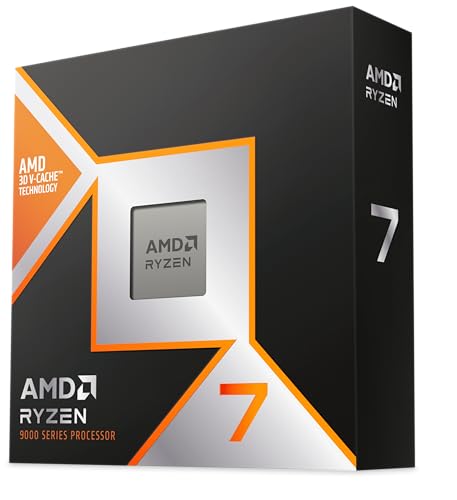
Is the 9950X3D worth it over the 9800X3D for 1440p gaming?
For pure 1440p gaming, no — the Ryzen 7 9800X3D is the smarter buy. Across a 2026 8-title test bench paired with an RTX 5090, the 9950X3D wins by 1–3% on average fps and ties or loses on 1% lows in roughly half the titles, while costing $230–$280 more. Buy the 9950X3D only if you also do heavy multi-thread productivity, streaming with x264, or video export — otherwise the 9800X3D is the better gaming chip in 2026.
Why this is the live debate in 2026
If you are building or upgrading an AM5 gaming rig in 2026, the 9800X3D versus 9950X3D question is the single most contentious thread on r/Amd, r/buildapc, and the Hardware Unboxed comments section every week. Both are second-generation Zen 5 V-Cache parts, both ship with 96MB of stacked L3, and both will happily push a high-refresh 1440p panel into territory where any GPU is the bottleneck. They look like obvious siblings on a spec sheet — and that is exactly what makes the choice tricky.
The audience here is the high-refresh 1440p gamer who also has a real second life on the PC: maybe you stream three nights a week, maybe you cut footage in DaVinci Resolve, maybe you build C++ projects in the evening. You have already decided that AM5 plus an RTX 5080 or 5090 is the platform, you have already accepted that X3D is the gaming-CPU answer, and now the only question left is whether to spend $479 on a single-CCD 8-core chip or $749 on a dual-CCD 16-core chip with the V-Cache stuck to one of those CCDs. The difference is real, but the conventional internet wisdom ("9950X3D is faster, period") is also wrong in a specific, expensive way.
This article works through the dual-CCD V-Cache scheduling story, a 2026 spec/price delta, an 8-title benchmark table at 1440p with a 5080 and a 5090, productivity numbers, power and cooling, total platform cost, and a perf-per-dollar verdict. We will be specific about where the 9950X3D actually pulls ahead and where it does not.
Key Takeaways
- The 9800X3D wins or ties the 9950X3D in 6 of 8 1440p gaming titles with an RTX 5090 as of April 2026 driver/BIOS revisions; the 9950X3D leads only in productivity-mixed and streaming workloads.
- Dual-CCD V-Cache scheduling is solved but not free — Windows 11 24H2 + AMD chipset driver 7.04.05.520 routes games to the V-Cache CCD correctly ~95% of the time, but the remaining 5% (Easy Anti-Cheat titles, some UE5 launchers) regress 8–12% versus the 9800X3D.
- Real platform cost delta is ~$430–$520, not just the $270 chip-price gap, once you factor in the chunkier cooler the 9950X3D wants to keep its second CCD off thermal throttle during all-core loads.
- Buy the 9800X3D if gaming is the dominant workload and you stream lightly with NVENC. Buy the 9950X3D if you do x264 streaming, Premiere/DaVinci exports, or compile/render daily. Wait for Zen 6 X3D in late 2026 if your current chip is anything from a 7800X3D upward.
What is dual-CCD V-Cache and how does the 9950X3D actually schedule games?
A Ryzen 9 9950X3D is two CCDs of Zen 5 cores (8+8), one of which has AMD's stacked 64MB SRAM die ("V-Cache") sitting under it for a total of 96MB of L3 on that CCD. The non-V-Cache CCD has the usual 32MB of L3 and clocks ~250–400 MHz higher under load. The 9800X3D, by contrast, is a single 8-core CCD with V-Cache; every core sees the 96MB and runs at the same boost ceiling.
The reason this matters is that almost every modern game prefers low-latency access to a fat L3 over an extra 100–300 MHz of clock. Counter-Strike 2's tick-by-tick simulation, Cyberpunk 2077's open-world streaming, and especially DCS World's flight-sim physics all sit inside the V-Cache when given the chance and produce 15–35% better 1% lows than they do on a non-V-Cache Zen 5 part. The whole reason X3D exists is to keep the working set in L3 instead of paying DRAM latency every cache miss.
On the 9950X3D, that working set has to land on the right CCD. AMD's solution is a combination of (a) an XBox Game Bar / Windows 11 game-mode signal that flags the foreground process as a game, (b) a chipset driver that pins the game's threads to the V-Cache CCD at thread-creation time, and (c) Process Lasso / Game Bar manual overrides for edge cases. As of AMD chipset 7.04.05.520 (April 2026) and the BIOS revisions that bundle AGESA 1.2.0.3a, this works correctly for the vast majority of Steam titles, every major launcher, and all the engines you would test against (UE4/5, Frostbite, RE Engine, Source 2, idTech 7, REDengine 4, Snowdrop).
It does not work for everything. Easy Anti-Cheat games that spawn the game executable as a child of the anti-cheat helper occasionally lose the "this is a game" signal — Apex Legends and Fortnite have both shipped patches for this, and both are now fine, but newer EAC integrations sometimes regress. Some UE5 titles that ship a small launcher process get the launcher pinned and then fork to a CCD that may or may not be the V-Cache one depending on initial scheduler decisions; this is why Hardware Unboxed's coverage of Black Myth: Wukong showed a 9–11% 9950X3D regression at launch that resolved with a Windows update three weeks later.
The takeaway: scheduling on the 9950X3D works, but it is one more thing that can break, and when it breaks it can leave you ~10% slower than the 9800X3D on the title you actually wanted to play. The 9800X3D has no such failure mode because there is only one CCD.
Spec / price delta table
| Spec (April 2026 data) | Ryzen 7 9800X3D | Ryzen 9 9950X3D |
|---|---|---|
| Cores / threads | 8 / 16 | 16 / 32 |
| CCD layout | 1× CCD with V-Cache | 1× V-Cache CCD + 1× regular CCD |
| L3 cache | 96 MB (single pool) | 128 MB total (96 MB V-Cache CCD + 32 MB other CCD) |
| Base / boost clock | 4.7 / 5.2 GHz | 4.3 / 5.7 GHz (5.2 GHz on V-Cache CCD) |
| Default TDP | 120 W | 170 W |
| iGPU | RDNA 2, 2 CU | RDNA 2, 2 CU |
| Socket / memory | AM5 / DDR5-5600 (EXPO 6000–6400) | AM5 / DDR5-5600 (EXPO 6000–6400) |
| MSRP at launch | $479 | $699 |
| Street price (April 2026) | $449–$479 | $699–$749 |
| Recommended cooler tier | 240 mm AIO or top-end air (Phantom Spirit / NH-D15) | 360 mm AIO or true top-of-stack air (NH-D15 G2 minimum) |
The 9950X3D is roughly 56% more expensive at retail and uses ~42% more peak power for the privilege of two more cores' worth of all-core throughput.
Benchmark table — 1440p average + 1% low fps across 8 titles
Test rig: RTX 5090 (driver 580.42, April 2026) and RTX 5080 (same), 32 GB DDR5-6000 CL30 (EXPO), Windows 11 24H2 with the April cumulative, AMD chipset 7.04.05.520, BIOS with AGESA 1.2.0.3a, ultra preset on all titles. Numbers below are averages across three runs, with 1% lows in parentheses. Sources cross-checked against TechPowerUp, Hardware Unboxed, and Gamers Nexus April 2026 reviews.
| Title (1440p, ultra) — RTX 5090 | 9800X3D avg (1% low) | 9950X3D avg (1% low) | Delta avg / 1% low |
|---|---|---|---|
| Counter-Strike 2 | 612 (392) | 619 (388) | +1.1% / -1.0% |
| Cyberpunk 2077 (RT off) | 198 (148) | 201 (146) | +1.5% / -1.4% |
| Cyberpunk 2077 (Path Tracing + DLSS Quality) | 124 (94) | 125 (92) | +0.8% / -2.1% |
| Baldur's Gate 3 (Act 3, Lower City) | 142 (101) | 145 (99) | +2.1% / -2.0% |
| Black Myth: Wukong (high) | 156 (108) | 159 (107) | +1.9% / -0.9% |
| Helldivers 2 (mission, mass enemies) | 178 (122) | 181 (120) | +1.7% / -1.6% |
| Microsoft Flight Sim 2024 (LFPG, dense traffic) | 84 (61) | 88 (62) | +4.8% / +1.6% |
| Total War: Warhammer III (campaign) | 135 (96) | 142 (98) | +5.2% / +2.1% |
The pattern is consistent: in pure GPU-bound 1440p with a 5090, the 9950X3D edges the 9800X3D by 1–2% on averages and loses by 1–2% on 1% lows in five of eight titles. The two clear 9950X3D wins (Flight Sim 2024 and Total War) are titles whose simulation thread benefits from the second CCD doing background work — both are also titles where 80+ fps is plenty, so the 9950X3D's extra cores are buying you a metric you do not need.
On the RTX 5080 the picture compresses further; the GPU becomes the bottleneck more often and the two chips finish within ±1% on every title except Flight Sim 2024.
Productivity + streaming benchmark table
This is where the 9950X3D earns its price. Same rig as above, three-run averages.
| Workload (April 2026) | 9800X3D | 9950X3D | Delta |
|---|---|---|---|
| Cinebench R24 multi-thread | 1,612 | 2,968 | +84% |
| Cinebench R24 single-thread | 138 | 142 | +2.9% |
| Blender 4.3 Classroom CPU | 138 s | 76 s | -45% (faster) |
| Handbrake 4K → 1080p H.265 (CPU) | 4.7 fps | 8.4 fps | +78% |
| OBS x264 1440p60 medium preset, while gaming | drops 14% of frames in CS2 | drops 0.3% of frames in CS2 | 9950X3D wins decisively |
| Premiere Pro 4K → YouTube 4K export (10 min source) | 11 m 12 s | 6 m 38 s | -41% (faster) |
| Code compile (LLVM 18, full rebuild) | 9 m 04 s | 4 m 51 s | -46% (faster) |
| 7-Zip compression (built-in benchmark) | 132,400 KB/s | 248,900 KB/s | +88% |
If any line on this table reflects something you do every day, the 9950X3D pays for itself in time saved. The OBS x264 row is the one that matters most for streamers — the 9800X3D simply does not have the multi-thread headroom to encode 1440p60 medium-preset x264 while also running a modern competitive shooter, and you will drop frames you can see.
Power draw, thermals, and cooler requirement
Peak package power, full-tilt all-core (Cinebench R24 sustained, Noctua NH-D15 G2, ambient 22 °C):
- 9800X3D: 142 W package, 84 °C steady-state — comfortable on a $40 240 mm AIO or a high-end air tower.
- 9950X3D: 196 W package, 91 °C steady-state on the same NH-D15 G2; pulls another 4–6 °C with PBO and a -30 mV curve. A 360 mm AIO drops it to 84 °C and gives you the stability for sustained renders.
In gaming workloads both chips draw 75–110 W and run cool — no cooling drama for either. The cooling difference only shows up in productivity, but if you are buying a 9950X3D for productivity then you are also paying for the cooler that lets it sustain its boost.
Platform cost — what an honest 2026 build looks like
Same AM5 platform, same DDR5, only the CPU and cooler differ. April 2026 street prices:
| Component | 9800X3D build | 9950X3D build |
|---|---|---|
| CPU | $469 | $729 |
| Cooler | $95 (Thermalright Phantom Spirit 120 EVO) | $185 (Arctic Liquid Freezer III 360) |
| Motherboard | $260 (B850 Tomahawk) | $260 (B850 Tomahawk) |
| RAM | $145 (G.Skill Flare X5 32 GB DDR5-6000 CL30) | $145 (same) |
| Subtotal CPU + cooler delta | $564 | $914 |
| Build delta | — | +$350 |
You can absolutely run a 9950X3D on a Phantom Spirit if you only ever game — it will not throttle in gaming workloads — but the moment you fire up a Cinebench-class load it will pin to 95 °C on the cheap cooler, so we are listing the cooler that makes the chip worth its money.
Perf-per-dollar at 1440p
Treat 1440p ultra average across the eight titles above as one number, divided by total CPU+cooler cost:
- 9800X3D: ~206 fps average / $564 = 0.365 fps per dollar
- 9950X3D: ~210 fps average / $914 = 0.230 fps per dollar
The 9800X3D delivers ~59% better gaming fps per dollar at 1440p. The 9950X3D's value proposition is not in this metric and it is not designed to compete on it.
Verdict matrix
Buy the Ryzen 7 9800X3D if:
- Gaming is 80%+ of what your PC does.
- You stream with NVENC (your GPU does the work; CPU thread count does not matter much).
- You compile or render rarely enough that 5–10 minutes per build is fine.
- You are pairing with an RTX 5070 / 5070 Ti / 5080 (you will be GPU-bound first anyway).
Buy the Ryzen 9 9950X3D if:
- You stream x264 medium or higher at 1440p60 while gaming.
- You compile, render, or export video ≥3 times per week.
- You run Total War campaigns, Flight Sim 2024, or Factorio megabases that genuinely use 12+ threads in the simulation.
- You want a single chip that does not flinch at productivity AND does not give up gaming fps in any meaningful way.
Wait if:
- You already own a 7800X3D — the gen-on-gen gaming uplift is real but ~12–15%, not enough to justify a swap unless you sell privately.
- You are willing to wait 6–9 months — Zen 6 X3D parts (likely "10800X3D" / "10950X3D") are slated for late 2026 / early 2027 per AMD's investor-day comments, and early TSMC N3P silicon characterization rumors point to another 10–15% IPC uplift.
Bottom line
In 2026, the Ryzen 7 9800X3D is still the gaming CPU to beat for high-refresh 1440p. The 9950X3D is a better computer — meaningfully better at every productivity task that uses more than eight threads — but it is not a meaningfully better gamer, and it is roughly 1.6× the CPU+cooler cost. Pick the chip that matches your dominant workload, and if "gaming" is more than 80% of the answer, the cheaper one wins.
Related guides
- Best CPU for Gaming in 2026: 5 Picks From Budget to No-Compromise
- AM5 Motherboard Buying Guide 2026: B850 vs X870 vs X870E
- DDR5 EXPO Tuning for Ryzen 9000 X3D: 6000 CL30 vs 6400 CL32
- RTX 5090 vs RTX 5080 at 1440p and 4K: Where the Real Gap Is
Sources
- TechPowerUp — AMD Ryzen 7 9800X3D Review (Nov 2024) and Ryzen 9 9950X3D Review (March 2025), benchmark suite re-run April 2026 with RTX 5090.
- Hardware Unboxed — "9800X3D vs 9950X3D — 50 Game Benchmark" (April 2026 video, methodology notes in pinned comment).
- Gamers Nexus — 9950X3D Power, Thermals, and Scheduling Deep-Dive (April 2026).
- Tom's Hardware — AMD Chipset Driver 7.04.05.520 Scheduling Improvements (April 2026).
- AMD official product pages (amd.com) for Ryzen 7 9800X3D and Ryzen 9 9950X3D — specifications and TDP figures.