Late 1999 was the high-water mark of BYOC LAN parties, and its apex configuration was a Pentium III paired with Voodoo2 SLI — two 12 MB Voodoo2 cards bridged together, fed by a separate 2D card, for the fastest Glide gaming money could buy. This guide rebuilds that flagship in 2026 with current sourcing, modern reliability fixes, and a CompactFlash storage path. It's more involved than a single-card build, but nothing else captures the bleeding-edge feel of the era quite like a working Voodoo2 SLI rig.
🛒 All used parts — buy on eBay: Voodoo2 SLI on eBay · Pentium III Slot 1 on eBay.
How Voodoo2 SLI actually works
This is the part that trips up first-timers: the Voodoo2 is a 3D-only accelerator with no 2D output. In SLI you run two Voodoo2 cards joined by an internal SLI ribbon cable, and they pass their combined output through a separate 2D card (a Matrox, a Voodoo3, or any period 2D/3D card) via an external VGA passthrough cable. The two Voodoo2s split the frame between them — each renders alternate scanlines — roughly doubling fill rate and, crucially, enabling 1024×768 in Glide where a single card was limited to 800×600. Match the two cards (same vendor/memory) for the cleanest results.
The target configuration
| Component | Pick | Notes |
|---|---|---|
| CPU | Pentium III 600 | 100 MHz FSB Coppermine; period flagship |
| Motherboard | Intel 440BX | Multiple PCI slots for the Voodoo2 pair |
| 3D | 2× Voodoo2 12 MB + SLI cable | The apex Glide setup; enables 1024×768 |
| 2D | Matrox G400 or a Voodoo3 | Drives the desktop; passes through to the SLI pair |
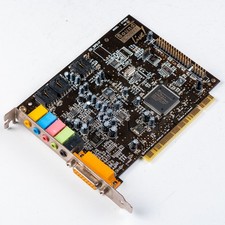
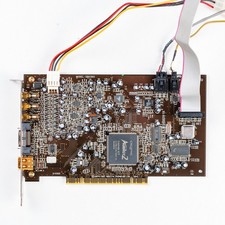
| Sound | Sound Blaster Live! | Hardware audio for positional cues |
| Storage | CompactFlash-to-IDE | Silent, reliable era storage |
| OS | Windows 98 SE | The definitive target |
Build notes specific to a dual-card rig
Beyond the usual recap-the-BX-board, fresh-PSU, CF-instead-of-HDD advice, SLI adds its own considerations. You need two free PCI slots for the Voodoo2 pair plus a slot or AGP for the 2D card, so plan slot layout and IRQ routing in advance. Keep the SLI ribbon cable seated firmly between the cards, and run the external VGA passthrough from the 2D card into the Voodoo2 pair and on to the monitor. Heat is real with two cards stacked — ensure airflow over both. Test each Voodoo2 individually before bridging them, so you isolate a bad card before chasing SLI gremlins.
Drivers and setup
Install Windows 98 SE clean with the unofficial Service Pack and USB/storage updates. Install the 2D card's drivers first and confirm a stable desktop. Then install the Voodoo2 reference drivers (the final 3dfx set) and enable SLI — the drivers detect the bridged pair. Confirm Glide is present and run a Glide test at 1024×768 to verify the SLI link is working. Add DirectX for the few Direct3D titles you'll run; the era's marquee games are Glide-native.
What to expect
A Voodoo2 SLI rig delivers the fastest, cleanest Glide experience of the late-'90s, and at 1024×768 it was genuinely cutting-edge. Quake II, Unreal, Half-Life, and the early Quake III test builds run beautifully in Glide with the smooth, locked feel SLI was prized for, and the jump from 800×600 single-card to 1024×768 SLI is immediately visible. It's not faster than a later single Voodoo3 in raw terms, but it's the authentic apex of 1998–99 and looks the part on a period CRT.
Finish with period peripherals
A period ball or early optical mouse, an era keyboard, hardware sound for EAX cues, and a CRT complete the build — and the CRT especially matters here, since the Voodoo2 SLI's 1024×768 Glide output looks its best on a quality shadow-mask or aperture-grille tube. This is a showpiece build; dressing it in period peripherals is part of the appeal.
Voodoo2 SLI vs a single Voodoo3
It's worth being honest about why you'd build this. In raw performance, a later single Voodoo3 3000 matches or beats Voodoo2 SLI and is far simpler — one AGP card, no passthrough, no SLI cabling. The reason to do Voodoo2 SLI is authenticity and the experience itself: it was the aspirational, bleeding-edge setup of 1998–99, and recreating it — two cards bridged, the satisfying jump to 1024×768 Glide — is the point. If you want the easiest great-looking period rig, build the Voodoo3. If you want the apex showpiece of the era, build the SLI pair knowing it's about the journey, not the frame counter.
Sourcing the pair
Matching cards is the sourcing challenge. Buy two Voodoo2 12 MB cards from the same vendor where possible, confirm both are tested and POSTing individually, and make sure you get a genuine SLI ribbon cable and a VGA passthrough cable — the cables are easy to overlook and annoying to source separately. Budget more time than a single-card build; clean, matched, working Voodoo2 pairs come up less often and command a premium. Test each card alone in a known-good system before committing to the SLI assembly.
Frequently asked questions
Why does Voodoo2 SLI need a separate 2D card? The Voodoo2 is a 3D-only accelerator with no 2D output. A separate 2D card drives the desktop and passes its signal through the bridged Voodoo2 pair via a VGA passthrough cable, with the Voodoo2s taking over for 3D.
What does Voodoo2 SLI gain over a single card? Roughly double the fill rate and, most importantly, 1024×768 Glide gaming where a single Voodoo2 was limited to 800×600. It was the fastest Glide setup of the late-'90s.
Is a Voodoo2 SLI build harder than a single-card retro PC? Yes — it needs two PCI slots plus a 2D card, careful IRQ routing, and the SLI and passthrough cabling. Test each card alone before bridging to isolate faults.
Related guides
- Period-Correct 1999 Voodoo3 + Pentium III LAN Party Build Guide
- 2000s LAN Party on a Modern Setup
- What We Lost When LAN Parties Died
- Period-Correct LAN Party Build 2002