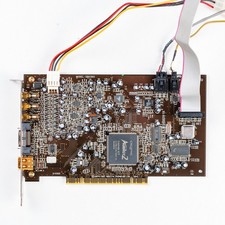
A Voodoo3 3000 that installs but shows no display on Windows 98 SE almost always traces to one of five things: a bus mismatch (PCI card, AGP driver, or vice versa), a stale ghost device in Device Manager, the wrong driver version, marginal PSU rails, or a failed RAMDAC. Work the five checkpoints below in order and you'll resolve the overwhelming majority of Voodoo3 no-display cases without parts swapping.
🛒 Need a second card to isolate the fault? The market is eBay, not Amazon: Voodoo3 3000 on eBay.
Checkpoint 1: bus and driver match
The Voodoo3 3000 shipped in both PCI and AGP versions, and the single most common no-display cause is a mismatch between the card you have and the driver you installed. Confirm whether your card is PCI or AGP, then install the matching driver build — the AGP driver will not correctly initialize a PCI card and the reverse is equally true. If you recently moved the card between slots or swapped boards, this is your first suspect.
Checkpoint 2: ghost devices
Windows 98 SE clings to old display-adapter entries. If a previous GPU or a half-finished Voodoo3 install left a ghost device, the new card may install but never drive the display. Boot to Safe Mode, open Device Manager, and remove every display adapter entry — including greyed-out ghosts under "show hidden devices" — then reboot and let Windows redetect the Voodoo3 cleanly. This clears more no-display cases than any driver reinstall.
Checkpoint 3: the right driver
Use a known-good period driver, not the newest thing you can find. The final 3dfx reference drivers are the baseline; the community Amigamerlin and FastVoodoo packs add stability and resolution options and are the go-to for a clean Win98 SE install. Install with the card already detected, reboot when prompted, and confirm Glide is present afterward.
Checkpoint 4: PSU rails
A 25-year-old power supply with a sagging 3.3 V or 5 V rail can power the board to POST but fail to drive the RAMDAC under load, producing a black or garbled screen. If everything else checks out, test with a known-good modern PSU with the correct connectors. Unstable rails masquerade as GPU faults more often than people expect.
Checkpoint 5: RAMDAC and the card itself
If the bus matches, the device list is clean, the driver is correct, and power is solid, the remaining culprit is the card — most often a failed RAMDAC or aged capacitors. Inspect for bulging caps and recap the power section; a clean recap revives many "dead" Voodoo3s. If the RAMDAC is gone, a tested replacement is the practical fix.
The fast diagnostic order
- Confirm PCI vs AGP and install the matching driver.
- Safe Mode → remove all display adapters (including ghosts) → redetect.
- Install final reference or Amigamerlin/FastVoodoo drivers.
- Test with a known-good modern PSU.
- Inspect/recap the card; replace if the RAMDAC is dead.
Pair a working Voodoo3 with a hardware sound card like the Sound Blaster Audigy 2 ZS for period-correct EAX audio once the display is up.
Confirm it's the card, not the monitor or cable
Before condemning the Voodoo3, rule out the display path. A failing VGA cable, a monitor that won't sync at the card's default refresh, or a KVM in the chain can all present as "no display" from a perfectly good card. Try a known-good cable straight to a CRT or a CRT-tolerant LCD, and listen for the POST beep — a single healthy beep with no image points to the display path, not the GPU. Sync-on-green quirks and DDC handshake failures with modern displays are common gotchas on period hardware.
PCI vs AGP: how to tell them apart
Because the wrong-driver mismatch is the top cause, identify the card definitively. The PCI Voodoo3 3000 has the shorter PCI edge connector and seats in a white PCI slot; the AGP version has the offset AGP connector and seats in the brown AGP slot. The board silkscreen and the 3dfx part number confirm which you hold. Install only the matching bus driver — an AGP driver will not correctly initialize a PCI card, and this is non-negotiable on Win98 SE.
After the display returns
Once you have an image, lock in a sane resolution and refresh — 1024×768 at 75–85 Hz is a safe period default — then confirm Glide is present with a quick Glide test and verify Direct3D acceleration in the display properties. Setting those before installing games means you're not later debugging a game-side problem stacked on top of an unresolved driver one. Confirm the card holds its settings across a reboot, since a marginal card sometimes passes initial detection but drops acceleration after a power cycle.
Frequently asked questions
My Voodoo3 3000 installs but the screen stays black — where do I start? Confirm whether your card is PCI or AGP and that you installed the matching driver, then clear ghost display devices in Safe Mode. Those two steps resolve most Voodoo3 no-display cases on Win98 SE.
Which Voodoo3 driver is most reliable on Windows 98 SE? The final 3dfx reference drivers as a baseline, or the community Amigamerlin/FastVoodoo packs for added stability and resolution options. Avoid mismatched PCI/AGP builds.
Could a weak power supply cause no display? Yes. A sagging rail on an old PSU can power the board to POST but fail to drive the RAMDAC. Test with a known-good modern unit before condemning the card.
Does the PCI Voodoo3 need a free IRQ like a sound card? It can conflict in a poorly routed PCI slot, yes. If the card enumerates but won't drive the display, try a different PCI slot per the board's IRQ routing table before assuming the card is dead.