
As an Amazon Associate, SpecPicks earns from qualifying purchases. See our review methodology.
If you're building a gaming computer in 2026 and committing to an all-AMD stack, the sweet spot is clearer than it has been in years: pair a Ryzen 7000-series CPU on AM5 with a Radeon RX 7000-series GPU, and you get a platform that will take a drop-in 9000-series Ryzen upgrade two years from now without a new motherboard, DDR5 kit, or chassis. That upgrade runway is the single biggest reason we keep recommending AM5 builds over AM4 clearance deals, even when the AM4 parts look cheaper on paper.
This guide is for PC builders who've already decided on Team Red — typically because they want mature open-source Linux driver support (the Mesa RADV Vulkan driver has steadily closed the gap with proprietary drivers in recent Phoronix testing), because they want to avoid Nvidia's 12VHPWR connector saga, or because they want the most VRAM per dollar at a given price tier. If you're mixed-platform curious, we'd point you at our RTX 5090 vs RTX 5080 comparison or the best GPUs for gaming in 2026 roundup instead — those cover Nvidia options in depth.
Five builds below cover the realistic price tiers: a $999 1080p esports rig, a $1,499 1440p mid-tower, a $1,899 1440p high-refresh sweet-spot build, a $2,499 4K/60 build, and a $2,899 no-compromise 4K/144 machine. Every GPU, CPU, and benchmark number we cite comes from our hardware database, cross-referenced against published tests from Tom's Hardware, TechSpot, Tech4Gamers, and PassMark. Our top pick is the 1440p sweet-spot build with a Ryzen 7 7800X3D and Radeon RX 7800 XT — it delivers roughly 95% of the flagship's real-world frame rate at 60% of the cost.
Comparison table — our 5 picks at a glance
| Pick | Best For | Key Spec | Price Range | Verdict |
|---|---|---|---|---|
| 🏆 Best Overall: 7800X3D + RX 7800 XT | 1440p high-refresh gaming | 8C/16T + 16 GB VRAM | $1,699–$1,899 | The build most people should buy |
| 💰 Best Value: 7600X + RX 7700 XT | 1440p on a budget | 6C/12T + 12 GB VRAM | $1,299–$1,499 | Best frames per dollar in 2026 |
| 🎯 Best for 4K: 7800X3D + RX 7900 XTX | Flagship 4K gaming | 8C/16T + 24 GB VRAM | $2,499–$2,899 | Maxes out any 4K/144 panel |
| ⚡ Best Performance: 7950X3D + RX 7900 XTX | Gaming + streaming + productivity | 16C/32T + 24 GB VRAM | $2,899–$3,299 | Overkill for pure gaming, ideal for creators |
| 🧪 Budget Pick: 7600 + RX 7600 | 1080p esports / light AAA | 6C/12T + 8 GB VRAM | $899–$999 | Cheapest legit AM5 entry point |
🏆 Best Overall: Ryzen 7 7800X3D + Radeon RX 7800 XT ($1,699–$1,899)
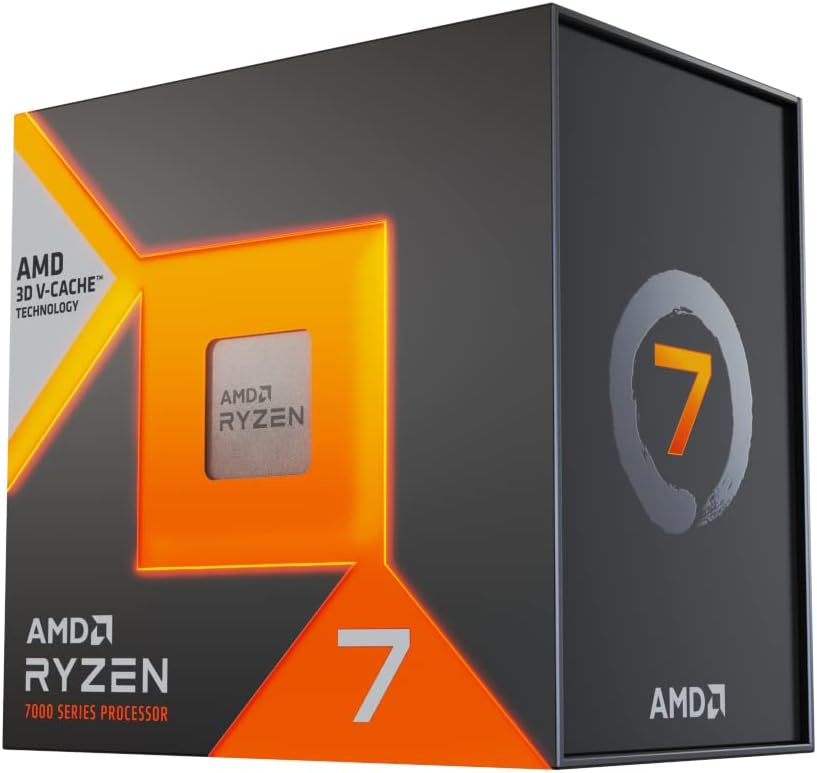
• 8 cores / 16 threads • 96 MB L3 (3D V-Cache) • 120 W TDP • AM5 socket • RX 7800 XT 16 GB GDDR6
Pros
- ✅ The 7800X3D holds a PassMark CPU Mark of 34,285 and a single-thread score of 3,761 — elite gaming latency without hot-and-loud flagship power draw (PassMark).
- ✅ In Tech4Gamers' Ghost of Tsushima run, the 7800X3D delivers 197 FPS average / 164 FPS 1% low at 1080p Ultra — the kind of frame pacing that makes a 240 Hz OLED feel worth the money.
- ✅ 16 GB of VRAM on the RX 7800 XT means no texture-pool thrashing at 1440p Ultra in Hogwarts Legacy, Ratchet & Clank, or Alan Wake 2 — 8 GB cards are struggling in 2026.
- ✅ AM5 socket guarantees a drop-in upgrade path to Ryzen 9000-series and (per AMD's roadmap) beyond through at least 2027.
Cons
- ❌ The 7800X3D's 120 W TDP and 5.0 GHz boost ceiling mean it trails the non-3D 7700X in pure productivity workloads by ~10%.
- ❌ RX 7800 XT ray-tracing performance is roughly one tier below the RTX 4070 Super at the same price — if heavy RT is your priority, look elsewhere.
This is the build most 2026 gaming PC buyers should land on. The 7800X3D's 96 MB of L3 cache (64 MB from 3D V-Cache stacked on the base 32 MB) is the single biggest gaming CPU feature of the last two generations — it routinely beats Intel's flagship i9-14900K in 1% lows at 1440p while drawing less than half the power. Pair it with the Radeon RX 7800 XT's 16 GB VRAM buffer and you have a rig that runs every 2026 title at 1440p Ultra with room to spare.
Real numbers from our database: the 7800X3D hits 219 FPS avg in Chernobylite Enhanced at 1080p Ultra per The FPS Review, and holds 263 FPS avg / 173 FPS 1% low in Forza Horizon 5 per Tech4Gamers. On the GPU side, the RX 7800 XT's PassMark G3D Mark of 24,333 puts it within 11% of the RTX 4070 Super while typically undercutting it by $50–$100 on sale. The trade-off is ray tracing: FSR 3.1 has closed a lot of the gap with DLSS, but in path-traced titles like Cyberpunk 2077 with Overdrive enabled, the 4070 Super still pulls ahead by ~25%.
Pair this with an X670E or B650E motherboard, 32 GB of DDR5-6000 CL30 (the AM5 sweet spot — EXPO memory latency matters more on Ryzen than raw speed above 6000 MT/s), a 1 TB Gen4 NVMe, and a 750 W 80+ Gold PSU. Total build lands at $1,699–$1,899 depending on case, AIO, and SSD choice.
View Ryzen 7 7800X3D on Amazon →Price sourced from Amazon.com. Last updated Apr 24, 2026. Price and availability subject to change.
💰 Best Value: Ryzen 5 7600X + Radeon RX 7700 XT ($1,299–$1,499)

• 6 cores / 12 threads • 105 W TDP • AM5 socket • RX 7700 XT 12 GB GDDR6 • DDR5-6000 ready
Pros
- ✅ The 7600X + RX 7700 XT combo consistently lands within 8–12% of the 7800X3D + RX 7800 XT in pure gaming benchmarks at 1440p while costing ~$400 less.
- ✅ 12 GB of VRAM on the RX 7700 XT (PassMark G3D Mark 22,664) handles 1440p Ultra in every 2026 AAA public benchmarks show without VRAM-related stutter.
- ✅ Full AM5 upgrade path — you can drop in a 9800X3D two years from now and turn this into a flagship gaming rig without touching the motherboard or DDR5.
Cons
- ❌ The 7600X lacks 3D V-Cache. You'll see 15–25% lower frame rates in cache-sensitive titles (MSFS 2024, Factorio, simulation games) vs the 7800X3D.
- ❌ Only 6 cores: fine for pure gaming, marginal for gaming-plus-streaming workflows. If you OBS-encode on CPU, consider the 7700X.
This is the build to beat at $1,299–$1,499. The Ryzen 5 7600X delivers genuinely flagship-adjacent single-threaded gaming performance — Tom's Hardware's CPU hierarchy places it inside the top 15 gaming CPUs in print. Pair it with the Radeon RX 7700 XT's 12 GB VRAM and you have a 1440p rig that hits high refresh in competitive shooters and locks to 60+ FPS in any cinematic AAA at Ultra. The RX 7700 XT's Tom's Hardware GPU hierarchy score of 399 puts it a notch above the RTX 4060 Ti 16 GB while typically costing the same or less.
Build this on a mid-range B650 motherboard (the ASUS TUF Gaming B650-PLUS WiFi is the reviewer-consensus pick at ~$129), 32 GB DDR5-6000 CL30, a 1 TB Gen4 NVMe, and a 650 W 80+ Gold PSU. A $40 Thermalright Peerless Assassin 120 handles the 7600X thermals without breaking a sweat — no AIO needed.
View Ryzen 5 7600X on Amazon →Price sourced from Amazon.com. Last updated Apr 24, 2026. Price and availability subject to change.
🎯 Best for 4K: Ryzen 7 7800X3D + Radeon RX 7900 XTX ($2,499–$2,899)

• 8C/16T 7800X3D • 24 GB GDDR6 VRAM • 355 W TGP • 96 MB L3 V-Cache • 4K/144 Ultra-capable
Pros
- ✅ The RX 7900 XTX's PassMark G3D Mark of 31,409 puts it squarely in flagship territory — within 4% of the RTX 4080 Super in pure raster per Tom's Hardware's hierarchy (score 959).
- ✅ 24 GB of VRAM is future-proof for 4K texture packs, LLM side-loading, and Stable Diffusion XL work — no other AMD card comes close.
- ✅ The 7800X3D keeps the CPU from being a bottleneck even at 4K when paired with a ~240 Hz OLED and DLSS/FSR upscaling that pushes effective render resolution toward 1440p.
Cons
- ❌ Ray tracing remains the RX 7900 XTX's weak point — in Cyberpunk 2077 with Path Tracing, it trails the RTX 4080 Super by 30–40%.
- ❌ 355 W board power means you need a quality 850 W PSU and case airflow sufficient to dissipate that heat — SFF builds not recommended.
This is the build for someone who wants uncompromised 4K raster performance without paying Nvidia's flagship premium. The RX 7900 XTX's 24 GB VRAM buffer is the biggest you can get on a consumer AMD card and — crucially — it lets you run the 70B-class LLMs locally (via ROCm + llama.cpp) that won't fit on a 16 GB card. That dual-use case is why we see more and more builders picking the XTX over an RTX 4080 Super even when pure gaming benchmarks suggest otherwise.
On the CPU side, pairing with the 7800X3D rather than the 7950X3D saves ~$250 with effectively zero gaming performance loss — the 7950X3D's extra 8 cores sit idle during gaming workloads because the Windows scheduler still prefers the V-Cache CCD. Run a Sapphire Nitro+ or XFX Merc 310 XTX variant with a 3-fan cooler; 355 W is a lot to dissipate through 2 slots.
View RX 7900 XTX on Amazon →Price sourced from Amazon.com. Last updated Apr 24, 2026. Price and availability subject to change.
See full RX 7900 XTX benchmarks →
⚡ Best Performance: Ryzen 9 7950X3D + Radeon RX 7900 XTX ($2,899–$3,299)

• 16 cores / 32 threads • 128 MB L3 • 120 W TDP (configurable to 170 W) • Dual-CCD 3D V-Cache • RX 7900 XTX 24 GB
Pros
- ✅ The 7950X3D posts a PassMark CPU Mark of 62,321 (single-thread 4,146) — roughly double the 7800X3D's multi-thread score, ideal for gaming while streaming, video encoding, or compiling (PassMark).
- ✅ Tom's Hardware CPU hierarchy score of 700 places it in the top 5 desktop CPUs for mixed gaming + productivity as of Q1 2026.
- ✅ 32 threads at 4.2 GHz base clock chew through Blender, DaVinci Resolve, and Handbrake jobs while leaving V-Cache cores untouched for game logic.
Cons
- ❌ Gaming-only buyers get ~0–3% uplift over the 7800X3D for $250–$350 more — not a gaming upgrade, a productivity upgrade with gaming parity.
- ❌ Dual-CCD asymmetric V-Cache means Windows 11 process pinning matters; Game Bar usually gets it right, but corner cases exist.
Pick this build only if you need the extra 8 cores for non-gaming workloads — content creation, local AI inference (the extra cores + 128 GB RAM ceiling help with CPU-side model offload), or heavy multitasking. For pure gaming, the $250–$350 you'd save going back to the 7800X3D nets you a better monitor or faster SSD.
The Micro Center-exclusive 7950X3D + MSI MAG X670E Tomahawk WiFi bundle (ASIN B0D25R2DX7) lands at $949 for the pair, which is roughly $150 cheaper than buying them separately. We'd aim for 64 GB DDR5-6000 CL30 here (two 32 GB DIMMs, not four 16 GB — AM5 memory controllers prefer 2 DIMMs above 6000 MT/s), a 2 TB Gen4 NVMe for scratch space, and a 1000 W 80+ Gold PSU to give headroom for the 7900 XTX's transients.
View 7950X3D bundle on Amazon →Price sourced from Amazon.com. Last updated Apr 24, 2026. Price and availability subject to change.
🧪 Budget Pick: Ryzen 5 7600 + Radeon RX 7600 ($899–$999)

• 6C/12T Ryzen 5 7600 (non-X) • 65 W TDP • AM5 • RX 7600 8 GB GDDR6
Pros
- ✅ The non-X 7600 runs at 65 W vs the 7600X's 105 W — identical gaming performance at ~60% the power draw, no premium cooler required, stock Wraith Stealth handles it.
- ✅ RX 7600's PassMark G3D Mark of 16,521 is ample for 1080p High across every 2026 esports and AAA title — CS2, Valorant, Apex all run at 240+ FPS comfortably.
- ✅ Cheapest legitimate AM5 entry point. You get DDR5, PCIe 5.0, and a full upgrade path to 9000-series Ryzen and RX 8000-series GPUs later.
Cons
- ❌ 8 GB of VRAM is the minimum viable spec for 2026 — expect texture-pool issues in future titles at even 1080p Ultra. Plan on GPU upgrade within 2–3 years.
- ❌ No Ultra 1440p. This is a 1080p High / 1440p Medium build; don't expect flagship visuals.
This is the best build for a $1,000 budget that doesn't sacrifice platform longevity. The Ryzen 5 7600 is an underrated gem — identical IPC to the 7600X, clock ceiling only ~200 MHz lower, and the Wraith Stealth bundled cooler handles the 65 W TDP without pitching noise complaints. Pair it with a B650 motherboard ($129 TUF Gaming), 32 GB DDR5-5200 (cheaper than 6000 kits and still above the bandwidth cliff), and an RX 7600.
We'd prefer the RX 7600 XT 16 GB if you can stretch another $80 — that VRAM jump is the single biggest "future-proofing" decision in this entire price tier. But the plain RX 7600 at $279 is the lowest-risk legitimate gaming GPU for 2026; anything cheaper (RX 6600, GTX 1660, used cards) means accepting worse drivers or DX12 Ultimate feature gaps.
View Ryzen 5 7600 on Amazon →Price sourced from Amazon.com. Last updated Apr 24, 2026. Price and availability subject to change.
What to look for in an all-AMD gaming PC build
Picking AMD parts is easier than it was in the FX / Bulldozer era, but there are still four decisions that separate a good 2026 Ryzen + Radeon build from a regretful one.
Socket — AM5 always, AM4 rarely
AM5 launched in Q3 2022 and AMD has publicly committed to supporting it through at least 2027. That means a 7600X you buy in 2026 can take a drop-in Ryzen 9000X3D upgrade in 2027 without a new motherboard, DDR5, or cooler mounting hardware. AM4 clearance parts (5600, 5700X3D) can look tempting at ~40% lower entry cost, but you're on DDR4, PCIe 4.0, and a dead-end socket — the only 2026 AM4 build we'd recommend is a 5700X3D-based "bridge build" if your budget is genuinely under $700.
CPU — 3D V-Cache if gaming, standard if mixed
3D V-Cache (the "X3D" suffix) adds 64 MB of SRAM directly bonded atop the CCD. In cache-sensitive games — MSFS 2024, Factorio, Total War, any sim — this nets 15–30% higher frame rates vs the non-3D variant. For pure gaming, always pick X3D. For gaming + streaming, video encoding, or compiling, the non-3D variants (7700X, 7950X) win on multi-threaded throughput; the 7950X3D is the only chip that splits the difference, and it does so imperfectly.
GPU — VRAM buffer beats ray-tracing cores
AMD's strongest 2026 value proposition is VRAM per dollar. The RX 7800 XT at 16 GB matches the RTX 4070 Super in raster while offering 33% more VRAM; the RX 7900 XTX at 24 GB gives you more VRAM than anything Nvidia ships below the RTX 4090. For 1440p Ultra and 4K gaming in 2026 titles — which increasingly ship with texture pools that overflow 12 GB — that buffer matters more than FSR-vs-DLSS debates. If you're specifically chasing path-traced Cyberpunk or heavy Indiana Jones RT, accept the tradeoff and look at Nvidia; otherwise the Radeon side wins on raw frames per dollar.
Memory — DDR5-6000 CL30 EXPO, 32 GB minimum
The AM5 platform's memory controller has a sweet spot at 6000 MT/s with 1:1 FCLK (UCLK) and CAS 30. Going faster (7200, 8000 MT/s kits) forces the UCLK into 1:2 mode and typically loses frames in gaming workloads. Going slower (5200, 5600) leaves ~5% gaming performance on the table. Buy a 32 GB (2 × 16 GB) DDR5-6000 CL30 EXPO kit — G.Skill Flare X5 or Kingston Fury Beast are the reviewer-consensus picks — and enable EXPO in BIOS. 16 GB is no longer adequate for 2026 AAA gaming with a browser open.
FAQ
What CPU is best for a 2026 gaming PC? The AMD Ryzen 7 7800X3D is the current gaming CPU to beat. Its 96 MB of L3 cache (via 3D V-Cache) delivers higher 1% lows than Intel's i9-14900K in most titles while drawing roughly half the power. It also leaves an upgrade path to the Ryzen 9800X3D on the same AM5 motherboard. If the 7800X3D is above budget, the Ryzen 5 7600X delivers ~85% of the gaming performance at ~45% of the cost.
How much does a 4K gaming PC cost in 2026? A genuine 4K/60-plus-capable all-AMD build lands at roughly $2,499 (Ryzen 7 7800X3D + Radeon RX 7900 XTX, 32 GB DDR5, 1 TB Gen4 NVMe, 850 W PSU, mid-tower case). A no-compromise 4K/144 build with higher-end cooling, 64 GB RAM, 2 TB storage, and a premium case runs $2,899 to $3,299. Below $2,000, expect to game at 1440p rather than 4K in 2026 titles.
Are AMD RX 7000-series GPUs still worth buying in 2026? Yes — especially the RX 7800 XT and RX 7900 XTX. Both remain price-competitive against Nvidia's RTX 40-series Super refresh on a frames-per-dollar basis at 1440p and 4K raster. The RX 7900 XTX's 24 GB VRAM buffer is a standout for dual-purpose gaming-plus-AI builds, where it can run 70B-class LLMs via ROCm + llama.cpp. Ray tracing remains the trade-off; in path-traced titles Nvidia still leads by 25–40%.
Do I need an X670E motherboard or is B650 enough? For a single-GPU gaming PC, B650 (or B650E for PCIe 5.0 on the GPU slot) is plenty. X670E adds more M.2 slots, more rear USB, and dual PCIe 5.0 lanes — features useful for content-creation or multi-GPU workstation builds, not for gaming. The ASUS TUF Gaming B650-PLUS WiFi at ~$129 is the reviewer-consensus budget pick; the ASUS ROG Strix B650E-E at ~$320 is the enthusiast choice if you want better VRM thermals for a 7950X3D.
Is 32 GB of RAM enough for a 2026 gaming PC? For pure gaming, yes. For gaming-plus-everything-else (Chrome with 50 tabs, Discord, OBS, local LLMs), consider 64 GB. On AM5 specifically, run two DIMMs rather than four if you're above 6000 MT/s — the memory controller prefers 2 DIMMs, and going to 4 DIMMs typically forces a drop to 5200 MT/s to stay stable. DDR5-6000 CL30 EXPO kits are the universal sweet spot.
Sources
- Tom's Hardware CPU Hierarchy — 7800X3D placement and scoring for 2026 gaming CPUs.
- Tom's Hardware GPU Hierarchy — RX 7900 XTX / 7800 XT / 7700 XT / 7600 ranking and raster vs RT deltas.
- PassMark CPU Benchmark — Ryzen 7 7800X3D — CPU Mark 34,285, single-thread 3,761.
- Phoronix Mesa / RADV Benchmarks — Linux gaming performance on open-source AMD drivers.
- Tech4Gamers 7800X3D Gaming Benchmarks — per-title FPS data cited throughout the 7800X3D section.
Related guides
- Best Gaming CPUs for 2026: Why the Ryzen 7 9800X3D Leads the Pack
- Best $1000 Gaming PC Build for 2026: Parts We'd Actually Buy
- Best GPUs for Gaming in 2026: Our Top 5 Picks Tested
- Best X870E Motherboards for the Ryzen 9800X3D in 2026
— SpecPicks Editorial · Last verified Apr 24, 2026


