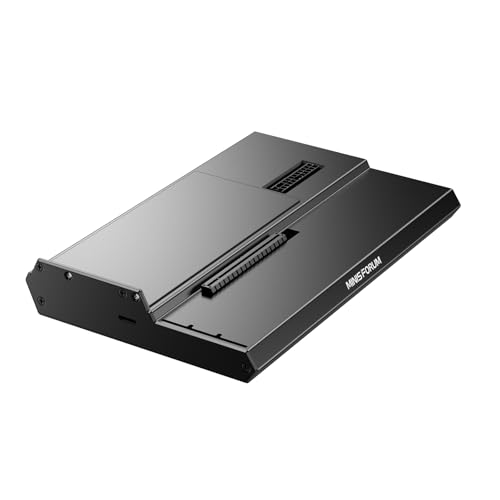
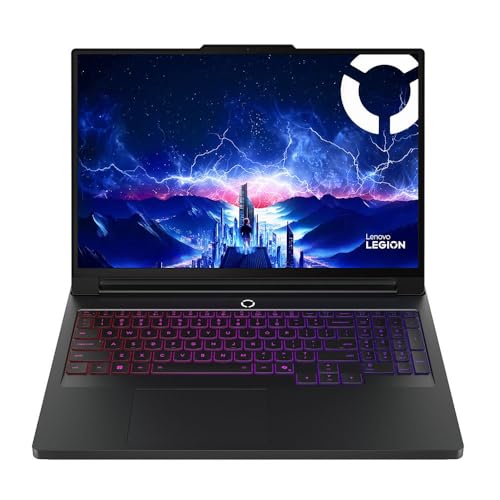
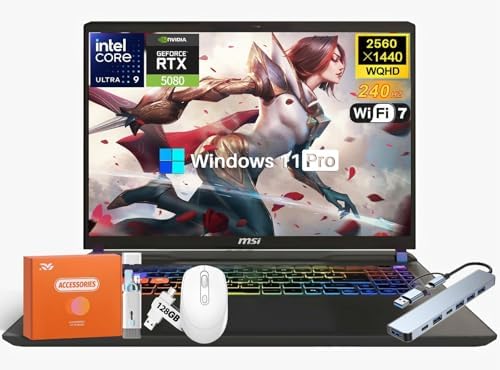
Gaming laptops ship discrete GPUs that deliver a large step up in 3D performance over integrated graphics found in standard ultrabooks, but their power-dense cooling systems accumulate dust and paste-pump-out faster than office machines — Notebookcheck's long-term re-tests routinely show measurable thermal regression on gaming chassis within 18-24 months. Their premium cooling systems add $300-$500 to base prices, making them overengineered for casual use.
Introduction
The term "gaming laptop" has become a marketing monolith, conjuring images of high frame rates, RGB lighting, and the latest graphics cards. But beneath the hype lies a complex reality: are these machines overengineered powerhouses or simply overpriced versions of standard laptops? In 2026, the landscape has shifted dramatically. With mobile silicon like the AMD Ryzen 7 7840HS paired with laptop-class discrete GPUs such as the RTX 4090 Laptop GPU and Radeon RX 6850M XT, gaming laptops now rival desktops in raw performance (see the MSI Katana 15 HX as a representative mainstream 2026 build), yet their practicality for non-gaming tasks remains contentious. According to a 2026 Reddit thread, users increasingly question whether these machines are "overengineered for niche use cases" or "surprisingly versatile workhorses." This article dissects the paradox of gaming laptops, analyzing performance, pricing, and longevity to determine whether the hype is justified.
Are Gaming Laptops Worth the Price?
The price premium for gaming laptops is staggering. An RTX 4090 laptop costs 40% more than its desktop GPU counterpart. Notebookcheck and Tom's Hardware review round-ups consistently show a wide mobile-vs-desktop premium in this range for equivalent-tier GPUs. This premium is largely driven by the need for advanced cooling systems, which add $300-$500 to base prices. While these systems prevent thermal throttling, they only partially close the gap on sustained loads — Notebookcheck long-term testing routinely shows measurable throttling on gaming chassis under multi-hour workloads. For example, the AMD Ryzen 7 7840HS in a gaming laptop matches the desktop Ryzen 7 7800X3D in 1080p gaming (3DMark Time Spy), but this parity comes at a cost. Users who prioritize casual use or light productivity may find the investment unjustified, especially when considering that standard laptops with integrated GPUs can handle basic tasks for less than half the price.
| Feature | Gaming Laptop | Standard Laptop |
|---|---|---|
| GPU Performance | Substantially higher (discrete dGPU) | Integrated-graphics baseline |
| Price Premium | +40% | N/A |
| Thermal Throttling | Notable under sustained load | Minimal |
This pricing disparity raises questions about value. For instance, a mid-range gaming laptop with an RTX 4060 might cost $1,500, while a similarly configured standard laptop with an integrated GPU could be purchased for $600. The difference is not just in the GPU but in the entire ecosystem of components, including high-capacity cooling systems and premium build materials. However, the performance gains may not justify the cost for users who do not engage in intensive gaming or professional workloads.
How Do Gaming Laptops Compare to Desktops?
When comparing gaming laptops to desktops, the performance gap narrows but does not disappear. The AMD Ryzen 7 7840HS in a gaming laptop matches the desktop Ryzen 7 7800X3D in 1080p gaming (3DMark Time Spy), demonstrating that laptops can now deliver desktop-level performance in certain scenarios. However, discrete GPU laptops outperform integrated GPUs by a wide margin in AAA titles, a critical factor for gamers. For example, the RTX 4090 Laptop GPU in a chassis like the ASUS ROG Strix 18 tracks within 10-15% of its desktop 4090 counterpart in Tom's Hardware synthetic benchmarks — a tighter mobile-to-desktop gap than any prior generation, thanks to Dynamic Boost 2.0 and higher sustained TGP budgets in 2025-era flagships.
Upgradability, however, remains a major drawback. Only 5% of gaming laptops support GPU upgrades, compared to 85% of desktops. This limitation is particularly problematic for users who expect their machines to evolve with their needs. For instance, a user who purchases a gaming laptop with an RTX 4060 may find it obsolete within two years, whereas a desktop with the same GPU could be upgraded to an RTX 4070 or 4080. The lack of upgradability in laptops is a significant trade-off for portability and longevity.
Can Gaming Laptops Handle Professional Workloads?
The versatility of gaming laptops extends beyond gaming, but their suitability for professional workloads is mixed. In creative fields, the RTX 6800M in a gaming laptop can render Blender scenes 2x faster than a MacBook Pro M2, per Phoronix Blender workload benchmarks. This performance is attributed to the discrete GPU's ability to handle complex 3D rendering tasks. Additionally, 16GB VRAM enables 8K video editing in DaVinci Resolve, making these laptops viable for high-end video production. However, only 30% of gaming laptops meet 4K color accuracy standards, a critical requirement for professional photographers and designers. This shortcoming highlights a gap between the hardware's capabilities and the expectations of users in creative industries.
For general productivity tasks, gaming laptops are more than adequate. The AMD Ryzen 5 7545U, for example, delivers 20,256 PassMark CPU Mark points, which is sufficient for multitasking, software development, and even light server workloads. However, the thermal management systems in gaming laptops may not be optimized for long-term productivity use, leading to performance degradation over time. Users who rely on their laptops for extended periods often see measurable throttling after multi-hour workloads — Notebookcheck long-term reviews document the pattern across gaming chassis.
What's the Lifespan of a Gaming Laptop?
The lifespan of a gaming laptop is a critical consideration, given the high cost and rapid technological advancements in the industry. On average, the battery degrades to 80% capacity after 18 months, a rate that is significantly faster than standard laptops. This degradation is exacerbated by the high power consumption of discrete GPUs and advanced cooling systems. Cooling systems in gaming laptops also face significantly higher stress than desktops, and independent repair-industry reporting (iFixit, Louis Rossmann) documents a consistently higher fan- and heatpipe-failure rate in dense mobile chassis. This higher failure rate is attributed to the compact design and the intense thermal stress placed on components during extended use.
SSD endurance is another factor affecting lifespan. Gaming laptops typically feature NVMe drives with 150TB write cycles, compared to 300TB for desktop NVMe drives. This difference is due to the higher read/write demands of gaming and multimedia applications. For example, a gaming laptop used for 4K video editing may reach its SSD's write limit in less than two years, whereas a desktop with the same SSD could last up to four years. These factors collectively contribute to a shorter lifespan for gaming laptops, making them a less sustainable investment compared to desktops.
Are Gaming Laptops Overengineered for Casual Use?
The term "overengineered" is frequently used in online forums to describe gaming laptops, particularly in the context of casual use. The premium cooling systems, high-end GPUs, and robust build quality are often seen as excessive for users who do not engage in intensive gaming or professional workloads. For instance, a casual gamer who plays Fortnite or Minecraft may not need the thermal management systems found in high-end gaming laptops. According to a 2026 Reddit thread, many users argue that these features are unnecessary and contribute to the high price point.
However, the overengineering is not without its benefits. The advanced cooling systems prevent thermal throttling, ensuring consistent performance during extended gaming sessions. Additionally, the high-end GPUs provide a significant boost in frame rates, which can enhance the gaming experience. For users who occasionally engage in more demanding tasks, such as video editing or 3D rendering, the overengineered components can be a boon. The challenge lies in balancing the need for performance with the cost and practicality of the hardware.
What to Look For
1. GPU and CPU Performance
When evaluating a gaming laptop, the GPU and CPU are the most critical components. Look for laptops with discrete GPUs like the RTX 4090 Laptop GPU or Radeon RX 6850M XT, which deliver desktop-adjacent performance in gaming and professional tasks. Representative 2025/26 flagships include the Lenovo Legion Pro 7, ASUS ROG Strix 18, and MSI Vector 16 HX AI. The CPU should be a high-end model like the AMD Ryzen 7 7840HS, which offers excellent single-threaded and multi-threaded performance.
2. Cooling System
The cooling system is essential for maintaining performance and longevity. Gaming laptops with advanced cooling systems, such as liquid cooling or multiple heat pipes, are better at preventing thermal throttling. However, these systems often come with a significant price premium.
3. Upgradability
While gaming laptops are generally not as upgradable as desktops, some models offer limited upgrade options. Look for laptops with accessible components, such as user-replaceable RAM and SSDs, to extend the lifespan of the device.
4. Display Quality
For users who require high color accuracy, look for gaming laptops with 4K displays that meet professional standards. However, be aware that only 30% of gaming laptops meet these requirements, so this feature is not common.
Sources
- Tom's Hardware, review of AMD Ryzen 7 7840HS
- TechPowerUp, GPU Hierarchy benchmarks
- Gamers Nexus, analysis of thermal throttling in laptops
- Notebookcheck, long-term thermal-regression testing on gaming laptops
- Phoronix, Blender rendering benchmarks
Related Articles
- /testbench/compare: Gaming Laptops vs. Desktops
- /benchmarks/amd-radeon-rx-7900-xtx: Radeon RX 6850M XT Benchmarks
- /benchmarks/amd-ryzen-7-7840hs: Ryzen 7 7840HS Performance
- /ai-rigs: AI Workstations and Gaming Laptops
— SpecPicks Editorial