Hand-picked GPUs, pre-built workstations, and custom rigs for running Llama 3.1, Qwen, and DeepSeek-R1 locally. VRAM tiers from 6 GB budget cards to 192 GB datacenter accelerators.
By Mike Perry, Founder & Editor-in-Chief — Updated 2026-10-21
158,838Products tracked
19,065Benchmark scores
2,739Brands tracked
DailyUpdated
SpecPicks earns a commission from qualifying Amazon purchases at no extra cost to you. How we pick →
What can I run? Model size to hardware, at Q4
Start from the model you want to run, not the card you want to buy. At Q4_K_M quantization
the weights take roughly 0.55 GB per billion parameters, and the runtime plus a usable
context window wants about 2 GB on top; the weights column gives the real Q4_K_M file
sizes of the models in each band. Once the weights fit, generation speed is a
bandwidth question; until they fit, it is a "how much of this is executing on your CPU"
question, and the answer is always "too much".
Know your VRAM and your budget already? The
GPU picker
runs this same data the other way round — give it a VRAM floor, a price ceiling and a
workload and it ranks the cards that clear them, on one model band, with the run counts and
sources in each row.
Asking about one exact model on one exact card? The
Will it run? matrix answers every pair of
23 open-weight models and 19 GPUs on its own page, from the
real GGUF file size and the cited runs, with the whole table as a free CSV.
Model size
Weights at Q4
VRAM you need
Cheapest card with runs on file
Fastest with 3+ runs in this band
3B (Llama 3.2 3B, Qwen 3 4B)Runs on almost anything with a discrete GPU, and usably on modern integrated graphics.
20-27B (Gemma 3 27B, Mistral Small)A 27B Q4_K_M file (about 16.7 GB) is more than a 16 GB card holds, so 16 GB means a Q3 quant or partial CPU offload; a 24B loads with a short context. 20 GB holds the class with a usable context window, 24 GB with a long one.
The VRAM column is derived from the quantization math above. Every tokens-per-second figure
is a median of community-reported runs held in the SpecPicks benchmark
database, restricted to cards that hold the weights and to chipsets with at least three
independent runs on file. Each card name links to its benchmark page with the per-run sources.
The cheapest-card column is therefore the cheapest card with runs on file, not the
cheapest card that fits: any card with at least the VRAM in the third column holds the weights,
including cheaper ones this database has not yet collected three runs for.
Read the full local-LLM GPU buying guide →How we source benchmark numbers
Can this GPU run this model? The Q4 compatibility grid
Read down your card, across to your model. Fits at Q4 means the weights and a
usable context window both live in VRAM. Tight fit means the weights fit and
the context window does not, so long prompts spill to system RAM.
CPU offload means the weights do not fit at all, and generation speed becomes a
question about your CPU rather than your GPU — which is why those cells carry no number.
Verdicts are derived from the quantization arithmetic stated in each row: Q4_K_M weights run
about 0.55 GB per billion parameters and the runtime plus a usable KV cache wants roughly
2 GB more. Every tokens-per-second figure is a median of
184 community-reported runs held in the SpecPicks benchmark
database, with at least 3 independent runs behind any number shown; card
names link to the per-run sources. Bands with no measured Q4 runs on these cards are left out of the grid rather than
filled with empty cells: 70B+.
The model-size table above covers every band, including the
ones only a 48 GB card answers.
Read the full local-LLM GPU buying guide →How we source benchmark numbers
Which GPU do you need to run a local LLM?
The short answer is VRAM, then bandwidth, then everything else. An 8B model at Q4 needs
about 4.4 GB of weights (~0.55 GB per billion parameters); a 27B-32B model at Q4 needs
about 15-18 GB. Below the line where the
weights fit, tokens per second falls off a cliff no matter how fast the chip is, because
the layers that do not fit are executing on the CPU.
Generation speeds below are medians of 714 community-reported
benchmark runs held in the SpecPicks benchmark database (llama.cpp scoreboards, vendor
blogs, LocalLLaMA threads), not a single best case. Each GPU name links to its full
benchmark page with the per-run sources.
Under $300
Entry tier. 8-12 GB holds an 8B model at Q4 with room for context; anything larger runs on the CPU.
*Price sourced from Amazon.com. Price and availability subject to change.
⚔️ The Biggest Decisions for a 2026 AI Rig
RTX 5090 vs 4090 for raw tok/s. Mac Studio M3 Ultra vs RTX 5090 for capacity. Threadripper Pro vs Mac Studio for fine-tuning. The matchups every local-LLM builder is researching — with real benchmark data and a side-by-side spec comparison.
Best for: RTX 5090 — 32 GB VRAM for local LLM inference
Picked for RTX 5090 — 32 GB VRAM for local LLM inference. The ASUS TUF Gaming GeForce RTX 5090 32GB GDDR7 ranks first on Amazon rating and review volume among the listings that fit the Best AI Flagship GPU slot. Open the product page for the full spec sheet and the live Amazon listing for today’s price.
Best for: RTX 3090 + dual-card LLM rigs (under $900)
For buyers optimizing for RTX 3090 + dual-card LLM rigs (under $900), the ASUS TUF Gaming NVIDIA GeForce RTX 3090 OC (PCIe 4.0) is the Best 24GB Used / Sweet-Spot GPU pick. Compare it against the runners-up via the Compare tool before clicking through.
Best for: 12-16 GB VRAM — 7B comfortable, 13B quantized
Best Budget LLM GPU goes to the ASUS Dual GeForce RTX 4070 Super EVO OC (PCIe 4.0) for buyers who match 12-16 GB VRAM — 7B comfortable, 13B quantized. Check the spec sheet on the product page against your build before you buy.
The Best Big NVMe for Model Storage nomination is the WD_BLACK SN850X 4TB NVMe SSD, from Sandisk, for 4-8 TB Gen4/5 — Llama, SDXL, dataset cache. Open the product page for the full spec sheet and the live Amazon listing for today’s price.
Best PSU for Multi-GPU: the Corsair AXi Series is a strong default for 1500W+ ATX 3.1 for dual-card builds. Open the product page for the full spec sheet and the live Amazon listing for today’s price.
Picked for open-frame, vertical, dual-GPU. The LINKUP PCIe 5.0 Riser Cable ranks first on Amazon rating and review volume among the listings that fit the Best PCIe Riser / Multi-GPU Mount slot. Open the product page for the full spec sheet and the live Amazon listing for today’s price.
Llama 3.1 70B at q4_K_M quantization needs ~42 GB of VRAM. The RTX 5090 (32 GB) fits it with CPU offload at ~34 tok/s. For native inference: dual RTX 4090/5090, or Apple M3 Ultra with 128 GB+ unified memory.
How much VRAM for a home AI rig?
Starter rigs with 12-16 GB VRAM (RTX 4060 Ti 16GB, Arc B580) run 7B-14B models. Enthusiast 24 GB cards (RTX 4090) handle 32B natively. Pro tier needs 32 GB+ (RTX 5090) or Apple unified memory for native 70B. Workstation tier (405B, fine-tuning) needs 64 GB+ VRAM or 128 GB+ unified memory.
Is a Mac Studio M3 Ultra better than an RTX 5090 for AI?
Depends on the workload. M3 Ultra with 512 GB unified memory is the only consumer-tier option that holds 405B models in memory; it wins on memory capacity, silence, and power draw. RTX 5090 wins on raw tokens/sec for models that fit in 32 GB VRAM (5090 ≈ 34 tok/s on 70B q4 vs M4 Max at ≈12 tok/s). Pick M-series for capacity, NVIDIA for speed.
Can I run local LLMs on a gaming PC?
Yes — any modern gaming PC with 16 GB+ VRAM runs 7B-14B models well. A single RTX 4070 Ti Super (16 GB) handles Llama 3.1 8B at ~50 tok/s via Ollama, plenty for chat, coding assistants, and RAG. Beyond 32B you need dedicated AI hardware.
Should I buy a used RTX 3090 for AI?
Yes, if priced under ~$650. The 3090 has 24 GB VRAM (same as 4090), native NVLink for dual-card VRAM pooling, and is the community favorite for dual-GPU local-LLM builds. Check for fan/VRAM-temp issues before buying; ex-mining cards with rebuilt fans are fine if temps look clean.
Can I run Llama 3 8B on 8 GB of VRAM?
Yes, at Q4 quantization. An 8B model at Q4_K_M is about 5 GB of weights, which leaves roughly 3 GB on an 8 GB card for the KV cache — enough for a few thousand tokens of context. The 8 GB cards in the SpecPicks benchmark database land around 42-65 tok/s on 8B Q4. Past about 8K context you will start spilling into system RAM; a 12 GB card removes that ceiling.
Is the RTX 3060 12GB good for local LLMs?
It is the cheapest card that comfortably runs a 12-14B model. The 12 GB of VRAM is the point: it holds an 8B model at Q4 with a large context window, or a 13-14B model at Q4 with a normal one, where the faster 8 GB cards cannot. It is not fast — community runs put it near 29 tok/s on 12-14B Q4 against 58 tok/s for a 16 GB RTX 5070 Ti — but capacity decides what you can run and speed only decides how long you wait.
What is the minimum GPU for running a 70B model?
About 42 GB of VRAM at Q4, so a single 48 GB card (RTX A6000, RTX 6000 Ada, Radeon Pro W7900) or two 24 GB cards. Benchmark runs on file show roughly 11-18 tok/s on 48 GB cards and about 25 tok/s on an 80 GB H100. A 32 GB RTX 5090 runs 70B only with layers offloaded to system RAM, which drops it to around 18 tok/s; a 24 GB card offloading falls to about 8 tok/s.
What is the best GPU under $400 for local AI in 2026?
The NVIDIA GeForce RTX 3060 Ti, at about $345 across the 15 listings SpecPicks tracks for it. Its 8 GB of VRAM is the reason: that holds an 8B model at Q4 with a few thousand tokens of context; a 12–14B model needs 12 GB. It posts a median 63.7 tok/s on an 8B model at Q4 across 30 community-reported runs on file, against 58 tok/s and 8 GB for the Radeon RX 7600 at about $340. Read the VRAM figure before the tokens-per-second figure — capacity decides which models run at all, speed only decides how long you wait.
What is the cheapest GPU that runs a 30B model entirely in VRAM?
The NVIDIA GeForce RTX 3090, at about $2,000 across 7 tracked listings. A 30-35B model at Q4_K_M is roughly 19 GB of weights, so 24 GB is the first tier that holds one with a usable context window; this card posts a median 30.3 tok/s in that band across 7 community-reported runs on file. Below 24 GB a 30B model runs only with layers resident in system RAM, where PCIe and DDR bandwidth set the speed rather than the GPU.
How We Pick
SpecPicks recommendations combine manufacturer spec data, aggregated benchmark results from public review sources (TechPowerUp, PassMark, Tom's Hardware, Geekbench, Phoronix, the LocalLLaMA community), live Amazon review feedback (ratings × review volume), and editorial judgment on price-to-performance. We update picks continuously as new silicon ships and prices move. Full methodology →



 AMD Radeon RX 9060 XT 16GB
 NVIDIA GeForce RTX 5080
 NVIDIA GeForce RTX 5070
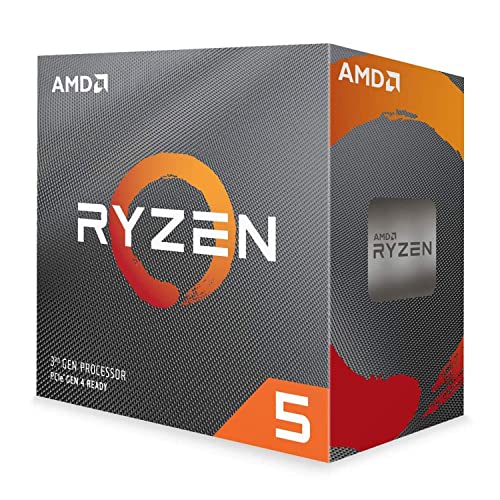 AMD Ryzen 5 3600
 AMD Ryzen Threadripper 7960X
 NVIDIA GeForce RTX 3080
 AMD Radeon RX 9070 XT
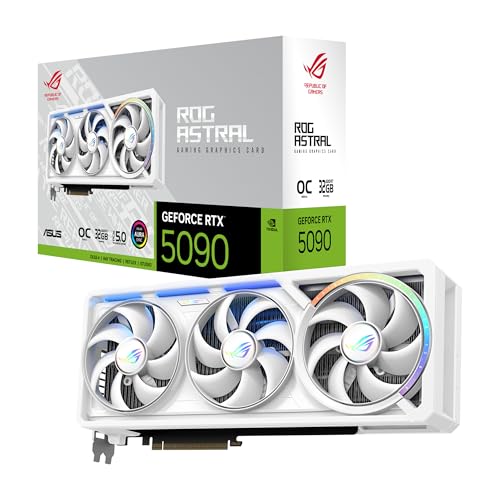 NVIDIA GeForce RTX 5090
 🏆 Best AI Flagship GPU
 Intel Arc B570
18 benchmarks · 2025
Intel Arc B570
18 benchmarks · 2025
 NVIDIA GeForce RTX 5070
27 benchmarks · 2025
NVIDIA GeForce RTX 5070
27 benchmarks · 2025