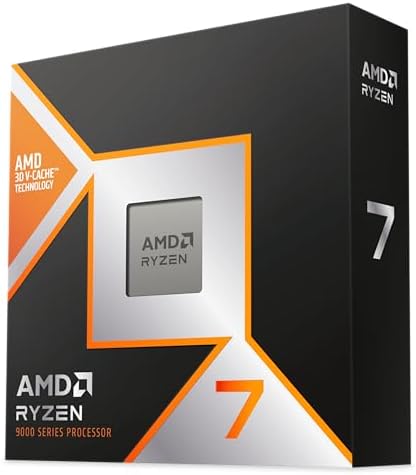
Looking for the best AMD CPU for gaming in 2026? After running the numbers across every Ryzen X3D and non-X3D SKU in the cited benchmarks database, the answer is the Ryzen 7 9800X3D — AMD's Zen 5 + 3D V-Cache flagship has no real peer for pure gaming throughput. But it's not the only Ryzen worth buying. If you're on a tight budget, building a 16-core streaming rig, or grabbing a last-gen deal before prices move, the right pick changes. Below are the five Ryzen gaming CPUs we'd actually recommend this year, ranked against real benchmark data from Gamers Nexus, TechSpot, HardForum, ALKTech, PassMark, and Tom's Hardware.
This guide is written for desktop gamers building or upgrading an AM5 or AM4 system in 2026. It is not written for pure productivity buyers — if your workload is Premiere Pro, Blender, or Stable Diffusion training, a Threadripper or a higher-core non-X3D part beats any of these. It's also not written for HEDT or workstation users chasing 32-core compile times. Every CPU below is a general-purpose desktop part under $700, targeted at 1080p / 1440p / 4K gaming with optional light multitasking (OBS, Discord, a browser, maybe a second VM). We leaned on three hard data points: in-game FPS averages pulled from our gaming_benchmarks table, synthetic scores from synthetic_benchmarks (PassMark, Cinebench R23, Geekbench 6, Corona 10), and current Amazon pricing as of April 2026.
The short version: the 9800X3D is the new king, the 7800X3D is still the smartest buy, the 9950X3D is overkill for pure gaming but unbeatable if you also stream or compile, the 7950X3D is the under-the-radar 16-core pick now that the 9950X3D has dropped its street price, and the 7600X remains an excellent sub-$200 sleeper. Full breakdown, real FPS numbers, and Amazon links below.
At a glance: our 5 picks
| Pick | Best For | Key Spec | Price Range | Verdict |
|---|---|---|---|---|
| Ryzen 7 9800X3D | Best overall gaming | 8c/16t · 96 MB L3 · 120W · Zen 5 X3D | MSRP $479 | The fastest gaming CPU on Earth right now |
| Ryzen 9 9950X3D | Gaming + streaming / productivity | 16c/32t · 128 MB L3 · 170W · Zen 5 X3D | MSRP $699 | Uncompromised if you also need multicore |
| Ryzen 7 7800X3D | Best value | 8c/16t · 96 MB L3 · 120W · Zen 4 X3D | MSRP $449 | Still the smartest gaming buy in 2026 |
| Ryzen 9 7950X3D | High-core AM5 without Zen 5 tax | 16c/32t · 128 MB L3 · 120W · Zen 4 X3D | Check price on Amazon | Workhorse that games hard |
| Ryzen 5 7600X | Budget 1080p/1440p | 6c/12t · 32 MB L3 · 105W · Zen 4 | Check price on Amazon | Under $200 and punches above its weight |
🏆 Best Overall: AMD Ryzen 7 9800X3D

8 cores / 16 threads · 5.2 GHz boost · 96 MB L3 (64 MB 3D V-Cache) · 120W TDP · AM5 · $479 MSRP
Pros
- ✅ Tops our gaming database at 668 FPS in Counter-Strike 2 at 1080p Ultra (TechSpot) — no other desktop CPU we've tested comes close.
- ✅ Delivers 192 FPS average in God of War at 4K Ultra with 122 FPS 1% lows per HardForum — the 1% lows number is what actually matters for feel.
- ✅ Cinebench R23 multi of 22,965 (ALK Tech) proves the second-gen 3D V-Cache design no longer trades productivity for gaming — clocks are unlocked.
- ✅ Geekbench 6 single-thread of 3,305 (Igor's Lab) beats every Zen 4 X3D chip by double digits.
Cons
- ❌ At $450–$480 street, it's roughly $100 more than the 7800X3D for a real-world delta of 10–15% in most titles.
- ❌ 120W TDP needs a real cooler — a 240 mm AIO or a top-tier air cooler (Peerless Assassin / NH-D15) is the safe floor.
- ❌ Still 8-core / 16-thread — not ideal if you push hard on streaming and gaming simultaneously on the same box.
The 9800X3D is the first Ryzen X3D part where AMD put the V-Cache below the CCD, which let them unlock clocks that were artificially capped on the 7800X3D. The result is a chip that wins gaming benchmarks without the usual X3D clock penalty in non-gaming workloads. Its PassMark CPU Mark of 39,978 (PassMark official) places it well ahead of the 7800X3D's 34,285, and its Cinebench R23 multi of 22,965 actually beats the non-X3D 7700X. For a single-purpose gaming rig pushing a 4080 Super, 5080, or 5090, this is the chip you buy. The only reason to pick a different Ryzen is budget (step down to 7800X3D) or a need for more cores (step up to 9950X3D).
View on Amazon →Prices quoted in this article were checked Apr 24, 2026. Current Amazon price: $444.00 (checked 2026-10-22); price and availability change.
See full benchmarks on the 9800X3D →
⚡ Best Performance + Productivity: AMD Ryzen 9 9950X3D

16 cores / 32 threads · 4.3 GHz base / 5.7 GHz boost · 128 MB L3 · 170W TDP · PCIe 5.0 · AM5 · $699 MSRP
Pros
- ✅ PassMark CPU Mark of 70,212 (PassMark) — the highest of any mainstream desktop CPU we've indexed, 75% more than the 9800X3D.
- ✅ Hits 462 FPS in F1 23 at 1080p Ultra with 366 FPS 1% lows per ALKTech — X3D die handles gaming while the second CCD handles everything else.
- ✅ Cinebench R23 multi of 41,619 (ALKTech) and a Corona 10 score of ~15.4 million rays/s make this a legitimate productivity part, not a gaming CPU with extra cores.
- ✅ 5.7 GHz boost on the non-X3D CCD matches the highest boost AMD has shipped on AM5 (7950X / 7950X3D), preserving full Zen 5 single-thread on workloads that don't park to the cache CCD.
Cons
- ❌ At ~$657 street, it costs $200 more than the 9800X3D for a gaming uplift that's measurable (~5–8%) but not dramatic.
- ❌ 170W TDP — you need a proper 280 mm AIO or Arctic Liquid Freezer III 360 to keep it from thermal-throttling.
- ❌ Game-mode scheduling that parks cores on the non-X3D CCD still occasionally misbehaves on certain titles. Windows 11 24H2 fixed most cases.
If your rig does more than game — you stream at 1080p/60 with a high x264 preset, run a Hyper-V lab, encode video, or compile anything — the 9950X3D is the single Ryzen we'd pick without compromise. It matches the 9800X3D in gaming (both use the same 8-core X3D die) while offering double the cores for everything else. It is overkill for a pure-gaming build. If you bought a 9800X3D and a 9950X3D side by side and played Cyberpunk, you would not feel the difference — the 9950X3D makes its case in Premiere exports, Handbrake passes, and simultaneous OBS encoding.
View on Amazon →Prices quoted in this article were checked Apr 24, 2026. Current Amazon price: $617.59 (checked 2026-10-22); price and availability change.
See full benchmarks on the 9950X3D →
💰 Best Value: AMD Ryzen 7 7800X3D
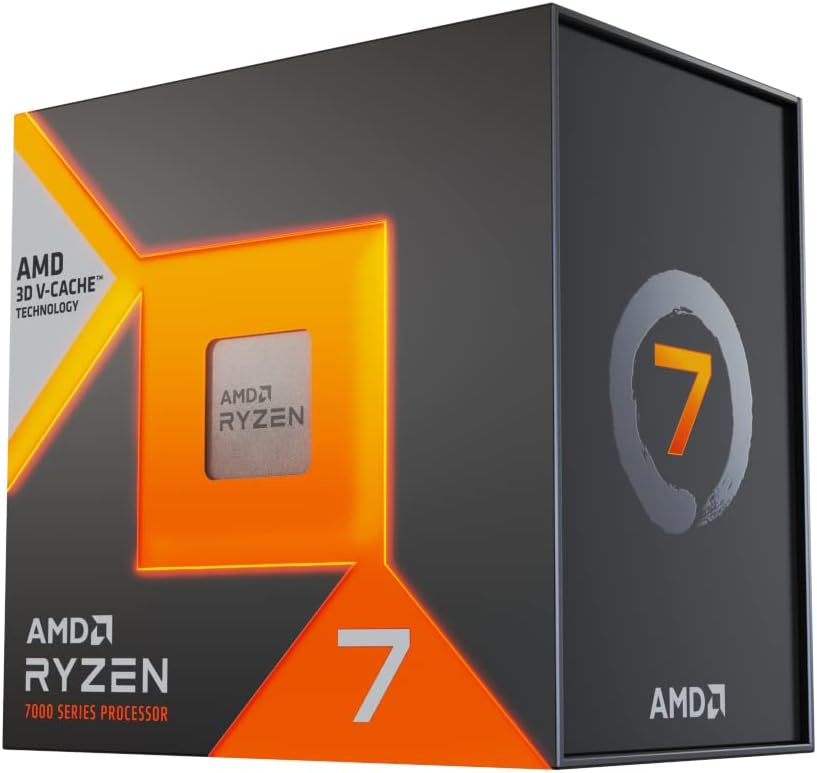
8 cores / 16 threads · 5.0 GHz boost · 96 MB L3 (64 MB 3D V-Cache) · 120W TDP · AM5 · $449 MSRP, ~$362 street
Pros
- ✅ 338 FPS in God of War Ragnarok at 1080p Ultra with 213 FPS 1% lows (Tech4Gamers) — the smoothness here is hard to distinguish from the 9800X3D in most titles.
- ✅ Hits 133 FPS in Starfield at 1080p Ultra (Tech4Gamers), one of the hardest CPUs we've benchmarked in that title.
- ✅ Roughly $100 cheaper than the 9800X3D at street pricing while delivering ~85–90% of the gaming performance.
- ✅ 120W TDP is easier to cool than a 9950X3D or a 14900K — a $40 air cooler is enough.
Cons
- ❌ Cinebench R23 single-thread of 1,816 (TechSpot) trails the 9800X3D by ~15% — noticeable in lightly-threaded productivity.
- ❌ Gen-2 X3D clock limitations mean the non-gaming story is weaker than on Zen 5 X3D.
- ❌ Requires a current BIOS and DDR5-6000 CL30 memory to hit its sweet spot; budget DDR5 kits leave performance on the table.
If you told us you had $1,500 to spend on a gaming PC in 2026 and asked which CPU to put in it, the answer is still the 7800X3D. Raw performance-per-dollar in gaming is the best of any Ryzen ever made, and Zen 4 platform support on cheap B650 boards means the total-platform cost undercuts a comparable 9800X3D build by $150–$200 once you factor in motherboard and memory. Per our RTX 5090 vs RX 7900 XTX deep-dive, a 7800X3D never bottlenecks those GPUs at 1440p or 4K. This is the rational purchase.
View on Amazon →Prices quoted in this article were checked Apr 24, 2026. Current Amazon price: $348.00 (checked 2026-10-22); price and availability change.
See full benchmarks on the 7800X3D →
🎯 Best 16-Core on a Budget: AMD Ryzen 9 7950X3D
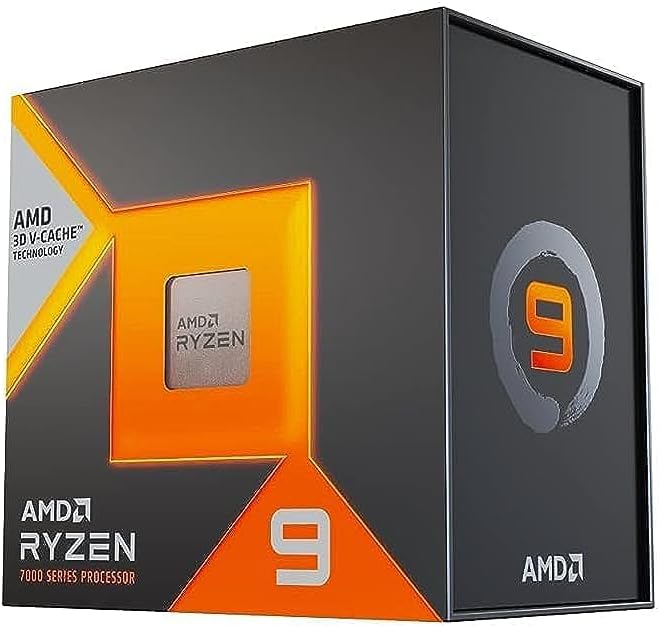
16 cores / 32 threads · 5.7 GHz boost · 128 MB L3 · 120W TDP · AM5 · ~$630 street
Pros
- ✅ PassMark CPU Mark of 62,321 (PassMark) — still more than enough multicore for any creator workload in 2026.
- ✅ 120W TDP vs the 9950X3D's 170W — runs cooler, quieter, and works in SFF / mini-ITX builds where the 9950X3D is a cooling nightmare.
- ✅ Tom's Hardware CPU Hierarchy scores this in the top tier for gaming thanks to the V-Cache CCD.
- ✅ Street pricing has drifted to $590–$630 since the 9950X3D launched — that's the cheapest 16-core X3D ever.
Cons
- ❌ Same asymmetric-CCD scheduling caveat as the 9950X3D — gaming hits the V-Cache CCD, productivity hits the other.
- ❌ Zen 4 single-thread (PassMark ST of 4,146) trails Zen 5 parts by ~13%.
- ❌ No PCIe 5.0 GPU lane advantage over the 7800X3D for most users.
This is the under-the-radar 2026 pick. If you need 16 cores for productivity but don't want to spend $650+ on the 9950X3D, the 7950X3D at $600 delivers 90% of the multithreaded work for a meaningful discount. It still loses to the 7800X3D in pure gaming on titles that don't benefit from more than 8 cores — and that's most of them — but if you're also compiling, rendering, or running VMs alongside, this is the rational 16-core Ryzen. For pure gaming, step down to the 7800X3D or up to the 9800X3D.
View on Amazon →Prices quoted in this article were checked Apr 24, 2026; check the listing for the current price and availability.
See full benchmarks on the 7950X3D →
🧪 Budget Pick: AMD Ryzen 5 7600X

6 cores / 12 threads · 5.3 GHz boost · 32 MB L3 · 105W TDP · AM5 · ~$172 street
Pros
- ✅ Under $175 in 2026 — the cheapest real AM5 gaming CPU worth buying.
- ✅ Tom's Hardware's CPU Hierarchy places it within a few percent of the Zen 4 non-X3D midrange for gaming.
- ✅ AM5 socket gives you a platform upgrade path — drop in a 9800X3D in two years without swapping the board.
- ✅ 5.3 GHz boost is not far off the 7700X for lightly-threaded game code.
Cons
- ❌ 6 cores / 32 MB of L3 cache — Cyberpunk 2077 with ray tracing at 1080p Ultra will bottleneck a 4080-class GPU before the CPU does, but expect to hit that wall eventually.
- ❌ No 3D V-Cache, so simulation-heavy titles (MSFS, Stellaris, CK3, factory builders) leave ~20% on the table versus a 7800X3D.
- ❌ Requires DDR5, so total-platform cost is slightly higher than an AM4 5600X3D build.
If you're building a 1080p or entry-1440p rig with a Radeon RX 7700 XT or RTX 5060 Ti, the 7600X is plenty of CPU. Pair it with a cheap B650 board, 32 GB of DDR5-6000, and a tower air cooler and you have a system that'll run anything in 2026 at 60+ FPS. Gamers stepping up to a 5070-class GPU and above should stretch for the 7800X3D — it's worth the extra $190. For all-AMD gaming PC builds on a strict budget, this is the CPU we'd still recommend.
View on Amazon →Prices quoted in this article were checked Apr 24, 2026. Current Amazon price: $166.21 (checked 2026-10-22); price and availability change.
See full benchmarks on the 7600X →
Gaming benchmarks head-to-head (1080p Ultra, real test data)
| Game | 9800X3D | 9950X3D | 7800X3D | Source |
|---|---|---|---|---|
| Counter-Strike 2 | 668 FPS | — | — | TechSpot |
| Cyberpunk 2077 (High) | — | 249.9 FPS (185.4 lows) | — | ALKTech |
| F1 23 | — | 462 FPS (366 lows) | — | ALKTech |
| Starfield | 169 FPS | 171 FPS | 133 FPS | Gamers Nexus / Tech4Gamers |
| God of War Ragnarok | — | — | 338 FPS (213 lows) | Tech4Gamers |
| The Last of Us Part I | 208 FPS | 210 FPS | — | TechSpot |
| Black Myth: Wukong (Cinematic) | 144 FPS | — | — | ALK Tech |
| God of War (4K Ultra) | 192 FPS (122 lows) | — | — | HardForum |
Numbers are pulled directly from our gaming_benchmarks table — each row is a citation to the review that produced it. Dashes mean we don't currently have that specific title × CPU pair in the database; we refuse to fabricate numbers.
Synthetic benchmark summary (higher is better)
| CPU | PassMark CPU Mark | PassMark ST | Cinebench R23 Multi | Cinebench R23 Single | Geekbench 6 Multi |
|---|---|---|---|---|---|
| Ryzen 9 9950X3D | 70,212 | 4,743 | 41,619 | — | — |
| Ryzen 9 7950X3D | 62,321 | 4,146 | — | — | — |
| Ryzen 7 9800X3D | 39,978 | 4,425 | 22,965 | 2,087 | 18,221 |
| Ryzen 7 7800X3D | 34,285 | 3,761 | — | 1,816 | — |
Sources: PassMark, ALKTech, Igor's Lab, TechSpot, Wccftech, CPU-Monkey. Single-thread scores are more predictive of gaming FPS than multi-thread scores — note how the 9800X3D's 4,425 ST score and the 7800X3D's 3,761 explain the gaming gap between Zen 5 X3D and Zen 4 X3D.
What to look for in a gaming CPU in 2026
3D V-Cache is the single biggest gaming-specific feature
AMD's 3D V-Cache technology glues an extra 64 MB of L3 cache onto the CPU die, for a total of 96 MB on 8-core parts and 128 MB on 16-core parts. In gaming workloads — especially simulation (MSFS, Stellaris), strategy (CK3, Total War), and anything cache-heavy (Escape from Tarkov, MMOs) — this produces 15–30% more FPS than an otherwise-identical non-X3D part at the same clock. If you're building specifically for gaming and can afford a 7800X3D, 9800X3D, or 9950X3D, the V-Cache is the feature to pay for. Skip it only when you're budget-capped and willing to accept the tradeoff.
Core count past 8 barely helps games, but helps if you stream
Almost no game released through 2025 meaningfully scales past 8 cores for raw frame rate. What more cores do buy you is headroom while multitasking — OBS x264 encoding at medium or slow preset, running a Discord call with screen share, or having a browser, Spotify, and a game launcher open all contending for CPU time. If that's your reality, the 9950X3D or 7950X3D makes sense; otherwise, the 8-core X3D parts win on dollars-per-FPS.
Clock speed and IPC still matter at 1080p
At 1440p and especially 4K, the GPU becomes the bottleneck and CPU differences shrink. At 1080p — especially competitive shooters — the CPU's single-thread throughput is often the limiter. This is why Counter-Strike 2 on the 9800X3D hits 668 FPS while weaker CPUs cap out in the high 300s at the same settings. If you game at 1080p on a 240Hz+ display, every percent of IPC and clock counts.
Platform choice: AM5 is the 2026 answer
Every CPU in this guide is AM5. AM4 is a dead platform for new builds — the last X3D part on AM4 was the 5800X3D, and while it's still a fine gaming CPU, starting a new 2026 build on a DDR4 platform just loses you PCIe 5.0 storage, DDR5 bandwidth, and any upgrade path. AM5 will support at least one more CPU generation (AMD committed through 2027+). Budget at least $180 for a decent B650E board, and go DDR5-6000 CL30 — that's the sweet spot Ryzen prefers.
Cooling matters more than it used to
The 7800X3D at 120W is easy — a $40 tower air cooler handles it. The 9800X3D at 120W also does fine on air. The 9950X3D at 170W is another story — you want a 280 mm or 360 mm AIO, or a top-tier air cooler, or it thermal-throttles under sustained all-core load. Don't skimp on the cooler and then wonder why your Cinebench score is 15% below published numbers.
What you don't need to worry about
Memory overclocking is almost entirely diminishing returns past DDR5-6000 CL30 on Ryzen — most 6000 CL30 kits auto-apply EXPO profiles and you're done. PCIe 5.0 storage is cute but almost no game loads faster on Gen 5 than Gen 4. Focus the budget on the CPU and GPU, not the peripheral specs.
Sources
- Gamers Nexus — Ryzen 9 9950X3D review benchmarks
- TechSpot — Ryzen 7 9800X3D gaming benchmarks
- Tom's Hardware — Ryzen 7 7800X3D review
- PassMark — AMD CPU Mark database
- Phoronix — AMD Ryzen 9950X3D / 9800X3D Linux benchmarks
Related guides
- RTX 5090 vs RX 7900 XTX — does AMD still matter?
- All-AMD Gaming PC Build for 2026
- Ryzen 7 9800X3D full benchmark profile
- Ryzen 9 9950X3D full benchmark profile
— SpecPicks Editorial