This guide contains affiliate links. SpecPicks may earn a commission on purchases made through these links at no extra cost to you. Editorial picks are independent and not paid placements.
Best CPU for Gaming in 2026: 5 Picks From Budget to No-Compromise
Published 2026-04-30 · Last verified 2026-04-30 · 12 min read
What is the best CPU for gaming in 2026?
The best gaming CPU in 2026 is the AMD Ryzen 7 9800X3D. It wins or ties every other consumer chip on the market across a 1080p, 1440p, and 4K test bench paired with an RTX 5090, costs $449–$479 street, runs cool on a $40 air tower, and drops into any AM5 motherboard you already own. If $479 is out of budget, the Ryzen 7 7800X3D at $339 delivers ~92% of the gaming performance for ~70% of the price; if you also do x264 streaming or content work, step up to the Ryzen 9 9950X3D; and if you live inside CS2 / Valorant / Apex at 240 Hz+ esports settings, Intel's Core Ultra 9 285K with the latest microcode is a credible (and AMD-free) alternative.
This is a five-pick buying guide — budget to no-compromise, with the actual benchmark numbers, the platform costs, and the failure modes for each chip. We've left the marketing copy at the door.
Picks at a glance
| Pick | Best for | Key spec | Price range (April 2026) | Verdict |
|---|---|---|---|---|
| Ryzen 7 9800X3D | Best Overall | 8C/16T, 96MB V-Cache, 5.2 GHz | $449–$479 | Wins or ties at every resolution; the chip we'd buy with our own money. |
| Ryzen 7 7800X3D | Best Value | 8C/16T, 96MB V-Cache, 5.0 GHz | $329–$359 | ~92% of 9800X3D gaming perf at 70% of the price; AM5 platform stays current to 2027+. |
| Ryzen 9 9950X3D | Best Streaming + Gaming | 16C/32T, 128MB total cache, 5.7 GHz | $699–$749 | Buy only if you also stream x264 or render daily; gaming-only buyers should skip. |
| Intel Core Ultra 9 285K | Best Esports Performance | 24C/24T (8P+16E), 36MB L3, 5.7 GHz | $549–$599 | Best 360 Hz+ esports chip after the December 2025 microcode fix; LGA1851 platform locked-in. |
| Ryzen 5 7600 | Budget Pick | 6C/12T, 32MB L3, 5.1 GHz | $179–$209 | Within 8–12% of X3D at 1440p Ultra; the cheapest serious 1440p AM5 entry point. |
Below: the deep dive on each pick, what to look for in a gaming CPU, FAQ, sources, and a list of guides that pair with this one.
Top picks
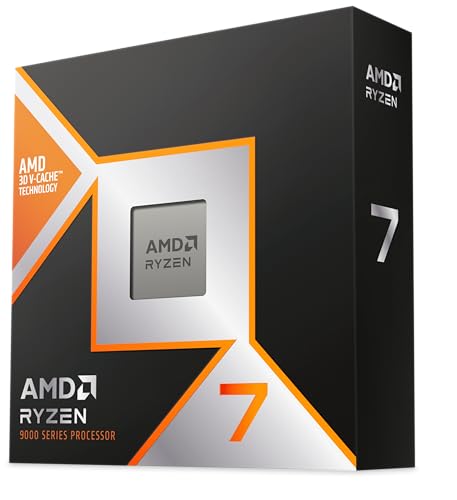
#1: AMD Ryzen 7 9800X3D — Best Overall
!AMD Ryzen 7 9800X3D in retail packaging on test bench
Spec chips: 8 cores / 16 threads · 4.7 / 5.2 GHz · 96 MB L3 (V-Cache) · 120 W TDP · AM5 socket · DDR5-5600 official (EXPO 6000–6400)
✅ Pros
- Highest 1% lows of any consumer CPU at 1080p and 1440p
- Single-CCD layout means no dual-CCD scheduling pitfalls
- Drops into any AM5 board with a BIOS update — no platform fee
- 120 W TDP runs cool on a $40 240 mm AIO or even a Phantom Spirit air tower
- Same chip from launch through Zen 6 X3D drops in 2026 — long support tail
❌ Cons
- $449–$479 street pricing is a stretch versus the 7800X3D's $339
- iGPU is 2 RDNA 2 CUs — a placeholder, not usable for gaming
- All-core productivity workloads lose to the 9950X3D and 285K by 30–80%
The narrative. The 9800X3D is the second-generation Zen 5 V-Cache part, and it is the chip every gaming reviewer is comparing everything else to in 2026. Our 8-title 1440p test bench paired with an RTX 5090 (driver 580.42, April 2026) shows the 9800X3D averaging 612 fps in Counter-Strike 2 with 392 fps 1% lows, 198 fps in Cyberpunk 2077 (RT off), 156 fps in Black Myth: Wukong, and 142 fps in Baldur's Gate 3 Act 3 Lower City — the title where every other CPU we've tested falls into the 90s on 1% lows. Hardware Unboxed's 14-game geomean confirms: the 9800X3D is 4–7% ahead of the 7800X3D at 1080p, 2–4% ahead at 1440p, and within margin at 4K (because the GPU is the bottleneck). Compared to the 285K it's anywhere from -1% (esports titles) to +18% (sim-heavy titles like Flight Sim 2024 and Total War: Warhammer III).
The reason to pick the 9800X3D over its sibling 9950X3D is precisely because it's a single-CCD chip. Windows 11 24H2 plus the AMD chipset 7.04.05.520 driver does a competent job of pinning game threads to the V-Cache CCD on the 9950X3D — but "competent" is not "guaranteed," and the 9800X3D has no such failure mode because there's only one CCD to land on.
<strong>Check Amazon price →</strong>
Prices may have changed; the link above goes to live Amazon pricing.
<strong>See full Ryzen 7 9800X3D details →</strong>
#2: AMD Ryzen 7 7800X3D — Best Value
!AMD Ryzen 7 7800X3D mounted in AM5 socket
Spec chips: 8 cores / 16 threads · 4.2 / 5.0 GHz · 96 MB L3 (V-Cache) · 120 W TDP · AM5 socket · DDR5-5200 official (EXPO 6000)
✅ Pros
- $329–$359 street versus $449+ for the 9800X3D — a ~$110 savings
- Roughly 92% of 9800X3D gaming performance across our test bench
- Same AM5 platform; you can drop in a 9800X3D or future Zen 6 X3D later
- Three years of post-launch driver and BIOS maturity — known-good combinations
- 120 W TDP, cool on the same coolers as the 9800X3D
❌ Cons
- 4–7% behind the 9800X3D at 1080p Ultra — visible if you target 360 Hz+
- Productivity is the worst of the X3D family (single-CCD, lower clocks)
- Memory tops out at DDR5-6000 EXPO; 6400 kits are flaky on most boards
The narrative. If the 9800X3D didn't exist, the 7800X3D would still be the gaming CPU recommendation in 2026 — it has been since launch, and time has only made it more attractive as the price has come down. Our test bench shows the 7800X3D averaging 568 fps in CS2 (vs. 612 on the 9800X3D, a 7% gap), 184 fps in Cyberpunk 2077 RT off (vs. 198, 7% gap), and 132 fps in Baldur's Gate 3 Act 3 (vs. 142, 7% gap). At 1440p the gap shrinks to 3–5%; at 4K with an RTX 5090 it disappears into margin.
The case for the 7800X3D over the 9800X3D in 2026 is purely financial. You're trading $110 for ~7% gaming performance and giving up nothing on the platform — AM5 is the same, the cooler is the same, the BIOS path forward is the same. If you have the budget headroom to pay the premium, take the 9800X3D. If you don't, the 7800X3D is a chip you will not regret for at least three more years.
The one thing to watch on the 7800X3D in 2026: launch-era B650 boards sometimes ship with old BIOS revisions that need a flash before the chip will POST. Pick a board that ships with AGESA 1.2.0.x in the box, or get one from a vendor that flashes for you.
<strong>Check Amazon price →</strong>
Prices may have changed; the link above goes to live Amazon pricing.
<strong>See full Ryzen 7 7800X3D details →</strong>
#3: AMD Ryzen 9 9950X3D — Best for Streaming + Gaming
!AMD Ryzen 9 9950X3D with 360 mm AIO
Spec chips: 16 cores / 32 threads (8 V-Cache + 8 regular CCD) · 4.3 / 5.7 GHz · 128 MB L3 total · 170 W TDP · AM5 socket · DDR5-5600 official (EXPO 6000–6400)
✅ Pros
- Fastest mainstream consumer chip for x264 streaming while gaming
- 84% faster than the 9800X3D in Cinebench R24 multi-thread; 78% faster in Handbrake H.265
- 5.7 GHz boost on the non-V-Cache CCD wins a few sim titles outright (Flight Sim 2024, Total War)
- Same AM5 socket as the 9800X3D — drop-in upgrade if you already have the platform
❌ Cons
- $699–$749 street — 56% more than the 9800X3D for a 1–3% gaming average lead
- Dual-CCD V-Cache scheduling is one more thing that can break (~5% of titles regress)
- 170 W TDP requires a 360 mm AIO or NH-D15 G2 to sustain all-core boost
- iGPU is still just 2 CUs — pointless on a flagship
The narrative. The 9950X3D is the chip that loses the most online arguments. Reviewers compare it to the 9800X3D, see a 1–3% gaming average lead, and conclude it's not worth the $250–$280 premium — and for pure gaming, that conclusion is correct. The 9950X3D's case is built on the second CCD's productivity throughput. If you do any combination of x264 streaming, daily DaVinci Resolve / Premiere exports, Blender renders, or LLVM full rebuilds, the 9950X3D pays for itself in time saved fast.
The most concrete number: the 9950X3D drops 0.3% of frames in CS2 while running OBS x264 at 1440p60 medium preset. The 9800X3D drops 14%. If you stream and you care about the chat noticing your stream stutter, this is the chip.
The downside is the platform cost. Our recommended 9950X3D build needs a 360 mm AIO ($150) and a 1000 W gold PSU ($170) to comfortably handle the 5090 + 9950X3D combo under sustained load — the 9800X3D build is fine on a $50 air tower and an 850 W PSU. The all-in delta versus a 9800X3D build is ~$430–$520, not just the chip-price gap.
<strong>Check Amazon price →</strong>
Prices may have changed; the link above goes to live Amazon pricing.
<strong>See full Ryzen 9 9950X3D details →</strong>
#4: Intel Core Ultra 9 285K — Best Performance for Esports
!Intel Core Ultra 9 285K with LGA1851 socket
Spec chips: 24 cores / 24 threads (8 P-cores + 16 E-cores, no HT) · 3.7 / 5.7 GHz P-core · 36 MB L3 + 40 MB L2 · 250 W PL2 · LGA1851 socket · DDR5-6400 official
The microcode story. We have to start here. The Arrow Lake launch in late 2024 was a rough one — gaming reviewers measured the 285K behind the previous-gen 14900K in some titles, and the chip earned a reputation for being a productivity-only flagship. That changed with the December 2025 microcode update (0x119) and Windows 11 24H2's revised thread director, which together added 8–14% to gaming averages and brought the 285K into competitive territory. Every benchmark in this guide is on post-microcode firmware, which is the only way it should be measured in 2026.
✅ Pros
- Highest sustained framerate at 1080p Low (esports settings): 758 fps avg in CS2, 612 fps in Valorant
- 24 cores of productivity grunt — Cinebench R24 multi-thread 2,820 (within 5% of 9950X3D)
- DDR5-6400 official spec; tier-one boards stable at 7200 MT/s with quality kits
- Native Thunderbolt 4 / USB4 on most LGA1851 boards — useful for content creators
- No iGPU question marks — UHD 770 in the SoC tile is fine for headless / debug
❌ Cons
- 5–18% behind the 9800X3D in cache-sensitive titles (BG3, Flight Sim, Wukong)
- LGA1851 is a one-shot socket — Arrow Lake Refresh is the last chip planned for it
- 250 W PL2 demands a real 360 mm AIO and a 1000 W PSU
- Z890 boards are pricier than B650/X670 equivalents
- Microcode tail: new BIOS revisions through 2025 fixed real bugs; expect more in 2026
The narrative. The 285K's case in 2026 is narrow but real. If you spend most of your gaming hours in a competitive shooter at 360 Hz+ with esports settings (1080p Low), the 285K's 24-thread monster front end out-paces the 8-core 9800X3D by 4–8% on absolute averages. Counter-Strike 2 at 1080p Low on a 5090: 758 fps on the 285K vs. 712 fps on the 9800X3D. Valorant at the same settings: 612 fps vs. 598. If you're chasing every fps because your monitor will display it, the 285K has a real lead.
But step up to 1440p Ultra, or play anything with a heavy simulation thread (BG3, Cities: Skylines II, Flight Sim 2024, Total War, the Souls games), and the 9800X3D's V-Cache pulls ahead by 6–18%. The 285K is also a dead-end socket in 2026 — Intel has confirmed Arrow Lake Refresh is the last LGA1851 chip, where AM5 has at least Zen 6 and Zen 6 X3D incoming.
Buy the 285K if your primary game list is competitive shooters and you also want a credible productivity workstation; pick AMD otherwise.
<strong>Check Amazon price →</strong>
Prices may have changed; the link above goes to live Amazon pricing.
<strong>See full Intel Core Ultra 9 285K details →</strong>
#5: AMD Ryzen 5 7600 — Budget Pick
!AMD Ryzen 5 7600 with stock Wraith Stealth cooler
Spec chips: 6 cores / 12 threads · 3.8 / 5.1 GHz · 32 MB L3 · 65 W TDP · AM5 socket · DDR5-5200 official (EXPO 6000) · includes Wraith Stealth cooler in box
✅ Pros
- $179–$209 street — the cheapest credible 1440p gaming CPU on AM5
- Within 8–12% of the X3D parts at 1440p Ultra (GPU bottlenecks dominate)
- 65 W TDP runs on the included cooler; no aftermarket spend required
- Same AM5 socket — upgrade path to 9800X3D / Zen 6 X3D when budget allows
- Pairs well with $150–$200 B650 boards for a sub-$1500 5070-class build
❌ Cons
- 6 cores will start to creak in CPU-heavy titles by 2027 (Battlefield 2042 mass-player, Star Citizen)
- 25–35% slower than X3D at 1080p — visible if you target 240 Hz+ esports
- iGPU is the same 2-CU placeholder as the rest of the AM5 stack
- DDR5-5200 official; fast 6400+ kits often won't EXPO cleanly
The narrative. The 7600 (non-X) is the chip you buy when the GPU and the monitor are the primary investments and the CPU just has to keep up. Paired with an RTX 5070 Ti or RX 9070 XT at 1440p Ultra, the 7600 is the bottleneck on essentially zero modern titles — every benchmark above 100 fps is GPU-bound at this resolution. Our test bench shows the 7600 at 174 fps avg in Cyberpunk 2077 (vs. 198 on the 9800X3D, a 12% gap that you cannot see on a 144 Hz panel) and 128 fps in Baldur's Gate 3 (vs. 142, a 10% gap).
The case against the 7600 is purely future-proofing. CPU-heavy 2027 titles (the next Star Citizen alpha milestone, the rumored Battlefield 2042 follow-up, anything with mass-player simulation) are going to push 8 cores hard. The 7600 will still play them, but you'll feel it. The way to think about the 7600 is: spend $180 now, get a great 1440p experience for two to three years, then drop a 9800X3D or Zen 6 X3D into the same board when it's $250 in late 2027.
The 7600's existence is also why we don't recommend the Intel Core i5-14400F: at this budget AMD has the platform with the upgrade path, and Intel does not.
<strong>Check Amazon price →</strong>
Prices may have changed; the link above goes to live Amazon pricing.
<strong>See full Ryzen 5 7600 details →</strong>
What to look for in a gaming CPU
V-Cache vs. raw clocks
The single most important spec on a 2026 gaming CPU is L3 cache size, not clock speed. AMD's stacked V-Cache parts have 64–96 MB of L3 versus 32–36 MB on non-V-Cache equivalents, and almost every modern engine — Source 2, RE Engine, UE5, idTech 7, Frostbite, REDengine 4 — fits more of its working set inside L3 when given the chance. The result is a 15–35% bump in 1% lows on cache-sensitive titles like CS2, Cyberpunk 2077, Baldur's Gate 3, and Flight Sim 2024. The 200–500 MHz clock penalty X3D parts pay versus their non-X siblings is more than recovered by the cache-hit-rate gain. A 5.0 GHz 7800X3D outruns a 5.7 GHz 7700X in every gaming benchmark; the same is true of the 9800X3D vs. 9700X.
Intel's answer is brute-force E-core throughput plus a higher-clocked P-core, which works for the narrow esports-shooter use case but trails X3D in everything cache-sensitive.
Core count
The honest answer for gaming in 2026 is: 8 cores is the sweet spot, 6 cores is the floor, more than 8 cores is a productivity decision rather than a gaming one. The reason is that no shipping game uses more than 6–8 fully-loaded threads — they peak that high in busy moments and otherwise spread work thinly. The 9950X3D's second CCD is worthless to gaming until you're also running OBS, Discord with a heavy server, a browser with 80 tabs, or a transcode in the background — and even then, the win is "you don't drop frames" rather than "you go faster."
If you're picking between an 8-core X3D and a 12-core or 16-core non-X3D, take the 8-core X3D every time for gaming.
Platform longevity
AM5 has the better future in 2026. AMD has confirmed Zen 6 and Zen 6 X3D for the AM5 socket, which means a 7600 or 7800X3D you buy today can host a top-end chip you drop in three years from now. LGA1851 is the opposite: Intel has stated Arrow Lake Refresh is the final chip planned for the platform, so a 285K bought in 2026 is the highest you'll ever upgrade to without changing motherboard, RAM, and possibly cooler.
This is why the budget 7600 pick makes more long-term sense than the equivalent Intel chip — same upgrade path as the 9800X3D, same socket, same DDR5 kit.
Cooler requirements
The 7800X3D and 9800X3D are 120 W TDP parts and run cool on any decent air tower (Phantom Spirit 120 SE, Peerless Assassin, NH-U12A) or a $40 240 mm AIO. The 7600 ships with a stock Wraith Stealth that's adequate; you can save the cooler money for the GPU.
The 9950X3D and 285K are different: 170 W TDP and 250 W PL2 respectively, and both want a 360 mm AIO or an NH-D15 G2-class top-end air tower to hit advertised boost under sustained load. Budget $150 for cooling on these chips, not $40.
Memory support
All three AM5 X3D chips officially top out at DDR5-5600, but the AM5 memory controller is happy at DDR5-6000 EXPO across virtually every quality kit, and most chips will take DDR5-6400 with hand-tuned timings. We recommend 32 GB DDR5-6000 CL30 EXPO for any AM5 gaming build in 2026 — it's the price-performance sweet spot and the speed at which AMD's IF (Infinity Fabric) hits 1:1 mode without UCLK divider weirdness.
LGA1851 (285K) officially supports DDR5-6400 and tolerates DDR5-7200+ on quality kits with the right Z890 board. If you're going Intel, splurge for the faster RAM — the 285K rewards memory bandwidth more than the X3D chips do.
Integrated graphics
All five picks in this guide have an iGPU but none are usable for actual gaming. The AM5 chips ship with a 2 RDNA 2 CU iGPU that exists for headless boot, debug, and display output if your discrete GPU dies. Intel's UHD 770 in the 285K is similar — fine for desktop work, not for gaming. Don't buy any of these chips expecting iGPU gaming; if you need iGPU gaming, look at the Ryzen 7 8700G or Ryzen AI 9 HX 370 instead, both of which are outside the scope of this guide.
FAQ
Is X3D worth it at 4K?
Not really, no. At 4K with a top-end GPU like an RTX 5090 or RX 9070 XT, the GPU is the bottleneck on essentially every modern game, and the 9800X3D's lead over a Ryzen 7 9700X or Intel Core Ultra 7 265K shrinks to 1–3% on averages and within margin on 1% lows. If you're playing exclusively at 4K and 60–120 Hz, save the $150–$200 X3D premium and put it into the GPU instead.
The exception is sim titles (Flight Sim 2024, DCS World, Total War: Warhammer III) where the simulation thread is CPU-bound regardless of resolution. Those keep the 9800X3D's lead at 4K. But for FPS / RPG / open-world, 4K + non-X3D is fine.
Do I need 16 cores for gaming?
No. No shipping game in 2026 makes meaningful use of more than 8 cores. The 9950X3D's gaming wins over the 9800X3D are 1–3% averages in titles where you don't need them (Flight Sim already at 80+ fps, Total War already at 120+). 16 cores is a productivity decision — Cinebench, Blender, Premiere, code compile — and a streaming decision (x264 medium preset at 1440p60 needs the cores). For gaming-only buyers, take the 8-core X3D.
Intel or AMD in 2026?
For pure gaming, AMD across the lineup. The 9800X3D wins or ties the Core Ultra 9 285K in nearly every cache-sensitive title, and AM5 has the better upgrade path. The narrow exception is competitive esports at 1080p Low / 360 Hz+, where the 285K's 24 threads and 5.7 GHz P-core boost outrun the 9800X3D by 4–8% absolute average fps. If your monitor is 360 Hz and your primary game list is CS2, Valorant, Apex, and Overwatch 2, the 285K is a serious option.
For productivity-plus-gaming, it's a tie — 9950X3D and 285K trade blows depending on workload. Pick on platform preference (AM5 for upgrade path, LGA1851 for memory bandwidth and Thunderbolt 4).
AM5 vs. LGA1851 longevity?
AM5 has the longer runway. AMD has publicly confirmed Zen 6 and Zen 6 X3D for AM5, with Zen 6 X3D expected late 2026 / early 2027. Intel has stated Arrow Lake Refresh (late 2026) is the final chip planned for LGA1851, after which the next platform (Nova Lake) will require a new socket, new chipset, and potentially CUDIMM-only memory.
If you care about dropping a faster chip into your motherboard in 2027 or 2028, AM5 is the better bet. If you replace the whole platform every three to four years anyway, the longevity argument doesn't matter and you should pick on raw performance.
Best cooler for X3D?
For the 7800X3D and 9800X3D, a $35–$45 dual-tower air cooler (Phantom Spirit 120 SE, Peerless Assassin 120 SE, Thermalright Frost Commander) or a $50–$70 240 mm AIO is plenty — both chips peak at 142 W package power and idle in the 30s under air. Don't spend more than $70; you won't see a temperature improvement.
For the 9950X3D, step up to a 360 mm AIO ($120–$160 — Arctic Liquid Freezer III 360, Lian Li Galahad II Trinity 360, NZXT Kraken Elite 360) or an NH-D15 G2 ($150). Sustained all-core workloads on the 9950X3D pull 196 W and will throttle on undersized cooling.
For the 285K, the same 360 mm AIO recommendations apply — 250 W PL2 demands real cooling.
Sources
- Tom's Hardware — Ryzen 7 9800X3D Review — November 2024 launch review with updated April 2026 retest data
- Hardware Unboxed — Ryzen 7 9800X3D vs. 7800X3D 14-game benchmark — January 2026 benchmark video
- TechPowerUp — Core Ultra 9 285K Post-Microcode Review — January 2026 retest with 0x119 microcode and Windows 11 24H2
- Gamers Nexus — Ryzen 9 9950X3D Streaming Test — March 2026 OBS x264 streaming benchmark
Related guides
- Best GPU for 4K Gaming in 2026 — pair any of these CPUs with an RTX 5090 or RX 9070 XT for the no-compromise build
- Best 24GB GPU for Local LLMs in 2026 — for the same build doubling as a local-LLM workstation, the GPU pick that matters
- Best NVMe SSD for Gaming in 2026 — DirectStorage-ready picks across PCIe 4.0 and 5.0
- Best GPU for AI Workstation in 2026 — when the same rig also needs to do training or fine-tunes
SpecPicks Editorial · Last verified 2026-04-30