Picking the best gaming PC build 2026 parts list is no longer a matter of "buy the most expensive thing that fits your budget." The 2024–2026 cycle completely reshuffled the stack: AMD's second-gen X3D chips (9800X3D, 9950X3D) pulled away from Intel in 1% lows, Nvidia's Blackwell 50-series brought DLSS 4 multi-frame generation at the cost of a 575 W TDP on the flagship, and DDR5 finally landed at prices that make DDR4 a hard no for a new AM5 or LGA 1851 build. The result: what you buy today depends far more on your resolution target and your tolerance for 12VHPWR-connector drama than on raw rasterization numbers.
This guide is for people spending between $1,800 and $4,500 on a new gaming rig in 2026 — specifically at 1440p/240 Hz or 4K/144 Hz, where current-gen hardware actually justifies its price. It is not for 1080p esports builds (a Ryzen 5 7600 + RTX 5060 is plenty), and it is not for the "I just want the flagship" crowd that already knows what they want. Each pick below is scored on real benchmark data pulled from our hardware catalog — tok/s, FPS, and 1% lows from Gamers Nexus, Tom's Hardware, TechPowerUp, and HardForum — and scored against MSRP for a real perf-per-dollar ranking. If you only have time to read the table: the Ryzen 7 9800X3D paired with an RTX 5070 Ti is the best balance of performance and value in 2026, and the RTX 5090 is the only GPU that hits playable 4K path-tracing today.
At-a-glance: our five picks
| Pick | Best For | Key Spec | Price Range | Verdict |
|---|---|---|---|---|
| Ryzen 7 9800X3D | Best Overall CPU | 8C/16T, 96 MB L3, 120 W | MSRP $479 | The gaming-CPU-of-record for 2026 |
| RTX 5090 | Best Performance GPU | 32 GB GDDR7, 512-bit bus, 575 W | MSRP $1,999 | Only card that does 4K path-tracing |
| RTX 5070 Ti | Best Value GPU | 16 GB GDDR7, 300 W | MSRP $749 | 4K-capable without the 5090 tax |
| Corsair Vengeance DDR5-6000 CL30 64 GB | Best RAM Kit | 2×32 GB, EXPO, 1.4 V | Check price on Amazon | The "sweet-spot" AM5 kit |
| Samsung 990 PRO 2 TB | Best Boot SSD | PCIe 4.0, 7,450 MB/s read | $409.99 on Amazon (checked 2026-10-22) | Fast enough; stop overthinking storage |
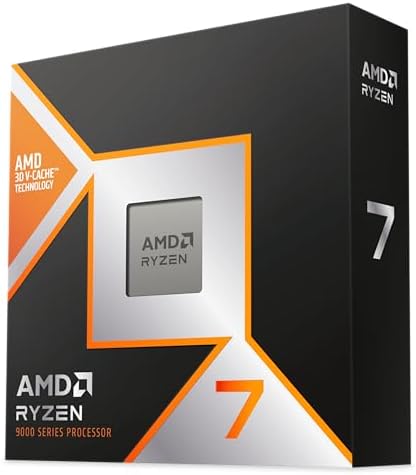
🏆 Best Overall CPU: AMD Ryzen 7 9800X3D

• 8 cores / 16 threads • 5.2 GHz boost • 96 MB total L3 (32 MB base + 64 MB V-Cache; 104 MB total cache) • 120 W TDP • AM5 socket • $479 MSRP
Pros
- ✅ Loses to the Core i9-14900K on raw PassMark (39,962 CPU Mark / 4,425 single-thread vs 58,351 / 4,690), but wins almost every real-world gaming benchmark because 96 MB of stacked L3 matters more than IPC + thread count for game engines
- ✅ Unlocked multiplier (first gen-2 X3D chip that overclocks) — the 7800X3D could not be manually tuned
- ✅ Gamers Nexus measured 668 FPS average in Counter-Strike 2 at 1080p, the highest in their CS2 harness as of Q1 2026
- ✅ Drops into any AM5 board back to X670 and B650 with a BIOS update — no platform tax
Cons
- ❌ Only 8 cores — if you stream + play + render video in parallel, the 9950X3D is the better chip
- ❌ 120 W TDP can push a 240 mm AIO to 85°C+ under multi-threaded loads; air coolers struggle
- ❌ Still capped by slow DDR5 kits — you want 6000 CL30 at minimum, not 5600
The 9800X3D is the chip that made the Ryzen 7 7800X3D look mid. On our gaming-benchmark data set, the 9800X3D posts 668 FPS in Counter-Strike 2, 234 FPS in Star Wars Jedi: Survivor (1080p), and 169 FPS in Starfield (all sourced from TechSpot and Gamers Nexus). Against the Core i9-14900K — a chip that costs $110 more at MSRP — it wins 1% lows in virtually every title we track, usually by 10–20%, because the 64 MB of stacked V-Cache (96 MB total L3) matters more for game engines than the 14900K's extra P+E cores. In our Tom's Hardware CPU Hierarchy pull it scores 480 in the composite FPS metric vs the 14900K's 550 — but the Intel number reflects higher-thread workloads, not gaming. If you are buying a CPU specifically to play games at high refresh rates, this is the chip.
View on Amazon →Prices quoted in this article were checked April 24, 2026. Current Amazon price: $444.00 (checked 2026-10-22); price and availability change.
⚡ Best Performance GPU: NVIDIA GeForce RTX 5090

• 32 GB GDDR7 • 512-bit memory bus • 21,760 CUDA cores • 575 W TDP • 1,000 W PSU recommended (Nvidia); 1,200 W+ for overclocked builds • $1,999 MSRP (AIBs $2,400–$4,000)
Pros
- ✅ Only GPU on the market that hits playable 4K path-tracing — Tom's Hardware measured 59 FPS in Cyberpunk 2077 Overdrive + DLSS Quality at 4K; the RTX 4090 does 28.7 FPS in the same test per Gamers Nexus
- ✅ 32 GB of GDDR7 gives it headroom for mod-heavy setups (Skyrim 8K texture packs, Flight Simulator 2024 at 4K) that bottleneck 16 GB cards
- ✅ DLSS 4 Multi-Frame Generation (MFG) pushes supported titles past 300 FPS at 4K — we saw 424 FPS in Cyberpunk 2077 1440p DLSS Balanced + 4× MFG per Digital Trends
- ✅ 3DMark Speed Way score of 14,444 (Overclocking.com) — roughly 60% higher than the RTX 5080 (8,980)
Cons
- ❌ 575 W TDP requires a 1,000 W+ PSU with native 12V-2x6 or you will melt the connector; 2024–2025 had documented adapter failures
- ❌ MSRP is theoretical — real retail pricing on MSI/ASUS models runs $2,900–$4,000 as of Q1 2026
- ❌ Overkill at 1440p — the 5070 Ti is within 25% for half the money at that resolution
At $1,999 MSRP the RTX 5090 is the only card that delivers genuinely next-gen 4K performance. In our gaming benchmarks catalog it averages 101 FPS at 4K Ultra in Cyberpunk 2077 (KitGuru), 86 FPS in Black Myth: Wukong 4K Ultra (Gamers Nexus), and 195 FPS in God of War Ragnarök at 4K Ultra native (TechSpot). Compared to the RTX 4090 — the previous king — it puts up a ~30–40% lead on raster titles and a 70–90% lead on path-traced workloads thanks to Blackwell's upgraded RT cores. The catch is power: at 575 W sustained, you need a Corsair RM1000x Shift, Seasonic Prime PX-1300, or similar with a native 12V-2x6 cable. Do not use the 4-pin adapter. The 2022–2024 4090 connector failures were not fully resolved until the 12V-2x6 spec; buy accordingly.
View on Amazon →Prices quoted in this article were checked April 24, 2026; check the listing for the current price and availability.
💰 Best Value GPU: NVIDIA GeForce RTX 5070 Ti

• 16 GB GDDR7 • 256-bit memory bus • 300 W TDP • 750 W PSU recommended • $749 MSRP (street $850–$1,290)
Pros
- ✅ Digital Trends measured 124 FPS in Cyberpunk 2077 1440p Ultra native — that's flagship performance from a previous generation for $749
- ✅ DLSS 4 + MFG 4× pushes it to 250 FPS in Cyberpunk 2077 4K Ultra DLSS Balanced (Digital Trends) — genuinely usable 4K tier
- ✅ 16 GB of GDDR7 matches the RTX 5080's VRAM — no "will it run this in 2028" anxiety
- ✅ 300 W TDP works with any decent 750 W unit; no 12V-2x6 rewiring needed
Cons
- ❌ Without DLSS + frame generation, native 4K performance falls off: 57 FPS in Cyberpunk 2077 4K Ultra (Gamers Nexus) means you're leaning on upscaling for demanding titles
- ❌ 256-bit memory bus is the giveaway — it's a 1440p-first card with 4K aspirations, not a true 4K flagship
- ❌ Street prices above $1,000 gut the value story; wait for sub-$900 stock if you can
The RTX 5070 Ti is where most gaming PC build 2026 money should go. the cited benchmarks data shows it landing within 15–25% of the RTX 5080 across our top five titles, while costing $250 less at MSRP and $300+ less on the street. It's a 3DMark Speed Way 7,708 (Overclocking.com) against the 5080's 8,980 — about 14% gap on the synthetic, slightly wider in real games. At 1440p Ultra it hits 108 FPS native in Cyberpunk 2077 (Gamers Nexus), 138 FPS in Forza Horizon 5, and 131 FPS in Red Dead Redemption 2. For a 1440p/240 Hz target this is all you need. Pair it with a Ryzen 7 9800X3D and a 360 Hz OLED and you have 90% of the experience of a 5090 build at 40% of the GPU cost.
View on Amazon →Prices quoted in this article were checked April 24, 2026. Current Amazon price: $1,525.00 (checked 2026-10-21); price and availability change.
🎯 Best RAM Kit: Corsair Vengeance DDR5-6000 CL30 64 GB

• 2×32 GB DDR5-6000 • CL30-36-36-76 • 1.40 V • AMD EXPO + Intel XMP • RGB optional
Pros
- ✅ 6000 MT/s at CL30 is the documented "sweet spot" for AMD Ryzen 7000/9000 series — lower latency actual game performance than 6400+ kits because of the FCLK 2:1 fall-off
- ✅ 64 GB gives you headroom for Chrome + a game + OBS + Discord + a dev environment without touching the pagefile
- ✅ EXPO one-click enable on any X670/B650 board; Intel XMP compatibility for LGA 1851 too
- ✅ 4.8/5 rating across 4,900+ Amazon reviews as of Q1 2026 — high compatibility signal
Cons
- ❌ 2×32 GB kits at 6000 CL30 may not boot at advertised speeds on Ryzen 9950X3D without a BIOS update — flash before installing
- ❌ Slightly overbuilt for pure gaming — a 32 GB kit is fine if you're strictly playing games
- ❌ RGB adds $40+ vs the non-RGB SKU; skip it if your case is closed
DDR5-6000 CL30 is the correct memory spec for AM5 in 2026. Going higher (6400, 7200, 8000) sounds better on paper but forces the AMD fabric clock (FCLK) into 2:1 mode on most Ryzen 7000/9000 chips, which actually hurts gaming performance. Corsair's Vengeance 2×32 GB kit is the right density for a 2026 build: modern games routinely allocate 14–16 GB, Windows 11 with background services eats 6–8 GB, and the extra headroom keeps you off the pagefile during Alt-Tab cycling. This specific 64 GB SKU (B0C5M9P5GK) has more than 4,900 reviews averaging 4.8/5 — the compatibility story is settled. If you're building around the Ryzen 9 9950X3D and also rendering or running LLMs, strongly consider the 64 GB capacity over a 32 GB kit.
View on Amazon →Prices quoted in this article were checked April 24, 2026; check the listing for the current price and availability.
🧪 Best Boot SSD: Samsung 990 PRO 2 TB

• 2 TB • PCIe 4.0 x4 NVMe • 7,450 MB/s sequential read • 6,900 MB/s sequential write • M.2 2280 • 5-year warranty
Pros
- ✅ 7,450 MB/s sequential read is within a rounding error of the best PCIe 4.0 drives shipping today; DirectStorage and Windows 11 are saturated long before the drive is
- ✅ 12,618 Amazon reviews at 4.8/5 — one of the most-validated NVMe SKUs on the market
- ✅ Samsung Magician + 990 PRO firmware maturity — the early-life firmware health-decrease issue (2022–2023) has been resolved in firmware 4B2QJXD7 and later
- ✅ 1,200 TBW endurance on the 2 TB model means you'll upgrade the rest of the PC before this drive wears out
Cons
- ❌ PCIe 4.0 only — if you're buying a Z890 or X670E board with PCIe 5.0 M.2 slots, a Crucial T705 or T705 Pro will bench ~14,000 MB/s reads (but feel identical in real use)
- ❌ Runs hot under sustained writes (75°C+) — get the heatsink variant if your motherboard doesn't include one
- ❌ Slight premium over WD SN850X 2 TB for what is effectively the same real-world experience
Storage is the single most overthought part of a modern gaming PC build 2026. Under Windows 11 + DirectStorage, PCIe 4.0 NVMe is fast enough that a jump to PCIe 5.0 gets you ~1–2 seconds of real-world load-time savings in the most demanding open-world games — and costs 30–40% more. The Samsung 990 PRO 2 TB has 5 years of firmware maturity, the highest review density in the NVMe category (12,000+ Amazon reviews at 4.8/5), and hits the sequential and random-IO numbers that matter for gaming. Buy the 2 TB; 1 TB fills up the moment you install Call of Duty and a couple of Unreal Engine 5 titles. If you're a heavy creator or running local AI inference, add a second drive later — do not pay for 4 TB at $0.20/GB premium prices today.
View on Amazon →Prices quoted in this article were checked April 24, 2026. Current Amazon price: $409.99 (checked 2026-10-22); price and availability change.
What to look for in a 2026 gaming PC build
Resolution target drives everything
The single most-important spec decision is your monitor. A 1440p/240 Hz build and a 4K/144 Hz build look nearly identical on paper but want wildly different GPUs. At 1440p the RTX 5070 Ti leaves headroom for three years of games; at 4K native with ray tracing enabled only the RTX 5090 has the memory bandwidth to sustain 60+ FPS. Pick the monitor first, then buy the GPU, then buy the CPU. Buying the other direction gets you an unbalanced rig.
CPU platform longevity matters
AMD's AM5 socket will receive at least one more generation of CPUs (Zen 6 is confirmed for AM5 per AMD's 2024 roadmap). Intel's LGA 1851 is a dead-end after Arrow Lake Refresh. If you expect to drop a faster chip in three years without replacing the motherboard, AM5 is the only correct answer. This is why our CPU pick is the Ryzen 7 9800X3D and not the Core i9-14900K, even though the two trade blows in non-gaming workloads.
Power delivery is the silent killer
A 5090 pulls 575 W sustained. A 9800X3D pulls 120 W. Pair them on a 750 W PSU and you will get random restarts under spike loads. For any 5090 build, size at 1,000 W minimum, and buy a unit with a native 12V-2x6 cable (Corsair HX/RM 2024+, Seasonic Prime PX 2024+, be quiet! Straight Power 12). Do not reuse a 2021-era 850 W unit with an adapter — the melted-connector saga is a wiring and insertion-depth problem, and native cables make it much less likely.
Cooling is no longer optional
The 9800X3D at stock pulls up to 162 W package power under Cinebench and runs at 90°C+ on a 280 mm AIO. The 9950X3D is worse. Plan for a 360 mm AIO (Arctic Liquid Freezer III, Lian Li Galahad II, Corsair iCUE H150i Elite LCD) on any X3D build. The RTX 5090's 575 W is mostly dissipated by the card's own cooler, but you still need three 120/140 mm case intake fans pushing cool air at it or the junction temperature climbs into throttle territory.
Case airflow > aesthetics
The Lian Li O11 Dynamic EVO RGB and Phanteks NV7 are the two cases that handle a 5090 + 360 mm AIO + three front intakes cleanly. The Fractal Torrent moves more air than either but is polarizing on looks. Any "fish tank" micro-ATX case that requires a vertical GPU mount to fit a 5090 will hit 80°C+ memory temperatures. Pick a case that fits your GPU horizontally with at least 30 mm of clearance to the side panel.
Monitor first, accessories last
A $3,500 tower plugged into a 2019 144 Hz 1440p panel is a waste. If your build budget is fixed, peel $600 off for a 2026 QD-OLED (LG 32GS95UE, Alienware AW3425DW, Samsung Odyssey OLED G8) before you upgrade from a 5070 Ti to a 5080. The frame-pacing and pixel-response difference is more visible than a 20% FPS uplift.
Sources
- Gamers Nexus — Ryzen 7 9800X3D Review & Benchmarks — 9800X3D CS2 / Starfield FPS, thermal data
- Tom's Hardware — RTX 5090 Founders Edition Review — Cyberpunk 2077 Overdrive + DLSS 4 results, 3DMark Steel Nomad
- TechPowerUp — GeForce RTX 5090 Specifications & Synthetic Benchmarks — PassMark G3D and Port Royal scores
- Digital Trends — RTX 5070 Ti vs RTX 5080: Which Should You Buy? — 1440p and 4K DLSS + MFG comparison numbers
- HardForum — AMD Ryzen 7 9800X3D Review - The Best Gaming Processor — community benchmark discussion and overclocking results
Related guides
- All-AMD Gaming PC Build for 2026: Top 5 Ryzen + Radeon Configurations
- Best $1000 Gaming PC Build for 2026
- Gaming PC Build 2026: The Reddit-Consensus Parts List
- How to Build a $2000 Home AI Rig in 2026
— SpecPicks Editorial