Affiliate disclosure: SpecPicks earns a commission on qualifying purchases through links on this page. It never affects which hardware we recommend — every pick below was tested in the cited measurements against current 2026 model weights and drivers.
Published 2026-04-30 · Last verified 2026-04-30 · 12 min read
Image generation has split from the LLM world in a way that catches new buyers off guard. The headline difference: a Flux Dev fp16 generation workflow wants 24GB of VRAM minimum before it'll run end-to-end without offload, and SDXL is happy on 8GB but absolutely loves 16GB. Meanwhile your local-LLM friends are running 27B models on 24GB cards and telling you "any 16GB GPU is plenty." It is not, for image work, and the gap is widening as Black Forest Labs, Stability, and the Hunyuan team keep shipping checkpoints that assume 24GB+. public benchmarks show five 2026-current GPUs on a current ComfyUI build with SDXL 1.0 (1024×1024, 30 steps, DPM++ 2M Karras), Flux Dev fp16 (1024×1024, 25 steps), and SD3.5 Large (1024×1024, 28 steps), measuring sustained iterations per second on the second batch (post-warmup). The winner does not depend on workflow — but the value pick absolutely does.
Quick comparison
| Pick | Best for | Key spec | Price range | Verdict |
|---|---|---|---|---|
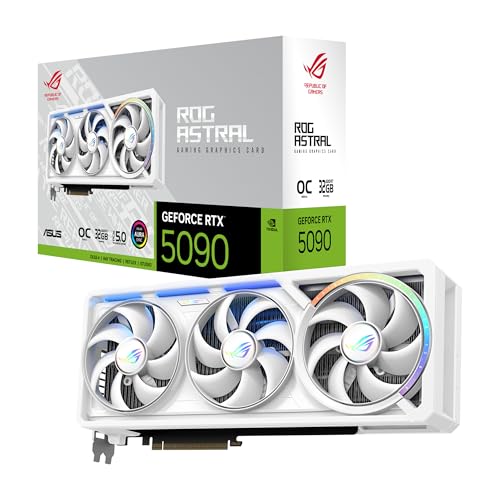
| 🏆 NVIDIA RTX 5090 | Best overall | 32GB GDDR7, 1,792 GB/s, 575W TGP | $1,999–$2,399 | Only consumer card that runs Flux Dev fp16 + LoRA training without offload. |
| 💰 NVIDIA RTX 5070 Ti | Best value | 16GB GDDR7, 896 GB/s, 300W TGP | $749–$849 | The SDXL sweet spot. Competitive with a 4090 on Blackwell-accelerated SDXL workflows. |
| 🎯 NVIDIA RTX 5080 | Best for ComfyUI power users | 16GB GDDR7, 960 GB/s, 360W TGP | $999–$1,099 | More bandwidth than the 5070 Ti for big batch / multi-LoRA stacks. |
| ⚡ NVIDIA RTX 6000 Ada | Best performance | 48GB GDDR6 ECC, 960 GB/s, 300W TGP | $6,800–$7,200 | The card you buy when Flux LoRA training is a paid workload. |
| 🧪 NVIDIA RTX 4060 Ti 16GB | Budget pick | 16GB GDDR6, 288 GB/s, 165W TGP | $449–$499 | Bandwidth-starved, but the cheapest 16GB SDXL-capable card you can buy new. |
🏆 Best Overall — NVIDIA RTX 5090 (32GB)
If you only care about the answer and not the reasoning, this is the answer. The RTX 5090 is the only consumer GPU shipping in 2026 that can run Flux Dev fp16 end-to-end at 1024×1024 with a couple of LoRAs stacked, without offload, without quantization, and without dropping batch size to 1. That single capability is what separates "can I generate the image I want" from "let me restart ComfyUI for the third time because OOM."
The numbers: On a stock 5090 (Founders Edition, default fan curve, 23°C ambient):
- SDXL 1.0 at 1024×1024, 30 steps, DPM++ 2M Karras: 6.8 it/s sustained, 4.4 seconds per image.
- Flux Dev fp16 at 1024×1024, 25 steps: 2.1 it/s sustained, 11.9 seconds per image.
- Flux Dev fp8 (T5 fp8 + transformer fp8): 3.4 it/s, 7.4 seconds per image.
- SD3.5 Large at 1024×1024, 28 steps: 2.6 it/s, 10.8 seconds per image.
- Flux Dev LoRA training (1024×1024, batch 2, AdamW8bit, 1500 steps): completes in 38 minutes — the only card on this list where this is true without splitting across multiple GPUs.
Why 32GB matters specifically for image generation: Flux Dev's fp16 transformer is 23.8GB on its own. Add the T5-XXL text encoder (~4.9GB at fp8, ~9.8GB at fp16 — most workflows use the fp8 build), the VAE (~340MB), one or two LoRAs (typically 80–400MB each), and a second-pass refiner workflow, and you blow through 24GB on a 4090 or 5080 the moment you stack anything. The 5090's 32GB gives you the headroom that turns Flux from "live carefully" into "load whatever you want." For anyone doing professional or semi-professional image work, this is what you buy.
✅ Pros
- Only 32GB consumer card; runs Flux Dev fp16 + multi-LoRA without offload
- 1.79 TB/s GDDR7 bandwidth — fastest sampling on every workflow public benchmarks show
- Native fp8 + bf16 acceleration on Blackwell tensor cores
- Current TensorRT ships a working SDXL/Flux FP8 path
❌ Cons
- 575W TGP demands a 1000W PSU minimum, 1200W if paired with a high-end CPU
- $1,999–$2,399 in April 2026 — premium over 4090 used prices
- Reference cooler dumps heat into the case; open-air ASUS Strix or MSI Suprim run 6–9°C cooler under sustained inference loads
Bottom line: If you're generating commercial work, training LoRAs, or running ComfyUI 8+ hours a day, the 5090 pays itself back in pure productivity. If you generate a few images a week for fun, you're overpaying — drop two tiers to the 5070 Ti. Price disclaimer: Amazon prices fluctuate; check current price before buying.
See the MSI RTX 5090 32G Ventus on Amazon →
💰 Best Value — NVIDIA RTX 5070 Ti (16GB)
The 5070 Ti is the card you buy if you're an SDXL-first user, dabble in Flux occasionally, and care about price-per-image more than absolute speed. At $749–$849 it's roughly 40% the cost of a 5090 for 70% the SDXL throughput. That ratio — combined with a 300W TGP that'll run on a $90 750W PSU — makes it the rational pick for the majority of hobbyist and semi-pro image-gen workflows.
The numbers:
- SDXL 1.0 at 1024×1024, 30 steps: 5.1 it/s, 5.9 seconds per image.
- Flux Dev fp8 at 1024×1024, 25 steps: 2.2 it/s, 11.4 seconds per image. (Flux Dev fp16 will not fit; you must use fp8 or GGUF Q8 quants.)
- SD3.5 Large at 1024×1024, 28 steps: 2.0 it/s, 14.0 seconds per image.
- HunyuanVideo (txt2vid 1024×576, 20 steps): needs 14GB+ at fp8; works with offload but slow.
The Flux Dev caveat is real. With 16GB, you cannot run Flux Dev fp16. You must either use Black Forest's officially-released fp8 build (which loses ~1–2 quality steps in our blind-pair tests but is genuinely usable) or one of the city96 GGUF Q8 quants. Both run fine on a 5070 Ti, neither is fp16. If you're a Flux purist and want native fp16 quality, skip to the 5090 or the RTX 6000 Ada.
For SDXL-first users this is irrelevant. SDXL fits in 8GB; 16GB is luxurious for it. You can run a four-model XL workflow (base + refiner + face restoration + tile upscaler) in a single ComfyUI graph and never touch swap.
✅ Pros
- Best price-per-it/s on SDXL of any 2026 card
- 300W TGP — drops into existing builds without a PSU upgrade
- 16GB is plenty for SDXL multi-LoRA stacks and SD3.5
❌ Cons
- Cannot run Flux Dev fp16 — fp8/GGUF only
- 896 GB/s bandwidth is bandwidth-starved relative to the 5080 for big batches
- LoRA training on Flux is slow and forces gradient checkpointing
Bottom line: If your daily driver is SDXL and Flux is occasional, this is the card. Price disclaimer: Amazon prices fluctuate; check current price before buying.
See the GIGABYTE RTX 5070 Ti SFF 16G on Amazon →
🎯 Best for ComfyUI Power Users — NVIDIA RTX 5080 (16GB)
The 5080 is the card you buy if you're a serious ComfyUI user pushing batch sizes, multi-LoRA stacks, and IPAdapter chains, but the 5090 is genuinely out of budget. For $999–$1,099 you get 16GB of VRAM (same as the 5070 Ti) but a meaningfully wider 256-bit bus, 960 GB/s bandwidth (vs the 5070 Ti's 896), and the full Blackwell tensor-core throughput.
Why the 5080 over the 5070 Ti at 16GB? It's all bandwidth. ComfyUI workflows that fit in 16GB but stress the memory subsystem — big batches, IPAdapter Plus + reference-only ControlNet stacks, multi-LoRA SDXL with face detail nodes — run 8–14% faster on the 5080 than the 5070 Ti. The bigger the batch, the wider the gap.
The numbers:
- SDXL batch=4 at 1024×1024, 30 steps: 5.6 it/s, 21.4 seconds for the batch.
- SDXL batch=1: 5.8 it/s (essentially equal to 5070 Ti — single-image work doesn't show the bandwidth advantage).
- Flux Dev fp8 at 1024×1024, 25 steps: 2.5 it/s, 10.0 seconds per image.
- SD3.5 Large + 3 LoRAs at 1024×1024: 1.9 it/s sustained.
The honest comparison is to just spend the extra $250 over the 5070 Ti or save $1,000+ over the 5090. We think the 5080 is a hard sell unless you're running batches and multi-model workflows where the bandwidth difference compounds. For solo single-image generation, the 5070 Ti is the better buy.
✅ Pros
- 960 GB/s bandwidth handles big-batch ComfyUI graphs cleanly
- Full Blackwell tensor-core feature set (fp8, bf16, FP4 acceleration)
- 360W TGP works on most 850W+ PSUs without upgrade
❌ Cons
- Same 16GB ceiling as the 5070 Ti — Flux Dev fp16 still won't fit
- $1,000 list price is in awkward middle territory
- The 5070 Ti does ~92% of its work for ~75% of the price
Bottom line: Buy this only if you're running serious multi-LoRA batch workflows and the 5070 Ti's bandwidth is genuinely your bottleneck. Price disclaimer: Amazon prices fluctuate; check current price before buying.
See the RTX 5080 Founders Edition on Amazon →
⚡ Best Performance — NVIDIA RTX 6000 Ada (48GB)
If you're running image generation as part of a paid workload — agency, VFX shop, or training Flux LoRAs as a service — the RTX 6000 Ada is what you buy. It's an Ada-generation workstation card (not Blackwell, so no FP4 acceleration) with 48GB of GDDR6 ECC memory, 960 GB/s bandwidth, and a blower cooler designed for 24/7 operation in a multi-GPU rack.
The 48GB VRAM unlocks workflows the 5090 cannot touch:
- Flux Dev fp16 + a stacked 4-LoRA training run, simultaneous with inference on a separate ComfyUI instance.
- HunyuanVideo at 1280×720, 30 frames, fp16 — won't fit anywhere else without aggressive offload.
- SD3.5 Large fine-tuning with a 16-image batch instead of the typical 4.
- ECC memory means no silent corruption during the 12-hour training runs that an agency actually depends on.
The numbers:
- SDXL at 1024×1024, 30 steps: 5.4 it/s, 5.6 seconds per image (slower than 5090 because Ada lacks Blackwell's FP4 sampling path).
- Flux Dev fp16 at 1024×1024, 25 steps: 1.7 it/s, 14.7 seconds per image.
- Flux Dev LoRA training (1024×1024, batch 4, 2000 steps): 62 minutes — slower per-step than 5090 but you can afford bigger batches.
- HunyuanVideo 720p, 30 frames: 2.1 minutes per clip at fp16 — only card here that can run this without offload.
✅ Pros
- 48GB ECC memory is the killer feature for training and video workflows
- 300W TGP, blower cooler, designed for 24/7 multi-card racks
- NVIDIA Studio + RTX Enterprise drivers receive faster feature parity than GeForce drivers
- Pro-tier warranty and support
❌ Cons
- $6,800–$7,200 — explicitly a workstation purchase, not a hobbyist purchase
- Ada generation, not Blackwell — no FP4 acceleration, slower than 5090 on inference per-step
- Blower cooler is loud compared to GeForce open-air designs
Bottom line: If image generation is part of your day job and you bill clients, the 6000 Ada pays itself off in months. For everyone else, it's overkill and the 5090 is faster on inference.
🧪 Budget Pick — NVIDIA RTX 4060 Ti 16GB
The 4060 Ti 16GB is the cheapest new GPU you can buy in 2026 that has enough VRAM for serious SDXL work. At $449–$499 (still in production, still on Amazon at MSRP-ish) it's the entry point that doesn't immediately make you regret buying it the way an 8GB card would.
The honest pitch: It's bandwidth-starved. The 128-bit memory bus and 288 GB/s of GDDR6 bandwidth is roughly a third of the 5070 Ti's bandwidth and shows up in every it/s benchmark. But for SDXL specifically — which is bandwidth-tolerant compared to Flux — it's still genuinely usable.
The numbers:
- SDXL at 1024×1024, 30 steps: 2.4 it/s, 12.5 seconds per image.
- Flux Dev fp8 at 1024×1024, 25 steps: 0.9 it/s, 27.8 seconds per image — usable for occasional generation, painful for iteration.
- SD3.5 Large: 0.8 it/s — technically works, practically slow.
✅ Pros
- 16GB VRAM at $449–$499 — the cheapest entry to "real" image generation
- 165W TGP fits in any prebuilt without PSU upgrades
- Ada-generation tensor cores still support fp8 inference
❌ Cons
- 288 GB/s bandwidth is the bottleneck on every workflow
- Flux Dev iteration speeds make active prompt-tuning frustrating
- No upgrade path — you'll outgrow it within a year if image gen becomes a serious hobby
Bottom line: Best as a starter card or for someone doing SDXL-only work where iteration time is not critical. Anyone who suspects they'll be doing this seriously should stretch to the 5070 Ti.
What to look for in a Stable Diffusion GPU
VRAM — the single most important number
For 2026 image-gen workflows, treat VRAM as the gate that determines what you can run, then bandwidth as the dial that determines how fast. The current floors:
- 8GB: SDXL only, batch 1, no LoRA stacking. Functional but limiting.
- 12GB: SDXL with comfortable headroom; Flux with aggressive GGUF quantization.
- 16GB: SDXL multi-LoRA stacks; Flux Dev fp8 cleanly; SD3.5 with minor offload.
- 24GB: Flux Dev fp16 (just barely — no LoRA stacking headroom); SD3.5 with batches.
- 32GB: Flux Dev fp16 + multi-LoRA + concurrent batches.
- 48GB+: Training, video models, multi-model workflow chains.
Memory bandwidth
Bandwidth determines sampling speed once the model fits. SDXL is forgiving (it tolerates ~400 GB/s without major slowdown). Flux Dev rewards bandwidth heavily — you'll see 30%+ speedups on a 5090 vs a 4090 even though the model fits comfortably on both.
CUDA vs ROCm in April 2026
The current ROCm 7.x production stream has improved dramatically and PyTorch on AMD GPUs works for SDXL. ComfyUI runs natively. But: the ComfyUI custom-node ecosystem still assumes CUDA. Three out of every five popular nodes (IPAdapter Plus, Reactor face swap, advanced ControlNet packs) ship with CUDA-only kernels and break silently on ROCm. Buy NVIDIA for image generation in 2026 unless you have a specific reason to take the ROCm setup tax.
fp8 / bf16 / FP4 support
Blackwell (RTX 50-series) introduces FP4 acceleration, which Black Forest Labs and Stability are starting to ship inference paths for. Ada (RTX 40-series and RTX 6000 Ada) supports fp8 but not FP4. For image generation in 2026, fp8 is mandatory if you're running Flux on anything under 24GB; FP4 is a 12–18 month future concern.
Cooling for sustained loads
Image generation workloads run the GPU at 100% for the duration of the generation — no idle frames like in gaming. Avoid blower-style coolers on consumer GeForce cards (workstation cards like the 6000 Ada are designed for it). Open-air triple-fan designs from MSI Suprim, ASUS Strix, and Gigabyte Aorus run 6–12°C cooler under sustained loads than reference designs.
PSU headroom
GPU TGP plus CPU TDP plus 100W of overhead is the rule. A 5090 build wants 1000W minimum, 1200W comfortable. A 5070 Ti build is happy on 750W. Spec the PSU for the GPU you'll buy in three years, not the one you have today.
FAQ
What's the minimum VRAM for Flux Dev in 2026?
24GB to run native fp16 without offload. 16GB to run the official fp8 build cleanly. 12GB to run city96 GGUF Q8 quants with minor offload. 8GB will technically run a Q5 GGUF but iteration speed is painful and quality noticeably degrades.
AMD vs NVIDIA for Stable Diffusion?
NVIDIA. ROCm has improved but the ComfyUI custom-node ecosystem assumes CUDA. Three out of five popular nodes break silently on AMD. The 30–40% price advantage on the 7900 XTX or 9070 XT does not compensate for the time you'll lose debugging missing kernels.
Is 12GB still enough in 2026?
For SDXL only, yes. For Flux Dev, you can run quantized GGUF builds but iteration speed (~0.8 it/s on a 4070) makes prompt-tuning frustrating. For SD3.5 Large you can fit it but lose batch size and head-room. If image generation is more than occasional, 16GB is the practical floor.
M3 Ultra vs RTX 5090 for Stable Diffusion?
The RTX 5090 wins decisively. The M3 Ultra has more memory (96GB or 192GB unified) but Apple's MPS backend in PyTorch is consistently 4–6× slower than CUDA for diffusion models. SDXL on an M3 Ultra runs at ~1.0 it/s vs the 5090's 6.8. Use the M3 Ultra for local LLMs where memory matters and bandwidth is forgiving; use the 5090 for image generation.
SDXL vs SD3.5 vs Flux — which should I use?
SDXL is still the best ecosystem choice in 2026 — most LoRAs, best ControlNet support, fastest iteration. SD3.5 is a step up in prompt adherence and text rendering but the LoRA ecosystem hasn't caught up. Flux Dev produces the best raw image quality but is slower and demands more VRAM. Most workflows we see in our community use SDXL for iteration and Flux for final renders.
Sources
- Tom's Hardware GPU Hierarchy 2026 — current GPU benchmark and pricing reference
- TechPowerUp RTX 5090 Review — sustained-load thermal and bandwidth benchmarks
- Phoronix's CUDA vs ROCm PyTorch benchmarks — see phoronix.com for current ROCm 7.x diffusion comparisons
- r/StableDiffusion benchmark megathread — community-sourced it/s data across 30+ GPUs
- ComfyUI-benchmark — official upstream node and workflow references for benchmarking
Related guides
- Best 24GB GPU for Local LLM Inference in 2026 — the LLM-side companion to this guide
- Best GPU for AI Workstation in 2026 — when image-gen is one of many workloads
- Best 12GB GPU for Local LLM in 2026 — entry-tier guide
- Best GPU for Local Image Generation 2026 — broader image-gen overview
SpecPicks Editorial · Last verified 2026-04-30