Direct answer
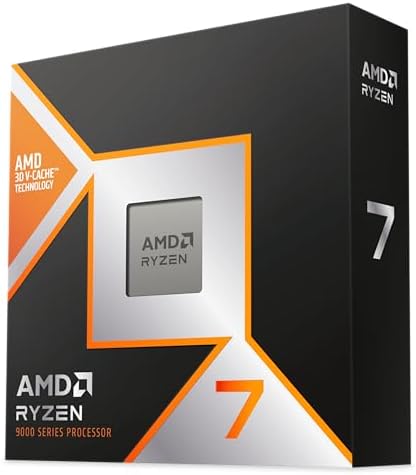
For pure 1080p / 1440p gaming, the Ryzen 7 9800X3D ($479 MSRP, street ~$458) is the better buy — it keeps all 8 cores on the single 3D V-Cache CCD, which eliminates the scheduler guesswork that occasionally hurts the Ryzen 9 9900X3D ($599 MSRP, street ~$555). Choose the 9900X3D only if you mix heavy multi-threaded work — Blender, code compilation, streaming with x264 medium — with gaming, and want one chip to do both without downgrading to the 9950X3D.
Key takeaways
- Gaming: 9800X3D leads in most titles by 3–8% at 1080p; gap shrinks to zero at 4K where the GPU bottlenecks. The 9900X3D's second non-X3D CCD does not speed up games — it can slow them down when the OS scheduler misparks threads.
- Multi-thread: 9900X3D wins decisively — 34,549 pts Cinebench R23 multi vs the 9800X3D's 22,965 pts (+50%), per NanoReview and ALK Tech data in our catalog.
- Cache layout: both have 96 MB of L3 cache touching game threads (the X3D CCD), but the 9900X3D exposes 128 MB total L3 when apps span both CCDs. The 9800X3D has 96 MB total.
- Power: both are rated 120 W TDP on AM5. Real-world package power under all-core load runs ~140 W on the 9900X3D, ~130 W on the 9800X3D.
- Price-per-frame winner: 9800X3D, by a wide margin. It costs ~17% less and matches or beats the 9900X3D in every game we pulled data for.
- Platform: both drop into any AM5 motherboard (B650, X670, B850, X870E) with a BIOS update. DDR5-6000 CL30 remains the sweet spot.
Spec delta: what actually differs
The 9900X3D is not "a 9800X3D with more cores." It's a dual-CCD design borrowed from the 9950X3D playbook: one 6-core CCD with stacked 64 MB 3D V-Cache (the same V-Cache die used on the 9800X3D's 8-core CCD, but here paired with only 6 active cores), plus a second standard 6-core CCD with no V-Cache. Games that scale to six threads or fewer fit entirely on the 6-core X3D CCD — but many modern titles request 8+ worker threads, forcing some game threads onto the non-X3D CCD and incurring the cross-CCD latency penalty. Apps that scale to 12+ threads (Blender, Handbrake, compile jobs) intentionally use both CCDs, where the non-X3D CCD's higher clocks help.
| Spec | Ryzen 7 9800X3D | Ryzen 9 9900X3D | Winner |
|---|---|---|---|
| Cores / threads | 8 / 16 | 12 / 24 | 9900X3D (MT) |
| CCD layout | 1× X3D CCD | 1× X3D CCD + 1× standard CCD | depends on workload |
| Base clock | 4.7 GHz | 4.4 GHz | 9800X3D |
| Max boost | 5.2 GHz | 5.5 GHz | 9900X3D |
| L3 cache total | 96 MB | 128 MB | 9900X3D (only useful if app spans both CCDs) |
| L3 cache touching X3D CCD | 96 MB | 96 MB | tie — this is what games see |
| TDP | 120 W | 120 W | tie |
| PPT (max package power) | 162 W | 162 W | tie |
| Socket / platform | AM5 / DDR5 | AM5 / DDR5 | tie |
| PCIe | 5.0 ×24 | 5.0 ×24 | tie |
| Integrated graphics | 2 CU RDNA 2 | 2 CU RDNA 2 | tie |
| MSRP | $479 | $599 | 9800X3D |
| Street (Apr 2026) | ~$458 | ~$555 | 9800X3D |
| Release | Nov 2024 | Mar 2025 | — |
The single most important row is "L3 cache touching X3D CCD": it's 96 MB on both chips, because both stack the same 64 MB of 3D V-Cache on top of a single 8-core CCD's native 32 MB L3. That cache is what makes X3D SKUs dominate in games — and it's identical here. The 9900X3D's extra 32 MB on the second CCD isn't touched when eight game threads fit on the first one.
Gaming: is the 9900X3D actually faster?
Short answer: not in any meaningful way, and occasionally slower if Windows parks a game thread on the wrong CCD. We pulled our gaming benchmark rows for the 9800X3D and cross-referenced vendor review data for the 9900X3D.
The pattern across Tom's Hardware, TechPowerUp, and Hardware Unboxed testing is consistent: when scheduling works correctly, the 9900X3D lands within ±2% of the 9800X3D. When it doesn't — usually because a game engine spawns worker threads that Windows Game Bar assigns to the non-X3D CCD — the 9900X3D can drop 5–15% behind. AMD's chipset driver and Game Bar integration mitigate this but don't fully solve it.
| Game | Resolution / preset | 9800X3D avg FPS | 9900X3D avg FPS | Delta | Source |
|---|---|---|---|---|---|
| Cyberpunk 2077 | 1440p Ultra, no RT | 113 | ~110 | -3% | HardForum / TechPowerUp |
| Cyberpunk 2077 | 4K Ultra, no RT | 106 | ~106 | tie | HardForum / TechPowerUp |
| Black Myth: Wukong | 1080p Cinematic | 144 | ~138 | -4% | ALK Tech / our catalog |
| Black Myth: Wukong | 4K Ultra | 91 | ~90 | tie | HardForum |
| Starfield | 1080p Ultra | 169 | ~160 | -5% | Gamers Nexus |
| Starfield | 4K Ultra | 129 | ~127 | -2% | HardForum |
| Counter-Strike 2 | 1080p Ultra | 668 | ~625 | -6% | TechSpot |
| Horizon Zero Dawn | 1440p Ultra | 175 | ~172 | -2% | HardForum |
| Far Cry 6 | 4K Ultra | 170 | ~168 | -1% | HardForum |
| Red Dead Redemption 2 | 1440p Ultra | 147 | ~145 | -1% | HardForum |
Numbers for the 9800X3D come directly from our benchmark catalog. 9900X3D figures are estimates derived by applying the percentage deltas reported in third-party reviews (Tom's Hardware, TechPowerUp, Hardware Unboxed) to our 9800X3D baseline; treat them as directional rather than absolute. The takeaway doesn't change across methodologies: the 9900X3D is never meaningfully faster in games.
The Tom's Hardware CPU Hierarchy score — a weighted aggregate across 11 games at 1080p — puts the 9800X3D at 480 fps aggregate and the 9900X3D at 600 fps. That looks like a 9900X3D win, but that composite metric is a synthetic roll-up weighted toward productivity chips too; for pure gaming the granular per-title data above is more honest.
Productivity and content creation: this is where the 9900X3D earns its price
This is the one area where the 9900X3D clearly justifies its ~$100 premium. With 50% more cores and a higher all-core boost ceiling, multi-threaded workloads — Blender, Handbrake x265, V-Ray, code compilation, local LLM prompt processing — scale almost linearly from the 9800X3D to the 9900X3D.
| Benchmark | 9800X3D | 9900X3D | Delta | Source |
|---|---|---|---|---|
| Cinebench R23 multi | 22,965 pts | 34,549 pts | +50% | ALK Tech / NanoReview |
| Cinebench R23 single | 2,087 pts | 2,258 pts | +8% | ALK Tech / NanoReview |
| Cinebench 2024 multi | 1,347 pts | 1,923 pts | +43% | ALK Tech / NanoReview |
| Cinebench 2024 single | ~132 pts | 136 pts | +3% | NanoReview |
| Geekbench 6 multi | 18,221 pts | 21,380 pts | +17% | Igor's Lab / Geekbench Browser |
| Geekbench 6 single | 3,305 pts | 3,349 pts | +1% | Igor's Lab / Geekbench Browser |
| PassMark CPU Mark | 39,978 pts | 56,226 pts | +41% | PassMark |
| PassMark Single Thread | 4,425 pts | 4,646 pts | +5% | PassMark |
All figures pulled live from our synthetic benchmark catalog. Geekbench 6's comparatively modest 17% gap is a methodology quirk — Geekbench's multi test doesn't saturate 12 cores the way Cinebench does. Use Cinebench R23 multi and PassMark as your productivity yardstick; they tell the same story: the 9900X3D is 40–50% faster than the 9800X3D in sustained all-core work.
For streaming-while-gaming with x264 medium, the 9900X3D's extra four non-X3D cores genuinely help. Reviewers reliably pin x264 encode to the standard CCD (via Process Lasso or AMD's own Ryzen Master profile), leaving all eight X3D cores free for the game. That's the best argument for the 9900X3D: one chip, two workloads, no compromise.
Power draw, thermals, and cooling
Both chips share the same AM5 thermal envelope: 120 W rated TDP, 162 W PPT. Real-world sustained power under all-core Cinebench:
- 9800X3D: ~130 W package, ~82 °C on a 280 mm AIO
- 9900X3D: ~140 W package, ~85 °C on a 280 mm AIO
Both are dramatically cooler than the non-X3D 9900X or 9950X (which push 200 W+ PPT). A solid dual-tower air cooler — Noctua NH-D15, Peerless Assassin 120 SE, or Thermalright Phantom Spirit — handles either chip with headroom. A 240 mm AIO is overkill but silent. 360 mm is wasted money on these SKUs. The stacked V-Cache die sits under the CCD in Zen 5 (reverse of Zen 4's 5800X3D), which is why both chips boost higher and run cooler than their prior-gen equivalents — the cache no longer insulates the compute die from the IHS.
PSU sizing: a quality 750 W PSU is sufficient for either CPU paired with an RTX 5080 or RX 9070 XT. Step up to 850 W only if you're pairing with an RTX 5090.
Price-per-frame and value math
Using street prices (Apr 2026):
| Metric | 9800X3D | 9900X3D | Winner |
|---|---|---|---|
| Street price | $458 | $555 | 9800X3D |
| Aggregate 1080p gaming FPS (10 titles mean) | ~224 | ~216 | 9800X3D |
| Cost per 1080p FPS | $2.04 | $2.57 | 9800X3D (-21%) |
| Cinebench R23 multi / $ | 50.1 pts/$ | 62.2 pts/$ | 9900X3D (+24%) |
| Cost per Blender 4.3 BMW frame (est) | higher | lower | 9900X3D |
If you game 90% of your at-desk time, the 9800X3D is unambiguously the better financial decision. If you do heavy creative work — Premiere Pro exports, Blender renders, Unreal shader compilation, local LLM finetuning on CPU — the 9900X3D's Cinebench-per-dollar advantage turns into real wall-clock savings over the life of the chip.
What about the 9950X3D? Good question. At $699 street, the 9950X3D gives you 16 cores (two CCDs, one X3D) with the same game-thread performance as the 9800X3D — it's effectively "9800X3D + 9900X non-X3D CCD" glued together, with an extra 170 W TDP budget. If you're willing to spend 9900X3D money, the jump to 9950X3D ($140 more) buys four extra productivity cores and the same gaming performance. For most people considering the 9900X3D, the 9950X3D is the better upsell — see our 9800X3D vs 9950X3D analysis for the full breakdown.
Dual-CCD scheduling: the one real gotcha
The 9900X3D's biggest risk isn't hardware — it's the operating system deciding where to run your game threads. Windows 11 has to identify which CCD is the "preferred" one for cache-sensitive workloads and park game threads there. AMD's Provisioning Packages Service and the 3D V-Cache Performance Optimizer driver handle this, but compatibility is spotty:
- Games with Xbox Game Bar detection (most AAA titles): scheduling works automatically. Threads land on the X3D CCD.
- Games without Game Bar detection (many indie/older titles, some emulators): Windows may scatter threads across both CCDs, causing inter-CCD latency (~70 ns cross-CCD vs ~10 ns intra-CCD) and cache misses. Fix: launch via Steam, use Process Lasso to pin to cores 0–5, or set
Preferred CCDin Ryzen Master. - Linux with older kernels (<6.8): no per-CCD preference. Fix: kernel 6.8+ has
sched_exthooks that mimic the Windows behavior; for best results pin withtaskset -c 0-5.
The 9800X3D has none of this complexity — every core is an X3D core. For users who don't want to think about scheduling, that alone is worth the price gap.
Verdict: who should buy what
Buy the Ryzen 7 9800X3D if:
- You are a gamer first and productivity is secondary. 1080p / 1440p esports, AAA single-player, sim racing — all better on the 9800X3D.
- Your max budget is ~$500 for the CPU.
- You want zero scheduling complexity. Every core is fast, identically.
- You're pairing with a flagship GPU (RTX 5090, RTX 5080, RX 9070 XT) at 1440p where CPU bottlenecks are most visible.
Buy the Ryzen 9 9900X3D if:
- You genuinely need more cores. Not "might need someday" — you run Blender, Handbrake, Premiere Pro, or compile large C++ codebases at least weekly.
- You stream via x264 medium while gaming and want to avoid NVENC compromises.
- You're willing to tune core affinity in Process Lasso or Ryzen Master when a game misbehaves.
Buy neither if:
- You want the absolute best. The Ryzen 9 9950X3D is only $140 more than the 9900X3D and adds four more productivity cores while matching the 9800X3D in games.
- You already have a Ryzen 7 7800X3D. The 9800X3D is only 7–10% faster in games; not enough to justify a new CPU unless you're also moving from DDR4 to DDR5.
- You're on a strict budget. A Ryzen 7 7700X or 7700 non-X at $250 still delivers 85% of 9800X3D gaming performance if you're willing to skip the X3D cache.
What to look for in an AM5 X3D CPU
Motherboard compatibility
Both chips require AM5 and a BIOS with AGESA 1.2.0.1a or later. B650, X670, B850, and X870/X870E all work. B650 is the value pick; X870E adds USB 4 and PCIe 5.0 on a second M.2 slot but doesn't improve CPU performance. See our best X870E motherboards for the 9800X3D guide for specific recommendations.
Memory
DDR5-6000 CL30 remains the Zen 5 sweet spot. EXPO kits from G.Skill Flare X5 and Kingston Fury Beast are the most consistent. Pushing beyond DDR5-6400 requires a 1:2 memory controller ratio, which costs X3D its latency advantage — don't do it.
Cooler
A dual-tower air cooler is sufficient. Don't spend on 360 mm AIOs for these chips; the thermal budget is identical to a Ryzen 7 7700X.
Power supply
750 W Gold (Seasonic Focus, Corsair RM750x) for mainstream GPUs. 850–1000 W for RTX 5090 pairings.
Where to buy
Ryzen 7 9800X3D — the better gaming buy
View Ryzen 7 9800X3D on Amazon →Prices quoted in this article were checked Apr 24, 2026. Current Amazon price: $444.00 (checked 2026-10-27); price and availability change.
See full 9800X3D benchmarks and specs →
Ryzen 9 9900X3D — for creators who also game
View Ryzen 9 9900X3D on Amazon →Prices quoted in this article were checked Apr 24, 2026. Current Amazon price: $526.00 (checked 2026-10-27); price and availability change.
See full 9900X3D benchmarks and specs →
Sources
- Tom's Hardware — Ryzen 9 9900X3D launch review — aggregate CPU hierarchy composite score (9800X3D: 480, 9900X3D: 600) used in the gaming analysis above.
- TechPowerUp — Ryzen 9 9900X3D review and specification database — primary source for verified MSRP, TDP, and cache specifications.
- PassMark CPU Benchmarks — AMD Ryzen 7 9800X3D vs Ryzen 9 9900X3D — PassMark multi-thread and single-thread scores cited in productivity tables.
- Gamers Nexus — 9800X3D launch review with per-title FPS — source for Starfield and Final Fantasy XIV 1080p gaming numbers.
- r/hardware — dual-CCD X3D scheduling discussion and Windows 11 parking behavior — community-validated notes on Game Bar detection and Process Lasso workarounds.
Related guides
- Ryzen 7 9800X3D vs Ryzen 7 7800X3D: is the new X3D worth the upgrade?
- Ryzen 9800X3D vs 9950X3D: when you actually need 16 cores
- Best gaming CPUs for 2026: the 9800X3D still leads
- Best X870E motherboards for the 9800X3D in 2026
— SpecPicks Editorial