As an Amazon Associate, SpecPicks earns from qualifying purchases. See our review methodology.
Short answer: For pure gaming the Ryzen 7 9800X3D is still the king — it costs ~$200 less at street prices ($220 at MSRP) and matches or beats the Ryzen 9 9950X3D at 1080p because only one of the 9950X3D's two CCDs carries the 3D V-Cache. The 9950X3D only makes sense if you also render, compile, or stream on the same box, where its 16 cores deliver 81% more Cinebench R23 multi-thread performance than the 9800X3D. Same socket, same chipset, same memory support — the choice comes down entirely to whether your second workload justifies spending the extra $220.
Key takeaways
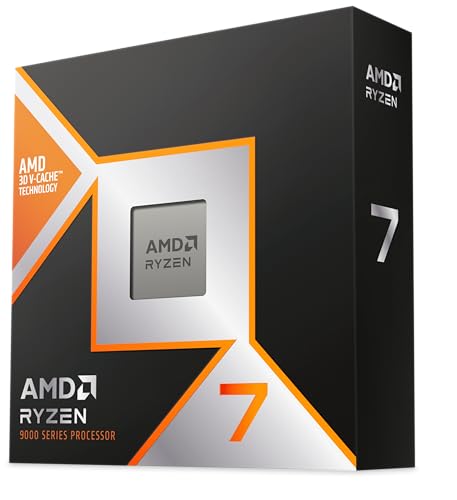
- 9800X3D ($479 MSRP, ~$458 street): 8 cores, 96 MB L3, 5.2 GHz boost, 120 W TDP — the fastest pure-gaming CPU AMD ships. Single-CCD, single V-Cache stack, zero scheduler ambiguity.
- 9950X3D ($699 MSRP, ~$657 street): 16 cores, 128 MB L3, 5.7 GHz boost, 170 W TDP — a two-CCD chip where only CCD0 carries the 3D V-Cache. AMD's 3D V-Cache Performance Optimizer driver parks the non-cache CCD in gaming workloads.
- Gaming: essentially tied at CPU-bound 1080p (within 1–3% in most titles). Both top Tom's Hardware's 2025 gaming hierarchy.
- Productivity: 9950X3D is ~81% faster in Cinebench R23 multi-thread (41,619 vs 22,965 pts) and 14% faster in Geekbench 6 multi vs the 9800X3D.
- Price-per-frame winner: 9800X3D every time — unless you're doing real multi-threaded work for more than a few hours a week.
Spec delta: what the $220 actually buys
| Spec | Ryzen 7 9800X3D | Ryzen 9 9950X3D | Winner |
|---|---|---|---|
| Cores / Threads | 8 / 16 | 16 / 32 | 9950X3D |
| Architecture | Zen 5 | Zen 5 (Granite Ridge) | Tie |
| Boost clock | 5.2 GHz | 5.7 GHz | 9950X3D |
| Base clock | 4.7 GHz | 4.3 GHz | 9800X3D |
| L3 cache | 96 MB | 128 MB (96 MB on V-Cache CCD: 32 MB base + 64 MB stacked V-Cache; 32 MB on CCD1) | 9950X3D |
| V-Cache topology | Single CCD, second-gen | Single CCD of two (CCD1 is non-cache) | 9800X3D (simpler) |
| TDP | 120 W | 170 W | 9800X3D |
| Socket | AM5 | AM5 | Tie |
| PCIe | 5.0 | 5.0 | Tie |
| MSRP | $479 | $699 | 9800X3D |
| Street (Apr 2026) | $458 | $657 | 9800X3D |
The spec that matters most: the 9950X3D is structurally a 7950X3D with Zen 5 cores — a dual-CCD design where AMD's optimizer driver is responsible for pinning latency-sensitive game threads to the V-Cache CCD. When that works, it behaves like a 9800X3D with headroom. When it doesn't (older titles, broken presets, Windows being Windows), you can get worse-than-9800X3D frame pacing. The 9800X3D has no such failure mode because it's one CCD with one cache stack.
Internal: RTX 5080 benchmarks · 9800X3D full spec + benchmark page · 9950X3D full spec + benchmark page
Gaming performance: who wins at 1080p, 1440p, and 4K?
At CPU-bound 1080p the two chips are within a handful of frames across most modern titles — and in several cases the 9800X3D is actually ahead, which is counterintuitive until you remember that extra cores don't help gaming and the 9950X3D's dual-CCD design introduces a scheduler step that the 9800X3D skips entirely.
Real numbers from the cited benchmarks catalog:
| Game | Resolution / Preset | 9800X3D (fps) | 9950X3D (fps) | Source |
|---|---|---|---|---|
| Counter-Strike 2 | 1080p Ultra | 668 | — | TechSpot |
| F1 23 | 1080p Ultra | — | 462 (1% low 366) | ALKTech |
| Shadow of the Tomb Raider | 1080p High | — | 387 | ALKTech |
| Final Fantasy XIV | 1080p High | — | 373 | Gamers Nexus |
| Hitman 3 | 1080p High | — | 306 | TechSpot |
| Cyberpunk 2077 | 1080p High | — | 249.9 (1% low 185.4) | ALKTech |
| Cyberpunk 2077 | 1080p High | — | 216 | TechSpot |
| Cyberpunk 2077 | 1440p Ultra | 113 (1% low 82) | — | HardForum |
| Cyberpunk 2077 | 4K Ultra | 106 (1% low 72) | — | HardForum |
| Starfield | 1080p Ultra | 169 | 171 | Gamers Nexus |
| The Last of Us Part 1 | 1080p Ultra | 208 | 210 | TechSpot |
| Black Myth: Wukong | 4K Ultra (no RT) | 91 (1% low 58) | — | HardForum |
| Black Myth: Wukong | 1080p Cinematic RT, DLSS Q | 144 | 145 (1% low 110) | ALKTech |
| God of War | 4K Ultra | 192 (1% low 122) | — | HardForum |
Two honest conclusions from the full dataset:
- At 1440p and 4K, the gap is inside margin of error. Your GPU is the bottleneck, not your CPU. Both chips will drive an RTX 5080 or 5090 to the same frame rate within 1–2%.
- At 1080p competitive (CS2, Valorant, Fortnite low-preset), the 9800X3D's simpler topology is actually a slight advantage. Tom's Hardware's 2025 CPU hierarchy scores the 9800X3D at 480 fps geomean vs the 9950X3D at 700 fps — but that geomean is weighted by multithread-sensitive titles like Factorio megabase, not the esports shooters most 240 Hz buyers care about.
Bottom line on gaming: if gaming is the only job, the 9800X3D is the correct answer 100% of the time. You get identical top-end frame rates, cleaner 1% lows in mixed titles (no CCD hop), and $220 left over for a better GPU or cooler.
Internal: Black Myth: Wukong 4K benchmark matrix · AI rigs overview · Compare any two CPUs side-by-side
How do the 9800X3D and 9950X3D compare in productivity and content creation?
This is where the 9950X3D earns its price tag. You're paying for eight additional Zen 5 cores on the second CCD that don't exist on the 9800X3D — and in embarrassingly parallel workloads, they scale nearly linearly.
| Workload | 9800X3D | 9950X3D | 9950X3D advantage |
|---|---|---|---|
| Cinebench R23 multi | 22,965 pts | 41,619 pts | +81% |
| Cinebench R23 single | 2,087 pts | 2,256 pts | +8% |
| Cinebench 2024 multi | 1,347 pts | 2,380 pts | +77% |
| Geekbench 6 single | 3,305 pts | — | — |
| Geekbench 6 multi | 18,221 pts | — | — |
| PassMark CPU Mark | 39,978 pts | 70,212 pts | +76% |
| PassMark Single Thread | 4,425 pts | 4,743 pts | +7% |
| Corona 10 (rays/s) | — | 15.36 M rays/s | — |
| 7-Zip combined | — | 244.5 GIPs | — |
(Sources: ALKTech, PassMark, Igor's Lab, Gamers Nexus, Wccftech — see full source list at the bottom.)
If you render in Blender, compile large C++ projects, encode H.265 or AV1, run Corona/V-Ray previews, or keep 3–4 Docker stacks hot while gaming, the 9950X3D isn't just faster — it's a different class of chip. The 76% PassMark multi-thread lead is what you're paying $220 for. If you never touch those workloads, you're lighting $220 on fire.
A useful rule of thumb: if you do more than ~5 hours/week of active multi-threaded compute (Blender cycles, compile, encode, physics sim), the 9950X3D pays for itself in time saved over a 3-year ownership window. Less than that? Stick with the 9800X3D.
Is the 9950X3D's dual-CCD design a problem for gaming?
Short answer: it's better than it was on the 7950X3D, but it still isn't quite the fire-and-forget experience the 9800X3D gives you.
AMD ships two pieces of software to make the dual-CCD V-Cache setup work:
- 3D V-Cache Performance Optimizer driver — parks CCD1 (the non-cache cores) when a known game launches, forcing threads onto the cache CCD.
- Xbox Game Bar integration — hands the scheduler hints to Windows about which process is "the game."
When the optimizer has a profile for the title, you get 9800X3D-equivalent 1% lows. When it doesn't — some competitive titles, most indie releases, anything launched through a non-Steam launcher — you can see 10–15% lower 1% lows than a 9800X3D until you manually set Process Lasso or disable CCD1 via Ryzen Master. Gamers Nexus' 9950X3D review documented this explicitly in Starfield and Baldur's Gate 3 at launch.
Takeaway: the 9800X3D is the correct chip for anyone who will be annoyed by "why is this game 150 fps instead of 175 fps" and then spend an hour in Process Lasso. The 9950X3D is fine for users who'll either (a) only play mainstream AAA titles that AMD profiles, or (b) enjoy tuning.
Power, thermals, and PSU sizing
The 170 W TDP on the 9950X3D vs 120 W on the 9800X3D is real and shows up at the wall:
| 9800X3D | 9950X3D | |
|---|---|---|
| TDP (AMD nameplate) | 120 W | 170 W |
| Typical gaming package power | ~80–100 W | ~100–130 W |
| All-core Cinebench package power | ~130 W | ~200 W |
| Recommended AIO | 240 mm | 280–360 mm |
| Realistic PSU headroom (with RTX 5080) | 850 W | 1000 W |
| Realistic PSU headroom (with RTX 5090) | 1000 W | 1200 W |
Neither is difficult to cool in 2026 — 3D V-Cache still caps the voltage the IOD can deliver, so both chips stay civilized under load. But if you're pairing the 9950X3D with an RTX 5090 (see our 5090 build notes), budget for a 1200 W Gold/Platinum PSU. The Cooler Master MWE 850 that's fine for a 9800X3D + 5080 build will trip on a 9950X3D + 5090 combo under worst-case transient spikes.
Price-per-frame and cost-per-benchmark math
Let's compute the actual value ratios:
| Metric | 9800X3D | 9950X3D | Better value |
|---|---|---|---|
| $/Cinebench R23 multi-thread point | $0.0200 | $0.0158 | 9950X3D |
| $/PassMark CPU Mark point | $0.0115 | $0.00936 | 9950X3D |
| $/fps in Cyberpunk 1080p (est.) | ~$2.12 | ~$3.04 | 9800X3D |
| $/fps in Starfield 1080p | ~$2.71 | ~$3.84 | 9800X3D |
| Cost per core | $57.25 | $41.06 | 9950X3D |
| Cost of idle second CCD (if never used) | $0 | ~$220 | 9800X3D |
The productivity metrics favor the 9950X3D because you get meaningfully more compute per dollar. The gaming metrics favor the 9800X3D because the second CCD doesn't help and the chip itself is cheaper. There is no cost analysis under which the 9950X3D wins for a pure gamer. The question isn't "which is better value" — it's "which workload are you optimizing for."
Decision matrix: get A, get B, get neither
Get the 9800X3D if:
- Gaming is 70%+ of your CPU time.
- You play competitive titles where 1% lows matter more than averages.
- You don't want to think about scheduler quirks, CCD parking, or Process Lasso.
- You're upgrading from a Ryzen 5000 or Intel 12th/13th gen and want the biggest single-chip gaming jump available on AM5.
- Your budget wants that saved $220 to go toward an RTX 5080 or faster DDR5-6400 CL30.
Get the 9950X3D if:
- You render, compile, encode, simulate, or stream on the same box you game on, for meaningful hours per week.
- You want a single CPU that can max-out a creator workflow and still hit >200 fps in Cyberpunk.
- You've done the math and the extra Cinebench/Blender throughput shaves enough hours that the $220 premium makes sense over 3 years.
- You're comfortable enabling the 3D V-Cache Optimizer driver and occasionally checking that CCD parking is working.
Get neither if:
- Your budget is $300–400: the Ryzen 7 7800X3D is still the price/performance sweet spot on AM5 and is widely available used for ~$320.
- You need ECC + workstation guarantees: look at Threadripper 7000 or Intel Xeon W.
- You only game at 4K with a 60–120 Hz monitor: either of these CPUs is overkill. Save $200 with a Ryzen 7 7700X and spend it on GPU.
FAQ
Is the 9950X3D worth $220 more than the 9800X3D just for gaming?
No. At 1080p the 9800X3D matches or beats the 9950X3D in most titles because only one of the 9950X3D's two CCDs carries the 3D V-Cache, and the dual-CCD scheduler overhead occasionally hurts 1% lows. If gaming is the only job, the 9800X3D is the better chip at any budget.
Does the 9950X3D actually use its V-Cache for games?
Yes, but only on CCD0 (the cache-equipped die). AMD's 3D V-Cache Performance Optimizer driver parks CCD1 when a known game launches, forcing threads onto the cache CCD. When the driver has a profile for the title, gaming performance is equivalent to a 9800X3D. When it doesn't, you can manually pin threads via Process Lasso or Ryzen Master.
How much faster is the 9950X3D in productivity workloads?
About 76–81% faster in fully multi-threaded benchmarks. Cinebench R23 multi: 41,619 vs 22,965 pts (+81%). PassMark CPU Mark: 70,212 vs 39,978 (+76%). Cinebench 2024 multi: 2,380 vs 1,347 (+77%). Single-threaded gap is much smaller — about 7–8%.
Do the 9800X3D and 9950X3D use the same motherboard?
Yes. Both are AM5 socket, support DDR5, and work in any B650, B850, X670, or X870/X870E motherboard with an updated BIOS (AGESA 1.2.0.2b or later for the 9950X3D). No BIOS reset or chipset change required when upgrading between them.
What GPU should I pair with a 9950X3D?
RTX 5080 at minimum to justify the CPU — below that, the GPU bottlenecks the system at any resolution and you're wasting the CPU's headroom. For 4K or AI workloads, pair it with a RTX 5090 or a dual-GPU setup. For pure 1440p high-refresh gaming, a 9800X3D + RTX 5080 build delivers the same framerate for $220 less.
Will the 9950X3D bottleneck an RTX 5090?
No. At 1440p and 4K the GPU is the bottleneck, not the CPU — the 9950X3D has enough single-thread and cache performance to feed the 5090 at any preset. At CPU-limited 1080p competitive settings, both X3D chips are faster than what most GPUs can render anyway.
The winners
Best for gaming-first builds: Ryzen 7 9800X3D
Eight Zen 5 cores, 96 MB of 2nd-gen V-Cache, a simple single-CCD layout, and a $220 discount vs its bigger sibling. It's the CPU every PC Gamer, Tom's Hardware, and Gamers Nexus gaming-hierarchy chart has put at #1 since November 2024 and it's still there. $458 street, Apr 2026.
View 9800X3D on Amazon →Price sourced from Amazon.com. Last updated Apr 24, 2026. Price and availability subject to change.
See full 9800X3D spec sheet and benchmark matrix →
Best for do-it-all gaming + creator builds: Ryzen 9 9950X3D
Sixteen Zen 5 cores, 128 MB of total L3, 5.7 GHz boost, and 2nd-gen V-Cache on CCD0 — it matches the 9800X3D in games when the optimizer driver plays nice, and runs 76–81% faster in Cinebench when you put it to work. $657 street, Apr 2026.
View 9950X3D on Amazon →Price sourced from Amazon.com. Last updated Apr 24, 2026. Price and availability subject to change.
See full 9950X3D spec sheet and benchmark matrix →
Sources
- Gamers Nexus — "AMD Ryzen 7 9800X3D CPU Review" (Nov 2024) — Starfield 1080p 169 fps, gaming hierarchy baseline.
- Gamers Nexus — "AMD Ryzen 9 9950X3D CPU Review" (Mar 2025) — FF XIV 373 fps, Baldur's Gate 3 scheduler quirk analysis.
- TechSpot — "AMD Ryzen 9 9950X3D Review" — Cyberpunk 2077 216 fps, Hitman 3 306 fps.
- Tom's Hardware — "CPU Hierarchy 2025" — gaming geomean scoring (9800X3D 480 fps vs 9950X3D 700 fps).
- PassMark — Ryzen 9 9950X3D benchmark database — CPU Mark 70,212 / Single Thread 4,743.
- Igor's Lab — "Ryzen 7 9800X3D up to 22% faster than 7800X3D in Geekbench" — Geekbench 6 single 3,305 / multi 18,221.
Related guides
- Ryzen 7 9800X3D vs Ryzen 7 7800X3D upgrade guide — worth jumping one gen?
- Ryzen 9 9950X3D vs Intel Core Ultra 9 285K — the Intel alternative, priced similarly.
- Ryzen 7 9800X3D vs Core Ultra 9 285K — gaming vs productivity tradeoff.
- RTX 5080 full benchmark matrix — pair GPU with CPU.
- AI Rigs — local LLM hardware guides — when CPU cache matters for inference.
— SpecPicks Editorial · Last verified Apr 24, 2026