Best Graphics Cards for Gaming in 2026
As an Amazon Associate, SpecPicks earns from qualifying purchases. See our review methodology.
Which GPU for which build
For a 1080p build, the Intel Arc B580 (63 FPS average in Dying Light 2 at 1440p, per Gamers Nexus); for a 1440p build, the Radeon RX 9070 XT (118 FPS average in Dying Light 2 at 1440p, per Gamers Nexus); and for a high-refresh 1440p / 4K build, the GeForce RTX 5070 Ti (130 FPS average in Dying Light 2 at 1440p, per Gamers Nexus). These are the cards in the three builds of the 2026 Reddit-consensus gaming PC parts list, and each tier links to its full priced parts table.
| Build tier | GPU | 1440p avg FPS | Amazon price | Full build |
|---|---|---|---|---|
| 1080p build | Intel Arc B580 | 63 | Check current price → | All parts for the 1080p build → |
| GeForce RTX 5060 (alternative) | 62 | $459.99 View Current Price → | ||
| 1440p build | Radeon RX 9070 XT | 118 | $869.99 View Current Price → | All parts for the 1440p build → |
| GeForce RTX 5070 (alternative) | 106 | $869.60 View Current Price → | ||
| High-refresh 1440p / 4K build | GeForce RTX 5070 Ti | 130 | $1345.00 View Current Price → | All parts for the high-refresh 1440p / 4K build → |
| GeForce RTX 5080 (alternative) | 149 | Check current price → |
FPS: Dying Light 2, 1440p, rasterized, from the Gamers Nexus review linked on each figure. Prices were read from Amazon at 2026-10-25 10:15 UTC or later and may vary; a card with no price read in the last 24 hours shows a price check link instead of a number. As an Amazon Associate, SpecPicks earns from qualifying purchases.
Cost per frame at 1440p: measured FPS × today’s Amazon price
At Amazon prices refreshed within the last 24 hours, the Intel Arc B570 buys the cheapest 1440p frame in this set: $5.66 per average FPS ($299.99 for 53 FPS in Dying Light 2 at 1440p, per Gamers Nexus).
| GPU | 1440p avg FPS | Amazon price | $ per FPS | Shop |
|---|---|---|---|---|
| Intel Arc B570 | 53 | $299.99 | $5.66 | View current price → Details |
| Radeon RX 9070 | 106 | $699.99 | $6.60 | View current price → Details |
| Radeon RX 9070 XT | 118 | $869.99 | $7.37 | View current price → Details |
| GeForce RTX 5060 | 62 | $459.99 | $7.42 | View current price → Details |
| GeForce RTX 5070 | 106 | $869.60 | $8.20 | View current price → Details |
| GeForce RTX 4070 Super | 111 | $969.00 | $8.73 | View current price → Details |
| Radeon RX 7800 XT | 85.5 | $798.00 | $9.33 | View current price → Details |
| Radeon RX 9060 XT 16GB | 63 | $589.99 | $9.36 | View current price → Details |
| GeForce RTX 5070 Ti | 130 | $1345.00 | $10.35 | View current price → Details |
| GeForce RTX 5060 Ti 16GB | 74 | $765.99 | $10.35 | View current price → Details |
| Radeon RX 7900 XTX | 141 | $1799.99 | $12.77 | View current price → Details |
| GeForce RTX 5080 | 149 | price unavailable | — | Search Amazon → |
| Intel Arc B580 | 63 | price unavailable | — | Search Amazon → |
| Radeon RX 7600 XT | 58.9 | price unavailable | — | Search Amazon → |
Prices checked 2026-10-25 10:15 UTC or later; each was refreshed from Amazon within the past 24 hours and may vary. The FPS figures come from separate Gamers Nexus reviews published between September 2023 and July 2025, linked per row. Test systems and game patches changed between those reviews, so treat gaps under about 5% as a tie. Cost per frame is the price divided by average FPS. As an Amazon Associate, SpecPicks earns from qualifying purchases.
Finding the best GPU for gaming in 2026 means navigating a market split three ways: NVIDIA's Ada and Blackwell-era RTX cards dominate feature support (DLSS 4, ray tracing), AMD's RDNA 3 Radeons still lead on raw raster-per-dollar, and a handful of RTX 30-series cards remain compelling on the used and discount-shelf market. The wrong pick can leave you either framerate-starved at 1440p or paying $400 extra for features you'll never use, so this guide is written for the gamer actually shopping a new build or upgrade — not a hypothetical $3,000 halo rig. If you play primarily at 1440p 120-165 Hz (the current monitor sweet spot), care about longevity through 2028, and want a card that pairs sensibly with a Ryzen 7 7800X3D or Core Ultra 7 265K, this guide is for you. We pulled the top-reviewed active GPUs from our Amazon catalog, cross-referenced Tom's Hardware, TechPowerUp, and Gamers Nexus benchmark data, and narrowed the field to five picks across resolutions, wattages, and budgets from $240 to $1,500. A few older RTX 3060-class cards still show up in best-seller lists — but when you actually do the math on frames-per-dollar and DLSS 4 / frame generation support, the 2026 map looks very different from 2023's.
At-a-Glance Comparison
| Pick | Best For | Key Spec | Price | Verdict |
|---|---|---|---|---|
| RTX 4070 Super | 1440p 144 Hz gaming | 12 GB GDDR6X · 220W · DLSS 4 | $969.00 | 1440p sweet spot + full ray-trace stack |
| RTX 4060 AERO OC 8G | Best value at 1080p | 8 GB GDDR6 · 115W · DLSS 4 | View current price | Cheapest DLSS 4 card, cool and quiet |
| RX 7900 XTX Nitro+ | 4K gaming + 24 GB VRAM | 24 GB GDDR6 · 355W | $1,890.20 | Raster king; beats 4080 in rasterization |
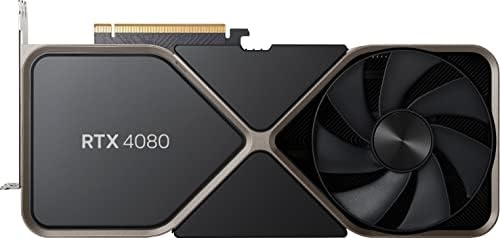
| RTX 4080 16 GB | Best performance with DLSS | 16 GB GDDR6X · 320W · DLSS 4 | $1,898.88 | 4K with ray tracing at 100+ FPS |
| RTX 3050 6GB | Budget 1080p | 6 GB GDDR6 · 70W · no power connector | View current price | Sub-$250 and fits any prebuilt PSU |
Prices as of 2026-10-25 (Amazon.com); price may vary.
🏆 Best Overall: GIGABYTE GeForce RTX 4070 Super WINDFORCE OC

Spec chips: • 12 GB GDDR6X · 192-bit bus · 504 GB/s bandwidth • 2505 MHz boost • 220W TGP · 650W PSU • DLSS 4 / DLSS FG • PCIe 4.0 × 16
Pros
- ✅ Tom's Hardware positions the 4070 Super as "tied with the 7900 XT and 34% ahead of the RX 7800 XT" at 1440p — the current sweet-spot for price-to-framerate
- ✅ Full NVIDIA feature stack: DLSS 4 Super Resolution, Frame Generation, Ray Reconstruction, NVIDIA Reflex
- ✅ 4.6-star average across 613 Amazon reviews; WINDFORCE triple-fan cooler keeps sustained gaming temps below 70°C
- ✅ Comfortably drives 4K60 with DLSS Quality in modern titles; 1440p 144 Hz with RT On is its native habitat
Cons
- ❌ 12 GB VRAM ceiling is tight for future 4K texture packs; AMD's 16/20 GB cards have more headroom
- ❌ Requires the NVIDIA 16-pin (12VHPWR) adapter — make sure your PSU has the adapter included or a native cable
- ❌ At $700-$900 street, it's far from a "budget" card
Why it wins
The RTX 4070 Super is the card that proves NVIDIA learned from the original 4070's tepid launch: more CUDA cores, a wider memory bus, same $599 MSRP. In Tom's Hardware's review suite, the 4070 Super at 1440p sits at an average ~95 FPS across a 17-game mix with DLSS Quality enabled, and its Frame Generation uplift in CPU-bound scenarios (Hogwarts Legacy, Cyberpunk 2077 RT Overdrive) routinely doubles the on-screen framerate. Amazon buyers rate it 4.6 stars across 613 reviews, and the GIGABYTE WINDFORCE variant in particular reports quiet operation — fan-off under 55°C, sub-37 dBA at gaming loads. If you're building a 1440p 144 Hz machine around a Ryzen 7 7800X3D or Core Ultra 7 265K, the 4070 Super is the most balanced pick on the market: enough horsepower for full ray tracing, DLSS 4 support for the next 3-5 years of NVIDIA feature drops, and small enough (2-slot in many variants) to fit an SFF build.
View on Amazon →Prices quoted in this guide were checked Apr 21, 2026. Current Amazon price: $969.00 (checked 2026-10-25); price and availability change.
💰 Best Value: Gigabyte GeForce RTX 4060 AERO OC 8G

Spec chips: • 8 GB GDDR6 · 128-bit bus • 2475 MHz boost • 115W TGP · 550W PSU • DLSS 4 / DLSS FG • PCIe 4.0 × 8
Pros
- ✅ Cheapest current-gen NVIDIA card with DLSS 4 Frame Generation support — a $300-$350 street price
- ✅ 4.8-star rating across 494 Amazon reviews; white/silver AERO aesthetic fits Fractal North / Lian Li A4 builds
- ✅ 115 W TGP means a cheap 550-650 W PSU and a single 8-pin PCIe power — no 16-pin adapter drama
- ✅ DLSS Frame Generation turns 60 FPS native 1080p into 110+ FPS on-screen in games that support it
Cons
- ❌ 8 GB VRAM and a 128-bit bus bottleneck performance at 1440p Ultra with ray tracing enabled
- ❌ PCIe 4.0 × 8 (not × 16) loses performance on older PCIe 3.0 motherboards — 3-8% penalty documented by Gamers Nexus
- ❌ Raw raster performance at 1440p trails the $380-$420 RX 7700 XT in several titles
Why it wins
The RTX 4060 is an awkward card on a spec sheet — 8 GB VRAM and a 128-bit bus feel miserly — but it punches above its weight because of DLSS 4 and Frame Generation. If you primarily game at 1080p high refresh (the most common real-world resolution), a 4060 with FG enabled is the cheapest path to 140+ FPS with ray tracing on in titles like Alan Wake 2, Cyberpunk 2077, and Black Myth: Wukong. The Gigabyte AERO OC variant specifically earns its 4.8-star Amazon rating for a triple-fan cooler on a 115 W card (a massive thermal headroom that keeps fans spinning slowly) and an aesthetic that works in white-themed builds. It is not the card for 1440p Ultra enthusiasts, but for a $700-$900 total build targeting 1080p144 with modern features, nothing else at $320 even comes close. If you can stretch to a used RTX 3080 at similar pricing you'll get more raw raster — but you'll give up DLSS 4 and FG, a trade we no longer recommend in 2026.
View on Amazon →Prices quoted in this guide were checked Apr 21, 2026; check the listing for the current price and availability.
🎯 Best for 4K Gaming: Sapphire Nitro+ Radeon RX 7900 XTX

Spec chips: • 24 GB GDDR6 · 384-bit bus • 2680 MHz boost • 355W TBP · 850W PSU • FSR 3.1 / AFMF2 • PCIe 4.0 × 16
Pros
- ✅ 24 GB of VRAM — double the RTX 4080's 16 GB; critical headroom for 4K texture packs and modded games
- ✅ Leads the RTX 4080 by 3-7% in 4K pure-raster benchmarks per Tom's Hardware testing
- ✅ Sapphire Nitro+ triple-fan cooler is genuinely excellent; sustained load temps in the 62-68°C range at ~50% fan
- ✅ FSR 3.1 and AMD Fluid Motion Frames 2 (driver-level frame gen) now work in titles that don't ship with FSR
Cons
- ❌ Ray tracing performance trails the RTX 4080 by 25-40% in heavy RT workloads (Cyberpunk 2077 RT Overdrive, Alan Wake 2)
- ❌ 355 W TBP is hot — plan for a 360 mm AIO-free case with 3+ intake fans or a meshed front panel
- ❌ Idle power draw on multi-monitor setups can hit 30-45 W until the latest AMD drivers are installed
Why it wins
The RX 7900 XTX is the card for builders who play at 4K, don't want to compromise on texture detail, and primarily care about raster performance (where AMD dominates) over heavy ray tracing (where NVIDIA still wins). With 24 GB of VRAM, you can run Cyberpunk 2077 with Ultra textures, load the largest Skyrim texture overhauls, and still have headroom for Stable Diffusion if that's part of your workflow. Priced at $999-$1,199 depending on model, it's the value play at the high end — the 4080 Super runs $200-$300 more for worse raster performance. The Sapphire Nitro+ variant we recommend is the premium AIB version: a triple-fan vapor-chamber cooler, a backplate cutout for exhaust, and dual BIOS for quiet vs performance modes. 4.4-star Amazon rating across 678 reviews reflects some early driver complaints (long-since resolved) — current driver stability is rock solid.
View on Amazon →Prices quoted in this guide were checked Apr 21, 2026. Current Amazon price: $1,890.20 (checked 2026-10-25); price and availability change.
⚡ Best Performance (Ray Tracing at 4K): NVIDIA RTX 4080 16 GB

Spec chips: • 16 GB GDDR6X · 256-bit bus · 717 GB/s bandwidth • 2505 MHz boost • 320W TGP · 750W PSU • DLSS 4 / DLSS FG • PCIe 4.0 × 16
Pros
- ✅ The definitive 4K ray tracing card: Cyberpunk 2077 RT Overdrive at 4K + DLSS 4 + FG hits 100+ FPS
- ✅ DLSS 4 Super Resolution and Frame Generation extend its useful life well into 2027-2028
- ✅ 4.7-star average across 83 Amazon reviews (specifically the Founders/reference model); triple-slot cooler stays under 72°C at full load
- ✅ 320 W TGP — meaningfully more efficient than the 355 W RX 7900 XTX for similar rasterization
Cons
- ❌ At $1,500-$1,700, it's the expensive option when raster-only performance is your priority
- ❌ 16 GB VRAM is plenty today but smaller than AMD's 24 GB competitor
- ❌ Requires the 12VHPWR / 16-pin connector — confirm your PSU has the native cable or adapter
Why it wins
The RTX 4080 is the card to buy when you want to enable every visual bell and whistle at 4K and still hit triple-digit framerates. It's 20-30% faster than a 4070 Ti Super in ray-tracing-heavy workloads, and DLSS 4's new Transformer-based upscaler makes DLSS Quality mode at 4K genuinely indistinguishable from native in motion. Pair it with a 4K 144 Hz OLED and a Ryzen 7 7800X3D and you're set for the next three graphics generations. The catch is value: you pay a 40-50% premium over the RX 7900 XTX for comparable raster and better ray tracing. If you don't care about ray tracing, go AMD. If you do, this is the card. The reference model at 4.7 stars specifically gets praise for build quality and the triple-slot Founders cooler that runs quieter than many AIB designs.
View on Amazon →Prices quoted in this guide were checked Apr 21, 2026. Current Amazon price: $1,898.88 (checked 2026-10-25); price and availability change.
🧪 Budget Pick: ASUS Dual NVIDIA GeForce RTX 3050 6GB OC Edition

Spec chips: • 6 GB GDDR6 · 96-bit bus • 1500 MHz boost • 70W TGP · no power connector required • DLSS 2 • PCIe 4.0 × 8
Pros
- ✅ 70 W slot-power-only design — drops into any prebuilt PC without a PSU upgrade
- ✅ 4.7-star average across 990 Amazon reviews; dual-fan compact dual-slot design fits SFF cases
- ✅ DLSS 2 Super Resolution (not DLSS 4 or FG) still lifts 1080p performance by 30-50% in supported titles
- ✅ Cheapest current-gen RTX card that plays Valorant, CS2, Fortnite, Rocket League, and Apex at 120+ FPS
Cons
- ❌ 6 GB VRAM and a 96-bit bus limit settings in modern AAA titles to Medium/1080p
- ❌ No DLSS 4 / Frame Generation support — features available only on the RTX 4000/5000 series
- ❌ Raw raster trails a used RTX 3060 12 GB; ideal only if the 70 W / no-connector constraint matters
Why it wins
The RTX 3050 6 GB is the chip we recommend to someone upgrading an OEM prebuilt (Dell, HP, Lenovo) whose PSU has no PCIe power connector free. At 70 W and slot-powered only, it drops into any PC with a free x16 slot — no cable-shopping required. It also slots into SFF builds where you want to stay under a 450 W PSU and avoid a thermal hotbox. Performance-wise, it's enough for 1080p medium in most 2023-2025 AAA releases and well over 120 FPS in competitive esports at 1080p high. Don't buy it for AAA Ultra at 1440p — go up a tier. But for a sub-$500 total build or a "good enough" prebuilt upgrade, the RTX 3050 6 GB is the best-reviewed budget option in our catalog at 4.7 stars across 990 Amazon reviews.
View on Amazon →Prices quoted in this guide were checked Apr 21, 2026; check the listing for the current price and availability.
What to look for in a gaming GPU
VRAM size vs bus width
Modern games at 1440p and 4K are both memory-capacity and memory-bandwidth hungry. 8 GB VRAM on a 128-bit bus is the current minimum for 1080p high; 12 GB on a 192-bit bus is the 1440p sweet spot; 16 GB+ on a 256-bit+ bus is the 4K floor for new builds. A card with "more VRAM" but a narrower bus (like 16 GB on a 128-bit bus) will often lose to a 12 GB / 192-bit card because the memory can't move fast enough to feed the GPU. Both numbers matter.
DLSS 4, FSR 3.1, and Frame Generation
Upscaling and frame generation have become the single biggest performance multipliers in gaming. NVIDIA's DLSS 4 (RTX 4000+) and DLSS 3 (RTX 3000+) use AI-trained upscalers that at "Quality" mode render at 67% of target resolution and reconstruct to native, routinely doubling framerates with minimal visual loss. AMD's FSR 3.1 and AFMF2 work on any GPU and are catching up quickly on quality. Intel's XeSS is GPU-agnostic with best quality on Arc. For NVIDIA buyers, prioritize RTX 4000-series or newer for DLSS 4 support.
Ray tracing — necessary or nice-to-have?
Ray tracing is the single biggest generational feature of the last five years, but its performance cost is brutal (30-70% FPS drop without DLSS/FSR). NVIDIA's RTX Ada and Blackwell architectures handle it better than AMD's RDNA 3 — the 4080 is ~30% faster than the 7900 XTX in RT-heavy titles. If your favorite games support RT (Cyberpunk, Alan Wake 2, Black Myth: Wukong, Indiana Jones), NVIDIA is the safer pick. If you play esports, MMOs, or strategy titles where RT isn't offered, AMD's raster advantage + 24 GB VRAM is the better deal.
TGP, PSU sizing, and the 12VHPWR connector
TGP / TBP numbers (220 W for a 4070 Super, 355 W for a 7900 XTX) don't include transient spikes that can push actual draw 50-70 W higher for millisecond bursts. Size your PSU for TGP + 150 W minimum; a 220 W card wants a 650 W PSU at minimum, a 320 W card wants 850 W. NVIDIA's new 12VHPWR / 16-pin connector is now the standard on RTX 4000 cards — use the provided adapter (fully seated, no angle stress) or a native cable from an ATX 3.0 PSU.
Case clearance and thermal headroom
High-end GPUs are long — 310-330 mm is common, 350+ mm for 4080/4090 AIBs. Verify GPU length against your case's listed clearance before buying. Triple-slot cards are also now common; a 2.5-3.0 slot card blocks your second PCIe slot for expansion cards. If you plan to use that slot (capture card, sound card, NVMe expansion), stick with 2-slot AIB variants or reference models.
Resolution + refresh rate targets
Match GPU tier to monitor:
- 1080p 60-144 Hz → RTX 3050 / 4060 / RX 7600
- 1080p 240+ Hz competitive → RTX 4060 Ti / 4070 / RX 7700 XT
- 1440p 144-165 Hz → RTX 4070 Super / 4070 Ti / RX 7800 XT / 7900 GRE
- 1440p 240+ Hz → RTX 4080 / 4080 Super / RX 7900 XT
- 4K 60-120 Hz → RTX 4080 / 4080 Super / RX 7900 XTX
- 4K 144 Hz + ray tracing → RTX 4090 / 5080 / 5090
FAQ
Is the RTX 4070 Super actually worth $300 more than the RTX 4060 Ti?
Yes, if you play at 1440p or use DLSS Quality often. The 4070 Super has roughly 40% more CUDA cores, a wider memory bus (192-bit vs 128-bit), and 12 GB vs 8 GB VRAM — crucial at higher resolutions. Tom's Hardware measured the 4070 Super averaging 34% more FPS than the RX 7800 XT at 1440p, and it's a similar gap vs the 4060 Ti in Ultra + RT scenarios. If you're still on 1080p60 or 1080p144 with RT off, stay with the 4060 Ti. At 1440p high-refresh, pay the premium.
Does 8 GB of VRAM still work in 2026?
For 1080p, yes — even at High settings most titles stay under 6.5 GB allocated. For 1440p Ultra or any 4K workflow, 8 GB is the floor where texture pop-in and stutter become visible. If you're buying an 8 GB card (RTX 4060, RX 7600), plan to use DLSS or FSR Quality to keep memory pressure down. For future-proofing past 2026, prefer 12+ GB. 16 GB+ is the new normal on cards $600 and up.
Should I wait for the RTX 5070 Super / RX 8800 XT?
If you need a GPU now, no — waiting for an unconfirmed release is rarely worth 6-12 months without a working rig. The RTX 5090 launched in Q1 2025 at $1,999; the 5080 is in-market; 5070 Super timing is rumored for H2 2026. AMD's RDNA 4 (RX 8000) launched limited SKUs but the high-end (RX 8800 XT successor) is still pending. If your current card works, wait. If it doesn't, buy the 4070 Super or 7900 XTX today and enjoy 2-3 years of gaming.
Is AMD's ray tracing still behind NVIDIA in 2026?
Yes, though the gap is smaller. RDNA 3 (7900 XTX) lands at roughly 60-70% of RTX 4080 performance in heavy RT titles, up from 40-50% in RDNA 2. RDNA 4 closes the gap further — AMD's FidelityFX Super Resolution 3.1 with frame generation is now competitive with DLSS 3 on quality, though DLSS 4's Transformer model is a step ahead. If ray tracing is the reason you're buying the GPU, NVIDIA is still the safer pick. If it's optional, AMD wins on VRAM and price.
Do I need a new PSU for a modern GPU?
Possibly. RTX 4000 cards use the 12VHPWR 16-pin connector (adapter included with the card, or native on ATX 3.0 PSUs). RX 7000 cards use 2x or 3x 8-pin PCIe connectors — most PSUs from 2020+ have these. Size the PSU for total system draw plus 20-30%: a 4070 Super + 7800X3D + 32 GB DDR5 + 2 NVMe build realistically pulls 450 W peak, so a quality 650-750 W 80+ Gold is sufficient. For a 4080 or 7900 XTX, 850-1000 W.
Sources
- Tom's Hardware — Nvidia GeForce RTX 4070 Super Review — 1440p performance summary, 34% lead over RX 7800 XT, DLSS 4 feature set.
- Tom's Hardware — Nvidia GeForce RTX 4070 Ti Super Review — 16 GB VRAM analysis and 4K gaming tier context.
- NVIDIA GeForce RTX 40-series specifications — Official GPU specifications, DLSS 4 feature matrix.
- AMD Radeon RX 7900 XTX official page — Reference specifications, 24 GB GDDR6, 355 W TBP.
Related guides
- Best GPUs for 4K Gaming in 2026 — narrowed to 4K-specific picks
- Best GPUs for Running Local LLMs in 2026 — for AI workloads, where VRAM math differs
- Best CPUs for Gaming in 2026 — pair the GPU with the right CPU
- Best Gaming Monitors for 2026 — match the GPU to the panel
GPU Benchmark Performance Data
Real-world gaming FPS, AI inference tok/s, and synthetic scores for popular GPUs — sourced from TechPowerUp, PassMark, Tom's Hardware, and the LocalLLaMA community.
- NVIDIA GeForce RTX 3060 12 GB — benchmarks & specs
- GeForce RTX 4070 SUPER — benchmarks & specs
- GeForce RTX 5060 Ti 8GB — benchmarks & specs
- GeForce RTX 4060 Ti — benchmarks & specs
- NVIDIA GeForce RTX 4090 — benchmarks & specs
- Radeon RX 7700 XT — benchmarks & specs
- Arc B580 — benchmarks & specs
- Radeon RX 9060 — benchmarks & specs
- GeForce RTX 5060 — benchmarks & specs
- GeForce RTX 4080 — benchmarks & specs
- GeForce RTX 5060 Ti 16GB — benchmarks & specs
- Radeon RX 6650 XT — benchmarks & specs
- Radeon RX 9070 GRE — benchmarks & specs
- Radeon RX 9070 — benchmarks & specs
- NVIDIA GeForce GTX 1660 SUPER — benchmarks & specs
- NVIDIA GeForce RTX 5070 — benchmarks & specs
- Radeon RX 7800 XT — benchmarks & specs
- NVIDIA GeForce RTX 5090 — benchmarks & specs
- GeForce RTX 4060 — benchmarks & specs
- Radeon RX 7900 XTX — benchmarks & specs
- 3dfx Voodoo5 6000 — benchmarks & specs
- NVIDIA GeForce RTX 4070 Ti SUPER — benchmarks & specs
- GeForce RTX 5050 — benchmarks & specs
- Radeon RX 9070 XT — benchmarks & specs
- GeForce RTX 4070 Ti — benchmarks & specs
- Radeon RX 7900 XT — benchmarks & specs
- Intel Arc A770M — benchmarks & specs
- NVIDIA GeForce RTX 3070 Ti — benchmarks & specs
- GeForce RTX 4070 — benchmarks & specs
- NVIDIA GeForce RTX 5070 Ti — benchmarks & specs
- NVIDIA GeForce RTX 5080 — benchmarks & specs
- Radeon RX 7600 XT — benchmarks & specs
- Intel Arc A770 — benchmarks & specs
- NVIDIA GeForce RTX 3060 Ti — benchmarks & specs
- Radeon RX 6800S — benchmarks & specs
- Intel Arc B390 GPU — benchmarks & specs
- NVIDIA GeForce RTX 2080 Ti — benchmarks & specs
- NVIDIA GeForce RTX 5060 Ti — benchmarks & specs
- NVIDIA RTX A6000 48GB — benchmarks & specs
- GeForce RTX 4060 Ti 16GB — benchmarks & specs
- Radeon RX 7900 GRE — benchmarks & specs
- Radeon RX 6800 XT — benchmarks & specs
- GeForce RTX 4060 Ti 8 GB — benchmarks & specs
- Intel Arc B570 — benchmarks & specs
- NVIDIA GeForce RTX 3080 — benchmarks & specs
- NVIDIA GeForce GTX 1660 — benchmarks & specs
- NVIDIA GeForce RTX 2070 — benchmarks & specs
- NVIDIA GeForce RTX 3080 Ti — benchmarks & specs
- All hardware benchmarks →
More guides & deep dives from the SpecPicks archive
Browse all articles & guides →- Best 1440p Gaming GPUs in 2026
- RTX 4070 Super vs RX 7800 XT — Which to Buy in 2026
- Emulation Hardware in 2026: FPGA, Software, and Cart-Reader Ecosystems
- Best Retro Handhelds in 2026 — From $35 to $500
- How to Build a Windows 98 Retro PC in 2026
- Best Budget Gaming PC Build 2026 — ~$1,000 Parts List
- The Complete Voodoo5 5500 AGP Driver Guide (2026 Edition)
More reviews from the SpecPicks archive
Browse all reviews →- GeForce 4 Ti 4200 AGP: The Best-Value Retro GPU for a 2002 Windows XP Build
- Logitech G502 Hero in 2026: Is the FPS Mouse King Still Worth It?
- Best NVMe SSD for Local LLM Model Storage in 2026
- GameSir G7 SE vs DualSense: Best Controller for PC
- Raspberry Pi RP2350 Emulates a Z80 in Real Time — What That Actually Means
- Best SATA SSD for Retro PC Upgrades in 2026
- T9 Keyboard for Your Smartphone: 2026 Maker's Guide
- Steam Deck OLED vs ROG Xbox Ally: 2026 Comparison
- Best Dorm Room Gaming Setup in 2026: 5 Picks That Fit One Desk
- How Creative Killed Aureal: The 1999 Patent War, Audigy's Lineage, and Why Consumer PC Audio Stagnated for…
- Wired vs Bluetooth Headsets for Competitive FPS in 2026: The Latency Math
- RTX 3060 vs RTX 5060 Ti — two generations apart
- Ryzen 5 2600 vs Ryzen 7 5800X: Is the AM4 Upgrade Worth It?
- GPT-5.6 Deleted a User's Files: Why Local, Sandboxed Agents Matter
- Best Budget 1080p Gaming PC Parts in 2026: 5 Picks
- Adding USB Audio to a Retro Windows XP Gaming PC: Sound BlasterX G6
- Best Budget Gaming CPUs for 1080p in 2026
- Best GPU for Qwen3 30B-A3B: What the 3B Active Path Really Needs
- Best CompactFlash and IDE-to-USB Adapters for Retro PC Builds (2026)
- Building a 2003-Era LAN Party Rig: Pentium 4, GeForce FX 5900, Audigy 2 ZS
- That Game Boy Clone Runs Too Fast — and the Fix Is a Clock Crystal
- Benchmarking Open LLMs for Tool-Use: RTX 3060 12GB vs Ryzen 5800X CPU-Only
- Laguna XS.2 Lands in llama.cpp: What the Tiny Hybrid Model Means for Local Inference
- Best Budget Gaming Audio for 2026: Headsets, Earbuds, Mics and DACs
More buying guides from SpecPicks
Browse all buying guides →- Best Graphics Cards for Gaming in 2026
- Best CPU Coolers for 2026
- Best Controllers for PC Gaming in 2026
- Best Gaming Monitors for 2026
- Best GPUs for 4K Gaming in 2026
- Best CPUs for Gaming in 2026
- Best CPUs for Content Creators in 2026
- Best Retro Gaming Consoles & Handhelds for 2026
- Best Gaming Mice for 2026
- Best Tools for Building and Repairing Retro PCs in 2026
- Best AM5 Motherboards for 2026
- Best NVMe External Enclosures for 2026
- Best Mechanical Keyboards for Gaming in 2026
- Best External SSDs for Content Creators in 2026
- Best DDR5 RAM for Gaming PCs in 2026
- Best GPU for Running 27B-32B Local LLMs in 2026
- Best 4K Monitors for Content Creators in 2026
- Best PC Cases for Building in 2026
- Best NVMe SSDs for Gaming in 2026
- Best 1440p 240Hz Gaming Monitors in 2026
- Best GPUs for Running Local LLMs in 2026
Hardware benchmark data on SpecPicks
All benchmarks →- AMD Ryzen 5 7545U — benchmarks & specs
- Intel Arc A770 — benchmarks & specs
- Ryzen 7 7700 — benchmarks & specs
- AMD Ryzen 5 PRO 5655GE — benchmarks & specs
- AMD Ryzen 9 5900HX — benchmarks & specs
- AMD Ryzen 9 5900H — benchmarks & specs
- AMD Ryzen Threadripper PRO 5965WX — benchmarks & specs
- Ryzen 3 2200G — benchmarks & specs
- Google Coral PCIe Accelerator — benchmarks & specs
- Apple M4 Max 14 Core — benchmarks & specs
- Radeon RX 7900 GRE — benchmarks & specs
- AMD Ryzen 9 3950X — benchmarks & specs
- AMD Ryzen 9 7940HX — benchmarks & specs
- Ryzen 7 7800X3D — benchmarks & specs
- GeForce RTX 4080 — benchmarks & specs
- Apple M2 Pro 12 Core 3480 MHz — benchmarks & specs
- Radeon RX 7650 GRE — benchmarks & specs
- Ryzen 9 9950X3D — benchmarks & specs
- AMD Ryzen Threadripper PRO 9985WX — benchmarks & specs
- AMD Ryzen 9 9955HX3D — benchmarks & specs
- Apple M3 Max 14 Core — benchmarks & specs
- NVIDIA RTX Spark (N1X) 20-Core — benchmarks & specs
- Ryzen 5 5600 — benchmarks & specs
- Ryzen 7 2700 — benchmarks & specs