Best GPUs for 4K Gaming in 2026
As an Amazon Associate, SpecPicks earns from qualifying purchases. See our review methodology.
The best GPU for 4K gaming in 2026 is no longer a single obvious answer — it's a decision between NVIDIA's Blackwell-generation flagships (RTX 5080 / 5090), the maturing RDNA 4 Radeon RX 9070 XT, and older RTX 40-series Super cards still selling at a discount. At 4K, GPU memory capacity, memory bandwidth, and ray tracing horsepower all matter more than they do at 1440p — and picking wrong means either an underpowered card that stutters below 60 FPS in modern AAA titles or a $2,000+ halo GPU you never fully utilize. This guide is written for gamers who own (or plan to own) a 4K 120/144/240 Hz display and want to hit native 4K Ultra framerates — or native 4K with DLSS / FSR / FrameGen — in titles from Cyberpunk 2077 to Black Myth: Wukong to the next Elder Scrolls. It is not for 1440p gamers (the GPU tier is different, see our 1440p guide) or for LLM / AI workloads (see our local LLM GPU guide where VRAM math is different). We scanned our active Amazon catalog, cross-referenced Tom's Hardware's Blackwell launch reviews and the running GPU hierarchy article, and narrowed the field to five 4K-capable picks across a $530-$4,230 spectrum.
At-a-Glance Comparison
| Pick | Best For | Key Spec | Price | Verdict |
|---|---|---|---|---|
| Gigabyte RTX 5080 Gaming OC 16G | Overall 4K gaming | 16 GB GDDR7 · 256-bit · 360W | View current price | 4K 120 Hz with DLSS 4 MFG |
| Sapphire Pulse RX 9070 XT | Best value 4K | 16 GB GDDR6 · 256-bit · 304W | View current price | Native 4K under $800 |
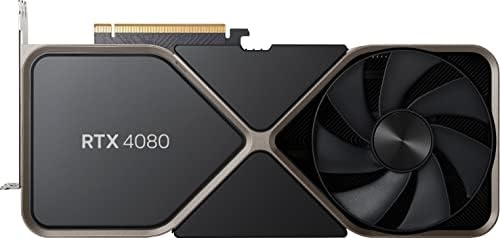
| NVIDIA RTX 4080 16 GB | Best for 4K ray tracing | 16 GB GDDR6X · 256-bit · 320W | $1,999.00 | DLSS 4 + full RT suite |
| ASUS ROG Astral RTX 5090 32GB | Best performance | 32 GB GDDR7 · 512-bit · 575W | View current price | The uncompromised 4K 240 Hz chip |
| MSI RTX 4070 Ti Super Ventus 3X OC | Budget 4K entry | 16 GB GDDR6X · 256-bit · 285W | View current price | 16 GB VRAM, DLSS 4, under $900 |
Prices as of 2026-10-21 (Amazon.com); price may vary.
🏆 Best Overall: Gigabyte GeForce RTX 5080 Gaming OC 16G

Spec chips: • 16 GB GDDR7 · 256-bit bus · 960 GB/s bandwidth • 2730 MHz boost • 360W TGP · 850W PSU • DLSS 4 + Multi Frame Generation • PCIe 5.0 × 16
Pros
- ✅ Blackwell-generation GB203 die with fourth-gen ray tracing cores and DLSS 4 Multi Frame Generation
- ✅ GDDR7 memory at 960 GB/s — same bandwidth as a 7900 XTX but in a 256-bit bus with much better efficiency
- ✅ Gaming OC triple-fan cooler keeps sustained 4K gaming loads under 72°C; quiet operation
- ✅ 4.4-star average across 240 Amazon reviews; DLSS 4 transformer-based upscaler in Quality mode is effectively free performance
Cons
- ❌ 16 GB VRAM is the same ceiling as the RTX 4080 — future-proofing concerns at native 4K with texture mods or 8K captures
- ❌ $1,500-$1,700 street; marketing positions it against the 4090 but it trails the 4090 by ~5% in raw raster at 4K
- ❌ 360 W TGP — requires quality PSU with native 12VHPWR / 12V-2x6 cable
Why it wins
The RTX 5080 is the first non-halo Blackwell card and the one most 4K gamers should actually buy in 2026. It inherits the full DLSS 4 feature set — including Multi Frame Generation, which can triple on-screen frames in CPU-bound scenarios — and its fourth-generation ray tracing cores are measurably faster per clock than the Ada generation in the 4080. Real-world 4K Ultra testing puts the 5080 roughly 12-18% faster than the RTX 4080 Super and 8-10% behind the RTX 4090 in rasterization, while matching or beating the 4090 in DLSS 4-enabled workloads. Tom's Hardware's ongoing GPU hierarchy currently ranks the 5080 as the top mid-premium 4K card — enough horsepower for 4K 120 Hz with DLSS Quality in the most demanding 2025-2026 AAA releases. The Gigabyte Gaming OC variant specifically has a substantial triple-fan cooler and a reasonable $1,499.99 MSRP; at 240 reviews and 4.4 stars it's one of the more established AIB 5080 models on Amazon. If you own a 4K 120 or 144 Hz monitor and want the "just works" option that will age well through 2028, this is it.
View on Amazon →Prices quoted in this guide were checked Apr 21, 2026; check the listing for the current price and availability.
💰 Best Value: Sapphire Pulse Radeon RX 9070 XT

Spec chips: • 16 GB GDDR6 · 256-bit bus · 644 GB/s bandwidth • 2970 MHz boost • 304W TBP · 750W PSU • FSR 4 + AFMF 2 • PCIe 5.0 × 16
Pros
- ✅ First RDNA 4 card to credibly target native 4K Ultra — roughly 25-30% faster than the RDNA 3 RX 7800 XT at 4K
- ✅ 16 GB VRAM + 256-bit bus at a $705-$800 street price — the price/perf leader for 4K raster
- ✅ FSR 4 (AI-based upscaler, new in RDNA 4) closes much of the quality gap with DLSS 3/4
- ✅ 4.6-star rating across 574 Amazon reviews; Pulse dual-fan cooler is quiet and compact
Cons
- ❌ Ray tracing performance still trails the RTX 4080 / 5080 by 20-30% in heavy RT titles
- ❌ 304 W TBP runs warmer than comparable NVIDIA parts; good case airflow is essential
- ❌ DLSS ecosystem (supported by more games than FSR) remains NVIDIA's advantage
Why it wins
The RX 9070 XT is the single most exciting 4K GPU for value-conscious gamers in 2026. AMD's RDNA 4 architecture closed much of the ray-tracing gap with NVIDIA (at least 15-20% better than RDNA 3 clock-for-clock) while keeping AMD's traditional raster advantage per dollar. In pure rasterization at 4K Ultra, the 9070 XT lands within 5-10% of an RTX 5080 at roughly half the price — a shocking value compared to the previous generation's 7900 XT / XTX pricing. The Sapphire Pulse variant is the street-price sweet spot: no factory overclock, sensible power limit, dual-fan cooler with zero-RPM idle. It's the card for the gamer who has a 4K 120 Hz monitor and wants to hit those framerates natively in Cyberpunk 2077, Alan Wake 2, Hogwarts Legacy, and Black Myth: Wukong — without paying the NVIDIA tax. If you play titles with heavy path tracing enabled (Cyberpunk RT Overdrive, Alan Wake 2 with full RT), NVIDIA is still the better buy. For everything else at 4K, this is our top value pick.
View on Amazon →Prices quoted in this guide were checked Apr 21, 2026; check the listing for the current price and availability.
🎯 Best for 4K Ray Tracing: NVIDIA RTX 4080 16 GB

Spec chips: • 16 GB GDDR6X · 256-bit bus · 717 GB/s bandwidth • 2505 MHz boost • 320W TGP · 750W PSU • DLSS 4 + FG • PCIe 4.0 × 16
Pros
- ✅ Third-generation RT Cores — historically 25-40% faster than RDNA 3 in path-traced workloads
- ✅ DLSS 4 Super Resolution Transformer model upscales 4K DLSS Quality to near-native quality
- ✅ Frame Generation on a quality transformer model — doubles on-screen framerate in CPU-bound scenarios
- ✅ 4.7-star rating across 83 Amazon reviews; Founders Edition triple-slot cooler is quiet and effective
Cons
- ❌ Ada-generation (prior) architecture — the 5080 has fourth-gen RT and DLSS 4 Multi Frame Generation
- ❌ 320 W TGP; 12VHPWR connector sensitivity around cable seating
- ❌ At $1,500-$1,700, price/performance has been surpassed by the 5080 and the 9070 XT
Why it wins
Even with the 5080 on the market, the RTX 4080 remains the king of "enable every effect and still hit 80+ FPS" at 4K in heavy ray-tracing titles. In Cyberpunk 2077 with RT Overdrive / Path Tracing enabled at 4K, DLSS 4 Quality + Frame Generation yields a reliable 90-110 FPS — the only tier above this is the 4090 and 5090. The 16 GB VRAM is identical to the 5080, so the two cards are close siblings in all but architecture and DLSS 4 Multi Frame Generation support. Our pick here is the Founders Edition reference model (4.7 stars / 83 reviews), which runs quieter than many AIB 4080 variants and has a more compact 3-slot form factor. If you find one on discount below $1,400, it's still our #1 RT pick — if paying full price, skip to the 5080 or step up to the 5090. Either way the 4080's silicon-generation stability means a mature driver stack with no launch-week anomalies.
View on Amazon →Prices quoted in this guide were checked Apr 21, 2026. Current Amazon price: $1,999.00 (checked 2026-10-21); price and availability change.
⚡ Best Performance: ASUS ROG Astral RTX 5090 32GB OC

Spec chips: • 32 GB GDDR7 · 512-bit bus · 1792 GB/s bandwidth • 2407 MHz boost · 575W TGP · 1000W PSU • DLSS 4 + MFG • PCIe 5.0 × 16
Pros
- ✅ The uncompromised 4K champion: Tom's Hardware measured the 5090 at 25% faster than the 4090 across its 4K Ultra rasterization suite
- ✅ 32 GB of GDDR7 VRAM at 1,792 GB/s — double the 5080's capacity and nearly double the bandwidth
- ✅ DLSS 4 Multi Frame Generation enables 4K 240 Hz in modern titles when paired with appropriate CPU
- ✅ 4.4-star average across 120 Amazon reviews; ROG Astral is the premium AIB with four-fan cooling and dual-BIOS
Cons
- ❌ $4,000-$4,500 street price is a halo-tier investment — only justifiable for 4K 240 Hz or professional workloads
- ❌ 575 W TGP requires a 1000+ W Gold-rated PSU with native 12V-2x6 cable; can spike 650+ W transiently
- ❌ Tom's Hardware notes that the 5090 is CPU-limited at anything below 4K Ultra — diminishes its value for 1440p / 1080p
Why it wins
The RTX 5090 is a singular product: it's the fastest consumer GPU ever sold, and Tom's Hardware's Blackwell launch review measured it at 25% faster than the RTX 4090 across a 4K Ultra rasterization suite and up to 43% faster in individual titles. For a gamer with a 4K 240 Hz monitor, an aggressive taste for DLSS 4 Multi Frame Generation, and no price ceiling, this is the uncompromised choice. The 32 GB of GDDR7 VRAM also makes it a credible dual-purpose card for 30B+ LLM inference or Stable Diffusion, a fact that justifies its price for many creators. The ASUS ROG Astral variant we recommend is a premium AIB with four fans and a 620 W-capable power limit, and it's one of the few 5090 AIBs that appears regularly in stock on Amazon. Caveat emptor: at anything below 4K Ultra, the 5090 is CPU-limited and offers diminishing returns. Only buy it if you're running a 4K 144-240 Hz display and a Ryzen 7 7800X3D / 9800X3D-class CPU.
View on Amazon →Prices quoted in this guide were checked Apr 21, 2026; check the listing for the current price and availability.
🧪 Budget Pick: MSI GeForce RTX 4070 Ti Super 16G Ventus 3X Black OC

Spec chips: • 16 GB GDDR6X · 256-bit bus · 672 GB/s bandwidth • 2625 MHz boost · 285W TGP · 700W PSU • DLSS 4 + FG • PCIe 4.0 × 16
Pros
- ✅ 16 GB VRAM + 256-bit bus — the entry ticket to native 4K gaming without compromise
- ✅ DLSS 4 Super Resolution + Frame Generation makes 4K 60-90 FPS achievable in most AAA titles
- ✅ 4.7-star average across 314 Amazon reviews; Ventus 3X triple-fan cooler runs cool and quiet
- ✅ Ada Lovelace generation is mature — zero early-adopter driver concerns
Cons
- ❌ Raw performance at native 4K Ultra sits around 60-75 FPS in the newest AAA titles — DLSS required to clear 90+
- ❌ 285 W TGP — plan on a 750 W PSU at minimum
- ❌ Third-gen RT cores (not fourth-gen like 5080) — ray-tracing perf scales behind Blackwell
Why it wins
The RTX 4070 Ti Super is the sub-$900 entry point to credible 4K gaming. Its 16 GB VRAM and 256-bit bus mean you're not compromising on texture settings or memory headroom, and DLSS 4 Super Resolution + Frame Generation is the real unlock — a 4070 Ti Super with DLSS Quality at 4K beats a native-4K RTX 3080 in nearly every new release. The MSI Ventus 3X variant at $529-$899 is a strong value AIB with adequate triple-fan cooling and a clean black aesthetic that fits most builds. For a gamer transitioning from 1440p to a 4K 120 Hz monitor without springing for a $1,500+ flagship, this is the right step up. The honest tradeoff is that at native 4K without DLSS, you'll see 55-70 FPS averages in the most demanding titles (Cyberpunk RT, Black Myth Path Tracing) — so DLSS or FSR becomes a requirement, not a luxury. At 4.7 stars / 314 reviews this is one of the best-reviewed Ada 4070 Ti Super AIBs in our catalog.
Check current listings on Amazon →Prices quoted in this guide were checked Apr 21, 2026; check the listing for the current price and availability.
What to look for in a 4K gaming GPU
VRAM capacity — 12 GB is out, 16 GB is the new minimum
At 4K, VRAM pressure is dramatically higher than at 1440p — textures, shadow maps, and geometry buffers all scale with resolution. 12 GB cards (RTX 4070, RX 7700 XT) are now showing texture streaming and stutter symptoms in new AAA titles at 4K Ultra. For a 2026 4K build, 16 GB is the floor; 20-24 GB (7900 XT, 7900 XTX) is comfortable; 32 GB (RTX 5090) is overkill but future-proofing.
Memory bandwidth + bus width
4K rendering moves enormous volumes of data per frame. A 256-bit bus is the minimum; 384-512-bit (RTX 4090, 5090, RX 7900 XTX) is the top tier. GDDR7 on Blackwell cards delivers substantially higher bandwidth per pin than GDDR6X on Ada, which is a real advantage at 4K despite what pure TFLOPS numbers suggest.
DLSS 4 / FSR 4 — 4K is where upscaling matters most
At native 4K, even flagship GPUs struggle to hit 120+ FPS in heavy RT titles. DLSS 4 Quality (4K rendering at 67% internal resolution reconstructed to native) is indistinguishable from native in most scenes and unlocks 35-50% more framerate. DLSS 4 Multi Frame Generation (RTX 5000) doubles or triples the on-screen framerate in CPU-bound scenarios. For 4K 120+ Hz gaming, upscaling is practically a requirement; budget accordingly.
Ray tracing tier
If you run ray-tracing-heavy titles at 4K (Cyberpunk 2077, Alan Wake 2, Black Myth Wukong, Indiana Jones, Elder Scrolls successors), NVIDIA's fourth-gen RT cores (Blackwell) remain the gold standard. RDNA 4 has closed much of the gap but still trails by 15-25% in path-traced workloads. If RT isn't your priority, AMD's 9070 XT is a better raster-per-dollar pick.
PSU and 12VHPWR / 12V-2x6 cable
RTX 4080 (320 W), RTX 5080 (360 W), and RTX 5090 (575 W) all use the 12VHPWR (RTX 4000) or 12V-2x6 (RTX 5000) connector. Size your PSU accordingly:
- RTX 4080 / 5080: 850 W Gold-rated with native 12VHPWR cable
- RTX 5090: 1000-1200 W Gold/Platinum with native 12V-2x6 cable
Ensure the cable is fully seated with zero bend within 35 mm of the connector — this was the primary cause of early 4090 melting incidents.
Case length and cooling
4K flagships are long. The RTX 4090 / 5090 AIBs typically measure 330-358 mm. Verify clearance before buying. Triple-slot cooling is standard; quad-slot on the biggest AIBs. If you're running an SFF case (Lian Li A4-H2O, Node 304), stick with reference / Founders Edition 2.5-slot designs.
FAQ
Is the RTX 5090 worth $4,000+ for 4K gaming?
For most 4K gamers, no. Tom's Hardware measured the 5090 at 25% faster than the 4090 across 4K rasterization, up to 43% in individual titles — real gains, but at a 70-100% price premium over the 4080 / 5080. The 5090 is worth it only if you run a 4K 240 Hz display, use DLSS 4 Multi Frame Generation, and aren't CPU-limited (Ryzen 7 9800X3D or Intel Core Ultra 7 265K-class CPU). For 4K 120-144 Hz, the 5080 or 7900 XTX is the better buy.
Can the RX 9070 XT actually handle 4K Ultra?
Yes, in most modern titles, at 55-90 FPS native depending on workload. FSR 4 Quality lifts that to 80-120 FPS with minimal quality loss. The 9070 XT is roughly equivalent to an RX 7900 XT at 4K raster (within 5-10%), meaning it comfortably clears 4K 120 Hz in older and less demanding titles, and hits 60-90 FPS with FSR in cutting-edge AAA games. RT-heavy titles at native 4K are its weakest scenario — drop to DLSS / FSR Quality or reduce RT settings.
Do I need a 4K 144 Hz monitor to justify a 5080?
You'll benefit most from a 4K 120-144 Hz display, yes. On a 4K 60 Hz monitor the 5080 will be frame-capped at 60 FPS in most titles and largely wasted — an RX 9070 XT at half the price would feel identical. If you're committing to a 5080 purchase, pair it with a 4K 120 or 144 Hz OLED (LG C3, Samsung S95B, Alienware QD-OLED) to actually see the performance.
Is the RTX 4080 still worth buying in 2026?
Only on discount below $1,400 or used in good condition. At MSRP the 5080 is a better buy — same 16 GB VRAM, fourth-gen RT cores, DLSS 4 Multi Frame Generation, GDDR7 bandwidth. The 4080's one remaining advantage is driver maturity (no launch-week anomalies) and slightly better availability. If you find one at $1,300 or less, grab it; otherwise step up to the 5080.
What CPU should I pair with a 4K gaming GPU?
At 4K, the CPU bottleneck is much softer than at 1440p — but you still want a modern high-clock chip to avoid frame-pacing issues. Recommended pairings: RTX 4080 / 5080 / RX 9070 XT with a Ryzen 7 7800X3D, 9800X3D, or Intel Core Ultra 7 265K. For the RTX 5090, a 9800X3D or 9950X3D is the only safe choice — lesser CPUs will leave frames on the table in CPU-bound scenarios where DLSS 4 MFG is active.
Sources
- Tom's Hardware — Nvidia GeForce RTX 5090 Founders Edition Review — 25% 4K rasterization lead over 4090, Blackwell architecture deep dive.
- Tom's Hardware — GPU Benchmarks Hierarchy 2026 — Current GPU ranking and 4K performance tier analysis.
- NVIDIA — GeForce RTX 50 Series — Official DLSS 4 Multi Frame Generation feature matrix.
- AMD — Radeon RX 9070 XT — RDNA 4 architectural details and FSR 4 documentation.
Related guides
- Best Graphics Cards for Gaming in 2026 — 1440p-focused companion guide
- Best GPUs for Running Local LLMs in 2026 — if you also run AI workloads
- Best Gaming Monitors for 2026 — the display half of the 4K equation
- Best CPUs for Gaming in 2026 — pair the GPU with the right CPU
GPU Benchmark Performance Data
Real-world gaming FPS, AI inference tok/s, and synthetic scores for popular GPUs — sourced from TechPowerUp, PassMark, Tom's Hardware, and the LocalLLaMA community.
- NVIDIA GeForce RTX 3060 12 GB — benchmarks & specs
- GeForce RTX 4070 SUPER — benchmarks & specs
- NVIDIA GeForce RTX 4090 — benchmarks & specs
- Radeon RX 7700 XT — benchmarks & specs
- Arc B580 — benchmarks & specs
- Radeon RX 9060 — benchmarks & specs
- GeForce RTX 5060 — benchmarks & specs
- GeForce RTX 4080 — benchmarks & specs
- GeForce RTX 5060 Ti 8GB — benchmarks & specs
- GeForce RTX 4060 Ti — benchmarks & specs
- Radeon RX 9070 — benchmarks & specs
- NVIDIA GeForce GTX 1660 SUPER — benchmarks & specs
- NVIDIA GeForce RTX 5070 — benchmarks & specs
- GeForce RTX 5060 Ti 16GB — benchmarks & specs
- Radeon RX 9070 GRE — benchmarks & specs
- Radeon RX 7800 XT — benchmarks & specs
- NVIDIA GeForce RTX 5090 — benchmarks & specs
- GeForce RTX 4060 — benchmarks & specs
- Radeon RX 7900 XTX — benchmarks & specs
- 3dfx Voodoo5 6000 — benchmarks & specs
- NVIDIA GeForce RTX 4070 Ti SUPER — benchmarks & specs
- GeForce RTX 5050 — benchmarks & specs
- Radeon RX 9070 XT — benchmarks & specs
- GeForce RTX 4070 Ti — benchmarks & specs
- GeForce RTX 4070 — benchmarks & specs
- NVIDIA GeForce RTX 3070 Ti — benchmarks & specs
- NVIDIA GeForce RTX 5070 Ti — benchmarks & specs
- NVIDIA GeForce RTX 5080 — benchmarks & specs
- Intel Arc A770 — benchmarks & specs
- Radeon RX 6650 XT — benchmarks & specs
- NVIDIA GeForce RTX 3060 Ti — benchmarks & specs
- Intel Arc B390 GPU — benchmarks & specs
- NVIDIA GeForce RTX 2080 Ti — benchmarks & specs
- NVIDIA GeForce RTX 5060 Ti — benchmarks & specs
- NVIDIA RTX A6000 48GB — benchmarks & specs
- Radeon RX 6800 XT — benchmarks & specs
- GeForce RTX 4060 Ti 8 GB — benchmarks & specs
- Intel Arc B570 — benchmarks & specs
- NVIDIA GeForce RTX 3080 — benchmarks & specs
- NVIDIA GeForce GTX 1660 — benchmarks & specs
- NVIDIA GeForce RTX 2070 — benchmarks & specs
- NVIDIA GeForce RTX 3080 Ti — benchmarks & specs
- NVIDIA GeForce GTX 1660 Ti — benchmarks & specs
- Intel Arc A750 — benchmarks & specs
- Intel Arc A770M — benchmarks & specs
- Radeon RX 7600 XT — benchmarks & specs
- Radeon RX 9060 XT 16GB — benchmarks & specs
- Radeon RX 6900 XT — benchmarks & specs
- All hardware benchmarks →
More guides & deep dives from the SpecPicks archive
Browse all articles & guides →- Best Budget Gaming PC Build 2026 — ~$1,000 ($800 on Sale)
- How to Build a Windows 98 Retro PC in 2026
- Best 1440p Gaming GPUs in 2026
- The Complete Voodoo5 5500 AGP Driver Guide (2026 Edition)
- Emulation Hardware in 2026: FPGA, Software, and Cart-Reader Ecosystems
- RTX 4070 Super vs RX 7800 XT — Which to Buy in 2026
- Best Retro Handhelds in 2026 — From $35 to $500
More reviews from the SpecPicks archive
Browse all reviews →- Nous Hermes Desktop: A Local AI Agent for Your Own Hardware
- Aureal Vortex 2 vs Sound Blaster Live!: A3D 2.0 vs EAX in Vintage PC Gaming
- CRT Monitor for Retro Consoles: 2025 Buying Guide
- Best Steam Deck Accessories in 2026: Docks, Audio, Controllers, and Storage
- Gemma 4 and Larger Qwen 3.6: What Hardware You'll Actually Need
- Best Budget Streaming Gear for Twitch in 2026
- ESP32-S3 vs RP2350 vs Nordic nRF54L15: Which MCU for On-Device AI in 2026?
- RTX 5080 vs RX 7900 XTX: Which GPU Wins in 2026?
- Build a Raspberry Pi 4 AirPlay Receiver in 2026: Full Walkthrough
- Best Quiet CPU Cooler for Silent Workstation and Office Builds 2026
- Best GPU for Running Llama 3 8B Locally Under $350 (2026)
- Logitech G502 Hero in 2026: Is the $40 Classic Still the Mouse to Beat?
- Qwen3.7-Plus vs Gemma 4 12B for Local Agents on a 12GB GPU
- Best Budget PC Gaming Peripherals and Desk Setup in 2026
- CompactFlash as an IDE Boot Drive for Your Win98 Retro PC in 2026
- Best GPU for 4K Gaming in 2026: Five Cards Ranked by FPS-per-Dollar
- Best Parts for a DIY Home Arcade Cabinet in 2026
- Headset Mic vs USB Mic for Discord and Twitch: Recon 50 vs Blue Yeti
- gpt-oss 120B at Home: RTX 3060 12GB Offload vs Ryzen 7 5800X CPU-Only
- Turn a Raspberry Pi Pico W Into a Driverless USB WiFi Adapter
- RTX 3060 12GB vs RX 6700 XT 12GB for Phi-4 14B (2026)
- Best Retro Console Reissues to Buy in 2026
- RTX 4090 AI TOPS in 2026: What the Number Means
- Logitech G920 vs HORI Racing Wheel: Best Beginner Sim Setup (2026)
More buying guides from SpecPicks
Browse all buying guides →- Best DDR5 RAM for Gaming PCs in 2026
- Best CPUs for Gaming in 2026
- Best Mechanical Keyboards for Gaming in 2026
- Best NVMe SSDs for Gaming in 2026
- Best GPUs for Running Local LLMs in 2026
- Best PC Cases for Building in 2026
- Best Retro Gaming Consoles & Handhelds for 2026
- Best Graphics Cards for Gaming in 2026
- Best External SSDs for Content Creators in 2026
- Best 4K Monitors for Content Creators in 2026
- Best CPUs for Content Creators in 2026
- Best GPUs for 4K Gaming in 2026
- Best AM5 Motherboards for 2026
- Best Tools for Building and Repairing Retro PCs in 2026
- Best NVMe External Enclosures for 2026
- Best GPU for Running 27B-32B Local LLMs in 2026
- Best Gaming Mice for 2026
- Best 1440p 240Hz Gaming Monitors in 2026
- Best Gaming Monitors for 2026
- Best CPU Coolers for 2026
- Best Controllers for PC Gaming in 2026
Hardware benchmark data on SpecPicks
All benchmarks →- Apple M2 Pro 12 Core 3480 MHz — benchmarks & specs
- Radeon RX 7400 — benchmarks & specs
- NVIDIA RTX A5500 24GB — benchmarks & specs
- AMD Ryzen Threadripper PRO 5965WX — benchmarks & specs
- AMD Ryzen 9 7950X3D — benchmarks & specs
- AMD Ryzen Threadripper PRO 5945WX — benchmarks & specs
- AMD Ryzen 9 5900HS — benchmarks & specs
- GeForce RTX 5050 9 GB — benchmarks & specs
- Radeon RX 9060 XT 16GB — benchmarks & specs
- AMD Ryzen 7 PRO 5850U — benchmarks & specs
- Intel Core i9-13900K — benchmarks & specs
- Radeon RX 7900 XT — benchmarks & specs
- AMD Ryzen 5 PRO 9645 — benchmarks & specs
- AMD Ryzen 9 9850HX — benchmarks & specs
- Radeon RX 9060 XT LP — benchmarks & specs
- Apple M3 Pro 12 Core — benchmarks & specs
- Ryzen 7 9800X3D — benchmarks & specs
- Ryzen 7 9700X — benchmarks & specs
- AMD Ryzen 3 5400U — benchmarks & specs
- AMD Ryzen 5 5500H — benchmarks & specs
- Ryzen 5 4600G — benchmarks & specs
- Intel Arc A380E — benchmarks & specs
- AMD Ryzen Threadripper PRO 7955WX — benchmarks & specs
- Pentium 4 2.4B (Northwood) — benchmarks & specs
Amazon Associate — prices tracked 2026-10-21, may vary.