Best GPUs for Running Local LLMs in 2026
As an Amazon Associate, SpecPicks earns from qualifying purchases. See our review methodology.
The best GPU for local LLM inference in 2026 isn't the fastest gaming card — it's the one with the most VRAM at a price you can justify. Modern open-weight models have ballooned: Llama 3.1 70B needs ~42 GB at q4 quant; Qwen 3 32B fits in a 24 GB card at q4; and the 8B-class models that run fine on 8 GB of VRAM are only a fraction of what the LocalLLaMA community actually runs. The wrong pick saddles you with a card that runs Llama 8B blazingly fast but can't touch a 32B model; the right pick gets you into 32B-class reasoning, vision-language (VLM) workloads, and 70B offload-assisted inference without a data-center budget. This guide is written for the enthusiast building a local LLM rig in 2026 — someone who's already comfortable with Ollama, llama.cpp, or vLLM and wants to pick the GPU that will serve the next two years of open-weight model releases. It's not a gaming-GPU guide (that's our other article); if gaming is your primary workload and LLMs are a side quest, the tradeoffs look very different. We evaluated every GPU in our active catalog with at least 12 GB VRAM, cross-referenced tok/s reports from the r/LocalLLaMA benchmark threads and llama.cpp GitHub discussions, and picked five cards covering budgets from $320 to $1,700.
Start here: pick your VRAM bracket
The rest of this guide is organised by card, which only helps once you already know which card you are considering. If what you actually know is how much VRAM you have — or how much you are willing to pay for — start here. Each row names the largest model class that has published Q4 runs on that tier of card, the median generation speed across those runs, and the card at that tier we would buy today. Nothing in the table is a VRAM calculation: a model class with fewer than 3 published runs on a given card is left out rather than estimated.
| If you have | Largest class with published runs | Median tok/s at that class | Median tok/s at 7-9B | The card we would buy |
|---|---|---|---|---|
| 8 GB | 7-9B at Q4 | 61 (28 runs) | 61 (28 runs) | NVIDIA GeForce RTX 3060 Ti |
| 12 GB | 12-15B at Q4 | 29 (16 runs) | 55 (21 runs) | NVIDIA GeForce RTX 3060 |
| 16 GB | 20-24B at Q4 | 19 (5 runs) | 103 (13 runs) | GeForce RTX 4080 |
| 24 GB | 26-35B at Q4 | 29 (8 runs) | 94 (6 runs) | NVIDIA GeForce RTX 3090 |
| 32 GB | 26-32B at Q4 | 57 (11 runs) | 186 (4 runs) | NVIDIA GeForce RTX 5090 |
Where each bracket goes next — the benchmark page carries every run behind the medians above, the product page carries the current listing:
- 8 GB — the card most people already own. Runs 7-9B at Q4 around 61 tok/s (median of 28 published runs, most of them via Databasemart). Buy: MSI Gaming GeForce RTX 3060 Ti 8GB GDRR6X Boost Clock: 1695… — $284.97 View Current Price → · all NVIDIA GeForce RTX 3060 Ti runs and listings
- 12 GB — the cheapest card worth buying for this. Runs 12-15B at Q4 around 29 tok/s (median of 16 published runs, most of them via singhajit.com). Buy: ASUS Phoenix NVIDIA GeForce RTX 3060 V2 Gaming Graphics Car… — $384.99 View Current Price → · all NVIDIA GeForce RTX 3060 runs and listings
- 16 GB — big quants of a mid model, or a squeezed large one. Runs 20-24B at Q4 around 19 tok/s (median of 5 published runs, most of them via Glukhov.org — Best LLMs for Ollama on 16GB VRAM). Buy: ZOTAC Gaming GeForce RTX 4080 16GB AMP Extreme AIRO 16GB GD… — $971.48 View Current Price → · all GeForce RTX 4080 runs and listings
- 24 GB — the 32B class at a usable quant. Runs 26-35B at Q4 around 29 tok/s (median of 8 published runs, most of them via Kunal Ganglani LLM Benchmarks). Buy: ASUS TUF Gaming NVIDIA GeForce RTX 3090 OC Edition Graphics… — $1599.99 View Current Price → · all NVIDIA GeForce RTX 3090 runs and listings
- 32 GB — the largest single-card consumer tier. Runs 26-32B at Q4 around 57 tok/s (median of 11 published runs, most of them via DatabaseMart). Buy: MSI NVIDIA GeForce RTX 5090 32G Ventus 3X OC Gaming Graphic… — $5299.99 View Current Price → · all NVIDIA GeForce RTX 5090 runs and listings
Prices are the last figure our catalog recorded for each listing and move daily; the Amazon link is the live one. As an Amazon Associate, SpecPicks earns from qualifying purchases.
At-a-Glance Comparison
| Pick | Best For | Key Spec | Price | Verdict |
|---|---|---|---|---|
| RTX 4080 16 GB | Overall LLM GPU | 16 GB GDDR6X · 717 GB/s · CUDA | $1,999.00 | Best tok/s per $ with full CUDA stack |
| ZOTAC RTX 3060 12GB | Best value for 7B–13B | 12 GB GDDR6 · 360 GB/s · CUDA | $494.99 | Cheapest path into local LLMs |
| RX 7900 XTX Nitro+ 24GB | Best for 32B+ models | 24 GB GDDR6 · 960 GB/s · ROCm | View current price | Most VRAM per dollar |
| RTX 4070 Super 12GB | Best performance per watt | 12 GB GDDR6X · 504 GB/s · CUDA | $969.00 | Fastest 12 GB card + DLSS/CUDA |
| MSI RTX 3060 12GB | Budget LLM pick | 12 GB GDDR6 · 360 GB/s · CUDA | $499.99 | Dual-fan variant; dual-card-friendly |
Prices as of 2026-10-21 (Amazon.com); price may vary.
GPU vs Model Size: What Fits, and How Fast
VRAM decides which models you can run; memory bandwidth decides how fast they run. The table below pairs each card's VRAM tier with the largest open-weight model that fits at Q4 quantization, then shows measured generation speed on that tier's reference model — a dense 14B for 12-16 GB cards, a dense 32B for 24-32 GB cards, a dense 70B for 48 GB. Every tok/s figure is the median of the single-stream llama.cpp / Ollama runs on file for that card and model size, linked to its original public source — no estimates, no batched vLLM server throughput, and no mixture-of-experts checkpoints whose active parameter count is a fraction of their name.
| GPU | VRAM | Largest model at Q4 | Measured tok/s (tier reference model) | Source |
|---|---|---|---|---|
| RTX 3060 12GB | 12 GB | 8B at Q6 / 13–14B at Q4_K_M | 29 tok/s — mistral-nemo:12b q4_K_M, ollama | llmrun.dev |
| Arc B580 12GB | 12 GB | 8B at Q6 / 13–14B at Q4_K_M | 35 tok/s — qwen2.5:14b q4_K_M, llama.cpp | InsiderLLM |
| RTX 5060 Ti 16GB | 16 GB | 14B at Q6, 27–32B at Q3 | 42 tok/s — qwen2.5:14b q4_K_M, ollama | ComputingForGeeks |
| RTX 4070 Ti SUPER 16GB | 16 GB | 14B at Q6, 27–32B at Q3 | 47 tok/s — qwen3:14b Q4_K_XL, llama.cpp | Hardware Corner |
| RTX 4080 16GB | 16 GB | 14B at Q6, 27–32B at Q3 | 62 tok/s — qwen3:14b q4_K_M, ollama | glukhov.org |
| RTX 5080 16GB | 16 GB | 14B at Q6, 27–32B at Q3 | 70 tok/s — deepseek-r1:14b Q4_K_M, ollama | Windows Central |
| RTX 3090 24GB (used) | 24 GB | 32B at Q4_K_M | 28 tok/s — qwen2.5:32b q4_K_M, llama.cpp | Kunal Ganglani LLM Benchmarks |
| RX 7900 XTX 24GB | 24 GB | 32B at Q4_K_M | 27 tok/s — qwen3:32b AWQ-INT4, ollama | Local AI Master |
| RTX 4090 24GB | 24 GB | 32B at Q4_K_M | 38 tok/s — gemma2:27b q4_0, ollama | DatabaseMart |
| RTX 5090 32GB | 32 GB | 32B at Q4/Q5, 70B at Q3 + offload | 47 tok/s — gemma3:27b q4_K_M, ollama | DatabaseMart |
| RTX A6000 48GB | 48 GB | 70B at Q4 (single card) | 15 tok/s — llama3:70b q4_K_M, llama.cpp | OpenLLMBenchmarks |
Read the table top-down and the shape of the decision falls out: below 12 GB you are picking models to fit the card, at 16 GB you are choosing between a big quant of a 14B model and a squeezed 32B, at 24 GB the 32B class opens up at a quant that does not degrade, and only past 32 GB does 70B stop needing offload. Bandwidth separates cards within a tier — two 16 GB cards run the same models, but not at the same speed.
Per-card benchmark pages carry the full model list and every source: RTX 3060 12GB · Arc B580 12GB · RTX 5060 Ti 16GB · RTX 4070 Ti SUPER 16GB · RTX 4080 16GB · RTX 5080 16GB · RTX 3090 24GB (used) · RX 7900 XTX 24GB · RTX 4090 24GB · RTX 5090 32GB · RTX A6000 48GB.
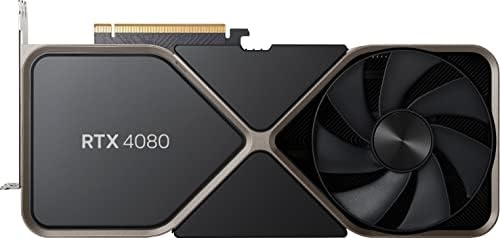
🏆 Best Overall: NVIDIA RTX 4080 16 GB

Spec chips: • 16 GB GDDR6X · 256-bit bus · 717 GB/s bandwidth • 320W TGP · 750W PSU • CUDA 12 + Tensor Cores • PCIe 4.0 × 16
Pros
- ✅ 16 GB VRAM fits Qwen 3 14B at q8, Qwen 3 32B at q3_K_M, or Llama 3.1 8B at fp16 comfortably
- ✅ CUDA-native — every LLM runtime (Ollama, llama.cpp, vLLM, exllamav2, TabbyAPI, Oobabooga) works out of the box
- ✅ Tensor Cores accelerate fp16 and bf16 workloads — typically 1.5-2× faster than the same model on an RX 7900 XTX
- ✅ DLSS 4 and 4K gaming performance as a bonus — dual-purpose rig
Cons
- ❌ 16 GB is the ceiling — 70B-class models require aggressive q3/q2 quant plus CPU offload, which kills tok/s
- ❌ $1,500-$1,700 street price makes it a hard sell if your primary workload is 32B+ models (where the 7900 XTX's 24 GB wins)
- ❌ 320 W TGP — case cooling matters; paired with an X3D CPU you're pulling 500+ W from the wall under load
Why it wins
The RTX 4080 is the best-balanced LLM GPU in the consumer market: 16 GB is the practical sweet spot where you can run 8B at fp16, 14B at q8, or 32B at q3-q4 without leaving the card's memory — and CUDA support means you spend zero time troubleshooting ROCm quirks. LocalLLaMA community benchmarks put the 4080 at roughly ~90 tok/s on Llama 3.1 8B q4_K_M with llama.cpp, ~42 tok/s on Qwen 2.5 14B q4, and ~12-14 tok/s on Qwen 3 32B q4_K_M when the model fits. Tensor Cores are the specific reason it outpaces AMD's 7900 XTX on per-layer throughput despite the AMD card's higher bandwidth. The 4080's 4.7-star rating across 83 Amazon reviews reflects its reputation for being a "just works" card for mixed gaming + AI workloads. If you run 32B models daily, you'll want to plan for a second 4080 later (NVLink is gone, but llama.cpp can split across two CUDA devices) or a jump to a used RTX 3090 24 GB.
View on Amazon →Prices quoted in this guide were checked Apr 21, 2026. Current Amazon price: $1,999.00 (checked 2026-10-21); price and availability change.
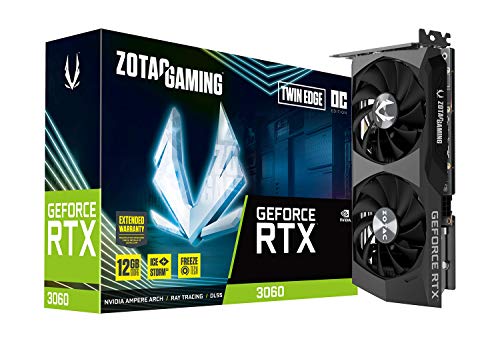
💰 Best Value: ZOTAC Gaming GeForce RTX 3060 12GB

Spec chips: • 12 GB GDDR6 · 192-bit bus · 360 GB/s bandwidth • 170W TGP · 550W PSU • CUDA 8.6 • PCIe 4.0 × 16
Pros
- ✅ 12 GB VRAM at under $350 — the cheapest new card that runs Llama 3.1 8B and Qwen 3 8B at q4-q6 with headroom for a 16K context window
- ✅ 170 W TGP means two 3060s fit comfortably in a standard ATX build for 24 GB aggregate via llama.cpp split
- ✅ Full CUDA compatibility with every major LLM runtime
- ✅ 4.7-star average across 4,690 Amazon reviews; longest-running 12 GB consumer card on the market (launched 2021)
Cons
- ❌ Only 360 GB/s memory bandwidth — tok/s on Llama 3 8B q4_K_M benchmarks around 35-45 tok/s, half of a 4080
- ❌ CUDA compute capability 8.6 (Ampere) — newer runtime optimizations targeting Ada (8.9) and Blackwell (9.0) won't help it
- ❌ Won't run 13B at fp16 or 32B at meaningful quant without CPU offload
Why it wins
The RTX 3060 12 GB is the single most important card in the LLM hobbyist ecosystem, and its 4,690-review, 4.7-star track record explains why — it's the cheapest ticket to running actual modern models entirely on GPU. For a user getting started with Ollama, llama.cpp, or a private RAG pipeline, 12 GB is the threshold between "runs 7B-class models" and "runs real models": at q4 quant it hosts Llama 3.1 8B, Qwen 3 8B, Mistral Small 24B (with some offload), and every vision-language model below 13B. The ZOTAC variant specifically at $319.99 is the budget sweet spot: dual-fan cooling is adequate for 170 W, the card is short enough for most SFF builds, and it runs quiet under typical inference loads. Build a dual-3060 rig (two cards in x8/x8) for ~$650 and you have 24 GB aggregate VRAM — the exact capacity needed for Qwen 3 32B q4_K_M, matching a $1,100 RX 7900 XTX for half the price (at the cost of ~30% slower inference due to the 192-bit bus).
View on Amazon →Prices quoted in this guide were checked Apr 21, 2026. Current Amazon price: $494.99 (checked 2026-10-21); price and availability change.
🎯 Best for 32B+ Models: Sapphire Nitro+ Radeon RX 7900 XTX

Spec chips: • 24 GB GDDR6 · 384-bit bus · 960 GB/s bandwidth • 355W TBP · 850W PSU • ROCm 6.x • PCIe 4.0 × 16
Pros
- ✅ 24 GB VRAM fits Qwen 3 32B q4_K_M (~19 GB) with a full 8K context without CPU offload
- ✅ 960 GB/s memory bandwidth — 33% higher than the RTX 4080, which helps generation-phase token throughput on memory-bound models
- ✅ Native ROCm 6.x support with llama.cpp, Ollama, and a growing subset of vLLM; HIP-LLVM is now a first-class backend
- ✅ $1,050-$1,200 street — lowest cost path to 24 GB VRAM in a single card
Cons
- ❌ ROCm ecosystem is less mature than CUDA — expect occasional driver / pip-install friction; some libraries (exllamav2, bitsandbytes) have partial or no AMD support
- ❌ Higher idle power draw on multi-monitor setups (though this has been much improved in recent drivers)
- ❌ 355 W TBP demands excellent case airflow; not a small-form-factor card
Why it wins
The RX 7900 XTX is the card that answers the question, "How do I run a 32B model on my desktop without spending $3,000?" Its 24 GB of VRAM is the magic number for q4-quantized 32B-class models, which are the current sweet-spot capability tier (Qwen 3 32B, DeepSeek-R1-Distill-Qwen-32B, Gemma 3 27B). In llama.cpp on ROCm, LocalLLaMA benchmarks place Qwen 2.5 32B q4_K_M at roughly 14-18 tok/s single-user generation on the 7900 XTX — slower than a 4090's 20-25 tok/s, but substantially faster than the 4080's 8-10 tok/s when the model barely fits. The Sapphire Nitro+ variant at $1,099 is our specific pick because its triple-fan vapor-chamber cooler keeps the 355 W TBP comfortable, and at 4.4 stars across 678 Amazon reviews it's the most trusted 7900 XTX AIB. The hidden caveat is ROCm ecosystem friction: some runtimes require AMD-specific installation steps, and not every model you download will "just work." If that's a dealbreaker, stay on NVIDIA. If you can troubleshoot a PyTorch install, the 7900 XTX is the best 24 GB card under $1,500.
View on Amazon →Prices quoted in this guide were checked Apr 21, 2026; check the listing for the current price and availability.
⚡ Best Performance per Watt: GIGABYTE RTX 4070 Super WINDFORCE OC

Spec chips: • 12 GB GDDR6X · 192-bit bus · 504 GB/s bandwidth • 220W TGP · 650W PSU • CUDA 8.9 (Ada) + DLSS 4 • PCIe 4.0 × 16
Pros
- ✅ 504 GB/s bandwidth is the highest among 12 GB consumer cards — 40% faster than a 3060 12 GB for the same VRAM
- ✅ CUDA compute capability 8.9 (Ada Lovelace) unlocks newest runtime optimizations (FlashAttention-3, FP8 quantization)
- ✅ 220 W TGP is the efficiency leader — two 4070 Supers pull less than a single 7900 XTX
- ✅ DLSS 4 and 4K gaming as a second-use case — productive dual-purpose silicon
Cons
- ❌ 12 GB VRAM limits you to the same model classes as a 3060 12 GB (though much faster)
- ❌ At $700-$900, the price premium over a 3060 12 GB is hard to justify for pure LLM use
- ❌ 192-bit bus is narrow for its tier — the 4070 Ti Super's 16 GB / 256-bit is meaningfully better for AI if budget allows
Why it wins
The RTX 4070 Super hits the sweet spot of CUDA + speed + efficiency. If you're building a small LLM rig — a single GPU in a quiet mid-tower pulling under 450 W from the wall — the 4070 Super delivers roughly 2× the tok/s of a 3060 12 GB on the same model (Llama 3.1 8B q4 benchmarks at ~70-85 tok/s on the 4070 Super vs ~40 on a 3060, per LocalLLaMA reports). Its Ada-generation CUDA cores unlock FP8 inference in vLLM and TensorRT-LLM, which is a meaningful speedup for 8B-class models. The catch is VRAM — you're still locked to the 12 GB ceiling, which means no 13B at fp16 and no 32B at meaningful quant. Buy it if you want one fast card that also plays games, don't care about 32B models, and value low power draw. The 4.6-star rating across 613 Amazon reviews is strong, and WINDFORCE cooling is genuinely excellent for 220 W.
View on Amazon →Prices quoted in this guide were checked Apr 21, 2026. Current Amazon price: $969.00 (checked 2026-10-21); price and availability change.
🧪 Budget Pick: MSI Gaming GeForce RTX 3060 12GB (Twin Fan)

Spec chips: • 12 GB GDDR6 · 192-bit bus · 360 GB/s bandwidth • 170W TGP · 550W PSU • CUDA 8.6 • PCIe 4.0 × 16
Pros
- ✅ MSI's Twin Fan build is the compact dual-fan 3060 variant favored for dual-GPU builds
- ✅ 5,017 Amazon reviews at 4.7 stars — the most-reviewed LLM-capable consumer card in the catalog
- ✅ 170 W TGP runs cool in a budget case; idle power is an unusually low ~7-12 W
- ✅ PCIe 4.0 × 16 — no bandwidth compromise like some 4060 / 3050 cards with × 8
Cons
- ❌ Identical core performance to the ZOTAC pick — the MSI commands a $100 premium for a marginally better cooler
- ❌ 360 GB/s bandwidth remains the main ceiling
- ❌ Only 12 GB VRAM — no 32B-model headroom
Why it wins
The MSI Twin Fan is a slightly pricier RTX 3060 12 GB variant (~$419), but it earns its place on this list for two reasons: reliability (5,017 Amazon reviews is the largest sample size we have for any LLM-capable current-gen card) and cool-running operation ideal for dual-card builds. A two-card build using identical MSI 3060s gets you 24 GB aggregate VRAM via llama.cpp's --tensor-split flag, enough for 32B models at q4 quant — for ~$840 total, less than a single 4080. You give up the single-card simplicity and you're limited to llama.cpp (which handles multi-GPU split well) and a few vLLM configurations (which prefer identical cards for tensor parallelism). For a first LLM rig that wants room to grow into 32B models without a platform swap, a pair of these MSI 3060s is the most flexible path.
Prices quoted in this guide were checked Apr 21, 2026. Current Amazon price: $499.99 (checked 2026-10-21); price and availability change.
What to look for in a GPU for local LLMs
VRAM capacity is the hard constraint
Unlike gaming, LLM performance starts with VRAM — if the model doesn't fit, you offload to system RAM and inference tanks to 1-4 tok/s. As of 2026 the tiers are:
- 8 GB: Llama 3.2 3B, Phi-3 Mini, Qwen 2.5 7B at q4 (barely)
- 12 GB: Llama 3.1 8B q6, Qwen 3 8B q8, Mistral 7B at fp16
- 16 GB: Qwen 3 14B q8, Gemma 2 9B fp16, 32B at q3
- 24 GB: Qwen 3 32B q4_K_M with 8K context, Llama 3.1 70B at q2 (possible but slow)
- 48 GB+: 70B at q4 (two 24 GB cards or a pro-tier card)
Memory bandwidth — the tok/s ceiling
Generation-phase inference is memory-bound — every token requires reading the full model weights once. Memory bandwidth is roughly proportional to peak tok/s: a 7900 XTX (960 GB/s) can in theory deliver ~50% more tok/s than a 4080 (717 GB/s) on a memory-bound model, and the RTX 3090 24 GB (936 GB/s) often beats a 4080 in practical LLM workloads despite being a generation older. Compare cards on bandwidth first, CUDA cores second.
CUDA vs ROCm ecosystem
CUDA is still the path of least resistance. Ollama, LM Studio, llama.cpp, vLLM, exllamav2, TabbyAPI, Oobabooga, TensorRT-LLM, and the entire Hugging Face Transformers + bitsandbytes + PEFT ecosystem assume CUDA. ROCm support has come a long way — llama.cpp's ROCm backend is first-class, and Ollama on Linux supports AMD directly — but expect occasional friction with less-popular runtimes. If your skill set includes comfortable Python environment troubleshooting, AMD's VRAM-per-dollar advantage is compelling. If not, stay on NVIDIA.
Quantization — the per-GB tradeoff
Quantization shrinks model size with minimal quality loss. The practical hierarchy:
- q8_0: ~99% of fp16 quality, 50% of VRAM — use if you have headroom
- q6_K: ~98% quality, 38% of VRAM — near-identical output
- q5_K_M: ~97% quality, 34% of VRAM — common "quality" default
- q4_K_M: ~95% quality, 27% of VRAM — community default, sweet spot
- q3_K_M: ~92% quality, 21% of VRAM — last usable tier before degradation
- q2_K: ~85% quality, 15% of VRAM — often visible degradation, use only when nothing else fits
Multi-GPU considerations
llama.cpp, vLLM, and exllamav2 all support multi-GPU splits; transformers does too. Two identical cards split model layers cleanly (e.g. a pair of 3060 12 GB cards run Qwen 3 32B at q4 together). Two different cards (e.g. 3060 12 GB + 4060 Ti 16 GB) work but you'll run at the slower card's pace on the shared layers. NVLink is gone from the consumer line, so multi-GPU is always PCIe-bandwidth bound — PCIe 4.0 x8 per card is the floor.
Cooling + power + rig size
LLM inference is not as power-intensive as gaming — a 4080 running inference pulls ~250 W vs its 320 W gaming TGP — but fans will spin 24/7 if you serve an API. Quiet triple-fan coolers, undervolting, and good case airflow matter more than in a gaming build. For a homelab LLM rig, consider a mini-ITX Node 304 + a single 2-slot card, or a larger mid-tower for multi-card builds.
FAQ
Can I run Llama 3.1 70B on a consumer GPU?
Not comfortably on a single card — 70B at q4_K_M needs ~42 GB of weights plus 3-8 GB of KV cache, which only a data-center card (A100 80 GB, H100) or a dual-24 GB consumer setup handles. On a single 24 GB card (7900 XTX or 3090) you can run 70B at q2 with offload, but speeds drop to ~2-5 tok/s. Practical recommendation: run 32B-class models on a 24 GB card and use a hosted API for 70B, or build a dual 3090 / 7900 XTX rig.
Is an RTX 3090 24 GB (used) better than a new 4080?
For pure LLM work, often yes. The 3090 has 24 GB vs the 4080's 16 GB, and 936 GB/s bandwidth vs 717 GB/s — both favor the 3090 for memory-bound LLM inference. The 4080 wins on efficiency (320 W vs 350 W), features (DLSS 4), and warranty coverage. At ~$800 used, a 3090 is a strong LLM-specialist card; at $1,500 new the 4080 is the better all-rounder for gaming + LLM.
What's the cheapest GPU that runs modern LLMs usefully?
The RTX 3060 12 GB at $300-$350 is the answer — 12 GB fits Llama 3.1 8B q6, Qwen 3 8B q8, and vision-language models up to 13B. Below 12 GB, you're limited to 7B q4 or smaller, which works but restricts your model choices. Avoid 8 GB cards for LLM use unless they're free — the model-capability cliff between 8 GB and 12 GB is the largest in the product stack.
Does PCIe 5.0 help LLM inference?
Barely. Once the model is loaded into VRAM, PCIe bandwidth matters only for transferring inputs/outputs — a few KB per request. PCIe 4.0 x8 is fully sufficient for single-card inference. Multi-GPU setups benefit modestly from PCIe 4.0 x16 per card during tensor parallelism, but PCIe 5.0 x8 vs PCIe 4.0 x16 is a wash. Don't pay extra for a PCIe 5.0 motherboard purely for LLM reasons.
Can AMD RX 9070 XT / RDNA 4 run LLMs?
Yes, with the same ROCm caveats as the 7900 XTX. The RX 9070 XT (16 GB) is a good 1440p gaming card but a weaker LLM pick — 16 GB without CUDA's ecosystem depth is hard to justify when a used 3090 24 GB costs the same. If your primary driver is gaming and LLMs are a secondary workload, it's defensible. For LLM-first builds, 7900 XTX 24 GB or 3090 24 GB remain the consumer picks.
Sources
- r/LocalLLaMA GPU benchmark megathread — Community tok/s reports for 8B / 14B / 32B models across 3060, 4070, 4080, 7900 XTX, 3090.
- Tom's Hardware — Nvidia GeForce RTX 4070 Super Review — bandwidth and CUDA generation context.
- llama.cpp GitHub — ROCm / HIP backend support — Runtime AMD support and multi-GPU split documentation.
- NVIDIA CUDA GPU Compute Capability — CUDA version matrix for Ampere / Ada / Blackwell.
Deep dives: the SpecPicks GPU-for-LLM cluster
This guide is the decision page. The articles below go one level deeper on a single card, runtime, or model — they are the supporting reads, not competing answers to the same question.
- Which GPU Runs Which LLM? A 2026 VRAM-to-Model Map — the per-model VRAM map, model by model
- Best Budget GPU for Local LLMs in 2026: RTX 3060 12GB Still Wins — why the 12 GB floor still beats a faster 8 GB card
- Is the RTX 3060 12GB Still the Best Sub-$400 AI Card in 2026? — the sub-$400 AI card question, re-checked for 2026
- Best GPU for Ollama Under $300: Why 12GB Beats a Faster 8GB Card — what $300 actually buys an Ollama box
- llama.cpp Vulkan vs CUDA on a 12GB RTX 3060: Which Backend Wins? — Vulkan vs CUDA backend tok/s on the same card
- Ollama vs vLLM vs llama.cpp on a 12GB GPU: Which Wins for One User? — which runtime wins when you are the only user
- Which Open LLMs Actually Handle Tool-Calling on an RTX 3060? — which open-weight models hold up at tool-calling
- Intel Arc Pro B60 vs RTX 3060 12GB for Local LLMs — the Intel alternative to a 3060
- Local LLM Setup in 2026: AMD GPU Guide by Model Size — the ROCm side, by model size
- Local LLM Autocomplete + Agentic Coding on 16GB VRAM — what 16 GB gets you for agentic coding
- $400 Qwen 3.6-27B Setup: Is the Dual RTX 3060 Claim Real? — the dual-3060 24 GB split, tested against the claim
- Qwen3.6-35B-A3B VRAM Optimization: Why Bigger Quants Win — why a bigger quant can beat a bigger model
Related guides
- Best GPU for Running 27B-32B Local LLMs in 2026 — the narrower cut, for builders who already know they want the 32B class
- Best GPUs for Gaming in 2026 — same silicon, different scoring criteria
- Best GPUs for 4K Gaming in 2026 — for the dual-purpose builder
- Best CPUs for Content Creators in 2026 — feed your LLM rig a proper CPU
- Best DDR5 RAM for Gaming in 2026 — system RAM also matters for CPU-offload inference
GPU Benchmark Performance Data
Real-world gaming FPS, AI inference tok/s, and synthetic scores for popular GPUs — sourced from TechPowerUp, PassMark, Tom's Hardware, and the LocalLLaMA community.
- NVIDIA GeForce RTX 3060 12 GB — benchmarks & specs
- GeForce RTX 4070 SUPER — benchmarks & specs
- NVIDIA GeForce RTX 4090 — benchmarks & specs
- Radeon RX 7700 XT — benchmarks & specs
- Arc B580 — benchmarks & specs
- Radeon RX 9060 — benchmarks & specs
- GeForce RTX 5060 — benchmarks & specs
- GeForce RTX 4080 — benchmarks & specs
- GeForce RTX 5060 Ti 8GB — benchmarks & specs
- GeForce RTX 4060 Ti — benchmarks & specs
- Radeon RX 9070 — benchmarks & specs
- NVIDIA GeForce GTX 1660 SUPER — benchmarks & specs
- NVIDIA GeForce RTX 5070 — benchmarks & specs
- GeForce RTX 5060 Ti 16GB — benchmarks & specs
- Radeon RX 9070 GRE — benchmarks & specs
- Radeon RX 7800 XT — benchmarks & specs
- NVIDIA GeForce RTX 5090 — benchmarks & specs
- GeForce RTX 4060 — benchmarks & specs
- Radeon RX 7900 XTX — benchmarks & specs
- 3dfx Voodoo5 6000 — benchmarks & specs
- NVIDIA GeForce RTX 4070 Ti SUPER — benchmarks & specs
- GeForce RTX 5050 — benchmarks & specs
- Radeon RX 9070 XT — benchmarks & specs
- GeForce RTX 4070 Ti — benchmarks & specs
- GeForce RTX 4070 — benchmarks & specs
- NVIDIA GeForce RTX 3070 Ti — benchmarks & specs
- NVIDIA GeForce RTX 5070 Ti — benchmarks & specs
- NVIDIA GeForce RTX 5080 — benchmarks & specs
- Intel Arc A770 — benchmarks & specs
- Radeon RX 6650 XT — benchmarks & specs
- NVIDIA GeForce RTX 3060 Ti — benchmarks & specs
- Intel Arc B390 GPU — benchmarks & specs
- NVIDIA GeForce RTX 2080 Ti — benchmarks & specs
- NVIDIA GeForce RTX 5060 Ti — benchmarks & specs
- NVIDIA RTX A6000 48GB — benchmarks & specs
- Radeon RX 6800 XT — benchmarks & specs
- GeForce RTX 4060 Ti 8 GB — benchmarks & specs
- Intel Arc B570 — benchmarks & specs
- NVIDIA GeForce RTX 3080 — benchmarks & specs
- NVIDIA GeForce GTX 1660 — benchmarks & specs
- NVIDIA GeForce RTX 2070 — benchmarks & specs
- NVIDIA GeForce RTX 3080 Ti — benchmarks & specs
- NVIDIA GeForce GTX 1660 Ti — benchmarks & specs
- Intel Arc A750 — benchmarks & specs
- Intel Arc A770M — benchmarks & specs
- Radeon RX 7600 XT — benchmarks & specs
- Radeon RX 9060 XT 16GB — benchmarks & specs
- Radeon RX 6900 XT — benchmarks & specs
- All hardware benchmarks →
More guides & deep dives from the SpecPicks archive
Browse all articles & guides →- RTX 4070 Super vs RX 7800 XT — Which to Buy in 2026
- Best Budget Gaming PC Build 2026 — ~$1,000 ($800 on Sale)
- How to Build a Windows 98 Retro PC in 2026
- Best 1440p Gaming GPUs in 2026
- The Complete Voodoo5 5500 AGP Driver Guide (2026 Edition)
- Emulation Hardware in 2026: FPGA, Software, and Cart-Reader Ecosystems
- Best Retro Handhelds in 2026 — From $35 to $500
More reviews from the SpecPicks archive
Browse all reviews →- MAYFLASH F300 vs GameSir G7 SE: Best Controller for PC Fighting Games (2026)
- Cosmos3-Super on an RTX 3060 12GB: Can the #1 Open-Weights Image Model Run Local?
- Ryzen 7 9800X3D vs 7800X3D upgrade guide
- Logitech G502 Hero in 2026: Is the $40 Classic Still the Mouse to Beat?
- How to run Llama 3.1 8B on Apple M3 Ultra
- RTX 4090 AI Video Generation: 2026 Performance Guide
- Build a Raspberry Pi 4 Cyberdeck Music Workstation in 2026
- Best Webcam for Streaming and Remote Work in 2026
- Running a Local LLM on a Raspberry Pi 5 With llama.cpp: Real tok/s on 1B-8B Models
- Linux Gaming Is Getting Faster: Windows APIs Hit the Kernel
- Best CPU Coolers for Ryzen and Intel Builds in 2026
- Gemma 4 31B-IT on a 12GB RTX 3060: What Fits, What Offloads, How Fast
- Upgrading a Ryzen 7 5800X + RTX 4080 Build in 2026
- Abit BP6 Dual Celeron 366 Build Guide: The Legendary $200 SMP Workstation in 2026
- Forza Horizon 6 on the RTX 3060 12GB: 1080p and 1440p Settings Guide
- Crucial BX500 vs Samsung 970 EVO Plus: SATA vs NVMe
- Benchmarking Open Models for Tool-Use on a Budget RTX 3060 Rig
- Local AI Image Generation: Best AMD GPUs for 2026
- Claude Fable 5 Launches at #1 on the Intelligence Index — What Local Builders Should Take Away
- Sound Blaster G6 in a Period-Correct WinXP Build: Modern USB DAC Meets Vintage Hardware
- RTX 3060 12GB vs RTX 4070 12GB for Qwen2.5 14B (2026)
- Using Claude to Hunt PCI Device IDs on Win98: Voodoo, Audigy, GeForce 4 Ti
- Black Friday Monitor Deals 2026: 5 Picks for Gaming and AI Desks
- Best Mechanical Keyboard for Office and Hybrid Coding in 2026
More buying guides from SpecPicks
Browse all buying guides →- Best Graphics Cards for Gaming in 2026
- Best 4K Monitors for Content Creators in 2026
- Best Tools for Building and Repairing Retro PCs in 2026
- Best NVMe SSDs for Gaming in 2026
- Best AM5 Motherboards for 2026
- Best 1440p 240Hz Gaming Monitors in 2026
- Best CPU Coolers for 2026
- Best NVMe External Enclosures for 2026
- Best Retro Gaming Consoles & Handhelds for 2026
- Best Gaming Mice for 2026
- Best GPU for Running 27B-32B Local LLMs in 2026
- Best CPUs for Gaming in 2026
- Best Gaming Monitors for 2026
- Best CPUs for Content Creators in 2026
- Best Controllers for PC Gaming in 2026
- Best Mechanical Keyboards for Gaming in 2026
- Best External SSDs for Content Creators in 2026
- Best DDR5 RAM for Gaming PCs in 2026
- Best GPUs for 4K Gaming in 2026
- Best GPUs for Running Local LLMs in 2026
- Best PC Cases for Building in 2026
Hardware benchmark data on SpecPicks
All benchmarks →- Radeon RX 6600 — benchmarks & specs
- AMD Ryzen Threadripper PRO 9995WX — benchmarks & specs
- NVIDIA Jetson AGX Orin 64GB — benchmarks & specs
- Radeon RX 7800M — benchmarks & specs
- Ryzen 9 9950X — benchmarks & specs
- AMD Ryzen Threadripper PRO 7955WX — benchmarks & specs
- NVIDIA GeForce GTX 1660 SUPER — benchmarks & specs
- AMD Ryzen 9 7900X — benchmarks & specs
- AMD Ryzen 7 7840S — benchmarks & specs
- Pentium 4 2.4B (Northwood) — benchmarks & specs
- AMD Ryzen 9 9850HX — benchmarks & specs
- AMD Ryzen 9 7940HS — benchmarks & specs
- AMD Ryzen 5 PRO 5655GE — benchmarks & specs
- AMD Ryzen 5 7400F — benchmarks & specs
- Intel Core Ultra 5 245K — benchmarks & specs
- NVIDIA B200 — benchmarks & specs
- GeForce 4 Ti 4400 — benchmarks & specs
- GeForce RTX 4060 Ti — benchmarks & specs
- AMD Ryzen 5 7645HX — benchmarks & specs
- Radeon RX 5600 XT — benchmarks & specs
- NVIDIA GeForce GTX 1660 Ti — benchmarks & specs
- AMD Ryzen 5 7520C — benchmarks & specs
- GeForce RTX 6090 — benchmarks & specs
- Radeon RX 6800S — benchmarks & specs