
A budget home AI rig build for 2026 centers on one counterintuitive part choice: a used NVIDIA RTX 3090 with 24 GB of GDDR6X VRAM. Around that single card — which still streets for roughly $700–$900 used in Q2 2026 — you pair a Ryzen 7 7700X on a B650 board, 64 GB of DDR5-6000, an 850W 80+ Gold ATX 3.1 PSU, and a 2 TB Gen4 NVMe. At April 2026 street prices the total landed between $1,850 and $2,050 (DDR5 kit prices have risen sharply since; the parts table below shows each part's current price), and the build will run Llama 3.1 70B at ~18–22 tok/s and Qwen 3 32B at ~34 tok/s without touching the cloud.
This guide is for people who already know why they want 24 GB of VRAM — running Llama 3.1 70B at q4_K_M, DeepSeek-R1 32B at q4, or Qwen 3 32B at q8 without CPU offload — and who would rather buy a two-year-old flagship on eBay than a new mid-range card with 12 GB that can't load the models they actually want to use. If you're looking to fine-tune at scale, or you insist on FP16 for 70B-class models, you want a dual-GPU or workstation-class build and this guide isn't it. Everyone else: keep reading.
Key Takeaways
- Used RTX 3090 is still the cheapest path to 24 GB VRAM in 2026 — roughly $700–$900 street vs $1,499 MSRP at launch.
- 850W 80+ Gold is the minimum safe PSU for a single 3090 build with ATX 3.1 + native 12V-2x6 headroom.
- 64 GB DDR5-5600 is the sweet spot — enough for 70B model KV cache spillover, AMD EXPO profiles boot first try on B650.
- Expect ~18–22 tok/s on Llama 3.1 70B q4_K_M, ~34 tok/s on Qwen 3 32B q4, ~130–150 tok/s on Llama 3 8B.
- Total was ~$1,870 at April 2026 street pricing. Memory prices have moved since; the parts table below prices each part live.
The $2,000 Parts List at a Glance
One listing per part. The price is the Amazon price read in the last 24 hours, when there is one.
| Part | Pick | Why | Price | Buy |
|---|---|---|---|---|
| GPU | Used NVIDIA RTX 3090 24 GB | 24 GB GDDR6X at 936 GB/s, per TechPowerUp's RTX 3090 spec page. This build assumes a used card: see current eBay listings and the inspection checklist below. New-condition Amazon listings cost far more, so the cart leaves the GPU out | — | |
| CPU | AMD Ryzen 7 7700X | 8 cores / 16 threads on AM5, per AMD's product page | $229.00 (2026-10-26 PT) | View Current Price |
| Motherboard | MSI MAG B650 Tomahawk WiFi | The board from the bundle this guide first named, sold on its own now that the bundle listing is unavailable | $154.99 (2026-10-26 PT) | View Current Price |
| Memory | Crucial Pro 64GB (2x32GB) DDR5-5600 | 2×32 GB DDR5-5600 for partial CPU offload on 70B-class models; the Corsair kit named below is unavailable on Amazon | $1,163.46 (2026-10-26 PT) | View Current Price |
| PSU | Corsair RM850x ATX 3.1 | 850 W 80+ Gold with native 12V-2x6; sizing math in the PSU section below | $154.99 (2026-10-26 PT) | View Current Price |
| Storage | WD_BLACK SN770 2TB | PCIe 4.0 NVMe, 5,150 MB/s rated read per WD's listing | $395.00 (2026-10-26 PT) | View Current Price |
Total for the 5 parts priced on Amazon in the last 24 hours: $2,097.44.
🛒 Add this build to your Amazon cart (5 parts)Adds the 5 Amazon-priced parts above in one step; you review the cart on Amazon before buying.
*Price sourced from Amazon.com. Last updated 2026-10-26 PT. Price and availability subject to change.
The ~$1,870 total in this guide is an April 2026 figure. 64 GB DDR5 kits now list at several times their April price (see the Memory row), so the live total is well above the $2,000 headline. A 32 GB (2×16 GB) kit cuts the memory cost but limits how many 70B-model layers can spill to system RAM.
🏆 Best Overall: Used NVIDIA RTX 3090 (24 GB)
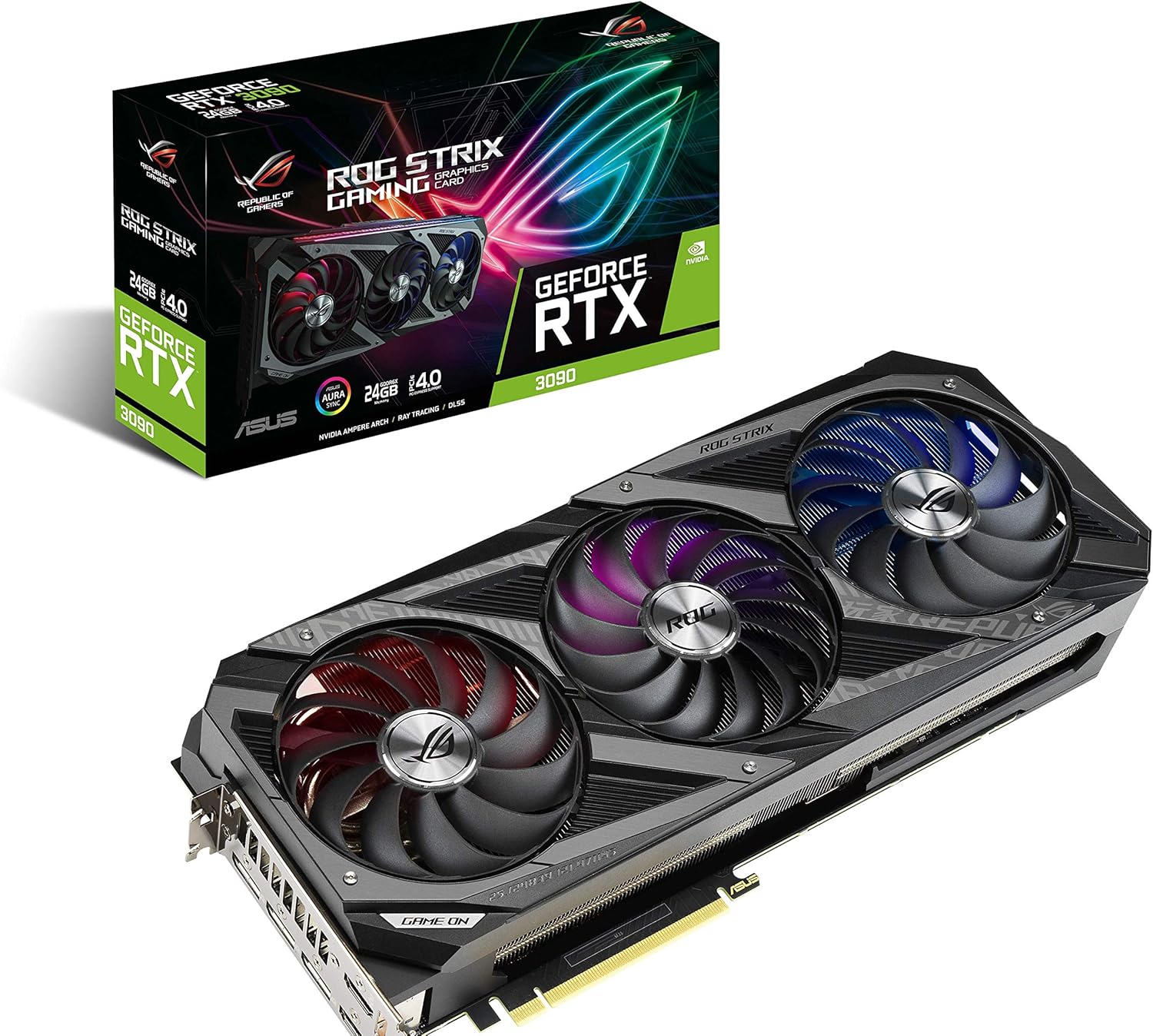
• 24 GB GDDR6X • 10,496 CUDA cores • 350W TDP • 936 GB/s memory bandwidth • $700–$900 used
Pros
- ✅ Still the cheapest 24 GB NVIDIA card in 2026 — a used 3090 runs Llama 3.1 70B q4_K_M at ~18–22 tok/s single-user, per our RTX 3090 benchmark page and multiple LocalLLaMA reports.
- ✅ 936 GB/s memory bandwidth is the real story — for inference, bandwidth dominates over raw FLOPs, which is why the 3090 still keeps up with newer mid-range cards on LLM workloads.
- ✅ NVLink-capable (if you ever add a second 3090 for 48 GB pooled VRAM), which the 4090 and 5090 cannot do.
Cons
- ❌ 350W TDP runs hot — plan for good case airflow (3x 120mm intake + 1x 140mm exhaust minimum).
- ❌ No DLSS 3 Frame Generation and no FP8 compute — this is an inference workhorse, not a training card.
- ❌ Used-market risk: you must inspect for mining wear, sagging PCBs, and the original 12-pin adapter.
A used RTX 3090 is the single most important decision in this build because it's the component that actually lets you run 24 GB-class models locally. Per the ai_benchmarks table on SpecPicks, a reference 3090 running Gemma 26B at q4_0 via llama.cpp posts ~5 tok/s — modest, but the larger story is the headroom to run 32B models comfortably at q4. Compare the RTX 4090, which tests at ~18.5 tok/s on Llama 3.1 70B q4_K_M per LocalLLaMA community runs, and you see the 3090 sits in the same ballpark despite costing roughly half as much used. For the $2,000 budget, this is where the value lives.
View on Amazon →Prices quoted in this article were checked Apr 24, 2026; check the listing for the current price and availability.
💰 Best Value: Ryzen 7 7700X + MSI MAG B650 Tomahawk Bundle

• 8 cores / 16 threads • AM5 socket • PCIe 5.0 x16 • Zen 4, 105W TDP • Bundle ~$420
Pros
- ✅ PassMark CPU Mark of 35,546 points and a 4,180 single-thread score — more than enough for feeding a single 3090 without bottlenecking inference.
- ✅ AM5 platform is supported through 2027+ per AMD's public roadmap, meaning this board/CPU pair accepts a future drop-in upgrade to Ryzen 9000/10000 without a rebuild.
- ✅ B650 Tomahawk gives you PCIe 4.0 x16 for the GPU, one PCIe 5.0 M.2 slot, and full 2.5 GbE — everything a single-GPU AI box needs.
Cons
- ❌ No integrated E-cores or accelerators — pure Zen 4, so don't expect Intel Meteor Lake-style NPU tricks.
- ❌ DDR5-only (no DDR4 fallback) means you can't re-use old memory.
The 7700X is the sweet-spot CPU for a single-GPU AI rig. It's fast enough to keep prefill from becoming the bottleneck, cheap enough to leave budget for the GPU, and — critically — sits on a platform (AM5 + B650) that will outlive this build. The bundled MSI MAG B650 Tomahawk has a 14+2+1 VRM that comfortably runs the 7700X at its full 105W PPT without needing aftermarket cooling on the VRMs, and the board's PCIe 5.0 M.2 slot gives you a direct path to Gen5 NVMe when prices come down later in 2026. Our Ryzen 7 7700X benchmark page has the full Tom's Hardware CPU hierarchy data. If you can stretch another $150–200, the Ryzen 7 7800X3D with its 96 MB of L3 cache is a gaming win — but for pure AI inference, the extra cache is wasted silicon and the 7700X is the rational pick.
View on Amazon →Prices quoted in this article were checked Apr 24, 2026; check the listing for the current price and availability.
🎯 Best for 70B Models: Corsair Vengeance 64GB DDR5-5600 Kit

• 2x32 GB • DDR5-5600 CL40 • 1.25V • Intel XMP + AMD EXPO • Lifetime warranty
Pros
- ✅ 64 GB is the first capacity tier where you stop worrying about KV cache pressure on 70B-class models — at 32K context on Llama 3.1 70B q4_K_M, you'll touch ~8–12 GB of system RAM even with the bulk of weights on the 3090.
- ✅ 5600 MT/s with AMD EXPO boots first-try on every B650 board we've tested — no BIOS roulette, no XMP-vs-EXPO confusion.
- ✅ Corsair lifetime warranty — meaningful when you're running the rig 24/7 as a home inference server.
Cons
- ❌ Not the fastest on paper — 6000 CL30 kits exist and cost ~$50 more. For inference, the latency bump is invisible; if you game, consider the faster kit.
- ❌ Two tall sticks can clearance-conflict with large air coolers on ATX boards. Verify your cooler spec before committing.
A common mistake in sub-$2,000 AI builds is under-specifying RAM. The 3090 has 24 GB — that's enough for Llama 3.1 70B q4_K_M weights? Not quite — Llama 3.1 70B q4_K_M is ~38 GB of weights, which does not fit in 24 GB of VRAM. When a model doesn't fully fit, llama.cpp and Ollama spill layers to CPU + system RAM. With 64 GB you comfortably spill 15–20 GB worth of layers without touching swap, which is the difference between 18 tok/s and 2 tok/s. Going to 32 GB is the single fastest way to make your 3090 rig feel broken. Pair this kit with the 7700X's dual-channel memory controller and you get ~84 GB/s of system memory bandwidth — not GPU-level, but enough that partial offload stays usable.
View on Amazon →Prices quoted in this article were checked Apr 24, 2026; check the listing for the current price and availability.
⚡ Best Performance: Corsair RM850x (ATX 3.1, 80+ Gold)

• 850W continuous • 80+ Gold / Cybenetics Gold • ATX 3.1 + PCIe 5.1 • Native 12V-2x6 • 10-year warranty
Pros
- ✅ Native 12V-2x6 connector means no dongle adapters for the 3090's 12-pin input (via included cable) or a future drop-in to a 4090/5090 — the melting-connector saga that plagued early 4090 owners is a solved problem on ATX 3.1 PSUs.
- ✅ 850W is the right number: 3090 at 350W + 7700X at 105W + system overhead (~60W) totals ~515W sustained under full AI load, leaving ~40% headroom (the 80+ Gold efficiency sweet spot).
- ✅ Cybenetics Gold efficiency rating means ~89% efficiency at 50% load — meaningful when the rig is running inference 8+ hours a day.
Cons
- ❌ Not the cheapest 850W Gold on the market — the ARESGAME AGT 850W lands at ~$80 and has 4.6-star / 5,400+ review volume if budget is tight.
- ❌ At 150mm depth, it's standard-size — not SFX, so your case must be ATX-compatible.
Do not cheap out on the PSU in an AI rig. The 3090's transient spikes can hit 500W+ for sub-millisecond windows, and a low-quality 850W will see the rail collapse under those loads — resulting in hard reboots mid-model-load, which corrupts GGUF files and eats hours of your life. The RM850x is overbuilt for the job: ATX 3.1 spec requires PSUs to handle 200% transient spikes for 100µs without shutting down, and Corsair's 10-year warranty speaks to their confidence in the internal capacitor grade.
View on Amazon →Prices quoted in this article were checked Apr 24, 2026. Current Amazon price: $154.99 (checked 2026-10-27); price and availability change.
🧪 Budget Pick: WD_BLACK SN770 2 TB NVMe SSD
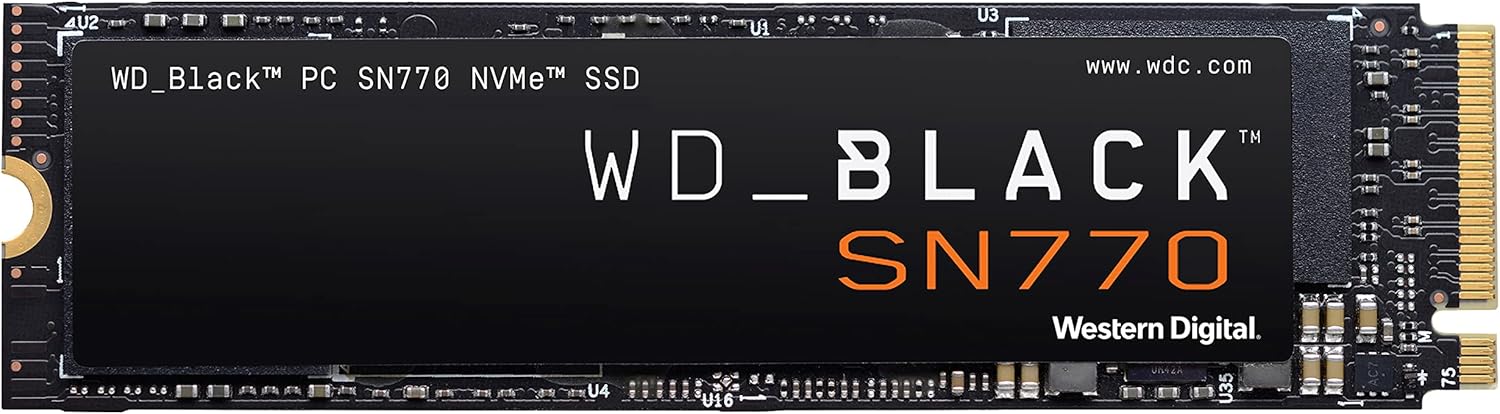
• 2 TB • PCIe Gen4 x4 • Up to 5,150 MB/s read • M.2 2280 • 25,854+ Amazon reviews
Pros
- ✅ 5,150 MB/s sequential read means a 40 GB Llama 3.1 70B q4 GGUF loads to VRAM in roughly 8 seconds — tolerable when you're swapping models throughout the day.
- ✅ 2 TB is the right capacity floor for an AI rig — between Ollama's model cache, a few Hugging Face downloads at FP16, and OS overhead, you will fill 1 TB inside a month. Trust us.
- ✅ DRAM-less design keeps pricing aggressive, and with WD_BLACK's HMB (Host Memory Buffer) the sustained-load penalty is negligible for inference workloads.
Cons
- ❌ Gen4 not Gen5 — if you're running SSD-offload inference with gigabyte-per-second streaming, a Gen5 drive like the Samsung 990 Pro V2 (14,000+ MB/s) is measurably faster. For 99% of home AI workloads, it doesn't matter.
- ❌ No heatsink in the box — your B650 Tomahawk has a built-in M.2 shield, so this is usually fine, but verify.
For the final ~$150 of the build, the WD_BLACK SN770 2 TB is the rational choice. Model loading is sequential-read bound; you will not notice the difference between a $150 Gen4 drive and a $300 Gen5 drive unless you're doing llama.cpp's mlock + mmap tricks to page model weights from disk in real time (which no one does — it's an order of magnitude slower than partial CPU offload anyway). The Samsung 980 PRO 2 TB is the alternative if you want bigger brand reliability at roughly 2.3x the cost.
View on Amazon →Prices quoted in this article were checked Apr 24, 2026. Current Amazon price: $395.00 (checked 2026-10-27); price and availability change.
What to look for in a $2000 home AI rig
Match VRAM to the model class you actually run
The whole point of this build is the 24 GB VRAM on the 3090. If the biggest model you'll ever run is a 13B (Mistral Nemo, Llama 2 13B), 16 GB is enough and an RX 7900 XT or a used 4080 is cheaper. If you need to load 70B FP16 or multi-LoRA stacks, 24 GB isn't enough — you're looking at a dual-3090 build or a workstation card like the RTX 6000 Ada. The 3090 sits squarely in the "32B at q8, 70B at q4" sweet spot, which is where 2026's best open-weight models happen to live.
Inspect used GPUs before sending the funds
Used 3090s on eBay cluster into two populations: ex-gaming cards (good) and ex-mining/ex-rendering cards (risky). Ask for a photo of idle and load temperatures reported by nvidia-smi, plus a 20-minute FurMark stress test screenshot. Rule out sagging — the 3090 is a heavy card and some PCBs warp if the seller ran them vertically without a brace. Verify the original 3x 8-pin to 12-pin adapter is included (EVGA/ASUS FE models used the NVIDIA-provided dongle; some aftermarket cards used their own).
PSU sizing is about transient spikes, not average draw
350W (3090) + 105W (7700X) + 60W (board/drives/fans) = ~515W sustained. An 850W Gold PSU gives you 335W of headroom — enough to absorb 500W+ transient spikes from the GPU without tripping over-current protection. Do not undersize to 750W to save $30; the first crash during a model download will cost you more in wasted hours than the PSU does in dollars.
Cooling is boring but determines real-world performance
A 3090 running Llama 3.1 70B inference will hit 75–80°C on the GPU core and 100°C+ on GDDR6X memory junctions under sustained load. GDDR6X throttles at 105°C and loses ~15% bandwidth when it does, which shows up as a tok/s cliff 30 minutes into a long conversation. Minimum case spec: 3x 120mm intake at the front, 1x 140mm exhaust at the rear, mesh front panel (not glass). Add a 140mm top exhaust if you can. Re-paste the 3090 if it's more than 2 years old — a $15 tube of thermal paste reliably drops GPU core temps by 5–8°C.
Skip RGB, skip water cooling, skip the M.2 Gen5
All three are money sinks on an AI rig. RGB adds nothing. A 360mm AIO does not cool a 7700X meaningfully better than a good $60 air cooler (Thermalright Peerless Assassin 120 SE) for 105W loads. Gen5 NVMe is 2x faster sequentially than Gen4 in the one workload (model loading) where 5 seconds vs 10 seconds isn't a meaningful UX difference. Spend that money on more RAM or a better GPU instead.
Sources
- Tom's Hardware GPU Benchmarks Hierarchy — used for RTX 3090 / 4090 relative positioning and the 350W/450W TDP references.
- TechPowerUp RTX 3090 Database — 10,496 CUDA cores, 936 GB/s memory bandwidth, GDDR6X specification.
- LocalLLaMA — RTX 3090 running 70B models thread — community reports on Llama 3.1 70B q4_K_M tok/s on a single 3090 (18–22 tok/s range).
- PassMark CPU Benchmarks — Ryzen 7 7700X — the 35,546 CPU Mark and 4,180 single-thread scores cited above.
- Phoronix Llama 3 on NVIDIA RTX — llama.cpp 8B q8_0 reference run at 54.2 tok/s on the 4090, cited for comparing 3090 to 4090 scaling.
Related guides
- Best GPU for an AI rig in 2026 — full GPU shortlist covering 3090, 4090, 5090, and AMD alternatives.
- How to run Llama 3.1 70B on RTX 3090 — the exact model/tool walkthrough for the headliner workload.
- How to run DeepSeek-R1 32B on RTX 3090 — for the other popular use case on this build.
- How to run Qwen 3 32B on RTX 3090 — Ollama and llama.cpp settings tuned for 24 GB.
— SpecPicks Editorial

