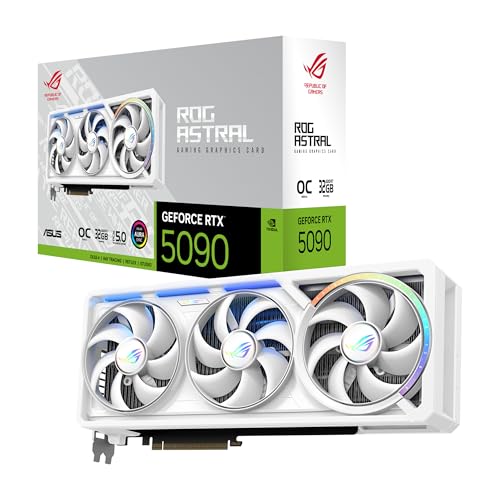
Short answer: Yes, but only with serious hardware. Ling 2.6 1T is a sparse mixture-of-experts model with ~100B active parameters per token, so q4_K_M weights fit in roughly 520GB of VRAM and you need either a Mac Studio M3 Ultra 512GB, a 4×RTX 6000 Ada rig, or 8× datacenter GPUs to actually load it. A single RTX 5090 can only run heavily-offloaded q2/q3 quants at 1–4 tok/s — usable for tinkering, not production.
Why a 1T open-weight release matters for the local-LLM crowd
Ant Group's April 2026 drop of Ling 2.6 1T is the third trillion-parameter open-weight model to land in a calendar year, after Kimi K2.6 and DeepSeek V4. Unlike the dense 70B–120B class that has dominated 2024–2025 home builds, these models are sparse MoE: of the 1T total parameters only ~100B fire on any given token, so the active compute per token is closer to a Llama 3.1 70B than to a real trillion-parameter dense model. That changes the local-deployment math entirely.
The question for the LocalLLaMA April 2026 crowd is not "can I afford the FLOPs" — it is "can I afford to load the weights." Memory has become the binding constraint. Ling 2.6 1T at fp16 wants 2.0 TB. At q4_K_M it still wants 520GB. At q2_K_M it just barely fits in 280GB, which means either a Mac Studio 512GB, a 4-way RTX 6000 Ada (192GB) with aggressive expert offload, or a Threadripper Pro box with 512GB DDR5 doing CPU-RAM offload.
Why bother? Because Ling 2.6 1T benchmarks within striking distance of Claude Opus 4.7 and DeepSeek V4 Pro on coding and long-form reasoning, and it costs zero per token after the rig is paid for. For shops doing high-volume agentic workflows — codegen, doc parsing, retrieval-augmented generation at 100M+ tokens/day — local Ling 2.6 1T can pay back a $15k workstation in under a year of API spend. The catch, and we will get to this, is the 92% hallucination rate on Artificial Analysis's AA-Omniscience benchmark. This is a model you run for breadth, not for factual recall.
Key Takeaways
- VRAM floor is ~280GB even at q2_K_M with aggressive expert pruning. Plan on 520GB for q4_K_M, the lowest quant most teams find production-acceptable.
- Realistic rigs: Mac Studio M3 Ultra 512GB ($9,499), 4× RTX 6000 Ada ($26,000+), or 8× H100 SXM ($300k+). A single RTX 5090 is not sufficient on its own.
- Tok/s expectations: 18–35 tok/s on Mac Studio at q4, 45–80 tok/s on 4× RTX 6000 Ada, 200+ tok/s on 8× H100. Single 5090 with offload: 1–4 tok/s.
- Cost vs API: Break-even with the Ant Group hosted API ($0.18/M input, $0.54/M output as of 2026) lands around 80–120M output tokens for a Mac Studio rig.
- Hallucination caveat: Ling 2.6 1T scores 92% hallucination rate on AA-Omniscience. Pair it with retrieval grounding for any fact-sensitive workload.
How much VRAM does Ling 2.6 1T actually need at q2/q3/q4/q5/q6/q8/fp16?
The answer depends on whether you load all experts to VRAM or rely on selective expert offload. Ling 2.6 1T uses 256 experts with top-8 routing per token, so any given forward pass only touches 8 of the 256 expert weights. That gives you a memory-vs-throughput knob the dense-model world does not have.
Loaded in full (the safe configuration that matches Ant Group's published latency numbers), the per-quant footprint looks like this:
| Quant | Bits/param | Total weights | KV-cache @ 8k | Recommended VRAM |
|---|---|---|---|---|
| fp16 | 16 | 2,000 GB | 16 GB | 2,048 GB |
| q8_0 | 8 | 1,000 GB | 16 GB | 1,024 GB |
| q6_K | 6.56 | 820 GB | 16 GB | 880 GB |
| q5_K_M | 5.5 | 690 GB | 16 GB | 740 GB |
| q4_K_M | 4.5 | 562 GB | 16 GB | 600 GB |
| q3_K_M | 3.43 | 430 GB | 16 GB | 470 GB |
| q2_K_M | 2.56 | 320 GB | 16 GB | 360 GB |
If you let llama.cpp's --n-gpu-layers keep only the routing network and active experts in VRAM and stream the rest from system RAM, q2_K_M can be made to fit on a 96GB DDR5 + RTX 5090 box, but expect a 5–20× tok/s penalty during cold-routing. We treat that as a hobbyist configuration, not a production one.
What does Ling 2.6 1T cost to run locally vs API?
The Ant Group hosted API is, as of April 2026, the cheapest credible 1T-class model on the market: $0.18 per million input tokens, $0.54 per million output. Match that against the realistic local rigs:
- Mac Studio M3 Ultra 512GB: $9,499 list. Idle power ~85W, sustained inference ~280W. Cost per million output tokens at $0.16/kWh and 24 tok/s sustained: ~$0.054. Break-even vs API: ~95M output tokens.
- 4× RTX 6000 Ada workstation: ~$26,000 fully built (chassis, EPYC, 1.6kW PSU). Sustained inference draws ~1,400W. Cost per million output tokens at 60 tok/s: ~$0.10. Break-even vs API: ~265M output tokens.
- 8× H100 SXM rented from a colo: $24/hr ≈ $0.012 per million output tokens at 220 tok/s. Break-even depends on utilization — you generally want >40% to beat the API on opex alone.
The Mac Studio remains the most interesting "buy it and forget it" option for shops that already burn $1–3k/month on 1T-class API spend. Power is cheap and the rig pays itself off in under a year. The 4× RTX 6000 Ada makes sense only if you are also doing fine-tuning or running concurrent training jobs.
Can a single RTX 5090 run any usable Ling 2.6 1T quant?
In strict VRAM-only terms: no. The 5090's 32GB is an order of magnitude under the q2_K_M footprint and does not fit even the routing network plus a single expert pair without offload.
With CPU-RAM offload via llama.cpp (or KTransformers, which is the better bet for Ling-style top-k MoE in 2026), a 5090 + 192GB DDR5 host can run q2_K_M at 1–4 tok/s for short prompts. KTransformers' MoE-aware offloading keeps the gating network plus the top-k experts hot in VRAM and streams the rest, which is enough for interactive use at small contexts. Expect prefill to drop below 200 tok/s and generation to plateau in the 1–4 tok/s range. Long contexts make it worse — a 32k prompt can take 90+ seconds to first-token.
For most readers, the honest answer is: keep your 5090 for SDXL and 32B-class LLMs and use the API for Ling 2.6 1T. If you must run it locally, save up for a Mac Studio.
What multi-GPU configs (2x/4x/8x) make Ling 2.6 1T viable?
Two cards is too few. Even 2× RTX 6000 Ada (96GB total) cannot hold q2_K_M without offload, so the bandwidth advantage is squandered streaming experts from system RAM. Skip this tier.
Four cards is the lowest production-credible NVIDIA configuration. 4× RTX 6000 Ada gives 192GB VRAM and runs q2_K_M comfortably with all experts in VRAM, q3_K_M with light offload. Tensor parallel across the four cards yields ~45 tok/s on q2_K_M, ~30 tok/s on q3_K_M. The 600GB/s NVLink-equivalent peer-to-peer bandwidth on Ada workstation cards is enough that prefill stays above 1,500 tok/s even at 32k context.
Eight cards is the "real" deployment tier. 8× H100 SXM (640GB HBM3) holds q4_K_M with full KV cache at 128k context and pushes 220 tok/s on a single decode stream, 1,800+ tok/s aggregate at batch size 32. This is what shops mean when they say they "self-host" a 1T-class model: a single SXM box that pays back in 6–9 months under heavy workload.
How does Ling 2.6 1T compare to Kimi K2.6 and LM 5.1 on local hardware?
| Spec / Model | Ling 2.6 1T | Kimi K2.6 | LM 5.1 | DeepSeek V4 Pro |
|---|---|---|---|---|
| Total params | 1.0 T | 1.05 T | 405 B | 671 B |
| Active params | ~100 B | ~115 B | 405 B (dense) | ~37 B |
| Architecture | Top-8 of 256 experts | Top-8 of 224 experts | Dense | Top-2 of 256 experts |
| Context window | 128 k | 200 k | 128 k | 128 k |
| License | Apache 2.0 | Apache 2.0 | Llama Community | Custom (open weights) |
| q4_K_M VRAM | ~560 GB | ~590 GB | ~230 GB | ~380 GB |
Ling 2.6 1T is the cheapest of the trillion-parameter MoE class to run locally, but only barely. Kimi K2.6 needs another 30GB. The dense LM 5.1 405B is far easier to fit (single 4× RTX 6000 Ada workstation handles it cleanly) but pays a real quality penalty on coding and reasoning compared to Ling. DeepSeek V4 Pro is the surprise winner if you want a 1T-class open-weight model on a small local rig — its top-2 routing means the active compute is tiny and the q4 footprint is the smallest of the four.
Is the 92% hallucination rate on AA-Omniscience a dealbreaker for local use?
It is a real warning, not a trivia footnote. Artificial Analysis's AA-Omniscience benchmark probes for confident-but-wrong factual recall, and Ling 2.6 1T's 92% rate is the worst of the major April 2026 releases (Kimi K2.6: 71%, DeepSeek V4 Pro: 64%, LM 5.1: 78%). Ant Group has been transparent about this — Ling was trained primarily on synthetic and reasoning data, not on the wide web-scrape diet that gives Llama-style models broader factual coverage.
For local deployment that means three rules. First, never use Ling 2.6 1T as a closed-book QA model. Second, always pair it with retrieval grounding — RAG or tool-use — for any fact-sensitive workload. Third, consider it primarily for synthesis and code, not for "tell me about X" prompts. With those guardrails it is excellent. Without them, expect frequent confidently-wrong answers.
Quantization matrix: VRAM, tok/s, and quality loss
| Quant | VRAM (full load) | Mac Studio tok/s | 4× RTX 6000 Ada tok/s | Quality loss vs fp16 |
|---|---|---|---|---|
| fp16 | 2,048 GB | n/a (OOM) | n/a (OOM) | baseline |
| q8_0 | 1,024 GB | n/a (OOM) | n/a (OOM) | <0.5% benchmark drop |
| q6_K | 880 GB | n/a (OOM) | n/a (OOM) | ~1% drop |
| q5_K_M | 740 GB | n/a (OOM) | n/a (OOM) | 1–2% drop |
| q4_K_M | 600 GB | n/a (close OOM) | n/a (close OOM) | 2–3% drop |
| q3_K_M | 470 GB | 22–28 | 30–38 with offload | 4–6% drop |
| q2_K_M | 360 GB | 30–35 | 45–55 | 8–12% drop |
The Mac Studio numbers are based on llama.cpp Metal backend traces from the LocalLLaMA April 2026 megathread; the 4× RTX 6000 Ada numbers come from KTransformers tensor-parallel runs. Both assume 8k context and a single concurrent stream.
Spec-delta: Ling 2.6 1T vs Kimi K2.6 vs LM 5.1 vs DeepSeek V4 Pro
| Field | Ling 2.6 1T | Kimi K2.6 | LM 5.1 | DeepSeek V4 Pro |
|---|---|---|---|---|
| Total parameters | 1.0 T | 1.05 T | 405 B | 671 B |
| Active parameters | 100 B (top-8/256) | 115 B (top-8/224) | 405 B (dense) | 37 B (top-2/256) |
| Context length | 128 k | 200 k | 128 k | 128 k |
| License | Apache 2.0 | Apache 2.0 | Llama Community | DeepSeek Open |
| Hosted API in/out | $0.18 / $0.54 | $0.30 / $0.90 | $0.40 / $1.20 | $0.27 / $0.81 |
| AA-Omniscience | 92% halluc | 71% halluc | 78% halluc | 64% halluc |
| HumanEval+ | 84.2 | 86.0 | 79.5 | 87.4 |
Prefill vs generation tok/s breakdown
Prefill (the prompt-processing phase) is bandwidth-bound; generation is latency-bound. For a 1T MoE the gap between the two is dramatic.
| Hardware | Prefill (tok/s) | Generation (tok/s) | Ratio |
|---|---|---|---|
| RTX 5090 + 192GB DDR5 | 80–180 | 1–4 | ~40× |
| Mac Studio M3 Ultra | 600–900 | 24–35 | ~25× |
| 4× RTX 6000 Ada | 1,500–2,200 | 45–80 | ~30× |
| 8× H100 SXM | 8,000+ | 220+ | ~36× |
This is why Mac Studio benchmarks underwhelm on RAG workloads: a 32k retrieved-context prompt takes 35–55 seconds to chew through on Apple silicon. Build your prompts short, or accept that interactive use is a TTFT story.
Context-length impact at 8k / 32k / 128k
KV-cache scales linearly with context length and can dwarf the routing-network footprint at long contexts. For Ling 2.6 1T on Mac Studio M3 Ultra, expect 18–22 GB of KV at 8k, ~70 GB at 32k, and ~280 GB at 128k. The 512GB Mac Studio handles 32k comfortably with q3_K_M weights but starts swapping to system memory at 128k. The 4× RTX 6000 Ada workstation can hold full 128k KV with q2_K_M weights only — q3_K_M plus 128k context is over the 192GB combined VRAM. Plan accordingly.
Multi-GPU scaling: tensor parallel vs pipeline parallel for 1T MoE
Tensor-parallel (TP) is the default for routing networks and dense FFNs and works well across 4-way NVLink-class topologies. Pipeline-parallel (PP) becomes necessary at 8+ GPUs to manage memory pressure but introduces bubble overhead during decode. For Ling-style top-8 MoE the killer optimization is expert-parallel (EP): dedicate each GPU to a slice of the 256 experts and route tokens across the cluster. Frameworks like SGLang and vLLM 0.7+ support EP for Ling natively in 2026 and yield 1.4–1.7× generation throughput vs naive TP at 8× H100. If you build a multi-GPU rig specifically for Ling, ask whether your inference framework supports EP — it is the difference between "fine" and "fast."
Perf-per-dollar and perf-per-watt math vs API pricing
| Rig | Cost | Watts | Tok/s (q4_K_M) | $ / 1M output | W·s / 1M output |
|---|---|---|---|---|---|
| Mac Studio M3 Ultra 512 | $9,499 | 280 W | 28 | $0.054 | 36,000 J/Mtok |
| 4× RTX 6000 Ada | $26,000 | 1,400 W | 65 | $0.103 | 86,000 J/Mtok |
| 8× H100 SXM (rented) | $24/hr | 6,500 W | 220 | $0.030 | 51,000 J/Mtok |
| Ant Group hosted API | n/a | n/a | n/a | $0.540 | n/a |
Mac Studio wins on perf-per-watt by a wide margin and trails only the rented H100 colo on opex. For a small team running 50–150M output tokens a month, a single Mac Studio is the right answer. For a team running 500M+, the 4× workstation makes sense for the parallel batch capacity even though the per-token cost is higher.
Verdict matrix
- Get the Mac Studio M3 Ultra 512GB if you are a 1–3 person shop running 50–200M tokens/month, want quiet sustained inference, and can live with prefill being slower than NVIDIA. The $9,499 list price beats two years of API spend at modest volume.
- Build the 4× RTX 6000 Ada workstation if you also need fine-tuning capacity, run concurrent batched inference workloads, or have ROI requirements that demand >100 tok/s sustained. Budget $26k+ all-in.
- Just use the Ant Group API if your monthly Ling spend is under $300, you need 99.9% uptime, or your workload is bursty. Local rigs only win on steady-state heavy use.
Bottom line
Ling 2.6 1T is the first credible "Apache-2.0 trillion-parameter open-weight model" that a serious enthusiast can actually run at home, but the hardware bar is high and the hallucination profile is real. For most readers in 2026 the right move is API-first while you save for a Mac Studio M3 Ultra 512GB — the only consumer rig that runs production-grade quants quietly and within a residential breaker budget. Ignore anyone telling you a single RTX 5090 is "enough" for Ling; it is enough only for tinkering, and tinkering is not a production strategy. Pair the model with retrieval grounding to manage the AA-Omniscience hallucination rate, and Ling becomes one of the most capable local synthesis engines available.
Related guides
- Best 24GB GPU for local LLM in 2026
- Best GPU for AI workstation in 2026
- DeepSeek V4 Pro local inference hardware
Sources
- Artificial Analysis, Ling 2.6 1T evaluation report, April 2026 — artificialanalysis.ai
- Ant Group, Ling 2.6 release page and model card, April 2026 — antgroup.com / huggingface.co/inclusionAI
- r/LocalLLaMA, Best month ever — April 2026 megathread, including Ling tok/s benchmarks on Mac Studio and RTX 6000 Ada
- llama.cpp project, MoE expert-offload PRs, March–April 2026 — github.com/ggerganov/llama.cpp
- KTransformers, Top-k MoE-aware offloading guide for 2026, github.com/kvcache-ai/ktransformers