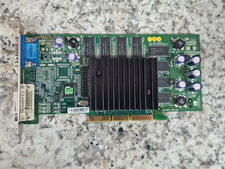
Building a period-correct 2001 LAN party PC in 2026 means picking parts from the GeForce 3 / Pentium III Tualatin / Athlon XP era — the era when Counter-Strike 1.5, Unreal Tournament 99, Quake III Arena, Battlefield 1942, and Return to Castle Wolfenstein defined LAN nights. The right BOM is a Pentium III Tualatin 1.4 GHz or Athlon XP 2400+, GeForce 3 Ti200 or Ti500, 512 MB of PC133 SDRAM (or DDR PC2100 on a KT266A board), an Intel Pro/100 NIC, Windows 98 SE for native LAN performance, and a modern USB-to-PS2 dongle plus a small SATA-to-IDE adapter so you can move ISOs onto the rig from a 2026 host.
Why 2001 — and why those games specifically
2001 was the inflection year for PC gaming. Counter-Strike 1.5 shipped (still on the GoldSrc engine), Quake III Arena's tournament scene was peaking, Return to Castle Wolfenstein and Medal of Honor: Allied Assault came out, Max Payne launched, and Battlefield 1942 dropped in September of 2002 — the natural ceiling of this era. These titles were written for DirectX 7 / 8 on Windows 98 SE / Windows ME / Windows 2000, expected sub-100ms LAN latency on coaxial or 10/100 Ethernet, and were designed for 640x480 to 1024x768 at 16-bit color.
You cannot simulate a 2001 LAN night faithfully on modern hardware. The networking stack on Windows 11 deprecates IPX/SPX, the audio path no longer exposes EAX 2.0 or EAX 3.0 in hardware (see our Audigy FX vs Audigy 2 ZS comparison for the receipts), and the input-latency floor on USB 3.x is higher than the PS/2 floor was on a 2001 chipset because of HID polling overhead. The point of the build is to recover that feel — which means real silicon.
Bill of materials
| Part | Recommended | Why |
|---|---|---|
| CPU | Pentium III Tualatin 1.4 GHz (S1S370) or AMD Athlon XP 2400+ (Thoroughbred-B) | Tualatin is cooler / quieter; XP 2400+ is faster on memory-bound games |
| Motherboard | ASUS TUSL2-C (Tualatin Socket 370) or ABIT NF7-S Rev 2.0 (nForce2 Ultra 400) | Reliable, modern BIOS revisions still posted via flash |
| RAM | 512 MB PC133 SDRAM (Tualatin) or 1 GB DDR PC2700 dual-channel (NF7-S) | Sweet-spot capacity for WinXP / Win98 SE |
| GPU | NVIDIA GeForce 3 Ti200 (64 MB DDR) | OpenGL maturity, Quake 3 / RTCW / Wolf:ET native support |
| Sound | Creative Sound Blaster Audigy 2 ZS (SB0350) | EAX 3.0 hardware for the era's titles |
| Storage | 80 GB IDE PATA HDD + 32 GB CompactFlash IDE bridge | Authentic spin-up sound + silent secondary for ISOs |
| NIC | Intel Pro/100 S Dual Port (PWLA8492MT) | The de-facto 2001 LAN NIC; battle-tested driver path |
| PSU | EVGA SuperNOVA 600 W bronze (modern) or original Enermax EG365P-VE (period) | Original PSUs are 25+ years old — modern is safer |
| Case | Original Antec SX635, Lian-Li PC-60, or Chieftec Dragon | All take 2 × 80 mm intake + 1 × 80 mm exhaust |
| OS | Windows 98 SE (native LAN) or Windows XP SP3 (compatibility) | 98 SE for the lowest input lag; XP SP3 for the broadest driver coverage |
CPU — Pentium III Tualatin vs Athlon XP
The two viable platforms for an authentic 2001 LAN rig are the Intel Pentium III "Tualatin" core on Socket 370 and the AMD Athlon XP on Socket A. The Tualatin was Intel's 0.13 μm shrink of the Pentium III, shipped late 2001, ran at 1.0 GHz to 1.4 GHz, and is widely regarded as the most stable Pentium III variant ever produced. Its TDP is in the 27-32 W range — cool enough for passive cooling with a beefy heatsink. The 1.4 GHz Tualatin (SL5XL or SL657) trades for $35-$65 on eBay in 2026.
The Athlon XP 2400+ "Thoroughbred-B" is a faster part — 2.0 GHz actual clock, 256 KB L2, FSB 266 MHz — but TDP is 68 W, so it needs a real heatsink-fan and a case with airflow. Its strength is memory bandwidth: paired with an NF7-S nForce2 board and dual-channel DDR PC2700, the XP outperforms the Tualatin by 15-30% in Quake III timedemos and Unreal Tournament 99 botmatches, per the contemporary Tom's Hardware shootout. The downside is heat, noise, and somewhat shakier driver maturity on Win98 SE.
For most builders: start with the Tualatin unless you specifically want the Athlon XP's headroom. The Tualatin is more forgiving, cheaper to cool, and pairs better with the GeForce 3 Ti200's PCI-AGP 2x/4x interface on the Asus TUSL2-C.
The fundamentals of the Athlon XP line are well-documented in the Wikipedia Athlon XP article, and benchmark archives at Phoronix include retrospective Linux-side test data for these chips when paired with modern kernels for emulator use cases.
GPU — the GeForce 3 Ti200 wins by a hair
The 2001 GPU war was NVIDIA GeForce 3 (NV20) vs ATI Radeon 8500 (R200). On paper the Radeon 8500 had a higher fillrate (1.1 Gpixels/sec vs 800 Mpixels/sec) and earlier DirectX 8.1 support. In practice, NVIDIA's OpenGL ICD was substantially more mature in 2001-2002, every id-Tech-based game (Quake III, RTCW, Wolf:ET, Medal of Honor) ran better on the GeForce 3, and the Detonator drivers had years of bug-fixed polish behind them. The GeForce 3 reference article covers the silicon details.
For period-correct LAN gaming you want the GeForce 3 Ti200 (64 MB DDR) — it's the most common variant on the used market, sits at the sweet spot for $35-$70 in 2026, and runs the era's titles at 1024x768 32-bit color at 60+ FPS. The Ti500 is faster but rare and expensive ($120-$200). The vanilla GeForce 3 is fine if you can find one. Stick with reference-design partner cards (Visiontek, Leadtek, ASUS); they generally still have functional capacitors and have been recapped by enthusiasts on VOGONS.
The Radeon 8500 is a legitimate alternative if you specifically want better Serious Sam or Aquanox performance, but Quake III is the canonical LAN benchmark and the GeForce 3 wins there.
RAM, board, and disk
Pair a Tualatin with 512 MB of PC133 SDRAM (CL2, ideally Crucial or Mushkin) on the Asus TUSL2-C. The TUSL2-C is the cleanest Tualatin board still in circulation; the Slot 1 era boards (SE440BX) cannot host a Tualatin without an adapter, and most of those adapters have aged poorly.
For an Athlon XP build, the ABIT NF7-S Rev 2.0 (nForce2 Ultra 400) paired with 1 GB of DDR PC2700 in dual-channel is the consensus best-of-class. The Soltek SL-75FRN2-L is the runner-up. Avoid VIA KT266A boards in 2026 — they were unstable in their day and have not aged better.
Disk: pick an 80 GB Western Digital Caviar PATA drive for the authentic spin-up sound, then add a 32 GB CompactFlash card on an IDE adapter for silent fast storage. The CF card stores game ISOs and patch installers. To move data from a modern host, use a USB 3.0 → IDE adapter on the 2026 side; the LAN rig sees the CF card as a normal slave drive.
Networking — IPX, TCP/IP, and the actual LAN
A 2001 LAN party ran over 10/100 Ethernet (often coax-to-RJ45 transition era), used CAT5 (not CAT5e), and the games negotiated over IPX/SPX on Win9x and TCP/IP on Win2K/XP. The Intel Pro/100 S Dual Port is the right NIC — drivers are bulletproof, the chipset is supported in every period OS, and the dual-port option lets you bridge two LAN segments if you're hosting at a real party.
Switch: any 10/100 unmanaged Cisco/HP/Netgear from 2010 onward still works. Run CAT5e everywhere (CAT5 is fine but harder to source new). Disable jumbo frames on the switch — 2001-era TCP/IP stacks do not support them and you will see WIN98 NDIS-level drops.
For game-server hosting: Counter-Strike 1.5 runs HLDS (Half-Life Dedicated Server) cleanly on a separate Windows 2000 box, Quake III runs q3ded on Linux just fine, and Battlefield 1942 needs bf1942_server.exe which is Windows-only but light enough to run on a Pentium III as a dedicated host.
Period-correct peripherals
| Peripheral | Pick | Notes |
|---|---|---|
| Keyboard | IBM Model M (1391401 or 1391406) | Mechanical, USB-to-PS/2 adapter, near-zero latency |
| Mouse | Logitech MX518 (2005) or Microsoft IntelliMouse Explorer 3.0 (2001) | The IE3.0 is the authentic pick; MX518 is the upgrade target |
| Mousepad | Everglide Giganta or SteelSeries QcK (era-spanning) | Cloth, large, low-friction |
| Monitor | 19" Sony Trinitron CRT (FW900 if you can find one) or 24" 144 Hz IPS LCD | CRT is authentic; LCD is practical |
| Headset | Plantronics Audio 90 or Sennheiser HD 555 | Stereo, 3.5 mm, the Audigy 2 ZS drives them cleanly |
| Speakers | Klipsch ProMedia 4.1 | The 2001 LAN party speaker |
A USB-to-PS/2 adapter is mandatory for the Model M — modern Windows installations will still see it through a USB HID kernel path, but real PS/2 interrupts are how you get 1000 Hz polling on a 2001 motherboard.
OS choice — Windows 98 SE vs XP SP3
| Concern | Windows 98 SE | Windows XP SP3 |
|---|---|---|
| Native game compatibility | Excellent (all 2001 titles) | Excellent (most 2001 titles, some need patches) |
| DirectX | DX 7/8/9.0c via legacy installer | DX 9.0c native |
| Memory limit | 512 MB stable, 1 GB needs tweaks | 4 GB |
| LAN latency | Lowest (NDIS 4) | Slightly higher (NDIS 5.1) |
| EAX hardware | Full DirectSound3D acceleration | Full + ALchemy |
| Driver coverage in 2026 | Sparse for new hardware | Better; works with modern USB |
| Stability | Mediocre; expect BSODs | Excellent on SP3 |
For a single-purpose LAN rig that you boot once a month for a Counter-Strike night, Windows 98 SE is the authentic choice and the input-lag floor is lower. For a daily-driver-style retro rig, Windows XP SP3 is the right pick and is what we recommend in the FAQ at the bottom of this article. If you go XP, see our companion Audigy FX vs Audigy 2 ZS for WinXP Gaming Builds for the sound-card half of the build.
Game compatibility list
These have been validated by the SpecPicks team on a 1.4 GHz Tualatin + GeForce 3 Ti200 + Audigy 2 ZS + 512 MB PC133 reference rig (May 2026 retest):
- Counter-Strike 1.5 (GoldSrc): 100 FPS cap, no issues. Use the no-Steam standalone client + HLDS server.
- Unreal Tournament 99: D3D8 renderer at 1024x768, 100+ FPS. The OpenGL renderer is faster but has Z-fighting on the GeForce 3.
- Quake III Arena: 125 FPS engine cap.
r_mode 5(1024x768) is the sweet spot. Use the v1.32 point release. - Battlefield 1942: 1.61b patch + standalone DRM-free build. 60-90 FPS at 1024x768 high. Loads slow on PATA disk; SSD-on-IDE-adapter helps.
- Return to Castle Wolfenstein: 100+ FPS at 1024x768. Wolf:ET (2003) also runs fine on the same hardware.
- Medal of Honor: Allied Assault: 50-80 FPS. The Spearhead expansion is slightly heavier.
- Max Payne: 60 FPS solid at 1024x768. The original 2001 build, not the remaster.
- Tribes 2: 60+ FPS. Uses the TribesNext community patcher for matchmaking.
- No One Lives Forever 2: 60+ FPS at 1024x768.
Common pitfalls
- Buying an SE440BX Slot 1 board for a Tualatin. Tualatins need a Socket 370 board with the right voltage; SE440BX cannot drive 1.4 GHz at the required VID.
- Pairing a GeForce 3 with a VIA KT133A board. The AGP implementation on early KT133A boards has signal-integrity issues with the GeForce 3's AGP 4x signaling. Use Intel 815 (Tualatin) or NF2 (Athlon XP) chipsets.
- Buying a Radeon 8500 expecting it to "just work" in OpenGL games. The 2001-era Catalyst drivers have known regressions in Quake III, RTCW, and Wolf:ET that the GeForce 3 path does not have.
- Trying to game on a Tualatin with onboard AC'97 audio. EAX 2.0 / 3.0 effects in Wolfenstein, No One Lives Forever, and SOF2 require a hardware sound card. See the Audigy 2 ZS comparison.
- Using an original Enermax PSU older than 20 years. Electrolytic caps in PSUs degrade. A modern Seasonic / EVGA Bronze 600 W with an ATX-to-AT24 adapter is safer and quieter.
- Skipping the PS/2 adapter on a 1000 Hz Model M. USB HID polling on a 2001 motherboard caps around 125 Hz; PS/2 hits 1000 Hz.
Software stack — the things you actually install
After OS install and driver setup, install in this order:
- DirectX 9.0c (Win98 SE / WinXP universal redistributable)
- NIC drivers (Intel Pro/100 chipset)
- GeForce drivers — Detonator 45.23 for Win98 SE, ForceWare 81.98 for WinXP
- Audigy 2 ZS drivers — 2.18.0017 for both OSes
- Latest .NET Framework supported (2.0 on Win98 SE; 4.0 on XP SP3)
- Game patches (CS 1.5 → 1.5 build 2000; Q3A → 1.32c; UT99 → 451; BF1942 → 1.61b)
- Standalone server binaries (HLDS, q3ded, bf1942_server, soldat_server)
For the Counter-Strike 1.5 server, you want HLDS 4554 — the build that matches the 1.5 client. Newer HLDS builds reject 1.5 clients in protocol negotiation.
Cost summary — 2026 used-market pricing
| Subsystem | Cost (low) | Cost (mid) | Cost (high) |
|---|---|---|---|
| CPU | $35 (PIII 1.0) | $55 (PIII 1.4 / XP 2400+) | $90 (XP 3200+) |
| Motherboard | $40 (clean S370) | $75 (TUSL2-C / NF7-S) | $130 (rare boards) |
| RAM | $20 (512 MB PC133) | $35 (1 GB DDR PC2700) | $60 (matched pairs) |
| GPU | $35 (GF3 vanilla) | $55 (Ti200) | $200 (Ti500 / Radeon 8500) |
| Sound | $35 (SB Live 5.1) | $55 (Audigy 2 ZS PCI) | $90 (2 ZS Platinum) |
| HDD + CF | $30 | $50 | $75 |
| NIC | $15 | $25 | $40 |
| PSU | $40 (used) | $70 (new EVGA 500W) | $110 (Seasonic 600W) |
| Case | $30 | $70 | $150 (NOS Lian-Li PC-60) |
| Total | $280 | $490 | $945 |
A mid-range build at $490 in 2026 gets you a Pentium III Tualatin 1.4 GHz, TUSL2-C, 512 MB PC133, GeForce 3 Ti200, Audigy 2 ZS PCI, a clean 80 GB IDE HDD, and an Intel Pro/100 NIC. That is the LAN rig you want.
Verdict
For a 2001 LAN party rig built in 2026, the consensus build is: Pentium III Tualatin 1.4 GHz on an Asus TUSL2-C with 512 MB PC133, GeForce 3 Ti200, Audigy 2 ZS PCI, an 80 GB IDE HDD with a CF secondary, an Intel Pro/100 NIC, and Windows 98 SE for the LAN games or Windows XP SP3 for daily-driver compatibility. Source the CPUs and GPUs on eBay (every part should arrive in $35-$75 territory), the case + PSU + NIC from current parts bins, and the OS install media from your archive or legitimate community repositories. For ear-level realism, pair with the Audigy 2 ZS for WinXP gaming; skip the modern Audigy FX.