Frequently Asked Questions
What GPU should I buy for 1440p gaming in 2026?
For 1440p Ultra at 144+ Hz, the RTX 5070 Ti ($849) or RX 9070 XT ($799) hit the sweet spot. Both stay above 100 fps on modern titles without ray tracing; enable DLSS/FSR for RT workloads. If budget is tight, the RTX 4070 Super ($599) still clears 1440p medium-high.
Is 4K gaming worth it in 2026?
Yes if your GPU is RTX 4080-class or above. The RTX 5080/5090 deliver 100+ fps at native 4K in most games; DLSS 4 with frame-gen pushes 120+ fps even with ray tracing. Below 4080-tier, 1440p remains the better price/perf target.
Best CPU for a gaming PC in 2026?
The AMD Ryzen 7 9800X3D is the undisputed gaming champion — its 3D V-Cache delivers 10-20% higher 1% lows than a 14900K in CPU-bound titles. If you also do heavy productivity, step up to the 9950X3D (16 cores) or Intel Core Ultra 9 285K. Match your CPU tier to your GPU tier; an RTX 5090 deserves a 9800X3D minimum.
How much DDR5 RAM and what speed?
32 GB at DDR5-6000 CL30 is the modern sweet spot for AM5 (Ryzen 7000/9000) — it hits the EXPO sweet spot the IMC likes. For Intel LGA1700 / Core Ultra LGA1851, DDR5-6400 CL32 is the equivalent. 64 GB only matters if you stream + game + run AI workloads simultaneously.
X870E vs B850 vs Z890 — which motherboard chipset?
X870E is the AM5 flagship with full PCIe 5.0 GPU + SSD; B850 is the value tier (same PCIe 5.0 GPU slot, fewer rear I/O); Z890 is Intel's top chipset for Core Ultra. For gaming-only, B850 saves $100-150 with no real perf loss; for content-creator builds, X870E's extra USB4 + dual PCIe 5.0 SSD slots earn their cost.
Air cooler or AIO for the new 9800X3D / 14900K?
9800X3D peaks at ~140W and a quality air tower (Noctua NH-D15, Thermalright Phantom Spirit) handles it. 14900K and 9950X3D peak past 200W under sustained load — a 360mm AIO (Arctic Liquid Freezer III, NZXT Kraken Elite, Corsair iCUE H170i) is the safer call. Loud-fan 240mm AIOs are a bad middle ground.
PCIe 5.0 NVMe SSD — worth it for gaming?
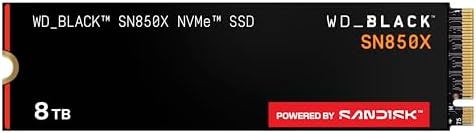
No, save the money. PCIe 5.0 SSDs (Crucial T705, Samsung 9100 Pro) hit 14,000 MB/s sequential — meaningful for video editing and AI model loading, but DirectStorage games show only 1-3 second faster level loads vs PCIe 4.0. Buy a 2 TB Samsung 990 Pro or WD_Black SN850X and put the savings into the GPU.
How big a PSU for an RTX 5090 build?
1000W minimum (ATX 3.1 / PCIe 5.1). The 5090 has transient spikes north of 700W — a 1000W Corsair RM1000x, Seasonic Vertex GX-1000, or be quiet! Straight Power 12 1000W keeps headroom safe. RTX 5080 is fine on 850W; 5070 Ti on 750W. Don't cheap out on the PSU — it's the one part that can take the rest with it.
OLED gaming monitor — burn-in concern in 2026?
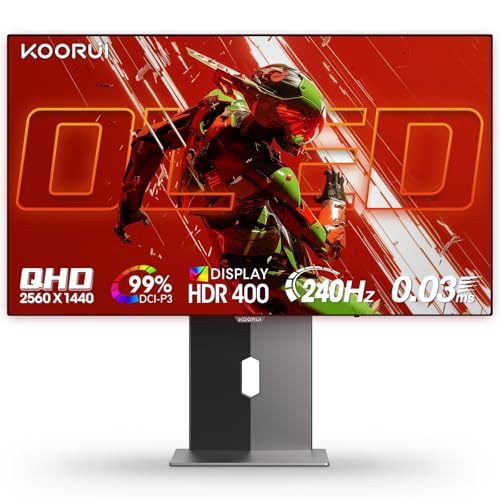
Modern QD-OLED (Alienware AW3225QF, Samsung Odyssey G80SD) and WOLED (LG UltraGear) panels include pixel-shift, automatic logo dimming, and 3-year burn-in warranties from LG/Samsung/Dell. With normal mixed use it's a non-issue. Static taskbars + 8 hours/day of the same desktop wallpaper are still risky — vary your wallpaper and hide the taskbar.
Mechanical keyboard for competitive FPS gaming?
Short-travel optical or Hall-effect switches (Wooting 60HE, Keychron Q1 HE, SteelSeries Apex Pro) deliver ~0.8 mm actuation vs ~2.0 mm on Cherry Reds — measurable in reaction time at the pro level. For casual play, any TKL with linear switches (HyperX Alloy Origins, Keychron K Pro) is fine.
What monitor refresh rate for gaming?
144 Hz is the modern minimum. 240 Hz is the competitive standard (CS2, Valorant); 360-480 Hz OLED is diminishing returns but worth it if you consistently push > 300 fps. For single-player + AAA: OLED 120-240 Hz with HDR1000+ is the new sweet spot.
Should I build or buy a pre-built gaming PC?
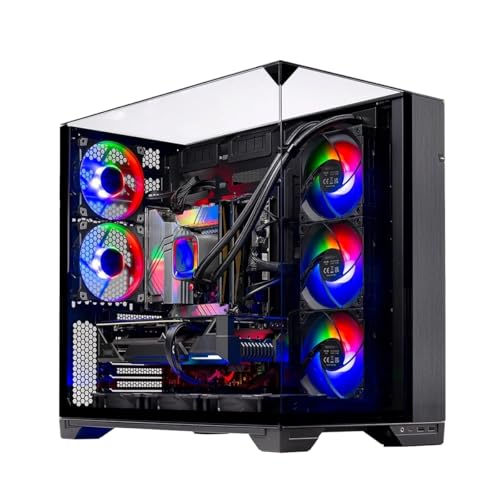
Build for best perf/$ — expect 10-20% savings vs pre-built. Buy a Skytech, NZXT BLD, or CyberPowerPC pre-built when (a) you need warranty-backed support, (b) the SKU is on sale at parts-alone pricing, or (c) you don't want to learn the build process. Pre-builts also win when GPU supply is constrained — they often get allocated stock first.
How We Pick
SpecPicks recommendations combine manufacturer spec data, aggregated benchmark results from public review sources (TechPowerUp, PassMark, Tom's Hardware, Geekbench, Phoronix, the LocalLLaMA community), live Amazon review feedback (ratings × review volume), and editorial judgment on price-to-performance. We update picks continuously as new silicon ships and prices move. Full methodology →






 AMD Ryzen 7 9700X
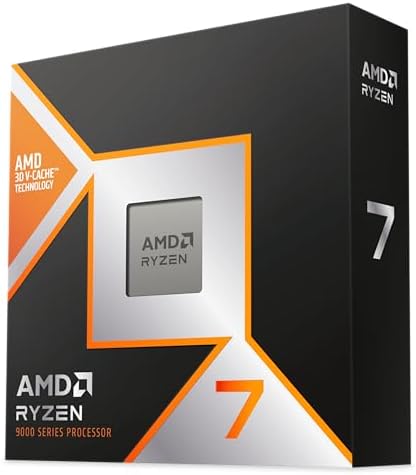 AMD Ryzen 7 9800X3D
 AMD Ryzen 9 9950X
 NVIDIA GeForce RTX 5070
 NVIDIA GeForce RTX 5070 Ti
 AMD Radeon RX 9070 XT
 NVIDIA GeForce RTX 5080
 🏆 Best Gaming GPU
 AMD Ryzen 9 9900X3D
22 benchmarks · 2025
AMD Ryzen 9 9900X3D
22 benchmarks · 2025