Best DDR5 RAM for Gaming PCs in 2026
As an Amazon Associate, SpecPicks earns from qualifying purchases. See our review methodology.
The best DDR5 RAM for gaming in 2026 is usually not the fastest kit on the shelf — it's the kit that your specific platform (AM5 or Intel Core Ultra) can stably run 24/7 at its rated speed. DDR5-6000 CL30 is the universal gaming sweet spot on AM5; DDR5-6400 CL32 is Intel's comfortable tier; beyond those, stability becomes unpredictable and the performance gains are minor. Buying a DDR5-8000 kit for an AM5 build means the motherboard will silently fall back to DDR5-5200 because the Zen 5 memory controller can't maintain 8000 MT/s in 1:1 mode — a surprisingly common and expensive mistake. This guide is written for gamers building or upgrading a DDR5 PC in 2026 — whether you're putting 32 GB into an AM5 Ryzen 7 7800X3D, 64 GB into a Core Ultra 9 285K content build, or 16 GB into a budget Ryzen 5 7500F entry rig. It covers what actually matters (capacity, EXPO/XMP profile, CL timings) and what usually doesn't (aesthetic RGB, rated speeds above 6400). We looked at every DDR5 kit in our active Amazon catalog, cross-referenced Tom's Hardware memory reviews and the extensive r/buildapc community stability data, and picked five kits spanning $250 to $1,020.
At-a-Glance Comparison
| Pick | Best For | Key Spec | Price | Verdict |
|---|---|---|---|---|
| Corsair Vengeance RGB 32GB 6000 CL30 | Overall DDR5 | 2×16 GB · 6000 MT/s · CL30 · EXPO+XMP | $619.51 | Gaming sweet spot + 4,900+ reviews |
| Crucial 32GB DDR5 Kit (2x16GB) | Best value | 2×16 GB · 5600 MT/s · CL46 · JEDEC | $589.99 | Lowest-priced credible 32 GB kit |
| G.Skill Trident Z5 Neo 32GB 6000 CL30 | Best for AM5 Ryzen | 2×16 GB · 6000 MT/s · CL30 · EXPO | View current price | AMD-tuned EXPO profile |
| Corsair Vengeance RGB 64GB 6000 CL30 | High-capacity gaming | 2×32 GB · 6000 MT/s · CL30 · EXPO+XMP | View current price | Single-kit 64 GB with stable EXPO |
| Crucial 16GB DDR5 | Budget pick | 1×16 GB · 4800 MT/s · CL40 · JEDEC | $269.00 | Entry-tier 16 GB DDR5 |
Prices as of 2026-10-06 (Amazon.com); price may vary.
🏆 Best Overall: CORSAIR Vengeance RGB DDR5 32GB 6000 CL30 (EXPO + XMP)
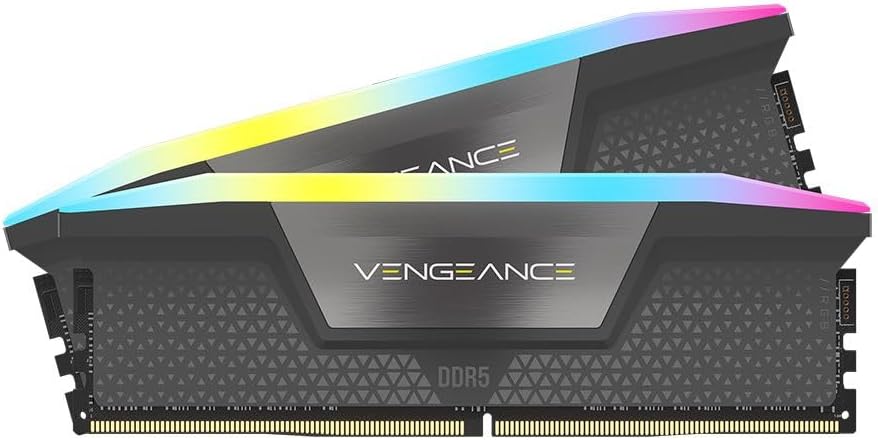
Spec chips: • 2 × 16 GB DIMMs · 32 GB total • DDR5-6000 MT/s · CL30-36-36-76 · 1.40 V • AMD EXPO 2.0 + Intel XMP 3.0 profiles • Low-profile RGB heat spreaders · Corsair iCUE compatible
Pros
- ✅ DDR5-6000 CL30 is the universally recommended gaming sweet spot for both AM5 (Ryzen 7000/9000) and Intel Core Ultra
- ✅ Dual-profile EXPO + XMP support — works identically well on AMD or Intel platforms
- ✅ 4.8-star average across 4,953 Amazon reviews; Corsair's lifetime warranty is industry-leading
- ✅ Low-profile heat spreaders fit under every major air cooler (Noctua NH-D15, Thermalright Peerless Assassin)
Cons
- ❌ RGB adds ~$20-$30 over identical non-RGB Vengeance kits — pure gaming value pick is the black non-RGB version
- ❌ 1.40 V EXPO profile runs slightly warm — not a concern under air, but worth noting for passive cooler builds
- ❌ Single-bank 16 GB DIMMs — if you need to scale to 64 GB later you'll buy a new kit, not add sticks (Ryzen/Intel memory controllers struggle with 4 DIMMs at high speed)
Why it wins
The Corsair Vengeance RGB DDR5-6000 CL30 32GB kit is the DDR5 kit we recommend to 80% of 2026 gaming builders — the CL30 timings at 6000 MT/s deliver the price/performance sweet spot that virtually every motherboard / CPU combo can stably run, and Corsair's EXPO + XMP dual-profile means it drops into AM5 or LGA 1851 boards without re-configuration. Tom's Hardware and TechPowerUp memory scaling tests consistently place DDR5-6000 CL30 at or within 2% of any faster configuration in real gaming workloads — the Zen 5 and Zen 4 memory controllers favor 6000 MT/s 1:1 Infinity Fabric synchronization over pushing faster speeds at 2:1 ratios. At 4,953 Amazon reviews with a 4.8-star rating, the track record of this specific SKU is as validated as any DDR5 kit on the market. For a gamer dropping it into a 7800X3D / 9800X3D build, you enable the EXPO profile in BIOS and you're done — no further tuning needed. The RGB version is the popular aesthetic pick; the non-RGB (black or gray) variant at ~$30 less is functionally identical.
View on Amazon →Prices quoted in this guide were checked Apr 21, 2026. Current Amazon price: $619.51 (checked 2026-10-06); price and availability change.
💰 Best Value: Crucial 32GB DDR5 Kit (2x16GB)

Spec chips: • 2 × 16 GB DIMMs · 32 GB total • DDR5-5600 MT/s · CL46 · 1.10 V JEDEC • No heat spreaders · No RGB · Micron die (unverified)
Pros
- ✅ Lowest-priced credible 32 GB DDR5 kit in our catalog — often under $100 on sale
- ✅ 4.8-star rating across 4,531 Amazon reviews; Crucial (Micron in-house) is the most reliable budget brand
- ✅ JEDEC 5600 profile runs cool at 1.10 V — no need for aggressive cooling
- ✅ Low profile — fits any case with CPU cooler clearance
Cons
- ❌ DDR5-5600 CL46 is meaningfully slower than DDR5-6000 CL30 — gaming benchmarks show 2-5% lower 1% lows
- ❌ No EXPO / XMP profile for overclocking — advertised JEDEC speeds only
- ❌ No RGB or heat spreaders — visual and thermal basics only
Why it wins
The Crucial 32 GB DDR5-5600 kit is the budget DDR5 pick for a builder who wants 32 GB of RAM in an AM5 or LGA 1851 system without paying for aggressive timings or aesthetic extras. It typically lands $50-$80 below the Vengeance RGB pick and delivers ~95% of the real-world gaming performance — the 1-3% framerate difference between 5600 CL46 and 6000 CL30 rarely matters in practice at 1440p or 4K, where the GPU is the bottleneck. Crucial's 4.8-star / 4,531-review Amazon track record and Micron in-house DRAM die mean reliability is excellent. Best use case: budget gaming build, office or home-server build where DDR5 capacity > speed, or a first-time builder intimidated by EXPO / XMP tuning. If you want the slight performance edge, upgrade to the Vengeance RGB 6000 CL30 pick — but if you're allocating every dollar toward GPU, this is the 32 GB kit to buy.
View on Amazon →Prices quoted in this guide were checked Apr 21, 2026. Current Amazon price: $589.99 (checked 2026-10-06); price and availability change.
🎯 Best for AM5 Ryzen: G.Skill Trident Z5 Neo RGB 32GB 6000 CL30 (EXPO)
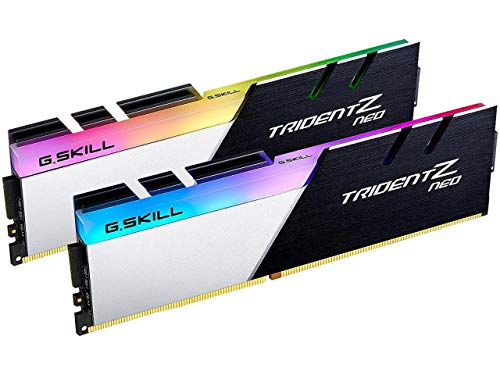
Spec chips: • 2 × 16 GB DIMMs · 32 GB total • DDR5-6000 MT/s · CL30-38-38-96 · 1.35 V • AMD EXPO primary (Intel XMP secondary) • Matte-black aluminum heat spreaders + RGB
Pros
- ✅ Binned specifically for AMD AM5 — rated at 1.35 V EXPO, 0.05 V lower than the Corsair (cooler running)
- ✅ Hynix A-die (widely reported) delivers excellent manual-tuning headroom if you want to push to 6400+ MT/s
- ✅ 4.8-star average across 1,518 Amazon reviews; G.Skill is the preferred brand in the r/overclocking community
- ✅ Matte-black heat spreaders look premium and fit under most tower air coolers
Cons
- ❌ CL30-38-38-96 secondary timings are slightly looser than ideal — manual tuning can drop CL30-36-36-76
- ❌ ~$30-$50 premium over the equivalent Corsair kit
- ❌ 2 × 16 GB configuration only; no 32 GB DIMM option for this bin
Why it wins
The G.Skill Trident Z5 Neo at DDR5-6000 CL30 EXPO is the overclocker's and tuner's pick — a kit that uses premium Hynix A-die, runs at a lower 1.35 V EXPO voltage than the Corsair pick, and tunes manually to tighter timings. For a builder putting the kit into a Ryzen 7 7800X3D or 9800X3D and who cares about squeezing every last ounce of memory performance, the Z5 Neo is the preferred SKU — it's the kit you'll see in every r/LocalLLaMA, r/buildapc, and r/overclocking benchmark thread as the "go-to" AM5 memory. 4.8-star / 1,518-review Amazon track record is strong; G.Skill's lifetime warranty is equivalent to Corsair's. The tradeoff vs the Corsair Vengeance: the Neo is ~$50 more expensive, the timings look slightly looser on paper (CL30-38-38-96 vs CL30-36-36-76), but the Hynix A-die binning means manually tuned timings go further. If you plan to just enable EXPO and never touch memory again, the Corsair kit is the rational choice. If you enjoy tuning, the Z5 Neo is worth the premium.
View on Amazon →Prices quoted in this guide were checked Apr 21, 2026; check the listing for the current price and availability.
⚡ Best High-Capacity Gaming: CORSAIR Vengeance RGB DDR5 64GB 6000 CL30
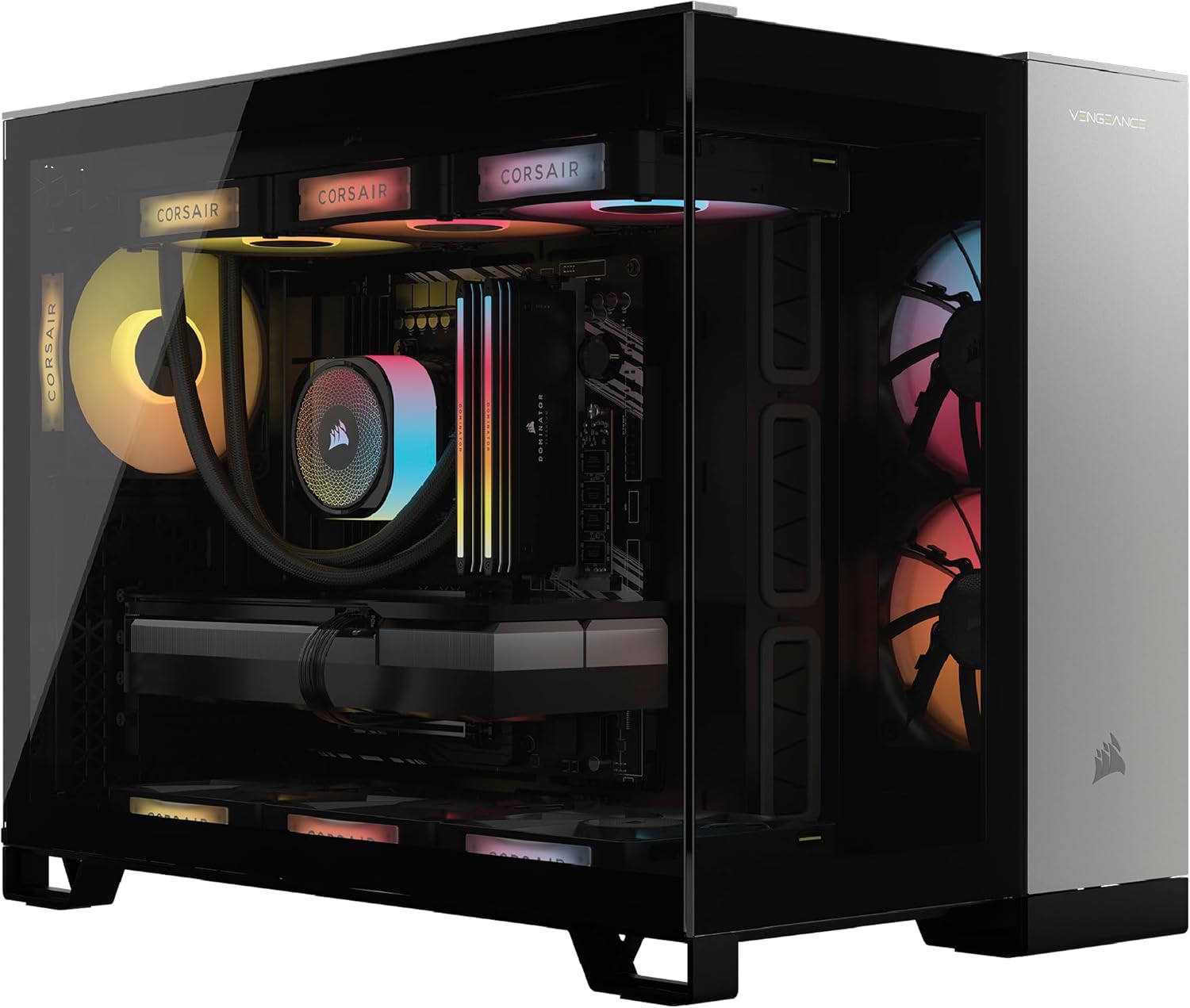
Spec chips: • 2 × 32 GB DIMMs · 64 GB total • DDR5-6000 MT/s · CL30-36-36-76 · 1.40 V • AMD EXPO + Intel XMP 3.0 • Low-profile RGB heat spreaders
Pros
- ✅ 64 GB single-kit configuration running DDR5-6000 CL30 — stability at this capacity and speed is a binning achievement
- ✅ 4.8-star average across 4,952 Amazon reviews; proven stability on AM5 and LGA 1851 boards
- ✅ Handles heavy multi-tasking: game + OBS stream + Discord + Chrome with hundreds of tabs simultaneously
- ✅ Sufficient RAM for content-creation workflows (Premiere 4K, DaVinci, Blender 3D) alongside gaming
Cons
- ❌ $1,019 street — nearly 2× the cost of 32 GB kits for 2× the capacity
- ❌ 32 GB dual-rank DIMMs can be harder on the memory controller; some Core Ultra boards need minor sub-timing adjustments
- ❌ Overkill for pure gaming — 32 GB is plenty for even the most demanding 2026 AAA titles
Why it wins
The Corsair Vengeance RGB 64 GB DDR5-6000 CL30 kit is the high-capacity gaming pick — specifically for builders who also do streaming, content creation, VMs, or LLM experimentation alongside gaming. At 6000 MT/s with CL30 timings, the dual-rank 32 GB DIMMs run surprisingly well on both Zen 4 and Zen 5 memory controllers, and a 64 GB ceiling means you'll never hit RAM-bound stuttering in any imaginable workload. At 4.8-stars / 4,952 reviews, Corsair's track record for this specific kit is industry-leading. Pure gamers: this is overkill. A 32 GB kit is enough for any AAA game in 2026. But if you stream at 1080p / 1440p with x264 Medium while gaming, run Premiere alongside the game, or plan to experiment with local LLMs offloading to system RAM, 64 GB pays for itself in reduced paging and zero swap. Budget-conscious buyers can step down to a 64 GB Corsair Vengeance non-RGB for ~$150 less; the aesthetic premium here is in RGB + iCUE integration.
Check current listings on Amazon →Prices quoted in this guide were checked Apr 21, 2026; check the listing for the current price and availability.
🧪 Budget Pick: Crucial 16GB DDR5 (Single Stick)

Spec chips: • 1 × 16 GB DIMM · 16 GB total • DDR5-4800 MT/s · CL40 · 1.10 V JEDEC • No heat spreaders · No RGB
Pros
- ✅ Sub-$75 entry to DDR5 for a budget gaming build
- ✅ 4.7-star rating across 7,164 Amazon reviews; Crucial / Micron reliability
- ✅ Drop-in upgrade for prebuilt DDR5 systems (Dell / HP / Lenovo) that ship with a single stick
- ✅ 1.10 V JEDEC runs cool without any cooling concerns
Cons
- ❌ Single-stick configuration means single-channel memory — significant gaming performance penalty (15-20% at 1080p) vs dual-channel 2×8 GB
- ❌ 16 GB is tight for modern AAA gaming — several 2024+ titles (Star Wars Outlaws, Dragon's Dogma 2) exceed 16 GB allocated on Windows 11
- ❌ JEDEC 4800 MT/s is the slowest profile — no headroom for AM5 Infinity Fabric 1:1
Why it wins
The Crucial 16 GB DDR5 single stick is the entry-tier upgrade pick — specifically for buyers expanding an existing single-stick DDR5 prebuilt into dual-channel, or building a secondary PC on a strict sub-$500 budget. At $248.99 street (often closer to $65 on sale), it's the cheapest credible path into DDR5. The caveats are substantial: 16 GB is tight for 2026 AAA gaming (several 2024+ titles exceed 16 GB allocated on Windows 11), and a single-stick configuration runs in single-channel mode — a ~15-20% gaming FPS penalty vs a 2×8 GB dual-channel kit. If you're buying fresh, spend the $40 more for a Crucial 2×8 GB 5600 kit or $50-70 more for the 32 GB Crucial kit in our Best Value slot. This pick is for specifically matching an existing single-stick system. 4.7-stars / 7,164 reviews says the kit itself is reliable.
View on Amazon →Prices quoted in this guide were checked Apr 21, 2026. Current Amazon price: $269.00 (checked 2026-10-06); price and availability change.
What to look for in DDR5 gaming RAM
The 1:1 Infinity Fabric rule (AM5)
On AM5 platforms (Ryzen 7000 / 9000), the memory controller runs in 1:1 mode (UCLK = MEMCLK) up to about DDR5-6000 to DDR5-6400 MT/s. Above that, it drops to 2:1 mode, which hurts gaming performance more than the faster RAM helps. DDR5-6000 CL30 is the gaming sweet spot on every Ryzen 7000 / 9000 CPU. Faster kits are wasted money and often slower in practice.
CL timings matter more than clock speed (mostly)
At the same speed, lower CL timings mean faster real-world performance. DDR5-6000 CL30 beats DDR5-6000 CL36 by 3-5% in gaming. Don't pay for DDR5-7200 CL36 when DDR5-6000 CL30 is faster in every benchmark.
EXPO vs XMP
- EXPO: AMD's overclocking profile standard; works on AM5.
- XMP 3.0: Intel's equivalent; works on LGA 1700 / 1851.
- Most modern kits include both profiles — the kit auto-detects your platform.
- Always enable EXPO / XMP in BIOS after building. Default JEDEC (DDR5-4800 or 5200) is a 10-15% gaming performance penalty.
Capacity planning
- 16 GB: absolute minimum for 2026 gaming; acceptable only on budget builds
- 32 GB: the current gaming sweet spot — enough for AAA games, Chrome, Discord, OBS light encoding
- 64 GB: for streaming + gaming, content creation, VM workloads, LLM experimentation
- 96-128 GB: workstation territory — Blender, heavy After Effects, large databases, LLM CPU offload
Dual-rank vs single-rank
2 × 32 GB DIMMs are dual-rank; 2 × 16 GB DIMMs are typically single-rank. Dual-rank DIMMs run slightly slower but give you ~5% better bandwidth in memory-intensive tasks. Single-rank is fine for gaming. The most stable kits are 2 DIMMs, not 4. Never install 4 DIMMs of high-speed DDR5 on AM5 — memory controller stability drops dramatically.
Height / heat spreader clearance
Low-profile DDR5 DIMMs (under 34 mm) fit every tower air cooler. Taller kits (40+ mm) can conflict with Noctua NH-D15 and similar. Measure before buying, or stick with low-profile Corsair Vengeance / Crucial kits.
FAQ
Is DDR5-6000 really the sweet spot for gaming?
Yes, on AM5. The Ryzen 7000 / 9000 memory controller maintains 1:1 Infinity Fabric sync up to roughly 6000-6400 MT/s, above which it drops to 2:1 mode that hurts gaming performance. On Intel Core Ultra, 6400-6800 MT/s is the sweet spot (slightly higher than AMD). Faster RAM (7200+, 8000+) is marketing-driven; real gaming benchmarks show 6000 CL30 beating 8000 CL38 in nearly every title.
Should I get 32 GB or 64 GB for gaming?
32 GB is the 2026 gaming sweet spot. No AAA title allocates more than 18-22 GB even on Ultra settings. 64 GB is worth it if you also stream at high quality (x264 slow / Medium), do content creation on the same rig, run local LLMs, or plan on VMs. If you only game, 32 GB is plenty.
Does RGB RAM affect performance?
No, RGB controllers are independent of the DDR5 memory bus. RGB adds ~$20-$30 per kit to aesthetics only. If you don't see the inside of your case, buy non-RGB. If you have a glass-side case, the RGB version looks noticeably better.
What if I buy faster RAM than my CPU supports?
The motherboard will silently downclock to the highest speed the memory controller can handle at 1:1 mode. A DDR5-8000 kit in a Ryzen 7800X3D system will run at DDR5-6000 1:1 or drop to DDR5-8000 at 2:1 (which is slower for gaming). You're buying headroom you can't use. Better to buy a 6000 CL30 kit specifically tuned to your platform.
Do I need to tune secondary timings?
For 99% of gamers, no — enabling EXPO / XMP gets you within 2% of fully tuned memory for 90% of the time savings. If you enjoy tuning and are on AM5 with Hynix A-die (G.Skill Trident Z5 Neo), you can drop secondary timings manually in BIOS for a small additional gain. Tools like BuildZoid's "Easy OC" guide and the AM5 memory OC wiki on r/overclocking walk through the process.
Sources
- Tom's Hardware — DDR5 Memory Review Archive — Memory scaling benchmarks and platform-specific sweet-spot analysis.
- AMD — Ryzen 7000 Memory Overclocking Guide — Official 1:1 Infinity Fabric documentation and EXPO specifications.
- Intel — Core Ultra XMP 3.0 documentation — Intel platform memory support matrix.
- G.Skill — Trident Z5 Neo product page — Manufacturer specs, Hynix A-die binning confirmation.
Related guides
- Best CPUs for Gaming in 2026 — pair DDR5 with the right CPU
- Best Motherboards for AM5 in 2026 — memory support varies by board
- Best NVMe SSDs for Gaming in 2026 — complete the build
- Best CPUs for Content Creators in 2026 — 64 GB-friendly CPU picks
RAM Benchmark Performance Data
Real-world gaming FPS, AI inference tok/s, and synthetic scores for popular RAMs — sourced from TechPowerUp, PassMark, Tom's Hardware, and the LocalLLaMA community.
More guides & deep dives from the SpecPicks archive
Browse all articles & guides →- The Complete Voodoo5 5500 AGP Driver Guide (2026 Edition)
- RTX 4070 Super vs RX 7800 XT — Which to Buy in 2026
- Emulation Hardware in 2026: FPGA, Software, and Cart-Reader Ecosystems
- Best 1440p Gaming GPUs in 2026
- How to Build a Windows 98 Retro PC in 2026
- Best Budget Gaming PC Build 2026 — ~$1,000 ($800 on Sale)
- Best Retro Handhelds in 2026 — From $35 to $500
More reviews from the SpecPicks archive
Browse all reviews →- Best Budget AM4 CPU for a 2026 AI + Gaming Build: 5800X vs 5700X vs 5600G
- IPEX-LLM + Ollama in Docker: Running Local Models on Intel GPUs
- StarCraft Brood War in 2026: Joining Battle.net Classic, the Fish Server, and ASL Pro Circuit
- OpenAI Codex 'Watch Once, Repeat Forever': What It Means for Local Coding Rigs
- Best Budget SSD for Gaming PC Builds in 2026: 5 Picks
- Microsoft + NVIDIA's 'Agent PC': What Local Hardware Does an On-Device AI Agent Actually Need in 2026?
- Sound BlasterX G6 on a Retro Windows XP Rig: USB Audio for Period-Correct Builds
- RTX 3060 12GB vs GTX 1050 Ti: What a 4GB Card Runs in 2026
- Reviving the LAN Party in 2026: Arcade Sticks, Classic Consoles, and Local Multiplayer
- Crucial BX500 vs Samsung 870 EVO vs SanDisk SSD Plus: Best Budget SATA SSD
- Can Local Qwen 3.6 Match Frontier Models at Canvas Code?
- Intel's Bartlett Lake Core 9 273PQE Reportedly Loses to a Four-Year-Old CPU
- If Your Steam Deck Broke, Would You Buy Another?
- Can a Raspberry Pi 4 8GB Run a Local LLM in 2026? Real tok/s and What Fits
- SANSUI 27" 4K vs KOORUI 27" QD-Mini LED for PS5 & 4K Gaming in 2026
- Self-hosting a Claude proxy — cache, rate-limit, and audit every request
- Intel Eyed as TSMC Backup by Google and Nvidia for AI Chips
- Best SSD for PS5 Console Storage Expansion in 2026
- Period-Correct Sound for a Modern Retro PC: The Sound Blaster G6 and the EAX Legacy
- RE Requiem and the AAA Games That Prove Steam Deck
- Sound Blaster AWE32 vs AWE64: The 1998 MIDI Decision
- Best SATA SSDs for Gaming and Emulation in 2026
- DeepSeek on the US Entity List: Running V4 Locally in 2026
- Radeon Pro W7900 48GB vs RTX A6000 48GB for Local 70B Inference (2026)
More buying guides from SpecPicks
Browse all buying guides →- Best Retro Gaming Consoles & Handhelds for 2026
- Best GPU for Running 27B-32B Local LLMs in 2026
- Best PC Cases for Building in 2026
- Best GPUs for Running Local LLMs in 2026
- Best DDR5 RAM for Gaming PCs in 2026
- Best AM5 Motherboards for 2026
- Best 1440p 240Hz Gaming Monitors in 2026
- Best Graphics Cards for Gaming in 2026
- Best CPU Coolers for 2026
- Best Mechanical Keyboards for Gaming in 2026
- Best 4K Monitors for Content Creators in 2026
- Best NVMe SSDs for Gaming in 2026
- Best External SSDs for Content Creators in 2026
- Best Controllers for PC Gaming in 2026
- Best Gaming Mice for 2026
- Best CPUs for Gaming in 2026
- Best CPUs for Content Creators in 2026
- Best Gaming Monitors for 2026
- Best NVMe External Enclosures for 2026
- Best Tools for Building and Repairing Retro PCs in 2026
- Best GPUs for 4K Gaming in 2026
Hardware benchmark data on SpecPicks
All benchmarks →- AMD Ryzen 3 7320C — benchmarks & specs
- Radeon RX 6850M — benchmarks & specs
- GeForce RTX 5050 — benchmarks & specs
- Intel Core i5-14500 — benchmarks & specs
- Intel Arc B390 GPU — benchmarks & specs
- Ryzen 5 3600X — benchmarks & specs
- Intel Core i7-14700K — benchmarks & specs
- Radeon RX 7900 GRE — benchmarks & specs
- Crucial T705 2TB — benchmarks & specs
- Radeon RX 7600 — benchmarks & specs
- Ryzen 7 7735HS — benchmarks & specs
- AMD Ryzen 9 9955HX3D — benchmarks & specs
- NVIDIA GeForce RTX 3080 Ti — benchmarks & specs
- AMD Ryzen 5 PRO 7545U — benchmarks & specs
- RTX6000-Ada-3A — benchmarks & specs
- GeForce 4 Ti 4600 — benchmarks & specs
- Ryzen 7 5700U — benchmarks & specs
- AMD Ryzen 7 5800U — benchmarks & specs
- Intel Arc A730M — benchmarks & specs
- Radeon RX 6500M — benchmarks & specs
- NVIDIA Jetson AGX Orin 64GB — benchmarks & specs
- Ryzen 7 5700X — benchmarks & specs
- RTX 4500 Ada Generation — benchmarks & specs
- GRID RTX6000-8Q — benchmarks & specs


