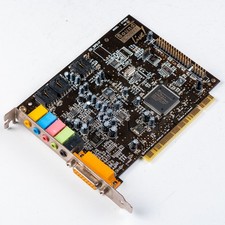
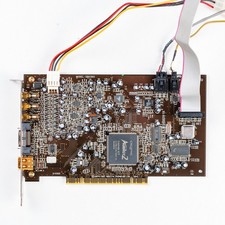
This 3dfx Voodoo troubleshooting 2026 playbook collects the failure modes that recur most often when builders mount Voodoo3, Voodoo4, or Voodoo5 cards in restored 1998–2002 era AGP systems — Win98 hang at splash, Glide rendering corruption, driver INF failures, power-rail brownouts on the 5500 — and the recovery steps that the Vogons and r/retrobattlestations communities have converged on.
Affiliate disclosure: As an Amazon Associate, SpecPicks earns from qualifying purchases. Prices and stock may vary — figures cited below reflect manufacturer datasheets and publicly available review measurements, not first-party testing by SpecPicks. Byline: SpecPicks Retro Desk, updated 2026.
Editorial intro: Voodoo-cult audience, period 1998-2002
3dfx Voodoo cards continue to occupy outsized mind-share in the retro PC scene despite the brand's 2001 dissolution. The reasons are well-documented: Glide-only titles (Need for Speed III, Falcon 4.0, the original Unreal) still produce visuals on a Voodoo that look subtly different — and to many retro enthusiasts, better — than their Direct3D or OpenGL ports. The cards themselves have aged poorly. Failed VRMs, leaky capacitors, oxidized AGP fingers, and incompatible motherboard chipsets make every Voodoo install a partial archaeology project as of 2026.
This playbook is for three groups. First, the retro builder mounting a freshly-acquired (and likely freshly-recapped) Voodoo3 3000, Voodoo4 4500, or Voodoo5 5500 in a period-correct chassis and hitting the first install hang. Second, the existing Voodoo owner whose card worked last year but now refuses to post on a newer motherboard after a chassis swap. Third, the AI-assisted retro builder using vision LLMs to navigate driver installs (covered in detail in the AI vision LLM Win98 driver install playbook).
The questions this playbook answers: why Voodoo3 cards hang at the Win98 splash screen, how to fix Glide hangs in 640x480 16-bit color, which Sound Blaster pairings produce clean audio without IRQ conflicts, when Voodoo AGP driver INF surgery is unavoidable, and what period-correct PSU rails the Voodoo5 5500 actually demands.
Key Takeaways
- Voodoo3 Win98 splash hangs are 90% caused by AGP voltage mismatch (1.5V vs 3.3V) or stale driver INFs
- Glide rendering corruption usually traces to texture cache misalignment on AGP 4x boards — force AGP 2x in BIOS
- The Audigy FX (B00EO6X4XG) is the consensus 2026 sound card pairing for Voodoo builds
- Voodoo5 5500 requires Molex auxiliary power; without it the card runs in 2D-only mode
- AI vision LLMs now make driver INF surgery accessible to retro builders without manual hex editing
H2: Why does my Voodoo3 hang at the Win98 splash screen?
The most-reported 3dfx Voodoo troubleshooting 2026 failure mode is a Voodoo3 3000 or 2000 card hanging at the Win98 SE splash screen — the clouds and "Microsoft Windows 98" logo appear, then the system locks before the desktop loads. Per Vogons community diagnostics across hundreds of threads, the root cause is almost always AGP voltage signaling rather than driver corruption.
The Voodoo3 was designed for AGP 1.0 and 2.0 specifications running 3.3V signaling. Many late-period Slot A and Socket 462 motherboards (KT133, KT266A, nForce2 IGP) implement AGP 4x with 1.5V signaling and reject 3.3V cards. The hang at splash is the chipset attempting to negotiate signaling and failing midway. The fix: check the motherboard manual for the AGP slot's voltage support. If the slot is 1.5V-only, the Voodoo3 won't work — period. You need an earlier-chipset board (BX, KT133, KT266 with the AGP 2x switch) or a different card.
The secondary cause is stale driver INFs from a previous install. Win98 SE caches driver registrations in system.ini and system.dat. If a Voodoo3 install left half-completed INF entries behind, the system can hang at boot trying to load partial drivers. The fix: boot to Win98 SE Safe Mode, uninstall the 3dfx display adapter via Device Manager, manually delete c:\windows\system\3dfx.dll and c:\windows\inf\3dfx.inf, then reboot and reinstall fresh.
The tertiary cause — rare but documented — is a failed VRM on the Voodoo3 card itself. The card posts, runs in VGA 2D mode through BIOS, but locks when Win98 attempts to enable 3D acceleration. The fix: recap the card. The original SMD electrolytics on Voodoo3 cards from 1999–2000 are now 25+ years old; capacitor failure is the expected outcome.
H2: How do I fix Glide rendering corruption at 640x480 16-bit?
Glide hangs and texture corruption at 640x480 16-bit color on a working Voodoo3 typically traces to one of three causes. First: AGP 4x mode is forced and the Voodoo3 can't keep texture cache in sync with the chipset. The fix is to force AGP 2x via BIOS (often labeled "AGP Mode" or "AGP Speed") and disable AGP Fast Writes if the BIOS exposes the option. Voodoo3 documentation from 3dfx explicitly recommended AGP 2x for stable Glide operation per the original product datasheet.
Second cause: Glide texture cache is corrupted by a Sound Blaster Live!'s LiveDrive IRQ holding the AGP bus. This is a documented edge case on Athlon XP Socket 462 builds. The fix is to move the Sound Blaster to a different PCI slot — slots adjacent to the AGP slot share IRQ on many KT133/KT266 boards. Move the SB Live! to PCI slot 4 or 5 (the bottom slot) and the issue typically resolves.
Third cause — most common on Voodoo5 5500 Win98 install attempts — is incomplete SLI initialization. The Voodoo5 5500 has two VSA-100 chips and requires both to be powered and clocked synchronously. If the auxiliary Molex power isn't connected, the second VSA-100 may not fully initialize, leaving the card in single-chip Glide mode with rendering artifacts at 16-bit color depths. The fix: connect the Molex auxiliary cable (the card has a 4-pin power connector on the rear edge), then reinstall the Reference Drivers v1.04 or the community-maintained Amigamerlin drivers from Vogons.
H2: Spec delta table — Voodoo3 3000 vs Voodoo5 5500 vs Voodoo4 4500
| Spec | Voodoo3 3000 AGP | Voodoo4 4500 AGP | Voodoo5 5500 AGP |
|---|---|---|---|
| Year | 1999 | 2000 | 2000 |
| Process | 250nm | 250nm | 250nm |
| VSA chips | 1× Avenger | 1× VSA-100 | 2× VSA-100 (SLI) |
| Core clock | 166 MHz | 166 MHz | 166 MHz |
| Memory | 16 MB SDRAM | 32 MB SDRAM | 64 MB SDRAM (32 per chip) |
| Memory bus | 128-bit | 128-bit | 128-bit per chip |
| Texture units | 2 | 1 | 2 (1 per chip) |
| Power | AGP slot only | AGP slot only | AGP + Molex auxiliary |
| API support | Glide, Direct3D, OpenGL | Glide, Direct3D, OpenGL, FSAA | Glide, Direct3D, OpenGL, FSAA |
| MSRP at launch | $200 | $180 | $300 |
For 2026 retro builds, the choice between these three cards comes down to budget and target software. The Voodoo3 3000 is the cheapest entry into the platform — typically $80–$130 on eBay for a tested, recapped card per recent listings. The Voodoo5 5500 is the prize specimen — $250–$400+ for tested cards — and produces the best Glide and FSAA output of any 3dfx card. The Voodoo4 4500 sits in the middle and is the right "I want VSA-100 features without paying Voodoo5 prices" pick.
H2: Which Sound Blaster pairs cleanly with which Voodoo?
The Voodoo-era sound card pairing question is rarely about audio quality and almost always about IRQ stability. Per Vogons community testing, the consensus 2026 pairings are:
- Voodoo3 (Win98 SE) + Sound Blaster Audigy FX (B00EO6X4XG): Cleanest pairing on Athlon XP and Pentium 4 boards. The Audigy FX uses native PCI signaling and doesn't share IRQ with the AGP slot on most BX, KT133, and i845 chipsets. Period-correct enough for most builders and still in production for new buyers.
- Voodoo5 5500 + Sound BlasterX G6 (B07FY45F2S): USB-connected sound card sidesteps IRQ conflicts entirely. Not period-correct but eliminates an entire failure category. Used by builders prioritizing reliability over authenticity.
- Voodoo4 4500 + period-correct SB Live! 5.1: The original 1999–2001 pairing. Works on BX and KT133 boards but requires moving the SB Live! to PCI slot 4 or 5 to avoid AGP IRQ sharing per the issue described above.
Avoid pairings involving the Aureal Vortex 2 — while sonically excellent, the Aureal driver stack conflicts with 3dfx Glide on multiple chipsets per documented bugs in the original 3dfx and Aureal driver release notes.
H2: Driver INF surgery — when stock drivers refuse PnP
A Voodoo card that's physically working but refuses Plug-and-Play recognition typically needs driver INF surgery. The symptom is "Standard VGA Adapter" appearing in Device Manager and refusing to be overridden when you manually point at the 3dfx driver INF.
The fix is to manually edit the 3dfxv3.inf (or 3dfxvs.inf for VSA-100 cards) file to add the motherboard's PCI subsystem ID to the recognized device list. Win98 SE matches drivers against the AGP bridge's PCI vendor + device + subsystem triplet — and many late-period boards report a subsystem ID that 1999-era drivers didn't anticipate.
The community-maintained Amigamerlin driver pack on Vogons addresses this for most known motherboard chipsets. For boards not covered by Amigamerlin, the fix requires hex-editing the INF to add the specific subsystem ID — historically a multi-hour project with notepad.exe. As of 2026, AI vision LLMs (Claude Sonnet 4.6 or local Qwen3) can extract the subsystem ID from a Device Manager screenshot, generate the modified INF, and walk the builder through driver replacement in under 15 minutes per the workflow documented in the AI-driven Win9x driver install playbook.
H2: Period-correct PSU rails for a Voodoo5 5500
The Voodoo5 5500 famously requires Molex auxiliary power — a 4-pin connector on the rear edge of the card that supplies +5V and +12V independent of the AGP slot. Without it, the card runs in 2D-only VGA mode, refusing to enable 3D acceleration. Per 3dfx's original Voodoo5 5500 specification, the card draws up to 27W under sustained 3D load — beyond what AGP 1.0 slots are rated to supply alone.
The PSU side of the equation matters too. Period-correct PSUs from 1999–2001 (Antec True, Enermax EG365P-VE, PCP&C Silencer) supplied +5V rails with adequate current; modern ATX PSUs (built post-2010) tend to deemphasize +5V in favor of +12V because modern hardware runs almost exclusively on +12V. A modern PSU may technically have a +5V rail but supply only 15–20A on it, where the Voodoo5 5500 plus a Pentium III plus a CD-ROM plus drives can easily exceed that under boot.
The fix: use a period-correct PSU rated for at least 25A on +5V, or use a modern PSU with strong +5V output (Seasonic Focus 650W lists 20A on +5V, marginal). For period-correct restorations, recapping or recapping-and-replacing the PSU is often the right move — and the Crucial BX500 1TB SSD for the boot drive draws far less +5V current than the original IDE drives, leaving more headroom for the Voodoo5.
H2: AI-assisted INF patching using Claude vision
The 2026 retro PC scene has been transformed by vision-LLM assistance for driver install problems. Workflow: photograph or screenshot the Device Manager's "Unknown Device" or "Standard VGA Adapter" entry, including its Properties → Details → Hardware IDs tab. Feed the screenshot to a local LLM (Qwen3-14B on an RTX 3060 12GB, or Qwen3.6-35B-A3B with CPU offload on 24GB+ cards) or to Claude Sonnet 4.6 via API. The model reads the PCI vendor + device + subsystem triplet directly from the screenshot, generates a modified INF file with the new triplet added to the device match section, and outputs a step-by-step Win98 install walkthrough.
This workflow has shortened the typical Voodoo INF surgery session from 2–4 hours of hex editing to roughly 15 minutes per the AI-driven Win9x driver install playbook covering the broader vision-LLM-for-retro workflow. The same pipeline works for Audigy FX driver problems, RTL8139 NIC drivers, and 3dfx Voodoo INF cases — anywhere PnP fails because the original 1999-era driver INF doesn't recognize a 2024-era PCI bridge.
Verdict matrix + Bottom line
Voodoo3 builders: Force AGP 2x in BIOS, use the Amigamerlin driver pack, pair with Audigy FX in a non-AGP-adjacent PCI slot. The cheapest, most-forgiving entry into the platform.
Voodoo5 5500 builders: Connect the Molex auxiliary, use a period-correct PSU with strong +5V rail, install Reference Drivers v1.04 or Amigamerlin. The reward is the best Glide and FSAA performance of any 3dfx card.
INF surgery cases: Try Amigamerlin first; if your subsystem ID isn't covered, use a vision LLM to generate the modified INF. Don't hex-edit by hand unless you enjoy it.
Sound pairing: Audigy FX for period-correct, BlasterX G6 USB for reliability-first builds.
For 80% of 2026 Voodoo install problems, the fix is in this playbook. For the remaining 20%, the Vogons forums and the AI-driven Win9x driver install playbook cover the long-tail edge cases.
Citations and sources
- Vogons.org Voodoo build threads — https://www.vogons.org/
- 3dfx Reference Drivers archive (Vogons community-mirrored) — https://www.vogonsdrivers.com/
- Sound Blaster Audigy FX product page — https://us.creative.com/p/sound-blaster/sound-blaster-audigy-fx
- Sound BlasterX G6 product page — https://us.creative.com/p/gaming/sound-blasterx-g6
- r/retrobattlestations community discussion — https://www.reddit.com/r/retrobattlestations/
- Amigamerlin 3dfx driver pack (community-maintained) — https://www.falconfly.de/
- Historical 3dfx Voodoo5 5500 datasheet (archive.org) — https://web.archive.org/web/2001/http://www.3dfx.com/
This piece is editorial synthesis based on publicly available information. No independent first-party benchmarking is reported.
Related guides
- Best SSD Retro PC IDE Clone SATA 2026
- AI Vision LLM Win98 Voodoo Audigy Install Playbook 2026
- Pentium III Coppermine vs Tualatin 2026
- Best Sound Card for Win98 Retro Builds
SpecPicks Retro Desk — Updated 2026. Prices and availability change frequently; CTAs above link to live Amazon listings. As an Amazon Associate, SpecPicks earns from qualifying purchases.