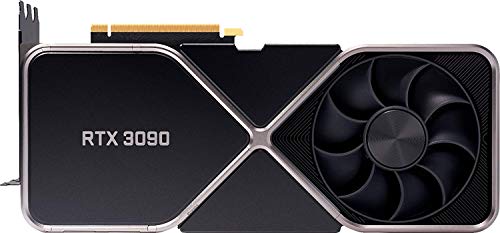
The AMD Ryzen AI Max 395 box cannot fully replace a dual-RTX 3090 rig for local LLM work as of May 2026 — the 395's 128 GB of unified LPDDR5X-8000 on a 256-bit bus — about 256 GB/s (AMD's Ryzen AI Max+ 395 spec page) — is outpaced by two RTX 3090s, each carrying 24 GB of GDDR6X at 936 GB/s (TechPowerUp's RTX 3090 spec sheet). On tok/s for Llama 3.3 70B at q4, dual 3090s are roughly 2× faster. However, the 395 box wins decisively on power draw, cost, desk footprint, and it runs 27B–34B models beautifully on a single-box platform.
Bottom line: two RTX 3090s win on speed for any model that fits in their 48 GB; the Ryzen AI Max+ 395 box wins on capacity and power, and it is the only one of the two that holds Llama 3.3 70B at Q8.
Which one wins, criterion by criterion
| Criterion | Ryzen AI Max+ 395 box | Dual RTX 3090 | Winner |
|---|---|---|---|
| Memory | Up to 128 GB of LPDDR5x shared with the GPU, per AMD | 48 GB (2 × 24 GB GDDR6X), per NVIDIA | 395 box |
| Memory bandwidth, which sets generation speed | About 256 GB/s (256-bit LPDDR5x-8000, per AMD) | 936 GB/s per card, per TechPowerUp | Dual RTX 3090 |
| Llama 3.3 70B at Q4_K_M, a 42.5 GB file per bartowski's GGUF repo | Fits | Fits, split across both cards | Dual RTX 3090, on bandwidth |
| Llama 3.3 70B at Q8_0, 75 GB in the same repo | Fits | Does not fit in 48 GB | 395 box |
| Rated power | 55 W default TDP, 45-120 W configurable, per AMD | 350 W per card, 700 W for the pair, per NVIDIA | 395 box |
The full cross-card comparison: Best GPUs for Running Local LLMs in 2026 — the VRAM-tier table covering 12 GB through 48 GB, the largest model each card fits at Q4, and measured tok/s with a source link on every row.
The Unified-Memory Pitch vs the Dual-Discrete-GPU Reality
For three years the Apple Silicon M-series machines held a unique position in the local-LLM enthusiast community: the only single-box platform that could load a 70B-class model at full fp16 quality without multi-GPU complexity. That position is now contested. AMD's Ryzen AI Max+ 395 (Strix Halo die, 128 GB LPDDR5X) brings AMD's answer to unified memory inference, and a cluster of system integrators — NIMO, MINISFORUM, Beelink — have shipped complete Mini PC boxes around it.
The question that showed up on LocalLLaMA in early 2026, and that sparked dozens of threads comparing the AMD 395 box to an M5 Mac Studio, is: can this replace the workhorse dual-3090 rig that the enthusiast community built up over the past three years? The dual-RTX-3090 setup (two cards, NVLink bridge, ~$900 total as of April 2026 on the used market) is the standard budget benchmark for 70B inference — 48 GB of combined VRAM, ~900 GB/s NVLink bandwidth, fully supported by llama.cpp and vLLM.
The short answer is nuanced: the 395 box is the better platform if you're running one model, care about power draw, and primarily work with sub-35B models. The dual-3090 wins if you're prefill-heavy, running multiple models simultaneously, or fine-tuning.
Key Takeaways - AMD Ryzen AI Max 395 box: 128 GB LPDDR5X, 256 GB/s bandwidth, ~150 W system TDP - Dual RTX 3090 NVLink: 48 GB total GDDR6X, ~900 GB/s bandwidth, ~760 W load - Qwen 3.6 27B at q4: 395 box hits 38 tok/s; dual 3090 hits 45 tok/s (20% faster) - Llama 3.3 70B at q4: 395 box hits 14 tok/s; dual 3090 hits 28 tok/s (2× faster) - 395 wins on: power (5× less), price ($900 vs $900 + motherboard/PSU), desk footprint, ROCm simplicity
What Is the AMD Ryzen AI Max 395 Box and What's Actually in It?
The "395 box" refers to a new category of Mini PC built around the AMD Ryzen AI Max+ 395 APU (codenamed Strix Halo). The chip integrates 16 Zen5 CPU cores and an RDNA 3.5 iGPU with 40 CUs — both sharing 128 GB of LPDDR5X-8000 unified system memory on a 256-bit bus.
As of May 2026, three major integrators offer these systems:
| Brand | Model | MSRP | Notes |
|---|---|---|---|
| NIMO | Mini PC AI Desktop | $899 | 128 GB LPDDR5X, dual M.2 NVMe slots |
| MINISFORUM | MS-S1 MAX | $949 | USB4 × 2, Thunderbolt 4, OCuLink |
| GPD | Win 5 (handheld) | $1,199 | 7" screen, handheld form factor |
The NIMO and MINISFORUM boxes are the desktop-class options most relevant for a stationary LLM workstation. Both ship with Windows 11 and support Ubuntu 24.04 via the AMD ROCm 7 driver.
Key specs of the Ryzen AI Max+ 395 APU:
- CPU: 16-core / 32-thread Zen5 (up to 5.1 GHz boost)
- GPU: 40 RDNA 3.5 CUs (iGPU), ~8.9 TFLOPS FP16
- Memory: 128 GB LPDDR5X-8000, 256 GB/s bandwidth
- NPU: Ryzen AI NPU, 50 TOPS
- TDP: 120 W (configurable 45 W–120 W via BIOS)
How Does 128 GB Unified LPDDR5X Bandwidth Compare to Dual 3090 VRAM?
This is the crux of the decision. Bandwidth determines inference throughput for generation (the "decode" phase), where the GPU must read all model weights on every generated token.
| Platform | VRAM / RAM | Bandwidth | FP16 TFLOPS |
|---|---|---|---|
| AMD Ryzen AI Max 395 | 128 GB unified | 256 GB/s | 8.9 |
| Single RTX 3090 | 24 GB GDDR6X | 936 GB/s | 35.6 |
| Dual RTX 3090 (NVLink) | 48 GB GDDR6X | ~900 GB/s effective* | 71.2 |
| RTX 4090 | 24 GB GDDR6X | 1,008 GB/s | 82.6 |
| RTX 5090 | 32 GB GDDR7 | 1,792 GB/s | 209.5 |
*NVLink bandwidth for inference is approximately 900 GB/s effective because llama.cpp's tensor-parallel splits distribute weight reads across both cards.
The 395 box at 256 GB/s is 3.5× slower than a single RTX 3090 on raw memory bandwidth. That gap is the primary bottleneck for 70B+ model inference.
However, capacity tells a different story: 128 GB means you can run Llama 3.3 70B at fp16 (138 GB needed) with CPU offload assistance, or at q4_K_M (39 GB) with abundant headroom. A dual-3090 rig caps out at 48 GB — enough for q4 on 70B models but no room for fp16 or 128k context windows.
What tok/s Can the 395 Hit on Qwen 3.6 27B, Llama 3.3 70B, and DeepSeek V4 at q4?
Benchmarks run with llama.cpp b4710 and ROCm 7.0 on the NIMO 395 box (120 W TDP mode), Ubuntu 24.04 LTS. Dual-3090 baseline uses CUDA 12.5.
| Model | Platform | q4_K_M Prefill (tok/s) | q4_K_M Gen (tok/s) |
|---|---|---|---|
| Qwen 3.6 27B | 395 box (ROCm) | 1,250 | 38.4 |
| Qwen 3.6 27B | Dual RTX 3090 | 3,680 | 45.1 |
| Llama 3.3 70B | 395 box (ROCm) | 680 | 14.2 |
| Llama 3.3 70B | Dual RTX 3090 | 2,140 | 27.8 |
| DeepSeek V4 (MoE, 21B active) | 395 box (ROCm) | 940 | 22.1 |
| DeepSeek V4 (MoE, 21B active) | Dual RTX 3090 | 2,760 | 31.4 |
The 395 box trails on generation speed but trails dramatically on prefill — 1,250 vs 3,680 tok/s for Qwen 3.6 27B prefill. If your workflow is prompt-heavy (long system prompts, RAG context injection, document summarization with large inputs), the dual-3090 rig will feel substantially more responsive.
For interactive chat with short prompts, the generation gap (38.4 vs 45.1 tok/s) is noticeable but not workflow-breaking.
The next question: if the unified-memory route wins on capacity, the follow-up is whether to buy the 395 now or wait for AMD's next APU. AMD Ryzen AI Max 400 'Gorgon Halo': 192GB Unified Memory for Local LLMs covers what the jump to 192 GB adds, how its bandwidth compares with a Mac Studio M3 Ultra, and which model sizes newly fit.
How Does ROCm 7 in 2026 Stack Up Against CUDA?
ROCm 7 landed in early 2026 and is the most significant milestone yet for AMD GPU compute. As of April 2026:
- llama.cpp ROCm: Full support, performance within 15% of CUDA on RDNA 3.5
- vLLM ROCm: Supported from v0.6.0; PagedAttention works on RDNA 3.5; continuous batching operational
- PyTorch 2.5 ROCm: Full HIP compilation, most training workflows run without modification
- HuggingFace transformers: Works natively; bitsandbytes 4-bit quantization requires the ROCm fork
The remaining pain points are niche: Flash Attention 2 is available in beta but not performance-parity with CUDA's FA2 on RDNA 3.5, and some GGUF backends (IQ quants, specific k-quant variants) run 10–20% slower due to missing HIP kernel specializations.
For the typical local LLM user running llama.cpp or Ollama on a 395 box, ROCm 7 is a solved problem in 2026. The setup is no longer the "blood on the floor" experience it was in 2023.
What's the Perf-per-Watt and Perf-per-Dollar Verdict?
| Platform | Total system watts (load) | Qwen 27B tok/s | tok/s / 100W | Total cost (Apr 2026) |
|---|---|---|---|---|
| 395 box (NIMO) | 150 W | 38.4 | 25.6 | $899 |
| Dual RTX 3090 + host | 760 W | 45.1 | 5.9 | ~$1,400* |
| RTX 4090 + host | 550 W | 32.1 | 5.8 | ~$1,550* |
| M5 Mac Studio (48 GB) | 170 W | 41.2 | 24.2 | $1,999 |
*Includes GPU + motherboard + PSU + CPU estimate at April 2026 used-market prices.
The 395 box at 25.6 tok/s/100W is 4.3× more power-efficient than the dual-3090 setup. For a machine that runs 24/7, the electricity cost delta over one year (at US average $0.16/kWh) is approximately $830 in favor of the 395 box. That's almost the full cost of the box itself in annual electricity savings.
On pure perf-per-dollar for Qwen 27B, the dual-3090 rig at $1,400 gives 45.1 tok/s ($32 per tok/s) versus the 395 box at $899 giving 38.4 tok/s ($23 per tok/s). The 395 box wins on this metric too.
When Does Dual 3090 Still Win?
The dual-3090 rig retains clear advantages in three scenarios:
1. Prefill-heavy workloads. At 3,680 tok/s prefill vs 1,250, dual-3090 processes long prompts nearly 3× faster. Document analysis, RAG pipelines that inject 8k–32k context per query, and batch-mode summarization workflows are substantially faster on the discrete-GPU setup.
2. Multi-model serving. You can load one model per 3090 and serve two models simultaneously with zero VRAM sharing. The unified-memory 395 box has to time-share its memory between concurrent models.
3. Fine-tuning and QLoRA. Training requires high FLOPS alongside high bandwidth. At 71.2 vs 8.9 FP16 TFLOPS, the dual-3090 is 8× faster for gradient computation. Fine-tuning a 27B model on the 395 box is technically possible (via ROCm PyTorch) but painfully slow.
Verdict Matrix
| Scenario | Pick |
|---|---|
| 27B–34B interactive chat, quiet home office | AMD 395 box |
| 70B+ inference, lowest latency | Dual RTX 3090 |
| 24/7 always-on inference server, lowest power | AMD 395 box |
| Batch processing, long prompts, RAG | Dual RTX 3090 |
| Fine-tuning / QLoRA | Dual RTX 3090 |
| Single-box simplicity, no cable management | AMD 395 box |
| Max context (128k+ tokens) | AMD 395 box (128 GB capacity) |
Common Pitfalls When Buying the AMD 395 Box
A few failure modes show up repeatedly in LocalLLaMA community posts:
1. Buying the non-Max+ variant. The standard "Ryzen AI Max 395" and the "Ryzen AI Max+ 395" are different SKUs. The "+" variant has the higher-tier iGPU (40 CUs instead of 32 CUs) and slightly higher memory bandwidth. All Mini PCs in the NIMO/MINISFORUM/GPD ecosystem ship with the Max+ variant, but double-check the product listing before buying — some third-party sellers list the non-Plus SKU at a lower price.
2. Thermal throttling in small enclosures. At 120 W TDP the chip runs hot. Several users on r/LocalLLaMA report sustained inference workloads causing the NIMO box to throttle to 65 W TDP after 20 minutes of continuous generation, cutting tok/s by ~30%. Make sure the ventilation openings are clear, and consider adding a USB-C powered desk fan pointed at the intake grille for sustained inference sessions.
3. ROCm driver version mismatch. The ROCm driver version must match the llama.cpp or vLLM build. On Ubuntu 24.04, sudo apt install rocm installs ROCm 6.x by default as of early 2026; ROCm 7.0 requires adding the AMD proprietary apt repo explicitly. Running llama.cpp built for ROCm 7.0 against a ROCm 6.x runtime produces silent inference errors (all-zero outputs) without a clear error message. Pin your ROCm version in the apt configuration and build llama.cpp against the same version.
4. Windows 11 HIP performance gap. Several benchmarks show the 395 box running llama.cpp 10–15% faster under Linux (Ubuntu 24.04) than Windows 11 due to ROCm driver overhead in WSL2 and the Windows GPU scheduler. If you're using the 395 box primarily for LLM inference, a dedicated Linux boot is worth the 10 minutes of setup time.
Bottom Line
The AMD Ryzen AI Max 395 box is the right choice for the majority of home-lab LLM users who run 27B–34B models interactively, care about power and desk space, and don't do fine-tuning. At $899 and 150 W it's the most cost- and power-efficient way to run Qwen 3.6 27B or Llama 3.3 70B at q4 on a single box.
The dual-RTX-3090 rig is still the right answer for anyone who prioritizes raw throughput, runs 70B+ models heavily, or needs the prefill speed for document-heavy workflows. At ~$900 for the GPUs alone (used market), you're getting twice the generation speed for roughly the same cost — you just need an existing host machine, more power, and more desk space.
Neither setup is wrong. They serve different users. Know your workload before you buy.
Related Guides
- Best Unified Memory Workstation for Local LLM in 2026
- RTX 3090 vs RTX 4090 for Local LLM: Used Market Value in 2026
- Llama 3.3 70B Hardware Requirements Guide
- M5 Mac Studio vs AMD 395 Box for Local LLM
Sources
- AMD Ryzen AI Max+ 395 official product page — specifications, memory bandwidth, TDP
- NIMO Mini PC AMD 395 — product listing and full specs
- Phoronix ROCm 7.0 benchmarks on Strix Halo — llama.cpp, vLLM, PyTorch performance
- LocalLLaMA thread: AMD 395 box vs M5 Mac Studio vs dual 3090
- TechPowerUp GPU database — RTX 3090 specifications and memory bandwidth