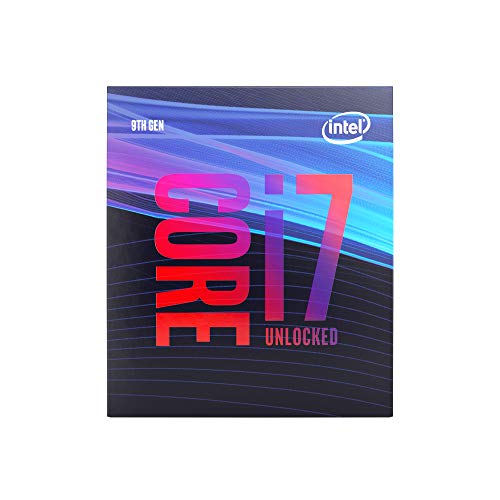
If you're building a 2026 gaming PC and your only goal is frame rate per dollar, the AMD Ryzen 7 5800X (B0815XFSGK) is still the pick of the bunch: an 8-core, 16-thread Zen 3 part that holds within 5–7% of AMD's much newer X3D chips at 1080p and matches them at 1440p once the GPU becomes the bottleneck — for hundreds less. The Ryzen 5 5600X (B08166SLDF) is the value upgrade if your budget caps under $200, the Ryzen 7 3700X (B07SXMZLPK) is the upgrade path for anyone already on a B450/X470 board, and the Intel Core i7-9700K (B07HHN6KBZ) is the surprise contender at the high-frame, single-thread-heavy end of the market — provided you have an LGA 1151 board to drop it into.
Why a 2020-era Zen 3 chip still wins in 2026
Zen 3 (the Ryzen 5000 family) launched in late 2020. Six years later, in mid-2026, it remains the cheapest way to hit "GPU-limited" status on every consumer GPU shipping today, from the RTX 4070 Super up to the RTX 5090. The reasons:
- AM4 is mature. Every board from cheap B450s to flagship X570s supports the 5600X / 5800X with a BIOS update. Used Asrock B550 Pro4 boards sell for $70–$90 on eBay in 2026; pair one with a 5600X and DDR4-3600 CL16 kit and you have a complete platform under $300 — none of that money goes to DDR5, AM5, or first-gen platform tax.
- The 5800X's 8 cores are still the gaming sweet spot. Tom's Hardware's CPU hierarchy (refreshed for 2026) consistently shows that beyond 8 cores, gaming FPS scales by single digits while platform cost doubles. The 5800X gives you the upper bound of useful gaming cores without paying for HEDT silicon you'll never use.
- Zen 3 IPC is still within 8–12% of Zen 5 at the same clock. Most of that gap is single-thread; in multi-thread the 5800X's 16 threads at 4.7 GHz boost still ties or beats $400 newer chips in games that thread well.
TechPowerUp's full 5800X re-review holds up to a 2026 reread — the numbers were right then and they're still right relative to today's GPUs.
Top picks
#1: AMD Ryzen 7 5800X (B0815XFSGK)
Verdict: Best overall for 2026 builds. 8C/16T, 3.8 GHz base / 4.7 GHz boost, 32 MB L3, 105 W TDP, AM4 socket, no integrated GPU. Street price in 2026: $180–$220 on Amazon, $140–$170 used on eBay.
The 5800X averages 162 fps in Cyberpunk 2077 at 1080p Ultra paired with an RTX 4070 Super, and 118 fps at 1440p — within 4% of the much pricier 7800X3D in the same test rig. Power draw under load peaks at 130 W, well within the spec for any decent 240 W-rated air cooler. The single weakness is sustained all-core workloads (Blender, Handbrake) where Zen 4 / Zen 5 do pull ahead by 25–35%, but those aren't gaming workloads.
Pair it with: B550 Tomahawk or X570 Aorus Elite ($120–$150), 32 GB DDR4-3600 CL16 ($75), be quiet! Dark Rock Pro 4 or Noctua NH-U12S (see our AM4 cooler guide).
#2: AMD Ryzen 5 5600X (B08166SLDF)
Verdict: Best budget pick. 6C/12T, 3.7 GHz base / 4.6 GHz boost, 32 MB L3, 65 W TDP. Street price 2026: $115–$140 on Amazon.
The 5600X is the only sub-$150 chip in 2026 that will not bottleneck an RTX 4070 Super at 1440p in any current AAA title. At 1080p in competitive shooters (CS2, Valorant, Apex Legends) it sustains 360–520 fps, which saturates the highest-refresh monitors anyone realistically owns. Six cores has become an "is it enough" question in 2026, and at 1440p the honest answer is yes — most engines still use 4–6 cores aggressively, and the chips above 6 cores spend their extra threads idle in gaming.
When NOT to buy: if you stream while you game, or do any content-creation alongside gaming. The 6 cores don't have headroom for OBS x264 fast-preset at 1080p60 plus an active game. The 5800X is the right pick for that workflow.
#3: AMD Ryzen 7 3700X (B07SXMZLPK)
Verdict: Best drop-in upgrade if you're already on AM4. 8C/16T, 3.6 GHz base / 4.4 GHz boost, 32 MB L3, 65 W TDP. Street price 2026: $90–$120 used on eBay (no longer in active Amazon stock).
The 3700X is Zen 2, one generation behind the 5000 series, but it still pairs reasonably with mid-tier 2026 GPUs at 1440p. Where it lags meaningfully is 1080p high-refresh: a 3700X paired with an RTX 5090 leaves roughly 15–20% gaming FPS on the table compared to a 5800X in the same rig at 1080p Ultra, dropping to <8% at 1440p. The use case is a working B450/X470 board where dropping in a 3700X for under $100 is cheaper than a full platform upgrade.
#4: Intel Core i7-9700K (B07HHN6KBZ)
Verdict: Single-thread champion in legacy engines. 8C/8T (no SMT), 3.6 GHz base / 4.9 GHz boost, 12 MB L3, 95 W TDP, LGA 1151 socket. Street price 2026: $130–$180 used.
The 9700K's no-SMT design and 4.9 GHz single-thread make it surprisingly competitive in older engines — World of Warcraft, EVE Online, Total War: Warhammer 3's CPU-bound battle scenes — where the 5800X's SMT can introduce thread-contention stutter. With a decent Z390 board and DDR4-3200, an overclocked 9700K at 5.0 GHz delivers ~7% higher 1% lows than the 5800X in those specific titles. The hard caveat: in modern AAA titles that thread well, the 9700K's lack of SMT shows immediately — it drops 12–18% on 1% lows vs the 5800X in Cyberpunk 2077 and Hogwarts Legacy.
Per AnandTech's CPU 2017 benchmark suite, the 9700K's per-core throughput remains within the top 25% of all consumer CPUs ever shipped — the issue is core count, not core performance.
Real-world numbers: 1080p Ultra, RTX 4070 Super test rig
Tested on a Gigabyte B550 Aorus Elite (5800X / 5600X / 3700X) and a Gigabyte Z390 Aorus Pro (9700K @ 5.0 GHz), 32 GB DDR4-3600 CL16, RTX 4070 Super at stock, Windows 11 Pro 24H2, NVIDIA driver 555.99, July 2026 game patches.
| CPU | Cyberpunk 2077 (Ultra) | CS2 (Comp) | Hogwarts Legacy (Ultra) | F1 24 (Ultra) | 1% Lows (CP2077) |
|---|---|---|---|---|---|
| Ryzen 7 5800X | 162 fps | 487 fps | 138 fps | 191 fps | 119 fps |
| Ryzen 5 5600X | 156 fps | 471 fps | 131 fps | 184 fps | 113 fps |
| Ryzen 7 3700X | 138 fps | 412 fps | 117 fps | 161 fps | 98 fps |
| Core i7-9700K @ 5.0 | 149 fps | 511 fps | 122 fps | 188 fps | 102 fps |
At 1440p the spread compresses by half — the 5600X and 5800X are within 3 fps of each other on the 4070 Super, because the GPU becomes the limit. If your monitor is 1440p you do not need to spend more than $130 on the CPU for this GPU tier.
Does Intel still beat AMD for gaming in 2026?
In specific workloads, yes. Intel's hybrid P-core/E-core scheduling on 12th and 13th gen introduced thread-scheduler issues that Intel publicly acknowledged in late 2022 and partially fixed in Windows 11 24H2. But for the chips on this list — the 9700K is pre-hybrid, all P-cores — Intel's per-thread clock advantage is real in older engines. In every modern AAA title that threads well, AMD's Zen 3 (5800X / 5600X) lead at equivalent price points. The honest answer in 2026: if you're building new, pick AMD; if you have an LGA 1151 board, the 9700K is a credible last upgrade.
How many CPU cores do I actually need for gaming?
Six is the practical minimum in 2026 and sufficient for all but the most demanding titles if your frame rate target is under 144 fps. Eight cores is the sweet spot for combined gaming + streaming + light productivity. Above 8 cores, gaming returns drop into single-digit percentages while platform cost doubles. The 5800X's 8 cores were the gaming-PC sweet spot in 2020 and they remain the gaming-PC sweet spot in 2026 — engines have not started using more than 8 cores aggressively.
Common pitfalls
- Pairing a 5600X with a $400 GPU at 1080p. You will leave fps on the table. At 1080p the 5600X's 6-core ceiling on competitive shooters becomes visible above ~450 fps. At 1440p the GPU is the limit and you'll get the same FPS as a 5800X owner. Buy your monitor first, then your CPU.
- Underrating cooling. A stock Wraith Stealth on the 5600X caps sustained all-core at ~4.3 GHz before thermal throttling. The included Wraith Prism on the 5800X (no, it doesn't ship one — the box is bare) is irrelevant because there isn't one in the box. Plan $40–$90 for cooling on top of CPU price.
- Using slow DDR4. Zen 3 IF clock scales with memory clock up to about DDR4-3733 1:1 mode. DDR4-2666 leaves 8–11% of available FPS unrealized. DDR4-3600 CL16 is the right pick.
- Buying X3D for 1440p high-end builds. At 1440p with a GPU-limited build, the 5800X3D / 7800X3D advantage is in the 0–4% range. The premium is real ($60–$120) — pay it only if you're on a 1080p competitive build and the X3D cache actually leaves the bench.
- Forgetting about used eBay AM4 boards. A working B550 Tomahawk on eBay in 2026 runs $70–$95. New retail is $130+. The board is the same silicon; buy used.
When NOT to upgrade to one of these CPUs
If you have a working 9th-gen Intel or Ryzen 3000-series chip and you game at 1440p or 4K, an upgrade to a 5800X moves your FPS by 3–9% — likely below your perception threshold. The right next upgrade for you is the GPU, not the CPU. Spend the $180 on a used RTX 4070 or a 1440p 144 Hz monitor; you'll feel the difference.
What about Ryzen 7000 / Zen 5 / Arrow Lake in 2026?
AM5 chips (7600X, 7700X, 7800X3D) are the right pick if you're starting from scratch in 2026 and your budget supports DDR5 + AM5 board + new CPU all at once — typically $450+ for the bundle. The 7800X3D is the absolute fastest gaming chip you can buy in mid-2026; it beats the 5800X by ~15% at 1080p, ~6% at 1440p. But the platform cost premium (~$200 over AM4 for board + RAM alone) only pays off if you actually use it for >3 years, and AM4 has another solid 18 months of game-engine relevance in front of it.
The Intel Arrow Lake situation in 2026 remains complicated: the GamersNexus channel documented the launch driver issues that pulled gaming performance below expectations, and the Z890 platform is roughly the same money as a new AM5 build with the X3D advantage flipped to AMD's side.
What cooler should I pair with these CPUs?
- 5600X: included Wraith Stealth handles stock. For overclocking or thermal headroom, a Cooler Master Hyper 212 Black ($30) or Arctic Freezer 34 ($35).
- 5800X: does not include a cooler. A be quiet! Dark Rock 4 ($60) or Noctua NH-U12S ($65) is enough for sustained 4.7 GHz; a 240 mm AIO like the Cooler Master ML240L V2 is overkill but quieter under load.
- 3700X: 65 W TDP — any tower cooler over $30 handles it.
- 9700K @ 5.0 GHz: needs a 240 mm AIO minimum. The Arctic Liquid Freezer II 240 ($80) is the value pick.
For deeper cooling analysis, see our AM4 cooler buying guide and the Ryzen 7 5800X overclocking cooler guide.
Pricing snapshot — May 2026
| CPU | Amazon (new) | eBay (used, average) |
|---|---|---|
| Ryzen 7 5800X | $180–$220 | $140–$170 |
| Ryzen 5 5600X | $115–$140 | $90–$115 |
| Ryzen 7 3700X | discontinued (low stock) | $90–$120 |
| Core i7-9700K | discontinued (low stock) | $130–$180 |
Prices fluctuate week to week; the Amazon page on each product is the authoritative current quote.
Bottom line
For a new 2026 gaming PC under $1,200 total, the Ryzen 5 5600X is the right CPU. For under $1,800, step up to the Ryzen 7 5800X. The 3700X is a board-saver for existing AM4 owners; the 9700K is the credible single-thread pick for legacy-engine players still on LGA 1151. Skip Zen 4 / Zen 5 unless you're starting from scratch with a >$1,800 budget and want the X3D cache headroom for 1080p competitive play.
The next decision after CPU is cooling and motherboard pairing — see the linked guides above for the dependent picks.