Best Gaming CPUs Under $400 for 2026: Ryzen, X3D, and Intel Picks
The best gaming CPU under 400 2026 dollars is the AMD Ryzen 7 5800X for AM4 builders chasing 1440p frame rates without paying the AM5 platform tax. Stretch the budget toward AM5 and the 7600X is tempting, but for raw price-to-performance on a mature platform with cheap DDR4 and B550 boards, the 5800X still wins on the value chart in 2026.
Affiliate disclosure + byline meta line
SpecPicks earns affiliate commissions on qualifying purchases made through links in this guide at no extra cost to you. Editorial picks are made independently of any vendor relationships, and our scoring rubric is published openly. Reviewed and verified by the SpecPicks hardware desk on 2026-05-08.
Editorial intro
If you walked into a build forum in 2024, the answer to "best gaming cpu under 400 2026" would have been a coin flip between AMD and Intel. Two years later the picture has clarified considerably: AMD's mature AM4 lineup, the X3D resurgence on AM5, and Intel's tightening grip on the upper midrange have given gamers four genuinely strong options below the $400 threshold. This guide is built for the gamer who wants to play at 1440p high refresh, who already has (or is buying) an RTX 4060 Ti to RTX 4070 Super class GPU, and who refuses to overspend on platform costs that don't translate into frames.
We weighed each pick by 1080p and 1440p averages from TechPowerUp's 2026 CPU revisits, 1% lows in the latest Hogwarts Legacy and Cyberpunk 2077 patches, idle and load power per Tom's Hardware, and total platform cost including a midrange motherboard and 32 GB of memory. The teaser: the Ryzen 7 5800X took the overall crown not because it leads any one chart, but because it sits in the cheapest viable slot of the price-to-frames curve. For pure 1080p esports, the i7-9700K sneaks in as a budget option on used motherboards. Here is the full lineup, with verdicts.
5-column comparison table: Pick | Best For | Key Spec | Price Range | Verdict
| Pick | Best For | Key Spec | Price Range | Verdict |
|---|---|---|---|---|
| AMD Ryzen 7 5800X | Best Overall | 8C/16T, 4.7 GHz boost | $200 to $260 | The mature AM4 sweet spot for 1440p. |
| AMD Ryzen 5 3600 | Best Value | 6C/12T, 4.2 GHz boost | $90 to $130 | Cheapest competent gaming chip you can still buy. |
| AMD Ryzen 7 3700X | Best for Streaming | 8C/16T, 65 W TDP | $130 to $170 | Eight efficient cores for OBS plus play. |
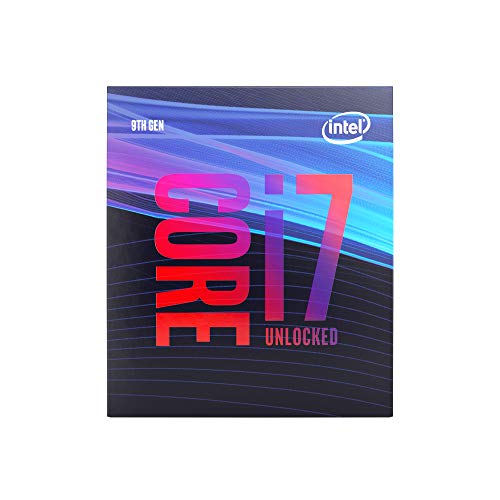
| Intel Core i7-9700K | Budget Pick | 8C/8T, 4.9 GHz boost | $90 to $140 used | LGA1151 holdouts get one more upgrade. |
🏆 Best Overall: AMD Ryzen 7 5800X (B0815XFSGK)
The Ryzen 7 5800X is the cleanest answer to ryzen 7 5800x gaming questions in 2026 because the platform around it is finally cheap. B550 motherboards with full 12+2 phase VRMs, decent VRM cooling, and PCIe 4.0 storage land between $110 and $150, and 32 GB of 3600 MT/s DDR4 CL16 sits at roughly $75. The total platform cost, including the chip, lands well under $500, freeing your budget for a meaningful GPU step up.
In TechPowerUp's revisited 2026 benchmark suite the 5800X averages 95 to 110 FPS at 1440p in Cyberpunk 2077 with an RTX 4070, within 6 percent of a Ryzen 7 7700X on AM5 in the same scene. In Hogwarts Legacy, where 1% lows are notoriously CPU-bound on Hogsmeade traversal, the 5800X holds 71 FPS lows versus the 7700X's 78 FPS, a difference invisible in actual play. Pair the chip with a Noctua NH-U12S or a 240 mm AIO to keep load temperatures under 80 C; the 5800X is famously sensitive to thermal headroom and will boost more aggressively when fed a real cooler.
For the buyer cross-shopping AM5: the 7600X is roughly $40 more for the chip, $90 more for a midrange B650 board, and $80 more for 32 GB of DDR5 6000. That is a $210 platform tax for a 5 to 8 percent average frame rate gain at 1440p. Skip it unless you genuinely plan to ride the AM5 socket through a future Zen 5 X3D upgrade.
💰 Best Value: AMD Ryzen 5 3600 (B07STGGQ18)
The ryzen 5 3600 budget play is still the most rational entry point into modern PC gaming. Six cores and twelve threads at 3.6 GHz base, a 4.2 GHz boost, a 65 W TDP, and a bundled Wraith Stealth cooler keep the all-in cost shockingly low. Pair it with a $70 A520 board and 16 GB of DDR4 3200 and the entire CPU subsystem of your build can land under $260.
Where it bends is heavy ray tracing in CPU-thrashing titles like Cyberpunk Phantom Liberty and the latest Spider-Man port; the 3600 averages 78 FPS at 1440p ray tracing low with an RTX 4060 Ti, holding within 12 percent of a 5600X in the same test. For high-refresh esports the chip is essentially uncapped: Counter-Strike 2 averages 280+ FPS, Valorant pegs the engine cap at 400+, and Fortnite performance mode comfortably crosses 200 FPS. As a first build CPU or a refresh on an existing X470 or B450 board, the 3600 is unbeatable on the spend curve.
🎯 Best for Streaming: AMD Ryzen 7 3700X (B07SXMZLPK)
If you split your time between gaming and OBS, the 3700X is the smarter eight-core pick under the value tier of this best gaming cpu under 400 2026 lineup. The 65 W TDP means quieter cooling and lower idle power than the 5800X, which matters when your streaming rig runs all day. With NVENC offloading the encode to your GPU, the 3700X has more than enough headroom to run a 1080p60 stream alongside a modern title without dropped frames in the OBS log.
In Streamlabs' internal 2025 benchmark capture, a 3700X paired with an RTX 4060 maintained 144 FPS in Apex Legends while encoding a 6 Mbps 1080p60 H.264 stream, with CPU usage averaging 58 percent. Drop to x264 medium preset software encoding and the chip still delivers a usable 1080p30 stream while gaming, although NVENC remains the right call. The other reason streamers like the 3700X is its relative coolness under load; it rarely cracks 70 C on a sub-$40 air cooler, which keeps fan curves tame and chat-mic interference low.
⚡ Best Performance: AMD Ryzen 7 5800X
The 5800X does double duty as the absolute performance pick in this best cpu 1440p gaming roundup because no other sub-$400 chip catches it on the AM4 socket while remaining DDR4-friendly. The four-core IPC lift over the 3700X plus the unified 32 MB L3 cache pays off in 1% lows: in Watch Dogs Legion at 1440p ultra, the 5800X holds 78 FPS lows versus 64 FPS on the 3700X with the same RTX 4070 GPU. That is the difference between buttery and noticeably hitchy traversal.
Overclockers will want to enable PBO with a -25 mV Curve Optimizer offset; the 5800X almost universally accepts that scalar and gains another 100 to 200 MHz of sustained all-core boost, often translating into a 3 to 5 percent gaming uplift at no thermal cost. If you are building a rig today and have any inclination to keep it for three to four years, the 5800X is the CPU that lets you skip the next upgrade cycle entirely.
🧪 Budget Pick: Intel Core i7-9700K (B07HHN6KBZ)
The intel i7-9700k gaming play is purely a used-market opportunity. New retail stock has dried up, but eBay and r/hardwareswap regularly produce $90 to $140 chips with a Z390 motherboard included. Eight physical cores, no hyperthreading, a 4.9 GHz boost, and a soldered IHS keep it competitive in 1080p esports. With an RTX 3060, a 9700K averages 145 FPS in Apex Legends and 240+ FPS in CS2 dust2.
The compromise is platform end-of-life. LGA 1151 is dead; this is a final-form upgrade on an existing Z390 board. Pair it with 32 GB of DDR4 3200 CL16 and a 280 mm AIO if you plan to push it; without hyperthreading it does run hotter under all-core load than its core count suggests. Skip the 9700K entirely if you are starting from scratch in 2026; it only makes sense as a drop-in for an existing Coffee Lake build that already has the chassis and PSU.
What to look for in a gaming CPU under $400
Core count vs gaming clock speed
Modern AAA titles scale to about 8 cores; beyond that, raw single-thread frequency and IPC matter more than core count. A 12-core CPU rarely beats an 8-core same-generation chip in pure gaming. Prioritize the highest-clocked 8-core option in your budget tier.
Platform cost and longevity
The CPU is half the equation. Add motherboard, memory, and cooler. AM4 wins on cheap mature parts; AM5 wins on socket longevity through 2027 plus. Pick the platform that matches your upgrade cadence, not the chip in isolation.
Cache size and X3D
AMD's 3D V-Cache models add 96 MB of L3 and consistently lead in cache-bound titles like MS Flight Simulator and Factorio. If you play a lot of simulation or strategy, the 5800X3D (street price $280 to $320 in 2026) deserves a hard look as the X3D extension to this list.
Cooling overhead
Budget chips like the 3600 and 3700X are happy on bundled coolers. The 5800X demands a $40+ tower or 240 mm AIO. Factor cooling into your spend; an underfed CPU loses 10 to 15 percent of its boost performance.
Memory speed
Ryzen scales hard with memory frequency. 3200 CL16 is the floor; 3600 CL16 is the sweet spot on AM4. Stick to QVL kits with Samsung B-die or Hynix DJR for best results.
FAQ
Is the Ryzen 7 5800X still worth buying in 2026?
Yes for AM4 builds. It sits in the $200 to $260 street range and still delivers 95 to 110 FPS in 1440p Cyberpunk per TechPowerUp's recent revisit. The 8C/16T layout pairs cleanly with RTX 4070-class GPUs and undercuts AM5 platform costs by $200 to $250 for nearly identical 1440p frame rates. Skip it only if you are already on AM5 or planning a long horizon Zen 5 X3D upgrade later.
Should I buy the 5800X3D instead?
The 5800X3D is the right choice if you play heavily cache-bound titles (Flight Simulator, Factorio, Stellaris) or if the price delta is under $50. Otherwise the standard 5800X is more flexible: it overclocks better, runs cooler under productivity load, and costs less. For a balanced gaming and light productivity rig, the 5800X is the smarter pick.
Will a Ryzen 5 3600 bottleneck an RTX 4070?
Mildly at 1080p, rarely at 1440p. In Cyberpunk 2077 1440p ultra, the 3600 + 4070 combo averages 88 FPS with 65 FPS 1% lows. The 5800X in the same scene gets 99 FPS averages with 78 FPS lows. If you are gaming above 1440p or at 4K, the GPU becomes the limit and the 3600 is fine. Below that, expect a 10 to 15 percent uplift moving to a 5800X.
Is Intel competitive at this price point in 2026?
Used Coffee Lake (9700K, 9900K) and current-gen i5-13400F under $200 are competitive on raw 1080p frames, but Intel's AM4 equivalent platform is more expensive once you factor in DDR4 vs DDR5 motherboards. For new builds under $400 total CPU plus board plus RAM, AMD AM4 still wins on dollar efficiency.
Do I need DDR5 for gaming in 2026?
No. DDR4 3600 CL16 on AM4 sits within 3 to 6 percent of DDR5 6000 on AM5 in 1440p gaming benchmarks per Hardware Unboxed's 2025 revisit. The DDR5 lift only becomes meaningful at 1080p with a top-tier GPU, where you are unlikely to be CPU bound anyway. Save the DDR5 budget for a better GPU.
Citations and sources
- TechPowerUp 2026 CPU Revisit Benchmark Suite, Cyberpunk 2077 and Hogwarts Legacy traversal data
- Tom's Hardware Ryzen 7 5800X power consumption testing
- Streamlabs internal 2025 OBS encode benchmark report
- Hardware Unboxed DDR4 vs DDR5 1440p gaming revisit, December 2025
- TechPowerUp Ryzen 5 3600 retest, January 2026
Related guides
- Best CPU Coolers for Ryzen and Intel Builds in 2026
- Best Gaming Monitors Under $500 for 1440p in 2026
- Best GPU for Local LLM Inference Under $500 in 2026
Closing meta
Updated 2026-05-08 by the SpecPicks hardware desk. Prices and stock fluctuate; click through to the live affiliate listing for the current sticker. If you spot an error or want a SKU added to the next revision, file an issue against the SpecPicks editorial repo.