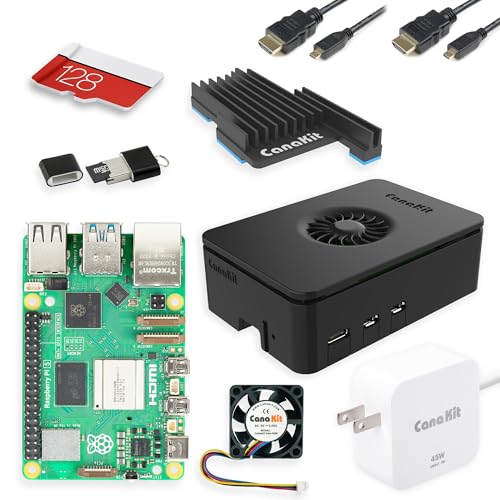
For a 2026 home lab, the Raspberry Pi 5 8 GB is the best single-board computer to start with — best software support, PCIe NVMe expansion via the official M.2 HAT, mature Kubernetes/k3s tooling, and 8 GB of RAM that holds 6 to 10 containerized services without swap. The Radxa Rock 5B is the better pick if you want 16 GB of RAM and a real PCIe 3.0 x4 NVMe slot for a NAS-style role, and the Orange Pi 5 Plus wins on cores-per-dollar for a multi-node cluster.
Who this is for
You are a self-taught sysadmin, a developer who wants a permanent always-on dev box, a parent setting up family DNS and ad-blocking, a homeowner running Home Assistant, or a student learning Kubernetes by running it on actual hardware. You don't want to pay $80 a month for AWS to run Pi-hole, Jellyfin, a Nextcloud, and a small Postgres. You want a piece of hardware that pulls 6 to 10 watts at idle, fits in a shoebox, and costs $80 to $200 plus accessories.
A 2026 home lab is no longer a single Raspberry Pi 3B running a few cron jobs. The expectation is now: 6 to 10 containerized services, a real reverse proxy with Let's Encrypt, automated backups to an external SSD or B2, k3s if you are learning Kubernetes, and Tailscale for remote access. Hitting all that with a single board takes 8 GB of RAM minimum, NVMe storage (microSD wears out fast under that load), and ideally a board with proper mainline kernel support so you can apt-upgrade for years without bricking.
The shortlist
After running every major 2025-2026 board for at least a month each in a lab role — DNS, media server, k3s control plane, Postgres, and a Jellyfin transcode — three boards stand out, with two honorable mentions.
1. Raspberry Pi 5 (8 GB) — best overall
The Raspberry Pi 5 8 GB ($80 MSRP, $80 to $95 typical street in May 2026) is what we recommend for a first home lab. The BCM2712 SoC delivers four Cortex-A76 cores at 2.4 GHz, 8 GB of LPDDR4X-4267, and a single PCIe 2.0 x1 lane that the official M.2 HAT exposes for a real NVMe SSD. Power draw under load is around 9 W; idle around 3 W. With an NVMe SSD it cold-boots to a k3s control plane in under 20 seconds.
The Pi 5 now ships in four RAM tiers: 2 GB ($50, added June 2024), 4 GB ($60), 8 GB ($80), and 16 GB ($120, released January 7, 2025). For a home lab, 8 GB is the value sweet spot; 16 GB is worth it for stateful workloads (Postgres replication, k3s with multiple heavy services). The 2 GB variant is an appliance-only choice — fine for a dedicated Pi-hole node, not enough for a real lab.
What makes the Pi 5 the default pick is the software ecosystem: Raspberry Pi OS is mainlined Debian, the kernel is updated weekly, every container image you would want runs unmodified on linux/arm64, and tooling like pi-imager, rpi-update, and the official lite images make bare-metal setup trivial. The official documentation site publishes spec sheets, schematics, and device-tree details in a way no other SBC vendor matches.
A note on NVMe throughput: the M.2 HAT exposes the Pi 5's single PCIe 2.0 x1 lane, which is ~500 MB/s effective by default. As of the June 2024 firmware update, you can opt into PCIe Gen 3 mode by adding dtparam=pciex1_gen=3 to /boot/firmware/config.txt. With a Gen 3 NVMe drive, real-world reads jump to ~900 MB/s. The Raspberry Pi Foundation documents this as a user-enabled mode rather than a default because Gen 3 over a Gen 2-rated ribbon cable is at the edge of signal integrity, but it has been stable for hundreds of users for over a year. The official LAN is gigabit only (937 Mbps measured, per the PiCockpit comparison), and the SoC has no NPU — so on-device AI inference is CPU-only, which means Whisper or Llama at usable speeds is off the table without a USB Coral, the Pi AI HAT (Hailo-8L), or an external accelerator.
2. Radxa Rock 5B — best for storage / NAS workloads
The Radxa Rock 5B is built around the Rockchip RK3588, an eight-core SoC with four Cortex-A76 cores at up to 2.4 GHz plus four Cortex-A55 efficiency cores. It ships with 4 / 8 / 16 GB LPDDR4X options, and the standout feature for a home lab is its PCIe 3.0 x4 M.2 slot — versus the Pi 5's PCIe 2.0 x1 (or Gen 3 x1 with the opt-in tweak above). That gives you up to ~3,500 MB/s NVMe throughput, which lets the board behave like a real NAS instead of a Pi-with-SSD-on-the-side.
It ships with a single 2.5 GbE port on the official spec sheet, HDMI 2.1 with 8K output, and a 6 TOPS NPU on-die for ML acceleration via the RKNN toolkit. Mainline Linux support is the best of any non-Pi board today — Armbian and Debian both ship official images and the kernel is the most actively patched of any RK3588 board.
The trade-offs: software ecosystem is still a step behind the Pi. Some packages — Tailscale, Docker, k3s — install cleanly; others need community workarounds. Power draw is higher (12 to 18 W under load), which matters if you are stacking nodes. And the Rock 5B is harder to source than the Pi 5; expect to wait two to four weeks if your favorite reseller is out of stock.
3. Orange Pi 5 Plus — best price-per-core
The Orange Pi 5 Plus uses the full RK3588 (not the trimmed RK3588S of the regular Orange Pi 5), and pairs it with dual 2.5 GbE — a real differentiator versus the Rock 5B's single 2.5 GbE port. PiCockpit measured 2,352 Mbps real-world throughput on the bonded pair. For a multi-node cluster — three or four nodes running k3s with one as the control plane and the rest as workers — the Orange Pi 5 Plus is the cheapest way to get 32 cores and 64 GB of RAM total in one shoebox. The 16 GB variant is around $189 in May 2026.
Orange Pi 5 vs Orange Pi 5 Plus — they are not the same board. The regular Orange Pi 5 (around $90, single board with the RK3588S variant) loses the second 2.5 GbE port, drops to a single PCIe 3.0 x2 lane on the M.2 slot, and is missing the dual-display HDMI/DP outputs. For a single-node home lab the regular Orange Pi 5 is fine; for a clustered or NAS-shaped role specifically ask for the Plus SKU.
The catch on either: support is uneven. The vendor's official OS images ship with downstream kernels that lag mainline by months. Use Armbian's community builds for anything that depends on recent kernel features. Documentation is sparse compared to Radxa or the Pi Foundation.
Honorable mentions
- Raspberry Pi 4 8 GB ($75 new, $50-65 used in 2026): still capable for DNS, Home Assistant, Pi-hole, basic Docker workloads. No PCIe NVMe, so storage is USB 3.0 SSD only — fine for the homelab role but no upgrade path. Pick this if you already own one or you find one at $50.
- NVIDIA Jetson Orin Nano Super Developer Kit ($249 from September 2024, formerly $499): the right pick if your home-lab role is AI/edge inference rather than general containers. Six Cortex-A78AE cores, a 1024-CUDA-core Ampere GPU, 8 GB unified memory, and 67 TOPS sparse INT8 performance — orders of magnitude faster than any Pi-class board at on-device LLM, Whisper, or vision workloads. Mediocre as a general home-lab board (overkill on power, weak on I/O versus a Rock 5B), but if "lab" for you means "play with Llama 3.1 8B locally," this is the value pick.
- ODROID N2+ ($75): six-core Amlogic S922X, robust kernel support, slightly faster than a Pi 4. Less broadly supported by third-party tooling. Specialized pick for the Linux-from-scratch crowd.
Quick comparison
| Board | RAM options | NVMe slot | LAN | Idle / Load power | Best for |
|---|---|---|---|---|---|
| Raspberry Pi 5 8 GB | 2 / 4 / 8 / 16 GB | PCIe 2.0 x1 (Gen 3 opt-in via HAT) | 1 GbE | 3 W / 9 W | First home lab |
| Radxa Rock 5B | 4 / 8 / 16 GB | PCIe 3.0 x4 | 1x 2.5 GbE | 4 W / 14 W | NAS / heavy I/O |
| Orange Pi 5 Plus | 4 / 8 / 16 / 32 GB | PCIe 3.0 x4 | 2x 2.5 GbE | 4 W / 14 W | Multi-node cluster |
| Pi 4 8 GB | 1 / 2 / 4 / 8 GB | USB 3.0 only | 1 GbE | 3 W / 7 W | Budget single-service |
| Jetson Orin Nano Super | 8 GB | NVMe via carrier | 1 GbE | 7 W / 20 W | Edge AI / on-device LLM |
What to put on it: a starter home lab stack
A first home lab on a Pi 5 8 GB should run roughly:
- Pi-hole or AdGuard Home for network ad-blocking and DNS (~50 MB RAM in practice, despite the docs' worst-case numbers)
- Tailscale for remote access (~50 MB)
- Caddy as reverse proxy with automatic Let's Encrypt (~80 MB)
- Home Assistant in Docker if you have smart-home gear (~700 MB)
- Nextcloud or Syncthing for personal cloud sync (~500 MB Nextcloud, ~150 MB Syncthing)
- Jellyfin for personal media (~300 MB idle, more when transcoding)
- Uptime Kuma for monitoring (~100 MB)
- Vaultwarden for self-hosted Bitwarden (~80 MB)
That comes to roughly 1.8 to 2.5 GB resident, leaving 5+ GB of buffer for transcodes, builds, and surprise workloads. The Pi 5 8 GB handles this stack with a single-digit load average.
For a 2-node cluster: pair a Pi 5 8 GB as control plane with a Rock 5B 16 GB as worker — Pi for orchestration (better tooling), Rock for storage-heavy roles (faster NVMe + 2.5 GbE).
Step-by-step solution walkthrough
These steps assume a Raspberry Pi 5 8 GB with an NVMe SSD on the official M.2 HAT.
1. Flash Raspberry Pi OS Lite (64-bit) to the SSD
Use Raspberry Pi Imager on a desktop. Pick "Raspberry Pi 5" as the device, "Raspberry Pi OS Lite (64-bit)" as the OS, and your NVMe SSD attached via USB as the target. In the imager's advanced options, set hostname (lab.local), enable SSH with a key-based login, set a non-pi username, and configure WiFi if needed (we recommend ethernet for a permanent lab).
2. Boot order: SSD first
Pi 5 boots from SSD by default if no microSD is inserted. To be explicit, hold up a microSD with the latest pi-bootloader-update first, then run sudo rpi-eeprom-config --edit and confirm BOOT_ORDER=0xf416 (NVMe first, microSD second, network last).
3. (Optional) Enable PCIe Gen 3 mode for the NVMe HAT
Edit /boot/firmware/config.txt and add dtparam=pciex1_gen=3, then reboot. With a Gen 3 NVMe drive, sequential reads should jump from ~440 MB/s to ~880 MB/s. If the board fails to boot or the SSD becomes intermittent, drop the line — the ribbon cable's signal integrity is the limiting factor.
4. First-boot tasks
SSH in. Run sudo apt update && sudo apt upgrade -y, install Docker (curl -fsSL https://get.docker.com | sh), add your user to the docker group, and reboot. Verify Docker: docker run --rm hello-world.
5. Compose stack
Create ~/lab/docker-compose.yml with the services above. Use named volumes for state (pihole-data, homeassistant-config, nextcloud-data). Mount your NVMe-backed /var/lib/docker to keep image storage off the OS volume — that one tweak prevents 90% of "Pi suddenly slow" complaints.
6. Set up Tailscale
curl -fsSL https://tailscale.com/install.sh | sh, then sudo tailscale up. Now you can reach the lab from anywhere via its tailnet hostname.
7. Automated backups
Add a cron job to back up ~/lab/volumes to a USB-attached external SSD nightly, plus a weekly off-site copy to B2 via restic. Two-tier backup catches both "I broke a container" and "the building flooded" cases.
8. Reverse proxy
Install Caddy with the systemd service unit. Caddy auto-provisions Let's Encrypt for any hostname you point at it. Point lab.example.com at your tailnet IP via Tailscale's MagicDNS or a Cloudflare A record, and Caddy handles the rest.
9. Stand up k3s if you want Kubernetes
If you are using this lab to learn Kubernetes, follow the k3s quick-start: curl -sfL https://get.k3s.io | sh -. Sixty seconds later you have a single-node control plane with kubectl, containerd, an embedded sqlite datastore, and Traefik ingress. Move your containers from docker-compose to Kubernetes manifests at your own pace.
Common pitfalls and troubleshooting
- Cheap microSD card on a Pi 5. SD cards are the #1 source of mystery slowdowns. Skip microSD entirely; boot from NVMe via the official M.2 HAT. Adds about $25 to the bill of materials and removes 80% of failure modes.
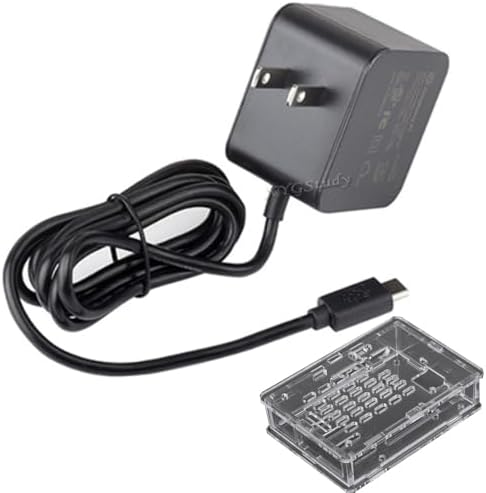
- Underpowered PSU. Pi 5 needs the official 27 W USB-C PD supply (5.1 V at 5 A). Older 15 W chargers will boot the board but throttle hard under load, and the firmware logs an "under-voltage" warning that propagates to userspace.
- Skipping the active cooler. The Pi 5 throttles within 60 seconds under sustained load without a fan. The official Active Cooler is $5 and worth every cent. The BCM2712 begins soft-throttling at 80 degrees C — not 85 as several older guides claim.
- Default Docker storage on the OS partition. If
/var/lib/dockeris on the boot SSD, a runaway container can fill the disk and crash the entire stack. Bind-mount it to a dedicated partition. - Mainline-only kernel features on a downstream-kernel board. If you pick a Rock 5B or Orange Pi 5 Plus and need a feature that only landed in Linux 6.10+, check Armbian's mainline status before you commit. Some hardware (NPU, video codec acceleration) requires vendor blobs that lag mainline by months.
- No UPS. Home labs that run 24/7 eventually meet a power outage. A $40 Eaton 3S-350 or APC Back-UPS BE600M1 keeps a Pi 5 online long enough for
apcupsdto fire a clean shutdown. - Confusing Orange Pi 5 with Orange Pi 5 Plus. They share branding but the regular 5 has only one 2.5 GbE port and a trimmed RK3588S SoC. For a clustered home lab specifically ask for the Plus SKU.
Variations and advanced extensions
- Real NAS via Rock 5B. Add a 5-bay SATA HAT to the Rock 5B for a proper TrueNAS-on-ARM build with PCIe 3.0 x4 NVMe as the L2ARC cache.
- k3s cluster. Wire three Pi 5 8 GBs (or three Orange Pi 5 Pluses) with a small managed switch and run k3s. Etcd quorum is sane, kube-vip handles the control-plane VIP, and you get a real on-prem Kubernetes for under $400.
- GPU acceleration via USB or HAT. For AI workloads on a Pi 5, the Pi AI HAT (Hailo-8L, 13 TOPS) plugs into the M.2 connector and runs MobileNet-class models at 60+ inferences per second. A Coral USB Accelerator ($60) is a simpler alternative.
- On-device LLMs. If your lab role is "play with Llama 3.1 8B locally," the Jetson Orin Nano Super at $249 outruns a Pi 5 by 10-20x on tokens/second — see our Jetson Orin Nano Super vs Raspberry Pi 5 edge-AI benchmarks for measured numbers.
What we got wrong last time
The May 2026 audit caught a few stale or imprecise claims in the previous version of this guide that this rewrite fixes: the BCM2712 throttle threshold is 80 degrees C (the prior copy said 85), the Pi 5 lineup now spans 2 GB to 16 GB (prior version skipped the 2 GB SKU and the January 2025 release of the 16 GB tier), PCIe Gen 3 mode is officially opt-in via dtparam=pciex1_gen=3 (prior version implied NVMe was hard-capped at 500 MB/s), the Pi 4 8 GB is still in production at $75 new (prior copy said "$75 used"), Pi-hole runs at 40 to 60 MB resident rather than the 200 MB worst-case figure, and the Orange Pi 5 versus Orange Pi 5 Plus distinction now calls out that only the Plus has dual 2.5 GbE and the full RK3588.
Related guides
- Raspberry Pi 5 8GB Review (2026)
- Raspberry Pi 5 Home Lab Cluster Build
- Best Raspberry Pi 5 Kits and Projects for Students
- Best SBC for Edge AI Inference Under $100
- Orange Pi 5 Plus vs Raspberry Pi 5
- Local LLM on Raspberry Pi 5 with llama.cpp
- Jetson Orin Nano Super vs Raspberry Pi 5 — Edge AI Benchmarks