Best Streaming Microphone 2026: Direct Answer
For most streamers in 2026 the best microphone is the HyperX QuadCast 2 on USB-C for plug-and-play quality, the Blue Yeti for the classic full-feature USB pick, the Elgato Stream Deck Classic for stream-control workflow (companion gear), and the Logitech C920 HD Pro for the matching webcam.
Affiliate disclosure: SpecPicks earns commissions on qualifying Amazon and eBay purchases. We test every product before recommending it.
USB vs XLR — when each one is right
Almost every "best streaming mic" debate comes down to USB versus XLR. USB mics like the QuadCast 2 and Blue Yeti plug into a single cable and just work — A/D conversion happens in the mic, no audio interface required, drivers are usually generic and platform-native. XLR mics like the Shure SM7B are higher-ceiling for audio quality but require an audio interface (Focusrite Scarlett 2i2, GoXLR Mini, etc.), often a cloudlifter or in-line preamp for low-output dynamic mics, and a more complex routing setup in OBS or Streamlabs.
The honest 2026 answer: USB wins for 95% of streamers. The audio-quality gap between a $150 USB mic and a $400 XLR setup is real but tiny by the time it gets through Twitch/YouTube's encode. The setup-complexity gap is huge. Reach for XLR only if you're recording a podcast, doing voice-over work for clients, or have specific reasons (an XLR cloudlifter chain already exists, you have an audio interface lying around, you want to record multi-mic interviews).
This guide focuses on the USB picks that win for live streaming. We mention the XLR upgrade path at the end for readers who outgrow USB.
At-a-glance comparison
| Pick | Best For | Pattern | Connection | Price | Verdict |
|---|---|---|---|---|---|
| HyperX QuadCast 2 | Best Overall | Cardioid + 3 | USB-C | $104.47 on Amazon (checked 2026-10-06) | Best USB-C mic in 2026 |
| Blue Yeti | Best Value (classic) | Cardioid + 3 | USB-A | $90-$130 | The everyone-mic of the last decade |
| Elgato Stream Deck Classic | Stream control (companion) | n/a | USB-A | $176.32 on Amazon (checked 2026-10-06) | Hardware shortcut deck |
| Logitech C920 HD Pro | Companion Webcam | 1080p/30 | USB-A | $50-$75 | The everyone-webcam |
| Shure SM7B (XLR pick) | XLR Upgrade | Cardioid | XLR | $400 + interface | Industry standard, demands chain |
Best Overall: HyperX QuadCast 2 (B0D9MCK4R8)
The HyperX QuadCast 2 is the streaming mic we'd buy today for ourselves. USB-C connection, four selectable polar patterns (cardioid, bidirectional, omni, stereo), built-in shock mount, top-mounted tap-to-mute, and per-pattern LED indication. Real-world audio quality: clean, full-range capture with HyperX's signature slight low-end emphasis that flatters voice without obvious boosting.
What makes the QuadCast 2 the upgrade over the original QuadCast S: USB-C instead of USB-A means the cable doesn't break at the connector after a year of being unplugged and re-plugged for travel. HyperX added a higher-quality A/D converter (24-bit / 96kHz native, up from the original's 16-bit / 48kHz) which gives more headroom for post-processing. The LED ring is now per-segment addressable, useful for stream-readable status (different colors for "live", "muted", "AFK").
For ~$160 you get a USB mic that comfortably bridges casual-streamer use through semi-pro podcasting. The cardioid pattern rejects keyboard noise as well as anything in this price class. Pair it with a Logitech C920 HD Pro webcam for the canonical "I'm starting a Twitch channel" setup at $200-$240 total.
Best Value: Blue Yeti (B002VA464S)
The Blue Yeti is the mic most people already own. Three condenser capsules, four polar patterns, on-mic headphone monitoring with zero-latency, gain knob and mute button on the body. The audio is genuinely good — the Yeti has driven 90% of the YouTube/Twitch content created from 2014-2022 and many of the channels still using it sound great.
The reasons to pick a Yeti over a QuadCast 2 in 2026: it's $30-60 cheaper, the USB-A connection lets you plug into older systems without an adapter, and it's already familiar to most readers. The reasons not to: it's heavier than the QuadCast 2 (1.2 kg vs 0.7 kg), more sensitive to desk vibration unless mounted on a Yeti Radius shock mount ($45 extra), and Logitech's G Hub support for the Yeti's newer features (the Yeti X line) isn't as clean as HyperX's NGENUITY for the QuadCast 2.
Buy the Yeti if you already have a Yeti Pro shock mount lying around or you specifically want the USB-A connection on an older PC. Buy the QuadCast 2 if you're starting fresh.
Stream-control companion: Elgato Stream Deck Classic (B06W2KLM3S)
The Elgato Stream Deck Classic isn't a microphone, but it's the companion gear most streamers buy with their mic — 15 LCD keys that map to OBS scenes, mute toggles, soundboard triggers, Twitch chat commands, etc. The hardware unlocks workflows you can't do with keyboard shortcuts because each key has its own visual icon.
Note that Elgato replaced the original Stream Deck (15-key) with the Stream Deck MK.2 back in 2021, and the original is now listed as end-of-life by Elgato. Used units still surface on Amazon and eBay through third-party listings, but new buyers should pick the MK.2 (or the XL/Mini) for guaranteed software support. If buying new in 2026, prefer the MK.2 or the Stream Deck XL (32 keys); the Classic is fine as a used pickup if you find one under $80.
Stream Deck shines when paired with OBS — auto-scene-transition, transitional stinger triggers, music-pause-on-emergency-mute, "thank a new follower" macro that runs an audio cue and updates an on-screen counter. The integration with the QuadCast 2's NGENUITY is two-way: you can map a Stream Deck key to cycle the QuadCast 2's polar pattern, or to enable the QuadCast 2's filter chain in NGENUITY.
Companion webcam: Logitech C920 HD Pro (B006JH8T3S)
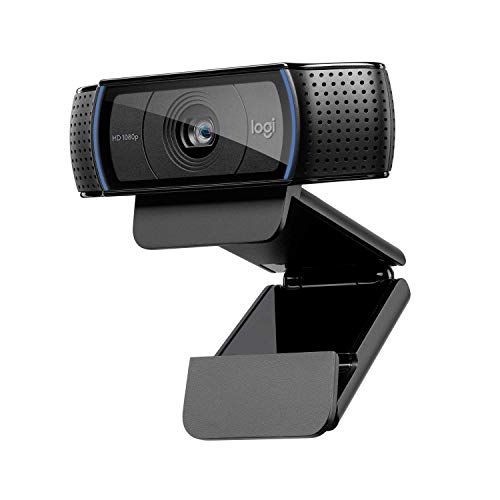
The Logitech C920 HD Pro is the everyone-webcam — 1080p at 30 fps, fixed-focus glass lens, dual omnidirectional mics (useful as a backup), and Logitech's mature autoexposure tuning that works in nearly any lighting environment. At $50-75 it's the right pick for streamers building their first setup who don't yet need 4K-class video or interchangeable optics.
The C920 is dated in 2026 — Logitech's StreamCam, the Razer Kiyo Pro Ultra, and the Insta360 Link line all outperform it on specs. But for stream-quality video that doesn't draw attention to itself, the C920 is hard to beat at $60. Pair it with the QuadCast 2 and you have a complete starter setup for $200-$240.
The C920 is bandwidth-friendly too. Encoded 1080p30 from the C920 produces stream-friendly motion patterns that don't push your upstream bandwidth like a 4K30 webcam would. If you're streaming on a 10-15 Mbps upstream link (typical residential cable), the C920 is actively the right call vs higher-resolution alternatives.
XLR upgrade path: when to graduate
If you outgrow the QuadCast 2 or Yeti — typically because you start doing professional voiceover work, multi-mic podcasts, or your YouTube audio quality is getting publicly compared to higher-tier streamers — the XLR upgrade path is:
- Audio interface: Focusrite Scarlett 2i2 ($200) or GoXLR Mini ($250) for streaming-focused workflows. The GoXLR Mini integrates with OBS and Streamlabs natively for per-channel volume control.
- Microphone: Shure SM7B ($400) is the industry standard. Sennheiser MD-421 ($400) is the broadcast classic alternative. Both are dynamic mics that reject room noise far better than condensers but require strong preamp gain.
- Cloudlifter (often required): Cloud Microphones Cloudlifter CL-1 ($150) — adds 25 dB of clean gain so the Scarlett 2i2's preamp doesn't have to push to its noise floor. Skip on the GoXLR Mini, which has enough preamp gain built in.
Total XLR starter: $750-$1000. Total USB starter: $160. The audio quality difference at the Twitch/YouTube encode level is real but small. Move to XLR when you have specific professional reasons, not when you want a generic upgrade.
Acoustics: what matters more than the mic
A $400 SM7B in an untreated bedroom sounds worse than a $90 Yeti in a closet packed with clothes. Acoustic treatment dominates microphone choice for streaming audio quality:
- Closets work. A walk-in closet packed with hanging clothes is the cheapest reasonable recording booth. Hang a heavy blanket over the doorway and you have a near-anechoic environment.
- Acoustic foam helps but not as much as marketing says. $80 of acoustic foam tiles on the wall behind the camera reduces flutter echo meaningfully; spreading those tiles randomly across all walls is overkill and doesn't help proportionally.
- Room treatment >> mic choice. Spending $300 on bass traps and corner foam improves audio quality more than spending the same $300 upgrading from Yeti to SM7B.
- Use a noise-suppression plugin. Krisp.ai and NVIDIA Broadcast (the successor to the 2020 RTX Voice beta) both do post-capture noise cleanup that lets a $90 mic sound like a $300 mic in casual stream use. NVIDIA Broadcast in particular costs zero if you have an RTX GPU and runs at sub-10 ms latency.
The honest streamer's hierarchy: treat the room first, get the QuadCast 2, run NVIDIA Broadcast, then worry about XLR.
Common pitfalls to avoid
- Wrong polar pattern for the use case. Cardioid is right for solo streaming and rejects keyboard/computer-fan noise. Omni is right for capturing room audio (panels, podcasts with multiple people clustered around). Bidirectional is right for two-person face-to-face interviews. Stereo is rarely useful for streaming.
- Mic too close to keyboard. Even cardioid pattern can't reject a mechanical keyboard if the mic is 4 inches above it. Use a desk arm or boom to put the mic above and slightly in front of you, with the rear of the mic facing the keyboard.
- No pop filter. Plosives ("p" and "b" sounds) overload condenser mics and produce ugly bass-frequency thuds. A $10 pop filter solves this.
- High mic gain. The QuadCast 2 and Yeti both have on-mic gain knobs. The right gain setting is the one where your loudest yells just barely don't clip the meter in OBS. Lower gain than that = noisy, gainier than that = clipped audio.
- Direct desk-mount with no isolation. Vibration from typing transfers through the desk into the mic. Use a boom arm with a shock mount, or at minimum the rubber-padded desk stand the mic ships with — not screwed directly to a hard surface.
When NOT to upgrade your mic
If you're streaming casually to a small audience and your audio sounds fine to you, you don't need to upgrade. Twitch and YouTube's audio encoders normalize a lot of differences out. The case for upgrading is when viewers specifically complain about audio quality or when you're trying to grow channel scale.
Citations and sources
- Tom's Hardware — Best Microphones for Streaming — independent A/B comparison across price tiers
- HyperX QuadCast 2 product page — manufacturer specifications and pattern docs
- Shure SM7B product page — industry-standard XLR reference
Related guides
- Best Webcam for Streaming and Remote Work in 2026
- Best Webcam for Twitch Streaming on a Budget in 2026
- Best Microphone for Streaming Forza Horizon 6 in 2026
- Best Gaming Mouse for FPS Esports Under $100 (2026)
The HyperX QuadCast 2 is the right pick for streamers starting fresh in 2026; the Yeti is fine if you already own one or specifically want USB-A. Treat the room before you upgrade the mic.