If your 90s rig still has a spinning CD-ROM drive, it's living on borrowed time. Here's the complete workflow for ripping those vintage discs to .bin/.cue images, storing them on a CompactFlash card via an IDE adapter, and mounting them in Win98 as if the original drive were still there.
The Dying-Drive Problem on 90s Rigs
Original CD-ROM drives from the mid-1990s are now 25-30 years old. The rubber belts that drive the laser sled have gone brittle, spindle motors have lost torque, and the lubricant on the laser guide rails has either dried out or turned to gum. A drive that still spins may not be able to read reliably — and a drive that can read may fail catastrophically the next time you try to access the one disc your software requires.
The irony is brutal: the big-box CD-ROM software that defined computing in 1994 — Myst, Encarta 95, 7th Guest, Microsoft Bookshelf — was never digitized en masse the way console cartridges were. VOGONS threads are littered with posts from people who powered on a beloved Pentium 75 machine and found that the drive simply wouldn't spin up anymore.
The solution is to get every disc you legally own imaged now, while you still have a working drive (or access to one), and then switch the system to a CompactFlash-based storage scheme that eliminates mechanical failure from the equation entirely. As of 2026, CF cards remain the cleanest solution for IDE-era retro PCs: passive adapters, no moving parts, silent, and fast enough for anything the original hardware can throw at them.
Key Takeaways
- Rip first, restore later: Image every disc to .cue/.bin before your optical drive dies — use ImgBurn 2.5.8.0 on a modern Windows or Linux machine with a working drive.
- CompactFlash on IDE is drop-in: A passive IDE-to-CF adapter presents your CF card as a standard IDE hard drive. No drivers needed; the Win98 BIOS sees it immediately.
- Daemon Tools 3.47 is the Win98-era virtual mount solution: Mount .cue/.bin images directly inside Win98 without physical disc swaps.
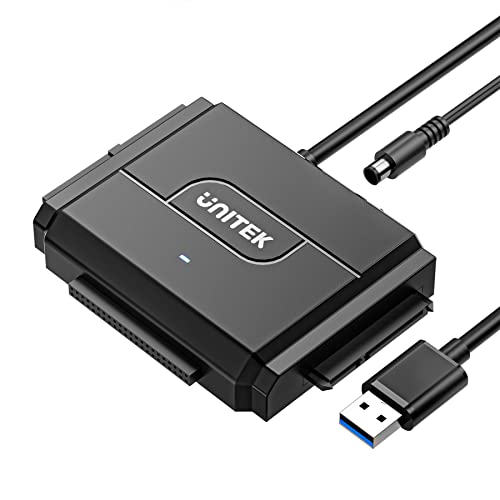
- USB-to-IDE bridges let you rip on modern hardware: The Unitek Y-3324 (ASIN B01NAUIA6G) is a SATA/IDE-to-USB 3.0 adapter; the Vantec CB-ISATAU2 (ASIN B000J01I1G) is the older USB 2.0 equivalent. Both work on Windows 11 without any special drivers — the USB 3.0 unit is faster for bulk dumps of full discs, but either is fast enough for one-shot CD imaging.
- 32GB or 64GB CF cards are the practical sweet spot for pure Win98 builds due to the OS's 137GB IDE limit and FAT32's 32GB per-partition cap under the Win98 formatter.
Why CF + IDE Adapter Beats Real Spinning Rust for Retro Builds
Before getting into the workflow, it's worth explaining the storage architecture decision. You have three options when the original hard drive fails or gets too small:
| Option | Pros | Cons |
|---|---|---|
| Period-correct IDE HDD | Fully authentic; no adapters | Loud, slow, failure-prone, hard to find |
| SD-to-IDE adapter | Cheap, widely available | Some chipsets have compatibility issues; SD is slow |
| CF-to-IDE adapter (passive) | Dead silent, fast, ultra-reliable | Costs slightly more than SD adapters |
CompactFlash is the correct choice for 90s retro builds. The electrical interface on CF cards is a subset of the ATA (IDE) protocol — the cards were literally designed to speak IDE natively. A passive CF-to-IDE adapter (StarTech IDE2CF, Syba SD-ADA45003) has no active components: it's a board that maps the CF card's 50-pin socket to the 40-pin IDE connector. The BIOS treats it as a hard disk. DMA mode works on most CF cards; if you see corruption, switch to PIO Mode 4 in Device Manager and it becomes rock-solid.
Compared to spinning rust, a 32GB CF card is faster at random access (critical for Windows loading DLLs), generates no heat, draws almost no power, and will outlast the capacitors on your motherboard by decades.
Hardware Shopping List
You will need the following hardware to complete this workflow. Links go to the product ASIN on Amazon where applicable.
For imaging on a modern machine:
- Unitek SATA/IDE to USB 3.0 Adapter (B01NAUIA6G) — The Unitek Y-3324 handles both 2.5-inch and 3.5-inch IDE drives plus SATA, and includes a 12V/5V wall adapter for 3.5-inch drives. Use this to connect your old CD-ROM (or IDE HDD) to a modern Windows 11 machine via USB 3.0.
- Vantec CB-ISATAU2 SATA/IDE to USB 2.0 Adapter (B000J01I1G) — The Vantec CB-ISATAU2 is an older USB 2.0 unit (480 Mbps) but extremely reliable and still works flawlessly on Windows 11. Good choice if you already have one or find it used.
- Either adapter presents your IDE CD-ROM as a USB Mass Storage device. ImgBurn sees it as an optical drive and rips from it normally.
For the retro PC itself:
- Passive IDE-to-CF adapter — StarTech IDE2CF or Syba SD-ADA45003. Passive only (no active ICs). Plugs into the 40-pin IDE header; CF card inserts into the adapter.
- CompactFlash card, 32GB or 64GB — SanDisk Extreme or Lexar Professional (Class 10 / UHS-I). Avoid generic no-name cards; they have inconsistent DMA behavior. 32GB is enough for Win98 SE + a full games library; 64GB gives room for Win98's FAT32 and a second partition for utilities.
- 80-conductor IDE cable — If your motherboard only has the old 40-conductor cable, upgrade to the 80-conductor version (required for UDMA Mode 4/5). Most CF cards perform fine on either, but the 80-conductor cable eliminates signal integrity issues.
Optional but useful:
- Plextor Premium CD-ROM drive (used, search eBay) — The only consumer optical drive with full C2 error reporting. Required for ripping copy-protected discs via CDRWIN's RAW mode. If you only need standard discs, any functional late-90s CD-ROM works.
- Parallel port cable and null-modem serial cable — For data transfer to the retro rig if network cards are absent.
Step-by-Step: Ripping with ImgBurn (.cue/.bin)
ImgBurn 2.5.8.0 is the current (as of 2026) final release of the best free Windows disc imaging tool. Download from imgburn.com — the installer is clean; decline the optional bundled software during setup.
Setup:
- Connect your CD-ROM drive to the modern machine via the Unitek or Vantec adapter.
- Insert the disc you want to image.
- Open ImgBurn and select Mode → Read.
Configuration (critical settings):
- Source: Select the drive letter ImgBurn assigned to your USB-attached CD-ROM.
- Destination: A folder on your NVMe or SSD. Name the file
<game-title>.bin— ImgBurn will auto-generate the matching.cuefile. - Settings → Options → Read: Set Read Speed to 4x or 8x. High read speeds cause read errors on aged discs; 4x is the safest for 30-year-old media.
- Settings → I/O → Error Recovery: Set Read Error Action to Skip, retry count to 3. For pristine discs, set retries to 5 and action to Retry to catch transient read errors.
- Verify after read: Enable this. ImgBurn will re-read the image and compare checksums. If it fails, your source disc may have surface damage.
Execution:
Click the Read button (folder-to-drive icon). ImgBurn reads the disc sector by sector and writes the .bin file with a paired .cue sheet. A typical 650MB CD takes 8-12 minutes at 4x speed. The .cue file describes the track layout (single data track for most big-box software; multi-track for games with redbook audio).
Result: You now have GameTitle.bin and GameTitle.cue on your imaging machine. Transfer these to the CF card (or a shared network folder) for use in the next step.
Mounting on Win98 with Daemon Tools 3.x
Daemon Tools 3.47 is the correct version for Windows 98 SE and Windows ME. Later versions (4.x and above) require Windows 2000 or XP. Download from the VOGONS file repository — the official daemon-tools.cc site no longer hosts legacy versions.
Installation:
- Copy the
DAEMON Tools 3.47.msiinstaller to the retro rig (via CF card, network share, or ZIP disk). - Run the installer. Daemon Tools installs a virtual IDE channel controller and adds one virtual CD-ROM drive to Device Manager.
- Reboot when prompted.
Mounting a .cue/.bin image:
- Right-click the Daemon Tools icon in the system tray → Virtual CD/DVD-ROM → Drive 0 → Mount Image.
- Navigate to your
.cuefile (not the.bin). Always mount via the.cue— it tells Daemon Tools the track structure. Mounting.bindirectly works for single-track discs but breaks multi-track audio. - The virtual drive appears in My Computer as a standard CD-ROM drive with the disc's original volume label.
- Run the software's setup or launch it from the virtual drive exactly as you would a physical disc.
If the software doesn't see the virtual drive:
Some titles check for a physical drive (rotational latency test, ATIP check). Daemon Tools 3.47 includes a basic emulation layer that fools most era-appropriate protection schemes. For stubborn titles, see the Troubleshooting section below.
Boot-CD Imaging via CDRWIN for Installer Discs
Some 90s software — especially operating system installers, game compilations, and CD-ROM encyclopedias — are bootable. Imaging these with ImgBurn's default settings works, but for maximum fidelity (especially when the disc needs to boot the retro rig directly during OS installation), CDRWIN 5.05 is the more precise tool.
CDRWIN preserves subchannel data, exact sector layout, and CD-ROM XA mode flags that some bootable discs require. The last release from the original developer Golden Hawk Technology is CDRWIN 4.0F — later 5.x versions were produced by third parties after the Golden Hawk trademark changed hands and are best avoided. Download CDRWIN 4.0F from abandonware archives (Golden Hawk discontinued retail sales long ago).
CDRWIN rip procedure:
- In CDRWIN, select Extract Disc/Tracks/Sectors.
- Choose your source drive (the USB-attached CD-ROM via Unitek/Vantec).
- Image Filename: Set to
InstallerDisc.bin; CDRWIN generates the matching.cue. - Error Recovery: Set to Abort for clean discs; Ignore if the disc has light scratches and you want to push through.
- Data Extraction Speed: Set to 4x (same rationale as ImgBurn — slow is safer on aged media).
- Read Sectors: Leave at default (reads all sectors including subchannel).
- Click Start and wait. CDRWIN reports any read errors with the exact sector address, which helps identify disc damage.
For bootable discs intended to boot the retro rig directly (Win98 boot CD, DOS 6.22 installer), write the resulting .bin/.cue to the CF card and use a tool like RawWrite for Windows to create a bootable copy. Alternatively, most retro BIOS implementations can boot from a virtual CD-ROM in software — check your retro rig's BIOS for an option labeled Boot from IDE CD-ROM or Boot Other Device.
Troubleshooting Matrix
| Symptom | Likely Cause | Fix |
|---|---|---|
| ImgBurn read errors on first few sectors | Disc has inner-ring scratches or label delamination | Retry at 1x speed; use CDRWIN RAW mode with Ignore error recovery |
| Image mounts but program refuses to run, says "Please insert CD" | Software checks for original disc's ATIP/rotational signature | Enable SafeDisc emulation in Daemon Tools 3.47 Options → Emulation; try CDRWIN RAW rip instead of ImgBurn |
| Win98 hangs on boot after CF install | DMA mode incompatible with CF card | Boot to Safe Mode; in Device Manager → Disk Drives → right-click CF drive → Properties → Settings → uncheck DMA; reboot in normal mode |
| CF card not detected by BIOS | Passive adapter seating issue or CF in wrong orientation | Re-seat CF card in adapter; verify pin 1 alignment; try a different IDE cable or port |
| "Insufficient disk space" during Win98 install | CF card not formatted, or FAT32 partition too small | Boot from Win98 boot floppy; run FDISK to create primary partition; FORMAT C: /S |
| Sector size mismatch error in ImgBurn | CD-ROM drive has firmware bug in RAW mode | Switch to standard 2048-byte sector mode in ImgBurn settings; most 90s software doesn't need RAW sectors |
| Daemon Tools 3.47 won't install on Win98 | Missing DCOM98 or IE 5.5 dependency | Install Internet Explorer 5.5 SP2 first; reboot; then install Daemon Tools |
| Multi-track disc plays data track as audio in media player | Mounted via .bin instead of .cue | Always mount using the .cue file, which specifies track types |
Common pitfalls — four failure modes worth knowing before you start:
- Mounting .bin instead of .cue. The .cue file is the index — it describes each track's type (Mode 1 data, Mode 2 XA, Audio), its sector offset, and its length. If you mount the .bin directly, Daemon Tools treats the entire disc as a single data track and audio tracks become corrupted or missing. Always point Daemon Tools at the .cue file.
- Running ImgBurn at max speed on aged media. At 48x or 52x, a 1994 CD-ROM is mechanically stressed beyond its design spec. The spindle motor forces the disc to 7,000+ RPM; micro-cracks in the aluminum layer can propagate, and buffering delays from a struggling laser misalign sector reads. Set read speed to 4x or 8x and accept the extra time.
- DMA mode on CF cards with old SiS/VIA chipsets. The SiS 5591, VIA Apollo VP3, and similar chipsets from the 1996-1999 era have spotty UDMA Mode 2 support. If Win98 assigns UDMA Mode 2 to your CF card, you may see intermittent data corruption — not immediately obvious, but manifest as occasional application crashes or corrupt save files. Disable DMA in Device Manager (Disk Drives → right-click → Properties → Settings → uncheck DMA) and accept PIO Mode 4. Slower in theory; stable in practice.
- Misidentifying the primary vs. secondary IDE channel for the CF adapter. If you put the CF adapter on the secondary IDE channel (with the CD-ROM as primary master), some 90s BIOSes won't list the secondary channel as a boot device. Put your CF adapter on the primary IDE channel as master. Put the virtual CD-ROM drive (Daemon Tools) on a secondary channel or use the primary channel's slave position only if your BIOS explicitly supports booting from it.
Period-Correct vs. Modern Workflow Trade-offs
There are two philosophies in retro computing: purists who want the exact experience of 1995, and pragmatists who want a reliable, functional system that runs 1995 software. The CF + imaging approach leans pragmatic, and it's worth being honest about the trade-offs.
| Aspect | Period-Correct | Modern Workflow (CF + Imaging) |
|---|---|---|
| Storage hardware | Original IDE HDD, spinning | CF card via passive adapter |
| Optical media | Physical CD-ROM in drive | .cue/.bin mounted via Daemon Tools |
| Boot experience | Identical to original | Functionally identical; silent |
| Copy protection | Some schemes require original disc | Daemon Tools 3.47 emulation handles ~80% of era titles |
| Failure risk | High (HDD and optical drive aging) | Very low (solid-state storage) |
| Expandability | Limited by original partition | Can resize or repartition CF |
| Authenticity | Maximum | High for most use cases |
The pragmatic camp wins on reliability. If your goal is to actually play Myst or run Encarta 95 today and in ten years, the CF approach is the right call. If you're doing a museum-quality restoration for display, period-correct hardware with fresh lubricant and a recapped power supply is the correct answer.
For most VOGONS-style retro enthusiasts — people who want a functional 486 or Pentium 75 desk machine they can actually use — the imaging + CF workflow removes the single biggest failure point (mechanical optical drive) while preserving everything that matters about the software experience.
Sources
- VOGONS Vintage Technology Forums — DOS & Windows Storage
- ImgBurn Manual & Documentation
- Archive Team: CD-ROM preservation guide