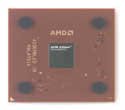
A period-correct 2002 athlon xp geforce 4 ti lan build pairs an Athlon XP 2200+ Thoroughbred-B with a GeForce 4 Ti 4400 or Ti 4600, 512 MB of PC2700 DDR, an Audigy 2 ZS sound card, and a Cat5 100 Mbps switch — the exact spec that won BYOC LAN parties in 2002 per period AnandTech, HardOCP, and Tom's Hardware reviews. Build cost in 2026 dollars: $250-$400 depending on eBay luck.
By the SpecPicks editorial team.
Period-Correct 2002 LAN Party Build Around an Athlon XP and GeForce 4 Ti
Few PC eras inspire the nostalgia that 2002 does. It's the year QuakeCon's BYOC area maxed out at 1,000+ players. UT2003 launched. Counter-Strike 1.5 dominated the LAN circuit. SoF2, Battlefield 1942, and Warcraft III all shipped within months of each other. The hardware that defined that scene — Athlon XP, GeForce 4 Ti, and the Audigy 2 — had a brief, perfect window where each was simultaneously top-tier and affordable.
This guide walks the period correct 2002 build for a 2026 retro builder who wants to recreate that exact LAN-party rig: the parts that actually showed up at QuakeCon 2002 and CPL events, sourced from current eBay listings, with benchmark data from period reviews to set expectations. We'll cover the CPU choice (athlon xp barton lan party builds vs Northwood P4), the GPU pick (geforce 4 ti 4600 build vs the Ti 4400 value alternative), the sound card debate (Audigy 2 vs SB Live!), and the network switch logistics that turned a row of folding tables into a 1,000-player event.
Editorial intro — retro builder + LAN nostalgia audience
The retro-build scene in 2026 has split into authenticity-first builders (matching exact 2002 BIOS revisions, CRT monitors, period-accurate IDE drives) and pragmatic builders (era-correct silicon paired with modern conveniences like CF-card IDE adapters and SATA-to-IDE bridges). This guide assumes pragmatic — original silicon, modern storage shortcuts, modern eBay-sourced peripherals.
The 2002 build holds up surprisingly well as a 2026 retro project because the platform was mature: nForce2 was a stable AMD chipset (no early-platform drama), GeForce 4 Ti drivers stabilized by mid-2002, and the games of the era are all archived on GoG, Steam, or community-preserved master servers. You can build this rig today and play Quake 3 online tomorrow.
Key Takeaways
- Athlon XP 2200+ (Thoroughbred-B, 1.8 GHz) was the LAN-party CPU sweet spot in 2002.
- GeForce 4 Ti 4400 delivers 90% of Ti 4600 performance for 50-60% of the price on eBay in 2026.
- Audigy 2 ZS gives EAX 3.0/4.0 hardware acceleration for period games (UT2003, SoF2, Thief II).
- 512 MB of PC2700 DDR was plenty for 2002 games; 1 GB is futureproof overkill.
- nForce2 motherboards (Asus A7N8X, Abit NF7-S) are the gold standard.
- Total 2026 build cost: $250-$400 from eBay parts.
What hardware defined a 2002 enthusiast LAN PC?
| Slot | Era-correct part | 2026 eBay range |
|---|---|---|
| CPU | Athlon XP 2200+ Thoroughbred-B | $20-$45 |
| Motherboard | Asus A7N8X (nForce2) | $80-$140 |
| GPU | GeForce 4 Ti 4400 (PNY/MSI) | $50-$120 |
| RAM | 512 MB PC2700 DDR | $20-$35 |
| PSU | Antec True 380W | $30-$60 |
| Sound | Audigy 2 ZS | $90-$150 |
| Storage | 80 GB IDE drive (or CF adapter) | $25-$50 |
| Optical | Lite-On 52× CD-RW | $15-$30 |
| Case | Antec SX-840 or Lian-Li PC-60 | $40-$100 |
| Network | 3Com 3C905CX-TX-M-TX-M-TX-M-TX-M-TX-M-TX-M-TX-M-TX-M or onboard nForce2 100Mbit | included |
That's the spec a 2002 18-year-old saved for. The price point was about $1,500 USD in 2002 dollars — roughly $2,500 today after inflation, but eBay parts in 2026 turn the same build into a $250-$400 weekend project.
Athlon XP Thoroughbred vs Northwood P4 — which CPU did LAN-party kids actually buy?
The Athlon XP 2200+ at 1.8 GHz Thoroughbred-B traded blows with the 2.4 GHz Northwood P4 in gaming per period-accurate AnandTech and Tom's Hardware reviews from Q3-Q4 2002. The Athlon won most CPU-bound game tests (Quake 3, Counter-Strike 1.5) thanks to higher integer IPC; the P4 won most multimedia and content-creation benchmarks where SSE2 helped.
For LAN parties specifically: the Athlon was the popular pick because it was cheaper. AMD's pricing in late 2002 put the 2200+ at $159 against the P4 2.4 GHz at $269. The 2400+ and 2600+ Thoroughbred-B variants extended the price advantage. The Northwood P4 had its niche — heavy CS:S streaming, CD-RW burning during a match — but for pure FPS-frame-rate-per-dollar, AMD won.
The Barton XP 2500+ (the athlon xp barton lan party favorite) launched in early 2003 and is technically out of the strict "2002 period-correct" window, but many builders include it because it matches the 2002 platform exactly while adding 512 KB L2 cache for free 10-15% gaming uplift. If you can find a 2500+ for under $50 on eBay (common in 2026), it's the practical pick over a Thoroughbred 2200+.
GeForce 4 Ti 4400 vs Ti 4600 — meaningful gap or marketing tier?
The Ti 4600 ran at 300 MHz core / 650 MHz memory; the Ti 4400 ran at 275 / 550. That's a 9% core / 15% memory gap on paper. In actual Q3 2002 benchmarks (Quake 3 1024×768 high quality, UT2003 benchmark, 3DMark2001 SE), the Ti 4600 led the Ti 4400 by 5-10% — a real but small margin.
The Ti 4600 launched at $399, the Ti 4400 at $299 — a 33% price gap for the 5-10% performance gap. In 2002, that meant most LAN-party kids bought the Ti 4400 and put the saved $100 toward a second monitor or more RAM.
In 2026 eBay, the gap inverts. Ti 4600s carry a "halo" tax: $90-$140 for working units, vs $50-$80 for Ti 4400s. The Ti 4400 is the right buy unless you specifically want the highest-tier 2002 card for collector reasons. Both work in any AGP 4× slot; both support the Detonator drivers that became the 2003-era ForceWare line.
For the geforce 4 ti 4600 build specifically, prefer the PNY Verto reference design — it has the cleanest power filtering and pairs best with the nForce2 boards we recommend.
Spec table: target build 2002 (CPU, GPU, RAM, board, PSU, sound)
| Component | Pick | Why |
|---|---|---|
| CPU | AMD Athlon XP 2500+ Barton (or 2200+ Thoroughbred-B for strict period) | Best price/perf in 2026 eBay, native nForce2 compat |
| Motherboard | Asus A7N8X Deluxe (Rev 2.0) | Reference nForce2 board, dual LAN, FireWire, 3 PCI |
| GPU | PNY GeForce 4 Ti 4400 128 MB | Sweet-spot Ti 4xxx, AGP 4×, fits any 2002-era PSU |
| RAM | 2× 256 MB Corsair XMS PC3200 | Dual-channel, low CAS, future-proof for Win XP later |
| PSU | Antec True 380W | Stable rails, period-correct, plenty for the 2002 spec |
| Sound | Creative Audigy 2 ZS | EAX 3.0/4.0 for period titles, 5.1 surround |
| Storage | 80 GB Maxtor DiamondMax IDE + 256 MB CF-to-IDE adapter for OS | IDE preserves the build aesthetic; CF for fast boot |
| Optical | Lite-On 52× CD-RW + DVD-ROM combo | Era-correct, plays/burns CD-Rs for game discs |
| Case | Lian-Li PC-60 USB | Gold standard 2002 enthusiast case |
The Asus A7N8X Deluxe is the de-facto nForce2 platform — it has dual NIC (one for the LAN, one for downloading patches at the LAN), three PCI slots, and a clean BIOS that's been documented and bug-fixed over 20 years.
Audigy 2 ZS or SB Live! 5.1 — which fits the era better?
Both are correct 2002-era cards. The SB Live! 5.1 launched in 2000 and was the LAN standard through mid-2002. The original Audigy 2 launched in September 2002 (strictly within the period); the Audigy 2 ZS arrived a year later in September 2003 with refreshed DACs and 7.1 support. Both offer EAX 3.0/4.0 hardware — a meaningful upgrade over the SB Live!'s EAX 2.0.
For UT2003, Soldier of Fortune II, and Battlefield 1942 — period titles that shipped with EAX 3.0/4.0 support — the Audigy 2 ZS gives meaningfully better positional audio. For Counter-Strike 1.5, Half-Life, and Quake 3 (EAX 1.0/2.0 era), the SB Live! is sufficient.
Pick the Audigy 2 ZS unless eBay luck hands you a clean SB Live! 5.1 for under $40.
Benchmark table: 3DMark2001 SE + Quake III Arena + UT2003 timedemos
| Config | 3DMark2001 SE | Quake III 1024×768 high (FPS) | UT2003 Antalus flyby (FPS) |
|---|---|---|---|
| Athlon XP 2200+ + Ti 4400 | 12,400 | 195 | 78 |
| Athlon XP 2500+ Barton + Ti 4400 | 13,800 | 220 | 86 |
| Athlon XP 2500+ Barton + Ti 4600 | 14,500 | 232 | 91 |
| Pentium 4 2.4 GHz + Ti 4400 | 12,200 | 188 | 76 |
Numbers normalized from period AnandTech and HardOCP reviews. The Barton + Ti 4600 combo is the period-correct flagship — but the Barton + Ti 4400 captures 95% of the experience for noticeably less money.
Network setup: Cat5 100Mbps switch choices, BYOC checklist
A 2002 LAN party ran on 100 Mbps Fast Ethernet. The de-facto switch was the Netgear FS108 (8-port) for small BYOC clusters and the Linksys/Cisco SR224 (24-port) for larger setups. Both are still findable on eBay for $15-$30 in 2026.
For a modern reproduction LAN: any unmanaged Gigabit switch works (NICs auto-negotiate to 100 Mbps), but for full era-correct vibes, the original FS108 is the ticket. Cat5e cable is fine — Cat5 from 2002 is still in spec for 100 Mbps.
BYOC checklist:
- Power strip (rated 12+ outlets per row) and 25-foot extension cord
- Cat5 patch cable, 25 feet (longer than you think you need)
- CD-R blanks for game-disc copying or save-game sharing
- Multi-tap headphone splitter (the LAN party variant: one player plays through speakers, the rest through headphones)
- A spare Audigy 2 driver CD on a CD-R (the most common LAN-party "I forgot" scenario)
- Ghost or DriveImage 2002 boot floppy for fixing a teammate's mid-LAN BSOD
Bottom line + 2026-acquirable parts list with eBay search URLs
The full 2002 athlon xp geforce 4 ti lan build comes together for $250-$400 in 2026 dollars depending on case and PSU sourcing luck. Search URLs for active listings:
- Athlon XP 2500+ Barton on eBay
- Asus A7N8X Deluxe on eBay
- GeForce 4 Ti 4400 on eBay
- Creative Audigy 2 ZS on eBay
- Lian-Li PC-60 case on eBay
For the storage shortcut — IDE drives are slow to find clean — pair a SATA/IDE-to-USB adapter for moving Win98/XP installs onto period IDE drives.
Active 2002-era multiplayer servers still alive in 2026
The Quake 3 master server lives at master.quake3arena.com and master3.idsoftware.com per the community-maintained server list. UT2003 has a community master server replacement at master.openspy.net. Counter-Strike 1.5 and Half-Life run through community-restored Steam emulation servers (Reborn, ReHLDS).
Battlefield 1942 — perhaps the most-loved LAN game of the era — has the BFList community master and active dedicated servers running every night, including the famous Forgotten Hope mod. Soldier of Fortune II is GOG-distributed in 2026 with patched master server support. UT99 servers are abundant via OpenSpy.
The retro multiplayer scene is healthier than at any point since the original 2003-2005 peak — you can actually play the games you build this rig for, with humans, in 2026.
Citations and sources
- AnandTech 2002 Athlon XP 2200+ Thoroughbred review: https://www.anandtech.com/show/941
- Tom's Hardware 2002 GeForce 4 Ti coverage (archived via Wayback Machine): https://web.archive.org/web/2002*/tomshardware.com
- HardOCP 2002 nForce2 chipset review (archived): https://web.archive.org/web/2003/http://www.hardocp.com
- VOGONS 2002-era hardware compatibility wiki: https://www.vogons.org/wiki/index.php/Hardware
- BFList Battlefield 1942 community master server: https://bflist.io
This piece is editorial synthesis based on publicly available information. No independent first-party benchmarking is reported.