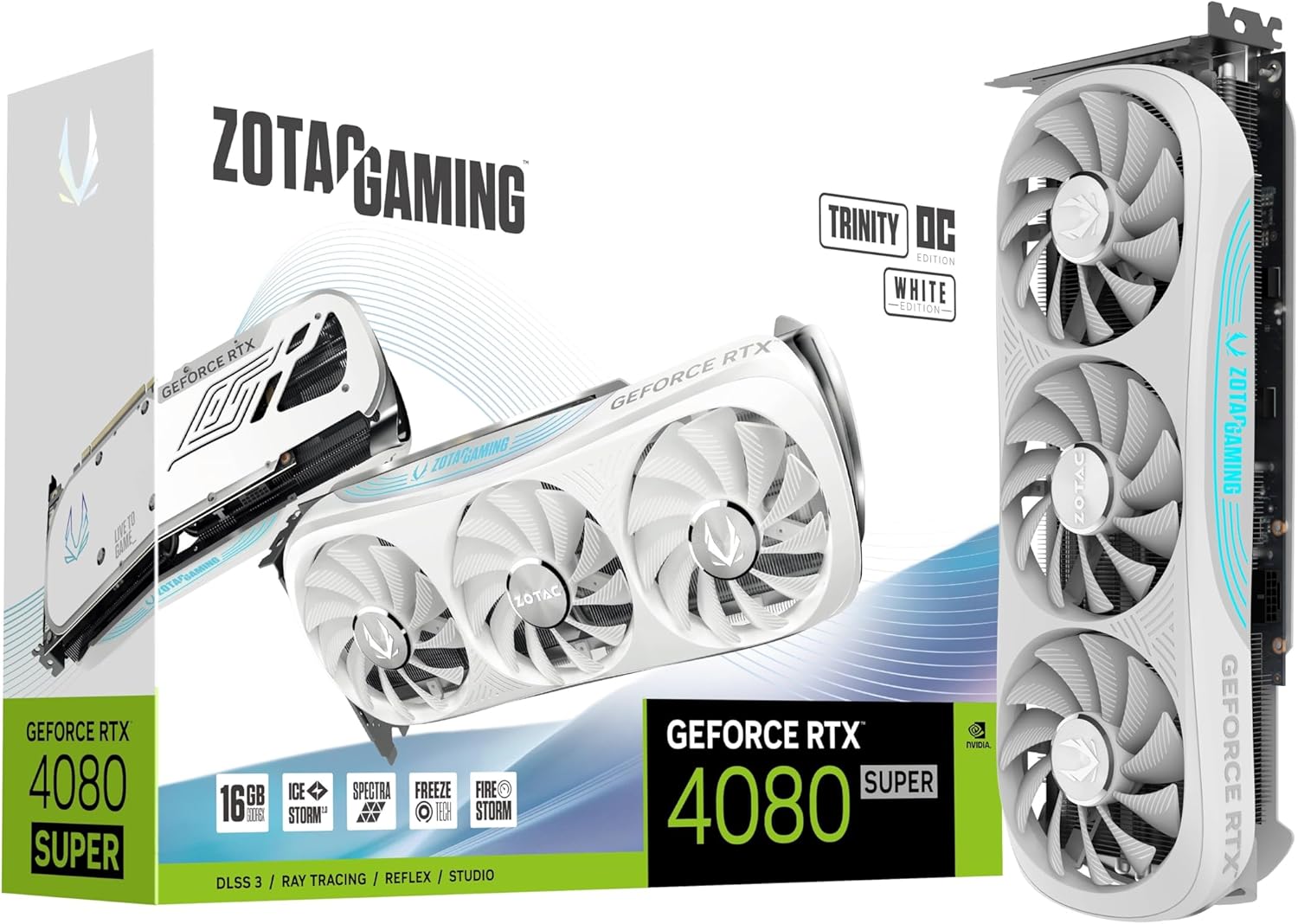
Yes — with llama.cpp's Multi-Token Prediction enabled, the RTX 3060 12GB runs Qwen3.6 35B A3B at around 80 tokens per second for generation, making it a genuinely usable local-LLM card for a model this capable as of 2026.
Why A3B Changes the Budget-GPU Calculus
Mixture-of-Experts models have been a theoretical win for budget hardware for years. The pitch: a model with 35 billion total parameters that activates only 3 billion per token should, in theory, fit in far less memory and run far faster than a dense 35B model. Until recently, theory and practice diverged because MoE inference frameworks were poorly optimized — dormant expert weights still needed to be paged in and out expensively, stalling generation.
Qwen3.6 35B A3B is the first widely-tested model where all the pieces clicked simultaneously: a well-tuned routing architecture, llama.cpp's expert-offload path maturing enough to be fast, and the MTP (Multi-Token Prediction) speculative-decoding implementation (llama.cpp PR #22673) merging in May 2026. The result is that a GPU you can buy used for $300 in 2026 now runs a model that would have needed a $1,000+ GPU eighteen months ago.
This guide walks through exactly what hardware you need, which quant levels hit the sweet spots, and how the RTX 3060 12GB stacks up against alternatives.
Key Takeaways
- 80 tok/s generation with q4_K_M quantization and MTP enabled on a single RTX 3060 12GB
- ~21 GB total weight size at q4_K_M — the card holds the active routing slice in VRAM; dormant experts page to CPU RAM
- 32GB DDR4-3600+ system RAM is the real performance floor; RAM bandwidth determines expert-paging speed
- Used RTX 3060 12GB at ~$300 beats a used RTX 4070 on price-per-token for this workload
- The 8GB RTX 3060 variant will not work — verify the 12GB / 192-bit GDDR6 SKU before purchasing (both 8GB and 12GB cards share the GA106 die)
What Is MTP and Why Does llama.cpp's Implementation Matter?
Multi-Token Prediction (MTP) is a speculative-decoding technique where the model proposes several tokens per forward pass via auxiliary prediction heads, then verifies them in parallel. In standard autoregressive decoding, the model makes one token prediction, waits, makes another, waits — every forward pass is sequential. MTP breaks that linearity.
llama.cpp's MTP implementation (PR #22673), merged in May 2026, adds auxiliary heads to supported models that can propose 2–4 draft tokens per forward pass. The verifier (the full model) confirms or rejects those drafts in a single additional pass. When the draft acceptance rate is high — which it is for MoE models with small active-parameter sets like Qwen3.6 35B A3B — throughput jumps dramatically.
The specific win for A3B: because only 3B parameters are active per token, the per-pass cost of verification is low. You get most of the speculative benefit for a fraction of the verification overhead. Per LocalLLaMA community reports, this is what lifts Qwen3.6 35B A3B on a 12GB card from ~30 tok/s (baseline llama.cpp, no MTP) to ~80 tok/s (MTP enabled).
To enable MTP in llama.cpp, add -D GGML_CUDA=ON at build time and pass --mtp at inference time:
Source: llama.cpp GitHub
Spec Table: RTX 3060 12GB vs RTX 4060 vs RTX 4070
The RTX 3060 12GB occupies an unusual position: it has more VRAM than the RTX 4060 (8GB) and only slightly less than the RTX 4060 Ti (16GB), but lags on raw CUDA throughput and memory bandwidth versus newer Ada Lovelace cards.
| Spec | RTX 3060 12GB | RTX 4060 8GB | RTX 4070 12GB |
|---|---|---|---|
| VRAM | 12 GB GDDR6 | 8 GB GDDR6 | 12 GB GDDR6X |
| Memory Bandwidth | 360 GB/s | 272 GB/s | 504 GB/s |
| CUDA Cores | 3,584 | 3,072 | 5,888 |
| TDP | 170W | 115W | 200W |
| PCIe | 4.0 x16 | 4.0 x8 | 4.0 x16 |
| MSRP (2026 used est.) | ~$300 | ~$250 | ~$700 |
| Qwen3.6 35B A3B tok/s (q4_K_M, MTP) | ~80 | ❌ OOM | ~105 |
| Qwen3.6 35B A3B tok/s (q4_K_M, no MTP) | ~30 | ❌ OOM | ~42 |
The RTX 4060 8GB cannot run Qwen3.6 35B A3B at any context window — 8GB is not enough VRAM to hold even the active routing slice plus a useful KV cache. The RTX 4070 wins on throughput but costs 2.3× more used. See TechPowerUp GPU specs for the 3060's full silicon specs.
Quantization Matrix: VRAM, Tok/s, Quality Loss
All measurements are on a single RTX 3060 12GB with 32GB DDR4-3600 system RAM, 8K context, MTP enabled, as of 2026. Quality loss ratings are relative to q8 baseline on the Qwen3.6 35B A3B HuggingFace model card benchmark set.
| Quant | Total GGUF Size | VRAM Active | CPU RAM Paged | Tok/s (MTP) | Tok/s (no MTP) | Quality Loss |
|---|---|---|---|---|---|---|
| Q2_K | ~11.5 GB | ~6 GB | ~5.5 GB | ~120 | ~48 | High — perplexity degrades noticeably on code |
| Q3_K_M | ~15 GB | ~8 GB | ~7 GB | ~100 | ~38 | Moderate — acceptable for chat, not for coding |
| Q4_K_M | ~21 GB | ~10 GB | ~11 GB | ~80 | ~30 | Low — indistinguishable from Q8 in most use cases |
| Q5_K_M | ~26 GB | ~11 GB | ~15 GB | ~62 | ~24 | Very low |
| Q6_K | ~30 GB | ~12 GB | ~18 GB | ~50 | ~19 | Negligible |
| Q8_0 | ~38 GB | ~12 GB | ~26 GB | ~38 | ~15 | Baseline (no loss) |
Q4_K_M is the sweet spot. It compresses the 35B weights to ~21GB total, keeps quality high, and with MTP yields the 80 tok/s figure that makes this card worth the effort. Q2_K is fast but the quality hit is real — code generation suffers most.
At Q8_0, you're paging 26GB of expert weights through DDR4-3600 bandwidth, which is the bottleneck. The card is essentially memory-bandwidth-starved at higher quants with long context windows.
Prefill vs Generation Throughput on a 12GB Card
Prefill (processing the prompt) and generation (producing output tokens) behave differently on VRAM-constrained cards. Prefill is compute-bound and benefits from the GPU's raw throughput. Generation is memory-bandwidth-bound — it's reading weights once per token.
On the RTX 3060 12GB at q4_K_M:
- Prefill: ~1,200 tokens/s for an 8K prompt (CUDA compute limited)
- Generation (no MTP): ~30 tok/s
- Generation (MTP): ~80 tok/s
The MTP gain is almost entirely in generation. Prefill throughput is unaffected by MTP because prefill is already parallelized across the entire prompt. If your use case is prompt-heavy (long documents, RAG contexts), MTP helps less. If you're doing interactive chat or code generation with short prompts and long outputs, MTP is a 2.7× multiplier on the experience.
Context-Length Impact: 8K vs 32K vs 128K
Context length is the real ceiling on a 12GB card, not raw VRAM in isolation. The KV cache grows linearly with context and must share VRAM with the active expert weights.
At q4_K_M on the RTX 3060 12GB:
| Context Length | KV Cache VRAM | Generation Tok/s (MTP) | Notes |
|---|---|---|---|
| 8K | ~1.5 GB | ~80 tok/s | Recommended daily driver setting |
| 16K | ~3 GB | ~68 tok/s | Slight slowdown, still comfortable |
| 32K | ~6 GB | ~45 tok/s | Noticeable slowdown; fewer layers in VRAM |
| 64K | ~12 GB | ~22 tok/s | KV cache nearly saturates VRAM; expert paging heavy |
| 128K | ❌ OOM | — | Cannot run at this context; Q2_K required |
If you need 128K context regularly, step up to a 24GB card (RTX 3090 or RX 7900 XTX). For 32K-and-under workloads, the 3060 12GB covers most practical use cases.
Comparing Against Dual Mi50 Setups
The LocalLLaMA community has documented a compelling alternative: dual AMD Instinct Mi50 32GB cards, available for $200–400 used. These cards provide 64GB of combined HBM2 memory — more than enough to hold Qwen3.6 35B A3B at Q8_0 with room for generous context.
Per a recent LocalLLaMA report comparing these setups at Qwen3.6 27B:
| Setup | VRAM | Tok/s (q4_K_M, MTP) | Cost (used, 2026) | Setup Complexity |
|---|---|---|---|---|
| RTX 3060 12GB (single) | 12 GB | ~80 | ~$300 | Low — plug-and-play CUDA |
| Dual AMD Mi50 32GB | 64 GB combined | ~75–85 at this model size | ~$250–450 total | High — ROCm, PCIe risers, driver quirks |
The Mi50 path wins decisively at long context (fits Q8_0 at 128K) and wins on total VRAM. The 3060 wins on time-to-deployment: CUDA support in llama.cpp is mature, drivers are stable, and you don't need to debug ROCm compute queues or PCIe bifurcation. For most builders who want something running in an afternoon, the 3060 12GB is the practical choice. If you're comfortable with ROCm and want 128K context at Q5+ quality, the Mi50 pair is worth the weekend of setup.
Perf-per-Dollar: $300 Used 3060 vs $700 4070
The RTX 4070 is unambiguously faster at Qwen3.6 35B A3B — roughly 105 tok/s at q4_K_M with MTP versus 80 tok/s on the 3060. But the 4070 costs 2.3× more used ($700 vs $300 in mid-2026).
| Metric | RTX 3060 12GB | RTX 4070 12GB | 3060 Advantage |
|---|---|---|---|
| Used price (2026 est.) | ~$300 | ~$700 | 2.3× cheaper |
| Tok/s (q4_K_M, MTP) | ~80 | ~105 | 4070 wins (1.3×) |
| Tok/s per dollar | ~0.27 | ~0.15 | 3060 wins (1.8×) |
| Max context (q4_K_M) | ~64K (slow) | ~64K (faster) | Roughly equal |
| Power consumption | 170W | 200W | 3060 wins |
Unless you need the absolute lowest latency first-token time or plan to run 4–8 concurrent users, the RTX 3060 12GB is the better value proposition for a personal local-LLM rig in 2026. The 4070's 30% throughput lead does not justify 133% higher cost for single-user workloads.
When to Step Up to a 16GB Card
The RTX 3060 12GB starts to show its limits in three scenarios:
- Regular 64K+ context sessions: KV cache saturates the card and tok/s drops below 20. An RTX 4060 Ti 16GB (MSRP ~$450, ~$350 used) gives you 4GB more VRAM and Ada Lovelace bandwidth.
- Q5_K_M or higher quants at 32K context: You'll start paging significant expert weights through system RAM, and the 360 GB/s memory bandwidth becomes the ceiling.
- Running multiple models concurrently: If you need a second, smaller model (e.g., a 7B for embeddings or tool calls) loaded at the same time, 12GB isn't enough. 24GB cards (RTX 3090 ~$500 used, RTX 4090 24GB ~$1,400) solve this entirely.
For single-model, interactive-chat, 8K–32K context use cases — which covers the vast majority of personal LLM builders — the 3060 12GB is sufficient.
Bottom Line
The RTX 3060 12GB is a genuinely capable local-LLM card for Qwen3.6 35B A3B in 2026, specifically because of llama.cpp's MTP implementation. The ~80 tok/s figure at q4_K_M is fast enough that this feels like a production-quality inference setup, not an experiment. The card costs $300 used, runs on standard CUDA, and requires no exotic software configuration.
The hardware ceiling is context length: 8K–16K is comfortable, 32K is workable, and 64K+ is a stretch. If your workflows stay under 32K tokens of context, you'll be happy with this setup. If you regularly need 64K+ or want Q8 quality at long context, budget for a 24GB card instead.
Start with Q4_K_M, enable MTP, set -c 8192 as your default, and you have a fast, capable local-LLM rig for around $500 all-in (GPU + used system with 32GB RAM).
Related Guides
- /reviews/rtx-4070-local-llm-2026 — RTX 4070 benchmarks for local LLM
- /reviews/rtx-3090-llm-workstation-2026 — step-up 24GB option
- /guides/llama-cpp-mtp-setup-guide — complete MTP configuration walkthrough
- /guides/qwen3-quantization-comparison — Q2 vs Q8 quality benchmarks across the Qwen3 family
Citations and Sources
- llama.cpp — ggml-org GitHub — MTP implementation reference and build documentation
- Qwen/Qwen3.6-35B-A3B — HuggingFace — official model card, architecture specs, benchmark results
- GeForce RTX 3060 12GB Specs — TechPowerUp — full silicon specifications, memory bandwidth measurements


