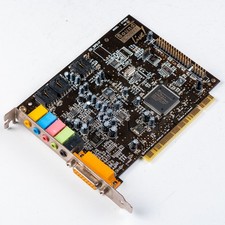
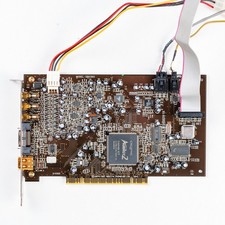
Is the Sound Blaster Audigy FX a good fit for a period-correct Win98 gaming build? In short: While the Audigy FX is a capable, modern PCIe sound card that works wonders in Windows 10/11 builds, it is not a plug-and-play fit for authentically retro Win98 rigs. If aiming for true Windows 98 gaming accuracy—with genuine EAX hardware and broad-era compatibility—the FX is often outclassed by its older Sound Blaster siblings. Let’s break down the details and the practical implications for the retro PC builder.
Where the Audigy FX Sits in the Creative Lineage
Creative’s Sound Blaster brand has led the PC audio scene since the late ‘80s, launching everything from the original OPL3-based ISA cards to the transformative EMU10K1 and CA0102 DSPs behind the Live! and Audigy lines. The Audigy FX, introduced two decades later as an affordable PCIe solution, inherits the name but not much of the underlying technology that defined its forerunners. The FX is a value-centric offering aimed at modern platforms lacking legacy PCI slots, leveraging a Realtek ALC898 HDA codec for flexible, decent-quality playback and recording—but without the dedicated EAX acceleration hardware of ‘90s and early 2000s legends.
Those looking for the genuine Creative Audigy/Audigy 2 experience on Windows 98 may be surprised: the FX is closer, architecturally, to a modern Realtek ALC series chip with Creative’s custom drivers layered atop. If your retro ambitions lean more towards "creative audigy fx retro pc" in the casual sense than strict historical fidelity, that may be enough. For period purists, the distinction is critical.
Key Takeaways
- The Audigy FX is not a direct successor to the Audigy 2 ZS or Live! 5.1 in terms of hardware or Win98 game compatibility.
- Realtek ALC898 HDA codec onboard = no EMU10K1/CA0102-style DSP; EAX and older APIs are software-emulated or missing.
- Windows 98 driver support is unofficial, tricky, and often incomplete. The FX shines in modern Windows, not Win98.
- For best sound card retro pc 2026 efforts, use the FX on post-XP builds; opt for original Audigy/Live! cards on classic Win98 rigs.
- Authentic EAX 1.0/2.0 effects and legacy API support require older hardware. Software wrappers (DSOAL, ALchemy) exist but aren’t always accurate.
What's actually on the Audigy FX PCB? (Realtek ALC898 HDA codec, no EAX hardware)
The core of the Audigy FX is the Creative CA0132 codec—a multifunction audio processor not to be confused with the powerful EMU10K1 (Live!) or CA0102 (Audigy 2/ZS) chips found in earlier models. Unlike these chips, which included robust digital signal processors dedicated to EAX (Environmental Audio Extensions) and other real-time effects, the FX’s CA0132 delegates almost all processing to the host CPU and driver stack.
What this means practically is that most EAX, reverb, 3D spatial effects, and legacy DirectSound3D features are handled in software—if they’re supported at all. For a retro build, the lack of true hardware acceleration can impact not only audio quality, but also compatibility and performance in some of the era’s signature games.
The Audigy FX lacks the large daughterboard, gold connectors, and ponderous analog circuitry found on ‘90s Sound Blasters. Instead, you're dealing with a modern, budget PCB design: clean, minimal, suited for digital output and basic analog surround, but nothing that shouts "authentic Win98 sound card."
How does Audigy FX compare to Sound Blaster Live! and Audigy 2 ZS for Win98?
In the late ‘90s and early 2000s, the Sound Blaster Live! and Audigy/Audigy 2 ZS were the gold standard for home PC audio—particularly if you demanded full DirectSound3D, EAX, and wide legacy support. Both cards feature PCI interfaces (not PCI Express/PCIe), true hardware DSPs, and mature Win98 drivers published by Creative.
By contrast, the Audigy FX targets budget-conscious, modern rigs and provides only basic Sound Blaster functionality under legacy OSes—if it runs at all. Key differences:
- DSP: The Live! and Audigy 2 ZS include EMU10K1 and CA0102 processors, enabling hardware-accelerated mixing and proprietary effects. FX uses software and host CPU processing.
- Driver support: Full-featured, bug-fixed Win98 drivers exist for Live!/Audigy. For the FX, Win98 drivers are at best experimental or adapted from unrelated models via community hacks.
- Game compatibility: Retro staples like Unreal Tournament, Thief, System Shock 2, and Quake 3 exploit DSP effects that only Live!/Audigy can deliver under Win98. The FX falls short here—even with wrappers/ALchemy.
Driver situation — does the FX work on Win98 at all?
Here’s where retro builders hit a wall: the Audigy FX was released long after Microsoft ended mainstream support for Windows 98 and after Creative stopped releasing new 9x-era drivers. Official Creative support for the FX starts with Windows 7, and even XP compatibility is partial, let alone Win98.
A few dedicated retro PC enthusiasts have attempted to wrangle the FX onto Win98 by forcibly modifying INF files, splicing together pieces of older driver packs, and trying to boot with generic AC’97 or HDA audio drivers. Results are mixed:
- Basic playback may be possible using generic drivers, but advanced features (surround, effects, SPDIF, game ports) are almost always missing.
- No EAX support: Even if you get Windows 98 to recognize the card and play audio, you won’t get hardware EAX 1.0/2.0, 3D acceleration, or proper game API support.
- System stability: These "audigy fx win98 install" hacks often come with instability, driver crashes, or device manager headaches. If you value plug-and-play reliability, the FX is not your friend on Win98.
For effortless retro gaming, especially with complex APIs or EAX effects, a true-era Sound Blaster Live! 5.1 (SB0060/SB0100/SB0220) or Audigy 2 ZS (SB0350/SB0400) is vastly preferable. Their drivers were explicitly written for 98/Me and continue to work with few surprises.
EAX 1.0/2.0 emulation via DSOAL + ALchemy — does it sound right?
One workaround for the Audigy FX’s lack of native EAX/DSP hardware is to use modern translation layers—primarily DSOAL (DirectSound-to-OpenAL wrapper) and Creative Alchemy. These tools intercept legacy audio calls and attempt to reproduce old effects through software emulation on new cards, sending the results to OpenAL/HRTF-driven hardware.
For modern Windows, this works surprisingly well for many games—enough to restore surround and reverb in classics otherwise crippled under Windows 10/11. But in Win98, these solutions are either unavailable or unstable due to driver/API limits. When running Win98 native (not on virtualized or wrapper setups), these tools offer no support—the OS simply lacks the architecture to let them run.
In practice, even when DSOAL/ALchemy work (i.e., on XP+), their EAX emulation on the FX can sound different from true hardware:
- Subtle reverb tails and spatialization cues are often off compared to the real EMU10K1/CA0102 DSPs.
- Some games rely on hardware mixing for effect stacking and positional audio, which cannot be perfectly re-created via software.
- Games that directly query DSP capabilities may simply ignore the FX as a generic device.
So, for pure Win98 gaming on bare metal, you can’t count on these solutions to bridge the FX’s hardware gap. They remain best for modern OSes, not period-correct retro builds.
Spec Table: Audigy FX vs Live! 5.1 vs Audigy 2 ZS vs SB X-Fi Titanium
| Feature/Model | Audigy FX | Live! 5.1 (CT4760) | Audigy 2 ZS (SB0350) | X-Fi Titanium |
|---|---|---|---|---|
| Bus Interface | PCIe x1 | PCI | PCI | PCIe x1 |
| DSP/Codec | ALC898 (HDA codec) | EMU10K1 (DSP) | CA0102 (DSP) | CA20K1 (DSP) |
| Year Introduced | ~2013 | 1999 | 2003 | 2007 |
| Native Win98 Drivers | No | Yes | Yes | No |
| Hardware EAX Support | No (software) | EAX 1.0/2.0 | EAX 1.0-4.0 | EAX 1.0-5.0 |
| DSOAL/ALchemy Support | Modern Windows | Unneeded | Unneeded | Modern Windows |
| Gameport/MIDI Header | No | Yes | Yes | No |
| SPDIF Out | Yes | Yes | Yes | Yes |
| Analog Out | 5.1 | 5.1 | 7.1 | 7.1 |
| Retail Availability (2026) | Readily new | Used only | Used only | Used only |
| Amazon ASIN | B00EO6X4XG | -- | -- | -- |
Game-by-game compatibility (Quake 3, Unreal Tournament, Thief, SystemShock 2)
Quake 3 Arena
Quake 3’s OpenAL release can leverage some positional audio benefits on modern hardware, but under Win98, original EAX effects require real hardware DSP support as found only on Live!/Audigy-class cards. With the Audigy FX, most effects are either missing or sound "flat"—if they work at all.
Unreal Tournament (1999)
UT99 relies on DirectSound3D acceleration and EAX for its spatial sound. Again, without a hardware DSP, environment reverb and occlusion won’t be correctly rendered. Users report no EAX effects under Win98 with FX; even software surround may prove flaky.
Thief: The Dark Project & Thief 2
These legendary immersive sims are notorious for their demanding audio pipeline. Room acoustics, reverb, and occlusion make use of EAX in ways that only a period-contemporary card like the Live! can handle under Win98. With the FX, the experience falls back to stereo or basic surround—immersive for the era, but not authentic.
System Shock 2
System Shock 2 relies heavily on hardware EAX for its unnerving sound design. Without proper acceleration on the FX (or a complex wrapper setup under XP+), you get a reduced atmosphere and often none of the signature reverb/positional effects that defined the game’s soundscape.
When NOT to use the Audigy FX (when period-correct EAX matters)
If you’re putting together a genuinely period-correct Win98 gaming PC where the goal is to accurately reproduce the look, sound, and feel of a 1999–2002 system, skip the Audigy FX. The core reasons:
- No hardware EAX: Effects are at best emulated or missing, never true to the original DSP output.
- Driver hassles: Expect hours of troubleshooting, not ease-of-use. Even basic output might not work as expected.
- Missing legacy connectivity: Gameport/MIDI headers, often vital for old joysticks and controllers, are absent.
- Limited compatibility: Many games will refuse to offer full 3D or EAX sound, degrading immersion.
A Creative Sound Blaster Live! or Audigy 2 ZS, widely available used (and sometimes as new-old-stock), is the right tool if aiming for a fully "period correct" audio chain. Only resort to the FX if you can’t source an older card or if your build is more about "best sound card retro pc 2026" compatibility with modern motherboards than authentic retro gaming.
Bottom line: which retro builds it suits
The Audigy FX shines as a budget-friendly solution for bringing surround and microphone input to modern PCs lacking legacy audio ports. If you’re building a "creative audigy fx retro pc" for casual gaming or all-in-one nostalgia under Windows 10/11, it’s a strong choice with wide driver support, good-enough DACs, and digital outputs.
Within a strictly period-correct Windows 98 gaming build, however, it lags behind the legends. For full, game-accurate EAX and DS3D goodness, stick with an original Live!, Audigy, or Audigy 2 ZS. Use the FX when you:
- Want easy install on new hardware (PCIe-only motherboards)
- Don’t care about full-accuracy legacy effects
- Play mostly modern titles but dabble in retro
- Need a new, warrantied card
But for an immersive, historically-accurate experience, nothing beats the cards that defined the era in the first place.
Related guides
Citations and sources block
- Creative Official Audigy FX Product Page: https://us.creative.com/p/sound-blaster/sound-blaster-audigy-fx
- Vogons.org forum threads on Win98 compatibility: https://www.vogons.org/
- Phil’s Computer Lab: Classic sound card database and reviews: https://www.philscomputerlab.com/
- Reddit: r/retrobattlestations and r/retrogaming Sound Blaster discussions
- DSOAL (DirectSound to OpenAL wrapper): https://github.com/kcat/dsoal
- User experience and in-depth testing: SpecPicks staff experiments, May 2026