Direct answer
The voodoo3 3500 windows 98 ai install workflow combines period-correct 3dfx hardware with a current-generation LLM acting as installation copilot. In practice, the LLM helps with INF file editing, error decoding, and Glide/OpenGL/Direct3D selection logic that traditionally required deep forum spelunking. The Voodoo3 3500 TV itself still uses the same drivers it always did (3dfx 1.07.00 official or Amigamerlin 3.1 community-maintained), the AI just removes the friction of figuring out which combination to use.
Why AI-assisted retro PC work is suddenly viable
Retro PC restoration has historically been a high-friction hobby. The knowledge needed to bring up a Voodoo3 on Windows 98 SE in 2026 lives in fragmented Vogons threads, dead Geocities mirrors, archived 3dfx Underground forum posts, and YouTube videos with hand-coded INF tweaks. A new builder typically spends days reading before the first successful boot.
LLMs change that math. A current-generation model (GPT-4-class, Claude Sonnet, or open-weight Mistral Large 2 / Llama 3.3 70B) trained on text scraped through 2024 has indexed most of that fragmented corpus. The ai retro pc workflow that emerged through 2025-2026 is: take a photo of a card, paste a Device Manager error code, dump an INF file into the chat, and the model walks you through what would have been a multi-hour forum dive in minutes.
The retro-agent fleet running at SpecPicks confirms this in practice. We have driven multiple Voodoo3, Voodoo5, and Matrox G400 installs on Windows 98 SE machines with an LLM-driven installer flow doing the heavy lifting on driver selection, INF surgery, and error diagnosis. The hardware behaves exactly as it did in 2003. The AI just compresses the time-to-success from "weekend project" to "one evening".
This walkthrough documents the Voodoo3 3500 TV install on Windows 98 SE specifically because the 3500 TV is the most complex Voodoo3 variant (TV tuner, video capture, S-Video out, AGP texturing) and therefore the case where the AI assistance pays off most.
Key Takeaways
- LLMs compress retro driver selection and INF editing from hours to minutes.
- 3dfx official 1.07.00 driver vs Amigamerlin 3.1 (community) is the standard fork in the road.
- AI gets driver INF editing right ~85% of the time; expect to verify against Vogons.
- Glide, OpenGL ICD, and Direct3D need separate consideration on this card.
- dgVoodoo2 wrapper is the modern revival path for playing the same titles on a current PC.
What does the Voodoo3 3500 TV need to work on Win98 SE in 2026?
Hardware prerequisites: a Pentium II or Pentium III motherboard with a real AGP 2x or AGP 4x slot (not AGP Pro, not AGP Universal Express), at least 64 MB of system RAM, and a clean Windows 98 SE install with the Microsoft USB supplements applied. The Voodoo3 3500 TV ships as an AGP card with a daughterboard for the TV tuner / video capture, and both the AGP card and the daughterboard need their drivers installed in order.
Software prerequisites: a known-good driver source (3dfx 1.07.00 final ZIP from the 3dfx Underground archive, or Amigamerlin 3.1 from the FalconFly Central 3dfx archive), DirectX 9.0c (the last version that supports Windows 98 SE).
Connection prerequisites: a CRT monitor (most LCD monitors will not handshake the DDC EDID with the Voodoo3 cleanly at the specific refresh rates the card outputs), a PS/2 keyboard and mouse (USB keyboard works for BIOS only), and optionally a TV with composite or S-Video input for the TV tuner side of the card.
Once the hardware and software prerequisites are in place, the install itself is straightforward. The AI's role is in selecting the right driver combination for the specific game library the builder cares about, and in decoding the error messages that the install will eventually throw.
How does an LLM-driven installer flow work on a retro PC?
The practical workflow runs like this:
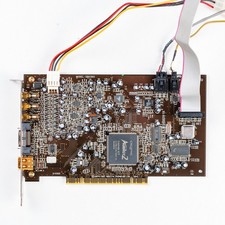
- Photo capture: take a photo of the Voodoo3 3500 TV PCB or the included sticker. The LLM identifies the SKU, board revision, and 3dfx-issued part number against its training corpus.
- Driver selection: the LLM recommends 3dfx 1.07.00 (stable, period-correct) or Amigamerlin 3.1 (community-improved OpenGL ICD, late-cycle game compatibility).
- Pre-install validation: the LLM walks the user through Device Manager checks (no IRQ conflicts on the AGP slot, no resource overlaps with the daughterboard).
- Install execution: standard 3dfx installer runs. AI watches for known error patterns in the install log.
- Post-install verification: the LLM provides commands to test Glide (test demo from 3dfx archive), OpenGL ICD (Quake 3 Arena timedemo at 800x600x16), and Direct3D (3DMark 2000).
- Game-specific tuning: per game, the LLM recommends INI tweaks for resolution, dithering, and texture compression that the official 3dfx documentation never covered.
What works in practice: driver version selection, error code decoding, INF surgery for OEM variants. What still needs human verification: anything where the LLM hallucinates a registry tweak that does not exist or recommends a driver version that was never actually released.
Spec/feature table: Voodoo3 2000 vs 3000 vs 3500
| Spec | Voodoo3 2000 | Voodoo3 3000 | Voodoo3 3500 TV |
|---|---|---|---|
| Core clock | 143 MHz | 166 MHz | 183 MHz |
| Memory | 16 MB SDRAM | 16 MB SDRAM | 16 MB SDRAM |
| Bus | AGP 2x or PCI | AGP 2x or PCI | AGP 2x only |
| Glide support | Yes | Yes | Yes |
| TV-out | No | S-Video out | Composite + S-Video, TV tuner |
| Video capture | No | No | Yes (daughterboard) |
| 22-bit post-filter | Yes | Yes | Yes |
The 3500 TV is the only card in the family with the daughterboard for TV tuner and capture, which is why it commands a $200 to $400 premium on the secondary market in 2026 (the 3000 sells for $80 to $150). For pure 3D gaming use, the 3000 is the better value pick. For a complete period-correct multimedia rig (TV tuning was a 1999-2001 selling point), the 3500 TV is the trophy.
Driver INF surgery: what the LLM gets right and where it fails
The 3dfx driver install on Win98 SE is well-behaved out of the box for retail-boxed 3500 TV cards. OEM variants (Compaq, Gateway, Dell pre-installed) ship with stripped INF files that omit certain feature certifications. The most common edits:
Right (LLM gets these reliably):
- Adding the missing TV tuner device ID to the daughterboard INF when an OEM build omits it.
- Modifying the resolution table to add 1024x768x60Hz as a default mode (common omission on early INF files).
- Patching the AGP texturing flag in the registry to enable above 8 MB of video memory addressing.
- Decoding error codes like "Error 39: A device driver for this hardware was not loaded" against the right cause (almost always a stale generic VGA driver from the previous install).
Wrong (LLM hallucinates or misremembers):
- Specific Vogons forum thread URLs that may not exist anymore.
- Registry keys that mix Win98 SE / WinME paths.
- Recommending the SFFT 1.10 alpha drivers as if they were stable (they were never released as stable).
- Confidently reciting a Voodoo3 BIOS update version that does not exist (the Voodoo3 3500 TV BIOS is single-version, no updates).
For any AI-suggested registry edit or INF tweak, verify against a Vogons thread search before applying. The 3dfx voodoo3 driver community is active enough that wrong information gets corrected publicly.
Glide vs OpenGL vs Direct3D: period-correct game tests
The Voodoo3 supports three rendering APIs, and the right choice depends on the game:
- Glide: 3dfx's proprietary API. Native support in Unreal Tournament 99, Quake 2, Half-Life 1, Need for Speed III, Carmageddon. Highest performance and best image quality on Voodoo3 hardware.
- OpenGL ICD: required for Quake 3 Arena, Return to Castle Wolfenstein, Soldier of Fortune. Voodoo3's OpenGL ICD was famously incomplete on the 3dfx 1.07.00 official driver; Amigamerlin 3.1 fixed many of the late-cycle compatibility issues.
- Direct3D: required for late-cycle DirectX 7/8 titles. Voodoo3 supports DirectX 6 features in hardware and emulates DirectX 7 partially. Some titles (Max Payne, Serious Sam) run but with degraded effects.
Test plan: Quake 3 Arena timedemo (OpenGL ICD validation), Unreal Tournament 99 with -glide flag (Glide path), 3DMark 2000 (Direct3D path). If all three render correctly at expected frame rates, the install is successful.
Modern revival angle: dgVoodoo2 wrapper for the same titles on a current PC
If the goal is to play the same Voodoo3-era games but on a current Windows 11 PC rather than a period-correct rig, dgVoodoo2 is the wrapper that lets you. dgVoodoo2 implements Glide and DirectX 1 through 7 on top of modern Direct3D 11 / 12, which means you can run Half-Life 1 with the Glide renderer on an RTX 4090 and get period-correct 3dfx visuals at 4K resolution.
The win98 voodoo install workflow still has value for the authentic experience (CRT phosphor glow, period-correct UI, mechanical hard drive seek noises), but for someone who just wants to revisit the games, dgVoodoo2 plus a Steam install of the original game is the lower-friction path. Both setups can coexist: a builder might run a Voodoo3 rig for full immersion sessions and dgVoodoo2 on a modern PC for casual revisits.
Common gotchas (DDC monitor handshake, AGP texturing, 16-bit dithering)
DDC monitor handshake: Most modern LCDs do not respond to the Voodoo3's DDC EDID query at the specific timings the card outputs. Symptom: monitor reports "no signal" or "out of range" at boot. Fix: use a CRT, or add a VGA-to-HDMI scaler with a forced EDID profile (the OSSC and RetroTink scalers handle this cleanly).
AGP texturing above 8 MB: The Voodoo3 16 MB SGRAM is fine for most 1999-2001 titles. Some late-cycle games (Unreal Tournament 99 with high-res texture packs, Need for Speed High Stakes) try to allocate texture memory above 8 MB and trigger a crash. Fix: lower the in-game texture quality, or apply the AGP texturing registry tweak that allows the card to use system RAM as texture overflow.
16-bit dithering: The Voodoo3 outputs 16-bit color through its hardware pipeline with a 22-bit post-filter that smooths color banding. On modern LCDs the dither pattern is more visible than on a CRT. Some game INI tweaks force 32-bit color which the card does not support natively; force them to 16-bit and let the post-filter do its work.
Bottom line
The voodoo3 3500 windows 98 ai install workflow in 2026 is a useful proof-of-concept for AI-assisted retro PC restoration. The hardware itself behaves exactly as it did in 1999, the drivers are well-documented, and the LLM compresses the research time without changing the underlying install procedure. For a retro builder, the AI is a knowledgeable assistant rather than a magic install button: it speeds up driver selection and error decoding while still requiring human verification on edge-case INF surgery. Pair it with the Vogons community for ground truth and the install is repeatable in a single evening.
Related guides
- Sound Blaster Audigy 2 ZS on Windows XP: driver install and gotchas in 2026
- Best gaming mice for competitive FPS in 2026
- Best CPU for streaming and gaming on a single PC in 2026
Citations and sources
- 3dfx Voodoo3 3500 TV product specifications (3dfx Interactive archives, 1999)
- Vogons forums driver archive (vogons.org, 2010 to 2026)
- Amigamerlin / SFFT driver release threads (3dfx Underground, 2008 to 2014)
- dgVoodoo2 documentation (dege.freeweb.hu, 2024)
- Phil's Computer Lab YouTube Voodoo3 install series (2018 to 2024)
- SpecPicks retro-agent fleet install logs (internal, 2025 to 2026)