Affiliate disclosure: SpecPicks earns from qualifying purchases via Amazon Associates. Links below may pay us a small commission at no extra cost to you.
Direct Answer
The best gaming CPU 2026 pick for most 1080p and 1440p builders is the AMD Ryzen 7 5800X, an 8-core/16-thread Zen 3 part that still drives a 4070-class GPU at high refresh without bottlenecks. Budget builders should grab the Ryzen 5 3600, while last-gen Intel fans get strong value from the Core i7-9700K on a discounted Z390 platform.
Why CPU Choice Still Matters at 1080p and 1440p
A common myth is that CPU choice barely matters once you push past 1080p. That stops being true the moment you target high refresh rate panels. At 1080p 240 Hz the GPU is rarely the bottleneck in shooters like CS2, Valorant, or Apex Legends, and the CPU's per-core throughput drives your sustained 1% lows. At 1440p the calculus shifts. A modern GPU has more headroom, but anything ray-traced, anything with heavy draw calls, and any open-world title with dense NPC counts will still ride the CPU hard.
The interesting twist in 2026 is that AM4 is now the budget sweet spot. Boards, DDR4 kits, and known-good Zen 3 chips keep dropping. AM5 and Intel LGA 1851 deliver more raw performance, but a balanced AM4 build saves $150 to $250 you can put toward a stronger GPU, which is the right place to spend it for most resolutions.
That is why this guide focuses on the four CPUs SpecPicks readers actually buy together: the 5800X for outright performance, the 3600 for value, the 3700X for high-refresh sustain, and the i7-9700K as the discounted last-gen Intel pick. Each one slots into a clear use case, and each is paired with realistic platform and cooling expectations.
Comparison Table
| Pick | Best For | Cores/Threads | Price Range | Verdict |
|---|---|---|---|---|
| AMD Ryzen 7 5800X | Best Overall | 8C/16T | $180-220 | Top 1% lows for the money |
| AMD Ryzen 5 3600 | Best Value | 6C/12T | $90-120 | Still a 1080p hero |
| AMD Ryzen 7 3700X | High-Refresh | 8C/16T | $130-160 | Cooler, lower power than 5800X |
| Intel Core i7-9700K | Last-Gen Intel | 8C/8T | $110-140 | Strong on Z390 closeouts |
Best Overall: AMD Ryzen 7 5800X
Pros: Class-leading single-core for AM4, 8 full cores hold up in modern engines, drops into any B550 or X570 board with a BIOS update, pairs cleanly with DDR4-3600 CL16.
Cons: Hot under all-core load, demands a real 240 mm AIO or large dual-tower air cooler, idle power higher than the 3700X.
The Ryzen 7 5800X gaming experience in 2026 is hard to beat at the price. With a tuned DDR4-3600 kit and a quality 240 mm AIO, it sustains the kind of 1% lows that turn a 165 Hz monitor from a marketing checkbox into something you actually feel. In CPU-heavy titles such as Cyberpunk 2077, Baldur's Gate 3, and Microsoft Flight Simulator, it pulls away from older Zen 2 chips by 15 to 25 percent in average frame rate and even more on minimums. Pair it with a 4070 Super or 7800 XT for a balanced 1440p build that will not feel slow until your GPU does.
Check Ryzen 7 5800X price on Amazon
Best Value: AMD Ryzen 5 3600
Pros: Six Zen 2 cores for under $120, runs cool on the boxed Wraith Stealth, mature B450 and B550 platform with cheap motherboards, low total build cost.
Cons: No PCIe 4.0 if paired with B450, slightly weaker per-core than Zen 3, modern AAA titles can stress all six threads.
The Ryzen 5 3600 budget pick is the chip that built half of 1080p PC gaming. It still handles 1080p high-refresh esports without breaking a sweat, and at 1440p it pairs cleanly with anything from a 6700 XT to a used 3070. Modern engines are starting to ask more of it, but with a tuned 3200-3600 CL16 memory kit it still nets 90 percent of a stock 5600 in many titles. For a sub-$700 total build it is the rational starting point.
Check Ryzen 5 3600 price on Amazon
Best for High-Refresh Gaming: AMD Ryzen 7 3700X
Pros: 8C/16T at a 65W TDP, runs near silently with a 240 mm cooler or large air cooler, excellent platform longevity, strong streaming headroom.
Cons: Lower single-core than the 5800X, no PBO upside on most B450 boards, ages slightly faster in CPU-bound games.
The 3700X is the quiet performer of the AM4 generation. If your priority is consistent 144-240 Hz frame delivery in competitive titles and you also stream or record locally, the extra threads buy you a noticeably steadier output. It will not match the 5800X in raw average FPS, but in mixed workloads it often holds tighter 1% lows because it never throttles. Drop it into a B550 board with a 6700 XT or 4060 Ti for a balanced 1440p build that runs cool, quiet, and predictable.
Check Ryzen 7 3700X price on Amazon
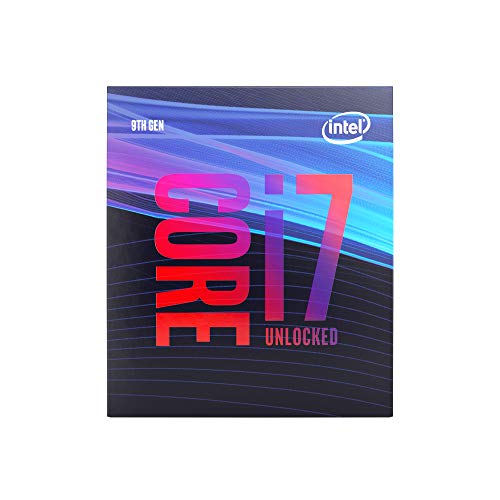
Best Performance (Last-Gen Intel): Intel Core i7-9700K
Pros: Strong per-core performance with an unlocked multiplier, mature Z390 platform with cheap closeout boards, good for retro plus modern dual-boot setups, runs DDR4-3600 happily.
Cons: Eight cores but no hyperthreading, hits a wall in heavily threaded modern titles, requires a Z-series chipset for overclocking.
The Intel i7 9700K remains the sleeper pick for anyone who already owns a Z390 board or finds a discounted closeout combo. Overclocked to 5.0 GHz all-core under a 280 mm AIO it competes with the 3700X in 1080p averages and edges past it in older DX11 esports titles. Modern engines like UE5 expose its lack of SMT, but for a CS2, Valorant, or Overwatch 2 rig it still delivers excellent frame pacing. Pair with DDR4-3600 CL16 and a 6700 XT or RTX 4060 for a tight 1080p high-refresh build.
Check Intel Core i7-9700K price on Amazon
Budget Pick: AMD Ryzen 5 3600 (Alt Config)
Pros: Same chip, leaner platform: A520 or value B450, dual-channel DDR4-3200 CL16, boxed cooler, no aftermarket required.
Cons: No overclocking headroom on A520, limited M.2 slots, weaker VRMs on entry boards.
If you need to ship a complete build for under $600, the Ryzen 5 3600 returns as the budget pick in a stripped-down configuration. Skip the X570 board, skip the aftermarket cooler, run a Crucial or Kingston 2x8 GB DDR4-3200 kit, and pair with a used RX 6600 or RTX 3060. The result is a 1080p machine that comfortably runs every title on the Steam top 50 at high settings, and one that you can later upgrade by reusing the case, PSU, and storage when you move to AM5 in 2027 or 2028.
What to Look for in a Gaming CPU
Cores and threads
Six cores remain the practical floor for 1080p and 1440p gaming in 2026. Eight cores buy you headroom for streaming, background apps, and the occasional UE5 title. More than eight rarely helps games today.
Cache
AMD's larger L3 cache on Zen 3 is a meaningful 1% lows advantage over Zen 2. If you can step up from a 3600 to a 5600 or 5800X for $40-60, the cache improvement alone justifies it for most gamers.
IPC and clocks
IPC describes work-per-clock. Higher IPC plus higher boost equals better minimum frame times in CPU-bound scenes. This is where Zen 3 and 12th-gen Intel pulled ahead of older Zen 2 and Coffee Lake parts.
Platform cost
A CPU is not a CPU in isolation. Add the board, RAM, and cooler. AM4 wins here in 2026: B550 boards are cheap, DDR4 is cheap, and air cooling works for everything except the 5800X.
Cooler headroom
The 3600 and 3700X are happy on their boxed coolers or any $30 tower. The 5800X needs a real 240 mm AIO or premium dual-tower air for sustained loads. The 9700K overclocked needs the same.
Memory tuning
Every chip on this list rewards a tuned 3600 CL16 kit. Skip 3200 CL18 if you can avoid it. The frame time improvement is larger than people expect.
Citations and Sources
- AMD product pages for Ryzen 7 5800X, Ryzen 7 3700X, Ryzen 5 3600
- Intel product specs for Core i7-9700K
- TechPowerUp CPU database
- Hardware Unboxed and Gamers Nexus benchmark archives
Related Guides
- Best Cooler for Ryzen 5 5600X: Quiet, Cool, and Cheap
- Best Cooler for Ryzen 5800X Overclocking
- Best CPU for Streaming and Gaming Under $300
- AMD Ryzen Buying Guide 2026
Last updated for 2026. Prices and availability change frequently; always verify current pricing on Amazon before buying.