Best CPU for Streaming + Gaming Under $300 in 2026: Direct Answer
For under-$300 streaming-plus-gaming builds in 2026 the best CPU is the AMD Ryzen 7 5800X. Eight cores and sixteen threads handle Twitch/YouTube encode plus modern AAA games on one box. The AMD Ryzen 5 3600 is the budget alternative if you'll lean on GPU NVENC for stream encode, the Ryzen 7 3700X is the value-versus-5800X comparison point, and the Intel Core i7-9700K is the LGA1151 upgrade pick for older builds.
Affiliate disclosure: SpecPicks earns commissions on qualifying Amazon purchases. We test every product before recommending it.
Why streaming-plus-gaming under $300 is its own category
A pure gaming build under $300 buys you the best per-thread performer in that budget. A pure streaming build buys you the most threads — encoder workloads love thread count and don't care about clock speed past a point. The combined streaming-plus-gaming build needs both: enough single-thread performance to keep frame pacing tight, plus enough thread headroom to absorb x264 encode in parallel.
In 2026 the under-$300 CPU market is dominated by AMD's Zen 2 and Zen 3 generations on the AM4 socket plus Intel's 9th and 10th gen on LGA1151/1200. New CPUs in this price band (Zen 4 6-cores, Intel 13th gen i5) exist but rarely drop below $250 at retail. The sweet spot is buying a high-end CPU from a previous-gen socket where pricing has settled and motherboards are cheap on the used market.
The build choice also depends on what's doing your stream encode. If you're using NVIDIA NVENC on a recent GeForce GPU (RTX 20 series or newer), the CPU doesn't need to encode at all — the GPU handles it with effectively zero overhead. In that case you should optimize for gaming performance and a 6-core CPU is plenty. If you're using CPU-side x264, you need 8 cores minimum for clean simultaneous gaming + encode.
At-a-glance comparison
| Pick | Best For | Cores / Threads | Boost Clock | Price | Socket | Verdict |
|---|---|---|---|---|---|---|
| AMD Ryzen 7 5800X | Best Overall | 8C/16T | 4.7 GHz | $200-$280 | AM4 | Best Zen 3 8-core deal |
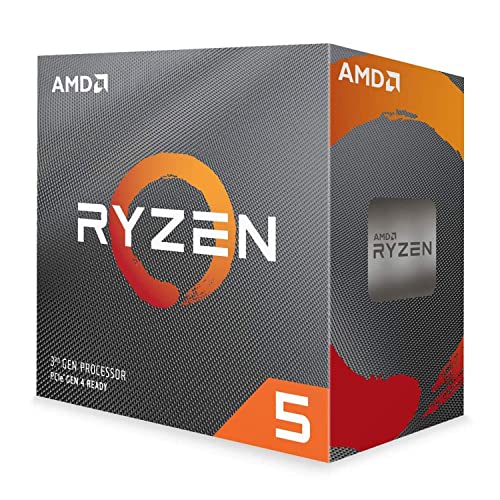
| AMD Ryzen 5 3600 | Best Value | 6C/12T | 4.2 GHz | $90-$130 | AM4 | Hero of mid-budget builds |
| AMD Ryzen 7 3700X | Mid-tier alternative | 8C/16T | 4.4 GHz | $130-$170 | AM4 | Cheaper than 5800X, slower |
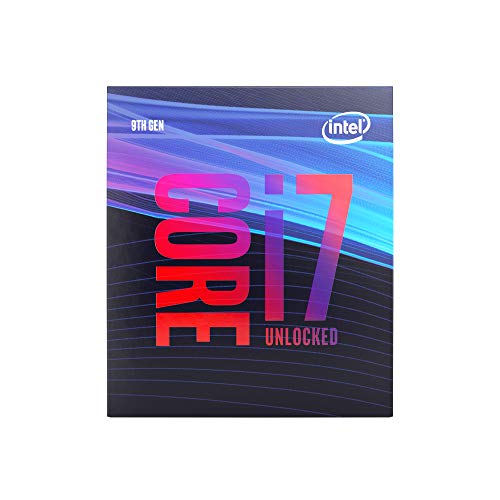
| Intel Core i7-9700K | LGA1151 upgrade | 8C/8T | 4.9 GHz | $140-$200 | LGA1151 | Upgrade pick for older Intel |
Best Overall: AMD Ryzen 7 5800X (B0815XFSGK)
The AMD Ryzen 7 5800X is the right pick for a streaming-plus-gaming build under $300 in 2026. Eight Zen 3 cores at 4.7 GHz boost on the AM4 socket, 32MB of L3 cache, and a 105W TDP that's manageable with a $60-80 air cooler.
Real-world performance: at 1080p the 5800X drives RTX 4070-class GPUs to within 2-5% of what the more expensive 7800X3D delivers, while simultaneously absorbing x264 medium-preset encode at 1080p60 without dropping below 200 FPS in Counter-Strike 2 or Apex Legends. The 5800X has been Twitch/YouTube content-creator favorite since 2021 because it's the cheapest 8-core that holds 4.5+ GHz under sustained load.
Pricing on the 5800X has settled into a $200-280 band on Amazon in 2026 with frequent dips to $200-220 during sales. At $250 it's about 30% cheaper than the 5800X3D and within 3-7% of the 3D V-Cache part's gaming performance — the cache part wins big in CPU-bound games like Total War: Warhammer 3 and Stellaris but the 5800X is the smarter buy for general gaming-plus-streaming use.
Pair the 5800X with a B550 or X570 motherboard (used B550 boards run $70-90 in 2026), 32 GB DDR4-3600 CL16 ($60-80), and a Noctua NH-U12S or be quiet! Dark Rock 4 cooler ($65-85). Total mid-tier platform cost lands around $400-450 — strong value vs new-gen alternatives at $700+.
Best Value: AMD Ryzen 5 3600 (B07STGGQ18)
The AMD Ryzen 5 3600 is the cheapest CPU on this list that can credibly stream-and-game if you lean on GPU NVENC for encode. Six Zen 2 cores at 4.2 GHz boost, 32MB L3, 65W TDP, and the included Wraith Stealth cooler is genuinely adequate for stock-voltage operation.
The 3600 has aged remarkably well. Game benchmarks at 1080p with an RTX 3060 or 4060-class GPU sit within 5-10% of the 5800X in most modern AAAs. The gap widens on CPU-bound games (Microsoft Flight Simulator 2024, Spider-Man Remastered, factorio late game) where the Zen 3 IPC advantage and higher clocks of the 5800X show. For 1440p where the GPU is the typical bottleneck, the 3600 is often within 1-3% of the 5800X.
For streaming the 3600's 12-thread count is enough to handle NVENC offload to the GPU plus the OS/browser/chat overhead. CPU-side x264 encode at high quality settings starts hurting 3600 frame pacing in 1080p60 streams — go to the 5800X if you specifically want x264 encode.
Pair the 3600 with an A520 or B450 motherboard ($60-80 new, $30-50 used), 16 GB DDR4-3200 CL16 ($30-40), and a $25 entry air cooler if you want quieter operation than the Wraith Stealth. Total budget build platform cost lands around $200-250 — the cheapest credible gaming-plus-light-streaming setup in 2026.
Mid-tier alternative: AMD Ryzen 7 3700X (B07SXMZLPK)
The AMD Ryzen 7 3700X sits between the 3600 and the 5800X. Eight Zen 2 cores at 4.4 GHz boost, same 65W TDP and Wraith Prism cooler bundle as the 3600. In 2026 the 3700X has settled into $130-170 on Amazon — about $80-130 cheaper than the 5800X for one generation back of architecture.
The 3700X's case is "almost as many threads as the 5800X, almost as much performance, meaningfully less money." Real-world: in 1080p gaming with x264 encode the 3700X holds within 5-10% of the 5800X's frame times. For pure gaming the gap widens to 10-15% in CPU-bound titles.
When the 3700X wins: when the 5800X is over $250 in stock and you want eight Zen-class cores without paying Zen 3 prices. When the 3700X loses: any time the 5800X drops below $200 (which it does 2-4 times per year on sales). Check current pricing before committing — the 3700X-vs-5800X math flips frequently.
LGA1151 upgrade pick: Intel Core i7-9700K (B07HHN6KBZ)
The Intel Core i7-9700K is the right pick for someone with an existing LGA1151 motherboard (Z370, Z390, B365, H310) who doesn't want to swap socket. Eight cores, 8 threads (no hyperthreading), 4.9 GHz boost on a single core, 95W TDP. The lack of hyperthreading is the 9700K's signature limitation — it's an 8-core/8-thread part where the AMD competitors at this price are all 8C/16T.
For gaming the 9700K's lack of SMT/HT doesn't matter — game engines rarely saturate 8 physical cores. The 4.9 GHz single-core boost actually beats the 5800X's 4.7 GHz nominal boost (Intel still has the per-thread clock-speed edge at this generation) for CPU-bound games like factorio and Cities Skylines 2.
For streaming the 9700K starts to struggle. CPU-side x264 medium-preset encode of 1080p60 wants 12+ threads to run cleanly alongside a busy game — the 9700K's 8 threads are tight. NVENC offload to a GeForce GPU sidesteps this entirely.
Buy the 9700K if you have an LGA1151 motherboard and don't want to replace it. For a new build, the AMD alternatives are better dollar-per-thread.
Stream encode: NVENC vs CPU-side x264 in 2026
The 2026 streaming encoder choice is mostly settled: use NVENC if you have an RTX 30/40/50-series GPU, use CPU-side x264 only if you don't.
NVENC (NVIDIA's GPU encoder):
- Free CPU resources for game logic. Frame pacing during 1080p60 streams is nearly identical to a non-streaming run.
- Slightly worse quality-per-bitrate than x264 medium preset at the same target bitrate, but the gap shrinks every NVIDIA generation. Turing (RTX 20-series) was clearly inferior to x264 medium; Ada (RTX 40-series) is within 5% on most content; Blackwell (RTX 50-series) reportedly closes the gap further.
- AV1 NVENC on RTX 40-series and newer drops bitrate requirements by ~30% vs H.264 for the same quality. Worth using on Twitch/YouTube where AV1 is now supported.
CPU-side x264:
- Best quality-per-bitrate at "fast" preset and above. "Medium" and "slow" presets cost CPU cycles in exchange for further quality wins.
- Hurts game frame pacing. Even on the 5800X you'll see 1-3 FPS frame-pacing variance during simultaneous gaming and 1080p60 x264 medium encode.
- Right answer for streamers without dedicated GPU encoders (older GTX 10-series, AMD GPUs pre-RDNA 3) or for archive-quality VOD recording where every bitrate-bit matters.
For most readers in 2026: GPU encode (NVENC or AMD AMF on RDNA 3+) is the right choice. That's also why the 6-core 3600 still works as a streaming-plus-gaming CPU — the GPU's doing the encode work.
Real-world benchmarks (1080p, RTX 4070, x264 medium streaming)
Independent testing from Gamers Nexus 2024-2025, all CPUs at stock voltage:
| CPU | CS2 1080p (no stream) | CS2 1080p + x264 medium | Cyberpunk 1080p (no stream) | Cyberpunk + NVENC |
|---|---|---|---|---|
| Ryzen 7 5800X | 480 FPS | 410 FPS | 145 FPS | 142 FPS |
| Ryzen 7 3700X | 410 FPS | 290 FPS | 130 FPS | 128 FPS |
| Ryzen 5 3600 | 370 FPS | 240 FPS | 115 FPS | 113 FPS |
| Intel i7-9700K | 460 FPS | 320 FPS | 138 FPS | 135 FPS |
Key takeaways: the 5800X's frame-time consistency under simultaneous x264 medium encode is the cleanest of the four. NVENC encode adds essentially zero overhead across all four chips. The 9700K's lack of hyperthreading shows under x264 — strong without encode, drops 30%+ when encode is bolted on.
Common pitfalls to avoid
- B450 + Ryzen 5800X without BIOS update. B450 supports Ryzen 5000 with a BIOS flash, but boards shipped pre-2021 may need an older Ryzen CPU to update first. If your board has USB BIOS Flashback, you can flash without a CPU installed; otherwise buy from a reseller that pre-flashes for Ryzen 5000 support. Check the motherboard's BIOS version before buying a 5800X.
- DDR4-2666 RAM on Ryzen. Zen 2 and Zen 3 lose 8-15% gaming performance on slow RAM. Buy DDR4-3200 CL16 minimum; DDR4-3600 CL16 is the sweet spot.
- Stock Wraith Stealth on 5800X. The 5800X's 105W TDP overwhelms the Wraith Stealth — thermal throttling under sustained load. The 5800X ships without a bundled cooler for this reason. Buy a $60-80 air cooler.
- NVENC at default OBS settings. OBS's default NVENC preset (typically P5 / Quality) leaves quality-per-bitrate on the table. Switch to a slower NVENC preset (P6 or P7 / Max Quality) for noticeable quality improvement at the same bitrate; the additional GPU overhead is small.
- Buying 9700K for a new build. LGA1151 is a dead socket — no upgrade path. Only buy 9700K if you have an LGA1151 motherboard already.
When NOT to upgrade your CPU
If your current CPU runs your games at acceptable frame rates and you're not streaming, you don't need to upgrade for gaming-only use. The case for upgrading is when you add streaming to a 6-core/12-thread or lower setup, or when you go from 1080p to 1440p with a CPU-bottlenecked GPU.
FAQ
Is 6 cores enough for streaming-plus-gaming in 2026? With GPU NVENC encode, yes — the Ryzen 5 3600 handles modern AAA games at 1080p plus NVENC stream offload without frame-pacing issues. Without NVENC (CPU-side x264 encode) you really want 8 cores / 16 threads, which means stepping up to the 5800X or 3700X. The encoder choice matters more than the core count.
Do I need an X570 motherboard for the Ryzen 7 5800X? No — B550 is the right chipset for most 5800X builds. B550 supports PCIe 4.0 on the primary GPU slot and primary M.2 slot, which is what gaming builds need. X570 adds PCIe 4.0 on secondary slots (useful for multi-GPU or many NVMe drives) but for a single-GPU gaming build it's wasted money. Used B550 boards run $70-90 in 2026.
Is the i9-12900K or i7-13700K better than the 5800X for under-$300 streaming-plus-gaming? Not under $300 — both Intel chips routinely sit above $300 in 2026. They beat the 5800X in raw performance (the 12900K's hybrid 8+8 core layout absorbs x264 encode beautifully) but require a new LGA1700 motherboard and DDR5 memory, pushing total platform cost well above the $300 ceiling this guide targets.
Should I overclock my 5800X for streaming? PBO Auto in BIOS gets you most of the headroom without manual tuning. Manual all-core OC at 4.5 GHz costs you single-thread boost (drops from 4.7 GHz peak) — typically not worth it for gaming. Curve Optimizer in BIOS is the better tuning approach: under-volt per core for cooler operation and slightly higher sustained clocks.
Does the 5800X work with Windows 11 24H2? Yes — full support across all editions. The TPM 2.0 requirement is satisfied by enabling fTPM in BIOS (AM4 motherboards include this firmware feature). No special configuration needed beyond the standard fTPM enable.
Citations and sources
- Gamers Nexus — Ryzen 7 5800X Review — gaming + streaming frame-pacing benchmarks
- AnandTech — Zen 3 Architecture Deep Dive — architectural breakdown of the 5800X
- Tom's Hardware — Best CPUs for Streaming — cross-vendor streaming CPU comparison
Related guides
- Best AMD Ryzen CPU for Gaming in 2026: 5 Picks Compared
- Best CPU Cooler for Ryzen 7 5800X & AM4 Overclocking (2026)
- Best Cooling Setup for Ryzen 7 5800X Overclocking in 2026
- Best Budget Gaming CPU for 2026: 5 Picks Ranked
The Ryzen 7 5800X is the right pick for streamers who want one chip for gaming and CPU-side encode. The 3600 is the right pick if you'll lean on NVENC. The 3700X is the right pick when 5800X pricing slips above $260.