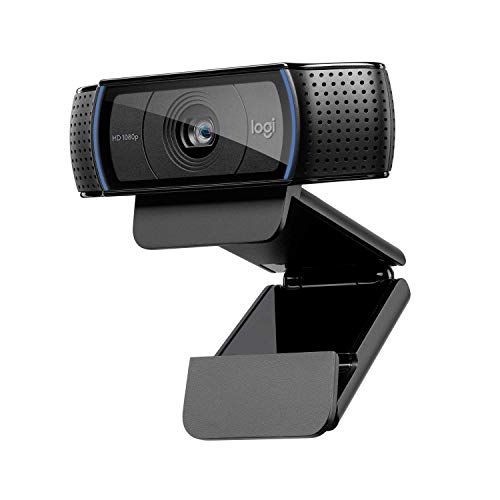
For most new streamers in 2026, the best streaming webcam setup is the Logitech C920 paired with a Blue Yeti USB microphone. This combination costs under $200 and delivers broadcast-quality 1080p video with studio-grade audio out of the box.
Affiliate disclosure: SpecPicks earns a commission on purchases made through links on this page. This does not affect our rankings — products are evaluated independently on performance, value, and beginner suitability.
| Updated May 2026 | 13-minute read
Why Your Streaming Setup Matters More Than Your Game
Twitch and YouTube Live together added over 8 million new creators in 2024 and 2025. By early 2026, Twitch alone hosts more than 9 million active monthly streamers. That growth means the bar for "watchable" has risen: viewers will click away in under 30 seconds if your audio is muffled or your video is a blurry 480p potato-cam. You don't need a $3,000 production setup to compete, but you do need to hit a minimum-viable threshold on three fronts: image quality, audio clarity, and scene control.
The good news is the hardware has gotten cheaper. The same webcam that cost $170 in 2021 now sells for under $70. USB condenser microphones that used to be podcast-studio luxury items are mainstream. And streaming software like OBS Studio remains free. A complete beginner kit — webcam, microphone, and an optional scene controller — can be assembled for $130 to $300 depending on how much you want to invest upfront.
This guide covers the exact hardware combinations that deliver the best results at each price tier, what to look for when evaluating streaming gear, and answers to the questions new streamers ask most. All prices are current as of May 2026 and reflect US Amazon pricing.
Quick Comparison: Top Streaming Webcam Setups in 2026
| Setup | Webcam | Mic | Scene Control | Total Cost | Best For |
|---|---|---|---|---|---|
| Best Overall | Logitech C920 | Blue Yeti USB | Elgato Stream Deck Classic | ~$285 | Serious beginners ready to invest |
| Best Value | Logitech C920 | Built-in headset mic | OBS hotkeys | ~$65 | First-time streamers on a budget |
| Best Audio | Logitech C920 | HyperX QuadCast 2 | OBS hotkeys | ~$185 | Streamers where voice quality is the priority |
| Best Performance | Logitech C920 | Blue Yeti USB | OBS hotkeys | ~$175 | Growing channels ready to upgrade audio |
| Budget Pick | Logitech C920 | Standard headset mic | OBS hotkeys | ~$65 | Testing the waters before committing |
Top Picks
#1 Best Overall: Logitech C920 + Elgato Stream Deck Classic + Blue Yeti
Price: ~$285 total | Logitech C920 (~$70) + Stream Deck Classic (~$100) + Blue Yeti (~$115)
This three-piece combo is what most mid-tier Twitch streamers are running as of 2026. Each component is the category leader in its price bracket, and together they eliminate the three most common pain points for new streamers: blurry video, muffled audio, and fumbled scene switches.
The Logitech C920 captures 1080p at 30 fps and 720p at 60 fps. Its 78-degree field of view is wide enough to show face and background without distortion, and the Carl Zeiss optics handle normal room lighting well. The autofocus is reliable even when you lean back or shift in your chair. Software control via Logi Capture lets you adjust field of view, zoom, and exposure compensation without leaving Windows. Logitech's official C920 product page confirms USB 2.0 plug-and-play compatibility with no driver install required on Windows 10/11 and macOS 12+.
The Blue Yeti is a USB condenser microphone with four selectable polar patterns: cardioid (just your voice), bidirectional (face-to-face interviews), omnidirectional (room audio), and stereo (music or wide soundstage). For streaming, you'll use cardioid mode almost exclusively. Blue's official Yeti page lists the frequency response as 20 Hz to 20 kHz — the full range of human hearing — and sample rate as 48 kHz/16-bit, which is broadcast-standard quality. The Yeti connects over USB-A, sits on a weighted desktop stand, and includes a headphone jack for zero-latency monitoring so you can hear yourself in real time without echo.
The Elgato Stream Deck Classic gives you 15 physical LCD buttons that you can map to any OBS action: switch scenes, toggle mute, fire off sound effects, trigger alerts, open Discord, or start/stop recording. Each button displays a live icon showing its current state. The Stream Deck software (Elgato's Stream Deck app for Windows and macOS) is free and integrates natively with OBS, Twitch, YouTube, Spotify, Philips Hue, and over 100 other apps through plugins. The physical buttons have 45-degree key travel — small enough for one-handed operation while playing.
Who this is for: Streamers planning to broadcast at least 3–5 hours per week, who have already done a few test streams and know they want to continue. This setup will last you 3–4 years without needing an upgrade.
#2 Best Value: Logitech C920 Standalone
Price: ~$65 | Webcam only, using your existing headset mic
If you already own a gaming headset with a boom microphone, you don't need to buy a standalone mic to start streaming. Most gaming headsets from brands like HyperX, SteelSeries, and Corsair record acceptable voice audio at 16 kHz or higher — below studio quality, but perfectly legible on stream.
The C920 alone at $65 gives you:
- 1080p/30 fps video, suitable for most streaming targets
- 720p/60 fps for smoother motion if you're also running graphically intense games
- Autofocus that re-locks in under 1 second
- USB plug-and-play — no setup, no driver, recognized by OBS immediately
The weakness of a headset mic is background noise pickup. Most headset microphones are omni-directional or semi-directional — they pick up keyboard clicks, room noise, and any ambient sound. This is tolerable at low volume levels and if you're in a quiet room. If you're streaming from a shared space or playing mechanical keyboards, the noise floor will be noticeable.
Upgrade path: Start here. After your first 10 streams, you'll know whether audio is your limiting factor. If viewers comment on mic quality, upgrade to the HyperX QuadCast 2 or Blue Yeti. If you never get complaints, you're fine.
#3 Best Audio: HyperX QuadCast 2
Price: ~$120 | Paired with Logitech C920 (~$65) for a ~$185 total kit
The HyperX QuadCast 2 is the microphone that's been quietly eating the Blue Yeti's lunch among streamers since 2024. It combines a built-in shock mount (absorbs desk vibration and typing noise), an LED ring that pulses when muted, and a tap-to-mute cap at the top of the capsule into a single unit that looks great on camera.
Specs that matter for streaming:
- Frequency response: 20 Hz to 20 kHz
- Sample rate: 48 kHz/16-bit (same as Yeti)
- Polar pattern: Cardioid, bidirectional, omnidirectional, stereo (selectable via rear switch)
- Self-noise: 32 dB SPL (lower is better — fewer hiss artifacts at high gain)
Per Podcastage's blind comparison tests on YouTube, the QuadCast 2 has slightly better off-axis rejection — meaning sounds coming from the sides of the microphone (keyboard clicks, chair creaks) bleed through less than with the Blue Yeti. For solo streaming where cardioid pickup is all you need, this matters more than the Yeti's extra polar patterns.
The built-in shock mount is the underrated feature here. Without a shock mount, the microphone transmits every desk tap and keyboard strike directly into the recording. The QuadCast 2 eliminates this without requiring a separate $25–$40 shock mount accessory.
Who this is for: Streamers in acoustically imperfect rooms — shared spaces, rooms with hard floors, setups near HVAC vents — where vibration and off-axis noise are real problems.
#4 Best Performance: Blue Yeti USB
Price: ~$115 | Paired with Logitech C920 (~$65) for a ~$175 total kit
The Blue Yeti has been a bestseller since 2009 and remains a top streaming recommendation as of 2026 for one reason: it simply works, on every OS, with every streaming platform, without fuss. Over 32,000 Amazon reviews averaging 4.6 stars represent years of evidence that this microphone is reliable in real-world streaming conditions.
The Yeti's tri-capsule array (three condenser capsules) captures wider frequency response than single-capsule microphones and gives you genuine stereo recording capability — useful if you ever branch into music streaming, podcast recording, or ambient-audio content. The bidirectional pattern is genuinely good for two-person setups when a guest sits across the desk from you.
For streaming specifically, run the Yeti in cardioid mode at about 60% gain in OBS's audio settings. Position it 6–10 inches from your mouth, slightly below face level, angled upward — this minimizes plosive sounds (hard "P" and "B" consonants) while keeping proximity effect (bass boost from being close to the capsule) under control. A pop filter adds $10–$15 and eliminates plosives entirely.
Who this is for: Streamers who also podcast, record music, or interview guests. The Yeti's multi-pattern capability justifies the slight premium over single-pattern microphones when audio work extends beyond solo streaming.
What to Look For in a Streaming Kit
Resolution and Frame Rate
1080p/30 fps is the minimum viable webcam specification in 2026. Twitch's default transcoding at 1080p60 requires 6 Mbps encode, but most partner-tier streaming runs at 6000 kbps bitrate for 1080p60. For newcomers on the non-partner Twitch tier, 1080p/30 at 3000–4500 kbps is the practical ceiling. Per Twitch's broadcasting guidelines, the maximum ingest bitrate is 8000 kbps, with recommended settings for 1080p60 at 6000 kbps.
720p/60 fps is often preferable to 1080p/30 for fast games (FPS, fighting games, racing) because motion clarity matters more than pixel count. The Logitech C920 supports both, switchable via OBS's video source settings.
Avoid webcams that only list "Full HD" without specifying fps — many cheap webcams capture 1080p at 5–15 fps, which produces choppy video that reads as broken even at low resolution.
Encoder Choice: Software vs Hardware
OBS encodes your stream using either your CPU (software encoding via x264) or your GPU (hardware encoding via NVENC on NVIDIA, AMF on AMD, or QuickSync on Intel). For most gaming rigs in 2026, GPU hardware encoding is the right choice — it produces comparable quality to x264 at lower CPU overhead, letting your CPU focus on the game.
If your GPU is more than 4 years old or doesn't support NVENC/AMF, software x264 at "veryfast" preset is a reasonable fallback. The C920 streams via USB and places its compression burden on the USB controller, not your GPU, so the encoder choice only affects how OBS processes the game capture and mic audio overlay.
Microphone Isolation and Noise Floor
The three variables that determine streaming audio quality:
Polar pattern — use cardioid for solo streaming. It rejects sound from behind and to the sides of the capsule. Omni and stereo patterns pick up room noise and are wrong for streaming unless you intentionally want ambient room audio.
Shock mount — if your microphone doesn't have a built-in shock mount (the Yeti doesn't; the QuadCast 2 does), buy a $25 boom arm with a built-in shock mount. Desk-mounted mics without shock isolation transmit keyboard and mouse click vibration through the stand into the capsule.
Noise gate in OBS — enable the Noise Gate filter on your audio source in OBS and set the Close Threshold to about -35 dB. This cuts your mic when you're not speaking, eliminating HVAC hum, background TV, and street noise during quiet moments.
Streaming Latency
End-to-end streaming latency on Twitch is typically 6–15 seconds in "Normal" latency mode and 3–5 seconds in "Low Latency" mode. This is the delay between what you do and what viewers see. It's relevant for interactive content (viewer can't react to your action in real time at 15 seconds) but irrelevant for pre-recorded-style streams where chat interaction is asynchronous.
Your webcam and microphone do not significantly affect streaming latency — the delay is primarily Twitch's ingest pipeline and viewer CDN delivery. What affects perceived latency is your upload connection stability and OBS's encoder preset. "Faster" presets (veryfast, superfast) reduce CPU load at the cost of slightly lower quality; "Slower" presets improve quality but increase encoder lag by 50–200 ms. For most setups, veryfast on x264 or NVENC "Quality" preset is the right balance.
Lighting (Often More Important Than the Webcam)
A $30 ring light will improve your stream video quality more than upgrading from a $70 webcam to a $150 webcam. The Logitech C920, like all webcams, performs better with more light — its sensor is a 1/3-inch CMOS, which means it needs adequate ambient light to expose correctly without the grainy noise that appears in dim conditions.
Minimum viable lighting setup: one ring light or LED panel positioned in front of you at face level. Don't use ceiling lights as your only source — they create unflattering downward shadows. If you're in a room with windows, position your desk so the window is in front of you, not behind you (backlighting blows out your exposure and you become a silhouette).
Sources
- Logitech C920 Pro HD Webcam — Official Product Page
- Blue Yeti USB Microphone — Official Product Page
- Twitch Broadcasting Guidelines — Help Center
Related Guides
- Best Gaming Microphone 2026 — Standalone mic rankings for all budgets
- Best Gaming Headset 2026 — Headsets that double as streaming audio
- Streaming Setup Checklist — Complete gear checklist before your first stream
- Best Capture Card 2026 — Console streaming: capture cards ranked
All prices are approximate and based on US Amazon listings as of May 2026. Prices fluctuate — check current pricing before purchasing. SpecPicks earns a commission on qualifying purchases at no additional cost to you.