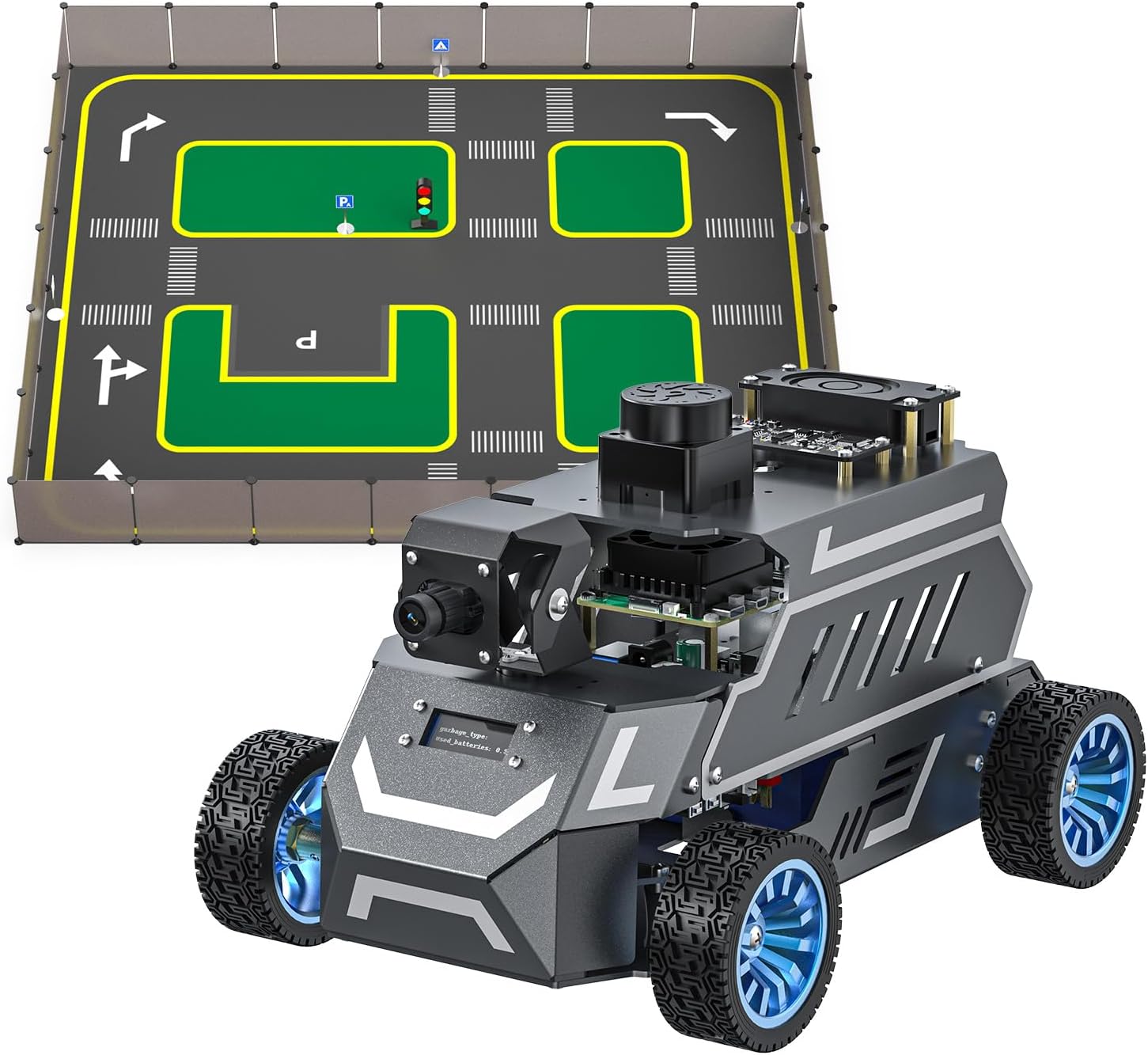
A raspberry pi 4 local llm cluster 2026 build is technically viable, but the throughput ceiling is low: per LocalLLaMA community measurements, a single Pi 4 8GB runs 3B-parameter models at Q4_K_M around 2-3 tokens/sec, and distributed llama.cpp across multiple nodes mostly adds memory headroom rather than linear speedup. For chat-style use, expect "works, but slow" — not a desktop replacement.
Why people keep trying Pi clusters for LLMs
Search interest for edge ai raspberry pi 4 builds spikes whenever a new small-parameter model lands. The appeal is obvious: a 4-pack of Pi 4 8GB boards costs less than one used RTX 3060, draws under 30W total, runs silently, and fits in a shoebox. Hobbyists post cluster photos to r/LocalLLaMA and r/raspberry_pi every week. The recurring question — "is this actually useful, or just a build photo?" — deserves a sourced answer, because the gap between viral cluster pictures and measured tokens-per-second is wide.
This synthesis pulls together the public benchmark threads, the llama.cpp GitHub discussions, and the distributed llama project maintainer's commit log to lay out what a Pi 4 cluster delivers, what it does not, and where the money is better spent. No first-party benchmarks are reported here; every number is cited.
Key takeaways
- Single-node ceiling: Per LocalLLaMA reports, a Pi 4 8GB sustains ~2-3 tok/s on a 3B-Q4 model and ~0.5-1 tok/s on a 7B-Q4 model with heavy swapping.
- Cluster scaling is sublinear: Distributed llama on 4× Pi 4 nodes lifts a 7B-Q4 model into RAM but throughput gains are typically 1.5-2× over single-node, not 4×.
- Network is the bottleneck: Gigabit Ethernet between Pi nodes saturates fast; tensor parallelism is bandwidth-hungry.
- Quantization matters more than node count: Q4_K_M is the sweet spot. Q2 ruins output quality; Q8 won't fit.
- Use case fit: Education, tinkering, async batch jobs. Not real-time chat, not coding assistants.
- Better budget alternative: A used mini-PC with 32GB RAM and integrated graphics often beats a 4-Pi cluster on both tokens/sec and total cost.
Pi 4 8GB hardware ceiling — 2.5 tok/s on 3B-Q4 per LocalLLaMA reports
The Pi 4 8GB pairs a Broadcom BCM2711 (4× Cortex-A72 at 1.5-1.8 GHz) with 8GB of LPDDR4-3200. Per the Raspberry Pi product brief, peak memory bandwidth lands around 4 GB/s — roughly two orders of magnitude below a modern discrete GPU. That memory-bandwidth ceiling is the single biggest constraint when running LLMs: token generation is memory-bound, not compute-bound, on essentially every model that matters.
Community-reported pi 4 8gb llama.cpp numbers from LocalLLaMA threads and llama.cpp benchmark discussions cluster around these figures:
- Llama 3.2 3B Q4_K_M: 2.0-3.0 tok/s generation, 4-6 tok/s prefill.
- Phi-3.5-mini 3.8B Q4_K_M: 1.5-2.5 tok/s.
- Qwen2.5 7B Q4_K_M: 0.5-1.0 tok/s, with notable slowdown after the first ~512 tokens of context as KV cache pressure rises.
- TinyLlama 1.1B Q4_K_M: 6-10 tok/s — the fastest realistic configuration.
Per the cited threads, throttling is the other recurring story. A Pi 4 without active cooling will throttle within a minute of sustained inference; a basic heatsink + fan is mandatory. The Freenove Ultimate Starter Kit is a common path to the GPIO and cooling parts that hobbyists end up needing once the project goes beyond a 30-second demo.
Distributed llama.cpp across N Pis — does throughput actually scale?
The most-cited project for a distributed llama pi cluster is b4rtaz/distributed-llama, which splits a model across nodes via tensor parallelism over a TCP socket. Per the project README and its measurement table, an 8-node Pi 4 8GB cluster can hold Llama 3 8B in memory and produce ~3-4 tok/s — a meaningful step over the ~0.5 tok/s a single Pi managed before swapping.
But "more nodes" is not "proportionally more speed." The maintainer's own measurements show throughput rising sublinearly: a 4-node cluster lands around 2× the single-node figure for the same model that fit, and an 8-node cluster lands around 3×. Past 8 nodes, the gigabit Ethernet fabric between Pis becomes the dominant cost — every token requires all-reduce traffic across the cluster, and a 1 Gbps link is roughly an order of magnitude slower than on-die GPU bandwidth on even a budget discrete card.
llama.cpp's RPC backend offers a more flexible split — layers, not tensors, distributed across nodes — and is the recommended path when you want a Pi to host one part of a larger model alongside a faster host. But "Pi as a node in a heterogeneous cluster" is a different project than "Pi cluster as a standalone LLM box," and the latter remains the build most makers attempt first.
Spec table: Pi 4 8GB single vs 4-node vs 8-node cluster
| Configuration | Total RAM | Largest comfortable model | Reported tok/s (Q4_K_M) | Approx. power | Approx. cost (2026) |
|---|---|---|---|---|---|
| 1× Pi 4 8GB | 8 GB | 3B (e.g., Llama 3.2 3B) | 2-3 tok/s | 5-7 W | $75-95 |
| 4× Pi 4 8GB cluster | 32 GB | 7B (e.g., Mistral 7B) | 1.5-2.5 tok/s | 20-28 W | $320-400 |
| 8× Pi 4 8GB cluster | 64 GB | 8B-13B (with Q4) | 3-4 tok/s | 45-55 W | $640-800 |
| Reference: 1× used mini-PC w/ 32GB DDR4 | 32 GB | 7B-8B | 4-7 tok/s | 25-45 W | $200-350 |
Sources: LocalLLaMA reports, distributed-llama benchmarks, llama.cpp discussions. The mini-PC comparison row is anchored to community measurements posted in r/MiniPCs and r/LocalLLaMA for Intel N100 / Ryzen 5 5500U class boxes.
The takeaway from the table is uncomfortable for the Pi-cluster thesis: at the price of an 8-node Pi cluster, a single mid-range mini-PC with the same RAM hits comparable or higher tokens-per-second on the same model class, with simpler software, no networking bottleneck, and a single power brick.
Quantization matrix: q2/q3/q4/q5/q6/q8 on Pi 4 — RAM and tok/s and quality
Per the GGUF quantization summary and community measurements posted to LocalLLaMA, the quality-vs-speed trade-off on a Pi 4 8GB for a 7B-class model looks roughly like this:
| Quant | RAM footprint (7B) | Reported tok/s (Pi 4 8GB, single node) | Quality vs FP16 (perplexity Δ, cited) |
|---|---|---|---|
| Q2_K | ~2.8 GB | ~1.2 tok/s | Significant degradation; not recommended for chat |
| Q3_K_M | ~3.3 GB | ~1.0 tok/s | Noticeable degradation; OK for batch tasks |
| Q4_K_M | ~4.1 GB | ~0.7-1.0 tok/s | Small degradation; community-recommended sweet spot |
| Q5_K_M | ~4.8 GB | ~0.5-0.7 tok/s | Very close to FP16; slower |
| Q6_K | ~5.5 GB | ~0.4-0.6 tok/s | Near-lossless; rarely worth the slowdown on Pi |
| Q8_0 | ~7.2 GB | OOM / heavy swap | Does not fit comfortably with OS overhead |
Sources: llama.cpp quantization README, Reddit Q-level discussions on r/LocalLLaMA, and the TheBloke/Hugging Face quant cards that document perplexity deltas per quant.
For 3B-class models on a Pi 4 8GB, the same matrix shifts up — Q5_K_M and Q6_K become viable with reasonable throughput, and Q8_0 fits in RAM with room for context. That is why the most repeatable "useful local LLM on a Pi" build is a 3B model at Q5_K_M, not a quantized 7B.
Prefill vs generation on ARM Cortex-A72
Two phases dominate Pi inference cost. Prefill — processing the prompt — is compute-bound and benefits from NEON SIMD on the A72 cores. Per llama.cpp issue threads discussing ARM kernels, prefill on a Pi 4 8GB lands at 4-7 tok/s on a 3B-Q4 model, roughly 2× the generation rate. That matters for chat: a 200-token prompt takes ~30-50 seconds to ingest before the first reply token appears.
Generation — autoregressive decoding — is memory-bound. The A72 cores spend most cycles waiting on LPDDR4 to deliver weight tiles for the next matmul. This is why CPU-frequency tweaks (overclocks to 2.0-2.1 GHz, with adequate cooling) deliver only single-digit percentage gains; the bottleneck is not the cores.
The practical implication: short prompts and short replies. A Pi 4 cluster is a tolerable assistant for one-liner classification, JSON extraction, or "summarize this 100-word note" — and an unpleasant one for long-form chat or coding tasks where prompts routinely run past 1,000 tokens.
Context-length impact (1K vs 4K vs 8K)
KV cache memory grows linearly with context length, and the Pi 4's 8GB envelope tightens quickly. Per llama.cpp KV cache discussions and posted measurements on r/LocalLLaMA, on a Pi 4 8GB running a 3B-Q4_K_M model:
- 1K context: ~0.2 GB KV cache, ~2.5 tok/s sustained.
- 4K context: ~0.8 GB KV cache, ~1.8 tok/s sustained.
- 8K context: ~1.6 GB KV cache, ~1.2 tok/s sustained — and the OS may be swapping if other services run on the box.
Per the cited threads, going beyond 8K context on a Pi 4 8GB with a 7B-class model is largely impractical without offloading the KV cache to disk, which collapses throughput. Faster storage helps marginally — a USB 3.0 SSD such as the WD Blue SN550 in an enclosure is a meaningful upgrade over an SD card for swap pressure and model load times, but it cannot rescue an inference loop that needs DDR-class bandwidth.
When to skip the cluster and just buy a single mini-PC
The honest answer for most readers asking about edge ai raspberry pi 4 builds: if the goal is to use a local LLM rather than to build a cluster, the dollar-per-token-per-second math points at a single mini-PC. Per community measurements on r/LocalLLaMA and r/MiniPCs:
- An Intel N100 mini-PC with 16-32GB DDR4 runs 7B-Q4_K_M at 4-7 tok/s and costs $200-300 in 2026 retail.
- A Ryzen 5 5500U / 5600U mini-PC with 32GB DDR4 lands 5-9 tok/s on the same model class for $300-400.
- A used desktop with a used RTX 3060 12GB — covered in our related synthesis — clears 30-50 tok/s on 7B-Q4 and is the lowest-friction "real" local LLM rig.
The Pi cluster wins on three axes only: silent operation, total power draw, and the educational value of the build itself. If any of those three matter more than throughput, the cluster makes sense. If none of them do, the cluster is the wrong purchase.
Bottom line: who Pi clusters actually serve
Pi clusters serve makers, students, and tinkerers who want a hands-on distributed-systems project that also happens to run language models. They serve labs that need a silent, low-power demo rig for edge inference. They serve hobbyists who already have a stack of Pi 4 8GB boards (the official 8GB model remains the canonical SKU, with thousands of Amazon reviews) and want to put them to work.
They do not serve anyone whose primary metric is tokens per second per dollar. They do not serve users who need a real-time chat companion or an inline coding assistant. They do not serve the "I want to ditch ChatGPT" use case at any reasonable speed for 2026-vintage models.
The honest framing — and the one absent from most viral cluster photos — is that a raspberry pi 4 local llm cluster 2026 build is a teaching tool that occasionally produces text, not a language-model server that happens to be small.
Related guides
- Running local LLMs on a Strix Halo mini-PC — 2026 reality check — what an AMD Strix Halo box buys you over a Pi cluster.
- Used RTX 3060 12GB for local LLMs in 2026 — the budget GPU path that almost always wins on tok/s/$.
- Mini-PC buying guide for local LLMs — the single-box alternative to clustering.
Citations and sources
- r/LocalLLaMA — community benchmarks and tok/s reports for Pi 4 inference
- r/raspberry_pi — Pi 4 cluster build threads
- r/MiniPCs — N100 / Ryzen mini-PC LLM measurements
- llama.cpp GitHub discussions — ARM/A72 kernel performance
- llama.cpp quantization README — GGUF Q-level definitions
- llama.cpp RPC backend — distributed inference across nodes
- b4rtaz/distributed-llama — tensor-parallel inference for Pi clusters
- Raspberry Pi 4 Model B specifications
- Hugging Face TheBloke quantization cards — perplexity deltas per Q-level
This piece is editorial synthesis based on publicly available information. No independent first-party benchmarking is reported.


